The Best Adaptive Resistance Training in the world that builds more muscle and burns fat with Mike Pullano.
May 02, 2022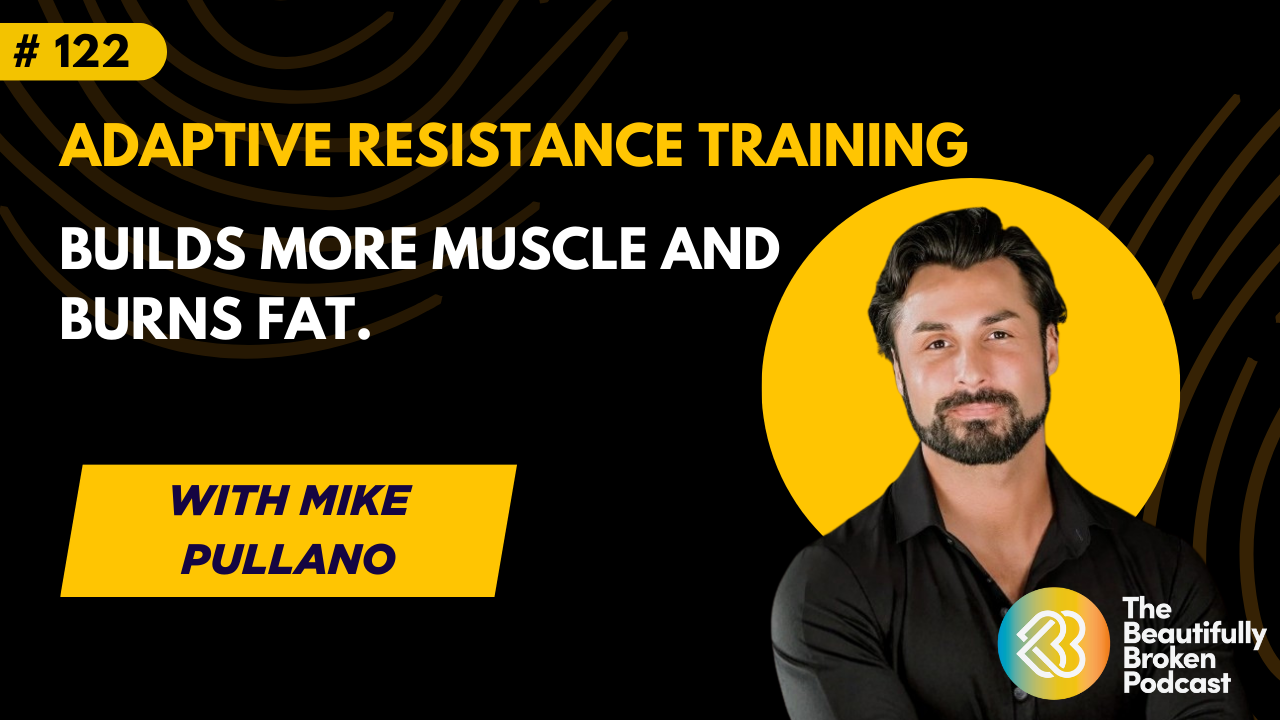
WELCOME TO EPISODE 122
Ready to discover a workout technology 95% MORE efficient than weights? What about real-time biofeedback on every REP so you can track your progress? Welcome to full body adaptive resistance training with ARX. Join Freddie and Mike Pullano (chief product officer at ARX) as they explore how users can gain more muscle in less time. They discuss the ARX software that empowers users to track and quantify their progress like never before with an advanced computer. This is the GYM spotter that never lies about how much effort you are actually delivering! There’s a lot to unpack in this episode, so stay tuned and stay beautiful.


Episode Highlights
[00:53] ARX technology amid the pandemic and the community formed
[05:05] In a nutshell: ARX technology explained
[13:48] Biofeedback loop within the software and exercise safety
[23:55] Where to access ARX technology in the US
[34:10] Workout for everyone regardless of age and strength
[37:58] What lights Mike up about ARX and working for the company
[41:13] Comparing ARX machines
[45:44] Vision in the next four years for ARX
[49:27] Mike’s definition of being beautifully broken
UPGRADE YOUR WELLNESS
Marion Institute BioMed Course: biologicalmedicine.org
Code: beautifullybroken
Silver Biotics Wound Healing Gel: https://bit.ly/3JnxyDD
Code: BEAUTIFULLYBROKEN
LightPathLED https://lightpathled.com/?afmc=BEAUTIFULLYBROKEN
Code: beautifullybroken
STEMREGEN: https://www.stemregen.co/products/stemregen/?afmc=beautifullybroken
Code: beautifullybroken
Flowpresso 3-in-1 technology: (https://calendly.com/freddiekimmel/flowpresso-one-on-one-discovery)
Medical grade Ozone Therapy: https://lddy.no/1djnh
Code: BEAUTIFULLYBROKEN
AquaCure Machine + Molecular Hydrogen
Website:https://eagle-research.com?ref=24931
Code: beautifullybroken
DIY Home Cold Plunge Experience: [https://www.penguinchillers.com/?rstr=6757]
CONNECT WITH FREDDIE
Work with Me: https://www.beautifullybroken.world/biological-blueprint
Website and Store: (http://www.beautifullybroken.world)
Instagram: (https://www.instagram.com/freddie.kimmel
YouTube: https://www.youtube.com/@beautifullybrokenworld
FULL EPISODE INTERVIEW
EPISODE TRANSCRIPT
Freddie Kimmel and Mike Pullano (00:00.046)
But if you show up the next week being like, I'm going to do 100 pounds again this week, but you have not slept well, your diet is not on point, like maybe you a little tweak in your neck, whatever the case is, and you try to rack 100 pounds again on a bench press and for whatever reason you're not able to do it, that's the difference between walking out of the gym feeling great and walking out of the gym being like, I need to call my chiropractor or worse, right?
Welcome to the Beautifully Broken podcast. I'm your host, Freddie Kimmel, and on this show we explore the survivor's journey, practitioners making a difference, and the therapeutic treatments and transformational technology that allow the body to heal itself. Witness the inspiration we gain by navigating the human experience with grace, humility, and a healthy dose of mistakes, because part of being human is being beautifully broken.
Freddie Kimmel and Mike Pullano (01:00.963)
Ladies and gentlemen, welcome to the beautifully broken podcast. I am here with my good friend, Mike Polano. Mike, welcome to the show. I feel honored to be here. This is a burgeoning relationship in the last six months. this is, yeah, this is a great time to sit in front of these machines and talk to you about these. So I'm ready. It's exciting. And I want to talk about the machines. I want to talk about ARX. And but I also want to talk to you. I wanted to sit down because for me, you're a person in Austin, Texas.
that has been a pillar of inspiration. You know, I often say I moved to Austin and what my experience has been is I'm sitting here in these thought leaders, spiritual leaders, movers and shakers, biohackers, and it seems otherworldly that this many people could be in this zip code committed to moving not only athletic performance, mental acuity, spirituality, fitness forward,
And you were shining light of one of those pillars from day one of when we started talking. I was like, this guy's awesome. And the way we met was at a biohacking conference. But then you invited me into the ARX facility, the technology, which we're going to speak about today and into a Sunday workout of like-minded human beings. Tell me about why you open up your facility at ARX to these human beings.
that are committed to this similar mission in town. Yeah, yeah, yeah. Man, so January 2020, rumors of the COVID floating around at that time. When I first made the decision to invite friends on Sunday, it was purely just because people kept asking me about trying ARX technology. And we're not open to the public. This is not a facility that is like available for business hours. And there's people who are members and stuff. This isn't a gym. This is our
warehouse, this is our office, this is our own personal space to build these machines and get them out to the world. And at some point I was like, well, on Sundays, I do my workout. I'm like roughly once a week is as much as I use these things, maybe twice here and there, but most of time it's just once a week. It's on Sunday. I come during the weekend when I'm not, you know, there's no calls and there's no emails to worry about. And it was just easy for me to batch.
Freddie Kimmel and Mike Pullano (03:23.778)
all these invites that people want to the machine. I was like, just come on Sunday and I'll set you up and you can just do it then. Flash forward two months, maybe five, six, seven of my friends were coming regularly on Sunday and then they kept inviting friends as well. And then the pandemic hit and everyone went into lockdown. And we paused here for like a month or two on having anybody buy, but at some point we were like,
think this is an opportunity for us to support one another. And I would just let people come and we would keep our distance. Or sometimes I wouldn't even be here. And I use this as a testing ground at that point to kind of test whether or not somebody could use these autonomous. If I just set them up, could I just run their own experience? I give them the program, I teach them the software, and I give them door code access. And so we did that for a few months. And then we got back to kind of actually hanging out in groups.
more in the summer. And what was quickly apparent is that so many people had been displaced from their regular workouts and their regular world, and they needed a place to go that could actually support them, not only physically, but socially. And it was like end of the summer, maybe when more and more people started to come and I was like, I have a thing going like started here. Like this started as a nice to do with a few people. And at some point it
More felt like I just had like a strong responsibility to the community to provide something that they were missing. I just love helping people. And it just became like a thing where if I'm in town, I'll be here. And I opened up from 10 to two and it's invite only. And the more people I would meet, the more people would ask me what I do. And I'm like, I built these exercise robots. And then I'm like, well, what are these things about? How can I try it? And I said, you're in luck.
there's a four hour time span on Sunday where you can get it in. like, can I come at Tuesday at two o'clock? I said, no, you can't. Yeah. And so that was how Sundays started. And man, it's been two years. Wow. Two years of Sundays. Yeah. For people at home that don't get to come to Austin and be at the ARX Sundays, it's just like this. It's probably most of the thought leaders you hear on podcasts and creating healing spaces and workshops and doing
Freddie Kimmel and Mike Pullano (05:46.087)
the trauma work online, elite marketing, everything. it's just a great mixed bag of people. Yeah. I could run down the list and you'd be like, they'd be like all these, you know, very big Instagram presence and warrior woman mode, conscious bro, Luke story. It's really amazing. And you know, the vibe, the vibe there is the tone is set through the technology that is ARX. Like we're here to commune.
and be together, but we're also here to get on this amazing machinery, adaptive resistance exercise, which I am so obviously addicted to because I've been here for six months. And so if you had to explain that to somebody that had never heard about it, what would you say ARX is? Yeah. I mean, the quick at the party conversation is, you know, this is resistance exercise. We've invented a new form of resistance exercise.
called adaptive resistance. We use motors instead of weights to create that resistance. And then we have computer software that controls all of that and quantifies the process. It's like the shortest version of that. So it's the blending of this motorized resistance, which provides you a mirrored, you know, one-to-one ratio, if you will, of whatever force you give the leg press or the chest press or anything like that. It just matches whatever you're providing. So two different people.
Like a grandma and a linebacker, as we say. Could use the exact same machine and no settings will be changed other than the range of motion. And there's no need to adjust the resistances. The machine always wins essentially, but like it's the user that is adaptive, not the actual machine and the technology. That's a common misconception. They think that there's some kind of adjustment that's happening on the fly, but that's actually really not. The motor just is constant rate of speed.
tell it to go seven seconds each way. It's just going to do that. You can try to get in the way of it. You can try to exert a hundred percent of your force or zero percent of your force. It just always is going to win and do its thing, which is like from a paradigm perspective, like a total flip, right? We're used to, we're used to creating resistance on a bar that matches what we need for this set and then change it again for the next set. And there's all sorts of different fun games that we all play in gyms and have for the last, you know, 80 years.
Freddie Kimmel and Mike Pullano (08:14.846)
But in reality, just provide a resistance that you can never beat. And ultimately it just matches you the way that kind of works out in the end. And then the computer software shows you in real time how much force you're creating against that motor. And it's that feedback mechanism of like perfect resistance on the mechanical side, feedback instantaneously from the software to help motivate you and tell you whether or not you're getting better and how you're doing.
And it's just like time and time again, like it's you never have to change it. I do this exact same workout essentially that I did eight years ago and I still see improvements because I'm getting better, which therefore means the machine is mirroring back more resistance than it was when I first started. And I know that to be true because I have the feedback of the software. And so like it's the marriage of those two that creates the ARX experience. Yeah. Walk me through the mechanics of I'm going to load up a barbell.
I want to put on plates and there's going to be, for me, the problem that it solved for me was there's times when I do that. Let's just say I'm going to throw on two 45 plates and a 45 pound bar. There's going to be times in the range of motion that feel near unhealthy to my tendons. And then there's going to be times in the range of motion when I feel very, very strong. Usually it's like that first three inches, right?
But when I get down to my chest and the joint is compromised, we could say, or it's not at its ideal angle of incidence, right? To be able to push that weight back up, you could have an injury. So for various reasons, you know, I tend to shy away from that. Like how is ARX solving that problem of allowing someone to move heavy weight without it being dangerous? Yeah, for sure. So fundamentally, when we choose a static weight, let's just call it hundred pounds in a bench press.
You know, we load up the plates. It's a hundred pounds. Great. I lifted off of the rack and my arms are extended at that point. I have leverage because my arms are extended and I have more strength capacity at that point. That's the highest amount of strength capacity that I have in that moment. And if you're locked out, you can really like hold it and keep it there. Cause you have like the stacking of the bones and all that stuff. As soon as I start breaking my elbow and moving it down towards my chest, I'm losing force capability.
Freddie Kimmel and Mike Pullano (10:37.834)
because my joint leverage is going down. Yeah. Right. And so we all know this feeling, you know, internally, if you've ever done a bench press or squat, it's like, as you start getting down, like you're starting to recognize I'm coming up against the difficult part. And so once you get to the most severe part of the joint angle, which would be at your chest and a bench press, you know, when the bar is closest to you, that's when, you know, we gauge our success of lifting a hundred pounds.
off of the weakest part of our range of motion. We say, if I can't get off my chest, then, you know, I can't lift it. It's like, well, let me just lift it five more inches beyond there. And all of a sudden you'll have the force capacity there to lift it. So it's really, when you think about weightlifting in general and any gravitational movement like that, you're gauging your success based off of your least strong position.
This is the bottom of the squat. This is the bottom of a bench press. This is the most extended part of a bicep curl. Like there's all sorts of different games we play to try to overcome that, you know, and some people use momentum to overcome that. You see the guy who like throws his whole body at like, at a bench press, you know, on the way up and use the speed or momentum to get through that difficult part. So he can get back to
more extended arm, more leverage, more force capacity. When you put it that way and you see the world that way, which is how we see it now, it seems really silly. You're like, that's really inefficient. So if the only part that's difficult in a hundred pound bench press for me is right when it's at my chest, let's call that, you know, three inches on the way down and three inches on the way up from my chest, that little V in the range of motion. Well, like what's happening for the rest of the range of motion when I have more than a hundred pounds.
of force capacity. And the answer is not much. It's highly inefficient for the rest of the movement. So let's just be generous and call that like 25 % of the range of motion is when it's difficult and there's tension on your system. like for the rest of the 75 % of the range of motion, you're kind of relaxing, especially as you come down on the way down, which is called the eccentric, the lowering of the weight. Most people just let gravity do their thing and they don't even try to resist it at all.
Freddie Kimmel and Mike Pullano (12:59.33)
So it's just highly inefficient. And like, that's kind of the story that is playing out as you're lifting any weight is this fighting of gravity, joint leverage changes, and ultimately force capacity changes. And if you had the Holy grail, if you could create the Holy grail of resistance exercise, it would be difficult the whole time, every time, and would adapt as you started to fatigue.
So might be a hundred pounds when you're at the top, but it might get the 50 pounds at the bottom. And then you get to your second rep, it might be 80 pounds at the top and 40 pounds at the way down. This is where our technology wins out. You need something that will change according to our changing strength. It's like this for all humans, we'll be forever. And it doesn't matter if you're a bodybuilder or a grandmother, the leverage of your joints and how much force you can create at each moment of that angle is like, it just changes. And then your fatigue changes.
from rep to rep, when you lift a static weight, like it doesn't care about any of that. She's like, here's a hundred pounds, deal with it. If you can't deal with it, this is where injuries happen, right? This is where you throw your shoulder out or you try to use momentum and hip your back up, you know, in a bench press. And then a week later you're at the chiropractor. Yeah. It's wild. The moving of this weight, when the force changes throughout and that's steady, it's like when I'm on it from my N equals one experience,
I feel like the system is meeting me where I'm at and always if I want to give more, it's going to give a little bit more. So am I incorrect in saying that there is a true biofeedback loop within the software? The biofeedback loop is, yeah, sure. You know, as an individual using, let's just say, keep the benchpress example, if you're doing a benchpress on our ARX technology, you are the deciding factor of how much resistance you want to provide this thing and what
it will ultimately give back to you. You can go hard as you possibly can on the way down and then midway you get a phone call. You can let go of your hands and go to zero force on this thing altogether and nothing negative will happen to you. Nothing will impact you directly. There's nothing going to fall on you. The machine just kind of keeps doing its thing. You told it to go seven seconds each way. It's going to keep doing seven seconds each way. And then I can answer that phone call, hang up real quick and catch the next rep.
Freddie Kimmel and Mike Pullano (15:21.112)
Yeah. our machine, right? So like you are, you are a hundred percent in control of your experience when you're using ARX. Contrast that with what I just said with weights. You choose a hundred pounds. That hundred pounds is acting on you and you have to manage that hundred pounds. You can't just give up halfway and answer a phone when you're in midway of a bench press because the hundred pounds doesn't care about your phone call. It doesn't care about your
bad shoulder or the tweak in your neck that happens or whatever the case is, like it wants to go to the center of the earth. Like that's how it works. And so that's again, it's just fundamentally so different of experience. puts all of the power in the user at that point on Aerox. It empowers the user to see on the screen. This is what I did last time. If I push really hard, I think I can get there. And they're not thinking about, no, if I let go, this thing's going to come crumbling down on me. Right. At all.
So yeah, it's fascinating because a big area of wellness that lights me up is, is mitochondrial health. I always reference people when they say, Freddy is a cancer survivor. What's your number one book? And it's the metabolic approach to cancer, looking at mitochondrial density. And that is the first thing from going through chemotherapy oncology practitioners. That is the first thing to go the directions now in that world are eat, keep on weight.
Don't let yourself go into that catabolic state. And there is no mention of exercise. You're actually told to avoid the gym because you're usually using an agent that's going to down-regulate immune system or take it to zero in my case. And so for a long time, exercise was like this afterthought that I told myself when I was healthy, I'll revisit this. I just got so inspired because when I got on ARX, I was like, this could be in a hospital.
For sure. Like you could meet someone where they're at in a compromised position. And you know, again, N equals one experiment. I was like super compromised, like cut open your belly, take out your organs. And it was just not something that I was thinking of. But there are things you could do on this. And I wondered if we could just, could we speak to like, and I still have things like, right, I'm always going to be working on mobility and scar tissue and
Freddie Kimmel and Mike Pullano (17:45.723)
But me not starting or delaying that, think that costs me something long-term. And we have a printout of me working for four to six months. We have an idea of what happened. Me showing up once a week. And it was pretty wild. Yeah, it's like 60 % improvement in your legs, 40 % improvement in your upper body. You come once a week, you knock it out, you go on and live your life. Yeah. And one time a week, was like me being here for an hour and a half talking, but me really being
on the machine and I only did four reps. Right, I would usually do that twice. For most times, very limited amount of time. Yeah, it's about two minutes and fifteen seconds of exercise per exercise. Yeah. Like time that you're actually like doing anything. Yeah. Ladies and gentlemen, I've got to speak up about a brand new technology I've been using, the Upgraded Formulas HTMA test, which is a hair test mineral analysis.
What this test allows me to do is from my home and my bathroom more specifically, is send away some hair and look at how the minerals in my body are balanced. These are the building blocks of how my body holds energy, burns fat, how easy I fall into sleep, and how I manage stress. This is a test so valuable I found that I had my mom do it not once, but twice. So...
Please use code FREDDY10, all caps, and get your own HTMA test and see how your body is doing with the building blocks of health and vitality. I really want people at home to hear that, like the solution that this solves, because I'm not worried about me. I'm worried about my parents. I'm worried about my family members, that it's really hard to get them excited and get in the door. I always disclaimer my mom. My mom does such a great job. She owns an Abcoil.
She fasts. She does mineral analysis tests. She's like, she's always asked me, how'd get her to understand and like get involved with that? Cause that's a hard uphill battle with most parents. She wants to do it. She wants it. She always gets mentioned in the podcast. like, but my mom, shout out Freddie's mom. Yes. Yeah. Shout out mom, you know, but it's, I'm worried about these people in the periphery of my beautiful family unit that just
Freddie Kimmel and Mike Pullano (20:03.8)
It's just not a priority. And sometimes I look and I'm like, my God, they're so far gone. Right. There's so much that needs to happen. And then we go back to that conversation around mitochondrial density, long-term health, like let's just talk about mitochondrial health and all cause mortality or X or we could just say exercise resistance exercise. Right. Because that solves a huge problem.
And we're looking at something here where everybody's excuse from my experiences. It's accountability and time. I don't have time to do it. And this is such a good fix for that. Yeah. If you ask anybody why they don't exercise in particular, why don't resistance exercise? They don't lift weights, right? A lot of people will go to everything from jazz or size classes and yoga and take walks and go run or ride a bike and stuff like those are very low skill exercises to perform. And
It's also low risk, right? I'm just going for a walk. Nothing's going to fall on me. And I'm not going to like blow my shoulder out. Start doing overhead presses or a bench press or something like that. And all of a sudden there's a whole new risk assessment that I have to go through. So most people don't understand how to assess risk in a weight, you know, gravity-based world, exercise world. And so they just avoid it. You just don't spend the time to go learn. They don't spend the time to hire a trainer.
Even if you do hire a trainer, there's no guarantee that that trainer also knows how to assess risk and they might put you in a bad situation. This is kind of like the horror stories of CrossFit and all sorts of different other training facilities that look similar. It becomes a competitive sport. And now we're not talking about good principles of exercise that are going to keep you safe. We're talking about whatever it takes to lift this weight, you know, cause we got to get this many reps in five minutes.
There's nothing wrong inherently with that as long as you understand the risk associated with it. But most people don't understand it until it's too late and they get injured. So one thing that they're going to say is why don't we do resistance exercises? I don't understand like how to assess the risk, right? I don't really get it. It's kind of scary. I don't blame them. The other side of that is, or the other comment is like, I don't have enough time. And
Freddie Kimmel and Mike Pullano (22:20.158)
Typically what they're referencing is, know, American College of Sports Medicine is like three times a week for 45 minutes. So in today's world, that just sounds daunting to anybody. Like to give that much time up knowing that they already feel pressure, time pressure for all of the other things in their life. If you're a parent, I mean, it's like good luck to get away for three hour plus moments of time is, you know.
It's expensive, it's a sitter, it's travel, it's like almost, it's daunting to think about. Yeah, so the time factor is crucial. You have to make exercise efficient from a time perspective. Yes, you have to make it safe, always. But if it's not time efficient, no one's going to do it. And so when you start talking about what's the difference between a traditional workout versus the ARX workout from the time perspective, you know, we're about 15 minutes a week.
Like once a week is, you you're going to be well on your way to still progressing. Are you going to be an Olympic athlete? No. But even then, like those people probably only need it like two or three times a week if they're being really efficient when it comes to the resistance exercise side. So if you can make it safe and you can make people feel like this is really efficient, I don't have to dedicate a lot of time to it. I feel like that's the only shot you have to get.
the masses to do this so, so important physiological requirement that is resistance exercise. Like it's bone marrow density, it's muscle mass, it's hormonal improvements, it's mitochondrial density, it's brain derived neurotrophic factor, it's glucose clearance. Like these are absolute pillars and fundamentals of any quality health program. And it comes from resistance exercise. It's like essentially like all of those things in a pill.
is resistance exercise. But because it's not time efficient and because people feel like it's risky, they don't do it. In speaking about the technology and talking about the need or the solution that ARX fills, how do people get access to ARX at this time in the United States? Where would someone go to explore? Yeah. So I think it's important to say that today is, you know, it's 2022.
Freddie Kimmel and Mike Pullano (24:41.931)
And we've been doing this for 10 years, right? This is not new. It's not new to us. It's not new to many people. We do 12,000 workouts a month, you know, across the globe. 12,000 people served. Yeah. Yeah. That's a, However the numbers break out, but like the point is, that, you know, we have data, we have feedback, we know that this works and it's really now getting it out to the masses, right? Like when you're building something new, you go through your iterations.
manufacturing, product revisions, you know, finding the early adopters who see the vision that we know to be true in the world. And they're like, my God, this is so much better than weights. It's like that used to be only like the biohacker crew, right? The very small amount of people in 2015 bulletproof conference who were doing all sorts of weird stuff outside of Yeah, it was, it was great. But you know, that's such a small segment of the world and it's, it's growing, but
that's still a very small component of the mass, you know, 8 billion people on the planet. So how do you get it out to the world? Like you got to start expanding the offering. This has to be more than just a biohacker gym staple, which, you know, we have like over 120 businesses around the world that utilizes tech. And some of those businesses are the biohacking gyms that have saunas and biochargers and amp coils and like
All the fun red light stuff and everything like that. But then there's also people who are, you know, they do workers comp and they're just trying to, they're just trying to get people back to some level of health after they got injured. There's rehab, there's chiropractors, there's tons of people out there who are now gaining access to our technology that are not trying to run marathons and you know, look jacked. Like they're just trying to get by. Like they're just trying to make sure that like bone marrow density doesn't
completely like crater, you know, after the age of 60. Like these are the kind of things where that's helping the 99%. And that really is the goal of what we're doing is how do we democratize resistance exercise to the world? And we know that this tech works. We know that the experience is something that people want. Now we're just getting the word out by doing more conversations like this and placing more machines in more parts of the world. Yeah. I think the other thing that I love about the technology
Freddie Kimmel and Mike Pullano (27:09.974)
is the software or what we'll show in a little bit of b-roll during this, that there is a screen that is allowing me to see what I did last week, how much weight I'm pushing, and I can almost like I'm always chasing the line, like I'm trying to make these higher mountains each time to get above the threshold. And for me, it really shows you how poor a
Perceptor we are of our own strengths. Yeah, because we all know we've shown up to the gym and it's dramatically different the quality of workout you get or one day you pick up the 65s and you're like, my god, these are really heavy like this feels terrible what happened over the week, right and so to be able to see it on the screen and Really be able to push yourself that little extra umph. I just think is a great Visualization into what's happening
And as far as my, levers and pulleys of my body were that day. day, that moment. That's one of the things that until you start using ARX on regular basis, it's really hard for me to describe the shift psychologically that happens when you start to do ARX workouts regularly. You essentially do the same workout every Sunday when you come here. And it's not the same workout though, because it's Freddie today.
versus Freddie last week, last month, whatever you choose to compare to. And that is what keeps it fresh and new, as well as you checking in with yourself in those moments, like, okay, it's leg press day, I know I had a rough weekend, or I know I just went out and did a run, if you're training for something, like a lot of our friends train for half marathons or whatever. And they're always trying to gauge their recovery. And what's great is they don't need to question
before they get on this machine, like, what do I set it to? I ran, I did a big, big run yesterday. Like, should I dial the machine down? It's like, you don't need to worry about that. Like, what do mean? It's just like, I get on it as push, just get on your push. And instantaneously, you're going to get a feedback readout on the software that's going to show you plus or minus, how are you doing compared to yourself last week? And there's a lot of times I'll get on there and I know I don't feel great and it will show.
Freddie Kimmel and Mike Pullano (29:31.235)
that I am not doing great, right? But I can still do a workout. It'll just be like 15 % less total output. Same exact workout as I did last week. The numbers are down and I walk away and I still get the benefits of exercise. I cleared some glucose. I got some hormonal improvements, yada, yada, yada. And it's just, I'm down today, no big deal. It still serves as, for me, like it would still serve as a fix for the psyche saying,
Well, not today, right? Cause you're going to get on and push play. That's it. You're going to go through those reps might not be the peak you achieved two weeks ago, but you're there. You're going to do the work. You're going to fight the machine if you want to. there's an element of accountability that I've found just from getting on. Sure. I mean, there's nothing wrong with having a down workout. Yeah. Right. Or a down day or just not being fully recovered.
The problem is if you, if you have a bad day in the traditional gym, lifting a weight and let's say you, you know, you did a hundred pounds last week and that was your PR and you felt great and everything was perfectly dialed in and you ate food that day and you had a great sleep. It was like, I'm good. Like you have this aspirational goal that like, I always want to be that version of myself. But the real of it all is that that comes and goes. And sometimes it's very fleeting when you feel that great.
But if you show up the next week being like, I'm going to do a hundred pounds again this week, but you have not slept well, your diet is not on point. Like maybe you a little tweak in your neck, whatever the case is. And you try to rack a hundred pounds again on a bench press. And for whatever reason, you're not able to do it. That's the difference between walking out of the gym, you know, feeling great and walking out of the gym being like, I need to call my chiropractor or worse. Right. So that's why.
psychologically, it's really great to just know that this thing can't really hurt me because I create all the force and it just kind of matches me the whole way. So some days that's really, it's a higher amount of force. still wins. Other days it's lower amounts of force. It still wins. And I just walk away being like, ah, bummer down 10 % today. Like when I have COVID, had COVID, my workouts were like 30 % less force output. I still did them. I still did the workout.
Freddie Kimmel and Mike Pullano (31:55.043)
I just knew that I was compromised. legit knew I was compromised before I walked in. And then I for sure knew I was compromised after I saw the numbers on the screen. And it's okay. Like everything's fine. I'm not going to get injured because of this. I don't need to worry about how much do I add or reduce. And then I also saw myself slowly trend back. And like now, you know, three months later, my numbers are back to where they were pre-COVID. And I watched it play out. I still showed up to work every day, work quote, work every day.
And I just did the workout. I just did my air acts workout. And it's just like a simplicity of it all is. Yeah. If I had to go in and like guess every day, what kind of weight I was supposed to do as I was through this healing journey, I probably would have given up. Probably would just been like, I'll just wait, wait multiple months because this is like too much stress every day to come in the gym and like bust out the calculator to try to figure out is today a hundred pound bench press day and 80 pound bench press day 110 pound.
I have no idea. Yeah. I've become increasingly aware of the way environmental toxicity affects my body. Now in the past, I've tested high for mercury, lead, cadmium, glyphosate, and mycotoxins from mold. Now I know what you're thinking, that is a full bucket, and even worse than the list of toxins was the fatigue, the neuralgia, and the brain fog due to the burden on the system.
So luckily, I was introduced to the Ion Cleanse Foot Bath by AMD at a wellness conference. The system uses both positive and negatively charged ions to help eliminate these harmful toxins from the body. So my N equals one experiment? After four months, I've watched most environmental toxicity fall by more than 30 % through diagnostic testing. So for me, this is a win-win. The Ion Cleanse by AMD is a fan favorite of the podcast because it's safe.
It's effective and it's a non-invasive way to cleanse and purify the body. So as a special promotion, Ion Cleanse by AMD is offering a free 15 minute consult where you can explore your personal needs to see if this technology may be the right solution for you and your family. So schedule your free 15 minute phone consult by selecting the link in the show notes, my Instagram at freddysetgo or freddysetgo.com. Friends, this is a heart centered company.
Freddie Kimmel and Mike Pullano (34:16.315)
The support team is amazing and they offer a 60 day, 100 % money back guarantee. That is zero risk for the customer. So if you're ready to purchase, visit www.amaturedifference.com and mention the beautifully broken podcast is your referral source. Namaste. How does the grandma versus the football player, how do you deal with
having 20 people in a workout room, everybody's a different size, shape, gait, arm length. How long does it take to set somebody up and how quickly can you pivot between people if they're all different sizes? Yeah, yeah. So the cool part of having the computer system drive this whole experience that is the motor and everything is we can set ranges of motion and then have them be remembered to your profile. that grandma might only have like a seven inch
leg press range of motion, but the linebacker might have like a 12 inch leg press range of motion. That's all in their profile individually. And so they just switch into their, you know, their name. Like we see people on Sundays do this all the time and just load up five, six, 10 people at a time. Someone shows up, quick switch over, you know, from Mike to Freddie and all of your history and all of your ranges of motion and all of the other parameters that we set for each workout. like,
Boom, right there, ready for you. You don't have to think about it. You don't have to remember like, oh, on the leg press, I do this amount of range or, I gotta make sure I go slow on the leg press or faster on the leg press. Whatever like we do when we think about weights, you don't have to do any of that. You just show up, you hit buttons, you hit the button and then you hit play and you're like, it remembers everything and you're off. And the only thing you have to do is try to beat your line from the previous workout and that's it. Like it's like.
It's so easy. so simple. Yeah. Yeah. If you were going to stack this in a facility, I know we often think about resistance training, moving weights. People will often say that you're missing out on some type of a cardiovascular workout. For me, after I push on the bench press, I'm gassed. I usually drop my head down in between my legs because it's like, I'm that person also on Sundays where I'm like letting out a scream and I'm yelling and it's great. Yeah, I'm done.
Freddie Kimmel and Mike Pullano (36:38.169)
I'm done. But if there was something to compliment this as far as, well, it's a trick question. Do you think people need to supplement with cardio and ARX? Yeah. I generally speaking, if you're just looking at the idea of cardio traditionally, like how it's described is that somehow I need to do something separate for my heart than my muscles. But in fact, they're all connected. Your heart is a muscle.
And so when I do hard work with my muscles, my biceps, my legs, whatever, my heart is the supporting muscle that is pumping blood to all of that. So it's one thing to say that, but we actually did research with Western Colorado University last year and they tested VO2 max, which traditionally doesn't go up unless you're doing like some kind of biking or sprinting or running or like that. like they tested a weight group and it tested an ARX group of which
Everybody's VO2 max went up, but the ARX group in compared to the weights went up three and a half times more. So if you're looking for cardio, then there it is. And if you want to go run a marathon, that's a different requirement. You still have to get functionally able, psychologically able, capable to go do that skilled event. But like, if you just want to improve the cardiovascular system, resistance training does that. That's not new.
That's not groundbreaking science whatsoever. That's been around for years. It's been just like pushed below the piles of Instagram people and everybody else who just believes that unless I am running hard or running for a long time and my heart is working for a long time, my heart does not improve. It's not true. Yeah. What's the most exciting thing about this technology for you? If you had to again, speak to someone coming in the door for the first time.
What really lights you up about not only ARX, but working with this company? Yeah. mean, the underlying goal of why we do this is to democratize exercise to the world. I mean, you need to give this to our parents who otherwise will never walk into a gym when parents are 72. Like there's no F in chance they're going to walk into a gym from here until the day they die. Like you cannot pay them to get into that world. So all of a sudden turn into
Freddie Kimmel and Mike Pullano (39:03.345)
a gym rat, right? However, what I could do is possibly get them to come in to a very calm environment. It's very unintimidating. This machine's not moving. It's not like a lot of noise. There's no clanging of weights. There's no guessing what weight to do. We take all of the difficult things that most people have to deal with when they walk into gym and we just outsource that.
to our technology, to the computer system. You don't worry about how fast the move. You don't worry about whether or not the weight or the resistance is gonna hurt you. Just like, this is very comfortable, outpatient, non-invasive surgery kind of moment where I just do a chest press. I push hard. Some days I win, some days I don't. And I get a huge benefit from doing that action. Exercise is longevity in a pill.
like pill form, it's unbelievable. Like it's so, there's so many things that happen when you just do a really good leg press. But the key is like, how do you make sure you cross over that threshold to make sure it's really good? Right. A walk around the block is one level, but that doesn't help with bone neural density, right? You need to load the structure and the bones. Otherwise they won't grow. Right. Same thing goes like we need to tear muscle fibers. Otherwise they won't grow back.
And so this is where you get osteoporosis and sarcopenia. It's everything that happens when we start to age. And those all have tons of other secondary effects. When the muscle mass goes, everything else goes. You see everybody in the hospital, cancer patients included, they just lose, rapidly lose muscle mass. And after that, that's when all of the secondary effects that they deal with start to just become real.
But the muscle mass, as long as that's around, means you're living, you're healthy. But cachexia is the thing, muscle wasting and just wasting away. And so if you just can make it easy for somebody and make it accessible for them, my parents would do this if it was down the street from them. They would. Your parents don't have an ARX at home? They don't have an ARX machine at home right now. But I'm going change that, I think, next year or two. But yeah.
Freddie Kimmel and Mike Pullano (41:26.709)
The key is I don't even want them to have it in their house. I want it to be in a facility that's very cost affordable and just it does not look or feel or act like any of the traditional stuff that they're afraid of. Yeah. If somebody was imaginative, you can imagine that you could easily cut down on square footage needed in a facility. Because if you just think about, let's just take Planet Fitness or Gold Gym, the amount of equipment.
that is spanning the floor that could be done on two machines. And could you differentiate there's two machines behind us that are slightly different here? Yeah. So alpha, one to my right here, lay press, chest press, row, calf raise, flexion and extension for the low back and abs. And that's pretty much it. It's not meant to do much more than that because this is like your 80 20 machine. This is the thing you want to put my parents on. It's the least intimidating, least skill required. Right.
This one behind me is the Omni. Cable-driven machine has 20 different types of exercises you can do, everything from deadlifts and belt squats, to pull downs and bicep curls. Cool. It's not overly difficult to do, but it requires a little bit more learning than this machine does. So it's the pair of them two, of the two of them, which makes, it's the perfect one-two punch. Now, if I'm just gonna get somebody on the machine who doesn't really care about deadlifting or anything,
more advanced, different angles of chest pressing. I just put them on the Alpha and they all get better. They all get stronger. You mostly do all of your workout on this machine. Yeah, I've only ever set a pull down on the Omni so far. Right, right. And that's totally fine. I do a lot of my work on the Alpha because it's so easy and simple, but square footage wise, I mean, it's like four feet by seven feet. It's like the square footage floor space that you would need. And
You could push, put one of these in the corner of like a chiropractic office. You could put one in like down the hall in an office building. That's a 10 by 10 room, you know, even smaller. It's kind of just, it's like this perfect. Yes. If you've got room for a couch, like a decent size, two and a half person couch, have room for an alpha. Omni is a little bit longer. It's about 11 feet and still four feet in terms of width required. But even this one still fits in most places.
Freddie Kimmel and Mike Pullano (43:50.603)
very simply and the potency that you can get out of these machines in terms of how many people can use them. And ultimately like on Sundays, I think the most I ever did was 42 people in four hours, which is insane. It's insane. If I only was open for four hours as a business owner and that was my whole business and those people paid me, it's not a bad business. Yeah. Right. And I did no work. I just kept them moving, but I didn't have to.
stack plates and choose weights for people. So when we think about the efficiencies as a user of this machine, that's one thing, but it's also the efficiency of the business owner, efficiency of just the owner of having this technology compared to the big plan of fitness, 50 treadmills, 40 different weight stack machines. It's a huge real estate purchase that's required to make that real. And you condense all that.
into about the size of a couch and still get the same, I'd argue a better workout in every way. It sounds like a great deal. Like that's what technology is supposed to do. It's supposed to make that leap for us and make everything easier. Yeah. It definitely serves a purpose in the world, which, you know, again, I'm excited about if I were a gym owner, mean, that's what I would be trending towards efficiency and serving people better.
When people are looking up ARX Fit, it's ARXFit.com, is there a locator in which they can find something and where they might be carrying a system in the city? So you can reach out to us. There's new locations opening like every month. Okay. The best way is just kind of reach out and ask us like, is there one in my location? You can easily Google to a lot of times like ARX Nashville. You'll find our customers who are out there as we continue to grow.
that process will also continue to grow. yeah, it's most people just Google it in their city and they find one. We have most of the major cities covered at this point in America. We have Perth, Australia and Barcelona and a couple other places abroad. yeah, primarily United States is where we're located. And it's most of the major cities and some of the not major cities. Fresno, California is rocking two ARX machines all of a sudden. And it's the hottest thing in the area.
Freddie Kimmel and Mike Pullano (46:11.875)
Yeah, there's what the first time I ever saw it and I was actually I was scared to get on it at Pam Gold at it was hacked fitness. Now it's portal in New York City. Pam was rocking two machines and it just looked very intimidating. And at the time just I didn't have an understanding or awareness around what it was. And everybody was in there all day. You know, she always had people on the systems.
And I'm excited to see it expand into this field, especially because it does solve so many things, space, efficiency. It's effective. It is easy to use. You know, I've never asked you for guidelines anymore. I touch the screen, I touch my name, I push play, I select what I want to do. And then I just, go, know, and I go and I try to beat the machine. Mike, so I want to be respectful of our hour and your time. And as we come here to a close.
What's your vision for like the next four years for ARX? What would you love to see in the world? Yeah, absolutely. So I'm our chief product officer, so I get to kind of drive some of that along with our team. And, for the first 10 years of this thing, it was, we've to make this thing real in the world. We've got to build it. We've got to build it reliably. We have to get it out to people. We have to build a business around it. You know, we've been successful at that to date. Now, you know, how do you scale that? How do we ratchet that up? And
You know, there's a lot of stuff that we can do from like a mobile application perspective and also from a hardware perspective to really open up. Yeah. Some of the bells and whistles and more of the, yeah, just like the features that you see in most mobile apps. They're like, you need to have your data everywhere. You need to have access to ARX machines everywhere you go. And you should be able to be booking ARX sessions, you know, when you step off the plane in Austin and be like, where's the nearest ARX machine.
and talk to nobody and just go show up at a business or go show up at a location where an Eric's is and, you know, tap your phone on the screen and be off and running. There's all of your ranges of motion. That is the future. Right. Like we don't have an exact date on that, but like that is where we are headed. And it's the only way that we can truly scale this to, you know, not just, you know, 12,000 workouts a month, but like 12 million and beyond. These machines have been proven themselves. Right.
Freddie Kimmel and Mike Pullano (48:33.337)
from a research level perspective, from objective and a subjective level, like we're not worried that the workout is kind of like a whistleblower moment as like, this thing's fake. Like they pulled one over on us. It's like, it's 10 years of data and 10 years of people validating this. It's just a matter of how do you get it out in the world? So if you're a business owner and you want to bring this to your customers or you want to bring this to your city or your town,
you know, that's what we spend most of our time in sales right now working with is guiding those people to like figuring out how to put this and bring this to their city. That could be a brand new workout center that they put together. It has one or two of these machines and that's it. That could be an existing facility that just wants to add, you know, an alpha to start training geriatric people, you know, like for bone mineral density. It's really versatile and it does not require
a lot of space or a lot of learning to get up and running on this thing. And once you do, it doesn't require a lot of overhead. You don't need to keep hiring trainers who have accreditation and you know, might not show up to work today. Like this thing shows up to work every day and it can be available to your customer base all the time if you want it to. And so that's in the future. We're going to grow that market. I'm here for it. Let's go. And then your last question, the beautifully broken podcast.
as a person who values health and strength and vitality. And, you know, I'm sure that's changed for you over time. I feel like people's awareness of about their health. It's sometimes we don't see how important it is until it's taken away or we have a little bit of a stumble. What does it mean to you to be beautifully broken? I've been beautifully broken multiple times. I was recently beautifully broken. You know, resilience in those moments is everything that I'm trying to build for.
and like prepare for. So there are days throughout the building this product and making this ARX thing happen in the world where like I was physically broken. I was traveling a ton. I did not have the time to take care of myself at the level that I knew I could. thank God I had ARX machines to keep me resilient because like I might only have 50 minutes this week to actually get a workout in. There's an ARX machine. You know, I have a little
Freddie Kimmel and Mike Pullano (50:58.737)
spoiled by having this, but like, oh my God, like this kept me strong to keep fighting those battles in the company. And so that's no different than people who are fighting battles in their family, you know, as a parent or fighting battles as a lawyer, you know, somewhere you're trying to maintain resilience at all times. And so the fundamentals for a reason and exercise is just like, you got to use your body and you have to like check the oil and keep the tire pressure up in your car.
Otherwise bad things are going to happen. And so for me, like, I know that I'm going to run into those beautifully broken moments. And what I'm trying to do is build HUD room in advance. So like when I get hit, you know, it's a 10 % 20 % hit and I bounced back from it quickly and it's not like a six month process. So I'm always thinking about how to build resilience with the fundamentals. And that's just like exercise and sleep. And we've been talking about
you know, sorts of detoxification things. And this guy's unbelievably amazing. Teaches me things every day I see him. But all of that stuff is just taking off load so that I can remain resilient when like the big hit comes, right? Like, boy, like here's a ton of travel back to back to back or COVID or any of the things that happen in life. I want to be resilient to bounce back from those and be able to keep on taking. Yeah, I love it. Well, we'll definitely do another one because we could talk for four hours on ARX.
And I also want to say just like the other thing that impressed me, which I kind of opened with is yes, you guys have a great technology, but you've built great community that happens here with the energetics around the Sunday event, which I think is so special. And your team is amazing. Everybody's so kind and smiling. And I don't know if it's at the exercise or the endorphins, but
Everybody that I've met from ARX, whether it's at a show or it's at the facility has just been like a 10 out of 10. thank you. Yeah. I really mean that. I hope everybody feels that in their heart when they listen to this, but it's been an amazing experience for me to get to know you guys and to collaborate and build. And we'll definitely do another episode. And I think we'll have like a podcast prime B and I'm to get on a machine here in a second. We'll video some stuff. Yeah. I'm ready to go for B and C and D and throughout the years as we continue to grow this.
Freddie Kimmel and Mike Pullano (53:22.887)
the world needs it. And thank you for those kind words. mean, our team is not normal as you've seen. But why would we be right? Like we believe in exercise robots and bucking a trend that's been around for a hundred years. It doesn't typically lead itself to pulling in the most normal, regular, straight thinkers. Yes. Yes. And we like to have fun along the way. That is the most important thing, bringing vitamin J into the gym. Let's go. Ladies and gentlemen, the beautifully broken podcast. Thank you for sitting here with us.
Namaste. Hi friends, I hope you're loving this show. Let's take a quick break to hear a word from our sponsors. If there's one word that makes me feel really intelligent, it's photobiomodulation. Better known as red light therapy. Photobiomodulation has been clinically shown to increase energy, circulation, increase testosterone production, workout recovery, hair growth, even the improvement in the depths of fine lines and wrinkles.
You actually don't have a lot of reasons not to incorporate red light therapy in your home. And not all panels are created equal, which is why the panel I recommend my family and my friends is Lightpath LED for the following reasons. This company continues to evolve their technology, including up to five wavelengths in each bulb. They include a three year warranty. This is one of the most robust in the industry. And they also have pre-programmed frequencies to add the benefit of pulsed light to the body.
and most importantly, after purchase support so you know how to best use your device for your specific needs. Now what does the evolving science say around pulsed light? Pulsed light yields benefit to the mitochondrial health, leading to increased production of cellular energy, thus improved outcomes. So say it with me, let's mind the mitochondria. So check out their beautiful new website at Lightpath LED and use code beautifullybroken, all lowercase, for a discount and checkout.
Freddie Kimmel and Mike Pullano (55:22.984)
My friends, you made it to the end of the podcast. Can you believe this is season four? Wait, don't turn it off yet. Before you go, I have something very important I need to say. There are two ways in which we can build this relationship that we've been working on. The first one is to join me on my membership program at buymeacoffee.com forward slash freddysetgo. You get early access to all the podcasts, bonus episodes, discounted coaching, and free webinars
with thought leaders in the wellness and technology industry. The second way to support this guy right here is to go to freddycedgo.com and download the Beautifully Broken Buyer's Guide. This is my ebook. It's a collection of transformational technology, supplements, and courses that have worked for me, my clients, and my family. These are things that I have found incredibly helpful in my personal healing journey, like the Ionic Foot Bath or Amp Coil or the Red Light.
Most offer significant discounts by clicking the link or using the discount code. Now please know they don't cost you anything extra and at the same time they do support the podcast through affiliations. Friends, thank you for tuning in. If you enjoyed today's show, head over to Apple Podcasts and leave a review. Five stars if you loved it and well...
I guess if you're compelled to listen to this entire thing and leave a one-star review, I'm gonna take that too. If you want to connect with me directly, I spend most of my time on the social media platform known as Instagram at freddysetgo. Or you can find me at buymeacoffee.com forward slash freddysetgo or freddysetgo.com. And lastly, from my vast team of legal internet lawyers, which I pay a lot of money to, the information on this podcast is for educational purposes only.
By listening, you agree not to use the information found here as medical advice, to treat any medical condition in yourself or others. Always consult your own physician for any medical issues that you may be having. That's all for today. Our closing, the world is changing. We need you at your very best. So take the steps today to always be upgrading. Remember, while life is pain, putting the fractured pieces back together can be a beautiful process. I love ya. I'm your host, Freddie Kimmel.