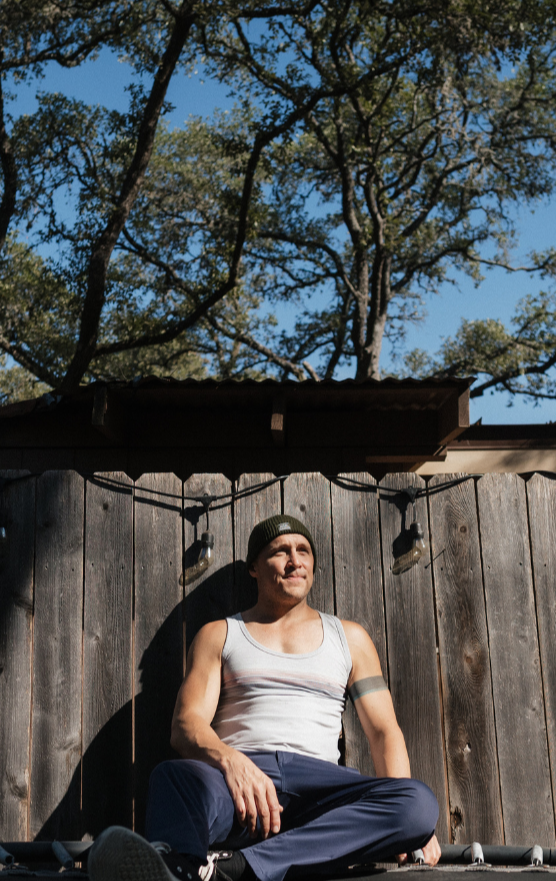
Adversity Is The Opportunity With Elite Functional Trainer Da Rulk
Jan 22, 2024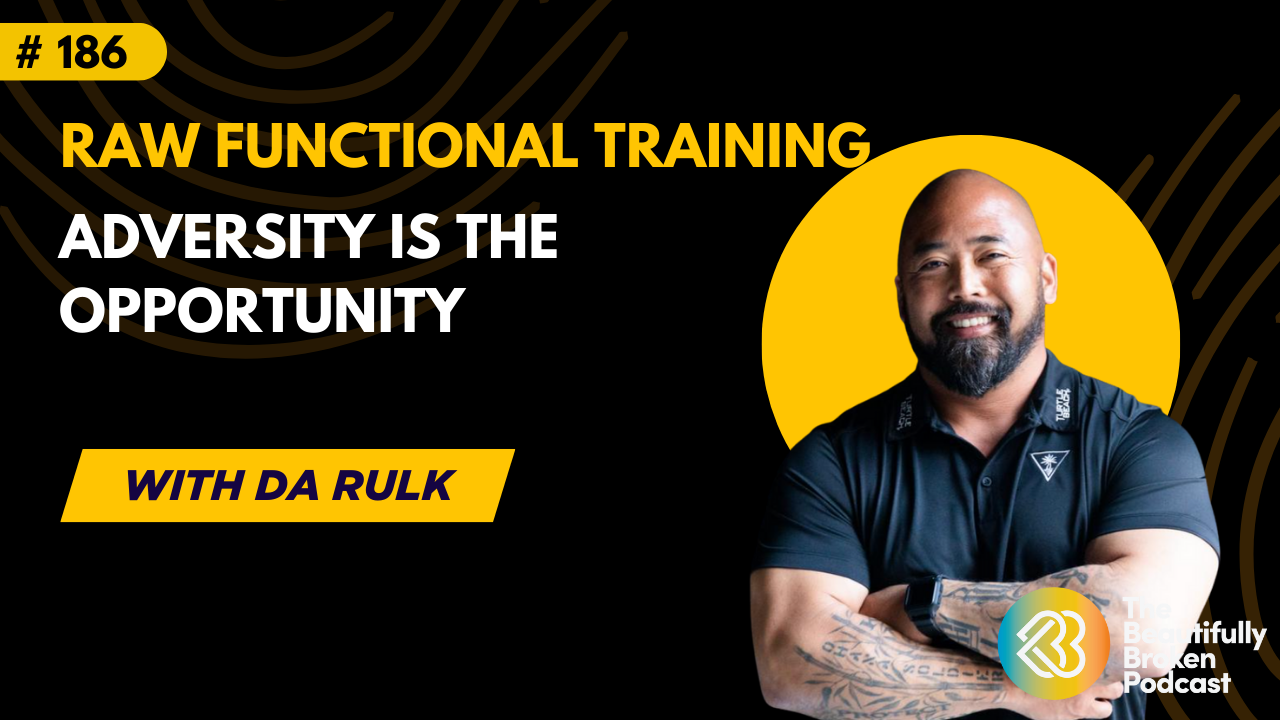
WELCOME TO EPISODE 186
In this episode, we’re sitting down with elite functional trainer Da Rulk who has made it his life mission to redefine everything you know about movement, fitness, and mobility. As the mastermind behind Raw Functional Training (RFT), Da Rulk teaches a groundbreaking movement-based methodology to an array of real-life superheroes: first responders, Navy SEALs, and even Hollywood superstar Chris Hemsworth. Join us today for an eye-opening discussion on Da Rulk’s unique multi-dimensional approach to movement that is bound to elevate your own health and fitness journey!
Learn more about Da Rulk’s signature movement, the bear crawl, and how this exercise unlocks key elements to functional fitness and dynamic strength training. Tune in as we also discuss the innovation behind BRRRN Boards as it improves your overall mobility and endurance through functional lateral movement. Explore Da Rulk's must-try exercises and gain insights into the importance of prioritizing recovery for a holistic approach to fitness.
As we dive into this engaging discussion, our guest shares his thoughts on the life-changing power of consistency, resilience, and adversity. Don’t miss out on this opportunity to see fitness from a whole new perspective and embrace your own personal fitness journey this 2024!


Episode Highlights
[3:55] Da Rulk’s Inspiration for Fitness
[8:25] How Brrrn Boards Are Incredibly Beneficial
[12:05] On Dynamic Strength Training
[16:15] Da Rulk’s Must-Try Exercises
[18:40] Understanding and Prioritizing Recovery
[20:31] How Consistency Is the Answer to Your Problems
[25:40] On the Power of Resilience
[35:15] The Secret Sauce to Da Rulk’s Recovery Process
[38:40] It’s All About Perspective
[43:42] Da Rulk’s One Piece of Advice for Anybody
[47:40] Why Imperfection Is Beautiful
GUEST LINKS
Instagram: https://www.instagram.com/da_rulk/
UPGRADE YOUR WELLNESS
Silver Biotics Wound Healing Gel: https://bit.ly/3JnxyDD
Code: BEAUTIFULLYBROKEN
LightPathLED https://lightpathled.com/?afmc=BEAUTIFULLYBROKEN
Code: beautifullybroken
STEMREGEN: https://www.stemregen.co/products/stemregen/?afmc=beautifullybroken
Code: beautifullybroken
Flowpresso 3-in-1 technology: (https://calendly.com/freddiekimmel/flowpresso-one-on-one-discovery)
CONNECT WITH FREDDIE
Work with Me: https://www.beautifullybroken.world/biological-blueprint
Website and Store: (http://www.beautifullybroken.world)
Instagram: (https://www.instagram.com/beautifullybroken.world/)
YouTube: https://www.youtube.com/@freddiekimmel
FULL EPISODE INTERVIEW
EPISODE TRANSCRIPT
Freddie Kimmel (00:03.504)
All right, ladies and gentlemen, welcome to the beautifully broken podcast. We're here with another episode and today we're going to go deep on elite levels of human optimization and fitness. We have our guest Rolik.
Rulk (00:18.301)
Oh man, he's laying the ground so deep.
All right, brother, I gotta get ready. Good thing I have my coffee. Four shots, bro. Ready, let's go.
Freddie Kimmel (00:28.376)
There you go. Well, listen, I had my single cup this morning and you know, I was just reading, I was reading on you all week. Cause when I have a guest on, I like to do as much homework as I possibly can. And dude, your, your prowess in fitness is incredible. If you must've said, Rolk, I'm just going to make a playoff Hulk and I'm just going to be as big as the incredible hawk is your, your massive.
Rulk (00:52.69)
No, dude, no, no. It's the name is funny because the name came from some of my Brazilian friends. So because of my some of my strength, etc., they used to call me Hulk. But in Portuguese, the H is pronounced with the R, right? That with R sound. So it's so that's where it looks like Rolk with everything. So everyone started calling me Rolk outside of Brazil, everyone speaks Portuguese, everyone calls me Rolk. And then
because of my ties with Hawaii. In Hawaii, like when you're like, hey, here comes the guy. He says, here's the roll, here's the guy. So that's where the roll came from. But yeah, it's been a long time, a long time coming. But yeah, it's just pretty much like, I just accepted it and rolled with it, so.
Freddie Kimmel (01:37.884)
Yeah, I mean, I also saw that, you know, some of your some of your clientele, dude, you train Thor.
Rulk (01:44.918)
Yeah, Chris is a good dude, man. Chris is a good guy. He's, you know, he's not very attractive, but it's okay. I just try to close my eyes when I work with him. But yeah, he's a great dude. I got a chance to work with him on the center app that did really, really well. And we're really proud of that. But he's just a dude. So good. Those guys, all those guys, Brolin, Hemsworth, they're all just...
They're great dudes, but it's like it's like hanging out with a bunch of young kids. You know, it's just running around. It's like it's all like elementary school comedy. That's got to be gross. That's right.
Freddie Kimmel (02:19.4)
Yeah, that's the best comedy. Dick and fart jokes.
Freddie Kimmel (02:28.28)
I love it. I have a, so how did you first get amped up into fitness and when did you want to understand the potential of the human body?
Rulk (02:35.018)
You know, it's interesting. I started off my, my educational background is in kinesiology, having an emphasis on biomechanics, but my focus always was understanding the adrenal system and how we organize the nervous system. So when I was in school, there were a lot of people interested in the 300 pound guy that could lift 5,000 pounds. I was more fascinated with the nine year old woman that lift the car for grandkids. I was like, how, how did that happen? Like, how do you do that?
To me, that's where we were like, there must be something else deeper than it. So understanding it, when I focused on my sequencing curriculum, which I created, which is RFT, raw functional training, it's an acronym, it was all how sequencing a movement directly correlates to the management of your adrenal system and organizing your nervous system, et cetera. And I started working, although I worked with a lot of elite athletes, and I was blessed to work with in pretty much all genres, from NFL, NBA.
NHL, MLB, UFC, et cetera. I was always fascinated with the first responder community. My dad was a law enforcement officer for a number of years, 26 years. He did a lot of amazing things in his career. Then he went to the DA's office and did a bunch of other stuff. But I always, I grew up around, that's what I grew up around, is first responders, fire, police, et cetera. So I used to see the police officers and firefighters.
they're in great shape and they would be complaining that they couldn't perform even though they physically looked amazing they couldn't perform on the job and so that was something that fascinated me to begin with you know like whether you do any elite athlete or anyone that was put into situations physically you are at your optimum but you can't perform under pressure so a lot of people would then focus in on the psychology of it right the sports psych and like I said I'm if
From a psychological standpoint, I think it's great. But there's also something happening neurologically. There's also something happening from that standpoint. So for me, I was always fascinated in that genre, in that capacity, understanding optimization, understanding resilience. And those guys in the first responder community are elite athletes. They just don't win or lose games. Their focus is life and death, right? So I was like, well, that...
Rulk (05:00.854)
that's something I definitely want to get into. And then I started working with law enforcement to start. So I worked with a lot of the academies, a lot of the SWAT teams, ACT divisions, et cetera. Then I was blessed to work with a lot of the fire departments and city, county, wildland, all the municipalities, different departments across the country. And then I worked with a lot of the elite military, so I've worked with.
seals and rangers and marine raiders and guys in Top Gun, etc. So I've been very blessed to work in that aspect, but in the heart of it, I'm a nerd and a scientist. So I mean, I'm always a biomechanist. I'm always looking at how is it I'm trying to break it down, optimization, figuring out, and I'm finding that everyone's now at this point where they're trying to understand, you know, how do I optimize my physical and mental collaboratively, right?
how do I do it so that both operate at a high level. So it's always, I'm always a student of the game, always learning, but yeah, man, it's been a fun journey, it continues, right? The journey continues, just like yourself, Freddie, just like, it's never ending, it's never ending. Quest for knowledge is always there.
Freddie Kimmel (06:11.292)
No.
It's, it's what keeps me going. And it what's, uh, it's what pulls me out of bed in the morning with an, a level of excitement that I can't, I couldn't sell that I couldn't bottle it. I am, I'm really honestly stoked to get up and do the work I do. And because I get to put it on myself, right? You know, I, I talk about this a lot in the podcast, just like having like a retro peritoneal lymph node dissection and all these abdominal surgeries. So for me.
Rulk (06:28.494)
Great.
Freddie Kimmel (06:39.468)
fitness has been, it's been phases of recovery, functionality, regaining bowel function. And now, now I'm into the place where I'm starting to be able to really get into functional mechanics. So, you know, when I grew up, it was like, I remember first finding the gym and I was like, we did, we were doing bench presses with all my buddies. We're like, after like seven weeks, we're like, we have packs. You know, it was like, I remember being like,
And everybody would just stand after their bench press. They were like, I just want it to stay like this, you know, cause it was cool. You're like, look what my body can do. And now it's like, I, that, that understanding of the gym was like, okay, there's a squat, there's a deadlift, there's a press, there's a pole. And that was sort of it. And if I think about that movement, it's very, uh, limited on what planes those exercise exercises exist on. And you see a lot of guys that are
Rulk (07:12.45)
Yeah.
Freddie Kimmel (07:33.292)
big and built these days, but there's, um, there's a, there's limited functionality. So how do you think, how do you address that in the gym? How do you work on those multi plane movements? Like what, what's your belief system on that?
Rulk (07:47.107)
Well, it's interesting, man. I think you always have to have a multi-dimensional approach, right? You don't want to be one-dimensional, even from your standpoint of movement and the planes of movement. And, interesting, how we got introduced is the guys over at Byrne, right, the Byrne boards. And the Byrne boards are such an amazing piece of equipment. Those two guys, Jimmy John, are just great guys to begin with. But the idea and the concept of...
working on that plane of movement is so huge. We just focus so much on the sagittal plane, like moving forward and that sort of thing. So we don't really work a lot of lateral movement. We don't work a lot of multi-directional movements, right? And so for us, and that's really the core aspect of functional training, you hear functional training so much.
When I first came up, knowing when we were saying functional training, people were like, what is that? Does it make sense? You know, and now it's kind of like a buzzword that everyone utilizes. But really to be truly functional, not only from a mental and physical capacity is that you have to be multi-dimensional. You have to work on your weaknesses. You have to.
Freddie Kimmel (08:53.104)
Mm-hmm.
Rulk (08:53.87)
and that we live in a 4D world where we're always moving in different directions. So if you're just focusing on one, you're actually starting to create more of a disparity in different strengths and weaknesses and because of that, then you have...
aspects of your training where you're vulnerable, where you're vulnerable to injury, right? You're vulnerable to various aspects there. Then also from a performance standpoint, you're not gonna be as strong, you're not gonna generate as much power, inertia.
Freddie Kimmel (09:15.212)
Mm-hmm.
Rulk (09:25.77)
You know, people focus so much on mobility, which is great. You know, I think mobility, I'm a huge proponent of mobility, but dynamic mobility and being able to push energy and intensity through mobility is something where that's the next step, right? It's great to be able to stretch laterally. It's great to be able to touch your toes and stuff, but can you do that with a bit of dynamic intensity? Because that's real life, right? And so,
Freddie Kimmel (09:54.604)
Yeah.
Rulk (09:55.886)
Products like the burn board are huge. I think they're game changers. I think people haven't seen it, but people are very hungry to know more about it. Because there's a myriad of benefits to it outside of just making your muscles stronger. There's regulation aspects to it. Sensory processing is such a major aspect of my training and my core foundation.
that understanding how that regulation helps us, you know, it balances us mentally and physically. So I think everything's tied together. I think people have focused so long in kind of, you know, one aspect of compartmentalizing fitness or compartmentalizing movement and understanding that it's all interwoven and that you have to work on all aspects of it.
Freddie Kimmel (10:30.625)
Yeah.
Freddie Kimmel (10:43.308)
Mm-hmm.
Rulk (10:47.866)
is hopefully opening the door for people to kind of get more of a comprehensive outlook on not only their overall performance, but from an everyday person's perspective, overall wellness, right? Because we want to be the best versions of ourselves. And in order to do that, we have to work on our weaknesses and do things that we're not accustomed to doing.
Freddie Kimmel (11:00.011)
Yeah.
Freddie Kimmel (11:07.164)
Yeah, that's right. I would love an example of an exercise because what I'm hearing you say is it's great to stretch. Like I'm imagining like a lateral lunge. But how do you how do you apply like dynamic strength at the end range of that motion? Like, can you give me an example of an exercise where you're going to put that on a body?
Rulk (11:25.782)
Are you talking about on a burn board or just are you talking?
Freddie Kimmel (11:27.908)
anything, anything. Well, we could use burn board if the audience at home, a burn board is, it's a big composite material. It's like a, it's a resin with two boards at the end. You're going to put on booties and you're going to just like a figure skater, you're going to do these lateral lunch slides, which is so fun by the way.
Rulk (11:48.414)
Freddie I never do you know my buddy Apollo who's you know he's just a weapon Olympic legend But he's associated with the guys from burn, but he's like dude get you in the Olympics I'm like bro. No way I'm trying to get on that thing I'm I literally look like a like a five-year-old that was just on skates for the first time when I got In fear of falling or caring
Yeah, I mean generating power is always a key issue. I mean, I think for me though, I've always been, a lot of people see my RFT movements and they show, they go, oh, is it like an animal flow? Not specifically, I mean, there's aspects to it that look like animal flow, but it's really not. There's a vast difference because for me, it's purpose-driven movement, right?
Freddie Kimmel (12:37.189)
Mm-hmm.
Rulk (12:37.898)
why we do it, but a lot of the movements that we generate are for regulation to help, you know, not only build specifically, like for aesthetic training or hypertrophy training, we tend to isolate a muscle. We go, hey, we're gonna work hamstrings or quads or biceps or triceps, but a lot of my movements are understanding movement, actually moving in a plane of motion, saggly, you know, laterally, frontal plane, whatever you're doing, we wanna make you more powerful in that. Everything has to work together.
Freddie Kimmel (13:08.086)
Mm-hmm.
Rulk (13:08.652)
So functional perspective, I think understanding what that is and people are like, hey, can you explain the difference between just overall strength training and functional strength training? I think it's hard because a lot of times strength training is isolating one specific movement to get very strong at doing one specific movement over and over and over again.
But for me, it's now the second chapter of that would then be, okay, let's try to incorporate different movements, different muscles, different intensity flows, right? Different positionings, et cetera, where we have to activate different muscles, and they learn to work together, right?
Freddie Kimmel (13:49.399)
Yeah.
Rulk (13:50.086)
And so for me, that's like the second chapter. Then of course, me for the neuro side of a third is like, now you get into the processing. When like, okay, let me take it to the next level, like deciding being able to process information, right? Organize information and then execute motor planning while you're doing motion. It's always like, it's kind of like the juggling aspect, right? You could throw one ball in the air, okay, there's two balls in the air. Can you throw three balls in the air? Four, and the better you are, you're just being able to have better hand-eye coordination, better processing speed.
better reactive speed, better accuracy. Those are aspects that I'm fascinated with because I think you're always so, in our fitness industry, we're so focused on bigger, faster, stronger for so long, right? Get bigger, get faster, get stronger. There's definite benefits to it, don't get me wrong. I think it's huge and a huge aspect and I'm a proponent of all that. But if you don't focus on the processing, you don't focus on the computer, the steering wheel, on what's happening, the size of the car doesn't matter anymore, right?
Freddie Kimmel (14:26.016)
Mm-hmm.
Freddie Kimmel (14:50.046)
Yeah.
Rulk (14:50.194)
and find more of that from athletics or whatever. It's like guys are like, dude, I can lift 600 pounds, I can deadlift 600 pounds, but then I went out camping, I was moving stuff and I pulled my back. I can't, you know, because they're just not accustomed, the body is not accustomed to moving that way. You get guys, oh, I pulled my back lifting, dropping my keys when I was picking up my groceries. It's just they're not accustomed to doing that or having to focus on other things. So it's just, like I said, it's just, it's always for me,
identifying ways to strengthen the neuro side of things and how it talks to the body and how we all collectively work together to create this synergistic power sequence, if that makes
Freddie Kimmel (15:34.704)
Yeah. Uh, let's take, g- give me an example when we're talking, let's just say it's a 45-year-old male, relatively good shape. Do you have like a couple exercises that are your absolute favorite to incorporate in a training regime?
Rulk (15:47.614)
You know, I love, of course, we talk about outside the crawl is such a huge movement. It's a bodyweight movement. It's a foundation of movement. We've all crawled as babies. We learned, you know, to stand like we crawled crawl to sit up, sit up to stand, stand to walk, walk to run kind of a thing, right. So understanding crawling and all the aspects and the benefits of it, not only physically from shoulder stability, hip stability, core strength.
Freddie Kimmel (16:05.76)
Mm-hmm.
Rulk (16:15.97)
but from the nervous system standpoint and affecting your adrenals and everything that's going on with that, right? So crawling is always something I try to incorporate. People are like, how do I do that? I mean, you could just do a five meter crawl up and back in between.
Freddie Kimmel (16:21.937)
Mm-hmm.
Rulk (16:30.846)
a power set, right, that you're doing with a barbell or a dumbbell or a kettlebell, and you start to see, wow, my system tries to, it's trying to figure that, because your body's always trying to figure out movement patterns, as you know, Freddie. It's always trying to figure out, okay, we are inherently love habit.
Habitual like we're just we like routine no matter people like I don't like routine you do you like some kind of regular Your routine is no routine kind of thing, right? There's some kind of a habit if you dissect everybody So understanding that if you're doing something if you're doing a lot of weight training incorporate some body weight movements in intermittently between in between sets
compound them through supersets, et cetera, and you'll start to see a huge advantage because then you're working not only your anaerobic system, but you're also working aerobic system and there's just a lot of just a ton of stuff that we can do there, so.
Freddie Kimmel (17:16.892)
Yeah. You know, I'm also so interested in this like longevity game. And I wonder from your experience, there's got to be an energetic cost to DNA repair, methylation, how the body ages with what is that right amount of exercise to, like you said, keep you in a state that you are that 90 year old grandma who can lift a car like how I'm always said, I was like, I just want to go grocery shopping on my own.
Rulk (17:22.015)
Mm-hmm.
Rulk (17:44.842)
Yeah.
Freddie Kimmel (17:46.096)
in my nineties, I think that would be a great flex.
Rulk (17:48.822)
Yeah, no, I totally agree with you, brother. I think it's very interesting because whenever you're getting into situations and you're starting off on a program, right, and guys that are like, how do you do that? And I think it's not so much about intensity. We focus so much on intensity, right? It's been pushed into it. I love the CrossFit community. I think it's great. I think CrossFit is great in a lot of ways, but smashing people, smashing people.
Freddie Kimmel (18:14.822)
Mm-hmm.
Rulk (18:19.91)
will get stronger from it. Yes, you will, but your cortisol goes through the roof and you're just consistently in inflammation. You're kind of in a consistent inflammatory state, right? Your body. You have to be able to balance that and allow your body to repair itself as well because you're just beating yourself up to a pulp. So I think understanding that there has to be balance and people don't necessarily like that. They just like to go full throttle, but balance is important.
Freddie Kimmel (18:32.373)
Mm-hmm.
Rulk (18:48.946)
So understanding and kind of looking at sleep patterns and looking at recovery, I think that's where anytime there's an ebb and flow, and I think whenever there is such a huge push over the course of the last 15, 20 years on intensity and finding ways to crush yourself, that you see now how much people are hungry to learn more about recovery. How do I reduce my pain?
How do I reduce my inflammation? I have an autoimmune issue. I have like forced it. My body is like, it's just going, it's fighting itself because I've just beat the hell out of it, right? So understanding that it's great to have high level of intensity, but it's better to have consistent balance. So consistency of balance is important. In order to have that consistency, that's the hardest thing. I've worked with so many elite athletes. I've worked with so many elite.
Freddie Kimmel (19:26.624)
Yeah.
Freddie Kimmel (19:34.732)
Mm-hmm.
Rulk (19:44.202)
you know, first responders and military and fire, police, et cetera. And I've dissect, I've talked to them. I've had candid dialogues with them and doing things at a high level of intensity is not that challenging to them. They can do it. But the hardest thing that they're always going to say is being able to be consistent. Can you day in day out do it? And to be honest, that's where.
Freddie Kimmel (20:05.473)
Mmm.
Rulk (20:09.538)
we see the best benefits. People do things and they run out there like, I'm not getting what I want fast enough, I'm gonna pivot and switch gears. And they never realized that they're five yards away from seeing some success. But like it's too hard, I'm gonna pivot, I'm gonna pivot. And what I try to preach to all my guys, that's what we talk about resilience. We talk about perseverance. And these are character traits that you wanna inherently adapt into every workout that you do.
Freddie Kimmel (20:23.329)
Yeah.
Rulk (20:39.154)
So consistency is key. So for the person that's always feeling like, I'm just getting beat up, consistently, you can train hard. You wanna train hard. You wanna go full throttle, but you also gotta go full throttle on your recovery. You gotta go full throttle on your mobility. Your set protocol has gotta be on point. Your nutrition's gotta be dialed in. And people, oh my God, it's too much. Usually, you're, oh, it's too much. I don't wanna think about all that stuff. I just wanna work out hard.
Freddie Kimmel (21:02.377)
Mm-hmm.
Rulk (21:08.034)
The other side of all those things, the easiest thing to do is just work out. I mean, people are like, it's hard. It is hard, but it's a lot easier than eating clean. It's a lot easier than getting an adequate amount of sleep and putting down your phone. It's a lot easier. There's a lot of things that people are like, well, that is kinda hard. You're gonna find more people that are like, can you work out hard one time? Yeah, they can do it. But can you sleep consistently over the course next two weeks? Can you do this? Can you eat like this? Can you take these protocols? Can you...
Freddie Kimmel (21:16.269)
Hmm.
Rulk (21:34.666)
Stretch, do mobility work, can you do breath work, meditations, oh no. I don't have time, right? So I think that's where people have to reinvest in themselves and understand, hey, you know, I'm worth it and I gotta do it. If you wanna be that nine-year-old woman, it's the consistency that's gonna get you there. It's not the intensity.
Freddie Kimmel (21:39.446)
Yeah.
Freddie Kimmel (21:54.172)
Yeah, I would join with you on that. I think it's, um, you know, I, unfortunately, just because of the, um, you know, the, the people that are drawn to this podcast or people that are also been through some really, really hairy medical stuff. Um, you know, that's the, that's the other avatar that I'll say is inspired into making all these changes because they're sick enough and there, there'll be a lot of times that people say, they're like, I'm not ready to do what you do. And I'm like, you're not sick enough yet. You will be.
You know, unfortunately you're on three medications to shut down your immune system right now. I don't think this gets better in your 70s and 80s. And so it's like, I invite people, you don't have to wait until something horrible happens. Like you can layer on one thing today. And I'm always amazed at the quality, how quality of life changes. You know, I didn't wanna get in the ice bath this morning. It's cold here in Texas.
Rulk (22:45.558)
Yeah, I agree.
Freddie Kimmel (22:50.04)
You know, when you wake up in the morning and it's colder outside in the air than the ice temperature, you're like, we dip into the thirties and I'm like, oh, the 40 degree water, 38 degree air temperature ambient. I'm like, that's and I know myself, I was like, my body's just not going to warm up. But I, you know, I didn't want to do it. Didn't feel good about it. And I was like, you got to do it, bro. Like, there's no camera. Nobody's there cheering me on. I'm not making a social post of it. Those are the tough times for me, which I'm always like.
I wonder if other people struggle like this, talking themselves into doing this, you know, thing that we know is good, but it sucks. And that's the battle.
Rulk (23:26.126)
Dude, it's so interesting, brother. You know, more recently, you know, people look at like a guy like Dave Goggins, Dave's amazing, Dave's a great dude. And they're like, dude, look at Dave, he's just doing hard things, really, really hard things all the time. There's a benefit. You're learning to it. And then,
He had a recent conversation with Andrew, with Drew, Andrew Huberman, and they were talking about different aspects. I love that they started to touch on the neuro side of things because people want to go, okay, doing hard things, how is that even going to help me? How is that helping me? I want to understand it. When you start to dissect it and we start talking about the anterior midcirlic cortex aspects of the brain and what's going on in the brain, it's an aspect, an interesting part of the brain.
that for example, in people that are obese, it's smaller, but when they go on a diet, it grows, right? In athletes, it's larger. For people that are going through a challenge and they overcome that challenge, it grows as well. But just as quickly as it grows, if you seek comfort, it shrinks again. So it's fascinating to me that as we age, we, it's, I always say aging is like the pursuit, aggressive pursuit of comfort.
Freddie Kimmel (24:44.311)
Yeah.
Rulk (24:44.554)
We want to be comfortable and unfortunately not understanding what we're talking about neurologically that enter the complex cortex, excuse me, is it's interesting because that aspect of the brain is important for the will to live, to be to want to be stronger, to live, you know, and that is always been a fascinating thing to me, right? Understanding aspects of the brain and what's actually going on.
because people want to know why. More people than anything are like, why? What am I gonna do that, why? Why should I eat like that? Why should I do that? But when there's some efficacy behind the fact that this is what's actually happening neurologically that's been proven in peer review studies and it's understanding and people see it, it's okay, let's start to train this. And that's the hard part, is that people think the quality of life is about comfort, and it's not.
The quality of life is consistently changing. Life is hard. It will throw things at you, as you know, unexpectedly that you're not prepared for. And if you have not trained that way, and if you not have put yourself through a little bit of adversity every single day, you get soft and then you're vulnerable. And you're vulnerable to not only mental resilience, but you're also.
you're vulnerable to disease, you're vulnerable to injury, you're vulnerable to all these things. And I think, you know, for me as a man, as a father, you get into a situation where you wanna make sure that you're laying the tracks and the groundwork for your kids. You wanna make sure that you're like, hey, this is how you do it. And you wanna create great humans that are gonna be able to contribute to society. But if anything, you know one thing that I can't promise my kid, what I can't, you know, my kids are like,
I ask them all the time, what's this gonna happen? How's this gonna happen? What's gonna happen? And I'm like, I cannot promise anything to my kids outside of they're gonna face adversity. That's the one promise I know 100% you guys will face adversity. And if I don't prepare them and let them understand how do I face that, how do I face adversity? Whether that be personal adversity, family adversity, health, mental health, whatever the case, injury.
Rulk (27:04.45)
disease, whatever the case is, then I feel like I'm not doing my job and preparing them for what it is. And if there is one thing that, you know, a lot of people that are listening to your podcast have gone through tremendous adversity, whether that be physical, mental, whatever, loss, whatever the case is. But when you overcome it, you're like, oh, I got stronger, I got through it. It's because your body learned that it's okay. Like, I can do it, I can get through it.
and then we seek comfort. And I think, me included, we all seek comfort. We wanna be, when we're cold, we wanna be warm. When we're hot, we wanna be cold. You know? When we're sleepy, we wanna sleep. We wanna do what we want. And understanding that it's not always the case. You have to make sure that you maintain control and you dictate the navigation of your life. And in order to do that, I think it's important that you put yourself through these micro, micro...
periods of adversity and that's where the cold water immersion helps like that's like taking time to Invest in yourself lots of times. I tell people it's like it's like buying life is a lot like health and fitness It's a lot like putting tires on your car most people just put the new tires on they're stoked they'll drive the hell out of it and They're like we can go a little longer. Look at it. It's fine. Like the tires are good There's still a little bit of tread on there
and you go and you go and you go and the only time anyone changes their tires is if it looks like it's gonna explode or you get a nail in it and you're like, oh, okay, let's just switch them all out. No one ever tracks like how long have I been doing it, how I've been driving it. They don't ever look at that aspect of it and it's so much, that now, it's so much about how life is. We do our health and we're like, oh, we're fine. I live, I sleep okay, I eat all right.
I walk around, I should be fine. And then when they face adversity, they're just like, oh man, they're not able to overcome it like they want to. And it's just fascinating. I mean, to me, that's something that we need to address.
Freddie Kimmel (29:12.632)
Yeah, 100%. I mean, it brings me into, I just want to touch a little bit on recovery and your thoughts on that. You know, when we, when you talk about the intermittent periods of like this intense hormetic stressors, the, you know, I'm always reminded of, of the, the seasons that a fruit or a vegetable would grow in that there would be times when the field is totally bare and there's times when it's fruiting and, and we do need to give our, give ourselves that rest period, whether it's daily, but I do think there's something to this season.
Rulk (29:23.534)
Mm.
Freddie Kimmel (29:42.24)
Like I look outside and the leaves are bare and it's cold. And there is an impetus. There is a calling or a whisper from another nature to be like, yo, you can hibernate. You can have a little extra belly fat right now. You know, we're not caring up for a photo shoot. And so I'd love to hear your ideas on like recovery specifically. What do you do? What do you lean into to recover?
Rulk (30:06.19)
I don't know, it's interesting that seasonally, I think we forget about the seasons, right? We try to do, and it's hard to stay, I'm not saying you have to do the same thing from January 1 to December 31st, but you have to stay consistent at doing something. And so when you talk about, you know, we eat differently in the summer than we do in the winter. In the winter, you can focus on other things. It's always about people focus on what they don't have.
or what's going wrong versus, you know, habits of gratitude and what's going right and what they do have control over. So if it's cold, then you focus on other aspects. If you can't go outside and run, then let's focus on some strength work. If you can focus on mobility, you can focus on recovery. We can always be doing something, but I think...
The hard part that I always struggle with, you know, with most people that I talk to and clients and people that I've advised or worked with is we seek preferred, preferred intentions. So we wanna do things that are preferred, always, right? It's cold, damn it, I hate it, it's cold. I want it hot, like I wanna be, you know, I don't wanna eat this, okay, well, but it's a slippery slope when you're talking about, like what's cold?
Alright, I'm just gonna eat whatever I want because screw it, it's winter and then I'll just eat better in the spring. You need to focus, there's certain things that have to stay consistent across the board. You can have some variance in it, but you have to have an underlying commitment to yourself that you're gonna maintain that as you kind of move across the process.
Yeah, I mean, I think during the winter, we all love to have enjoy the different foods, etc. But I think we have to be consistent. It's harder because the days are shorter. No one likes when it gets dark early, you know, and all these different things. But during that period is really where you can set yourself apart. That's where really the growth is because you're doing things when it's challenging. So we talk about those micro stressors.
Rulk (32:01.082)
and the stress inoculation, it doesn't have to be an, you know, acute and intense and one period. It could just be an overall overarching theme that during the course when I'm doing things that are very hard during the winter that I usually would not do because I'd usually just say, no, I'm not going to train. I'm just going to eat whatever I want. I'll catch up and catch up in February and March when it starts to warm up.
Freddie Kimmel (32:21.522)
Mm-hmm.
Rulk (32:22.686)
And I think that's where we're cutting ourselves short. You know, we forget about how much time we have on this earth, you know, and making the most of it. And I think not until people are put in a situation where they understand their mortality or they understand the quality of life can be.
forever diminished or affected, that they make these life changes and then people think they're crazy and the only reason people rationalize, oh, they're doing that now is because, oh, they almost died or they had a disease, that's good for him, he's doing that, he stays consistent. And it doesn't really make people change, it's just until you personally are affected by it or someone you love, you have to make that. It's unfortunate, but that's how a lot of us are because.
Freddie Kimmel (32:58.281)
Mm-hmm.
Rulk (33:05.25)
We're just like, it doesn't affect me. I wanna be comfortable, I wanna relax, I wanna be happy. But happiness is described at this point by comfort versus strength and resilience and having the confidence to be able to go through life, understand that you can face any obstacle and you can do those things. People, that should be happiness, the ability to have that. But right now happiness is I just wanna eat what eat food that makes me feel good, fills my belly. I wanna just lie around.
Freddie Kimmel (33:32.876)
Hmm.
Rulk (33:35.638)
watch TV and hang out, you know. And it's the culture that is always a challenge, but that's why I'm drawn to those that have gone through a lot, like a lot of those people that are on, that are listening to this podcast, I'm huge fans of. They may not even know, I might not know them, but just what they've gone through and the fact that you've gone through adversity, I have a huge amount of respect for them. I have a huge amount of reverence for...
Freddie Kimmel (33:37.288)
Yeah.
Rulk (34:03.874)
their ability to say, you know what, I'm gonna take control of my life and I'm gonna do it. And they're seeking, they're listening to your podcast because they want knowledge, they want inspiration, they want affirmation that they're on the right path. It's huge. Those are, if you're like, what are your kind of, those are my kind of people, right?
Freddie Kimmel (34:22.888)
Yeah, that's great. That's great. And given that I love that you because what you're doing with people and whether it's a movie star or it's you're creating a new program for center, you are you are putting that information into a practice and you're showing the results which is that is like that embodied knowledge, which people are really drawn to they respect it and they see it. And so and so we'll link your Instagram in this podcast, but you should go just
Cause it is, it's an inspiring Instagram. You're always posting something, some different type of movement or somebody you're working with. And, and you see that you're like, I see when I, whenever I feel like I've been really lazy and I see an account like that, I was like, I gotta get off my ass. It's time to go. What am I doing? You know, there's a little more, there's a little more juice to squeeze. Cause I love that. You know, I loved, you know, I love the Rocky Balboa story. I love the, I love those stories. We were Americans. We love it.
Rulk (35:05.55)
Weapon bro.
Rulk (35:17.174)
It's the Freddie Kimmel story. It is not the Rocky Balboa story, bro. It's all you, dawg. You have the eye of the tiger, brother. You have the eye of the tiger.
Freddie Kimmel (35:23.56)
Eye of the tiger. Yeah. I just, I just released, uh, depending on when this comes out, I just interviewed this Marine Casey West, who he was given three months to live with terminal brain cancer, glioblastoma. And he's, he's about to hit us two year. Cause he was like, no, here's, uh, it's going to be my store. I mean, incredible, incredible story, but, um,
Rulk (35:39.373)
Right.
Freddie Kimmel (35:45.912)
I want to know because you have access to a lot of cool stuff in your house. You mentioned before we hit record that you have a gym, you have a recovery center, you have cardio room. What are some of the things that you do to recover at home?
Rulk (35:59.266)
You know for me I do a lot I've incorporated a lot more time for my mobility work, which doesn't require any equipment I've done a lot of that I usually start my day. We I mean there's a lot of different therapies that I use I love cold water immersion I do the hardest thing first, which is the cold water immersion There's two components of that, you know
recovery aspects that we do. So the daily kind of protocol maintenance and then later on in the day I'll do my resilience protocols which is a little bit longer and it's a little bit of a different focus point on doing it. But in the mornings I'll do my cold water immersion, some contrast therapy with my infrared sauna, my mobility protocols, so I'll go through all my mobility work. And then I tend to work on, from a strength perspective, I work on the smaller things that I don't, you know.
that you may neglect during an actual workout later on in the afternoon. So, training my neck, you know, with iron neck and that kind of stuff, do a lot of core rotational work. And then also utilizing things like, we talked about the PMF therapy, the halo, I use the halo, all their frequency sets, I'll use the hyperbaric chamber that I have and my red light therapy, et cetera. So.
Freddie Kimmel (37:01.897)
Mm-hmm.
Rulk (37:11.282)
I do a lot of things. That's why I have to get up so early. I'm an 0400 guy, so I'm like, why do you get, everyone's like, what are you, because I have so many hacks, I gotta get up early enough to kinda get up. But yeah, I mean, for me, it's just maintenance. It's kinda like my church, it's hard. I mean, there's days that you just rather stay in bed and relax and you gotta get up and do your thing. But been using a lot of the grounding mats lately, which has been amazing.
Freddie Kimmel (37:20.62)
That's great.
Freddie Kimmel (37:30.293)
Yeah.
Freddie Kimmel (37:36.194)
Mm-hmm.
Rulk (37:37.878)
just because I don't always get the time because of my schedule to get out and really get my grounding in and my earthing in. But yeah, I notice a massive difference when I'm not able to do that. Say sometimes I'm traveling, et cetera, and I'm not having access to those things. It's like when you're away, you're like, it's great, you're traveling, you're getting stuff done. But you're like, man, you feel the difference. I feel the difference not only physically but mentally. I don't feel like the spirit's as sharp as I'd want it to be.
Freddie Kimmel (37:50.922)
Yeah.
Freddie Kimmel (38:06.797)
same.
Rulk (38:07.718)
And that's, it's fascinating when you're just like, man, you just, you crave it, because you've seen it now, you've touched on that level, you know how you can perform. So when you don't perform that way, you're like, what's going on? You're like seeking ways to kind of find that. So, but it is, it is what it is. When I travel, I try to do things that are outside of the box that are kind of like, hey, let me have access to things, maybe I don't have access. So I think looking at things that what you do have versus what you don't have, what you can do with what you can't do.
is something that I think I've always been fascinated with. I used to, you know, I worked with an athlete, his name's Kyle Maynard, and he was born with no arms, no legs, and I don't know if he has an amazing story. He does, he's done climbs, he did jujitsu, he's done all these things, but, you know, I talked to Kyle, he's such an inspiring guy, and I talked to Kyle, he's always like, he never feels sorry for himself.
He never focuses on, oh, I can't, he just figures out a way. And it's just, I think that's where he has inherent happiness and joy in him because he just appreciates what he has and makes the most of it and finds satisfaction in overcoming the things that most people would sit back and feel bad about, you know?
Freddie Kimmel (39:26.944)
Oh man, it's all perspective. It's all perspective. I say that all the time. Sometimes I'm like, you know, I'll look at myself and I'll touch my body and I'm like, fuck, I can get up. I can walk around. I can run. I'm living somebody else's dream that they would sell their soul for. That's it. And I do that a lot. There's a lot of times I check in and I'm like.
Rulk (39:43.937)
It's, yeah.
Freddie Kimmel (39:49.8)
Oh my God, anything I want to eat is in a cold box over here. I got a little supercomputer in my pocket. I access any information anywhere, all the time, any video. I'm like, if we went back to 1492, people would be like, you what? You're not a king, bro. You're a God. Like the way we live today is God-like. And there's no, you have to do gratitude for that. Cause where do we climb to from here? Nowhere.
Rulk (40:06.469)
Yeah.
Rulk (40:15.966)
I think that's where the challenge is, is finding that when we talked about it, that's where I was drawn to you, brother, and drawn to a lot of the things that you talk about on your podcast and how you live your life is optimization of our own potential is really the journey we all go in because we are born alone. It's just the way it is. We're on the journey.
Freddie Kimmel (40:39.582)
Mm-hmm.
Rulk (40:41.81)
and why don't we want to optimize every moment we have? We take it for granted if we said we only had seven more days to live. If you had seven days, look in the future, someone came back, go listen, seven days, this is gonna happen to you. You got seven days, dude. Would we spend it, I know there's a lot of people that spend the time, but they'd spend a day sad, right? And that's crazy to me. It's hard for me to understand.
Freddie Kimmel (41:04.696)
Mm-hmm.
Rulk (41:09.59)
because I think there's a lot of people that would spend a day of that seven just depressed and sad. Not understanding that the depression, that emotion is not, it's really just, it's non-existent. It doesn't really do anything. You have to just embrace what you have, make the most of it, and experience, and really soak in every moment.
Freddie Kimmel (41:15.68)
Mm-hmm.
Rulk (41:30.546)
And I think if we're able to live our life like that, what an amazing, like could you imagine, no matter what age you are, to live the rest of your life understanding, just like soaking in every moment. Like, you know, we talk about it's cliche, like it's your last, but if someone was to come back and tell you that, like dude, this is gonna happen tomorrow. So.
Freddie Kimmel (41:48.096)
Mm-hmm. Yeah. I mean, I think about that context all the time, and people are talking about new treatments that are gaining people like a couple months, and you'll have some people be like, oh, this new treatment, which irradiates the surrounding tumor and gives you two more months, are like, it's not that significant. I'm like, whoa. I was like, if you told me, if you told me, hey, you can go back and you can get like a week with your grandmother, like you get an extra week.
and you knew that was extra, tell me there's no price.
Rulk (42:22.398)
It's crazy, man. It's all context, right? It's whether you're talking about your kids or if you have that emotion, because your kids, if you're talking about your parents, your family, whatever, and you were there in the deathbed with them and you're like, this is it, you're saying goodbyes, but someone goes, I can give you another month. You want another month with them? I'll give you one more month. You would freak out. Like, could you ma-
Freddie Kimmel (42:23.864)
time.
Yeah.
Freddie Kimmel (42:50.782)
You'd freak out.
Rulk (42:51.974)
Only you're like a month. Yeah, I'll give you one more month, but you had to done this you do this You're like I did do that. Okay here you go. Did you know how much how crazy that would be? But people the context and I just look at it like that. They're just like a month months another month, bro every moment is precious and it sounds crazy until And people will make you there's a lot of especially younger guys and kids will look at it goes Yeah, months of months with bus effect
As you get older, you appreciate it that you do. And that's where I think you and I, we talk about outside, you wanna make sure that you are in optimum physical and mental shape so you can really enjoy what you have around you. You wanna put yourself a little bit so that you can appreciate the moments.
Freddie Kimmel (43:23.148)
Mmm.
Freddie Kimmel (43:38.113)
Mm-hmm.
Rulk (43:41.986)
The moments don't necessarily have to be an hour. It could be a second. It could be five seconds. But you work your ass off for those five seconds. I mean, you look at these athletes like Usain Bolt, Mike Phelps, and all the guys, and they've trained their ass off for 10 seconds of work. And so that whole mentality, that greatness that you get, is sometimes the greatest moments of our lives are not a day, it's 10 seconds. It's five.
Freddie Kimmel (43:59.61)
Mm-hmm.
Freddie Kimmel (44:11.22)
Mm-hmm.
Rulk (44:12.854)
So you wanna train and train, understanding that you're gonna train your ass off so that you get those magical five, 10 seconds throughout your day that you're gonna get because you're in the shape that you are, whether you feel better, you're more present, you don't have pain, you embrace family, friends, and moments, but in order to do that, you really have to buy into that and idea that.
I'm training for those small moments, and that's what lifestyle is.
Freddie Kimmel (44:44.02)
Yeah. That's beautiful. I got a, just a couple more questions as my battery runs to hold on. This is always amazing to me. 6%. I love it.
Rulk (44:53.354)
Oh, I love how do you see that? That's pretty that's pretty twisting. I'm tired of talking to roll. We're gonna get out here. I'm gonna say that there's six seconds six, six. All right, time to get
Freddie Kimmel (45:00.524)
Six. I wish I could screenshot you. Actually, you know what? I will. I'll text it to you. But it's good. But no, I'm glad I can text it to you. I'm like, control command four. I got you, bro. If you were able to wave a magic wand and tune all the television screens of the world into channel Rolk. Yeah, channel Rolk. The Rolk network. Is that what we wanna call it? Rolk News? Yeah.
Rulk (45:28.725)
The Rolc-
Freddie Kimmel (45:30.12)
Rolk news. Rolk cast. What would you say to people right now in the state that the world is currently existing in? One could say it's hard right now, but what would you say to the people?
Rulk (45:42.702)
I'll just tell people that right now, it's all about resilience and your ability to overcome adversity. So for me, adversity, a lot of people are going through a lot of adversity right now. Financial could be professional, you know, adversity work-wise, it could be a myriad of different things, but it's an opportunity. You know, adversity is an opportunity. It's the opportunity to overcome, and really that's where the growth happens.
it's really where the growth happens. So if you don't have, it's all comfort and all of warm and fuzzies, you're not growing at all. And it's really not what life's about. So I think people are given the opportunity, it's a blessing right now, the challenges that everyone's facing, personally, professionally, whatever. It's an opportunity to get stronger and it's an opportunity you're growing. It's a growth model. So I try to tell everybody that.
Freddie Kimmel (46:19.85)
Yeah.
Rulk (46:39.81)
you're going through it because I've talked to some, you know, in my career, I've talked to so many different elite athletes and experts in their fields and elite military and elite stuff and that I've gone through a tremendous amount of things, but I've also had the opportunity to talk to you know.
housewives, stay-at-home moms, and people that are just starting out, college kids, and people going through overcoming... Everyone has a story, and everyone... I think you're not alone. We always think that we're alone through adversity, but we're really not. Everyone has it in their own way. So I think we can collectively come together a little bit on understanding that we're all the same in that capacity. And do the same way we say we embrace the pain.
Freddie Kimmel (47:10.804)
Mm-hmm.
Rulk (47:25.902)
Collectively like we're all the same we can overcome adversity saying that person did it that person did that you can't do you just Have to commit to the purpose you have to commit to purpose to do it And I think once you get across that first line It's a lot easier when you're running that first miles the hardest mile after that mile You're like get got in the zone you catch your stride you're able to get it. You can keep right keep running
Freddie Kimmel (47:47.0)
Mm-hmm.
Rulk (47:50.218)
And I think that's the key is that just keep running, man. Keep running, because we're all there running with you. You know what I mean? We're all there running with you. Just, you may not see us. We might be on the other side of the fence, but we're running too. So stay with it, brother. Stay with us, sister. Like, we're there. So I think that's what I would say. In Hawaii, there's a saying called always can, which is, you know, if can, can. If no can, still can. You just gotta get it done.
Freddie Kimmel (47:56.661)
Yeah.
Rulk (48:19.638)
But I think understanding that collectively, we're all family in that. And we talk about promoting kindness and promoting compassion. I think those are important because you never know the struggles that people are going through. You never understand the small moments that affect people. Nothing, a wave, encouragement, and even you going through and maintaining the discipline and consistency, there are people watching you.
Freddie Kimmel (48:33.103)
Mm.
Freddie Kimmel (48:36.807)
Mm-hmm.
Rulk (48:48.822)
that if they see you quit, you know, there's always someone watching. So you figure out like, why should I even do it? It's because people are counting on you. People are counting on you. And they look at you like Freddie, they look at you and go, listen, well, Freddie's doing it. Like in that one moment, you could have turned the table for someone that made huge strides in their own journey or someone who was just wanted to turn it in and give up.
Freddie Kimmel (48:53.372)
Mm-hmm.
Freddie Kimmel (48:59.999)
Mm-hmm.
Rulk (49:14.154)
this dude I just go and that guy just keeps going so I'm gonna take one more day one day at a time man one day at a time just make it to tomorrow just one more day and it's like one foot in front of the other so I encourage people to understand is if you could take anything from it it's just one more day just tomorrow you want you want to give up just give up tomorrow not today right
Freddie Kimmel (49:26.665)
Mm-hmm.
Freddie Kimmel (49:38.146)
Yeah. Beautiful. And then because we're on the beautifully broken podcast, uh, what, what does it mean to you to be beautifully broken?
Rulk (49:46.494)
I think imperfection is such a beautiful thing. Perfection is never, it's not attainable, nor is it desired. I think the beauty is in the imperfections. The beauty is in overcoming things and getting good at things you're not good at. Beauty is coming to peace with yourself and being proud of yourself. Beauty is fighting imperfections in others and supporting them through it. It's really, imperfection is...
is really the desired outcome, right? You wanna, you wanna die, you, we are born, they always say we're born perfect, but you wanna die imperfect. You don't, you wanna go through it and experience it and fall, get up, go down the wrong road, turn around, come around, make the, cause that gives texture to your life. And I think those of us that are.
Freddie Kimmel (50:18.072)
Hmm. Yeah.
Freddie Kimmel (50:36.821)
Yeah.
Rulk (50:40.326)
on that journey and those of the people that are watching are part of the podcast, I watch your podcast that have gone through adversity, understand that when they've gone through and overcome cancer, when they've overcome different things, if they look back, they never wanna say, I wish I never went through that. They never say that, which is fascinating, right? They always go, I'm glad I went through that because now I'm this, now I'm here, right? And I think, yeah, you see that. And I think
Freddie Kimmel (51:02.936)
Mm-hmm. Yeah, more times than not, that's what I hear.
Rulk (51:09.738)
a lot of people that do that, don't get me wrong, if you never had to go through it, then you never went through it. But there's a reason for it. And rather than us look at it and being seeking a way in which to seek that comfort is understanding that adversity is going to come and we overcome it. And if you're in the gym, you're working out and you look around and you're not what you
Think you should be just be happy with what you are and stay consistent down the journey I think we look around so much at others And say like I wish that's is that what i'm supposed to be is that work? follow stay in your lane stay in your lane and uh appreciate, you know where you're at and um, I think if anything, that's what I would want to push out to people so they understand it because you know That's where a lot of the happiness internal happiness is going to come most of the time people
Freddie Kimmel (51:49.493)
Yeah.
Rulk (52:04.63)
aren't happy with themselves. And there's usually a reason because they compare themselves to those around them or they have unrealistic expectations of what they need to do. But just embrace the moment, embrace where you're at and understand you have full control and freedom of will to do what you need to do. And...
I think when we give them a little bit of a roadmap and help them navigate through that diversity, that's where the magic is, right? Let's take you to the Magic Castle. In order to get that, you need to make sure that it's going to be the windy road, not the straight road.
Freddie Kimmel (52:35.4)
Yeah. Yeah, beautiful. And finally, I just want to say heartfelt thank you for being a guest on the podcast. I'm excited for people to hear just your energy and your vibe and where can people go to learn more about your work and what you're working on in the world.
Rulk (52:44.008)
EW
Rulk (52:53.142)
Not, you know, for me, I'm a bit of a tech dinosaur. I'm trying to change that. People laugh. Freddie, you know, for me, like, IG is pretty much my jam. But yeah, contact me if people want to learn more about my training protocols, et cetera. People wanna understand kind of my methodology and approach. Definitely, you know, directly contact me and I'm happy to try to reach back out.
Freddie Kimmel (52:58.272)
Hehehehe
Freddie Kimmel (53:03.693)
Great.
Rulk (53:20.018)
My goal at this point in my career is to try to help as many people as I can. So with my knowledge set and what I know, I'm happy to kind of disseminate that to as many people as we possibly can.
Freddie Kimmel (53:32.372)
Awesome. We made it to 2%. Thank you for being a guest on the Beautifully Broken Podcast. Alright, big love.
Rulk (53:39.63)
Love you, brother.