Brain on Fire, Chronic Fatigue Syndrome, and Reversing Disease with Dr. Gary Kaplan
Oct 31, 2022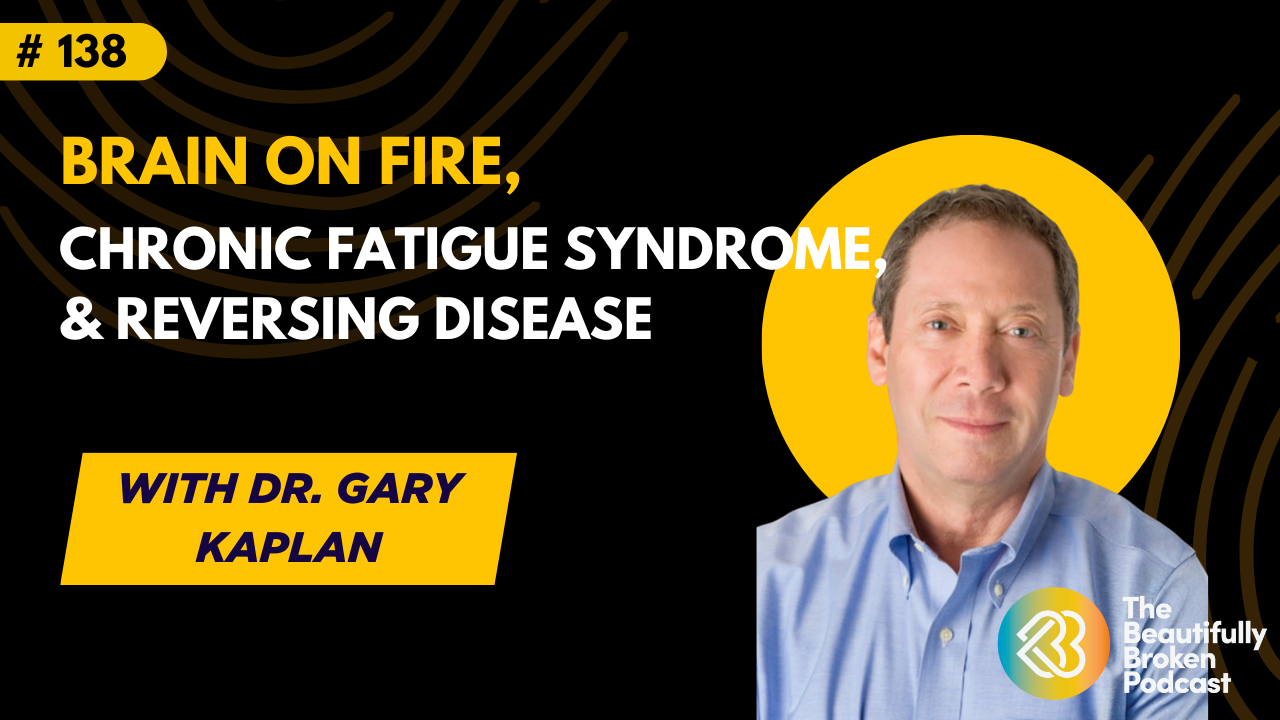
WELCOME TO EPISODE 138
Dr. Gary Kaplan is the founder and medical director of the Kaplan Center for Integrative Medicine. He has authored two books, is a leading figure and pathfinder in the field of integrative medicine and is one of 19 physicians in the country to be board-certified in both Family Medicine and Pain Medicine.
He specializes in what he calls “the brain on fire”—the inflammation of the nervous system that can be an effect of some illnesses. These inflammations cause symptoms of pains and disorders, both physiological and psychological, that then get regularly misdiagnosed because of tests not looking at the bigger picture.
You’re in for a fantastic episode as Dr. Kaplan shares his insights on prioritizing a complete understanding of the mind and body to promote holistic healing. Tune in!


Episode Highlights
[00:00] Dr. Gary Kaplan
[06:15] On How to Start Addressing the Problems in Your Body
[09:51] On Damaged Immune Systems
[18:21] The Markers on the Cunningham Panel
[21:14] A Deeper Look Into Depression and Addressing It Holistically
[30:34] How Exercise Fits Into Dr. Kaplan’s Avatar of Chronic Illness
[34:36] On COVID Resetting the Immune System Negatively
[40:22] The Accessibility of Out-of-the-Box Treatments and Modalities
[42:45] Addressing Possible Psychiatric Misdiagnoses in Children
[47:12] Dr. Kaplan’s Clinic and Operations
[49:42] Dr. Kaplan’s Advice and on Being Beautifully Broken
UPGRADE YOUR WELLNESS
Learn more of Dr. Gary Kaplan’s work:
Website: https://www.brainonfire.org/
Books: https://www.amazon.com/Gary-Kaplan/e/B00H0P3OGU
Claim your free toxicity consult through this LINK
AMD Ion Cleanse: https://calendly.com/ioncleanse/detox
Silver Biotics
Code: BEAUTIFULLYBROKEN
Sphere: sphere.guide
Code: BEAUTIFULLY25
DIY Home Cold Exposure: https://www.penguinchillers.com/product/beautifullybroken/
Cellcore – https://www.beautifullybroken.world/affiliate-products My favorite Binders
Re-Origin Limbic Training: https://re-origin.com/?ref=18
Code: beautifullybroken
LightPath LED https://lightpathled.com/?afmc=BEAUTIFULLYBROKEN
Discount Code – beautifullybroken
BioStrap: https://biostrap.com/order-evo?ref=freddiekimmelp My Favorite Recovery Tracker
Discount: BEAUTIFULLYBROKEN
Fully Vital Hair Restoration: https://fullyvital.com/
BEAUTIFULLYBROKEN15
My Favorite Sauna: Therasage https://bit.ly/39mTxwY
Code: BEAUTIFULLYBROKEN
CONNECT WITH FREDDIE
Work with Me: https://www.beautifullybroken.world/biological-blueprint
Website and Store: (http://www.beautifullybroken.world)
Instagram: (https://www.instagram.com/beautifullybroken.world/)
YouTube: https://www.youtube.com/@freddiekimmel
EPISODE TRANSCRIPT
Freddie Kimmel and Dr. Gary Kaplan (00:00.31)
Ladies and gentlemen, welcome to the Beautifully Brokered podcast. We're going to dive in today and this is a guest I've been waiting to have on for years. Dr. Gary Kaplan is the founder and medical director of the Kaplan Center for Integrative Medicine. He's the author of two books, Total Recovery, as well as his most recent, Why Are You Still Sick? How Infections Can Break Your Immune System and How You Can Recover.
He is a pioneer. is a thought leader in the field of integrative medicine and he is actually one of 19 physicians in the country to be board certified in both family medicine and pain medicine. You have homework. This episode is for that human being in your life who is struggling with a chronic condition. And I need you to listen all the way to the end because Dr. Gary's foundation for total recovery that now lives at brainonfire.org
has a collection of some brilliant lectures, which you are going to benefit from. And I believe in the work he's doing. I believe in the message. I believe in this resounding sentiment that comes back again and again from the best thought leaders in medicine. If we want different answers, we need to start to ask better questions. Let's jump in. Welcome to the beautifully broken podcast. I'm your host, Freddie Kimmel.
and on the show we explore the survivor's journey. Practitioners making a difference and the therapeutic treatments and transformational technology that allow the body to heal itself. Witness the inspiration we gain by navigating the human experience with grace, humility, and a healthy dose of mistakes. Because part of being human is being beautifully broken.
Freddie Kimmel and Dr. Gary Kaplan (01:55.278)
Ladies and gentlemen, welcome to the beautifully broken podcast. have the honor of sitting down with Dr. Gary Kaplan this morning. Gary, welcome to the show. Thank you. I'm delighted to be here. I'm so excited that actually had this was actually a moment of like my ego being like, dude, you're doing it because your team reached out. They're like, we want to talk to the beautifully broken podcast. And I've known about you for a majority of my journey through chronic illness. So it's great to be with you today.
Well, thank you. And I am truly privileged and honored to be here. I mean, your journey itself is quite the story. It's a wild story. And unfortunately, it's not an uncommon one in this. If we want to think about the silo or the container of chronic illness and what that looks like. Gary, I like to do this this way as opposed to read your resume. If you were walking down the street and you pass a stranger and they were really interested in you, they're they're having a dynamic conversation. What would you tell them that you do for a living?
I specialize in treating people with chronic illness and chronic pain. So we see a lot of people who have chronic fatigue syndrome, MECSF. We see a lot of people with fibromyalgia. We see a lot of people who have neuropsychiatric illness in terms of depressions and obsessive compulsive disorder. People who have been kind of dismissed by the medical profession as, know, you're kind of crazy, but you're not getting better with any of the medications and the stuff we're doing. We also see a lot of pan-pandas kids.
And I think that in the work that I've done, so these are these acute onset pediatric neuroinflammatories. Basically what I specialize is in brain on fire, treating people whose brains have become lit as a result of infections, which have tripped off the immune system. And now the immune system is attacking your own brain. And so this is something that affects not 15 people, but rather probably close to 20 million people. And I think that there's a huge number of people who have been
seriously misdiagnosed because they've been told they've been diagnosed by their symptoms. So fatigue is a symptom, it's not a disease. Chronic pain is a symptom, it's not the disease. Depression is a symptom, it is not the disease. And so what we need to do is step back and now we understand a whole bunch more than we used to, but we need to step back and say, these are the symptoms and especially when you've got not one, not two, not three, not four symptoms. So you've got sleep disturbance, if have problems with chronic daily headaches.
Freddie Kimmel and Dr. Gary Kaplan (04:24.102)
You have problems with brain fog, focus and concentration. You have problems with chronic pain. And the pain is moving around your body on top of it. So it's not just one place that hurts all the time. You have problems with digestive issues and you have problems with you stand up and you fall down. That's called POTS, post-orthostatic tachycardic syndrome. And so now what we're looking at is these multi-system problems going on where it's not a thing, but rather
It's multiple things not working in your body. And then the question is, what's the unifying factor? As a rule, what the unifying factor is your brain's on fire. That throws off your endocrine system. That throws off your whole immune system is going to throw it off, which is what caused the brain to get on fire to begin with. So that's what I specialize. I specialize in people whose brain are kind of on fire as a result of an infection that's done damage to the immune system and now tripped off with not supposed to say, but what
is what is officially referred to as autoimmune encephalopathy of infectious etiology. So, infections breaking the immune system causing a misstep where the immune system as opposed to just attacking the bugs is now attacking your brain. Yeah. So if we met on the street and you said that to me, I'm not letting you go. We're going to sit down. like, we're going to find a park bench. I'm going to grab either my recorder, my cell phone or my notepad, and we're going to start taking notes. So I love that intro and
is a patient, is somebody who had been through some level of that. I'm amazed. I want to just walk through. so many different directions I could go here. And my brain is on fire right now with excitement because as a patient, you know, what you experience is usually you experience some of the symptoms you mentioned. You go to your general practitioner. You're usually not seen or heard or validated in your lived experience.
Normal labs aren't telling us much. Maybe you get lucky. Maybe you find something. Maybe you don't. And so your next stop for a patient is the internet. And I start Googling and maybe I find that there could be some infectious agent or Lyme disease or toxic mold. But really, man, if I could take you through the 15 years of running through, maybe I'll do a gut test or a stool diagnostic and
Freddie Kimmel and Dr. Gary Kaplan (06:40.4)
I'll look over at here at chronic viral infection. So I'm sort of going around in a circle. making some good discoveries. They're all valid, but where would you start if you're one of these human beings that are experiencing, if they're living in this avatar that you just described? Well, I think the first place you start is with a physician who will listen to you. You need somebody who will not give you 10 minutes, but we'll give you, or it takes her two hours.
So they'll actually sit down and listen and try and understand the evolution of the entire story. So we're very interested in knowing, you know, the question I ask people when they come in is when was the last time you were in excellent health? And the first thing, by the way, almost everybody does is lie to me. I was last in excellent health until three years ago when I developed this infection. And the next thing you know, I've got fatigue ever since. And say, And so we take that information and we work with that. then
As we take the history back, we go, okay, you have any history of migrants? Oh, yeah, I've had migrants since I was 12. Well, since you're now 32, migrants have been in the picture for quite some time, haven't they? And any problems with any psychiatric issues? Well, yeah, I had eating disorders when I was a teenager. And you start taking it back and you start getting a much bigger picture. And then we also ask different questions. So we're looking at you ever been in a water damage building, right? And so
That is possible exposure to mold toxins, history of tick bites. So we're asking a whole bunch of different questions. We're literally reviewing your entire medical history so that we come to an understanding of how you got to where you are. Because the other thing that people misunderstand is that the issue isn't necessarily the event, but it's everything that's the soil in which everything happened. So what was leading up to this? And we find there's a percentage of our patients
who were abused in childhood. Childhood abuse is a great big deal, okay? Not only from the immediate standpoint in terms of the endangerment of the child and the immediate damage it does to the child, childhood abuse has very serious physiologic consequences. You're at much higher risk of developing autoimmune disease. You're at much higher risk of developing heart disease later in life. You're much higher risk of developing obesity and diabetes. Childhood abuse has long lasting and profound physiologic effects on the body.
Freddie Kimmel and Dr. Gary Kaplan (09:04.181)
So that becomes an important piece of information for us because we know we need to process the trauma in order to help get you better today for whatever is immediately happening because these things interfere with the functioning of your immune system. How's your nutrition been? How long have you know, I've had irritable bowel syndrome since I was, you know, eight years old. I've had problems with constipation. I've had problems. We picking up that information. Now you're starting to look at people very differently and you're going, okay, wait a minute.
Here's the evolution of the story. It's not an event. It's a process. And then how do we put all that together in order to understand how you got to where you are today? And more importantly, how we can get you back out of that so that we can legitimately return you to optimal health. Yeah. The term that really lit up for me in there was damaged immune system. And I have this belief that yes, maybe there are these incredible
We're overwhelmed with environmental toxicity or mold or maybe a unique infection, but it's my immune system that's chosen one day to react in that violent way. And so there's this line in the sand where all of a sudden it's a, maybe it's a facial tick or it's incredible brain fog. And so how do you look at from a clinical application of damaged immune system? It's, I'm assuming there's some type of a
a heavy handed immune response or it's almost like a memory to a trigger that we're going to just always react to this way when we come into contact with this pathogen. Yeah, it's an important question and a complex question. So on the far end of things we're looking at, so the immune system damage is kind of the end result of a bunch of things that happened before that. So on the far end of that, when we're doing assessments of the immune system, we're running
tests such as the Cunningham panel, which is a test that's been approved for treatment of pans panas, but we're also using it in adults. There's a cell trends where we look at antibodies to the peripheral nervous system and a cytokine panel that Dr. Bruce Primorance has developed specifically for post COVID syndrome, but we've been doing research with him looking at our post treatment Lyme syndrome patients. And we're looking at inflammatory proteins that are produced by
Freddie Kimmel and Dr. Gary Kaplan (11:24.165)
a number of different cells trying to understand how the inflammatory load is in the body as well as where specifically that's coming from, whether it's coming from the acquired immune system or whether it's coming from the innate immune system. so let's back up. When we talk about this stuff, you have to think in terms of the body being divided into the innate and the acquired immune system, where you're talking about immunity.
And in the acquired immune system, let's start with the immune system. innate immune system is our first responders. Okay? So what does that mean? Think of the innate immune system as you're going to renovate your house, you've had water damage to the house. These guys are the first crew to come in and what they're going to do is tear everything out. All right? They're going to get rid of all the water damage walls and flooring and they're going to start prep for your living room to be fixed by the general contractor who's going to come in and repair it.
great, except that if these guys are a little too overreactive, what they do is they look at your dining room and go, let's tear that up. And then they look at your kitchen, they go, let's tear that up. Now, it's not a good thing for your house. It's a much worse thing for your brain. So now what happens is you've got an innate immune system, which in the brain is essentially these microglial cells, but also mass cells and astrocytes are the main players in the central nervous system.
They're hyper reactive and they're now doing lots of damage. How much damage? If you have beta amyloid plaques in your brain, which has been associated with Alzheimer's, okay, if you have lots of those, you don't necessarily have Alzheimer's. If you have microglial activation, that is the innate immune system really firing off inflammatory molecules, you have Alzheimer's. So that
activity or overactivity of the immune system is crucial in any of a number of diseases. So Alzheimer's and Parkinson's and multiple sclerosis, these are all neuroinflammatory diseases. But so is chronic fatigue syndrome. So is chronic Lyme. So is these POTS, PANDAS kids. So is chronic depression and bipolar in particular is a neuroinflammatory disease. This is where the brain is inflamed. And so when we talk about inflammation, we need to understand
Freddie Kimmel and Dr. Gary Kaplan (13:46.058)
what's causing the inflammation. And in the brain, those cells that I just mentioned are our targets, and then there are ways to go treat them. The other piece of it is the acquired immune system. The acquired immune system is where you see they make antibodies. Okay, so we give you an immunization and your body builds up antibodies. Now these are highly specialized cells that attack very specific bugs. So if we give you immunizations for COVID, really good against COVID.
not of any value whatsoever against flu, not of any value against herpes. And so they're very unique and specific group of cells that look for that bug and no others. Now, if that gets overreactive, so there's a process called molecular mimicry where in Lyme disease in particular, but strep infections can do this in kids. We see this in chronic Epstein-Barr, chronic mono. There's a number of different infections which can
pause the immune system to overreact and when it does so, it then says, well, wait a minute, this tissue over here looks exactly like the bug. Well, that tissue happens to be your brain. So now what it's doing is it's attacking the bug and your brain. So now you have a neuroinflammatory disease. So inflammation is about damage being done to tissue on an ongoing basis and it creates lots of symptoms. What does it create? It creates depression.
creates brain fog and focus and concentration issues. It creates fatigue, creates sleep disturbances. It creates problems with chronic pain. And so on and on it goes. And now you've got all of this stuff going wrong when the bottom line of what's happened is there's an infection that was or was not properly treated. The immune system has become hyper reactive on both the innate and the acquired side. And now that piece of the puzzle needs to be put in place and addressed.
And so you have to understand all of the components of what's going on. In addition to you have to understand what potentially was the setup. So you get back to first of all genetics, but we're working on genetic. We're not there yet in terms of understanding it, but clearly not everybody gets an infection and gets sick like this. Right. So there's some genetic predisposition, but for instance, celiac disease, celiac disease is a disease where you have an autoimmune disease to gluten wheat.
Freddie Kimmel and Dr. Gary Kaplan (16:12.398)
right? And it does horrific damage. Interesting, quick side story. A kid come to see me and let me define a kid by the way. The definition of a kid is anybody younger than my oldest daughter. My oldest daughter is 38. Increasingly, I'm running the pediatric practice. So this kid comes to see me, his parents brought him in. He's 17 years old and he's depressed and attempted suicide, tried to hang himself.
multiple psychiatric evaluations and ultimately nothing was working for him. I saw him and worked him up from the standpoint of his brain being on fire. And in the process of that, one of the things we look for is celiac disease because celiac disease is not infrequently missed. And indeed he had celiac disease. We treated the celiac and about 5 % of celiacs will present with only neuropsychiatric issues.
They'll present with depression, they'll depress with obsessive compulsive disorder, anxiety disorder, and no other gastrointestinal symptoms, so no tummy problems. So indeed with him, when we took him off gluten and we did some other work in terms of repairing the gut, which had been inflamed and leaking, within a year's time, he is off all antidepressants. He's 100%. And I've seen him now for a number of years and he can change, just periodically his follow-up. And he's done spectacular since.
So the problem with him wasn't depression. The problem with it was celiac disease. Yeah. Don't ask the question. Don't get the answer. It's better questions. If we want different answers, there's so many, I just felt my heart jump in empathy from so many parents out there that I've talked to that have so many, you know, that's the thing when I, when I go do an event or I speak and I generally offer some part of my story, I always have, it's like four or five moms come find me in the back of the auditorium and say,
Can I talk to you? And I know what's coming, you know, my Cindy or my Peter or my Billy and, these kids are there in these 19 to, you know, late twenties failure to launch never, you know, this came on at the end of high school and they just never, it never resolved. I want to walk back just for a minute from my understanding. It's the second time I've heard it mentioned in like two months, the Cunningham panel from my understanding, it was a different way to look at inflammation in the brain. What kind of markers are we looking at with that panel? What's it look at?
Freddie Kimmel and Dr. Gary Kaplan (18:36.198)
So there's five markers on that panel and what they're looking at is antibodies to specific receptors in the central nervous system, basal ganglion specifically that region. So what does that mean? Nerve cells have receptors and without those receptors, they can't understand anything. I think of them as ears. And so if you have an ear for serotonin, you can hear serotonin when it gets released in the system. If have an ear for dopamine, you can hear dopamine when it gets in the system.
If that's damaged, you can't hear anything, right? So what these antibodies do is they damage the receptors on the nervous system. And the end result of which is the nervous system gets really dysregulated. It can't function properly. And so what happens in these kids who develop pans-pandas, you get really bizarre behavioral problems. You can get problems where they go into rage attacks.
I had one kid who did thousands of damage to the household. Sweet, sweet kid, really wonderful kid in between, but clearly distinct events where he would go into these rages that would last a half hour and then he'd be exhausted. They're a type of seizure. But they don't show up as a seizure if you do EEG studies on them, if you do electroencephalogram studies on them. So this confuses the picture and the neurologist says, well, know, he's just crazy. No, he's not crazy. He's got an inflamed brain.
and you didn't ask the right question. So if you use the wrong tool to look at the problem, you ain't going to fix it. So the thing that people need to keep in mind is, if you're sick and the tests come up negative, then we haven't done the right test yet. It's really that simple. And unfortunately, too often docs do the testing and say, well, everything's fine. And for instance, Lyme testing is notorious. Basically the standard testing for Lyme is
equivalent to toss of a coin, or they do the Lyme testing much too soon. So I've had people who get a tick bite and then get it tested for Lyme disease and the Lyme disease is negative. Well, I think it's got to be negative because what you're looking for is a body's reaction to Borrelia, the causative agent, or Dolphi, the causative agent of Lyme. But that doesn't happen for a week or two. So you're not going to see an antibody buildup. So if you do the testing too soon, you'll miss it. And then if you do the other testing, which is typically a Western blot at this point in time.
Freddie Kimmel and Dr. Gary Kaplan (21:02.141)
50 % chance of getting it by standard labs. We need specialized labs in order to get us much better information. And so there's lots of controversy in terms of the diagnosis of Lyme disease, but for the most part, most cases get missed. Yeah. And with that, know, Lyme again, in this unique container, in this audience that I'm in, and I get to field all these questions just as a result of who I'm speaking to. I often hear people start the conversation with, have MTHFR. I have.
Barton L infection. have chronic Epstein-Barr. people really get focused on the pathogen. And maybe it's a story we create in our heads. It is the problem of the symptoms that are downstream. What's your feeling about that? I'm sure they're both valuable. We have to identify the imbalance. But at the end of the day, what are people looking to do to experience an improvement in their symptoms? Well, so you mentioned MTHFR. MTHFR is a genetic issue. that
because there are two snips and depending upon how damaged those are is durability to methylate folic acid. If you can't methylate folic acid, then it can't be used in the brain appropriately. So that will lead to depression all by itself and that will lead to non-responsive depression when you're trying to treat with standard antidepressants. So, and by the way, the antidepressants for the most part are really anti-inflammatory.
All right. was a study that just came out. Serotonin was like serotonin was the problem with depression for decades. Right. Not decades. All our parents were on Prozac. Prozac. Everybody's got to on Prozac. And it's not that Prozac's a bad drug. The problem was the reasoning behind it was incorrect. So the thinking was that there was a serotonin deficiency. There is no serotonin deficiency. Nature published an article within the last month that said
great study that said, look, the problem is not an efficiency of serotonin or an excess of serotonin. Because what they found was when they measured serotonin, and by the way, the only way you can do that is through cerebral spinal fluid. You cannot measure it in the periphery. That's not a test we're all going to go run to doctor's data for. There's a lot of stuff. We'll rely on the research in order to bring it into the clinic and figure out what we're doing. So no, we're not going to subject you to a spinal tap.
Freddie Kimmel and Dr. Gary Kaplan (23:24.434)
But I can know by virtue of the work that other good researchers have done and say, well, hey, the problem isn't serotonin because they've looked at people with depression and they've looked at people who weren't depressed and they found no difference in the levels of serotonin in their cerebral spinal fluid. So that wasn't the problem. The problem is inflammation in the central nervous system. And the SSRIs, selective serotonin-reuptake inhibitors and a number of the other antidepressants actually work as anti-inflammatories.
And so what they do is reduce inflation. There is a place for them. They're extremely useful. But I think what you need to do is dig a little bit deeper and say, okay, what else is there? And say, what am I missing in terms of what's going on here? And what's lit the brain? What caused it to be on fire? And so you have to walk through, we talk about the psych social history in terms of potential child abuse or other trauma that occurred with post traumatic stress syndrome. That's maybe piece in the picture.
But you're also looking at what your diet look like, right? What your digestion look like. I mean, if you're feeding yourself crap, or if you're drinking way too much, then you're doing damage to yourself. So what are the things you're doing to weaken your own immune system? The gut is essential for the function of the immune system. 75 % of the serotonin receptors in the body are actually in the gut.
and production of serotonin in body. The other thing is if the gut's leaky, the brain's leaky. So if the gut's unhealthy, the brain's unhealthy. You got to work both ends. And so there's lots of things you have to do. It's not just a function of here, treat this symptom, take this pill, treat this symptom, which is unfortunately how most people are oriented. It's, okay, what's the problem? How do we fix the entirety of the problem so that we get you the result you want, which is great health?
Ultimately, what people care about is they want their energy back, they want their sleep back, they want the pain to go away. Those are all important things because that's about the quality of your life. So what we want to do though is find out underlying what's creating that problem so that you have those symptoms. They want the brain fog to go away. You know, had a kid I was working with who had mold toxicity. He couldn't read. If he read for more than 20 minutes a day, he crashed. I mean, he was completely wiped out.
Freddie Kimmel and Dr. Gary Kaplan (25:43.113)
because using the brain, okay, such as for reading, requires effort. It's not just physical effort, it's effort in terms of thinking and paying attention to things. And so in order to help him, one of the things we had to do is you don't want people crashing because that creates the inflammation even worse. So what you want to do is we backed him off, we literally had him reading five minutes a day. Five minutes, stop for 15 minutes, hard stop, rest,
and then you can read again. And what his problem was, the underlying problem was mold toxicity. And these are people who live in a house where they're very comfortable. And we went three times through the house trying to figure out where on earth the mold was. The mold was behind his wall all over his bedroom. And we literally had to drill a hole in the wall to have the mold inspector find this thing. And at the point that we ripped all that out,
being a dramatically better. energy came back, his focus, his concentration. And we also had to do things in order to remove the mold toxins. Because mold toxicity is also a genetic issue, meaning you don't have the genes that make the enzymes necessary to break down the mold toxins. Okay, fine. Then we have to give you other things to escort the mold toxins out of your body. So giving you things like glutathione and giving you binding agents such as charcoal and betanide clay.
There's a number of things we can do in order to help remove the toxins from your body when you're not doing it for yourself. That affects maybe about 15, 20 % of the population. Somebody else can be in the house and not have any problems whatsoever, but you are really disabled because your genes are lacking in terms of their ability to detox the mold. We've seen this in a couple of really dramatic situations where spouses
where the husband or the wife is completely fine, the other one is deathly ill, and we've been unable to remediate the house, literally they had to move out of the house in order for the spouse to recover. So mold toxicity is a big issue, it's an important issue, and a piece of the problem. Sometimes it is the problem, but more commonly it's a piece of the problem because mold toxins are neurotoxic and immunotoxic, meaning they start to damage the immune system.
Freddie Kimmel and Dr. Gary Kaplan (28:08.053)
This is part of the setup so that when you come and now you get an infection, now everything goes haywire. Yeah. Everything goes off the deep end. Yeah. It's wild. We need to make pie charts for people. We need to make the environment. And I feel like it all needs to be in a pictograph because I remember trying to navigate this with a foggy, moldy brain with chronic fatigue. And it was just like, head wanted to explode. mean, luckily, you you find a way through.
But at the time it was like, wait, I'm holding my shoelaces and I'm not sure what to do right away. I had that very, very definitive moment. Red light therapy has been clinically shown to help increase energy, circulation, increase testosterone production, workout recovery, hair growth, improve the depth of fine lines and wrinkles. I love red light therapy. It works. You stand in front of a panel naked, you turn it on, you repeat, you reap the benefits.
I think the only challenge for the customer with so many lights on the market is how do I choose the right light for my body? I use Light Path LED for the following reasons. They include a three year warranty. They have panel options with pre-programmed frequencies or different pulse rates to add the benefit of pulse light to the body. Even Andrew Huberman, the famous neuroscientist from Stanford University is celebrating the breakthroughs happening around 40 Hertz. Will this panel goes from one
9,999. Finally, they go deep. Lightpath LED is 60 % near infrared. So that spectrum is the range that penetrates deeper into the tissues of the body. And finally, I have to mention after purchase support. When you have a light and you purchase technology, you want to know how to best use it. And there is a 7,000 member group dedicated to helping you do that at Lightpath LED.
All of my mentors speak of mitochondrial dysfunction as the root cause of chronic illness and Red Light is safe, it's effective, and it's an easy way to support full body wellness from home. So check out Light Path LED and use the code BEAUTIFULLYBROKEN for a hefty discount in the checkout. Also, if you're interested in joining the Light Path LED team, join their affiliate program and get benefits from sharing a product that you absolutely love.
Freddie Kimmel and Dr. Gary Kaplan (30:31.192)
Team Lightpath, I'm out. You know, as we talk about all these things, the different ways in which we can use binding agents or supplements to help the body, I was listening to Andrew Huberman the other day and Peter Atiyah, and it was really interesting. Now I want to just frame it as they were talking about optimization and they were really talking about longevity, right? So we'll go out of the chronic illness container once. We'll say people who just want to kick ass in life.
And I thought it was fascinating. It was like, you know, nobody has any business talking about any supplement until you can do these. And he talked about like these 10 things. He's like, VO2 max. Hold yourself on a pull-up bar for two minutes at 40 years old. Carry your body weight in each hand. And they're pretty physical. You know, for me, I'm like 170, that's like an 85 pound kettlebell in each hand for two minutes. They're not crazy, but they are intense. A two minute wall sit.
in a squat. And what he was offering is he's like, there's so much energy and there's so much functionality coming from a body that can do these things from electricity and electricity standpoint, that a lot of the problems that we supplement for self-correct, where does movement and exercise? have this theory. like, I was like, there was so much of my chronic illness journey that I set exercise to the side. said, no way I'm too sick. I'm too tired. You don't have time for that, Freddie. I wonder in your opinion, where does exercise or movement
come into this paradigm of this avatar of chronic illness. Yeah, it's an interesting balance because when you're really sick, movement can become a problem. But the reality of the matter is exercise is the single best anti-inflammatory in the central nervous system. So regular exercise is really crucial. One more time for the people in the back. Exercise is the single most important and best anti-inflammatory for the brain. Period.
So the basics have to be in there, right? Exercise, and exercise is going to be different things for different people, right? I don't want you crashing. That's the last thing I want you to do because that makes things worse. What's crashing? Crashing is you're completely exhausted, brain fogs worse. So I had COVID a few weeks ago, right? So I got to have a taste of what my chronic fatigue patients go through. That was your first one? My first spout of COVID, yeah. Yeah, okay. I'm good. Great.
Freddie Kimmel and Dr. Gary Kaplan (32:54.31)
I don't know. Some people have had it like eight times now. So I just I ask my mom's had it like three times. I have a friend who had Lambda Delta and then got all my chronic. He declared himself a paternity. So but no, we've been very fortunate and I'm big on vaccinations and we take precautions. We're wearing masks. We're, know, we're doing the appropriate things, but very fortunate. But so we went out to dinner and
We have this Vietnamese restaurant that we like, which is about a mile from us. And we're two weeks after we've been sick. We're no longer shedding. And so we're testing negative. So we go to walk to the rest of my wife and I. And I like exhausted. I can't breathe. I'm like, my God, am I going to make it a mile right now? I just did a 10 mile bike ride this morning. OK, so that's that's my norm.
So I'm trying to walk a lousy mile just to get to dinner and I am like, I'm short of breath. I'm completely crashed. We got there, sat for 10 minutes and then was able to order dinner and eat dinner. Then we walked back and it was even worse walking back. I got home. was everything I do to get upstairs and go to bed. And I'm like, my God, my people are living like this every freaking day. Yeah. So
You really, I'm fortunate, mine was acute and then I did what I normally do to get people better, by the way. So I got my acupuncture treatments and I got high dose vitamin C and glutathione IVs and NAD IVs. And so I did my rehab on me that I do for everybody else. We have a post COVID clinic as part of the center. And so we've got an idea of how to manage this and actually get people back on their feet. So I did all that and now I'm back to being able to do everything I normally do.
But it took a month. You know, it took a good month to fully recover from this damn bug. This bug is serious. Nothing to joke about. Yeah. I have two sidebars on this topic. have, what was the second? I guess it was Delta. Delta was the second one. I got a bad, when I say bad, I mean the pain in my spine. Like I was laying on the floor. was, it was so intense in my spine that I like, I couldn't sleep. I just laid there and really just did some moaning and stuff. You know, I had some great, you know, I got everything.
Freddie Kimmel and Dr. Gary Kaplan (35:17.402)
I got an Ozo machine in my bathroom. have like pulse electromagnetic field, I coils everywhere and I could always get relief, but the pain when it would come back, I was like, wow, this is intense. Interestingly enough, if I had one thing that lingers, it's joint pain. Like actually not in the joint, but like almost like a tendon sheath, synovial fluid, weird, it just comes and goes. Sometimes it's gone for four months, sometimes back a little bit, but that's what I managed today. When I say after like,
after the COVID infection, once I got better, it was nowhere to be seen for like 45 days. I was like, my God, it might something, I cured myself. And then it slowly started to trigger back. So I have this theory that maybe my immune system got like this really hard reset from my infection possibly. Now I've heard both sides of it.
because I've talked to many other people with long-term chronic Lyme and mold that they are ever since they got COVID, they're worse than they've ever been. Like it just took them absolutely down through the floor. So is there any possibility that I did get like this almost like a, like when you defrag your computer, you know, when you reset everything? Yeah, no, I think that's absolutely correct. And we've seen both ends of it, right? So we see our patients who
you know, we're doing everything we can to prevent our people from getting COVID because they're already very sick. And sometimes they get it and it's like, wasn't that big a deal. It was annoying. Other times they get it and it's devastating to them. And we're having to do a lot of work to back them up. And this post COVID, by the way, one of the things we've found is if you have just COVID and it's post COVID, post COVID by the way, now defined as symptoms persisting past three months. And the reason it's past three months is because almost everybody ends up with something lingering
for a couple of months afterwards. This is a bad bug. You really want to not get this bug. And so if we have people who just have straight post COVID and everything else is okay on them, we can actually get them better fairly quickly with a combination of medications and supplements that we utilize, utilizing the cytokine panels that Bruce Patterson developed. But if they've got something underlying, so if they don't respond to that immediately,
Freddie Kimmel and Dr. Gary Kaplan (37:42.982)
meaning within two months, what we find is that there's something else going on. And inevitably we've been finding Lyme disease in these people, we're finding mold toxicity in these people. So now you got to step back and go, okay, what'd we miss? And so there's a percentage of those people who the COVID was the thing that tripped them over the edge and they were managing this other stuff prior to that. So you're right, infections build on each other and can crash the system. We also see people who get COVID.
And then they get the immunization and that creates a reset. And the next thing you know, they're not having symptoms. So lots of things can improve the immune system. The problem is if you're seeing symptoms coming back, then we're missing something, right? There's something else sitting there that we haven't quite figured out. But the good news is we now know that it's possible. Yeah. Yeah.
That's wild. so I'm like, don't even want to go down the rabbit hole like the immune intervention. It's so triggering to people, even though I've heard people on both sides of it. I've had people have very, very, very, you know, again, their kid was doing pretty good. And now they're it's been another year of them being back in bed because the immune system is so sensitive. then we've got this container of I remember at the time I was like, I was so nervous. I was like, I've been through cancer and mold and Lyme and chronic virals. I was like, I don't know what my immune system will do. I just want to
I want to trust like the work that I've done. And that's all I was like, please don't shame me into doing something that I don't want for my body. And that was my only conversation other than that. And I'm like, totally like you. I'm like, I want to be safe. I want to do the right thing. And I just, I don't know what that is with my medical history. I honestly, and truly that was like always my answer to people. was like, I don't know. I'm not sure. It's, know, you need a guide without question. These are complex problems. The other thing is with my patients.
My patients have been sick for a long time. My average patient has seen about 15 other docs before I get to see them. And as we clear up what's going on with them and we have an understanding of what the diagnosis is, the other piece of information I have to tell them is, look, I haven't got a magic wand. This is going to take time. And once the acquired immune system is kicked in here, it's not unusual that it's going to take a couple of years in order for them to recover. But we have a path and we have a high probability of getting you back involved.
Freddie Kimmel and Dr. Gary Kaplan (40:02.79)
with your life totally. And that's what they want. They want their lives back. They want their lives back. Yeah. Can I ask you a question? want to just, this is one that always comes up because we start to talk about these things and I'm like, my God. You know, if I listened to this podcast and I was a parent, I was like, I got to go see Dr. Gary. That's where I got to go. And I know from my experience, a lot of times it's like, how are we fitting in these outside of the box labs, testing and modalities?
in a range where I can afford it as a parent. Like what's that solution? Can we make that summit? Like financially managing your way through chronic illness. Right. And that's a huge problem on multiple levels. So one of the things I wrote a book, right? My second book was why you're still sick. And the book was published about a month and a half ago. And the purpose of the book is to put all of this information in your hands. I listed the lab tests that we do.
I listed the various processes that go through in this so that you have this stuff in your hands. Some of this stuff you can do on your own. You don't necessarily need me or a doc like me in order to do this. So you can begin to be your own detective in figuring out what's going on and how to do this stuff. So we gave you the labs, we gave you a number of the supplements and treatments that we do because there's only one of me and there's about 20 million people out there who need this access to this.
So let me explain to you my goal over the next 10 years. My goal over the next 10 years is to find better answers for all of these people. So one of the things we're doing for that is we did an international conference in February of this year, which is available through the Foundation for Total Recovery. So you can go online and for a small fee, can purchase
access to the entire conference. So, give it a month because we're redoing that website because it kind of crashed. There's too much demand on it. But by October, we'll have that site up and you'll be able to access all of those lectures so that you can hear from some of the leading experts around the world about how you can recover and how you can get better. So, we're trying to change the thinking within the medical profession, but we're also trying to put as much information in people's hands as possible.
Freddie Kimmel and Dr. Gary Kaplan (42:28.416)
The next conference that the foundation is sponsoring will be in October of 2023. The Foundation for Total Recovery happens to be named after my first book, Total Recovery, because I took a large portion of the proceeds from that book and created the foundation. Now, the other thing that the foundation is gearing up to do is a research project that will look at kids who are in mental health institutions and in the juvenile detention system. We want to identify what
number of those kids are actually sick, right? That the diagnosis has been missed. We've told these kids that they're broken, they're crazy, when in fact what they are is they're very sick and they need proper medical care in order for them to get better. And it's not psychiatric care they need. What they need is somebody to treat their Lyme disease, the mold toxicity. They need somebody to treat the autoimmune process going on in their brain that's damaging the nervous tissue. How important is this? Natalie.
Natalie's 16 years old, okay? Not a real name, but nevertheless, Natalie's 16 years old. Mom brings her into the office. Natalie, since age 10, develops obsessive-compulsive disorder. Natalie then develops problems with cutting behavior. Natalie then gets hospitalized psychiatrically, okay? Multiple attempts with antidepressants, multiple attempts with an anxiety agent, has periods of time where she's a little bit better and periods of time where she's worse. Okay.
What do you think the self-esteem is of a 16 year old who's been hospitalized psychiatrically, been told she's been crazy since age 10? Right? So the damage that's been done to this poor child's self-esteem is just immense. I work her up and I find that she has Lyme disease, CDC positive Lyme disease, not kind of maybe we'll debate Lyme disease, CDC positive Lyme disease. The cutting end panel shows clear autoimmune inflammation in the central nervous system. So this is a child.
who has been misdiagnosed from the get-go. Her real diagnosis was PANS, the cause of which was the Lyme disease, and she's got an autoimmune process affecting her brain. She's not crazy. She's not psychiatrically unstable. What she is is the brain inflamed, and these are the symptoms of what you're seeing. So for six years, this child's been told she's crazy, when in fact, what she is is very sick. And now I go and I talk to the psychiatrist and I say, okay,
Freddie Kimmel and Dr. Gary Kaplan (44:53.88)
Here's what we got in psychiatry, it's not Lyme disease. Psychiatrist says you're wrong. This is completely incorrect. And so now I've got a parent caught between me and the psychiatrist, where the psychiatrist is telling him I'm crazy. And I'm telling him, well, no, this is really the problem, what you need to do to get better. How many kids are out there like this? How many kids have been misdiagnosed? How many kids have been missed? We need to run this panel on some of these kids that are walking into these schools. Absolutely positive.
And when with firearms, I mean, that's the thing that always screams to my head. was like, is that kid living in mold? Does he have an inflamed brain? Has he been, you know, assaulted as a small child? And this is just like reverberating inflammation in the system. I always think about that. Right. So we have all of these kids who are really struggling and suffering. They're good kids. And now we need better answers for them. Yeah. And telling them they're crazy isn't the right answer for the
They're sick. How are they sick? What do we need to do to help them get better? And that's, that requires asking different questions and taking a completely different frame on what's going on with these people. Yeah. I'm so excited for this, Gary, by the time this goes out, your website will be on. So people will be, I'm going to, I'll make a outro for this. So we'll do a homework assignment. And I think, I think of all the people that listen to this podcast, I don't know why you wouldn't go watch these lectures. At least.
At least because this really is a new conversation because we're really talking about, we're talking about the inflammation in the neurological patterning in the brain. And then we're getting all these downstream effects, which are all varied. as opposed to treating these, these symptoms, we're really redefining what the root could be. And I think that's a very new conversation from what I've heard. And you know, it's almost like we're in this like tier three of like,
chronic illness education, right? We had like the old, old, like the Richie Shoemaker. So we're just like breaking out of the scene and saying, I think something else is going on. But now we're starting to get more defined. There's more education. More people are, I don't it was like 400,000 people diagnosed last year with like just Lyme. Right. And so we're having a better conversation, better questions. This is going to be a homework assignment. That's an action step for everybody. And then Gary, just to speak about your
Freddie Kimmel and Dr. Gary Kaplan (47:15.15)
clinic and your operations, where are you located? and would you tell, is your establishment someplace you would implore people to reach out to? Well, everybody that listens to this, you gotta go, you're going to get in the car and you're going to take a drive. know. So this is what we do for a living. So I have a, my associate, Dr. Lisa Lillipfield, my, uh, nurse practitioner, uh, pre and then we have two nurses. have medical assistants. have
Rebecca Berkson, who's our acupuncturist herbalist. We have four physical therapists who work with us and do a variety of different physical therapies, craniosacral work among them, and we do some work with frequency-specific modulation. We have a psychotherapist, Board Judy Braden. So there's, it's a team, and we have a nutritionist. So it's a team so that we are working synergistically in order to help people get better.
team communicates on a regular basis and helps us understand different perspectives in terms of how we can help people heal. You can see individual members of the team or you can see the whole team. So that's pretty much the way the center works. You know, we're always welcome to help people whenever we can. There's a bit wait list for me to see anybody, which is about six months. But again, that's why I wrote the book.
And that's why I go out my lecture and that's why we do the conferences and that's why we do the research because I need more docs doing what we do. I need more people out there doing what we do so that more people can get better. More people can be respected. More people can actually be listened to, heard, seen, and find a path to recovery. That's the goal. That's wonderful. I celebrate your mission and I love that clarity. So everybody heard that. We're going to watch the lectures.
we're going to get the book. So I'll put all those links in the show notes and Gary, it's been an absolute honor to have you on. We could do four podcasts. I think we could just do one on, on pans panda or just pots. You know, there's so many people that have these unique questions. can do one on sleep. That's all another thing, but didn't touch on. I know. I know. It's always been my experience. And for me that 99 % of my healing happened with my self care. Yep.
Freddie Kimmel and Dr. Gary Kaplan (49:34.732)
And the conversation I had with my own brain is we as we are on this platform, right? The beautifully broken podcast, right? Like if you get a magic wand, you can talk to everybody for 30 seconds at home in America. What would you tell them? Sleep, meditation, exercise, nutrition, the real basics of what you do, and that's all in your hands. And you can do all that stuff. And there's a lot of different things you can do to help that. So stick with the basics. Start there.
and then we build on from there. And then what does it mean to you to be beautifully broken? It's a really interesting question. And I think the answer is to understand this is an opportunity for you to grow. This is an opportunity for you to gain some insight into who you are, be respectful of who you are and be gentle and kind and loving to yourself, even though you may be struggling with any of a number of problems. And so healing that relationship with yourself
and understand that you're not bad. There's no moral or ethical issues here. What the issue is, you're struggling with some physical illnesses or mental complications, but you're still a good person and you're worthy of love. You're worthy of attention. You're worthy of being seen, heard and respected. Beautiful. Thank you for being a guest on the podcast. Gary Kaplan, a true honor.
I hope we get to do another one because there's so much we could go into these just different rabbit holes and containers. Your insights amazing. We'll have action steps for everybody in the audience. And this is the beautifully broken podcast. Thank you so much for being here. complete privilege, Freddie. I would love to come back anytime. Thank you for having me. Thank you.
Freddie Kimmel and Dr. Gary Kaplan (51:24.027)
team. Thank you for creating a wave of momentum that is driving season five of the beautifully broken podcast. My heart thanks you for tuning in. And if you enjoy today's show, head over to Apple podcasts, and now Spotify, Spotify is new, and you can leave a review five stars if you loved it. And before you go, I have something really important I need to offer. There are two ways we can build this relationship. The first
is to join my membership program at buymeacoffee.com forward slash freddy set go. You get early access to all the podcasts, bonus episodes, discounted consults, and free webinars covering all the wellness technologies. The second is to support beautifullybroken.world. That's right, I have a brand new website and new store, beautifullybroken.world. Listed on here are all the wellness tools, supplements,
educational courses and products that I absolutely love. Most of them offer significant discounts by clicking the link or using the code. Please know that they don't cost you anything extra. And at the same time, they do support the podcast through affiliations. What? What's that? I just got a message from my lawyers, my internet team of lawyers. They wanted me to tell you that the information on this podcast is for educational purposes only. By listening
You agree not to use the information found here as medical advice. Do you agree? Yes, you agree. To treat any medical condition in yourself or others, always consult your own physician for any medical issues that you may be having. Finally, our closing. The world is changing. We need you at your very best. So always take the steps to be upgrading your energy, your mindset, and your heart. Remember, while life is pain, putting the fractured pieces back together is a beautiful process. I love ya. I'm your host, Freddie Kimmel.