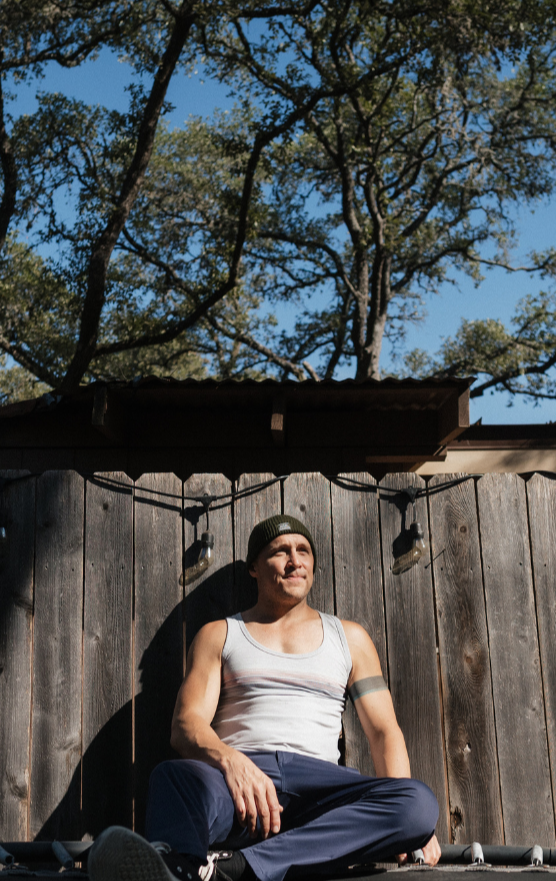
Charging the Cell through Pulsed Redlight with Scott Kennedy
Mar 07, 2022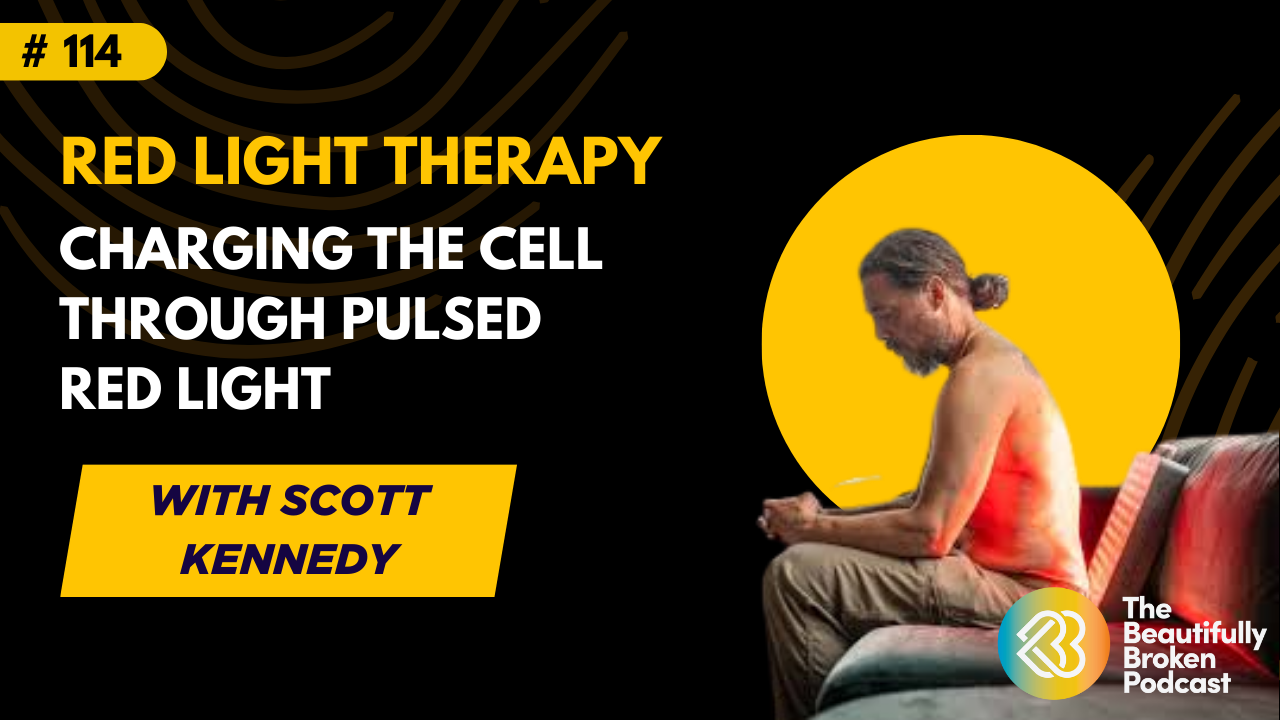
WELCOME TO EPISODE 114
Do you know that the red light spectrum has the ability to increase cellular energy? Did you know emerging research indicates "pulsed" light may even amplify those effects? With the advancement of science, we have learned that exposure to redlight has biological benefits at the cellular level. Photosynthesis is one example: plants take in sunlight which creates changes to allow it to thrive. In fact, the same process can be applied to human beings for internal energy production! In this episode, Freddie has Scott Kennedy join him on the show to discuss the science behind red light therapy, or in technical terms, photobiomodulation. Scott is a certified laser/light specialist, health coach, and the founder of LightPath LED. He’s here to go over how they take specific wavelengths of sunlight to expose to cells and kickstart them to do what they’re supposed to be doing on a higher level. Listen carefully to discover how light can be therapeutic!

Episode Highlights
[00:48] How is the business going in the middle of a pandemic
[03:11] Benefits of red light therapy and the science behind it
[09:34] How red light therapy was discovered and measured
[14:32] Evidences that support the claim that it works
[20:51] Pulse rates and their impacts on specific cells
[27:33] How to use the LightPath LED Panel and the treatment protocol
[31:29] Is there such thing as too much light therapy? What must go with it?
[37:18] What it means to be a veteran-owned business
[39:55] Why you should get a LightPath LED Panel
[44:10] Scott’s visions and manifestations for the company
UPGRADE YOUR WELLNESS
Marion Institute BioMed Course: biologicalmedicine.org
Code: beautifullybroken
Silver Biotics Wound Healing Gel: https://bit.ly/3JnxyDD
Code: BEAUTIFULLYBROKEN
LightPathLED https://lightpathled.com/?afmc=BEAUTIFULLYBROKEN
Code: beautifullybroken
STEMREGEN: https://www.stemregen.co/products/stemregen/?afmc=beautifullybroken
Code: beautifullybroken
Flowpresso 3-in-1 technology: (https://calendly.com/freddiekimmel/flowpresso-one-on-one-discovery)
Medical grade Ozone Therapy: https://lddy.no/1djnh
Code: BEAUTIFULLYBROKEN
AquaCure Machine + Molecular Hydrogen
Website:https://eagle-research.com?ref=24931
Code: beautifullybroken
DIY Home Cold Plunge Experience: [https://www.penguinchillers.com/?rstr=6757]
CONNECT WITH FREDDIE
Work with Me: https://www.beautifullybroken.world/biological-blueprint
Website and Store: (http://www.beautifullybroken.world)
Instagram: (https://www.instagram.com/freddie.kimmel
FULL EPISODE INTERVIEW
EPISODE TRANSCRIPT
Freddie Kimmel and Scott Kennedy (00:00.238)
Ladies and gentlemen, I missed you so much. Welcome to episode 114. We are going to do a deep dive on red light therapy. My favorite red light company, LightPathLED.com with Scott Kennedy. He's a repeat offender if you recognize that name. And today we'll be going over the biological benefits to red light. I often tell people red light therapy or a red light panel is my favorite gateway biohack. It's so simple. You mount it on the wall, you turn it on 10 minutes a day.
You flip and repeat, get some bare skin on that puppy, and just allow the magic to happen. We're gonna do an actually an exploration what happens in the mitochondria and how you might stack this therapy with certain supplements like methylene blue. It's an amazing episode. And as always, Scott has been so generous with the discount code for the audience. And that is beautifully broken, all lowercase. I'm excited for you to take this one all the way to the end of the episode. Please reach out with questions.
Let's get started.
Welcome to the Beautifully Broken Podcast. I'm your host, Freddie Kimmel, and on the show we explore the survivor's journey. Practitioners making a difference, and the therapeutic treatments and transformational technology that allow the body to heal itself. Witness the inspiration we gain by navigating the human experience with grace, humility, and a healthy dose of mistakes. Because part of being human is being beautifully broken.
Ladies and gentlemen, welcome to the beautifully broken podcast. We are here for a season four spectacular event. I'm here again for another repeat offender on the podcast with Scott Kennedy. Scott, welcome to the show. Freddie. How you doing, man? I'm doing well. How about yourself? I'm doing good. It's been a couple years. No, we interviewed, I believe in the middle of the pandemic up in Redding, Connecticut, in the barn. Wasn't that right?
Freddie Kimmel and Scott Kennedy (02:02.701)
It was. Wow. A lot of time has passed. A lot of things have happened. A lot of hours of red light therapy have gone by. And and I'll say the reason I'm having you on is because we're to talk about red light. We're going to talk about red light, L.E.D., the beautiful wellness and healing powers of red light spectrum and how that exists in nature. But I I feel like if I go and look at a picture of myself from
beginning of a pandemic, almost feel like my skin looks better now than it did almost a year and a half ago, which is pretty incredible that these lights really do work on that very... I mean, we can call it shallow to consider a biohacking event that makes the skin look better, but it's something that I notice every day and people often comment on. No, absolutely. Let's just check in. How has the pandemic been for you with business?
Light path LED, how have things been going as far as someone who is having a physical product being sold in the middle of a pandemic? Well, certainly we've dealt with supply chain issues. We've dealt with having difficulty getting certain parts, but we've definitely seen an uptick and people coming to light therapy through the pandemic. And I think a lot of it has to do with where they're starting to see
alternative ways of getting healthier. They're also noticing a lot of people through their pandemic that their anxiety is increasing, their depression is increasing, and they realize how light can be a benefit to them. And of course, whenever we're going through any kind of mental type illness, whether short term or long term, that has an effect on the body as well without a doubt.
So I think people have started to, because they were more homebound, they're trying to create a little mini biohacking center right in the confines of their living room or their bedroom. Yeah. Yeah. I couldn't agree more. I see that in the other industries that I have my hand in, especially things like amp coil, pulse electromagnetic field, red light therapy, saunas. I think those are the big three that
Freddie Kimmel and Scott Kennedy (04:24.942)
for very affordable price point that you can bring in your home. You don't have to leave the home. And all of sudden you've got an area where you can not only mind your own mitochondria, mind your own health, but that of your family. I think bringing it home in the middle of the pandemic, that's been a game changer for a lot of these companies with a physical product that fits in the right price point. And for me, I have to say, because of the value that Red Light brings and its price point, it's usually my first recommendation for people.
because it is so affordable. And I want to just jump right in and let's talk about, okay, we're talking about red light, red light therapy. If this is the first podcast you've ever heard that there is biological benefit to using a red light, led panel, or looking at natural red light, what's the mechanism of action in the cell? Why does red light help the body? Sure. So we'll delve more deeply into the science to give a
kind of a quick overview. Like you see a couple of panels behind me. if people are seeing this for the first time, they're like, okay, where's this light even coming from? So all we take in is specific wavelengths of light. Some of them are in the color spectrum. So you may see red, if you've heard red light therapy. Some may be in the near infrared, which is just outside of the visible spectrum for our eyes to pick up. Some of them are in other colors as well. But what we learned through science is that
When we can get really specific with the wavelength, we can get really specific with the power density, then what we've seen is an actual change in cellular activity. So an easy example is photosynthesis with plants. Plants takes in sunlight and that creates all kinds of changes to allow it to thrive. Now, if I just put it in a dark space, it wouldn't survive for very long.
I could bring that same plant inside, use a specific growth plants and get the same effect of sunlight but inside. So in essence, that's what we're doing when we talk about red light therapy or technical term photobiomodulation, as we're taking the specific wavelengths of sunlight that we know through science has an effect, a positive healthy effect on the cells. That's basic, easy,
Freddie Kimmel and Scott Kennedy (06:48.536)
overview of it. It's in essence, kickstarting the cells to do what they're supposed to be doing, but on a higher level. So let's delve in deeper to this. So yeah, take us there for the biohackers in the audience that want the deep dive. Let's just go. So mitochondria, we remember that in high school, that's the powerhouse of the cell. That powerhouse, the mitochondria produce ATP, adenosine, triphosphate. That's the energy
cellular energy that our body uses for all kinds of activity. So how do we even get to that point? Generally speaking, we get ATP through the process of foods, water, oxygen. So when we break down what we eat, the majority of our foods are comprised of proteins, fats, lipids, polysaccharides. As that gets into the stomach and into the intestines,
The proteins gets broken down to amino acids, polysaccharides into sugar, and then to glucose, fats into fatty acids, glycerol. These then take another step into the cell where they're oxidized through a process of glycolysis. And the end result is a form of CO2 that then goes through, remember, the electron transport chain. That's the mitochondria cellular respiration.
So it goes through the four stages where it gets broken down further. At the final stage, cytochrome C oxidase. That's where an actual pump that is turning, rotating brings oxygen, brings the CO2 together, can then pump out what is called ATP, which is a nucleotide. That ATP.
It's a chemical fuel. It's used to drive metabolic reactions. It helps transport substances across membranes, helps the mechanical work just as simple as muscle movement. So it's absolutely necessary to have this going on in our body. So where light comes in is at that very last, when I mentioned cytochrome C oxidase, that last stage of the electron transport state reaction.
Freddie Kimmel and Scott Kennedy (09:03.987)
That's where light is actually being absorbed and it helps to kickstart that pumping action so that more ATP is actually being released. Now, why do we need more ATP released? Because in many cases due to illness, stress, toxicities, viruses, mold, bacteria, poor diet, age as well.
that that pump gets blocked. It gets blocked in many cases by too much nitric oxide. Nitric oxide is hugely important for the body, but everything in moderation. We don't want too much of that blocking that pump. So what light is actually doing is that when it enters, it's disassociating that nitric oxide. That's allowing that pump to turn to produce the ATP energy.
Now the nitric oxide is hugely important for basal dilation. So when that nitric oxide leaves, it goes into the bloodstream, increases basal dilation, not just in the blood vessels, but in the lymphatics as well, increases the oxygen also, again, hugely important for any tissue in our bodies. So that's kind of the quick dive in to the science of how naturally reproduce ATP and how we can use
light therapy to increase that even more. I just want to I want to recap just from my understanding. So I'm seeing our fuel going to the body in the form of food, digested into those substrates, digested even further into a molecule that can enter the cell. And then what we're saying is when light therapy is present in that very last stage, you said cytochrome oxidase, cytochrome oxidase, correct, cytochrome oxidase that
the red light therapy is actually releasing or making more available nitric oxide for the process of the production of ATP? Correct. Yeah, absolutely. And how I guess my next step is, is, oh my God, how did we figure this out? And how is that measurable? Yeah, good question. You know, we initially started when lasers were invented back in 1960 and soon after Andre Messer wanted to test out if it would cause cancer.
Freddie Kimmel and Scott Kennedy (11:27.903)
So he used it on rats. So they took a couple, you know, control group shape, both of them. One of them, used the laser on the other one. They did not. One, they found no increase in any kind of cancer rates. But what he noticed was the laser side, the rats grew the hair back much quicker than the control side. So that's when they said, something's going on. Beyond that, it's just been, it was a,
a Russian scientist who first theorized that it had to do with the mitochondria. And they've slowly been getting closer and closer to really being able to locate more specifically how red light affects the mitochondria, how near infrared light affects the water sheet that surrounds the cell, creating more permeability
and that's creating more ATP. So to some extent, we have a general idea of what's going on, but they're still evolving. They're still finding more and more things specific to how light is interacting with the cells. And so if we go a little deeper into that, you know, I said, how do we quantify this or how do we prove it? Obviously, I can look at pre and post pictures of myself and I can look at fine lines and wrinkles. Another self-test that I've done
is to look at something like a voltage meter and look at the voltage in my body, which I have a very fancy tool to measure that. I can also look at things like, oh, mobility of a joint. If I have a sore tendon in my knee and I can go 20 minutes with one of the light panels on the knee and all of a sudden I have a bigger range of motion. Like I feel the improvement. The other thing that's a great test for me
is to actually use, since I moved to Austin, Texas is to do 20 minutes of red light front and back. And I've noticed I really haven't had a sunburn the entire time I've been down here, even though I'm closer to the equator, this is very different than upstate New York and it's sunny most days, sunny and over the summer up to a hundred degrees sometimes. And I really haven't had a sunburn, which is wild to me because I'm not dark skinned at all and mostly Austrian and German descent by my genetic testing. So
Freddie Kimmel and Scott Kennedy (13:51.69)
I've got these little N equals one experiments where I can see it show up as success. What do you see in some of the studies around the support of red light therapy for things like anything from vision to fat loss into mitochondrial health? I'd love to know some of the science that you enjoy reading. So let's talk about how it gets measured. So yeah, of course we could look in the mirror. That's a bit anecdotal. So let's talk about skin for an example. So they can show through proper measurements.
They may even do a biopsy or they're using mice after they euthanize. So they'll check. So let's just say for skin, they've been able to show a greater density of collagen. They've been able to show more elastin as well. If we talked about stem cells, they can check the brain and see an increase in stem cell production, brain cell production in mice. they test retinas, they'll
They've done studies in rats and they've been able to determine that there's been a decrease in methanol, which allows the mitochondria to function better. There's a decrease in, they can measure C-reactive proteins, decrease in inflammation. You know, they can see angiogenesis. So the production of new capillaries. So we can take it or we even with brain with.
EEG machines or hard EKG machines as well. So they're they're using very specific scientific tools to measure beyond what we simply see in the mirror or feel when we go out for, you a run. Well, are there any white papers that you're aware of that you find particularly compelling that you've come across as, you know, evidence? Is this is something you want to incorporate in your day to day practices? Well, the one good thing about light is there's
so much evidence to support. There's well over 7,000 studies that have been done on it, well over about 700 human studies as well. So we've got the last, you know, good 20, 30 years of studies that have been done that have shown statistically significant changes to the cells and to the outcome. You know, there've been a couple recent studies done on eye health.
Freddie Kimmel and Scott Kennedy (16:15.748)
that have shown both near, far, and contrast, improving a good 20%, which is huge. People with macrodegeneration, we're seeing studies done on the brain showing that in the nerve cells, we're getting a decrease in sodium channel blockers that diminish the activity of mitochondria. We're seeing a decrease in inflammation. We're seeing a decrease in premature
Apoptosis now we start getting into Alzheimer's dementia Parkinson's So we're gonna start seeing a lot more come around with that as well Now those are just a couple off the top of my head, but you know even things as far as muscle strength they'll test people on a Treadmill and decide that has gotten light in certain specific areas Have an increase in how far they can run
before they reach that point of exertion of complete exhaustion. Now to the average Joe, it's about a 5 % improvement. That's not a big deal. Maybe to me that goes out for my three mile run, but to a professional athlete that can make a huge difference. So those are a few just off the top of my head. Yeah, that's great. When people, you know, are looking at red light and a lot of people on this podcast have
obviously come here because they're dealing with some type of a chronic health condition, whether it's Lyme disease or mold toxicity, or even early cognitive dementia. You know, I've been working with people that have been integrated a red light into their protocol. What do you see with some of these disease states or these extreme, we'll say on the spectrum of a more extreme imbalance in the body? I know from some of the work that
Vylite has done, they've had really good success with pulsing a certain frequency of light into the nasal casual and seeing benefit with that in cognitive behavior and cognitive performance. Is there anything that pops up for you in that market? Yeah. Well, to give a kind of an overview of what pulsing is and the fashion of light, it's just simply the turning on and off of the light at specific frequencies per second. So it can range from anywhere from
Freddie Kimmel and Scott Kennedy (18:38.566)
blinking one time a second, you know, all the way up to 100,000 times per second. Right now, it's still kind of in the theory states of why it seems to be greater benefits. It comes down to, is it a resonance with the cells? Is it creating greater photo disassociation with nitric oxide allowing for greater ATP? Is it opening up the ions channels? I think it's a mix of all those.
But so they've shown, particularly with brain, 10 and 40 Hertz has an increased benefit. And what's interesting is when we work on the brain, not a whole lot of light can penetrate through the skin, the skull, all the blood to get to the brain. Only about three to five percent can get through there. But what they've noticed is they see changes immediately occurring much deeper into the brain where the light's not getting. So that's when we talk about the importance of
a systemic effect. So if we think about the brain as a bunch of gears, one gear is stuck with light, we're able to loosen up that gear. That one starts to turn that turns that one turns that one turns that one. So it's a cascade effect. And we're seeing that with, you know, back in the day when they were say, okay, let's study somebody has two bad eyes. So we're going to use one eye as the control of the other eye as the test. It didn't work because
Both eyes improved. Same thing with the knee. Somebody with two bad knees, they test one with the light, one with the sham. Both knees were improving. That's the amazing thing about light. It's a systemic effect. yes, brain pulsing is hugely important. I've got a recent study showing on the solar plexus doing eight to 12 Hertz per second was decreasing the sympathetic nervous system.
increasing the parasympathetic. So it had a calming effect on the body. A dental one, they were showing at 300, so 300 pulses per second, enhanced alkaline activity. On cardiopulmonary treadmill tests that I recently talked about, they had that at 250 Hertz. And they've recently done one with an eye test as well, where they had a pulsing initially,
Freddie Kimmel and Scott Kennedy (21:04.189)
for 30 seconds and then they would do 60 seconds of non-pulsing and 30 seconds again with pulsing. And they were seeing 25, 30 % improvements in vision. So I think with life, everything in life pulsates. And a lot of the other modalities out there in the biohacking alternative health, whether you're talking about like the Amcoil or things, they pulse. The body just naturally tends
to absorb and use energy when it comes through a pulsing manner. So I think as time goes, we're going to start seeing more and more research that leans on the side of pulsing over what we would call non-pulsing or continuous wave. Yeah, I think that's a great... I want to come back to some... Just I want to branch off on some of those answers for a second, but you just mentioned all these wonderful studies and these different pulse rates and these different rates of improvement based on the ability
to alter how your panel or how your delivery device is giving a signal to the body. And that's one of the big reasons that I love Lightpath LED is because I can customize what I'm going to work with that day. On my control panel, there's a button where I can put in the exact Hertzian wave, pulses per second, 3, 5, 10, 40, 2000, 1143, whatever I want to run.
And I always have the ability to... It's like I've got this big library of what I can work with as opposed to a panel where I just turn on and turn off and get red light. And as a biohacker and somebody who wants that, I want that flexibility. As new research comes out, it would be frustrating to me had I had a device that just goes in my nose and only did 10 and 40 Hertz when all of a sudden I find 300 is better for alkalinity in the body systemically and
I'm trying to deal with some systemic infection. So can you talk a little bit about the options that your panel has for pulsing? Because not every panel pulses at Lightpath LED. Right. So I have the non-pulsed then I have the pulsed. So the Lightpath is the first pulsed panel on the market. Since then, Juve came out with one that pulses at just 40 with the near infrared. So mine pulses anywhere from 1 to 10,000.
Freddie Kimmel and Scott Kennedy (23:31.519)
with 10 presets, including 10 and 40 for brain health. And then it goes through no GA frequencies. But you can also customize it and put in any pulsing for that reason, because we just don't know tomorrow. Again, there could be more research that comes out and says, hey, here's a great frequency for fibromyalgia. Now you have that option to put that into the panel and use that specific frequency. You're not held back by
just what I'm giving you. Yeah. I've become increasingly aware of the way environmental toxicity affects my body. Now in the past, I've tested high for mercury, lead, cadmium, glyphosate, and mycotoxins from mold. Now I know what you're thinking, that is a full bucket. And even worse than the list of toxins was the fatigue, the neuralgia, and the brain fog due to the burden on the system. So luckily I was introduced to the ion cleanse foot bath by AMD.
at a wellness conference. The system uses both positive and negatively charged ions to help eliminate these harmful toxins from the body. So my N equals one experiment? After four months, I've watched most environmental toxicity fall by more than 30 % through diagnostic testing. So for me, this is a win-win. The ion cleanse by EMD is a fan favorite of the podcast because it's safe, it's effective, and it's a non-invasive way to cleanse and purify the body.
So as a special promotion, Ion Cleanse by AMD is offering a 15 minute consult where you can explore your personal needs to see if this technology may be the right solution for you and your family. So schedule your free 15 minute phone consult by selecting the link in the show notes, my Instagram at freddysetgo or freddysetgo.com. Friends, this is a heart centered company. The support team is amazing and they offer a 60 day, 100 %
money back guarantee. That is zero risk for the customer. So if you're ready to purchase, visit www.amajordifference.com and mention the beautifully broken podcast as your referral source. Namaste. You just mentioned the Nogerre frequencies that are pre-programmed into the panels. Can you talk about what his background was? Because I'm sure there's a lot of people that don't know that very famous French scientist and what his body of work was.
Freddie Kimmel and Scott Kennedy (25:56.927)
Yeah, so a French neurologist, and he focused a lot on acupuncture, and he found that specific pulsing had an impact on certain cells. As we know, all cells vibrate, but if there's a sick cell, it vibrates less than their healthy counterparts. So what he found is certain pulses raises that sick cell up to a higher frequency.
and that's gonna give it a healthier state. So a lot of people in the wellness field that new light therapy, photobiomodulation have been using these specific frequencies for 20 to 30 years. And a lot of that is really ahead of the research. Although research is catching up, know, research likes to use 10 Hertz, 50 Hertz, 100 Hertz.
because they don't really know where they're going with it. They just want to see, is there a difference between 110 or 100 in continuous way? So again, we're still waiting for the research to catch up on this one. But when it comes to my group of clinicians that are treating clients on a daily basis, they're seeing really good benefits from using these specific frequencies.
Yeah, that's amazing. It's so inspiring. I feel like that's something that it's again, from our understanding, our understanding is in its infancy. And, you know, the more I can bust out the panel and try some of these different frequencies on my body, I knew I do notice subtle differences. What are some of your favorite Noje frequencies to run when you're kind of playing around with your panel? Are there any you're a fan of? Yeah, I like 40.
40 is one of those good universal, it's great for health, but it's also great for inflammation through the body. So I really liked that one. 147 is also for starters, I tell people 147 for aches and pains, 40 for brain health, for lymphatic, I like 587 for pain. If someone's in pain, acute pain, I tell them to go to the highest one that's on the
Freddie Kimmel and Scott Kennedy (28:11.907)
which is 4698, and that does a good job of blocking the pain fibers. Now I tell them to use that and then go to the 40 or the 147. So one, we're blocking the pain. That's good, but we also wanna create more healing with a frequency that's more specific on that. That's wonderful. And how do people, if, you know, I could imagine somebody listening to this and saying, well, this isn't a turn on turn off device. It sounds a little intimidating like,
how do I learn how to use the Lightpath LED panel? Incidentally, I just had someone see our live on Instagram a couple of weeks ago and they wrote me to like, what do I do with this thing? So how do people figure it out? Yeah. So that's really where I come in. So the key is with the Lightpath is you're not getting in a device that you go, what the heck am I supposed to do with this? Because what's going to happen is it's going to sit in the corner, it's going to collect dust. You're just not going to know how to use it. Or you're just not going to know how to use it to
benefit as good as you possibly could. So I put together an online manual with video. So I go through step by step each of these. And then in many cases, we'll set up a phone call as well where we go over each person's individual type issues. And we go through, okay, let's start off with this pulse setting. Let's put it here. Let's put it here. So I help walk people through the process so that they feel very comfortable with turning the panel on.
setting up the correct frequency, how far away do they wanna be from it? How long do they want each session to be? How often can they do that? So once we go through those, it's pretty easy. Amazing. And so, yeah, let's pivot onto the treatment protocols for, let's say your average person buys a red light panel and they get it home. What are you gonna say are the, let's say the broad strokes, what do you wanna shoot for every single week?
How much time in front of the panel do I want? What am I supposed to wear? What's my distance from the panel? And for the podcast and this, our purposes, we'll use the power and the power settings and we'll use the design based on your panel. Cause I know they are all a little different as far as how much wattage comes from each bulb and how much power and where do we want our safe distance from the panel as far as non-native EMFs. Right, right.
Freddie Kimmel and Scott Kennedy (30:37.348)
All right, so you get the panel in, they come in little small ones or like behind me large ones. And then you can add on to that to make, you know, a big giant monstrous one. Yeah. So what we're going to do is I enjoy first thing in the morning being able to get in front of the light. There's no doubt that there's a reaction to our eyes and seeing light as far as decreasing the melatonin, increasing the serotonin.
to give us energy. I would like people to be able to do it every single day. No different than brushing their teeth in the morning. It just becomes a daily habit. Three times a week is fine. Seven times a week every day is great. Depending on the size of the unit, you're generally gonna be about 10 to 15 minutes per area. So if I have a large panel like behind me, which is about three feet tall,
I can do that on my top half of the front. I can then turn around and do another 10, 15 minutes on my back half. If I want to do the legs, I can lower it as well. Now we're talking about an hour. That may be too much for people. You could get two panels stack on one on top of the other, 10 minutes on the front, 10 minutes on the back. Or you can do one day, you can do your front. The next day you can do your back. I'm totally fine with that. The one good thing is, really good thing with light is,
it's really, really difficult to goof it up. That's one of the great benefits. doesn't take a whole lot of thought to get the benefits. So whether I'm doing it three times a week or seven times a week, whether I'm doing it in the morning or I'm doing it in the afternoon or if I'm doing it in the evening, whether I'm doing it for five minutes or 20 minutes, you're going to see the benefit. Beautiful.
So 10 to 15 minutes per side, ideally every day of the week, we really can't get it wrong. I mean, what we're saying here, we've heard a couple of times is red light therapy is systemic. It doesn't necessarily mean if I work on a knee or a wrist that it's not gonna go to the other side of the body. Or I would theorize where the body is weak, where the body is damaged, it's probably gonna have a little bit of healing as a result of our systemic activation of the mitochondria or ATP production in excess.
Freddie Kimmel and Scott Kennedy (32:59.558)
of what is normally made. I guess the other thing that I would say is, can you do too much red light therapy? What are our upper limits? Thoughts on that? Yeah, it's there. Where exactly that is, we don't quite know. But there's the point. It's a best analogy. It's like watering a potted plants. If I just put a couple of drops in, that's just not going to cut it. If I put a slow amount in over time, that's perfect. If I put too much in,
then the water is just going to go off to the sides. If I continue to put water in, then that's going to have a deleterious effect. So if I'm standing in front of the panel for about 15 minutes, that's like just the right amount. If I do more than that, it's not going to hurt me. I'm just going to be wasting time. Yeah. It might get to a point where if I'm doing that for an hour on one location per day, I think we're going to get to the point where
we're going to start to see the benefits decrease. We still haven't gotten to the point where we've noticed negative results. We just didn't notice through the signs that we're not getting the benefit. Yeah, that makes sense to me. And I think that's just a good reminder for everybody. We have to think about what happens in nature. The sun does go up and it's very, there is a,
bolus or an extra benefit to the spectrum of red light in the morning. And then that changes with the noon sky. And so we do go through cycles and pulses during the day. And then obviously we're in periods of a very, very dark night sky. So just think about that when you're creating a protocol at home and obviously do your reading and do your own research. None of this is medical advice. We're just giving guidelines here, but I do think it's a good thing just to remind people, cause you're always going to have people on the end of the spectrum that are going to want to overdo it. And
I'm going to heal myself in a day. And I would say that's just a good thing to take note of. A fun question that I wanted to throw in, I've been experimenting with different supplement stacks with my red light therapy. Before I give my secret one that I've been playing with, is there anything that you like to couple or pair either pre or post red light therapy? Methylene blue is pretty cool. CQ10 is also good.
Freddie Kimmel and Scott Kennedy (35:19.302)
My thought is, you know, of course, if you had a vibration like that's great as well. Anything that you're doing that's going to support cellular health, good diet, clean water, exercise, less stress, good sleep, all those things are going to benefit and have a synergistic effect with red light therapy. Excellent. And for me, and I guess the listeners at home, why would you like pairing a vibe plate? And if for people that don't know what that's home, there's things like the power plate.
that you can stand on and there's a vibratory effect. Every cell in the body is kind of being more or less shaken from the inside out. Go ahead, why would that be a benefit? Well, the vibration plates, what I use it for, like my wellness center, is it helps to get the circulation going. It helps to get the lymphatics going as well. And anytime we're dealing with stagnation in those areas, that's going to lead to problems. So if we can get, using the vibration plate to get the circulation moving,
And then we're using light to help enhance basal dilation, help increase oxygen. Then they're just going to benefit each other. And we can do the same thing with simple things like dry brushing, lymphatic tapping, grounding. All those things can be a benefit. And then just to backtrack to with a methylene blue, I'm sure there are people out there that we actually have not done a podcast, although I have mentioned methylene blue. I'll often do a podcast and I've got a blue tongue from this.
supplement that he used called Troscriptions, which is wonderful and there is good research for its benefit to brain health. It's an incredible electron donor. It even has antiviral properties. But why would someone incorporate methylene blue and what is it from your understanding? methylene blue has been around for, gosh, I think about a hundred years. It's got a long history of benefit all on its own. But what's most interesting about
methylene blue is it's a photo enhancer. So what it actually does is like you would ingest it about an hour prior to doing light. That way the methylene blue can get through the body systemically. And what it'll actually do is pick up the light and help propel that deeper into the body. So we're taking greater advantage. It's really helping because one of the issues is light eventually gets absorbed. And if we can get that to be pulled deeper into the body,
Freddie Kimmel and Scott Kennedy (37:46.5)
through a photo enhancer, that's really key. And not to get too far off topic, but they're using now specific photo enhancers that will pull light directly into certain cells like cancer cells. So that's coming, that's certainly coming along where we're starting to use certain kinds of dyes or certain photo enhancers along with light to
target specific types of cells. Incredible. That's very exciting. So my stack has been in the morning, I've been playing around with a supplement called Neo 40, which is a nitric oxide tab, which dissolves in my mouth. Incredible strength benefits from that in the gym on its own. So I've been doing some NO in the morning and then I've been doing a liquid cocktail that is five to 10 drops of methylene blue.
and a molecular hydrogen tab, which dissolves in the water, and then some hydroxygen from Cellcore. So I make this great big bubbly blue cocktail, and then I wait a little bit, and then I stand in front of the red lights, and I can definitely feel a lot of movement. Sometimes it's a little too much, but it's been fun to play around that. I've been very inspired by the research behind methylene blue and how long that's been around and how safe and how efficacious and then how it actually has some really great antiviral properties, which I've seen them even
I think there's a white paper out of Mexico and it was one of the treatments they were using to work with COVID for a while. When they initially didn't have anything, there were no interventions at all. saw some really good success from that. Amazing. Scott, one thing we skipped over on the first podcast, and I'm pretty sure I didn't mention this, is that Lightpath LED is a veteran-owned business, which I think is great. What an interesting time to go through the pandemic and this last election and how divisive it is.
You know, one thing I think it's an admirable thing to give a little time and service. And if you couldn't just speak for just a minute or so, what it means to you to be a veteran owned business or why did you do some, a term of service for the country? you know, I, I followed in my father's footsteps. I wanted to make dad proud of me. You know, so I enlisted right after high school. was, I was still 17 when I went to basic training.
Freddie Kimmel and Scott Kennedy (40:09.962)
And, you know, for that time, that four years that I was in, it was definitely a calling for me to do that. To put on the uniform, it's a lot of pride that you feel. When you see other people in uniform, there's a real connection there. And so I continue that now. And we're starting to work with veteran type organizations to donate part of the proceeds to them. One of the things that I'm more passionate about is the veterans that come back.
from war and a lot of them have physical mental ailments, PTSD, difficulty acclimating to civilian life. So those are all things that I'm passionate about and we're working more to get involved with those types of groups. Wonderful. Wonderful. And then we'll just, just one more thing. And again, I'm always thinking about the consumer here. If you've listened to this podcast, you're like, okay, I'm ready. I kind of want to do a panel. And there's a lot of panels out there.
I know we've said this before that they all work. Why would someone go with a light panel from Lightpath LED? Because Freddie recommends it. That is the only reason. That is it. Well, I will say, you unlike a lot of other companies that are, you know, they're predominantly a company with CEOs and a lot of marketing funds. And it's really about the bottom line. What I've done is I've come in with my experience and
the knowledge of many people that I've surrounded myself with that have 20, 30 years experience on, you know, above me. And I've taken the basic panel that you would normally purchase and I made a lot of changes. So we've added wavelengths to it. We've added pulsing to it. We've added durability. We've added the things that science is saying, this is better for you. And one of the most important things is
Like we said, if you get in a device and we've all done this where we've gotten into device and we don't feel comfortable using it, we're not going to use it. So the key is with Lightpath is our conversations really only begin when you get the panel in. So that's when we delve into how to use it for your needs. This is when we delve into our Facebook group where you can come on and ask questions and get answers, not just from me, but from other people that are users.
Freddie Kimmel and Scott Kennedy (42:35.712)
that can give their own anecdotal aid help suggestions to you as well. So the key is, is you get in a unit that's got a three year warranty. It's got all the proper things that you need to be healthy and you get to help after the fact so that you, you know, you always got someone there to guide you to hold your hand. Yeah. Yeah. I love that. I mean, I would, you know, again, after having other panels and
What my experience was is that things didn't last that long. had a panel that worked great, but it was plastic. Plastic started to melt. I started to have lights go out and bulbs go out. And when I finally got a hold of one of your panels and now that I have the pulse panel, what I notice is I have this incredible ability to, as new information comes forward, I can select the frequency I want to play. I can select my pulse rate. I can even select whether I want the near or the far.
I don't necessarily have to have the visible spectrum to be getting some benefit while I'm working. I've got a light that has a three-year warranty, which rivals, I think, almost anything in the industry of red light LED panels. I can always get on the Facebook group, the community group, and I can pose a question to other users. I have access to you and you obviously are an incredible wealth of information. And I also know you as a human being. I have the advantage that I always know you're improving.
And when somebody gives you feedback, there might be a redesign. When we need to do something for how the panel is shipped, that's addressed. You're always looking to upgrade the experience for the end user. so for that reason, I think because it's on a smaller scale than a big corporation, I think the benefit falls in the hands of the consumer. So that's why I continue to support this panel and this business so much. And all my friends are so happy when they get one.
it's great for me to see. you know, God forbid anything happened with shipping and you realize that things happen in an international pandemic, which sometimes things need to be fixed and repaired and prepped. But I think that's a reality with all things right now that we're trying to, you know, manage the expectations around a global pandemic. And you do such a great job with that. So it's yeah, it's my number one panel. And I'm so, you know,
Freddie Kimmel and Scott Kennedy (44:57.006)
Very blessed to know you and thanks for being on the podcast again. It's truly my cellular benefit by having the product in my home. you, it's always my pleasure to be with you on this or just have our normal little conversations or chats. Yeah. Awesome. Awesome. And then 2022, do you have any visions or anything you want to manifest for Light Path LED in the year? Is there anything you want to call in for the wellness of the plan or the vision for the company? I want people to spread the word.
That would be great. You know, we do a big zero on marketing. everything, everything we do as far as growth, it's coming from talking to other people. And I mean, that's the best way to do it. And I want to continue that. So I want to inspire people to get healthy and then inspire them to share that knowledge with family, with friends, because we all have.
that dad that has a back issue. We all have that friend that's dealing with some kind of autoimmune. We all have that person that, you know, has those aches pains or has that depression. And we now have an opportunity to say, hey, instead of jumping to this pill, here's something that you can do for your health that's benefited me personally. I think that would be the great thing. And just go away, COVID. Let's be done.
Yeah, hopefully we're here. Hopefully this year we get up and we get people back to work and we get people back in community. And I'm really excited for that too. I have a good feeling. I have a good feeling. And I think again, the more people can be reminded that we have so much power in our hands to honor the body's natural signaling, the body's need for light, the body's need for clean water and community and for good restorative sleep.
the better we're going to have a response to any kind of external threat. And that is, that's always been true for me. That's what the pandemic has reminded me. And with that, think we're going to close it down, but it's been great having you as a guest, Scott. We're no doubt going to do it again. Namaste. Bye bye. Take care.
Freddie Kimmel and Scott Kennedy (47:13.314)
My friends, you made it to the end of the podcast. Can you believe this is season four? Wait, don't turn it off yet. Before you go, I have something very important I need to say. There are two ways in which we can build this relationship that we've been working on. The first one is to join me on my membership program at buymeacoffee.com forward slash freddysetgo. You get early access to all the podcasts, bonus episodes, discounted coaching, and free webinars
with thought leaders in the wellness and technology industry. The second way to support this guy right here is to go to freddysetgo.com and download the Beautifully Broken Buyer's Guide. This is my ebook. It's a collection of transformational technology, supplements, and courses that have worked for me, my clients, and my family. These are things that I have found incredibly helpful in my personal healing journey, like the Ionic Foot Bath or Amp Coil or the Red Light.
Most offer significant discounts by clicking the link or using the discount code. Now please know they don't cost you anything extra and at the same time they do support the podcast through affiliations. Friends, thank you for tuning in. If you enjoyed today's show, head over to Apple Podcasts and leave a review. Five stars if you loved it and well, I guess if you're compelled to listen to this entire thing and leave a one star review.
I'm going to take that too. If you want to connect with me directly, I spend most of my time on the social media platform known as Instagram at freddysetgo. Or you can find me at buymeacoffee.com forward slash freddysetgo or freddysetgo.com. And lastly, from my vast team of legal internet lawyers, which I pay a lot of money to, the information on this podcast is for educational purposes only. By listening, you agree not to use the information found here as medical advice to treat any medical condition in yourself or others. Always consult your own physician for any medical issues that you may be having. That's all for today. Our closing, the world is changing. We need you at your very best. So take the steps today to always be upgrading. Remember, while life is pain, putting the fractured pieces back together can be a beautiful process. I love ya. I'm your host, Freddie Kimmel.