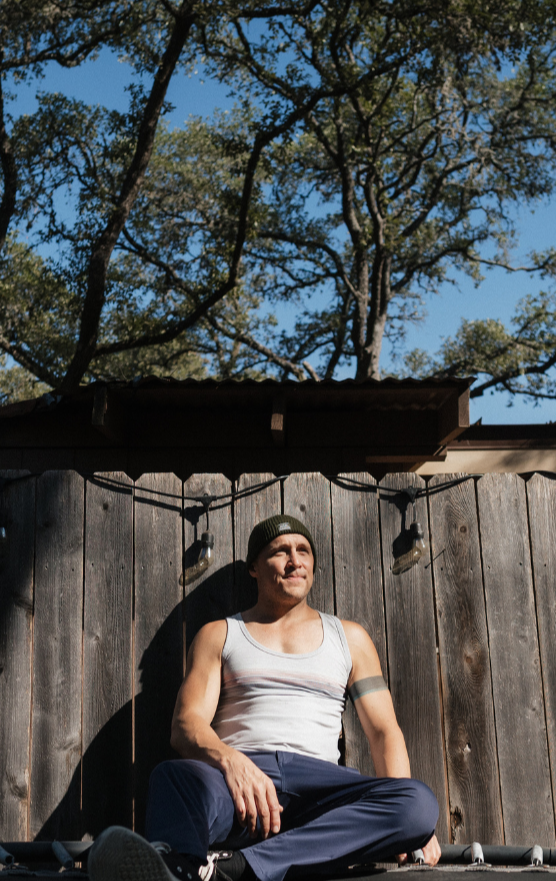
Documentary films, Biological medicine and RA with Gabe Golden
Mar 21, 2019
WELCOME TO EPISODE 8
Gabe Golden is a documentary filmmaker, writer and producer. He has authored six screenplays and has found creating documentary films to be an essential form of in-depth journalism necessary to communicate all aspects of a subject. Inspired by his 30-year challenge with rheumatoid arthritis, Gabe is directing "Lighting the Path," a documentary on alternative medicine. He has also co-written and produced the award winning "Rangeland" series as well as the "Nevada Mining" series for PBS.


Episode Highlights
- 2:03 - What superhero do you align with?
- 3:01 - Gabe has a black belt at 14, then his life takes a serious turn
- 6:18 - The social impact of chronic illness as a teenager
- 9:32 - Gabe's personal healing journey begins
- 12:40 - Gabe draws a line in the (western) sand
- 16:02 - Chronic illness has a way of humbling you
- 20:39 - A few treatments that moved the needle for Gabe
- 23:45 - The financial burden of taking your health in your hands
- 24:46 - What is microcurrent therapy?
- 25:50 - A further deep dive into treatments
- 27:50 - A primer on the lymphatic system
- 31:57 - The financial investment for these treatments
- 36:02 - Is there a difference between biological and western functional medicine?
- 41:21 - It's time to redefine doctor
- 43:43 - Gabe puts to film all that he's learned on his healing journey
- 47:50 - Would you trade your most painful moments for easier days?
- 49:48 - What does it mean to be beautifully broken?
Connect with Gabe:
- Support the films - https://www.goldenfilmproductions.com/about
- Preview Lighting the Path - https://www.goldenfilmproductions.com/in-production
UPGRADE YOUR WELLNESS
Marion Institute BioMed Course: biologicalmedicine.org
Code: beautifullybroken
Silver Biotics Wound Healing Gel: https://bit.ly/3JnxyDD
Code: BEAUTIFULLYBROKEN
LightPathLED https://lightpathled.com/?afmc=BEAUTIFULLYBROKEN
Code: beautifullybroken
STEMREGEN: https://www.stemregen.co/products/stemregen/?afmc=beautifullybroken
Code: beautifullybroken
Flowpresso 3-in-1 technology:
https://calendly.com/freddiekimmel/flowpresso-one-on-one-discovery
Medical grade Ozone Therapy: https://lddy.no/1djnh
Code: BEAUTIFULLYBROKEN
AquaCure Machine + Molecular Hydrogen
Website:https://eagle-research.com?ref=24931
Code: beautifullybroken
DIY Home Cold Plunge Conversion: [https://www.penguinchillers.com/?rstr=6757]
CONNECT WITH FREDDIE
Work with Me: https://www.beautifullybroken.world/biological-blueprint
Website and Store: (http://www.beautifullybroken.world)
Instagram: (https://www.instagram.com/freddie.kimmel
YouTube: https://www.youtube.com/@beautifullybrokenworld
EPISODE TRANSCRIPT
Freddie Kimmel and Gabe Golden (00:00.078)
I think it's just time for people to sort of redefine what a doctor is. If you're going to someone, while they may have been to medical school, they may seem to have your best interests, but yet all they're really doing for you is saying, here's what the test says, this is what you've got, and here's the drug. I mean, that is all that they do. And I think that is not a doctor. A doctor is someone who looks broadly at you, holistically, has an understanding of physiology, has an understanding of how all the systems work together.
And I think people need to change their expectations of what a doctor is.
Freddie Kimmel and Gabe Golden (00:35.395)
Welcome to the Beautifully Broken Podcast brought to you by AmpCoil. I'm your host, Freddie Kimmel, and on this show, we discuss the common threads survivors share after walking through the fire, the practitioners making a difference, and the treatment modalities that deliver healing back into the hands of the people who need it most. Witness the inspiration we gain by navigating the human experience with grace, humility, and a healthy dose of mistakes. Because part of being human is being beautifully broken.
Freddie Kimmel and Gabe Golden (01:09.497)
Ladies and gentlemen, welcome to the beautifully broken podcast. We have a very special guest today. They're always special because I bring high level people to this group, this community, which I love to connect with so much. have Gabe Golden, who is a documentary filmmaker, writer and producer. He has authored six screenplays and has found creating documentary films to be his essential form of in-depth journalism.
He really aligns with me as an artist in that way. That's why I'm so excited he's here. Inspired by his 30 year challenge with rheumatoid arthritis, is directing Lighting the Path, a documentary on alternative medicine and has co-written and produced the award winning Rangeland series, as well as Nevada Mining series for PBS. We are so honored to have you here. Gabe, welcome to the show. Thank you, Freddie. Really appreciate being here.
of course, of course. Like I said, you know, we've got a lot to talk about today, but what I want to do is I want to jump right in. So one question that I've been starting guests out with, if there's a superhero that you align with in your mind, who would that be? Well, you know, I'm not sure that there's a superhero, but for me, the my hero growing up and someone that I still look to is Bruce Lee. So he was kind of my superhero as a kid.
because there weren't a lot of superhero movies back then. And so I don't know if that counts, but for me, he's always been larger than life and always on another level. he is, I mean, he is a living superhero. I mean, I remember that one inch punch that he would do with his hand and just fingers to chest and knock somebody across the room. That was one of my favorite things too. Sure. So I just want us to keep that in mind. That's Gabe's superhero. We're going to go with Bruce Lee. His inner Bruce Lee is going to be guiding us through this story. Now.
If we take that superhero journey and as a lot of them did, they unfolded. It was almost like a pain to power scenario. So I want to paint you up with this picture. You are a young kid growing up in Tahoe and arguably for me, nature's most incredible playground. You're on a mountain bike. You're on a skateboard. You're on a snowboard more than on your own two feet. Soccer, swim team, martial arts, filled with additional hours of outdoors.
Freddie Kimmel and Gabe Golden (03:32.197)
just the state of play. You're a kid who built his identity around his physical ability and you're attached to it. So that's age 14. I want you to take us from that point forward. Thank you. Yeah, that frames it up really well. I lived in a fairy tale land really in Tahoe that was just of play and opportunity. I mean, it's the ultimate place to be a kid. And so I was taking full advantage of that.
particularly with the outdoors that were available. And, you know, I just got my black belt at the age of 14. And from that point on, had about six months of feeling as normal and accomplished as any kid would at 14 who gets to do that. And then gradually, in a period of just a couple of weeks, I started waking up with a lot of pain, in my feet, particularly, then it came to the knees, then it went systemic throughout my entire body. And so
every joint almost with wrist, fingers, elbows, shoulders, just swollen. So stepping on the floor as I got up out of bed was just excruciating. And suddenly we knew something very serious was wrong, but we didn't know what. So from that point on, concerned parents got me to the doctors, ended up at Stanford Medical Center and was studied by all of their best and diagnosed with rheumatoid arthritis, which was
At least common enough back then, it was not some real mystery to figure out what I had, unlike a lot of autoimmune diseases today that are sort of covering so many different symptoms that people struggle to really get a diagnosis. But this diagnosis was dark. It was, I was told I would probably be in a wheelchair within a few years. And that this was something that, you know, just if it happens to you, you're going to spend the rest of your life with it.
How did your 14 year old brain deal with that diagnosis? I think there was a lot of denial, confusion, felt like my body was betraying me.
Freddie Kimmel and Gabe Golden (05:43.847)
But I never really bought into the idea of what it was, because the idea of an autoimmune disease in mainstream medicine, of course, is that your body is just turned on you. And that's just what happened. And it just happens to people, and you're going to have to live with that the rest of your life. There's no explanation. There's no real dive into why this might be happening or what might your body be doing, responding to or trying to accomplish for you.
It's just, this has gone wrong and here are a whole bunch of really powerful immunosuppressive drugs to treat the symptom. Did you have, I have a question. Did you have understanding or validation from any of your friends at that time? mean, 14 years old, I think back to that time and you know, I, I don't know. It's, it's, it's because you almost think you're invincible, right? So to, so
And I didn't have a friend that was going through anything of that nature at that time, but I remembered being very focused on the state of play and again, being outdoors like you were. What happened to that social interaction aspect of your life at that time? Yeah, all of that ended because my identity changed completely. And as my identity changed and I became vulnerable, I became very weak. I became fearful of my environment.
I was afraid to be bumped into in the hallway because it might hurt or send me into significant pain. There was no more sports, there was no more activity. And of course, nobody understands that when they see that dramatic change in you. All they see is just somebody who's weak. so I did my best to hide it and tried not to, certainly didn't tell anybody about it really.
maybe just my closest friends who to some extent would understand it, but there wasn't a lot of that at 14. And I went through a phase of anger, a phase of insecurity, trying to compensate by being, trying to be the tough guy that I wasn't really, you So yeah, all of that faded and I lost some friends for a while and it was not an easy time. I isolated myself a lot. And when did you first
Freddie Kimmel and Gabe Golden (08:02.247)
When did you first start to see some relief, whether it was holistic means or it was medications, possibly from a Western medicine aspect? Yeah. So I was put on an immunosuppressant drug derived from gold called solganol, which was a common one back then. And very toxic, obviously. but over about a year and a half period of you doing these injections every week, having to have blood tests checked every week to make sure that my liver function was still okay. then I did notice.
significant improvement. And then eventually they added methotrexate to that, which is another immunosuppressant, which is still used today. And between the two of them, they managed to suppress my symptoms enough that I, within about two full years of diagnosis, so by the time I was about 16, I did achieve what they call remission. There was still pain. I was still taking pain medications most every day anyway. A leave, you know, which was actually called naproxen at the time.
So I was getting prescription anti-inflammatories to to make up for what the injections weren't doing and from that point on I had the ability to go back to snowboarding and skateboarding and soccer a bit But it was on a much different level than I had known in the past. I was much more fragile Of course, of course. I am I know that well. I know what it's like to go back to You're trying to go back to before
And it's, always different once the body's been through a trauma of that nature. So if you couldn't timeline us through, we're, we're at 16 now you've returned to sports a little bit. where is the next, where's the next place we find a, a divergence in the road? It's a long time. I spent the next 10 years on methotrexate, and you know, kind of good phases and bad, where I just continued to.
to do as much as I could. was still completely wanting to identify with a lot of the physical things that really gave my life meaning and enjoyment. But I can't complain. I didn't have it as bad as some people. The medications, I did tolerate them pretty well for quite a few years, which allowed me to ultimately do, you know, to live a fairly normal life, even though I was always kind of hiding the pain and I was always taking a lot of pain medications.
Freddie Kimmel and Gabe Golden (10:26.666)
By the time I was in my mid-20s, I had gone to film school, I had moved to Los Angeles, I was trying to pursue film, and the symptoms continued to just get worse and worse, and they were now combined with side effects of the medications. My hair was falling out in big chunks, I had liver pain, severe fatigue, just a whole variety of symptoms. And as I went into the doctor with this concern of these side effects, as well as
what I had dug up with research on, maybe some alternative ways to approach this with regard to diet, maybe even a theory that infection was triggering autoimmune disease. I took that into the doctor, the rheumatologist, and he was not interested in that at all. He just wanted to up my medications, give me more cortisone. He said, you know, we'll watch your blood work. You know, I can appreciate you looking out for your health, but you're fine. You know, this is just the nature of the disease.
Meanwhile, hair is falling out and your liver is something that you're clutching while you're walking down the street. And you know, understand that his definition of fine and your definition of fine are very different things. Absolutely. Absolutely. I mean, it was almost comical. know, this is just, I've seen many rheumatologists, are a little more open than others to this kind of stuff. But this one, was so absurd. Even he said to me, he said, you know, there's a new medication coming out. It's called Enbrel.
And this was one of the first biologics that were, that they were starting to develop also immunosuppressant drug, not anything that's really going to heal you. he said, but you know, there were some side effects with the initial release. They pulled it off the market, but they're going to, they're going to put it back on the market pretty soon. And we'll give that a try. And I thought, wow, so that's the best thing you've got in your toolbox is another drug that was potential. It was already been pulled off the market for problems. And that's his hope. That's the only thing he's offering me. So I.
I took my big giant folder of research and the prescription crumpled up the prescription he'd given me. I threw it in the trash. I hobbled out of the large hospital, past the, you know, the line of people at the, at the pharmacy. And I just said, I'm done. I, there's gotta be another way. And, and, and I vowed never to return. So tell me about the other way. I mean, you drew a line in the sand and where did you go from there? Yeah, well, I wish I could say, you know, I just.
Freddie Kimmel and Gabe Golden (12:47.017)
changed my diet a little bit and did some acupuncture and it was all better. Of course, it was a difficult road, but I did seek out a naturopath who was open to trying just about anything that I found credibility in in my research, but also that he had found in his clinic to be effective. So we begun with a, he does metabolic typing, which would, is a variety of tests, including blood type.
hair analysis, saliva analysis, evolutionary ancestry to determine the ideal metabolic type diet for you. So that was a big step in one direction for me, which of course included even this is in the year 2002, he was advocating gluten free, staying away from soy products because the protein was potentially the same as gluten, cleaning up the diet completely, detoxification. I did a lot of detoxification.
with teas and herbs. But we also implemented a low dose antibiotic protocol. There's been a tremendous amount of research by a rheumatologist named Dr. Thomas MacPherson Brown, who had done tests on minocycline for patients with rheumatoid arthritis. And he had incredible amount of research that, of course, no rheumatologist had ever showed me or seemed to be aware of. So we tried this low dose antibiotic protocol, which was only three days a week of a low dose antibiotic.
in addition to diet changes. Of course, as I got off of the methotrexate and all the other medications, the side effects of those things went away quite quickly, but my immune system seemed to surge. It was like it had been suppressed for 15 years and now it was just unleashed and I was miserable. Every joint flared even worse. I was pretty much bedridden.
just barely get around. But it didn't take too long before I found a balance there by, I think that the diet changes and things were just allowing me to know that maybe I was going in the right direction. Took about six months total, and then I started to feel significant relief. By nine months, I was running from my apartment to the gym and I had a complete recovery. So of course, I thought I had done something really remarkable and that
Freddie Kimmel and Gabe Golden (15:13.981)
I had beat this thing. And of course there was, there was a combination of anger with that as well because I had sacrificed a lot of years and here was another path that I'd walked and had this dramatic result. Now this dramatic result lasted about a year and had had my life back and was pretty confident that it was going to stick around. When the pain returned, the pain returned in my knees, no other joints ever again, really.
It was just in my knees and it would kind of go from one knee to the next. And it was real severe, but it was just the knees. So I knew that we had accomplished something. So from that point on, the next decade was just two steps forward and two steps back of exploring all of these different modalities that might get me to the finish line. I want to go, I want to go back for one second. Now there are two things. Now you find, you, found space in there. You said to pursue a film career as a documentary filmmaker in LA.
Right. actually went to LA to film school. studied screenwriting, film production, and acting. And when I got to LA, I was pursuing acting and screenwriting mostly. had worked on as a production assistant on some different sets, but my passion really was acting and screenwriting. Unfortunately, as the symptoms got worse, I did a lot more writing than going to auditions. Once things got really severe and I wasn't able to work for a temporary period of time, I moved
out of Los Angeles home to live with my parents in Tahoe at the age of 32. So that was humbling. so that put the breaks on that career in LA, but began a relationship with my father who had a little bit of background in television. We had some connections with the PBS affiliate there. And so we began developing programming for the PBS affiliate in Nevada.
And that began the documentary journey as well as the desire to start filming my own journey as I went through it. Incredible. if I timeline that back, it was the antibiotic therapy, the low dose antibiotic therapy that you think eliminated a majority of the RA from, it seems like some of the bigger joints in your body and isolated it to almost just the knees. I do believe that
Freddie Kimmel and Gabe Golden (17:40.489)
that it was very effective. It's hard to know how effective was the antibiotic as opposed to the dramatic diet changes, detoxing the body, and a variety of herbs that I took as well that are antimicrobial. But I do believe that what was interesting about it was that my progress followed the research almost exactly. It was like people would get on these antibiotics and would have...
for two, three months, just severe flare ups, and then they would gradually get better. And most people got significant relief. Not everybody got cured, but there was something significant happening there. I didn't realize this until we started having this conversation, but literally, in 2001, I had moved to New York to pursue acting a month after September 11th. And I remember how stressful it was walking around the city.
And you know, the city was in a state of chaos and, you could feel it was palpable. the fear and this waiting for the subway, every crash, every horn, people would jump September 11th. You know, it's, this is probably, I moved probably four weeks after the event, the city's still smoking. The sky is filled with higher helicopters at night. And I remember going out and looking for a job. had very little money and I would come home at night and I would sit in the shower.
And I would just literally fall down on the floor of the shower and cry because because my body I'm such an empath. And it was, I didn't, I didn't, I think it was the first time I realized how sensitive I was to the environment. And sure enough, it was probably like six weeks after living in the city. I had woke up in my, my fingers, joints and knees and every joint in my body was, was swollen and her. And, you know, that's a long story that we're not going to go into. very much the same. tried the.
You know, just eating Advil for a long time, but, years down the road, I also came across that antibiotic therapy by Dr. Brown and I had tried the, I think it was the, the minocycline. was another, actually, I think, you know what I ended up doing the doxycycline, which was an alternative to the people who didn't tolerate that. But I remember for months I would break out in hives and, just welts all over my arm and even on like a quarter of a dose.
Freddie Kimmel and Gabe Golden (20:03.891)
I would have these very strange reactions to these antibiotics and whether it was killing something and it was my body was trying to let go of it or it was an allergic reaction. You know, I did start to feel better after about a year, year and a half, but it was a, but it was a, but it was a really, it was definitely like a transition point. was, I definitely that I can put that in a barrier in my mind as a, as a wall that I, that I broke through. And then of course, after that, I think it actually had ended up putting me in a ditch because of the damage it did to my intestine.
you know, eating antibiotics for three years straight. you've got that issue. So I wanna go back to our timeline here. So you've had this great jump forward in as far as, you went from saying you were almost bedridden, moved back home with your parents to being able to run again, and then having some isolated pain in the knees. And I have a list here of some of the things that you tried, and I wanna read them. And I'd like to go down and just...
Just I want to give people perspective. So I had the list that you had delivered various diets, vegan, fasting, paleo, ozone injections, antimicrobial herbs, supplements, IV antibiotics, acupuncture, chiropractor, any T or neuro emotional technique, meditation, energy healing, Reiki and reconnective healing, microcurrent therapy, UVB blood therapy, vitamin IVs.
earthing and grounding mats, and finally, biological medicine and somatic healing. Now that is a list. Right, and there's probably more that I could add to that, but yeah, those are the greatest hits, yeah. And now, can you look at this list and say, you know what, Freddie, I know there's two or three of those that really did move the needle for me? Well, of course, diet is such a big foundation of it, right? I mean, you do have to find what's optimal for you, what's also something that you're going to
to follow. when I did my initial detoxification and I did my metabolic typing diet, the diet that was given to me was a fairly paleo diet, somewhere between ketogenic and paleo. But at the time, I was really getting into all these different gurus and listening to all of these different people. And many of them were talking, they were vegan and they were saying this is really the optimal way to heal. So I sort of did that diet without any animal proteins.
Freddie Kimmel and Gabe Golden (22:31.797)
And within about four months, had lost, I was already lean, I lost about 30 pounds of just whatever muscle I had on me. And I got weaker and weaker. My hormone levels really plummeted. Went back to my doctor that I was seeing at the time who had initially done this metabolic typing test. And he said, what's happening to you? And I said, I told him what I was doing. And he said, no, no, no, no, your metabolic type is one that needs animal protein. It's how your body builds itself. You know, he said,
doesn't mean you don't need to a lot of vegetables. He said, but you cannot process and build your body from amino acids in just vegetables and beans the way that maybe somebody else whose metabolic type is ideal to be a vegan can. And so that was a huge lesson and a huge step when I began to incorporate animal proteins in. I began to feel much better. My hormone levels returned. And that was actually just within that range of a couple of months when I had my initial breakthrough.
So that was a huge piece. so of course I've refined that over the years, what I think works. but, but I, but I find that really keeping it low carb and, fairly paleo, a lot of really healthy fats really works best for me. And then, yeah, there's a whole, a whole bunch of other stuff on that list. know. I know. And then there's, there's so many other ones. And, you know, I'm going through this list and I'm, actually, you know what my, my eye does to this list is it I see dollar signs. Yeah. You're either call you're either.
Seeking the compassion from an atropath who's willing to treat you at just at cost or maybe for free if they're really in that position, they can do that. Of course, when you're barely working, you just don't have much to give in terms of what can you pay for. You end up going into credit card debt just to pay for treatments. And these are all exploratory, even though they are non-toxic. They may not hurt you. They don't always help.
And so that journey was, there were things that were like microcurrent therapy, which was fairly expensive. I noticed significant results with that, but it was only if I did it really consistently three or four times a week. And that was just too expensive to do. And the machines themselves were too expensive to own. does that look like? What's an investment? Like what does a microcurrent therapy cost? And can you explain it to somebody who doesn't know what it is? Sure. I it's, I.
Freddie Kimmel and Gabe Golden (24:56.071)
It is similar to pulse electromagnetic field therapy, PEMF therapy, is more common now. Microcurrent, I think, though operates a little differently in that it's just, sending energy through the meridians of the body to light up the mitochondria and provide extra energy. And if you target that, you can do systemic treatments. You can also do treatments that are targeted specifically on the knees. That was what I was doing. And I was noticing dramatic results of
an anti-inflammatory effect. But that also was temporary because it seemed like it was just moving that inflammation for me, but it wasn't really solving the underlying problem. So of course, a treatment would cost me $120. Machines were way too expensive to buy on my own. And, you you run out of money pretty quickly, but that was one that I knew seemed to have an effect. Yeah, I know I can see how those can be cost prohibitive. So we're at this place where you've
essentially eliminated everything aside from this alternating knee pain and then you come to the Center for Biological Medicine and and and you've quoted is here is saying it was some of the most effective treatments you've received on a broad scale those things being PEMF lymphatic drainage hyperthermia colonics ozone zeal injections and foot baths sound beds and biomass Can you speak to some of those?
Sure. mean, what's incredible about the American Center for Biological Medicine, which is where I went for treatment, is that for week time, one week time, they would treat me every day with all of these things. And so they're hitting you pretty hard. So it is hard to know exactly what treatment may be more effective than another treatment. But the goal, of course, is just to cleanse the body and then optimize each system within the body.
Biological medicine isn't about really the disease as much as it's about optimizing the performance of the body on every level. And so they really make the effort to understand what each system is doing, how they're working together, what system's the most compromised, what system has the most power. And they optimize the system that has the most power to help compensate for parts of the systems that aren't.
Freddie Kimmel and Gabe Golden (27:17.821)
And then they do treatments such as lymphatic drainage. For example, if your lymphatic system is congested, which almost anyone with chronic illness has a congested lymphatic system, you get this opportunity to open up a lot of channels of elimination, optimizing the liver function, optimizing kidney function, digestive function, hormones. You can cover all of these bases and...
They also have really advanced diagnostics which are measuring things that I had not had measured before. So, and again, just for the people who don't understand, can you just explain the lymphatic system? I could try, sure. It's certainly the most underrated system in the body. I think it is, you have lymphatic vessels just below the skin surface throughout your entire system. And you have many of them that are concentrated around your neck.
and shoulders and your armpits and your groin where you have, and of course the digestive system around the abdomen, full of lymphatic vessels. And if those things are not moving, then that is one of the most effective ways of detoxing the body and things can build up and it can just become like concrete in there. And especially when you have chronic illness, because movement is really the only way that you can move the lymphatic system. It doesn't have its own pump like your cardiovascular system does.
So movement can be difficult when you have chronic illness. So treatments that actually help move the lymph system. There are also a variety of home things that you can do. Hot and cold showers, castor oil packs, skin brushing, things like that can help move the lymph system. Once you kind of get things going. I think that that's a really, like I said, underrated system that needs treatment. Yeah, I agree. I just want to go over that list that you said, because I know
Like you said, some of these treatments are incredible and they do work, but they are cost prohibitive and there are people out there that do need an alternative. So I know you said lymphatic brushing. I know you said lymphatic drainage that could be just jumping up and down on a rebounding trampoline that you can get off Amazon for $199. I know also an infrared sauna can be very good for moving and sweating and just starting to move. But you are really when you're in that state of chronic disease.
Freddie Kimmel and Gabe Golden (29:41.371)
It's fighting that desire to live on the couch and be a nomad and seclude. And really what your body wants to do, even though it doesn't feel natural, is getting out and jumping around and getting that lymphatic fluid the way it moves. Because I think, I'm pretty sure there is no pump for the lymphatic, like there is the blood vessel, that it is done through rebounding, through gravity, through movement up and down off the ground. Yeah, exactly. I think, you know, you can hopefully
If you do do a lymphatic treatment or two at say at a clinic, I think it can be an initial, a great way to start to sort of move that that sludge that might be building up. And then you can really take it on your own and do things from home and would not need to go in and, you know, over and over again and spend a lot of money on this, on this type of treatment. You know, there's so many things you can do on your own too, that don't cost things. You know, it's, really hard to measure in the areas of alternative medicine, the things that are
that are most effective as far as treatments that could be very expensive or they can be very time consuming. They can be painful. You can be traveling across town to go to a certain physician or practitioner and have something done. And how effective that really is compared to say a dozen things that you can do on your own that don't really cost anything, whether that's changing your diet, cleaning up your environment, all of the products that we use, having a meditation habit.
or whether it's journaling, finding a creative outlet to distract you a little bit from your illness. There are certain supplements that can be very effective. Grounding, getting outside and putting your feet on the ground. This is pretty remarkable research on the ability of that to have anti-inflammatory effects. Getting enough sunlight, deep breathing. These are things that don't cost anything. And if you actually put into place all of those habits,
How effective is that as opposed to maybe not having most of those habits in place and then sort of relying on an alternative modality or that one practitioner or someone who's got the answer for you and spending all this money on that modality or maybe a bunch of supplements that you're kind of attached to as you think that's what you need. the idea in my head is this information is for everybody. nobody out there needs, you don't need to wait till you have rheumatoid arthritis or a chronic on autoimmune
Freddie Kimmel and Gabe Golden (32:07.84)
infection or you're dealing with diverticulitis, you can start incorporating clean water and clean living and deep breathing and these things can happen tomorrow. Everybody can take a cold shower to reset that nervous system in the morning and I was just talking with a friend that I did a guest teaching spot today and I said every morning I get in the shower and I know how good it is. know a cold shower five minutes is great to build norepinephrine in the brain, happy hormones,
brain function goes up, the acclimation of brown adipose tissue or the good healthy brown fat goes up, which actually helps our energy. You know, I look at the dial for warm and I say, do I really want to do this this morning? And then it's always a little argument, but it's a simple thing. All I've got to do is turn the dial and I can get five minutes of a boost. It's going to sort of biohack my system and set me in a better place for the day. And I think if you can, I think if you can benchmark five or 10 of those throughout your day,
You like the grounding walking outside, maybe getting some full body sun exposure. You're going to eventually, you're going to start to feel better and better and better. And it's all about, it's about the process and it's about the journey. And I love that. I love all those examples, all those examples you gave. Now you said this basically, so biological medicine, you being at the center, which really was starting to make a big difference for you. it played out over two years and you had marks down that.
that was visiting every three months for one week, as well as doing some homeopathic remedies. Can I ask, can I ask just what those, what's that financial investment look like if somebody's looking to go down that road? For me, it was, it was out of reach. It wasn't something that I could afford. And I was fortunate to be able to do trade out with the center for film work. They needed a variety of film promos, educational promos. So that was how I essentially
paid my way. And the investment for someone who doesn't have that opportunity could be $2,000 to $4,000 for a one-week treatment. But when you put that in context of an entire year, let's say you go four times a year and you're spending $15,000 to $20,000, if you get a dramatic healing in a year or you get significant results as opposed to
Freddie Kimmel and Gabe Golden (34:27.406)
co-pays and what your insurance may not cover with mainstream medicine. these, I mean, while insurance covers a lot of mainstream drugs, you're still dealing with, you know, potentially thousands of dollars of expense. So it's not, that's, that's not something that's easy to do. But again, I'm not sure that everyone needs to go down that road, you know, in terms of that many different types of treatments all at once. I certainly encourage it if you can, because I think it's going to be your fastest route, especially when you have really good doctors who are looking
so broadly at all the systems and they're looking at really advanced diagnostics, they can sort of narrow down not only what treatments you need when you're there, but what you can do on your own and what might be most effective. So, but like I said, there are other things that, certain specifics within that say it's hyperthermia or it's lymphatic drainage that you might be able to do without having to go all the way to a biological medical center, just kind of knowing those two might be really optimal for you.
maybe once you've had one consult with the diagnostics to get an understanding of really where you're at. And is there a center that you would send people to in the US proper? Is there a center or two that you would recommend for biological medicine specifically? Yeah, the American Center for Biological Medicine in Scottsdale, Arizona is where I've gone. They also have a sister clinic that they've opened in New England. So those are the two that I am most familiar with.
recommend certainly. So you've at least got one on the west western part of the United States and the eastern part of United States. And do you know from my mind, I don't, is there much of a difference between biological medicine and what would someone would call per se a functional medicine doctor? I think there's certainly similarities there. Biological medicine probably would claim that they're going a little further with technology. Both functional and biological medicine are looking at all systems. I would
I think all systems of the body where they're trying to look very holistically. Biological medicine really utilizes a lot of technology, technology that has been pioneered a lot of it in Germany and Sweden. So you've got diagnostics like CRT therapy, which is contact regulation thermography. They've got pulse electromagnetic magnetic field therapy, Valkeon therapy, which is singlet oxygen therapy.
Freddie Kimmel and Gabe Golden (36:51.397)
You have ionic footpaths, have hyperthermia, you have ozone, you start adding up all of this and you've got a lot of weapons to use. And I think they really probably just focus more on utilizing that technology more than maybe just functional medicine. Yeah, it's basically, again, it's like a superhero's cave if they had all their things to put them back together if they were in a horrendous fight against evil. That's the way I look at it. And unlimited funds. So, and when you're even saying those things, know what, cue's up for me.
I actually have, I have a lot of tech in my home because through my journey, I have, I have looked at the figures and I've looked at the, at the prices and there were definitely times along the last 10 years where I've made the decision to buy some of these things. Like I have an ozone machine. You know, I have a hypoxic breathing machine that fills up a hundred gay bag oxygen bag, and I can do cardio on that and super oxygenate my system.
You know, I've just purchased in November, I purchased my, an amp coil, which is a biofeedback, bio resonance, pulse, electromagnetic frequency device, which that's been a game changer for me in shifting the paradigm. It's one of those things that's it's, it's put it's put a treatment that I would, you know, for the last 20 years, I would have definitely needed to go to a practitioner, but it's something now that it sits in my living room and I'm having, I'm super excited about it. I don't want to say too much about it because I'm two months in.
But so far it's been pretty amazing for my journey. will say AmpCoil is something I'm familiar with. I've been very fortunate to have met or spoken with the AmpCoil team and they are extraordinary people and really there is so much heart in all of them and you just get this sense that their mission is so authentic and genuine that they just want to heal people, to help people and yet
The technology that's been developed is by some extraordinary people. These machines are like nothing I've ever seen. So I think AmpCoil may very well be a whole other level of utilizing technology for healing and something that can empower patients where they don't have to go to clinics constantly or are limited to only having this technology in places that are hard to get to. yeah, they're an exciting company.
Freddie Kimmel and Gabe Golden (39:17.199)
Yeah, it's a really is you know, the more I get to know the people and the more the the relationship builds it it becomes less about a device company and more about a community. You know, one thing I know is I can I can get on six days a week and I can get a hold of someone from the support team that knows the science right down to the very bones or I can get on a community call with a hundred other people that are owning it and just hear stories, you know, these crazy stories of
women with with daughters who had had a seizure every day for two months and they they go through this series of vibrational journeys and their daughters don't have seizures anymore or you're having three or four members from a family that were bedridden back to work and and that's pretty much the talk and that's that's what you hear from this community so you know that's just another thing to keep in mind i think for people as they're looking if if these stories and these
Experiences speak to you. There's there's a way for you to get better. There's a way for you to up level You've just got to get out there and do your research and and one thing, you know, like you did Gabe that was so bold is there was a time when you just you told your doctor to stop talking and you and you went you went somewhere else you went somewhere else and you started asking different questions because you were tired of the answers you were getting and I just think that's just such a you know, that's the hero's journey
You know, it took a lot of courage to do that, especially at the time when, you know, I know now I watched the TV, a biologic that is a, an immune suppressant, every commercial that's, you know, every eight and a half minutes, you see someone running down the beach, doing cartwheels, throwing their grandchild up in the air. When I first went through my inflammatory journey, I asked for the drugs that I saw advertised because I wanted to be the person on the beach throwing the kit.
I didn't want to be the person sitting in the chair feeling the pain I was feeling. And it's just not the way it is. You talk to those people in real life and they aren't doing those techniques. They're not cartwheeling. So Gabe, I've got one more statement here from you and you were quoted as saying, rheumatologists are nothing but middlemen for the pharmaceutical companies. And I started to do some digging and
Freddie Kimmel and Gabe Golden (41:35.163)
Do you, are you aware of the paybacks that some of these doctors get for the number of prescriptions per pill? You know, you're probably more aware of the specifics. When I begin to just get into how medical schools are funded by pharmaceutical companies and the kickbacks that I do know about it gets so angry that I just sort of tune it out, you know, but. Yeah, no, it's just a.
You know, it just, it's, started to get into it it was just so, it was just so frustrating. You know, a it's not going after the root cause and B it's, you know, there's we're almost plugged into the system, just like the matrix, you know, we're feeding the machine. And I think, I think it, it, this information isn't out there so easily, so readily available because it, you know, it upsets the natural order of.
of things that have already been put in place by the pharmaceutical industry. Yes, absolutely. think, I think it's just time for people to sort of redefine what a doctor is, you know? I mean, if, if you're going to someone while they may have been in medical school and they, they may seem to have your best interest, but yet all they're really doing for you is saying, here's what the test says. This is what you've got. And here, here's the drug. I mean, that is all that they do.
I've been to many, many rheumatologists and I'll even kind of challenge them and try to get them to open their minds a bit. they're just, there is just no acknowledgement that there's really anything else that you can do. And their only tool after all those years of school is just to prescribe the same drug to every single person, or maybe they prescribe, you know, two of the same drug. mean, it's just, that's, that's all they do. And I think that is not a doctor. A doctor is someone who looks broadly at you holistically.
has an understanding of physiology, has an understanding of how all the systems work together. And I think people need to change their expectations of what a doctor is. And I think until we do that, mainstream doctors are still going to continue to just treat people the way that they do. I couldn't, I couldn't agree more. Gabe, so you're working on a documentary right now called Lighting the Path. Could you tell the audience a little bit about that, that film and, and, and what it's going to bring forward? Yeah, thank you. It's, um,
Freddie Kimmel and Gabe Golden (43:58.183)
It's a very long project. It started with me filming myself as I could in the beginning of my journey. Then as I got some progress and started to really see that there was a light in the dark in this journey, I knew there had to be other people. And as I began to encounter those people, particularly ones that I felt were really aggressively pursuing alternative medicine or other paths, I wanted to tell their stories. So we're telling...
several stories of people who are determined to heal, people who have walked a long journey and hopefully as they share their insights, we are saving other people the time of having to go down the exact same path, blazing a trail that others can walk. Healing is a very individual experience. I always loved the idea that I would just get better and then I would have this recipe and I would say, is what worked for me and so this is probably what works for you.
There are certain universal things we can all do and I think there's a lot of lessons in learning from other people, but your journey is gonna be your journey. And most people with chronic illness, while we take a lot of steps with diet and we take a lot of steps with alternative modalities, one common thread seems to be everybody has to go within. you journey within and look at your own emotions and your past and your relationships and your state of mind and your attitude.
You know, which just to me is, probably the most powerful piece that we all seem to wait till the end, to explore. And I would encourage everybody to start there, you know, start with the power, not only of believing that you can heal, but nurturing that power, and understanding what, your physiology is capable of based on where you are at psychologically. That's
I'm fist pumping over here if you guys can't see it. And I would imagine that Matt Damon and Ben Affleck are not sponsoring your documentary yet. Why I wish. Well, I'm sure, but I'm sure there's room for people that are listening to this podcast that are inspired by Gabe's story. And you should be if you're listening to this and I know you are, but you know, there's, there's actually a way to reach out and you can, and I'm sure there's a way that people can help this film move forward. Gabe.
Freddie Kimmel and Gabe Golden (46:22.789)
Yes, thank you. Yeah, I mean, of course they can go to the website and see the current trailer and donate directly to the film. The film is going to be more than just a standalone documentary. It's going to have a lot of additional extended media. So we will have extended interviews with patients, practitioners, physicians, and protocols as well. So you'll have transcripts that you can have as well. The idea is to simplify this and narrow this down as much as possible.
rather than just throwing sort of a lot of ideas at people and letting them walk that path, even on their own. You I want to narrow this down as much as I can to what I believe and what others in the film have found is sort of the priority, you the place to start, the steps to take from, you know, A to Z. I think that helps guide people and I want to continue to, they will all be on a website that has a guide there so that people can kind of follow the path that
We've walked and then also engage and ask questions and get answers so that people aren't just Googling at two in the morning, you know, with desperation in hopes that they're going to find an answer. Well, I thank you for giving people those actionable steps because that's always what I want. And it's never at it's never attached to those documentaries that make you scared and nervous and excited. And you know, you need to change something. Where do I go now? And we usually go to Google, but I love that your film is going to change that paradigm.
Gabe, it's an honor to have you on. I'm going to close it out. have two last questions that, that everybody answers some incarnation of these. you ready? Bring it on. All right. Okay. So number one, and this is a tough question. So would you trade the most painful experience of your life for easier days? Yeah, that's a tough one. because I know that the path I've walked has made me who I am. I know that there's a lot of quality.
I know there are lot of qualities that I've acquired along the way, probably more compassion for other people, a desire to really help other people. That purpose has given me a lot of fuel, given me a little bit different identity than I probably would have otherwise had. I do try to look at all the positives that have come from this, but it's also not a path I would recommend just to get yourself to a greater perspective.
Freddie Kimmel and Gabe Golden (48:48.807)
on life or to become a better person. You know, I ultimately had to see my illness as a ladder to sort of a greater version of myself rather than resisting the illness and trying to hide it or ignore it. know, challenges, discomfort, there is growth there. We often don't want to face that and we don't want to really dive into what the meaning is in adversity that we face.
But I think that for me, that has been the most rewarding way to approach it was that there's a light in the dark and you need to nurture that. And ultimately from there, well, to back to your question, would I trade that experience? Sometimes it's tempting to say yes, because who would I have been without 30 years of pain and discomfort and...
financial challenges, but these were the cards I was dealt. And if these are the cards you're dealt, play them the best you can rather than just wishing you had a different hand. That's beautiful. So my last question is, what does it mean to you, because this is the podcast, what does it mean to you to be beautifully broken? I think that there's beauty in
adversity and in challenge because within challenge, particularly something like a chronic illness, you are forced to to go within to evolve and grow. And a huge part of that progression is a spiritual growth, at least it has been for me. And so to be beautifully broken to me means to find meaning in that challenge or in that adversity.
You you have that choice. You can resist it and say why me and not really dive into it. But I think there's a much bigger, broader meaning in the things that we face. And ultimately, there's a beauty and a progress and a growth that we will get from walking that path with the intention of finding meaning in it.
Freddie Kimmel and Gabe Golden (51:10.127)
And I think there's really no other way to do it that's going to result in a healing without doing it that way. Gabe, thank you so much. Heartfelt. A heartfelt thank you. You you've led the path. Not only that, but you're documenting it. You're leading by example. And I know there's people that are going to listen to this episode. They're going to be inspired. Can you give us one more time?
the website where your documentary lives. Yes, thank you. It's goldenfilmproductions.com. Gabe Golden, you are the perfect example of Beautifully Broken. My friends, this episode of the Beautifully Broken podcast was brought to you by our sponsor, AmpCoil. Thank you guys for tuning in. Now, if you enjoyed today's show, head over to iTunes or Spotify or Freddy Setgo and you can leave a review.
and you can grab a download and you can subscribe when you do that to this podcast. When you leave us a five star review, you help spread the message and you help more people connect with this content. Now, if you want to connect with me, shoot me a message on Instagram at freddysetgo and you can send me a request for a topic or a guest or somebody you want to hear interviewed on the show. My friends, that's it for today. Our closing the world is hurting.
and we need you at your very best. So take the steps today to always be upgrading. And remember, when life is pain, that can be a fact. Putting the fractured pieces back together is a beautiful process. I'm your host, Freddie Kimmel. This is the Beautifully Broken Podcast. Namaste.