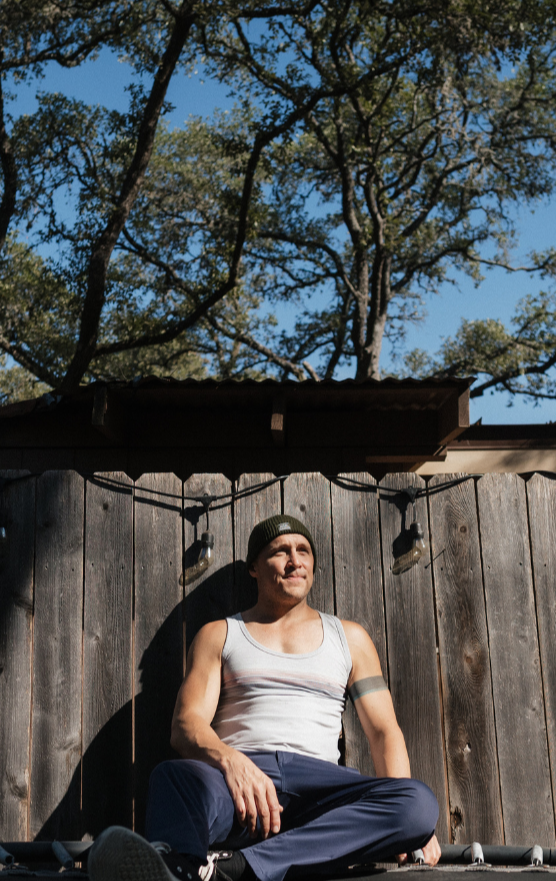
Dr. Jeoffrey Drobot: Changing the Game with Biological Medicine
Jun 06, 2019
WELCOME TO EPISODE 19
Dr. Jeoffrey Drobot is one of the founders and medical directors of the American Center for Biological Medicine (ACBM). He graduated from the University of Calgary with a degree in Exercise Physiology and a doctorate degree from the National College of Naturopathic Medicine in Portland, Oregon.
Jeoffrey prides himself on being a leading authority in the fields of European Biological Medicine, chronic and autoimmune disease treatments, detoxification, hormonal imbalance correction and customized sports medicine and nutrition programs.
His love of medicine has evolved into a vast clinical focus treating men, women and children from the youngest to the oldest. He excludes no one!
This conversation is great for those new to Naturopathic Medicine. It’s important to understand that unlike the current traditional medical model, which places much emphasis on symptom suppression, Naturopathic Medicine is a distinctively natural approach to health and healing that recognizes the integrity of the whole person and the body’s own amazing capacity to heal given the right input. And Jeoffrey will help you see its value in this conversation.


Episode Highlights
- 1:51 - The connection between sports performance and the medicine field
- 4:29 - Why does ice cream destroy me for a week?
- 8:57 - Are you resilient or are you scared?
- 10:18 - The medical effects of our modern stressors
- 17:45 - Why alternative medicine is a terrible term
- 19:49 - The importance of building up your own immune system
- 22:56 - How the medical industry is unlike other industries (for the worse)
- 26:52 - The connection between breeding exotic animals and our health
- 31:56 - Reasons why the infertility world is booming
- 34:28 - Solutions Jeoffrey is working on
- 39:26 - The best treatment is the one that the patient responds to
- 41:41 - How to work with Jeoffrey
- 46:26 - What does it mean to be beautifully broken?
- 48:54 - Jeoffrey's challenge for taking charge of your own wellness
UPGRADE YOUR WELLNESS
Marion Institute BioMed Course: biologicalmedicine.org
Code: beautifullybroken
Silver Biotics Wound Healing Gel: https://bit.ly/3JnxyDD
Code: BEAUTIFULLYBROKEN
LightPathLED https://lightpathled.com/?afmc=BEAUTIFULLYBROKEN
Code: beautifullybroken
STEMREGEN: https://www.stemregen.co/products/stemregen/?afmc=beautifullybroken
Code: beautifullybroken
Flowpresso 3-in-1 technology: (https://calendly.com/freddiekimmel/flowpresso-one-on-one-discovery)
Medical grade Ozone Therapy: https://lddy.no/1djnh
Code: BEAUTIFULLYBROKEN
AquaCure Machine + Molecular Hydrogen
Website:https://eagle-research.com?ref=24931
Code: beautifullybroken
DIY Home Cold Plunge Experience: [https://www.penguinchillers.com/?rstr=6757]
CONNECT WITH FREDDIE
Work with Me: https://www.beautifullybroken.world/biological-blueprint
Website and Store: (http://www.beautifullybroken.world)
Instagram: (https://www.instagram.com/freddie.kimmel
YouTube: https://www.youtube.com/@beautifullybrokenworld
EPISODE TRANSCRIPT
Freddie Kimmel and Dr. Jeoffrey Drobot (00:00.652)
We're looking for problems right now in medicine and we're far, far less focused on solutions. And it's the ability to say, you know, are we scared or are we resilient? Can we find our way out of this particular problem, which, you in human nature, there's always, there's always a way out of a situation. You just have to build that way out.
Freddie Kimmel and Dr. Jeoffrey Drobot (00:21.711)
Welcome to the Beautifully Broken Podcast brought to you by AmpCoil. I'm your host, Freddie Kimmel, and on this show, we discuss the common thread survivors share after walking through the fire, the practitioners making a difference, and the treatment modalities that deliver healing back into the hands of the people who need it most. Witness the inspiration we gain by navigating the human experience with grace, humility, and a healthy dose of mistakes. Because part of being human is being beautifully broken.
Freddie Kimmel and Dr. Jeoffrey Drobot (00:55.977)
And ladies and gentlemen, welcome to the beautifully broken podcast. have Dr. Jeff Drobot and he is one of the founders and medical directors of the American Center for Biological Medicine, a graduate of the University of Calgary with a degree in exercise physiology and a doctorate degree from the National College of Naturopathic Medicine in Portland, Oregon. Jeff prides himself on being a leading authority in the fields of European biological medicine.
chronic and autoimmune disease treatments, detoxification, hormone and balance correction, and customized sports medicine and nutrition programs. His love of medicine has evolved into a vast clinical focus, and I love this, treating men, women, and children from youngest to oldest. You didn't leave anybody out. Try not to. Yes, welcome to the podcast. Thank you. Thank you for having me. it's a pleasure to have you here. So right off the bat, so as I mentioned in your bio,
You are one of the founding members of the American Center Center of Biological Medicine. Can you give us a little, just a little, a toe in the water on what that center focuses on. So it's mostly chronic disease. So my background is exercise physiology. it's, you know, I'll tell you a quick story about how I got to this point. And usually everybody, when they're in alternative medicine has this disastrous medical story, but I never had one. So I actually came here from a performance standpoint.
and had my background in exercise physiology, had a free scholarship to go to conventional medical school. And this was in Canada and socialized medicine, you know, had a couple of professors that were doctors that said, you don't want to do that. And dropped me into naturopathic medical school because it did deal with supplements, it did deal with nutrition. And so that was attractive to me from an athletic standpoint. And then spent four years in Oregon doing that and realized that, you
performance and medicine aren't that far apart. You know, they're both dealing with biology and physiology. And so why can't we say, this, if this, we'll say cell is diseased and it happens to be in a liver, why can't we make it better? And if this cell is diseased and happens to be in a thyroid, why can't we make it better? And, you know, kind of led me on to, we'll say bigger things in technology and bigger things in performance and bigger things in biology that I've translated to medicine.
Freddie Kimmel and Dr. Jeoffrey Drobot (03:21.144)
What the hell do we do here? I got another big clinic in Rhode Island that does biological dentistry combined with biological medicine. And then I have another outreach program in Albany, Bahamas where we do biological medicine. And really what it boils down to is we want to get the most information with the easiest and we'll say most leading cutting edge technology so that we can figure out where in the body we have the hole in the bucket.
And so whether you come to me with an autoimmune disease, I get ton of, or whether you come to me wanting to live to 150 years old, which we get some of, and whether you come to me, I'm just looking for day-to-day athletic performance, which we get a lot of. mean, everybody still has a liver. Everybody still has a pancreas. So we're still doing some of this in-depth assessments to figure out which part maybe needs to work better, which part kind of blew out a little while ago. And we put that into a treatment plan and we use
technology to help us with biochemistry. we combine physics and biochemistry to get the best possible result. I love that. so my understanding of, you know, we've got this body and we're all walking around, like you said, with essentially, you know, pretty much the same cellular makeup, very, very similar DNA. Where do you hold the patient as an individual when they come into your center and not just
It's not just giving someone a stock treatment or you're going to put them on the, you know, Arizona. Yeah. The program. I'm usually everybody's 20th or 30th doctor and then lots of doctor. see lots of doctors as patients and lots of doctors refer their difficult patients to our center. And that's because we have maybe the most technology to make it individualized. So if we say everybody will take Lyme disease, right? Which is like, or we'll take chronic fatigue and we'll take some of these
huge buckets that we've put people that have some kind of energy system that blows out and we'll drop them into this huge bucket and we'll say, we're just gonna do this program of IV antibiotics to get out of it and 10 % get out of it, 90 % get worse. And then medicine likes to say, well, if 90 % got worse, then it really wasn't Lyme disease anyways and who cares? We release everybody back into the wild. It really helps when you're looking at, again, there's
Freddie Kimmel and Dr. Jeoffrey Drobot (05:43.709)
we'll say biochemistry, but then when you can look at how the body and the nervous system responds to stress, which is physics, you start to build a pretty good case for individualization. Some people's lymphatics don't work like others. Some people's brain doesn't work like others. Some people have experience that have happened in their central nervous system as they've grown up that have made very hard things or have tied up or have in-depth stress responses.
We like to look at all of those from the central nervous system with functional EEGs down to heart rate variabilities, down to full body thermographies, down to lymphatic evaluations, and then couple that with the standard biochemistry from lab work and hormones and neurotransmitters and genetic testing and kind of build a pretty good idea and say, now I've got to try this treatment and I have to see the patient respond. Everybody has a great.
at doing all these genetic tests and say, you can't do anything. Right? And it's like, well, how the hell did I get to be 44 years old? Right? Like if I was this, if I'm this much of a canary, like I don't remember being 14 and not being able to touch gluten and not go out of my house. Right? Like there had to be a period of time where my physiology was at least functioning. And I think we like that. always, humans like to,
We either remember the last 60 years or the last 60 days, and that really determines what ends up happening. But we don't have the greatest recollection of saying, you know what, one time I did have that ice cream sundae and I didn't crap my drawers for like seven days. So something must have happened between that point and this point. And we can't use age, so we have to use what accumulated, was it environmental, was it infectious, was it emotional? We have to look at all these and say, what was the tax?
Now there always has to be a biological tax. And we're looking for why does the biological tax, could it be EMS? I mean, we have a lot more taxes environmentally than we've ever had before. We have one nervous system that really hasn't evolved, you know, or hasn't evolved to the point that 5G has evolved, right? Like I, again, we were talking before this came on and you're 41 and I'm 44. And I'm like, when my iPhone, when I was 20, I'm like, no, no, cause it really, I don't remember it.
Freddie Kimmel and Dr. Jeoffrey Drobot (08:04.443)
I don't remember it at all. don't remember being under that much stress, we'll say much advancement. Like we didn't have any of that. So we're into a new experiment here with where new diseases kind of come up and new taxes affect us 24 hours a day that never did. And I think we're learning on how to adapt to that and what maybe technology or what do we need to do to our environment to allow us to adapt to some of these things, which means should go away, but they're not going to go away just because
Kind of like the industrial revolution, right? it'd be great if we didn't have any coal or mercury or lead. But everybody likes to drive their car around, right? And everybody likes to in houses with heat. So we're kind of, we're always our own enemies and we're always our own angels. So we're figuring out ways on how we're supposed to get biology to kind of catch up with technology. Yeah, yeah. It's this concept of, you know, do you want to be
What does bulletproof mean? Does bulletproof mean that I can walk around and I'm going to avoid every little thing that triggers me? Or does it mean, like you say, that I can walk in and I can eat a piece of pizza on the weekend and not have it destroy me for a week? Like, are you resilient or are you scared? Yes. And you know, the hardest thing is once people get a diagnosis, it's different because without these things, know, without these things, the diagnosis was only as good as a doctor's visit, right? You had the information.
Really wasn't much. You went away because you couldn't talk to your doctor all day. And now we get the diagnosis or we don't get the diagnosis even better. And we go home and we just start typing. Right? We start listening. You know, we start fabricating. We start imagining. And we start to build this monster of the bed. That is true, you know, because you don't feel good. But there's also, we...
we're looking for problems right now in medicine and we're far, far less focused on solutions. And it's the ability to say, you know, are we scared or are we resilient? You know, can we find our way out of this particular problem, which, you know, in human nature, there's always, there's always a way out of a situation. You you just have to, you just have to build that way out. You know, I love, I love the idea that we as an audience get to sit down with you because you know, you're, you're on the front lines. So I would just, I guess,
Freddie Kimmel and Dr. Jeoffrey Drobot (10:25.576)
One of the questions I would ask you is, is what are you seeing in practice as far as you just mentioned that we've never been under this many types of different stressors in our environment ever before as, as, as, as mankind. So what are, what are you seeing clinically of people coming into the, into the clinic? So the big, you know, the biggest one that I've seen, you know, as I talk about systems, right? Cause we, everybody has diseases and it's like, you're just trying to find enough symptoms to, to call something something.
You know, and I'm like, I'm still going to go back to physiology and biology. I'm going to say what system seems to be under the mode or what system in our bodies are the most shaky because for me, you know, it might be my digestive system. And for you, it might be your nervous system. We could have very, very similar symptoms. It's called IBS, right? But mine's local in my digestive system or yours is local in your digestive system. And mine's in my central nervous system, causing a spasm in my digestive system. And you know what the
What the sum is, is IBS. IBS. IBS, right? It sucks for everybody. It sucks for everybody, but there's not that many parts in the body that we could have this massive expression. So when one system goes out, it's like, is it an elbow pain or is it Lyme disease? What is it? What are you calling it? Or is it rheumatoid arthritis? So I would say the number one system, obviously, I could say without a doubt that I have seen in the last 10 years is a central nervous system.
You know, and people would say, why is that? You know, why, what's happening with that? Because I've done EEG studies and heart rate variabilities and track, you know, the ability for humans to create electrical power. And if we're just boiling it down to nothing but our reptilian brain, you know, if we don't have power out of the nervous system, we don't have anything. You know, if we don't produce ATP, we don't have anything. Forget about vitamins and catalysts and spirulina and all these wonderful things.
We're doing all these things to try to get electrical energy, and trying to get electrons to move. At the end of the day, we're a bag of bacteria, and we're basically a battery, and we're trying to produce some charge so that we can get to the next day in an elegant way. Now, there's a lot of, we'll say, emotional and spiritual things that might go with that, but that's biology, which we're all fighting to preserve because we're trying to get to the next day. That's a victory in evolution. If me and you wake up,
Freddie Kimmel and Dr. Jeoffrey Drobot (12:52.308)
opening our eyes tomorrow, a pretty good day, right? That's good 24 hours. But that central nervous system, just with its ability to produce power and what it's had to do to, I'm going to say, fend off things that shouldn't get into the central nervous system like mercury, like spirochetes, like aluminum, like plastics. mean, it's kind of like looking at one of those documentaries on the ocean and just being disgusted saying, you know, that stuff is never supposed to be here.
So how do we clean it up? Right? How are we going to clean it up? And when that central computer is irritated or when that central computer is taken for a ride, then every other organ system is affected. And in medicine, you know, I'd say the second biggest one would be the lymphatic system, which is the garbage collection system, which is supposed to be this nice waste disposal unit, which keeps all the rest of the cells away from all this toxicity. But they have become sluggish.
and they have become overwhelmed where it has now we have connective tissue, which is essentially polluted because we don't have enough space or we don't have enough functionality in the lymphatic system to eliminate it. When we have global systems like that that might not cause acute problems, right? Cause we can't, we don't even have a specialist that deals with the lymphatic system. We're just in medicine. We're like, screw it. It doesn't do anything. And it's like, wow, it's a, you know, it stretches from here to the moon and back. It's by far the largest circulatory system we have in the body.
We don't want to pay any attention to it and it basically removes waste products and metabolic waste from all ourselves, but we don't give a crap about it. That's an interesting problem. That central nervous system, as far as neurology is concerned, again, if you don't have like a tumor, we don't really care about it, right? It's like, we'll just give you an antidepressant and try to make it go away. Or we'll give you a sleeping medication and try to make you go to sleep. But we don't actually measure anything with the central nervous system and see how it's producing power. We don't care about that.
So those are the big protective systems that were started a long time ago in evolution and they're global systems. I would say in the last 10 years, those are the ones that have become and led us to the point, you know, in the last 20 years where we're at now, which is everybody's on their heels back peddling, trying to defend against the environment. And some of it's radiation, like I said, and some of it's toxicity and some of it's just us doing it to us being on computers all day.
Freddie Kimmel and Dr. Jeoffrey Drobot (15:21.432)
there's a lot of things that are happening to us and from nervous system. So I would say that those, those will continue to be the two leaders know as far as what they can do to us. Circulatory systems, everybody's caught up on heart disease and it's like, it's an inflammatory disease. I think we pretty much have most of the answers for that, you know, as far as what you need to do to stop inflammation in the cardiovascular system and cancer. mean, we know that probably 80, 85, 90 % of cancers are environmental. So we pretty much again,
If we do stuff with the lymphatic system, we build up the immune system, you stop putting garbage in and we get garbage taken out, I think we can do a pretty good job at that. But it's some of the bigger neurological conditions and autoimmune conditions, which really aren't disastrous to treat, but they are global systems, right? And then medicine, ignore that. We're like, you have Hashimoto? who cares? Those thyroid antibodies don't mean anything. Unless you're like bleeding from your small intestine, we just want to take it out.
Other than that, we'll give you 60 milligrams of prednisone and say either this or metotrexate, right? Or we'll give you a biologic and just shut your whole immune system down. And we're still not saying, well, what happens when I come off of this? this boogeyman gonna go away? No, it's not gonna go away because we really haven't done anything. And I would say that those are interesting for medicine because they're not specialty derived. Like I can't go to the auto-immunologist, right? That guy doesn't...
that guy or girl doesn't exist. Not yet. Not yet. Right. Might if we can find a pinhole. So we'll just go to these. It's a throw out in medicine, even though it's becoming such a huge part, such a huge expensive part. We just will fail to believe that it's an actual thing that we want to go ahead and treat instead of Medicaid, which again, it's interesting. We used to do that with 80 year olds. You know, we're just like,
well, Fran has been doing okay, so we'll just pop her on eight medications and then she'll just have a good last five years. And it's like, well, now autoimmune disease hits 15 year olds. Like, what are you going to do? You know, you're going to put them on fire? Can't have babies like that. You know, there's not much quality of life to it. They don't want to do it. They don't want to be on it. But we're not giving them much of an answer, even much of a road. You know, there's a little, they're not dropping any breadcrumbs even for them to try to follow.
Freddie Kimmel and Dr. Jeoffrey Drobot (17:43.619)
I know, I know talking to you, it's like, I'm sure there will be people listening to this. like, what's that drug? What did he say? What's that? I mean, basically, you know, this is what people are offered when they walk into your standard doctors, the allopathic model of medicine. It's like, take this pill and this pill and this pill. And, and as far as people tapped into this stream of consciousness, right? That there are alternatives that I want to talk about today on the show. is a very small percentage of the population really.
that are, yeah, like taking the, in the real world, taking the medication that's off label, like this prednisone should be the alternative to what you should be doing. Right? Like if, you know, there's alternative medicine is a terrible term because it means you either do this or do this. Like in China, you know, the alternative, alternative medicine is called pharmaceuticals, you know, conventional medicine is called acupuncture, right? Like you go to a hospital,
you'll get conventional medicine called acupuncture. And then if you don't want to do that, we can use some alternative medicine that's called the pharmaceutical. So it's very geographically, it's a terrible term because it's just, if you don't do this, you do this. And it's like, yeah, know, autoimmune disease needs to be handled, you know, because it's a relatively new and old disease, but it needs to be handled, probably not suppressed.
Suppressing it just means you're gonna have to handle it later. And when you're already suppressing it, you break down some of the other organ systems like the endocrine system. So when you try to come off of it, which frustrates even, you the specialists that are doing it, they're like, I don't want you to really go on that because I have to get you off of it and you're gonna be worse on it. It's a very perplexing problem for medicine these days. But yeah, the bottom line is you got this, it's multifactorial.
You want to move out of it and it's not about suppression. You know, it's about handling it and basically dealing with it. Yeah. You know, just going back to what you said a few minutes ago, you said we're basically human cells outnumbered 10 to one by all this bacteria. Correct. So the idea of going after, let's call them quote unquote, the bad guys in the sandbox. You know, how do you just eliminate if we're calling this a pathogenic infection in the body with somebody who's
Freddie Kimmel and Dr. Jeoffrey Drobot (20:08.636)
know, deem themselves labeled with whatever doctor has told them. I mean, obviously that model is completely outdated. It's a terrible way to look at something and say, if I just go ahead and we also do it in and you know, if we're looking at Lyme Litter, we look at some of these, we're just saying, well, if I just go after Epstein-Barr and it's like, what do mean if you just go after Epstein-Barr? Like, what do you think a nerve is just going to go ahead and it's not like I'm a seat seeking missile. It's like, you know, the best way to go after Epstein-Barr, make your own immune system strong enough to go do it.
You're never going to eradicate Epstein-Barr. Just like I get chickenpox when I was little, I'm going to have chickenpox until I'm older, until I'm done. But my immune system has it pretty much controlled. When you have infections that get out of control, it's because your immune system isn't doing it. Now, can leveling the playing field, like dropping some antimicrobials so that you... But you're also... They're not like magic beans. You're also killing off good bacteria. You're killing off fungus.
you're killing off all these other things. So then you have to reestablish the balance in there. But always the best way to do it, and again, that's what we do, the best, and I've tried it the other way, by the way, the best way to do it is takes a little longer, but you educate and build your own immune system up. You might do this little de-bridging at the start, but then your best way is to build up this immune system so that you have continual soldiers being released.
Does it take a little longer? Yeah, but it's far-reaching. You know, we have such a habit of saying, if I have, for example, Lyme disease, we don't want to pick on that because it's a hard one. But if I have something like that, I'm to go ahead and just do IV antibiotics and I'm just going to napalm the whole area and I'm going to see what I got. And it's like, well, you can't take it back. You know, it's not a whole bunch different than just saying, if I got this tumor, I'm just going to stick this chemotherapy in and I'm going to see what I got.
And it's like, well, you'll see what you got in 30 treatments, but you won't be able to go back to before treatment number one, just so you know. So if you're going to do some of those things, you better be doing other things to try to backfill because that is a risk reward saying I'm going to go and do something, but you're also going to do a bunch of other things. You know, and when you combine them all together, you just have to be real sure that the rest of your body is going to be supported or we end up with.
Freddie Kimmel and Dr. Jeoffrey Drobot (22:34.3)
you a rocky, very shaky system that, and I can't tell you how many times I've heard, I wish I would have never done that. And it's like, well, you did. That doesn't mean it's terrible. It means now we have to build it back and do the same thing we did anyways. But again, you woke up, your eyes are open. We're in a good spot, right? Move forward. Yeah. So why is it people find you at the 37th stop down the path to wellness?
Probably because I don't really have to advertise. Like that's always been it. You my thing is we have big centers and everybody that comes here would be like, I wish there was a center in every single state and there probably should be. but it's a different, I don't want to say, I never say it's better and never say it's worse. It's just different. You know, like I do conventional medicine, right? I'll prescribe a hormone. I'll prescribe some of that. I'm I don't take myself out of any of those. I work with pro sports teams.
I've seen some surgeries that are absolutely magic, which is like, what do want me to try to give 10 herbs to do that? Like that was a magical surgery that bought you like a whole bunch of relief. There's, I don't poo poo anything. I'm just saying, you know, in medicine we're supposed to constantly learn. And I think we just stop learning and we go with our specialty or our discipline. And then insurance companies tell us what we're supposed to be doing. And it's called the standard of care.
and everybody says it's horrible and shitty and we're like, well, this is all I can do. It's like, I've never again seen another industry where we just don't advance. You know, like I just cannot believe that this is what, and 80 % of doctors that go to medical school were polled and they said they would have never gone to medical school. Like that is the state of medicine. Half of it is because the patients now are armed with information. So they come and have a debate with you every day and you're only getting paid for five minutes.
So I guess a short answer to that would be you have to go through this winding road, which is so frustrating, not only for the patient, but for the doctor. Trust me. You know, by the time you get through it, it's like you've tried all these things and we're on 1 million supplements and we come back and it's like you, you come to our clinic and I say, you can't even absorb any of those supplements, right? And they're just like, there's just, it maybe wasn't done or wasn't assessed.
Freddie Kimmel and Dr. Jeoffrey Drobot (24:56.03)
before it's like going to the mechanic and saying, just replace everything. And the mechanic's like, well, that's like, we're never going to get it right again. And you're just like, just keep replacing things until it stops clicking. It's like, why wouldn't you just want to diagnose what is clicking and then, you know, do the most, but in at least a guided order. think medicine is still called a practice for a reason. You know, we practice medicine on patients and it just depends what tools you're practicing on. And sometimes
We practice and it makes them worse. And sometimes we practice and it makes life really complicated. And sooner or later, you're going to have to get to the same information. So do you have the technology as a clinic to look at physiology and to find some more information, or are you still going to practice lead and need? I just never like to do it. And it's like, if there's something advanced in technology that you can use to give you a look and make your job easier, you should want to do it.
You know, and I don't think medicine, it's just weird. Me and you are talking with these fancy headsets on and these microphones, and you want to know in five years, those will advance, right? This whole thing will look considerably different because somebody's going to find an easier way to do it. But we'll still be talking about prednisone and IV rocifin. I promise you we will, because we were talking about it 15 years ago. And when I got into this 17 or 18 years ago, I would have never told you that that's what we'd be still talking about. But we're still talking about it. And it's a...
I think it's a hard thing in medicine to say, are we going to evolve to give a different product? Eventually, it has to be a different product because the numbers are escalating and the problem is becoming a real problem. I think it's people like you that spread the word and say, there are solutions available and I'm trying to make this roadmap just a little easier for you to digest.
Well, I mean, it's, always shocking to me when I, I will get on the phone with somebody and you know, aside from the podcast, I'm a functional health coach, went to the Institute of functional health coaching and, really just, you know, sit down with people for two hours. listened to everything that's going on and I'll try to point them in the right direction. like, okay, let's just assess. We're to look at the whole picture. I'm going to connect you with this amazing practitioner over here. This
Freddie Kimmel and Dr. Jeoffrey Drobot (27:17.128)
you know, amazing licensed acupuncturist. And this person does emotional work to a deep, deep, deep level and really helps, you know, reset that nervous system. And nine times out of 10, people have never heard of any of the modalities or any of the outside of the box therapies that are available to people. And they're just sitting there and their nervous system and their immune system is just reacting, reacting, reacting. And they're just, you know, it's like a pin cushion and they've never been taught to pull out the tack.
It's one they always want to add. They're like, I want to add a supplement for inflammation and more fish oil. I'm like, wait a second. Well, why, why does your body, you know, sound like a rickety old set of sticks when you get up off the couch? Like, let's look at why your body's speaking to you that way. Let's ask the question. Do you know? And it's, it's just not, that is not what happens in a standard appointment when you go into. think in North America, we just want to add things.
You know, everybody is just so like if I add things or I add a pill or add something to do or I add like a difficult diet, then I'm going to get something out of it. Like your body works the best when it's relaxed. yes, you've got to go and eliminate things that tax your system and stress your system. And I promise you life will be a lot easier.
big proponents into neurofeedback and big proponents into EVOX, know, emotional releases and big proponents into physical and visceral manipulation. And that's, know, these are all done in the clinic and electrical work. And it's like, I don't know that you want to add 50 million things to do. Like I don't. Like you think you're going to get better by adding 50 million things. You know, the best example I always have is, know, when you really want to get like exotic animals in a zoo to breed, right? Because this is a big money, right? This is like, these are
This is a hard thing to do. You the thing you do is you get all of the stress and all the people away from the exhibit. And then you leave them alone. And then magically, know, biology comes into a great place and they want to breathe. But you have to get all that stress away. People somehow think that's the, you know, that's the example of having your parasympathetic nervous system actually available to do something. you know, life saying, Hey, I think I might click into this repair mode.
Freddie Kimmel and Dr. Jeoffrey Drobot (29:34.563)
I think the coast might be clear here and I wouldn't mind clicking in this mode where I actually eliminate and regenerate instead of this mode where I break down and inflame. That's not that hard. But North Americans, it's really funny because we think that if we just add more and add more and add more, and that's why Europe and some of these other places said, the hell I'm going to give you this free rain to sell supplements. I'm going to put them all behind prescription.
and everybody gets up in arms and they're like, Kodak's just taking all these things away. you know, those countries will say, we're in socialized medicine. So we have to pay for these guys and gals and whatever they decide to do. And if they're taking 30 different supplements plus our medications, who is figuring out how that is affecting our healthcare.on? Because we're going to now have to go when they get a cross reaction or when they
bang their liver up to the point that they're in the emergency room, that's going to cost us $50,000. And I don't think that that's a great way to do it. I'm just saying, you know, there's not, it's, still a scramble in North America say, if I take this pill and I take this pill and I take this pill and I take this pill. it's like, wow, what a big, what a big chemistry experiment you're trying there. And that's never been tried before, by the way, right? That's you're the first one that's trying all these things with your genetics. I mean, I don't ever think like,
I'm Ukrainian, I don't think I've ever seen spirulina before, so I'll see how it goes, right? But I have to understand that, again, if I'm in that breeding program, that's probably not the way my owners would run me. You know, they'd say, hey, let's go ahead and just try this stuff on this unique animal and see what happens. It's usually not that great. When you get back to simplicity in biology, really good things happen. When you start to complicate the environment and complicate physiology, it has to change.
And it might be generations, know, Pottinger's Cats are a funny book to read. It's not funny, but it's a good, it's a good, you know, representation of what changed. And he took all these cats and they did it in, you know, this industrial diet and we're like, God, that's not that great. And we're like, as humans, we're like, it's only cats. And then it's like, actually it wasn't. It was like mammals, right? We were looking at mammals. Right. So, so for people who don't know that story and correct me if I'm wrong, they, they kept
Freddie Kimmel and Dr. Jeoffrey Drobot (31:59.203)
They continued to feed cats. was at a homogenized milk source. Refined food. We'll say refined food. Okay. Refined food versus their native diets would, would we be raw food? Of course. This was the whole thing. And this was done a million years ago, by the way. And with each generation of cat, they got more and more funky. And to the point where they couldn't breed, which is pretty much where we're at, right? If we look at the rates of infertility and male sperm counts,
You know, we're in a really interesting position here where the infertility business is booming. And that's not such a good thing. You know, I know people will say, there's too many people on the planet. There's not too many healthy people on the planet, by the way. That's like, we're going to have our own problems. But you can start to see in the environment that infertility is massively on the rise and nobody likes to talk about. And know, male sperm counts are massively on the decline that nobody wants to talk about.
And these are trends that another couple generations will be a very interesting problem. You and I won't be with our headsets on talk about it, but somebody's going to have to figure that out. It's, think I saw a stat the other day that our, our, was at the birth rate. It's, it's declined for three years straight almost. Wow. That's a, and we're using medicine to push birth rates, you know, cause we're using medicine, we're using medicine to push conception rates. If we would have just got out of it, you know, we would have gotten into the situation where
those animals that could deal with this nasty and toxic environment were left to breed. And that was really what evolution was intended to do, right? The environment changed for whatever reason. We've just kind of crapped all over our environment. So those people with the genetics and the physiology to deal with toxicity would have evolved, right? And they would have bred with each other. So they could have dealt with this terrible environment and their kids would have been, we could say, not autistic.
and their kids would have not had all these nervous system problems. And that would have been the way that evolution kind of did it. Now in medicine, we step in there, which we say, if I'm 44 or I'm 34 and I'm 24, my genetics, like my body says, do not produce sperm. You are not the guy for this environment. Pack your hobo sack up and go across the field and go find your own environment.
Freddie Kimmel and Dr. Jeoffrey Drobot (34:24.295)
We play a little bit of a role. Oh my goodness. So, so doctor, you know, what I want to give people is can we talk about some of the exciting things going on at your clinic specifically? So we've talked about all these problems with the, with the current medical system. Yeah. Well, let's talk about some of the amazing things that you're doing in Arizona. So my approach has always been to use, you know, a lot of, a lot of, like I said, technology with biochemistry to get the best possible result of whatever.
whatever disease we might have, whatever diagnosis we might have. So, you if we were to walk around my clinic, there's probably 60 or more treatments that keep evolving. And we like to use machinery that builds, if we were looking again at that energy system, so it needs oxygen, needs electrons, needs thyroid hormone, and it needs glucose. And that's pretty much what we need to produce electricity. Now, when we're testing people, have
The first step coming to the clinic is always an assessment to see which organ system or which part of the system isn't producing or isn't holding its weight. And then sooner or later, we'll go and we'll focus around which of those systems. So we have probably two or three different lymphatic modalities, some from New Zealand, some from here. And I really like pulse electromagnetic fields. I've been doing that for like,
20 years, I really enjoy those. We probably have three or four different machines. And I think that's kind of the way of the past, to tell you the truth, it's old. When I was going to Germany a long time ago, that's pretty old technology. But nowadays it becomes essential because we need ways to produce electricity into cells. We have a huge IV department, which we do a lot of injectables. I still really like ozone for, again,
autoimmune disease and antimicrobials, whether it's 10 pass erectile, still one of the, we do ultraviolet blood irradiation with ozone. I still think that's one of my favorite therapies. And I don't have a disease. I just like the way that it makes you feel. Yeah. I bought an ozone machine in probably 2015 from longevity in Canada. Yeah. Longevity is, they're great. Yeah. Great machine. EXT50.
Freddie Kimmel and Dr. Jeoffrey Drobot (36:46.853)
That's right. And we, we do a lot of neurofeedback now cause of the central nervous system problems and a lot of, I don't know if you've ever heard of EVOX. EVOX is kind of a neat voice recognition, central nervous system, mental emotional. I really like that. of course we have pods that do lymphatic decompression. have, you know, huge, we'll say altitude resistant machines. have cryotherapy. So there's something for everybody always depends on, and I love evolving.
with the technology, I like looking at something and saying, if your problem is a hormonal imbalance, easy to fix. Usually autoimmune diseases involve two or three of those systems. So if we do them at the same time, again, it's just a matter of time before we get some pretty good resolution of some of those problems. do they, detoxification is, you know,
We like to, everybody likes to do these huge detox problems. And again, it's, when you're processing things and you're exposing the lymphatic and the nervous system back to something that may be more toxic in the first place, you kind of have to be careful with that. and I think we're just a little cavalier in North America about, know, I see, read some of these programs online or some of these patients will show me these programs. And it's like, there's a big, a weird thing that's happened in the last five years, I think we're, we're, starting to get a lot of
a lot more information, which I think is good, but it's becoming reckless in the sense that we're exposing, we're re-exposing and re-exposing and re-exposing. And especially in my clinic, we're starting to see the lymphatic systems very, very toxic, extremely toxic. And we're starting to see the nervous systems extremely toxic. And I think that's one of the things that...
I get most excited about in the clinic is when people come for a week or two weeks or three weeks, by the end of that third week, you know, I can see, I can see that the lights have gone on. That doesn't mean they're cured. Okay. That doesn't mean at all, but I can see like finally physiology is being breathed back into their connective tissue. And, that's rewarding. The hardest thing about what I do is again, because I don't, I've never, haven't seen a sore throat in like 15 years.
Freddie Kimmel and Dr. Jeoffrey Drobot (39:05.345)
Somebody would plate me up some lobs and I don't choose to because my brain I like to stay active anyways, but I Know the complexity of medicine when you've been doing it for so long, know It's still magical every time you see physiology kind of respond I mean the best treatment is the one that the patient responds to I don't care what it is And you said you said it's magical because you understand as a practitioner how many systems are going at the same time
interacting in a million different ways. So for you to hit a home run, it's like, we did something right. me some strep throat, you know, and I'll show you something every single day and I'll have a statue erected in my name. Give me the stuff that people give me. And it just takes a little bit longer. You'll get Christmas cards for the rest of your life. but it takes a little bit longer and it's more rewarding because once the person understands it, you know, get away the scariness of the whole thing. First of all, get that out of there.
Right? Because the trouble is that you have no parameters to base what you're going through. So that's scary. I understand that. Then you go on this massive internet walkabout, you know, and all go through all these chat rooms where it's just doom and gloom, right? So you got to try to stay away from the boogeyman there too. And then you kind of come out on the other side. You probably had six or seven medical visits by this time and they either say you're crazy or there's nothing they can do or they offer something that you don't do. So after all that,
crumpled up piece of paper, you're spit out, and then you've got to iron yourself back out again. That's a hard thing. And I'll still say like, the best treatment is the one that the patient responds to. And that doesn't mean that every treatment is going to be a hundred percent responsive. like you can, people are like, I got something to knock out a lot. And I'm like, I don't think you do because I've seen 10 of them now that were, didn't respond or didn't respond the way you want to to that treatment. And now we have to go and rebuild this again.
or wait to do the treatment so that you can get somebody prepped so that they can respond the way that you want to. And I think that's an interesting thing to say. In medicine, I wish it wasn't so reactive and we were just trying to fire bombs at people. wish we spent a little more time and people are educated and they want to do it. Like it just takes a little coaching. So you can say, I know that little string on that carpet looks just so like you want to pull it.
Freddie Kimmel and Dr. Jeoffrey Drobot (41:29.343)
but I'm telling you, it's attached to the whole carpet. You start it, you better commit to You're gonna unweave that whole thing. So let's say somebody aligns with this avatar, they're listening to this show and they know they've got a lot of stuff going on. Maybe they're dealing with Lyme, auto-immunity, chronic fatigue, a mold exposure. What's the best- Maybe that's all the same thing. Maybe that's all the same thing is the reality. Maybe that's all the same thing. So the...
said individual is, you know, looking for a way to, to get in and again, dip their toe in the water. How does someone start working with the Arizona center for biological medicine? Do you, is this a one-off to people come stay for a week, two weeks, three weeks? know, usually, well, the first point of contact, you know, it'll be to call the front desk and then normally we'll just have a little conversation, especially if it's complicated. Cause number one, I need to see what you've done. Cause people are like, okay,
If it only takes five minutes for me to have a conversation and to say, please go do this before you show up on my front doorstep, because I don't want to waste your money and we don't want to waste time. Go do some of these things so that we set this up. Go get me this blood work through your insurance. I don't want to charge you privately for that. That's a waste of time. It's funny, some of these places that you go to, it's like $25,000 for two days and I don't know what the hell was done. Just a bunch of laps.
I don't have any urge to do that because I don't get the labs back for three weeks and my schedule is so bogged down that I'd rather have it prepped up before we get here. So either go to the website, which is the biomedcenter.com or just call 480-614-5820 and talk to one of my front desk. The Rhode Island Clinic is the biomed center Northeast, NE.com. That's the biomedcenterNE.com. But you have to go through that first little process of talking to
patient coordinator and they just might say, know, hold on for a second. think I'm just gonna I'm gonna schedule you to talk to Dr. Drobot because this sounds like we've done some stuff. I just want to make sure that we're, you know, we're gonna get the most out of our visit here. You know, we do lots of virtual consultations and again people can just go to Dr. Drobot on Instagram. That'll be starting and I'll give away a whole bunch of free information on there or just kind of like you say dip your toe in ask questions on Instagram because it's
Freddie Kimmel and Dr. Jeoffrey Drobot (43:53.869)
You know, I'm traveling all over the place. got those three clinics sometimes just, you know, free information is the best information that you're going to get. And people ask me a million questions all the time and just go and follow that for a little bit. And I'm sure we'll lay enough breadcrumbs down for you to do it. But as far as if you clinically want to be seen, usually that'll be your, your best entry point. So you know, the other thing, friends and family, the show. So Gabe Golden was a guest.
Who has been, has been to the clinic and had some extraordinary outcomes from your work. you know, somebody who has settled with rheumatoid arthritis for a majority of their life and whatever, whatever other symptoms, you know, he had periods where he's been snowboarding and running again down the beach. So I know he's doing phenomenal. there's a, know, again, those are, and I always say people are like, you did this at your clinic. And it's like, I'm not walking on water. And now there's things that technology does some things, but I'll point to like,
There's a category of all of our patients, and there's thousands of them, right? All of our patients commit to a little process. It's not like a religion, but there's a process to the first little bit, and I know Gabe, we always kind of have a laugh about some of it, because the first month, it's just like, want to do all these things, and he says I can't. It's always like just,
just run the plan or execute the plan and let's get some energy back up before we go and do all these things. we've had, I've always been extremely blessed to have remarkable stories. And again, I don't think it's anything that I do. I've just been around the block a million times and probably we have the most technology to get, if we get ourselves in a problem, we can have technology to get ourselves out of a problem. So I can move.
Maybe I can advance physiology a little bit further than other people can because I can mitigate some of the effects that maybe people don't want when they have to do some of these things. But the work all has to get done. The timing is irrelevant in my opinion because however we get it done, we want to get it done for good. And will we still have these little blips? Yeah. But the goal is like, we're all just trying to live happy, fun lives. However long it takes to get there.
Freddie Kimmel and Dr. Jeoffrey Drobot (46:18.403)
We have, like I said, big facilities. It's just kind of, we do it every single day. So that's, that's all we know how to do. Beautiful. Well, there's two, two questions I want to end your show with, and I want to be respectful of your time. Number one, the title of the show, the beautifully broken podcast. What does it mean to you to be beautifully broken? You're always learning. know, people like people say you're aspiring, you know, I have all these accolades and you know, I've written books and stuff like that. And that's, and it's.
you know, always humbling, you know, to go home to your kids. First of all, like I don't wear suits. I don't wear ties. You know, I don't wear white coats. Like I really give a shit about any of that stuff to tell you the truth. And it's like, you know, when you're, when you're beautifully broken, means you're vulnerable. And I think, you know, everybody in profession to tell you a long story, you know, lawyers and doctors used to be these noble professions and now everybody hates them. So I mean, you know, the world goes through all these ups and downs with things, but
You'll always be broken and you'll always be beautiful and you'll never stop learning unless you want to. And you'll get to this point. Some of the best conversations, and this sounds terrible and this is the ironic thing, like your title, is the best conversations I have all week, besides the ones I have with my family or with people with like one month to live. Like the best conversations, the most real. We kick the family out of the room. They're very content with where they are.
We're gonna build the best possible last 30 or 60 or 90 days. We're not doing any more surgeries. We're not doing chemo. We're very happy with it. We're having a very good quality of life for what we have left. And we have some real conversation. And I've never heard any of this other nonsense in those real conversations. And I think that every day when you have people say, that must be terrible. I'm like, you're not having the conversation. That's the most beautifully broken
conversation you'll ever have because you learn what's important and you forget about what's not and you drive home with a little tear and you say like, man, look at these mountains for about 30 minutes and turn my phone and radio off. And I think that's the irony of life, right? Short, you can get caught up with it. But when you finally realize that you got caught up with it, you know, you want to stay in it for a little while and then you get content and the next place you're to go. I think we all get caught up with diagnosis and
Freddie Kimmel and Dr. Jeoffrey Drobot (48:44.365)
the future, how terrible life is. And we forget to just relax and let some of this stuff unwind and kind of enjoy some of the surroundings. it's incredible. Incredible answer. My last one for you is people realize when, when we go down this rabbit hole of, you know, searching for better health and vitality that there is the reality is it's an investment and the, in the investment and what we've talked about in the last hour.
is very different than healthcare that's provided right now. I, what I would love you to do is just leave the, the audience with a question to really get them thinking about the value of some of these investments in their own wellness. Right. think that people don't understand because it's, it's like a depreciating asset, you know, where you buy something and you don't understand that if you don't take care of it, it's already depreciated.
You know, it's like driving a car off a lot. You know, the investment, people always say, like, okay, it's expensive and maybe it's 6,000 a week or maybe, you know, I've seen people do $30,000 STEM. I've seen people STEM cells and I've seen people spend 50,000 on biological dentistry. And again, it's like, well, you know, what is the next, if you could put a price on the next 50 years, right? That you'd want to just kind of, well, what would the price be? Like the investment is here.
First of all, unfortunately, none of us did this, right? None of us did this to our environment, except everybody did, right? None of us put these root canals in your mouth, but your dentist did, but you allowed him to do it. You know, there's just certain things that we have to all take some responsibility on and say, you know, what is it, what is a healthy life worth to you? Is it worth leaving your job? I think so. Is it worth changing a partner? I think so. You know, is it worth not eating gluten?
Really give that much care about pizza? Like, I think so. Like, you know how hard a lot of this used to be 30 years ago when, you know, or 20 years ago when I first started and there wasn't gluten-free pizza anywhere? Like, you, does anybody have any idea? Like, I hear all this whining. I'm like, do you have any idea what these people used to do when they used to grind up these almonds in like a Vitamix and make almond milk? Do you understand how much time that took? Or when they used to juice?
Freddie Kimmel and Dr. Jeoffrey Drobot (51:09.551)
and you used to have more compost than you did juice and it used to taste like crap. Again, I think the question is like, this is, I'll tell you what the answer is. Life is too short not to do it, right? Life is too short not to do it. And it's don't make it more complicated than it is. Questions are always like too many answers and questions, answers when you say like, do you want the answer or do you want to keep asking questions? I guess that is the question. How much time do you have to ask questions?
Or do you want answers? And I think in medicine, like everybody's looking for it's question after question after question after question after question. And we just pile up all this information. And it's like, that's just noise. You know, like, can we get some answers here? Like, cause the answer is like, you've, you figured out, you know, there's, there's like five answers, right? There's you do, you do five things and I'm not saying they're, that simple, but there's 1 billion questions. No many questions I get from patients today.
one billion probably, where it's like, why do I feel like this? Can I eat this? Can I take that? What's in the supplement? It's like, wow, like that's going on in your brain some way. Like somehow that's ruminating in your subconscious. Cause only 18 % of our brains are conscious, which means 82 % that hamster, that those stress signals are going on. And I'm going to tell you that if you have that many questions, it's impossible for you to get well.
because that'll be a constant source of stress. Go get the answers. Then you'll knock the questions down to here and you'll have a lot of central nervous system power to go and just live, like smile, be happy a little bit. That's where we're gonna end it. We probably should. I'll keep talking. All right. Well, we'll come back for round two because there's so many things we could talk about that would benefit this audience. It's absolutely endless. It's a craft and it's work.
But it ends up being the more people hear about it and the simpler it gets to. And I promise you, you know, this is, it all fits into a space this big fast right now, but it all fits into a space this big. Once you kind of just conceptually learn about what you need to learn about, like I said, through Instagram and through these things, we'll, we'll try to, we'll try to create better borders than what I just completely confused you with over the last 60 minutes.
Freddie Kimmel and Dr. Jeoffrey Drobot (53:35.859)
Trying to show you the depth of the game before we bring it back. No, it's here. And the beauty of the podcast is these episodes are evergreen. So we could record this now and somebody could hear this two, three, four years later and they could find their way. it's just like, you know, we're just pitching little balls out in the universe and waiting for somebody to hit a home run back. And they'd probably be like, what the hell? And then they'll listen to it five years and go and be like, that's what he was talking about. You know, that's some of it.
I mean, people don't understand it in in medicine and where they're at right now. You know, this is a completely new experience that they never prepared or thought they'd be at. Right. It's like all of a sudden somebody dropped you into college and you're like, I don't know where I am. I know what I'm supposed to learn. Like we're we're usually have these slight plans in life that that happened to us. Like if we go to war, we've entered the military. So like we kind of know what's happening here.
And sometimes health is a surprise. Sometimes everything becomes a surprise. Humans don't do well when they get older with surprises. Kids do real well with surprises. But adults don't do well with surprises. We seem to internalize surprises a little bit more. But you think and you do and you simplify and you get yourself out of those surprises. Yeah, head up, eyes up, ears up, heart open and just smile.
That's you smile on your face and listen to that body. Relax, relax and breathe a little bit. You know, just put, I always say, put, put your body in a position to function. You know, don't, don't ever put it into dysfunction. You know, don't your goal should, and we spend way too much of this day being encapsulated in disease and we just don't ever put ourselves in an environment, you know, which is basically sounds weird.
You have to put yourselves in an environment, you have to put your nervous system at least in an environment where it can regenerate. If you don't, I mean, it's gonna do exactly what your messaging tells it to do, which is break down. And it's very easy to show them with technology that this is occurring. And it's very hard for me to say that to somebody, because they're like, I can't. It's like, you did when you were a baby, so you can. I know that you got the gear, you just don't know how to do it right. We're gonna help you remember. Exactly. All right, Freddie.
Freddie Kimmel and Dr. Jeoffrey Drobot (55:57.77)
Bye guys. Beautiful. Talk to you later. Namaste. Absolutely. This episode of the Beautifully Broken podcast was brought to you by our lovely sponsor, AmpCoil. Guys, a heartfelt thank you for tuning in. If you enjoyed today's show, if you found yourself moved and inspired, I would ask that your next stop today is to drop a review on iTunes. Nothing helps a movement like sharing, downloading, and spreading this message. You can follow me on freddysetgo on all social platforms and throwing a screenshot and a favorite quote of your episode in your Insta story or on Facebook. That is the extra credit next level engagement I am manifesting. So like these little ripples in a pond, your action helps connect this inspired information with the people who need it most. Till next time. I'm your host, Freddie Kimmel. This is a beautifully broken podcast. Namaste.