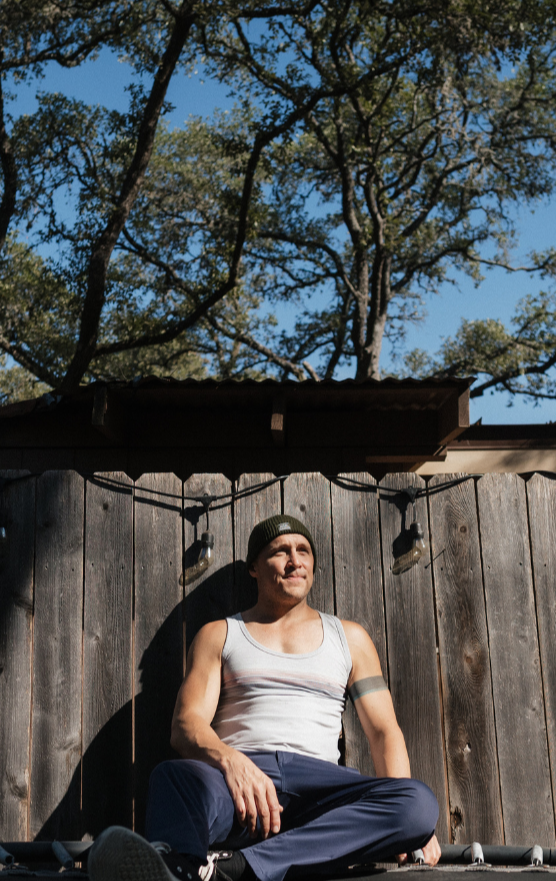
Dr. Ted Achacoso on smart drugs, methylene blue, and community
Oct 12, 2020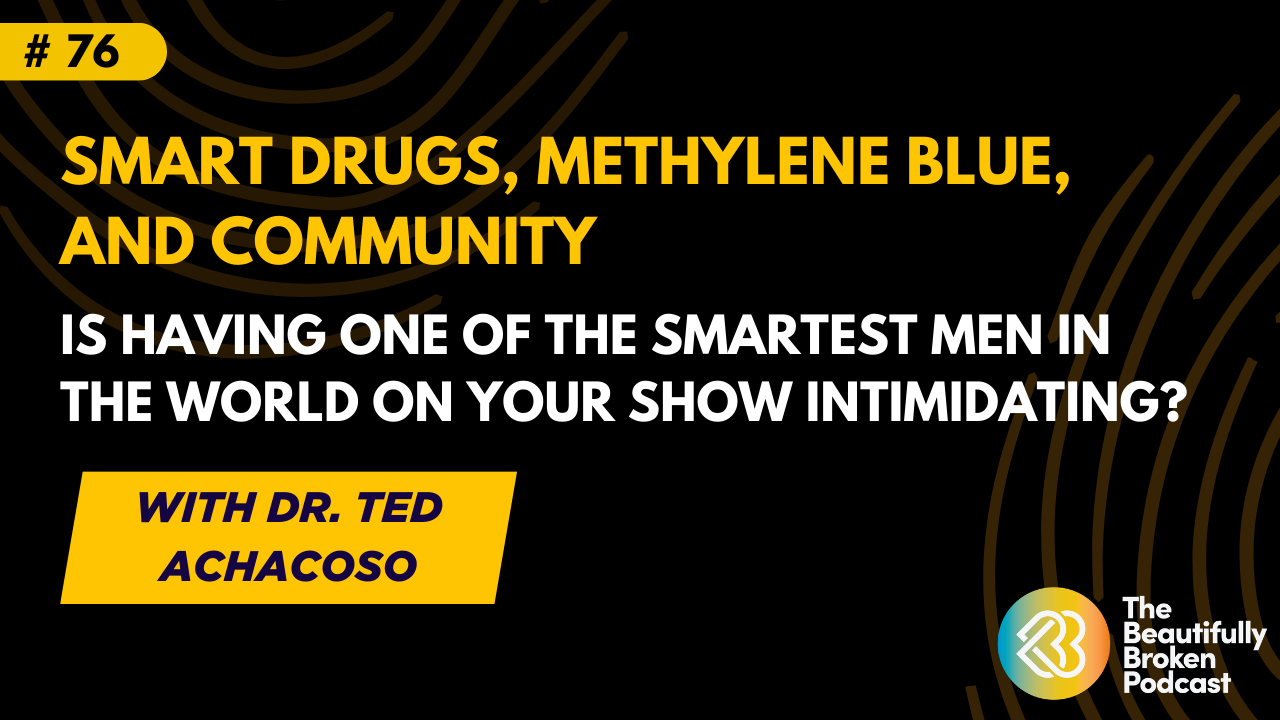
WELCOME TO EPISODE 76
In this episode, Freddie talks with Dr. Ted Achacoso, the founding pioneer of the clinical practice of Health Optimization Medicine (HOMe). Dr. Ted and Freddie discuss the importance of maintaining your body’s balance through health optimization, using Troscriptions to increase your mind power, and the importance of having heightened awareness in order to achieve a healthier self.
This episode highlights the concept of viewing yourself as an ecosystem and treating your body as something that needs to be in constant balance in order to function at its peak. If you are interested in optimizing your health, creating a better lifestyle, trocriptions, or just need something interesting to listen to, then you wouldn’t want to miss this episode!


Episode Highlights
1:49 Dr. Ted talks about the concept of Kintsugi and Wabisabi, and relating it to being beautifully broken - referring to the podcast title.
6:49 The concept of health optimization and how health maintenance is just as important as other concepts in medicine.
11:46 Dr. Ted expands on brain optimization, determining the four major neurotransmitters and their corresponding functions in the body, and why there should be a balance between them.
18:04 Dr. Ted talks about the body being an ecosystem comprised of different bacteria and trying to bring balance to the body’s normal flora.
23:24 Dr. Ted shares his breakthrough creation: Cannatine - a gum containing Methylene Blue that stimulates the neurons and helps out with your memory.
30:15 Freddie talks about the amount of disease in the country and why there is a need for an educational platform, like what Dr. Ted provides. Freddie also talks about his breakthrough experiences with Trosciptions.
37:32 Dr. Ted talks about the need to have heightened awareness especially in this pandemic and that the best way to take care of your health is through scientific guidance.
59:26 The bane of our egoic selves and how modern tools that can help ourselves have a better physical, social, and environmental relationship.
1:02:33 Dr. Ted talks about our sense of self-preservation and asking clients what’s beyond their communities.
UPGRADE YOUR WELLNESS
Marion Institute BioMed Course: biologicalmedicine.org
Code: beautifullybroken
Silver Biotics Wound Healing Gel: https://bit.ly/3JnxyDD
Code: BEAUTIFULLYBROKEN
LightPathLED https://lightpathled.com/?afmc=BEAUTIFULLYBROKEN
Code: beautifullybroken
STEMREGEN: https://www.stemregen.co/products/stemregen/?afmc=beautifullybroken
Code: beautifullybroken
Flowpresso 3-in-1 technology: (https://calendly.com/freddiekimmel/flowpresso-one-on-one-discovery)
Medical grade Ozone Therapy: https://lddy.no/1djnh
Code: BEAUTIFULLYBROKEN
AquaCure Machine + Molecular Hydrogen
Website:https://eagle-research.com?ref=24931
Code: beautifullybroken
DIY Home Cold Plunge Experience: [https://www.penguinchillers.com/?rstr=6757]
CONNECT WITH FREDDIE
Work with Me: https://www.beautifullybroken.world/biological-blueprint
Website and Store: (http://www.beautifullybroken.world)
Instagram: (https://www.instagram.com/freddie.kimmel
YouTube: https://www.youtube.com/@beautifullybrokenworld
EPISODE TRANSCRIPT
Freddie Kimmel and Dr. Ted (00:00.078)
We do have the tools to make our brains work one way. That's a lot better for us. We do have the tools to make our bodies work a lot better for us, even before it gets sick.
Freddie Kimmel and Dr. Ted (00:14.444)
Welcome to the Beautifully Broken Podcast. I'm your host, Freddie Kimmel, and on this show we explore the survivor's journey, practitioners making a difference, and the therapeutic treatments and transformational technology that allow the body to heal itself. Witness the inspiration we gain by navigating the human experience with grace, humility, and a healthy dose of mistakes. Because part of being human is being beautifully broken.
Freddie Kimmel and Dr. Ted (00:44.856)
Ladies and gentlemen, welcome to the beautifully broken podcast. I am so honored to bring to you, in my opinion, one of the most instrumental guests changing the face of health optimization today in the world. I have for you, have Dr. Can we go by Dr. Ted? Yes, Wonderful. Dr. Ted, a che coso.
is here with us and we are going to talk about so many things, neuro optimization. We're going to talk about nootropics, up regulating brain function and what it is to really feel optimal. But first, Dr. Ted, I just want to welcome you to the show and thank you for all you're doing in the world. It's truly incredible. we take pull back and take a bird's eye view, it's some of your work and how you're dedicating your life to making people raise their vibration. So thank you.
No, thank you. I actually, before we start, Freddie, I actually wanted to know whether or not you knew the Japanese word kintsugi or kintsuroi. I don't know kintsuroi. Kintsugi is the Japanese art of putting together the broken pieces of pottery with gold. Kin is gold and sugi is to put together
And Kintsugi is beautifully broken and beautifully put together. So it's prized because it's like our lives, you know, we break at several moments, we put it back together, we break again, put it together. But it's the gold, you know, and in the pathways that are unique to us that make the beautiful pattern of the battery. And that's called Kintsugi. And the philosophy behind that is wabi-sabi.
heard about that too, right? Yes. Yeah. Yeah. Yeah. It's the Japanese aesthetic philosophy or point of worldview of impermanence, of accepting impermanence, accepting imperfections for what they are, you know, and it's actually manifested in the simplicity of Japanese gardens and pottery and so on. So when I saw your title, said, beautifully broken podcast. The first thing that came to mind was, Kintsugi, right?
Freddie Kimmel and Dr. Ted (03:06.568)
And the things that we do to put our, for me, in put our health back together and maintain it, right, is sort of like a Hakekitsugi. So that's like, you you put back together beautifully what's broken and like a broken pottery that's been put together, the patterns there are uniquely yours, right? So in what I do, like in health optimization medicine, which I started 11 years ago,
Essentially, we have illness medicine doctors. used to be an interventional neuro radiologist, right? I used to choke, used to poke brains for a living. But we know how to repair things, right? We know how to do brain transplants, not brain transplants, we know how to do heart transplants. That's why the brain is the most important organ in the body, because it hasn't been transplanted yet. Yeah, can transplant the liver, the lung and so on.
You can do heart transplants, you can do liver transplants, kidney transplants, and so on. And we also know how to decrease your fever and treat you with antibiotics with acute infections and so on. But we have a very dismal record really in treating chronic diseases like diabetes, Parkinson's, Alzheimer's, and so on. And we regard them as inevitable as part of aging.
Right now, you know, we already know that aging is on its way to being reversed. Right. And the reason why you want to do the reversal process is for us never to pass through that period of chronic diseases. Right. Where you have cognitive decline and so on. Can we move age back? But that's the teaching in illness medicine. And so I said, well, you know, what about who's teaching about maintaining health? Right. How do we maintain our health?
It's not about preventing disease, you know, that's also in the purview of illness medicine. But for us is, you know, your car goes every 3000 miles, it says time for you to do maintenance, right? Before we thought that we didn't have any of such indicators. But in fact, we do. The technology has marched forward. We can take a look at small molecules in our body that are produced by the cells. All right, so
Freddie Kimmel and Dr. Ted (05:28.749)
in health maintenance, you have to move away from an organ point of view into a cellular point of view. What are the cells actually doing? Because all the organs are made up of cells. Each cell has a nucleus, mitochondria, endoplasmic reticulum, and so on. When we were in medical school, we were not able to peer at the function of the cells, right? We are only able to peer at the function of organs. But then technology has already moved in.
And we have not incorporated it in medical schools because we absolutely have no time. So now everything that we just memorize in medical school, you know, the metabolites of the Krebs cycle, which produces your energy and so on. We are now able to measure like your various different levels of vitamins, minerals, cofactors, and so on. And so when people ask me, Dr. Ted, do I need vitamin E? It's like, what the fuck, just measure it.
Right? Don't ask me because you can measure that already. So now that we have this, you know, maintenance panel that we can do, now we could optimize health, right? Because health is a spectrum. You go from health all the way to disease, right? So you should be able to check in now all the common elements that's happening inside your cells in your body. So the way I, you know, it's easy to think about this is, for example, if you have cancer,
You know, the oncologist is taking care of the cancer cells, but who's taking care of your healthy cells? No one is. So health optimization medicine doctors of health optimization practitioners, you know, for non-doctors can take care of your health because we now have indicators that show you where your metabolites are. So that's a very simple way of describing what I do. In illness medicine, you diagnose and treat disease.
In health optimization, you detect and correct imbalances. And the detection and correction right now is at the level of the metabolome or the small molecule metabolites that are produced by cells is because it's what we can see that we can present to illness medicine doctors like, look, you know, I don't want to be pushed aside by the illness medicine community and say what you're doing, you know, is not scientifically valid.
Freddie Kimmel and Dr. Ted (07:52.559)
What I want is for them to open their perspective and see, look, you know, we did not learn this in medical school, you know, health maintenance. We only learned about disease treatment, know, diagnosis and treatment of disease. We didn't learn about detection and correction of imbalances for health maintenance. And so that actually 11 years ago, I said, you know, can we start teaching like even just the mitochondria, which are the batteries inside your cells, right?
in bioenergetics to medical students and the medical school just didn't have time to do this. I mean, can you imagine you have a hundred quadrillion of these organisms inside your cells? You know, we call them organelles, but they're actually bacteria, right? And they derive them from your mother. And so it's very important. You know, you may be doing all of these other things. You're hacking your health, et cetera. But I feel, you know, you need to have a framework
for hacking yourself and health optimization medicine and health optimization practice is that framework where you could hack yourself on the most fundamental level, which is what does my body say about what I need? Right. And how can I meet that? So really what I do is I move your values back to back when you were between 21 and 30 years old. So because that's the golden period. Right. And I chose 30 because
30 is the age where the average age where testosterone actually begins to drop in men. So that's a very simple practice. So one of the pillars, of course, is clinical metabolomics that's used for detection, right? They draw your blood or they get your urine, they get your stool and so on. And they determine these small molecules that are produced by, and not only by your cells in your body, but also by your microbes, like for example, your stool microbiota.
are producing butyrate and propionate. These are what's called short chain fatty acids that are essential for your health. So we can measure this now. And then if you lack them, we give them. If you have too much of them, like you have too much mercury in your system, then we try to take it out or stabilize it inside your cell so it doesn't travel to your brain, for example. So that's the fundamental part of it. There's mitochondria, there's microbiota, there's your toxins.
Freddie Kimmel and Dr. Ted (10:19.161)
like exposomics, there's your chronobiology, your sleep, which is incredibly important. There is, you know, how much should you treat yourself, evolutionary medicine, and there's of course epigenetics, which is the mechanisms outside of your genes that actually determine a huge part of how much of your genes are expressed, right, in your body. And that simple example I could give for epigenetics is, you know, a mother who smokes during pregnancy is actually affecting three generations herself.
you know, her unborn child and her granddaughter. So yeah, you could see that those changes are heritable even if they do not belong to mutations in the genes. And do consider, Freddie, we never learned this stuff in medical school. So I said, well, someone's got to do this, right? Someone's got to put a framework together so doctors can actually help their patients, you know, shift away from disease perspective into a health perspective.
And I presume that, and correctly, that more practitioners, right, would be non-doctors, would be interested in it. They're more passionate, right? And they're closer. That's why I don't call them patients. I call them clients, right? They come to you. And so I created a nonprofit specifically to teach this, right? And we were touching on brain optimization. As you started earlier, you know, the brain can, you can now measure the neurotransmitters that are in your brain.
right? Before you had to open up the brain and get a brain biopsy to determine the levels, but now you could do correlations, right, with plasma and so on, and you could determine the neurotransmitters. And there you could see, for example, know, dopamine is responsible for your focus. And you could see the metabolites of dopamine there, it's called homo-vanillic acid. And then you could see the metabolites of serotonin. Most people call this your happy hormone, but it's
serves other functions than that. know, it's also the receptor for it is also the thing that's activated by psychedelics, right? The five hydroxy-triptamine receptors. There's a supplement called 5-HTP, which can boost your serotonin levels. And then there is epinephrine that's responsible for your alertness or your wakefulness. And there is GABA, the gamma aminobutyric acid, the inhibitory neurotransmitter of the brain. It was very funny. There was a study that I was reading a while back where they
Freddie Kimmel and Dr. Ted (12:45.583)
paired conservatives and liberals and they found out that they did that test of the GABA that the conservatives had so much more GABA in their systems like no too many breaks right whereas the liberals had a lower GABA in their brains and it was it was a funny study but it's a real scientific study that they did doing that so this
You can measure these four major neurotransmitters. Of course, the major excitatory neurotransmitter in the brain is glutamine, right? And the major inhibitory neurotransmitter, this is like your wifi, you know, the excitatory neurotransmitter. And GABA is their major inhibitory neurotransmitter. The others are actually used in what's called modulated formats, right? For example, dopamine is used for learning, especially reward-based learning. It's also the basis for addiction.
Because we learn, if you take a look at the progression of addiction or habit formation, we learn by making things more more more pleasurable, right? That's why you continue repeating the habit. And then an extreme form, you know, is addiction. And Johnson Brewer had a book, The Craving Mind, right? And he admitted in some podcasts, he said, he one point, was flying with the title of We Are All Addicted.
And that's because that's the way nature programmed us to learn. And so we have to pay attention to things like habit formation and so on and learn the techniques for those willfully. We have to actually set ways to do that and learn how to do those things. But in the end, what you're doing there is you're trying to keep the balance of all of those. You keep the balance of all of those. That's our mistake here in the West.
is that what we like to do is if one thing is good, we'll have so much more of it. Right? Put the gas pedal on. Yeah. Yeah. It's also very interesting. was reading recently on the differences in the response to the coronavirus pandemic. Right. There is more of a collective response in the East. Right. People behaving as collectively as a nation versus an individual response. People responding as individuals. You know, you can see it's just like
Freddie Kimmel and Dr. Ted (15:06.161)
the brain, you know, you need to have some sort of balance of these things. And that's where you do your optimization, right? Balancing. You're just looking at one. You have to be brain optimized first or neuronally optimized first, meaning your neurotransmitters are just at the optimal levels, you know, between 21 and 30 years old before, for me, before you overclock it, before you push your brain to the limit, right?
So before you take any supplements, et et cetera, my heuristic, my rule of thumb that I could give anyone who would like to do that is to make sure that at least your micronutrient optimized first, your vitamins, minerals, cofactors are all at the optimal ranges before you actually kick them off in one direction or the other. Because anything that you take will push it one way or the other. Right? Yes.
Yeah, I think that's such a great point. know, I think about, you know, the way you just described it, they're amazing pieces of knowledge. And when you know what drives what, it's fascinating. Well, I'm deficient in this. And yes, there's enough information out there, in my opinion, to be maybe a personal, I've got to drive to optimize or if I'm a functional medicine doctor, there's enough information out there just to be dangerous.
And if you don't know what to do in what order, or as you said, to look at the bioterrain and make sure the balance, the core pillars of our life are so solid before we go trying to, you know, do a week of like nicotinamide riboside, NID, or we go by your hyperbaric oxygen chamber or whatever. Do you understand where in the Krebs cycle that's going to optimize that ATP production? And I don't think people always do because marketing is so strong in the U S you're like,
Yes, I want that. You know, I think about like all of the long story short, when I went through, you know, when I first went down my rabbit hole of health, was like, first it was like Lyme, arthritis. And then it went, it moved into metastatic cancer. But in the Lyme, I remember seeing pictures of people taking, taking Celebrax and people were doing deep squats on the beach and throwing kids over their head. And I was like, that's the way I want to feel. And I begged my doctor for Celebrax. And he was like,
Freddie Kimmel and Dr. Ted (17:24.217)
No, you don't really, you don't want that. And I was like, why? I mean, they're doing deep squats. Why don't I want the Celebrex? And he's like, yeah, it doesn't quite work like that for everybody. So the marketing, the marketing is so good. So the guidance is what we need from you. You know, Freddie, you touch on a very important thing in there because, you know, all of these advertisements, you know, they program you one way or the other that this is how it's supposed to be, or this is how you're supposed to look and so on. And when you get lost,
in the thicket of biohacking, right? You try one thing and you try another and another and another. And pretty soon it's like, what the fuck am I doing? You know? So what I did then is like, was, was looking, I was probably spending like a thousand to $2,000 every month in various supplements and gadgets and all of that stuff. And then I said, no, no, no, I want to affect
every fundamental cell in my body. What is it that's common to all of them? And so when I said that's where I want to focus, then I said, well, this is what each and every cell needs in the body. So that's when I started to focus on the mitochondria, on the symbionts like bacteria, on the poisons that go in them, on the immune system.
them and how resilient they, you know, what in the cell makes them resilient. And I always, I never looked at the organs, you know, because it took me three years to get into this perspective. You know, you could stumble for three, for about three years before you really get into the fact like, you know, that's illness medicine. You know, this is where you're focused. And then you realize that you're actually not looking at the human being anymore as an individual. You're looking at
the human being as an ecosystem of cells, right? An ecosystem of organisms. And they are all in balance with each other, just like the Amazon rainforest, you know? If there's an overgrowth of one, you know, and then the depletion of the other, then there's, you know, there's an overgrowth of the other species. And you look at it that way. And that's called the holobiont, right? You're looking at the holobiont. Whereas the illness medicine is looking at us
Freddie Kimmel and Dr. Ted (19:47.885)
as an individual in a human population. And that's all right, right? That's all right. If you're trying to test, for example, the efficacy for antibiotic, it has to work across the population. But when you're dealing with health, it's like in Sugie, right? You are broken at very specific parts. You're imbalanced at very specific parts. And therefore, you know, when illness medicine doctors are new to this, they will say, where are the randomized clinical trials?
We cannot do that because each is specific to the person, you know, his lifestyle, his relationships, his environment and so on, right? Such that you cannot have a one size fits all. So all we can do really is to do quantitative statistics, qualitative statistics rather, rather than quantitative statistics case reports. This is what happens. This is what happens, right? You cannot.
do a one size fits all therapy for a holobiont because it's an environment in itself. So when you're taking a look at the body as an ecosystem, then suddenly you're not looking at your place in and your disease in this big community of people rather than you are the community. So where is it in the community of organisms in your body? Are you in balance? Right?
Is it in your microbiota? That's why you're depressed. You know, we know that this now on enteric microbiota, got brain access, right? When we were in medical school, it was just a gut brain access. Well, fine. Right. But now it's the enteric microbiota, which is your gut bacteria, got brain access. And, you know, we know that, or it used to be, at least before November, before I attended a conference in Italy, that our gut is colonized during childbirth, in spontaneous vaginal delivery.
right? That's why, for example, for cesarean sections, you see that the children usually have a lot of asthma or lot of immune disorders because there's improper colonization of the gut bacteria. But then in this conference, they also showed that even the placenta, which we thought to be sterile, know, has bacteria. In medical school, the ureters, where the urine passes from the kidney to your bladder, right? We were taught, initially thought that, hey, you know, that's sterile. Actually,
Freddie Kimmel and Dr. Ted (22:10.373)
It isn't. It has a resident microbiota. So a lot of things have changed and these are still not being taught in medical schools. So how are we going to create a framework that incorporates all of these new developments that are really more run through health? For disease, well, that's already the end point. It's already broken and it needs to get repaired. But when you're just in the imbalanced state,
how are you going to bring back the balance? And that balancing process is health optimization. So for example, in neural health optimization, you're balancing the different neurotransmitters, right? And what I noticed was that whenever I traveled and, you know, for me, heaven is being in one place, one time zone for at least two weeks. So it sounds awful, but
For me, know, coronavirus has actually put me in one time zone, at least for the time being. But when you land, you're immediately expected to perform, right? Either you're lecturing or you're meeting with patients or clients or meeting with high profile people and so forth. And you must be on, right? So I created something for myself, which is now called Blue Caneting, right? Initially, it was a gum, right? It was a gum. It could contain methylene blue.
some caffeine, a little bit of nicotine and some CBD. And I put them in a gum form and it actually worked. know, the methylene blue is an electron donor to the mitochondria. So it provides your neurons more energy, right? And then the caffeine, of course, you know what it does. It, other than wake you up, it's also good for short-term memory. America's favorite smart drug. Yeah. there's nicotine, right?
which is of course is also for the nicotinic receptors is also responsible for your working memory. Right? And then CBD I placed in there to round out the spikiness that's induced by caffeine and nicotine. And other friends said, what's that your tongue's blue? Like your tongue's blue right now. I am dosing on Dr. Ted's medicine right now.
Freddie Kimmel and Dr. Ted (24:31.769)
And I'll tell you about my experience, but I want you to keep going. Okay. And so, well, okay, you know, said, dad, we really like more of the gum. So I said, well, let's have it manufactured. no, since it's a gum, it has to be done by a confectioner and no confectioner would touch it because it turned all of their equipment blue. So I said, well, okay, reformulate, reformulate. So now I said, it's a buckle, trachea buckle, because you have to insert it between your upper cheek and gum, right?
People think it's sublingual, but it's not. It's closer to the circulation, brain circulation, that based off part of the brain. And, know, it has a very gentle rise and it gives you what I call a wide focus and a wide focus can simply, for me, a simple way of looking at it is you're able to focus on the reaction of your audience. Like if you're a comedian, you know, they're not laughing and you're focusing on what you're saying, you know, and, and adjust it accordingly. So when I'm lecturing, et cetera,
I'm taking a look at whether or not it's going beyond over the heads of my audience and then you adjust accordingly. you have that kind of awareness. This is I call a wide focus. And there are people who either don't drink coffee or they're caffeine naive, or they don't like nicotine or they don't like CBD, but they want methylene blue. So they requested that I create another product and it's called Just Blue. It's methylene blue, but it's
higher dose of Methadone Blue, about 16 milligrams of Methadone Blue. what I say is this gives you, instead of a wide focus, this gives you a bright focus. It energizes your brain, right? The Blue Cannotine has what's called in formulation, sensorial cure. know, it has a kick. You know, when your drinks like vitamin B,
Pure vitamin B has guarana in it. The guarana simply is to give you a kick. It's not necessarily, it's not necessary to be there, but instant gratification demands that you feel something right away, right? So just blue doesn't have that sensorial clue. It's just a gradual rise and a brightening of focus, right? And then gentle decline. And what I usually recommend for the dosing of both is that, you know, it's scored by a fourth. I'm a fucking lightweight.
Freddie Kimmel and Dr. Ted (26:51.601)
I can only take one fourth at a time. Oh wow. Yeah. Yeah. You take, you take a fourth and after about 20 to 30 minutes, if you don't, uh, if you're not experiencing anything, you put another fourth in there. Usually for people, you know, starting with a fourth to a half, if you're a coffee drinker, you know, a half is okay. Then you increase it by another fourth, but for those who drink six cups of coffee a day, you know, there's something seriously wrong with your, with your brain optimization.
You want to examine that habit. Yes. Yes. And for those people who can take it, you know, who are used to taking like two milligrams of nicotine gum, for example, they sell them in two and four milligrams in pharmacies, right? And this one contains only a milligram. So essentially what we're doing here is that the combination is a one plus one equals three. Blue canadine has more of a synergistic effect.
on that and you know being trained in pharmacology and toxicology I know how to mix my poisons Freddy. Is that I did follow all the guidelines for like the packaging has to be childproof right? Yes. And that the ingredients that I use are pharmaceutical grade. I know that some people have tried to copy this formula with aquarium grade methylene blue please don't do that. It has a lot of toxins and impurities right.
This is pharmaceutical grade methylene blue. It's not even food grade methylene blue that you use for dying food, right? This is pharmaceutical grade methylene blue. And, if this is precision dose, right? the milligrams that you're getting are exactly the milligrams you're getting. And that's because my training is actually in drug formulation. So, you know, I want people to know exactly how much you're getting. This is not the same as any food supplement. Like for example, if you're going to get,
cannabis edible out there, you don't really know how many milligrams you're going to get, right? Especially now that beers are coming out with THC in them, And gin, know, with cannabis in them, know, cannabis infused drinks, et cetera, we're not in that category. We're more in the precision dose category. So you know exactly how much you should take for yourself, right?
Freddie Kimmel and Dr. Ted (29:16.183)
And you can decide whether or not it's right for you. Maybe it's not the proper supplement, no tropic for you, right? What I usually recommend is optimize your neuronal health first. Take a look at the health of your general cell, right? And then take a look at the health of your neurons and bring them back first to optimal state before you even try overclocking their function. That way. What I say when my clients come to me, I say my goal in this relationship.
is to get you addicted to the feeling of wellness. So that when you get off kilter, either you get an imbalance, you know immediately what the feeling is that you have to return to in terms of balance. mean, most people don't even know what a feeling of health imbalance is, or the way they know about it is looking at images, right? Looking at the advertisements on TV that this is what good health is all about.
Yeah, and people commonly associate, you know, the ripped male with the 12 pack with good health. And I've seen that especially, you know, what's been eye opening to me is within Corona, what we see, we see people that are in incredible shape, professional athletes, some people are coming to the emergency room. And I always am reminding people that we are, I think it's the 35th most medicalized nation in the world. People are, we live on prescription drugs here. It's the norm. I think it's 80 million people in the U.S.
living with a chronic illness and then it's like 55 living with two. So this is there's a lot of disease in this country and ripped bodies does not mean healthy and it's a new conversation and it's not one you're going to get with your doctor. Like you're saying this is why you created this educational platform. I just want to offer you know my experience with the transcriptions so I had my taxes due.
So my taxes are due in order to qualify for like your personal PPP loan. They needed to be done on the 30th. So like the morning of the 27th, I pull out my six books of receipts and I pop up a prescription and literally that night at midnight I was done. And I wouldn't meet for numbers and sheets and org at the org. You know, it's overwhelming. I know what I got to do to do my taxes. I do it every year, but it's overwhelming. And I just sat down.
Freddie Kimmel and Dr. Ted (31:41.251)
And without stressing about it, I just kept going. was very machine-like. was really in the flow. Now before transcriptions, I used to be like, great, I'm going to go to Wegmans, the grocery store in upstate New York. I'm going to get a half a nicotine patch. I'm going to do a shot of espresso and some CBD. Like this is me like six years ago, you know, doing this. But what I would notice is as I was recovering from a horrible mold exposure, I went through a lot of chemotherapy and Lyme disease. You know, my bioterrain, my normal wasn't normal.
So when I would do the espresso, the nicotine and the CBD, I would have a depletion afterwards because like you said, I had too much gas pedal for the reserves that were available to me. And now I find I feel really good after the transcriptions because, you know, I've been at this a little bit of time, detoxing the body, removing heavy metals, up regulating my diet, my neurotransmitters, my sleep function. You know, it's not perfect, but it's really, really good compared to
you know, where I was 10, 15 years ago, it's absolutely incredible where I was 15 years ago, but it matters how this responds to you. And I'm always that person that takes something and I'm like, you know, I'll do like three pumps of like NAD and I'm like, this stuff is awesome. And then I'll have friends be like, yeah, I did four bottles, nothing, don't feel it. Because there is, like you're saying, there's, when you mine the bioterrain, the garden, there is this, you're going to feel when it, when it mists as opposed to needing four inches of rainfall.
You're going to feel the subtleties. See, Freddie, you're one of those that actually setting an example, right? This is what you want clients and, you know, patients and people to do is to be sensitive to the effects of things on them. Like food, for example, you know, I require food sensitivity testing for my clients because, know, you may eat something right now.
And you may not experience the migraine until two days later. Right. So you have all of these delayed effects of food sensitivity. You know, you're not allergic to them. It's not an IgE-immediated response that requires an epiPen. Right. But you have these delayed responses. And if your response, if you are sensitive to your body, you know, you don't only go back to what did I eat a few hours ago, but
Freddie Kimmel and Dr. Ted (34:02.646)
you go, shit, that was, you know, I remember I got this migrant again two days after I ate chocolates, you know, two days before then you, you know, that kind of sensitivity is actually needed if you really want to see what this body is doing, right? You have to be sensitive. That's why, you know, some practitioners require you to keep a journal and so on. But this is a skill, a very simple skill that people can have, you know, is just to note down
exactly what you're putting inside your body and taking a look at your response. The other thing that you may notice is when you're relating with other people, whether virtually or in real time, you know immediately what particular personality type stresses you out. And then you notice when you return home or you're talking to the people in your household, you become irritable. And that's already been the effect of the environment on you.
Another thing that you have to be sensitive to is to ask yourself first before you start screaming aloud, you know, am I hungry? Am I constipated? Have I pooped yet? Because all of these are contributing inside to your predisposition. So instead of blaming someone else, take a look at first whether or not you're hungry, you're thirsty, you're lonely, you're tired. There's this acronym,
Hungry, angry, lonely, So simple and it's so effective. Yeah. So, you know, these are the kinds of things that you get sensitive to, right? I presented a material on people who are alone, right, during this quarantine. And there's a 2014 study that showed that men and women were actually more willing to electrocute themselves, right? Than be alone with their thoughts. And that was an experiment.
Right. And I encourage everyone actually to have some sort of meditation practice where you can examine the contents of your consciousness. It's a beautiful game. I have this game when I tell my clients you can play this game where you're waiting in line or you you're you're getting bored, etc. Examine what what thoughts and emotions your brain is producing. It's scary. I mean, if you don't go there and you don't entertain those thoughts of what's on the undercurrent.
Freddie Kimmel and Dr. Ted (36:27.33)
I mean, I think this is a perfect example. These last three months, you know, we took away all the outlets of entertainment, the baseball, the sports, you know, there's nothing going on there. We can't go out to a movie theater, no social events, no family picnics, no vacations. And what are we left with? It is nothing short of painful. Now for everybody, I think there's a degree of pain, but especially if you're not used to just being with yourself. And I see this, I see this in the agitation through social media.
I see this how people are interacting with one another. The rage is palpable, you the anger and the frustration. So I know it's important and I know it's imperative and there is no replacement for that. You know, I, talk to people a lot about whether it's a nootropic or again, like a, like a red light or a stem cell injection, they're all tools and there is no spiritual bypassing to the work. You're going to get to the layer of the onion, which will never stop peeling. you're, it's someday you've got to deal with that emotional component.
of what you are, what your truth is. And it's the most important thing. You know, I try to simplify it for the people that I teach, which are usually my patients, my clients, you know, other doctors and practitioners. tell them, you know, once you're lost in thought, you've lost, right? You know, what? Because your attention gets, once your attention gets hijacked by your thoughts and emotions, then you lost the game, right? And especially right now,
there has to be a heightened awareness among us, right? It's that, especially within this pandemic, that, you know, the virus is gonna do what it's gonna do. That's its nature, right? We have to go lower than all of the symbolic interactions that we have and take a look at what the nature does and what we need to do, you know, what we need to do in order to contain this. So,
You know, it knows the virus knows no boundaries, it knows no politics, it knows no religion and all of that. Right. And so the best that we have, right. The best that we have is scientific guidance on how to do this. And, you know, here I am starting health optimization medicine because I wanted to present to the illness medicine group that, yes, we do have scientific guidance now on how to maintain health. Right. And
Freddie Kimmel and Dr. Ted (38:52.502)
It's the same idea that we have. We have scientific guidance on how to deal with this. It's just as collectively, you know, our generation hasn't experienced this pandemic and the several generations that the two generations, the generation above us hasn't either. Right. So we see how short term the brain works. And so we have to get lower than what has been, than what our impulses tell us.
and take a look at the guidance is there, you know, the guidance for our health, the guidance for prevention, the guidance for, you know, we, have all of these things. In fact, one of the jokes that I have for illness medicine people, because they don't have a unified guidance for disease prevention, right? I have a unified guidance for health maintenance and promotion because it's true for all cells. But if you're looking at, you know, this is the diabetes prevention guidelines. This is the
the heart attack prevention guidelines. And this is the stroke prevention guidelines. And I said, shit, if I had a patient with all of those, you have to put in all of those like 27, 30 things that they should follow. And that's the difficulty if you're looking at it on a disease by disease basis. And we look at it in its totality, there is a fundamental place where you can start, where you can start your health.
when you can start an actual decision about how to behave at a time like this, Where you could secure your guidance and so on. Just forget about things that you believe in. Take a look at the guidance that's there, that's available, because it's the best information that's available to us, right? And I know that before we started this, we were talking about storytelling and conspiracy theories.
And we are a species that loves storytelling, right? We love it. they're easy to remember. But remember that the stories that we tell are not necessarily true. So before we tell the story, let's make sure that the story that we tell is true and can affect action. Can affect health preventive action, for example. Yes.
Freddie Kimmel and Dr. Ted (41:11.044)
Yeah, and conspiracy theory is nothing more than this is, you know, storytelling taken to the extreme. You know, we like things, you know, with motive, know, imputation of motive, etc. Because the brain, you know, especially the default mode network of the brain, which is the seat of the self or what's called the seat of the ego, right, is a network in the brain that resides in the midline structure of the brain that's known as the seat of the ego. And, you know, it's when you ruminate, there's an increased activity there.
and so on, you know, thing that goes in is actually processed in terms of is this a fear response? Is this gonna is this gonna kill me or isn't it? Right? It's survival first. Yes. So you could see how paranoia can immediately get woven in to our stories and our stories. For example, we have in there, you know, the networks that contain the theory of mind and the theory of mind is, you know,
You think you know what the other person is thinking. Well, you could, I am usually gloriously wrong about what the other person is thinking, but we think we do. And that's called the theory of mind and it's embedded there. And the theory of mind contains those stories, right? That person is probably doing this, is looking squarely and this and that, and you know, and he's probably lying, et cetera. And we tell these stories without even checking in ourselves that we are already inventing a conspiracy, right?
we are unaware. And that's why it's very important to check the contents of that consciousness and see whether or not, you know, where's that story coming from? Or where's that conspiracy theory coming from? You know, because we can put them, we can always put them together. But what I like about what has been mentioned about blue canadine in fact, and that's the reason why I bring this up is that, you know, your default mode network is wired
basically opposite to the task positive network, which is the lateral cortical parts of the brain. The parts that are well known are the dorsolateral prefrontal cortex, where you see the devices stimulate the dorsolateral prefrontal cortex, and of course the posterior parietal cortex. And part of it is also what's called the salience network, which includes the attention networks. And these are the structures or the networks that are responsible when you are focused outside.
Freddie Kimmel and Dr. Ted (43:36.546)
when I used to do minimally invasive surgery, you would get into a flow state because you're looking outside, right? At that point in time, the self or the ego does not exist and time seems to delay. And so you're there and that's an external focus. And I suspect that a nootropic like blue canadine, for example, has a way of activating the past positive network. It's just a suspicion, you know, I haven't tested it, but if you are experiencing that kind of focus, external focus, cetera,
with the disappearance of your procrastinating self in the default mode network, I'm not going to do this next year, you know, then it's probably turning down the blood flow to your default mode network and turning on the blood flow to your tax positive network, allowing you to get into that state. There are many things that you could do, you know, to induce that. For example, I think it's a reason why exercise is better than any pill in terms of treating depression.
Right. Uh, because then you're, you're focused outside. You're not ruminating unless of course you go to a gym and you know, you get self-conscious that everyone's looking at you and you get depressed. That's why you push them out to the sunlight into a running or walking activity, et cetera, where they're looking out. Yeah. I had a, I had a great experience yesterday. I actually tried a, a half of a transcription. I did the pure blue. did.
an 18 minute program on a system I work with called the AMP coil, is broadcast in magnetic field and resonant frequencies to benefit neurotransmitters. And I did 10 minutes on a red light, on a powerful red light. And man, after this workout, I was just like, it was like being in a state of heaven. That's the best thing. I was in pure bliss. was driving down the road, the sun is shining. I was so overwhelmed with happiness. It was amazing.
I didn't have to go spend a million dollars or go to the other side of the world. It's like, I've got all these things right here and I can kind of create heaven in my own reality by just tweaking a few little things within my day. You actually just said something that a person like me realizes over and over in his lifetime. Heaven and hell is inside your head, right?
Freddie Kimmel and Dr. Ted (45:55.108)
you know, when your mother used to tell you, you know, you're going to go on break vacation, you're still going to be the same because you're carrying yourself with you. Right. Remember that story where this guy goes to visit a new place and he said, how are the people here? And the person replies, said, well, how are the people in your state? Well, he said, they are horrible. They're rude. They're, you know,
they're conniving, blah, blah. Then you'll find that the people here are horrible, rude, conniving, et cetera. And then another person comes in and asks this person, how is it like here? How are the people here? And they say, how is it in your state? Well, they're gentle and sweet and kind and nice. And I said, well, guess you find the people here gentle and sweet and kind and nice. So you bring yourself wherever you are. yeah.
Yeah, there's a famous John Cobb zine line right wherever you go. There you are It's so true because think about when you go, you know We've all talked to that stressed out human being we have in our lives and they'll go to they'll go to maui You know, it's great for four or five days and then the opiate effect the opiate effect of the vacation wears off And all of sudden they're stuck with themselves. They're stuck with their ideology. They're stuck with
the glass is half full and the shower is not great and I wish the bed was more soft. And that's the self chatter, that's a self talk, that's the narrative that they live with every single day. And no blue carnitine is going to change that. Although it might with cognitive therapy and some energy work and a yoga practice, then maybe we can shift that for sure. Yeah. And some guided psychedelic journeys. guided is important.
Believe me, you want a guy there. But what I'm trying to say here is your outlook, your point of view, et cetera, et cetera, you know, that's really up to you. You know, you get also get to choose the environment by which you express the various different selves that there are in you. You know, we know that the self is an illusion. We already established that in neuroscience, right? The self is illusory. But then
Freddie Kimmel and Dr. Ted (48:18.912)
It's an old concept. It's called the looking glass self, right? So essentially the self that comes out is mirrored by everything that's around you, including your internal milieu, So internal milieu and your external milieu. So, and that's the self that would come out. So, you know, for me it's like, why not help along such that it's the best self that, is actually brought out by the environment, right? The world needs that right now.
The world needs that. know, when you're looking at the, you know, lot of people are saying, well, it's so difficult to have a meditation practice and so on, and they couldn't send their thoughts and so forth. It's like, for me, it's like, it's like going to a mental gym, right? You go to a physical gym to work yourself out, you know, set aside time during the day to work on your mental gym.
And the exercise is very simple. Just observe what's arising in the sphere of consciousness. Observe the thoughts, observe the emotions. You can use your attention to focus on... There are essentially three types in a spectrum of meditation. There's a focused attention or focused awareness where you focus on your breath. And then there's what's called open monitoring where you jump from your breath to the sensation of pressure in your body.
to the sounds that you hear, to the things that you see, and so on, all the while, you know, just being there. And of course, the last is being aware of awareness itself, right? Being the space where everything arises, but you are the space and you feel that. And that's possible to feel, you if you cannot feel that, you know, one of the things that Sam Harris recommends is, you know,
you know, have a guided psychedelic journey because it's definitely going to suppress your egoic self. Right. And so, you know how it feels to be selfless because at the point of being aware of awareness, the self is not there. The egoic self is there. And it's the egoic self that makes you suffer. Right. And that's the whole point. You know, for me, you know, I've set my own purpose to be to decrease suffering in myself and to decrease suffering in others.
Freddie Kimmel and Dr. Ted (50:41.236)
knowing that there is no other, the other person is also you. So it comes to a definition of what suffering people say, I want to be happy. Me, I say, I just don't want to suffer. And so what is suffering? And for me, suffering is really something that's very simple is when there is an egoic self that's there, that's clinging to
or averse to something. And it happens all the time. I want a cup of tea. I want a cup of tea. I want to say this. I don't want to say that. It's a clinging and aversion. That's the egoic self that's doing that. Of course, it has its purpose, right? But what we need to keep in our minds is that these are just roles. I have Dr. Ted, the doctor. I have Dr. Ted, lecturer. Right now, the podcast interviewee and so on. These are just roles.
You know, there is no one. great illusion is that there's one self that's doing all of this, you know, but there's none. And it's when this illusion becomes our identity and it clings to something and repudiates another and so on. And that's where suffering lies. Right. And we don't need a Buddha to tell us this. know, neuroscience has already shown us. It's just that he managed to do it without neuroscience. So whatever help we can get.
be the simple thing where you don't need blue canadine and so on is that you have a meditation practice. You can try out various meditation practices. There are people who have ADHD and therefore a different type of meditation is useful for them. They call it the Jackrabbity consciousness or the Jackrabbity self. It's just like splitting from one to other, other people who are actually more turtley or more turtle-like. So it's a different ways of doing it, but the goal is the same.
is to be able to be aware of the contents of your consciousness. And the big thing is to be aware that the self is also arising from the same consciousness. It's the same field where the flower that you see is emerging from, or when you're visualizing Eiffel Tower in front of you, it's the same condition or sphere or space where the self is arising. And when you're able to do that,
Freddie Kimmel and Dr. Ted (53:05.154)
then you'll see where your suffering is coming from. So in fact, that's the basis for people say, well, I have a headache, but I'm still happy. And meaning they're not suffering, right? Because they know that the headache is a pain signal of the body. Right? It's a pain signal of the body. And when the suffering goes, it's like, what the fuck? Why did I have to drink too much last night? Blah, blah, blah. And all the self blame and so on and so forth. That's the suffering.
So you remember the saying, pain is inevitable, but suffering is optional. suffering, essentially, is the stories that we create around something. So we are actually a collection of processes, We're a collection of processes, but we don't address ourselves as a collection of processes. It's very unsexy, right? We'd rather refer to us as one single self, as an illusion, right? Because it's a good adaptation.
Evolutionary is a good meditation to just address you as one rather than one process or the other. But in the process of meditation, you see that you really see this bunch of processes just arising by themselves. there is a thought. there is an emotion, you know, or there is an imagination or there is a plan. There's this and you lose the game when your attention gets hijacked by any one of them such that it becomes views like, like, what the fuck?
Why did he say that to me? And then you lost the game. Repeat the game again. Right. And then your brain will get reprogrammed. Right. Such that, such that you become less reactive, right. Yeah. Lack of things that are especially negative. I remember our brains have a negativity bias, right. We respond to negative things worse than the positive things. So
I always like to remind people that with marketing that marketing is going to be geared with a certain tone or a flavor to be able to get you to click or to buy or to move to that purchase. It's a red flag that they're going to put up. It's never a green waving peace flag. It's something to stimulate and agitate on slight level to get you to buy. Yes. And that's the same way. You know that you're programmed that way. Why don't you create your own marketing schemes for yourself to get you to do what you want to do? Yeah. Create your own stories.
Freddie Kimmel and Dr. Ted (55:25.162)
and so on for yourself. So that's the, you know, it's, and for me, that doesn't require, you know, 10 minutes, 20, 10, 20 minutes a day is all you need to go to your mental gym. You just go to gym for what an hour or two, you know, but you're unwilling to go to your mental gym, right. To improve your life such that you don't suffer as much because when you don't suffer as much, you treat the people around you so much more nicely and they don't suffer as much. So
So then you have this trickle down effect, know, or a lateral effect for your tears and so on. And that reactivity or the knee jerk response is what you essentially, you do not get rid of it, but it's presented in your consciousness such that you have about, you know, for me, I count three seconds and take a look at it before I actually respond. So you're not reacting, you're responding to something. And sometimes silence is the best response to things.
Yeah, it's a better way to engage. Yes. And not only a better way to engage, but it's a more compassionate way to engage. Because you know that the person who's selling this to you is probably doing it out of a knee jerk response. And therefore you're responding to them as someone who actually understands what their brain processes are and what they're going through. Right. So makes for a better world. And it goes up, you know, what I call
I like to use, I like to verbize nouns. you know, it's called, you know, I like to fractalize the concept. So, you know, when you're able to see the desiriness of the self or the ego, and it's the one that's wanting and craving and aversion to things all the time, then you could see all of your wants and desires, all sorts of just appearances in that same conscious space, right? And therefore you begin to see how, you know, we don't need to pollute the oceans so that we could gain more profit.
because you want to buy a yacht or something else. So you don't need to traffic humans to be able to make your money and you don't need to do this and that because you could see that all of these are coming from all of these desires. So you could see how from something as fundamental, as I said, fundamental in health optimization medicine, the fundamental of the cell, it's the same thing. For me, I'm looking at what are the fundamentals of suffering?
Freddie Kimmel and Dr. Ted (57:51.948)
what makes you suffer. when you see that it's actually the illusory ego that's actually craving, I want that relationship. I don't want that relationship. I, know, I want that car. I got it. You see that there's a suffering going on there. And when you extend that, you could see why the world is the way it is because we have run away egoic selves that have unexamined wants and desires. It goes back to really as simply Socrates, right? The unexamined life is not worth living. It's just that now
We do have the tools to examine our lives. We do have the tools to make our brains work one way. That's a lot better for us. We do have the tools to make our bodies work a lot better for us, even before it gets sick. So you could see that at the core, it's that, if you want more martillary goods and more of this and more of that,
Then you're going to do things that are going to achieve that. then when you see that there's actually just an insecurity of the ego, then you could address it immediately. It's like, oh, I don't actually don't need to do that. I have enough. I have enough. I have enough. I am enough. Yes. I am enough. And so on. So the issue of suffering fractalizes itself and it manifests in the world that we have right now, in the world of humans that we have right now.
And you could see now that the concern is not only for other human beings. I'd like to repeat this. Humans are not the most important species on earth. They're only the most pernicious, right? It's like we've risen on top of the food chain, but there's only one earth that's the one spaceship that we're riding on. And so we see that, you know, that fundamental root of suffering that we have, you know, is actually
If you don't realize what it is, we continue destroying the environment that we have, not only the relationships we have with other people, relationships with our environment, of which we are part of, we always forget that we are shaped by our environment, right? Not only physical environment, our social environment, and so on. know, that light that you're shining in your ceiling or in your lamp, you know, is affecting you.
Freddie Kimmel and Dr. Ted (01:00:04.851)
in some way, the electromagnetic waves that are coming in from your Wi-Fi router is affecting you in some way. This conversation and the meaning that's being passed back and forth is affecting you in some way. So you could see all of these things, they're all connected. And when you sense that deep interconnectedness of things, you become freer. It doesn't just have to be you. You begin to rest.
you know, in the security of the connectedness of all things that, you know, you you begin to, to keep that gum wrapper in your pocket, you know, until you are able to dispose of this in a trash can rather than throw it in the, in the water in the beach. Suddenly this little realization or this real shift in perspective of where suffering is coming from, you know, it blossoms into this network of behaviors, right?
that then are not only beneficial to you, your relationships, your prosperity, your abundance and everything else, but to the planet as a whole. Right? And what do you know? Maybe to the universe as a whole, you know? I think so. I think so. I think so. You know, I was speaking with a colleague yesterday and she was talking about some of Kepler's research. It's like 1609. And he was looking at the songs and the frequencies of the universe. Yes.
Do you know what mean? That through music, through sound, through vibration, that there is an order and she had this image of a spinning cosmos and you saw the circular spin in the universe, just like there's a left and right spin and energetics in the body. And in that image, in that reference, I felt some of my fear went away of the last three months. Because I think for me, one of the scariest things throughout this three months has been feeling
not literally alone, but feeling alone and looking at how different our opinions are of each other, of other human beings and how we can clash when we were all pulled apart and separated like glue. And me seeing that image, I remembered that it's not all I need to do is to let it flow through me. I don't need to generate the energy. I'm letting it come through. I mean, an open channel to all the things that I do know. And it really helps with a clear brain. It does.
Freddie Kimmel and Dr. Ted (01:02:33.195)
You know, you could see also in the behavior of clients, right? Right now, it's for me, it's all telemedicine and so on. you know, health optimization and practice lends itself very well to virtual practice because, hey, you can ask the molecules, how are you doing today? Right? So you have to take a look at their values and you could create a protocol to balance out the nutrients and the hormones in the body. But what's, you know,
when they come to me and they do a video conference with me, you could see, and you should understand this, that as a human animal, right, you will have that same evolutionary programming, right? The first is survival. You know, Dr. Ted, you know, how can I, you know, improve my immune system, blah, blah, blah, blah, blah. So you want to protect your life. You want to survive. So you could see that in the words that are being said to you. And that's part of programming.
And of course, I tell them, you eating properly? Because the gut is the biggest immune system in the body, right? So it becomes a discussion and we got the gut immune system and so on. And then after that is survival and reproduction. What do I do with my children? The husband never figures into this. Like, forget him. What about my children?
What about my babies? Yeah, what about my children? Because, we're a survival and production that's evolutionarily programmed within us, right? But then what I do is I actually make them jump from there and ask them, what about your community? What's your community doing? know, oh, in my little gated community, you know, this is what's done. I said, what about what's beyond that gated community?
And then since most of these people are people of great means, like how much have you donated lately, you know, for this thing and that thing and that thing. And not even initially on a smaller scale, like, you know, to those that are not receiving any income, like your hairstylist or your this or your that, you know, why don't you send them something? And then after that, you get a little bigger and bigger and bigger. So it's like,
Freddie Kimmel and Dr. Ted (01:04:49.611)
having to take a look at, well, we have your bio-evolutionary programs, and then you have your social-cultural programs that are in there. And many of them are still geared towards your selfishness, right? And the big thing about them is to open up those programs and say, hey, there is this big world out there that you're a part of. If you are of means, you have a responsibility not only to yourself, but you have a responsibility towards others.
Right? So, and doing that is not about doing good, or it's not being kind, or it's not being altruistic. And because altruism in a biological sense has also its selfish motives, right? For example, if you donate masks to your community and just your community alone, it's because you want to be protected in that tiny community where you're not going, you're just going out in the community, right? But this is called non-receptual altruism.
Right? You know that you're going to do these things without an expectation of anything in return. And just because you feel that internal sense of connectedness, not only to other humans, right? But to everything else in return. And therefore you have that. It's not even a sense of responsibility. It becomes part of your nature to be that. Right? And because you have an innate sense of compassion, you know, not only for other people,
you know, but for the environments that we live in. I was actually aghast when people learned it was pangolins, you know, they started like beating up pangolins and it in fact is not pangolins, it's still bats, right? And then now bats are getting a bad rap and that's why they had to do specials. Bats are not really bad creatures. know, so simple things like this reveal to you, you know, how
we have there are biological programs that are placed in their bio-evolution and then we have our social programs that you know for example we have mirror neurons right in the brain that makes us mimic other people we have face neurons in the fusiform gyrus right that allows us to recognize faces and so on but most people do not realize that you know humans do not have photographic memories you know it has been so fantastically characterized as it's a compost heap
Freddie Kimmel and Dr. Ted (01:07:11.543)
So the way we learn how to relate with other people based on our memories and experiences, but we should realize that the memories and experiences that we have are actually degraded over time and adapted to the situations that we're in. So even if we have previous animosities to people or other groups of people, you know that those can be reprogrammed and reshaped deliberately, right? Because only you can do that.
training in your brain. And it starts with being aware of what you're normally not being aware of. You're familiar with term like microaggressions, right? Have you been reading about microaggressions lately? That's just a sign of things we're not aware of, right? But it reveals this internal biases and prejudices that we have, you know, that we have against not only against other human beings, but,
against climate change, for example, or against pollution of the environment, especially the oceans and so forth. So all of these are just revelations of what's in there. if you have just a practice of trying to see what's in there without any judgment of what's going on, it's a good practice already. Get to the root of suffering, the self that's there, that's craving, that's clinging and being averse to things all the time.
And then you realize what an illusion it is, then you're suffering slowly. Yes, I know. mean, it's heard a great quote lately, and it was that Donald Trump and the Dalai Lama are a peak and a trough on the same wave, that there are different levels of expression. I really do. I really all politics aside that it's taken the judgment out of it. And I witnessed behavior. I witnessed the way people speak or don't speak or when they're silent, you know, compliant.
It brings the level of awareness that I can see it and what it sparks in me. I'm like, okay, what do I got to change? What do I got to shift? What is it about the internal spark that in me that is brought on fire by watching one of our leaders speak in such a frame of reference? But it's always like, what can I do? Because if not, if it's outside of yourself, my goodness, what a life of victimhood that we're putting ourselves in.
Freddie Kimmel and Dr. Ted (01:09:34.719)
It's like you're always under the oppressor or you know, it's always going to live in that place. But the power to heal yourself, the power to change yourself, which you said we have access to right now in this very minute. That's everything. And that's how we heal this interconnected world. That's that's it. Yes. And I would encourage, you know, people, your listeners, your viewers, everyone, you know, any adult to actually go in there and take a look at what beliefs you hold.
you know, because they've been set in there when you were a child, you know, when you were an adolescent, when you're an early adult. In fact, I encourage, you know, 20 somethings to go off, you know, actually, when you try to find yourself, it's always been there, right? There's no self-define, seriously. But the whole point of the exercise is to examine what beliefs are in there, right? Because the beliefs are what you hold true. They're not necessarily true, right? But it's what you hold true, but it's the one that
moves you to behave. For example, as an example in fundamentalist America, if Jesus Christ is true, do the following. If God is true, then behave, the following. So you could see how these beliefs that are in there have been set in there, and how do you change them? I used to do a lot of computer programming, and one of the best techniques that I used in order to
stop the subroutines from running is you set a variable that says if this is true then run this then you could set this to false right and it wouldn't run but if you don't need that anymore ever you put a semicolon and so throughout my life you know even until now i still dig for things that were set in there not by me but by people around me right by lecturers by
you know I grew up a Roman Catholic by homilies and stuff and you see you know all of these things it's like okay you know these are the things that you used to accept as true and really it's a very simple process ready to remember remember when you used to believe in Santa Claus as a child you totally believed in Santa Claus and so on that's what belief is like and that's how beliefs can be changed as you know especially as you get older and you could use
Freddie Kimmel and Dr. Ted (01:12:01.685)
you can install beliefs in there that are beneficial for you. Initially, you don't believe them, but you act as if you believe them, and then it gets incorporated into your behavioral routine. And that's why in habit-forming, it's almost always not mentioned, that if you want to form a new habit, you do the following, etc. It's process that they do. But for me, the most important part is the belief.
that you can change the habit because if you never believe that you can change the habit, then you won't. So, and that's important, you know, an important exercise that you may engage in every day if you like, or once a week, you know, just sit down and take a look. It's like, what do I really believe in? Right? And it doesn't matter if what you believe in is true or not true. Just take a look at how it affects your behavior. Right? So, you know, for example, I believe that
even as a single person, I can help by reducing my carbon footprint by recycling and so on. So it guides your behavior because some people say, you know, most people aren't doing it and so on and so forth. you know, or people say, I won't vote because this district is going to Democratic or Republican anyway. But if you have the belief that you, you know,
have the power to change things from within you, then you will behave differently. So it's very important to examine the contents of your consciousness. It's actually important. Part of that contents of the consciousness are the things that you believe in. And sometimes you will surprise yourself, like you're observing yourself in a certain behavior, and then you go, shit, it's a microaggression. like, what is the underlying belief in here?
It's fascinating. Yeah, you can the patterns. Yeah. I mean, even even, you know, like what you're saying, the understanding of the physical body and who I am and all these computer programings, and I often refer to the body as a computer, supercomputer, we're processing all this information at the same time. And what I've been, you know, feeling into this last three months is like, you know, what's the relationship? What's the spiritual relationship? What's the relationship beyond beyond religion, you know, with God with it?
Freddie Kimmel and Dr. Ted (01:14:23.863)
source of your understanding. And I'll have these things show up and it's uncanny. You know, I was sitting in Prospect Park, I'm sitting with a very good friend, Kate, she just lost her brother to cancer. both sitting there and we're both sad. It was a really hard week. We're sitting there and this woman's walking her dog. And all of a sudden we're both, we're both sitting there trying to get out what we want to say. And this dog that this woman is walking stops its owner and it looks at us and it beelines right to our lap and it looks at her.
looks at me and it lays its head right down into our lap. And we both just start crying. I mean, we just start losing it. And the woman walking the dog, she doesn't know she's a stranger. This is Prospect Park in Brooklyn. She's crying. She's like, I don't know why I'm crying. And we had all we were sharing this beautifully social distance moment of three strangers and the universe was like, I'm putting you guys together right now because you're going to release some shit.
And it was divine. mean, I sound so silly. mean, but it was so divine the moment and how abrupt and to be there and to feel it. It was it was magic. You know, I have a dog story like yours. So I was doing a walking meditation around the National Mall, right? The Capitol and Lincoln Memorial. That's about a six mile walk. Suddenly I found myself like 40 feet above me and I was looking at myself walking. And so I walked.
that way for time. And then I was where I was, right? So I had to cross through the congressional gardens. And I said, if anyone tells me that I'm fucking enlightened, if any human tells me that I'm fucking enlightened, that was a false experience. You know, that experience is totally negates itself, right? It's like, that's just a hallucination. So I was also talking through
this huge dog comes bounding towards me, right? It comes bounding towards me, it's really big. then, I had to, you know, to avoid getting knocked over, I basically knelt, right? And the dog, the dog came to me and I grabbed it by the collar and the owner was just rushing towards me apologizing. And I looked at the collar and the name of the dog was Bodhi, enlightened one.
Freddie Kimmel and Dr. Ted (01:16:47.639)
It's like, haha, really funny. my goodness. No way. That's amazing. It was more like a challenge. If anyone tells me that was an enlightenment experience, that any human tells me, I was very specific. Any human tells me it an enlightenment experience. That was fake. That was a hallucination. I made it up. And then this going home, that's what I experienced. Body, said that enlightened one.
And at that moment, I actually really, really laughed. said, ha ha, really funny. Yeah.
I love it. Dr. Ted, I want to be respectful of your time. I want to know just for the nuts and bolts, you know, if people are interested in your work, you know, we do have quite a few practitioners on here if they're interested in the training. Also, if people are interested in trying blue carnitine or the transcriptions where we can send people. Yes. If you want to have a framework for health optimization, both for doctors and health practitioners, the site is homehope.org.
It's a non-profit foundation that I started to teach people about health optimization. And there are going to be seven modules right now. There are three modules that are up. The four modules or the four other pillars are coming this third quarter. But you can already apply for certificate to practice clinical metabolomics, which is reading the
test results because they're very involved, right? And then making prescriptions for those test results. In other words, you have a certificate, can be given a certificate of completion and you can be given a certificate to practice after you submit about three cases. And for doctors or if you need it as a health practitioner, we qualify for 45 continuing medical education credits. yeah.
Freddie Kimmel and Dr. Ted (01:18:43.345)
And for Trescriptions, there's Trescriptions.com, which is a website. It shows you all the scientific studies for all the ingredients that are being used that are there. And you can also purchase the Blue Panettine and Just Blue from there. And our Instagram is at Trescriptions. I am not in Asia. I go to the Philippines 30 days a quarter, but I can't go right now. That's at BioBalanceInstitute.com over there. But those are places to take a look at my work.
And if you want to join me, it's not a crusade. That's a war, you know, this is more, this is more of a happy party. and so home of that org, a descriptions that calm at descriptions and by a violence Institute. Beautiful. And, know, just a couple of questions to sum us up here that I ask.
all guests, you've already answered what it means to be beautifully broken. And I think that's beautiful, putting the broken pieces of the shattered base back together with gold. And I had someone quote that before. I and I gotta look back and see what it is, but I love that image because it's all about the beauty in that is where the breaks are and how they're highlighted. think that's unbelievable. So let me ask if you could give one piece of advice, very simple, very accessible for people listening to the show.
to optimize their wellness, what would it be? Actually, I have this saying that's been quoted over and over, right? And the simple advice is actually optimize your lifestyle, right? And how do you do that? It's very simple. You take a look at your day, right? You have to learn how to sleep well. So when you wake up in the morning, you take a couple of glasses of water, you hydrate well, right? And then you go and
ground well and go get barefoot in the in the ground or in the grass. You sun well, you get your vitamin D, right? And you mind your EMF exposure. And then you eat well, right? Mind your nutrition, right? You relate well to not only to people, but the things, to events. People think that relationships are just with people, but you have relationships with things that you own and you know, the events that are there.
Freddie Kimmel and Dr. Ted (01:21:03.317)
you you plan something and it's going to rain, you know, and that makes you suffer. And then of course you love well. And remember that a lot of those stuff in your lifestyle, they already can be measured. you know, you know, get those molecules, there's metabolites measured and balance them, see whether or not the changes in your lifestyle are actually having any effect. Beautiful. And then my last one is if you could have a magic wand and you could wave it,
What would be one change that the human race would carry forward after this Corona epidemic? A species wide awareness. It's more like this, right? All we do is survive and reproduce. If that's all that we're going to do, then we're doomed, right? Where do we want to bring our species moving forward? Right? Look, we are, what are we going to do? We're
raping, pillaging, and plundering the planet for these resources were worse than the viruses. And then we what? We go to another planet and go do the same thing, rape, pillage, and plunder, and survive and reproduce. No, where is it that we really want the human species to go? What is it that's beyond our bi-evolutionary programming to survive and reproduce? We don't have
We plan, don't have an awareness of where we're just stumbling along, bumbling through. It doesn't take a lot to be aware of where do we want to bring our species. We're just one of the species on earth. For example, if we take a look at the elephants in a reserve, if they're overpopulated, we call them, and so on. We can't do that to humans. But what can we do as a species?
collectively to determine where we want to bring ourselves into the future. Because look, we are responding awfully to the pandemic. We don't have national leadership and neither do we have any global cooperation as a species. You how are you going to deal with this? And that just shows you how unaware we are as a species of how fragile we are. Our fragile our existence is here.
Freddie Kimmel and Dr. Ted (01:23:25.631)
We're lucky to be here, you know, but what about our children, our children's children, you know, what do we want them to be aware of? It's not what are we leaving them, you know, because we know that we already fucked up, you know, what we're going to leave them. But what sort of awareness do we want in them species wide, not as an individual, a species wide, you know, in order to bring the human species forward in the future? Yes.
Dr. Ted, it was an absolute honor. This is one of my favorite interviews. I'll call it out now. Sorry to everybody else that went before. It was absolutely incredible. I hope we can do it again sometime. Definitely. But the next time we're going to sing a show tune. Okay. Okay. I'm kidding. I'm kidding. You said it. Sorry. Thank you for being here, Dr. Ted. Thank you, Freddie. Thank you for having me. Namaste.
Ladies and gentlemen, you made it to the end of the podcast and here we are at season two.
I think this is the beginning of something really beautiful. So one way to support the podcast is to head over to freddysetgo.com and check out Freddy's Faves, where I've linked every five star product and healing modality you hear about on the show. Most offer significant discounts by clicking the link or using the discount code. Please know they don't cost you anything extra. And at the same time, they support podcasts through affiliations. So check out Freddy's Faves on freddysetgo.com. My heart.
honestly thanks you for tuning in. And if you've enjoyed today's show, head over to Apple podcasts and leave a five star review. gives us the virtual thumbs up that we're doing things right. If you want to connect with me directly, I'm on Instagram at freddysetgo or freddysetgo.com through email. Now, this is a message from my vast legal team of internet lawyers. The information on this podcast is for educational purposes only. By listening,
Freddie Kimmel and Dr. Ted (01:25:29.896)
You agree not to use the information found here as medical advice to treat any medical condition in yourself or others. Always consult your physician for any medical issues that you might be having. That's it for today. Our closing, the world is hurting. We need you at your very best. So take the steps today to always be upgrading. Remember, while life is pain, putting the fractured pieces back together is a beautiful process. I love you.