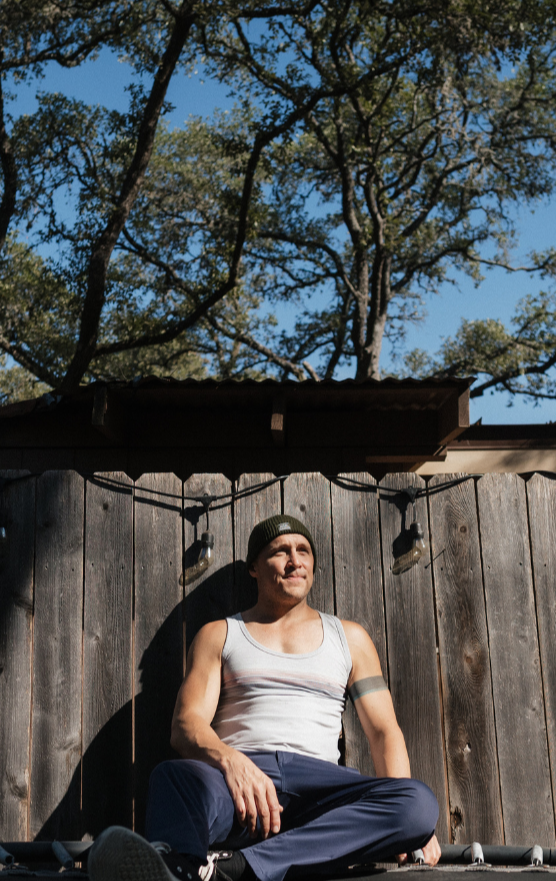
Fix your Breath, Heal your Life with Kasper van der Meulen
Jun 07, 2021
WELCOME TO EPISODE 95
This episode focuses on guiding you to the key to better health. Kasper shares how breathwork connects ancient and modern science, a step-by-step guide on powerful techniques and methods that you can try on, and its phenomenal effects that can lead you to a better state.


Episode Highlights
2:37 On how he discovered breathwork
6:19 Kasper’s discussion on the formula of life and the principle behind breathwork
14:30 How our lifestyle affects our immune system (and how breathwork helps)
23:01 Nasal breathing as a free solution to better health
34:31 Optimizing nasal breathing through the night and its notable effects
42:31 How nasal breathing helps with obstructive sleep apnea
49:31 Different breathing methods to help with autoimmune conditions
57:04 His remarkable wish that he wants people to have
UPGRADE YOUR WELLNESS
Marion Institute BioMed Course: biologicalmedicine.org
Code: beautifullybroken
Silver Biotics Wound Healing Gel: https://bit.ly/3JnxyDD
Code: BEAUTIFULLYBROKEN
LightPathLED https://lightpathled.com/?afmc=BEAUTIFULLYBROKEN
Code: beautifullybroken
STEMREGEN: https://www.stemregen.co/products/stemregen/?afmc=beautifullybroken
Code: beautifullybroken
Flowpresso 3-in-1 technology: (https://calendly.com/freddiekimmel/flowpresso-one-on-one-discovery)
Medical grade Ozone Therapy: https://lddy.no/1djnh
Code: BEAUTIFULLYBROKEN
AquaCure Machine + Molecular Hydrogen
Website:https://eagle-research.com?ref=24931
Code: beautifullybroken
DIY Home Cold Plunge Experience: [https://www.penguinchillers.com/?rstr=6757]
CONNECT WITH FREDDIE
Work with Me: https://www.beautifullybroken.world/biological-blueprint
Website and Store: (http://www.beautifullybroken.world)
Instagram: (https://www.instagram.com/freddie.kimmel
YouTube: https://www.youtube.com/@beautifullybrokenworld
EPISODE TRANSCRIPT
Freddie Kimmel and Kasper van der Meulen (00:03.308)
Welcome to the Beautifully Broken Podcast. I'm your host, Freddie Kimmel, and on this show we explore the survivor's journey, practitioners making a difference, and the therapeutic treatments and transformational technology that allow the body to heal itself. Witness the inspiration we gain by navigating the human experience with grace, humility, and a healthy dose of mistakes. Because part of being human is being beautifully broken.
Freddie Kimmel and Kasper van der Meulen (00:37.359)
Through my healing journey, I've become increasingly aware of the way environmental toxicity affects my body. In the past, I've tested high for mercury, lead, cadmium, glyphosate, and mycotoxins from mold. I've experienced this as fatigue, full body neuralgia, and brain fog. And after years of conventional treatments with limited results, I knew I needed to ask different questions if I wanted a different answer. Now around this time, I was introduced to the Ion Cleanse by AMD.
at an integrative wellness symposium. I came across a technology where people put their feet in water and over the next 20 to 30 minutes, ions were released into the water that assists the body's natural ability to release toxins. As you can imagine, I was very, very skeptical, but after my first session, I felt clear-headed, lighter, and a little bit high, and I was intrigued enough to invest in a unit. My N equals one experiment,
I've watched levels of most environmental toxicity fall by almost 30 % after four months. Now this is a friend favorite and as people come over to my home they ask, Freddy, can I please do a foot bath? This is a heart centered company. The support is amazing and they offer a 60 day, 100 % money back guarantee. The Ion Cleanse by AMD is a safe,
non-invasive way to help the body detox naturally and it's trusted by the Beautifully Broken Podcast. So reach out to Glenn at AMD today and see if it's a good fit for your home or your wellness clinic. Visit their site for more details at www.amajordifference.com.
Freddie Kimmel and Kasper van der Meulen (02:16.994)
Ladies and gentlemen, welcome to the beautifully broken podcast. I'm here with our very special guest, Casper Fondermulen. This is my second attempt at saying your name right. I think it's a little better all the way from the Netherlands. Casper, welcome to the show. Thank you. Great to be here. Well, I was just saying in in passing that I haven't really had a breathwork expert on the podcast yet and
You are someone who has a huge following around the work you're doing, optimizing the human experience through using one of our most valuable nutrients, oxygen. How did you get started into breath work? Well, I was working as a science teacher, actually, with teenagers. And I found that a lot of these kids had issues with anxiety, test anxiety, worries and panic attacks. And that's around the time when I also was myself in pretty bad health and mentally not.
in the place where I needed to be. I was, I was a mess in many ways. And I was looking for ways to help these kids in my classroom just manage themselves a little bit better. And I started delving into a lot of research primarily first about cognition and about learning about focus. And then later on, I realized that these kids are in a better state that will help them have kind of the desired learning behaviors that they're trying to get in school. And one of the things that I got very interested in was breath breathing, simply because
The big question was I was living with a lot of anxiety, a lot of worries for a large part of my life. And then I saw these kids have the same issues. I was like, how can I kind of hack into that? How can I change that? And I started coming across many different interesting studies. One of them explained how lengthening the exhale stimulates the parasympathetic nervous system. So the resting commerce states of your nervous system and how that is a simple way to calm down your heart rate and move away from stress. So I started kind of experimenting with that with the kids that were in my classroom.
And yeah, what do know? It worked. I was like, that's interesting. I just looked like a few breaths at the beginning of a test. And there was like the first assignment in the test was like, take, take a few slow breaths and wish we did together. And I was like, wow, that, that was easy. How did, how come nobody knows about this? How does this actually work? So I got very intrigued in that. And then later on, I wanted to dive a little bit deeper. And was actually especially interested in cold exposure, cold thermogenesis. And I knew about Wim Hof the Iceman who lives pretty close to where I live. uh,
Freddie Kimmel and Kasper van der Meulen (04:41.07)
Yeah, I went to see him and I did a workshop and a session with him. And that's where I did my first like deep, intense breath work. And that really opened Pandora's box for me. Since then I've been studying breath work with all shapes and sizes and kinds and traditions for, yeah, six years. Well, I've been teaching for six years and studying it for seven or eight years. And turns out there's so much out there. So many amazing techniques. And one thing I got kind of, I started to see
was a common thread very early on that all of these breathing techniques are based on the same core fundamental principles. And as a science teacher, which is so interested in the science behind it and figure out how to figuring out how it works. And a lot of people in the breath world in the scene, so to say, which is now grown exponentially in the last three or four years, but a lot of people, especially back then weren't really into the scientific part of it. And the more Western understanding part of it, the performance side of it, but it was.
a lot of spiritual work and emotional work and healing work, which is awesome. It's beautiful. But I met a lot of best coaches who had a hard time explaining what was happening. So I was like, maybe I can be of service here and I'll, start to work on that and figure out how this stuff works. And it was really, really cool to see that in the world of breathing, most people agree. And there's a few very profound and very interesting core principles of, of optimal health as they relate to breathing that are
Well, it's not that they're simple or they can be simple and easy to understand. Let's say it like that. There's not too many moving parts and it's been an absolutely joy to teach breath work from that perspective to really connect the, you know, the ancient practice with the modern science and the performance. So it's been quite a journey. If you could walk us through some of the scientific principles, I would love to understand what happens when we are properly oxygenating the body.
And as you said, in some of these altered states that you can bring yourself in with breath work, what happens chemically, energetically in the body? Well, with the altered states, there's a few interesting things going on. First of all, you're actually not oxygenating your tissues optimally. That's the whole point actually through this altered state type of breath work. And there's many different types of it where you basically start consciously over-breathing. You start breathing more than you need to. You're pretty heavily deregulating the biochemical state of your body.
Freddie Kimmel and Kasper van der Meulen (06:57.778)
And of your mind. And that is also where it gets really interesting. So as soon as we start over-breathing, we start superventilating consciously on purpose. There's a few interesting things that happen. First of all, we offload a lot of CO2, CO2, carbon dioxide. It is the product of cellular combustion. the plate, the way in which we actually produce the energy that we live from is in ourselves. have these little energy factories, their mitochondria, and if they have enough oxygen, they can.
produce a bunch of energy from glucose molecules. And in this process, one of the products from this combustion, from this burning of fuel to get energy is a substance called carbon dioxide, which a lot of people know about because it's gotten a bad rap in the media because it plays such a role in global warming and climate change. But in your body is absolutely vital. And then we actually have this CO2 transported back to our lungs and given off to the air and we breathe it out. So the point is that every time you breathe out,
to exhale this chemical called carbon dioxide. Now carbon dioxide is a very important chemical for our ability to take up oxygen. The more carbon dioxide we have in our body and our blood in our tissues, the more capable our body is at taking up oxygen. So if you have a high amount of CO2 in your body, you have a strong urge to breathe usually. So the little blood vessels, the capillaries, they open up to receive more oxygenated blood.
Carbon dioxide helps to take oxygen into the cell. So just little science class here going on. But the point is that the more of this wonderful chemical carbon dioxide we have in our blood, we have present in our tissues because of metabolism, because we're creating energy, the better we can actually use oxygen. So that's a very important point. So your first question about properly oxygenating ourselves actually has more to do with the right ratio between these two chemicals that are always doing this magical dance in our body.
at every single level. And it is precisely that dance between oxygen and carbon dioxide that is providing us with the biochemical prerequisites that we need in order to have the energy that we produce in ourselves in our mitochondria in order to have life. Right? So this chemical, this dance of carbon dioxide, breathing in oxygen, offloading a little bit of CO2 and constantly balancing. That is the formula of life, as I call it in my master classes, because that's what it really all comes down to. The extent to which you at a cellular level can
Freddie Kimmel and Kasper van der Meulen (09:24.669)
produce energy with the use of oxygen is the extent to which your mitochondria are healthy, which means the extent to which you are healthy, you you're a functioning human being. So that's the first question. Regulating those biochemical states is something that is actually directly under our control because we can determine how fast we breathe or how slowly we breathe. Now, generally the slower you breathe, the less you breathe, the more carbon dioxide you have available in your blood. So the less of which you breathe it out, which allows us to take up
far more of the oxygen that we actually breathe in at a cellular level. Now here's the cool thing. We can also play with that. We can hack into that because like I said, carbon dioxide kind of opens up your capillaries and it increases the blood flow to all the places where it needs to go. So what now happens if we start to breathe more than we need to? So instead of slowing down our breath and hyper oxygenating our blood, what if we start to breathe more than we need to? We start to over breathe. start to actively
start to breathe off CO2, well, then we actually get the opposite effect, which means that there's slightly lower amount of blood going to, for example, the extremities because we get this phase of constriction. That also means that some parts of our brain, especially the frontal lobe, the thinking parts of our brain, they also have this constriction, which means that there's less oxygen going there. And that sounds like a bad idea to put less oxygen in the brain. But imagine this, our
Conscious mind, so this prefrontal lobe executive function, conscious mind focuses mainly on what is smart to do. What do I do now? You know, if I do this, what happens then? So long-term consequences, but also inhibitions. So we have a lot of emotional processes going on. have a lot of surges in our body. We have a lot of survival drives. And then we also have our conscious human mind that makes sure we're not just monkeys running around the trees trying to get our next meal, trying to get our next.
whatever mating opportunity with our partner to say it nicely. We are humans, you know, we have thinking minds, have analytical minds, we can think logically and we can also go, hmm, I was about to scream at my neighbor for, you know, whatever, not collecting my Amazon parcel on time, but let me actually not do that, you know, let me not flip out to my boss. So we have these inhibitions. It's great. But within these inhibitions that we have in our logical mind, we've also developed the capacity to suppress our emotions, to suppress our current in the moment experience.
Freddie Kimmel and Kasper van der Meulen (11:49.565)
but also to live in that bandwidth. So our normal waking consciousness, our productive thinking, our focused normal thinking is a function of the mind. Now here's the cool thing to wrap it all up. Once we start to limit the functions of that logical thinker by doing this over-breathing and actually constricting the amount of energy that those parts of our brain get, we have a higher opportunity
So we have less of these inhibitions, which means you have a higher opportunity to let the things flow that are also present within us, which also means that this little structure in our brain, a big structure in our brain, which is called the default mode network, which makes sure that all of the normal things are always running normally is becoming less active. So we actually get to go into altered states of consciousness that are not bound, that are not kept in place by our normal, logical, rational thinking. So if you do this consciously in a
properly guided therapeutic setting. Safety is a big thing here because of course just over breathing and trying to blow your own mind could lead to fainting and passing out or like very bad hyperventilation experiences. But if you know how to do this and you're properly guided, you can breathe yourself into a state of very heavy biochemical deregulation, which puts the body in a survive and like a really intense heightened state, which
allows us access to altered states of consciousness where we can access emotions that we normally can't really access or feelings or even memories and moments of release that we can normally not access. to say, yeah, that was, was a very long lecture, but I hope it answered the question correctly. was wonderful. mean, I can follow that narrative all the way through. A couple of things came up for me when you were speaking from my research and so many of the people that listen to this podcast are struggling with
chronic illness. So we've, always say we've got a lot of people that are writing in about cancer and mold and Lyme disease. And from my experience and study, the base of every single thing, we're talking about some level of mitochondrial dysfunction. And so when you're, you're saying we have different ways to almost supercharge these microstructures in the cell, the mitochondria, giving energy and giving life to the body, it's really fascinating to me that all of sudden
Freddie Kimmel and Kasper van der Meulen (14:13.827)
If we frame this in the right way, we have access to something that is at your fingertips the second you want to choose to bring it in as a practice. know Wim Hof, his history, I've watched his documentary, of course, I'm in ice baths and cold therapy and all this lovely breath work. Can you speak a little bit about some of the science that came back as far as rebalancing the immune system from some of the initial work, maybe?
That's something that you either through your science background experienced or just as you started to do a deeper dive into breath work, how that allows the body to kind of reset the nervous system and in turn our innate immune system. So the body's not attacking itself. I'd love to hear a little bit about that. Yeah, that's a very interesting question. So there's two ways to approach this. This question, one of them is to talk about the specific studies that were specifically done on the immune system in relation to the Wim Hofnett, that those studies are amazing.
They're paradigm changing studies, which is spectacular. But to answer the question properly, we have to consider what is the main culprit in 90 % of 95 % of our lifestyle related diseases, which you were just referencing. And the main culprit there is chronic inflammation, right? And like you said, like the core aspect of that usually is some kind of metabolic dysfunction, so mitochondrial dysfunction.
So to say, and in the biohacker world, in the health optimization world, this is a very common topic to talk about. This is what it's all about for most of the people, whether it's nutrition or movement or, you know, contrast therapy, whatever it is, light therapy, it's all about, always about this one thing, basically metabolic efficiency in relation to inflammation. Now, what we have to consider is that we are living lives, lifestyles in the modern world that are
challenging our immune systems in many different ways, challenging our whole body in many different ways. And when we, for example, encounter stressors, now one of the things that the body needs to do, depending on what kind of stressor, but especially chronic stressors, which can be mental worries, it can be in your inner world, it can be oxidative stress, right? So for example, by eating a lot of processed foods or having a bad air quality, living in moldy environments,
Freddie Kimmel and Kasper van der Meulen (16:34.611)
And there's so many things like toxins in the food, medications. There's so many things that are attacking us. Those are stressors. So what's basically going on is that our body is in our mind. Well, basically our immune system becomes aware of some kind of reason to increase, let's say the internal security status, right? So if there's any reason signaled in the body that there might be, you know, an attack, whether that's from an actual pathogen,
whether that's from somebody literally attacking you, whether that's from worrying about your landlord and meeting your rent on time, but constantly feeling unsafe or, you know, that is from something coming at you in your imagination, right? You're imagining something really bad to happen. You're living in fear. All of these things can be seen as a trigger for your system to be like, we need a heightened state of alert. Now, one of the mechanisms that we have as a heightened state of alert is of course,
stress as we call it now. So chronic release, for example, of cortisol and the wrong times. And a part of that is also chronic inflammation. So what is chronic inflammation? It is the immune system basically sending out extra security guards, making sure everything is on a little bit of a higher alert, but that also starts to mess with a lot of different processes. Right? So that's kind of what chronic inflammation is where the immune system is always being triggered to have a little bit of a higher sense of alert. You're not fully sick, but there's always this kind of
dither like this background noise of extra immune function there the whole time. And it's not an optimal state to be in. It messes with a lot of processes. It takes a lot of energy. It keeps you away from properly recovering from any like big stressor. So that's kind of like the main culprit. Now in the field of research around breath work, there are many, many, many studies that are, for example, showing that learning to lengthen and control your exhale stimulates the parasympathetic
part of your nervous system. And when the parasympathetic side of your nerve chains are active, so this is the calm rest and digest states, then your immune system is also being brought out of inflammation. So, and there's many different ways that this has been studied with lengthened exhales, with learning to increase your CO2 levels, with chanting and with humming, with increasing nasal nitric oxide, and that all sounds very complicated, but all of it comes down to slowing down your breath.
Freddie Kimmel and Kasper van der Meulen (19:01.819)
calmly controlling your exhales and through that practice down regulating your system to a calmer state where there is no longer an internal perception of danger. And there's an increase of oxygen so that the actual cleanup service that the body needs to do the actual recovery has the proper amounts of energies in the tissues where it's needed. So there are a lot of moving parts in there, but it comes down to when you start to consciously control your breathing, slow it down.
and lengthen it, stimulate the recovering part of your nervous system, then you can have proper immune function and down-regulate chronic inflammation. And some people know they suffer from chronic inflammation when it is turned into an inflammatory illness, right? So chronic inflammation is not the same as an inflammatory illness. So many more people than are actually realizing it are struggling, suffering from chronic inflammation. They have all kinds of little issues, a little pain here, always tired, don't sleep well.
Now, and like you said very beautifully is that breathing is always available. It's always right there. It's completely free and you have it. And there's countless scientific studies that show that many different breathing modalities will down regulate this immunoresponse. And then as a cherry on the cake, my friend, Wim Hof, he did the studies a few years ago where they showed that they could actively suppress a direct and a very intense immune response to an injected
signal factor from a pathogen. And that's the thing that really kind of broke the mold of the way that the immune system is being thought of in the first place. And it was really a way to really prove the power of breath work in one beautiful study. So practically, right, just to make it practical for people listening, almost everybody who has chronic inflammation, chronic stress, or even inflammatory illnesses has an increased breath rate. They're breathing more than they need to because the body is in a state of heightened stress.
And there's another very important person in this, which is called Dr. Buteyko, a Russian doctor, who did tons of research linking different breath rates, frequencies to different kinds of illness, different types of sickness. And he was the first one to really argue that, yes, okay, a heightened breathing pattern might be a sign of being sick, but it might also be a cause of being sick.
Freddie Kimmel and Kasper van der Meulen (21:23.483)
and then slowing down your breath, calming it down, minimizing and learning to breathe as little as possible is a way out of these general health issues. Hi, friends. I hope you're loving the show. Let's take a quick break to hear a word from our sponsors. One of the consistent bio hacks in my home is red light therapy or photobiomodulation. If you want to sound fancy at a dinner party.
Now red lights have been clinically shown to help with a plethora of health benefits, including increased energy, better circulation, increased testosterone production, workout recovery, hair growth, and even help with fine lines and wrinkles on your skin. There are even multiple studies showing benefits with Alzheimer's patients. Personally, this is something I recommend for most of my clients to have in their home for its incredible benefits and relatively low cost.
Now from my research, Light Path LED continues to innovate their designs and they include multiple wave panels and pulsing. With this initial research showing a greater depth of penetration and benefit to mitochondrial health, which if you're a fan of the podcast, you know this is the moving target when it comes to wellness. Mind the mitochondria.
So check out light path led.com and use code beautifully broken all lowercase for a 10 % discount in the checkout. The inventor and founder Scott Kennedy is a true gem of a human being and stands behind every light that he sells. This is a beautifully broken podcast stamp of approval, five stars. Now let's get back to the show. Beautiful. It's beautiful to hear you articulate it. You you, you mentioned chronic inflammation.
And I can't help but think that look at 2020, 2021, what we're dealing with across the globe. And we're having all these people have very, very different experiences with this pandemic. And I think it really depends on who you're listening to or what your sources of information are as far as who are your guides for health. But when I see these different areas across the country, and we'll have a cluster like let's take Brazil right now, for example.
Freddie Kimmel and Kasper van der Meulen (23:36.819)
Now we know there's many, many co-factors in how people experience this pandemic, but Brazil is this, you know, microcosm where they're up to 3000 people passing away a day from COVID-19. This is really like an astronomical number. And, you know, there's definitely science to say, well, you know, a person's skin tone and the melanin in their skin is going to affect vitamin D levels and
access to clean drinking water. There's so many co-factors. when I look at... When I see numbers pop up like that, I have to think of the socioeconomic structure. I immediately wonder, what are the lifestyle practices that would bring a person back into resonance with nature? And simple things like, what is our stress index? What's the breath index? It's like you're saying a respiratory rate that would actually move someone to have a much better
reactionary response to a viral infection. it's because we know this is something we have immediate access to. In your area of study, influence, your experience, have you known the ability to work with the breath, have an immediate response to the body with something like a viral infection or something? We can compare it to anything in the news. I hate to say COVID-19 is because it's like a weird charged word, but we could just...
You know, we can, I would love some other scientific examples or some, again, in your own experience, instances that you've seen this be really beneficial. Well, one thing that comes to mind is one of the most simple things, through the level of breath, it always comes down to very simple things. People are vastly underestimating the power of breath in general, but especially the power of nasal breathing. And when we are sick, when we are stressed, we don't only speed up our breathing, but we also very
quickly switch to mouth breathing. This is also to do with that our nasal passages are usually quite blocked. So we don't have optimal nasal breathing. This can even have to do with just inflammatory responses to, for example, bad food. So people who have chronic inflammation, leaky gut, right? So a little micro tears in the gut lining, their immune system is always under attack. So it's always going to increase these extra defenses. Well, one of the defenses is
Freddie Kimmel and Kasper van der Meulen (26:02.269)
your nose clogging up and being extra sensitive to histamines and to anything attacking you. So people, get a clogged nose and they're stressed and they start mouth breathing. generally, like statistically, poor lifestyle is seen in regions of the world where there's a relatively low socioeconomic status, where there is poor food availability, not poor food availability, but there's just bad food available. And the only food people can afford is heavily processed food.
So just to come back to nasal breathing, the nose is a huge filter. It's a wonderful, magical, I can talk for hours about the nose. It's a really complicated structure that does a few things. First of all, it filters out pathogens from the air, not just pathogens, so pathogens are like actual things like viruses and bacteria attacking you, but also things like fine dust.
from roads and also things like micro plastic particles, which are in every breath that we take. We like, this is another big chunk of news that came out in relation to respiratory health in 2020 that barely anybody even noticed. But there's this huge study that came out that showed that every cubic meter of air on the planet has micro particles in there, even in the, the Himalayas, know, the cleanest air in the world. saw that so disturbing when we think about it. And there was not a lot of attention for it. So disturbing. when we think about
I saw another study that was relaunched this week. They were talking about some of the plastics in the amniotic fluid, plastics in the umbilical cord, non-native human chemicals, and just an incredible amount, like up to 248 in some of the studies that kids are just, that is day one. So we think about that little baby Buddha, like that's how you start. You start with the toxic load. So it's definitely going to be a different experience the next hundred years, 200 years.
but pivoting back to you about the nose and air quality. Yeah. And well, one thing I'll add to that is that in the same study, one thing that was referenced is another study where they did biopsies on people with lung cancer. in a scarily high amount of those biopsies they found at the core of the tumor, they found a microplastic particle, which they're starting to reason that, hey, maybe this tumor was an attempt.
Freddie Kimmel and Kasper van der Meulen (28:18.701)
of trying to move or encapsulate or do something with that plastic non-human particle that was in the lung. Isn't that fucking scary? Now I got to dovetail one more because now I'm reading on, studying a lot on Alzheimer's right now. I have a friend going through that experience at very young age, 51 years old, and you know, are starting to read about the beta amyloid plaque that builds in the brain. We get these clusters and we always hear about how you vilify amyloid. Well, amyloid is actually an antimicrobial.
it's actually a key layer of like heavy metals in some respects. So the idea that the brain is actually putting the amyloid there to save itself to almost like a series of napalm on the jungle, just to quell the fire of inflammation, of course, then there's less space in the brain that's navigatable for all these neural connections. But it's like, we're always talking about removing the beta amyloid plaque. And from my research, what makes sense is
it you stop looking like the body as it's just attacking you, the body's doing the best it can with the junk car parts that you're feeding it. And so that becomes when you frame it like that, for me, it becomes somewhat empowering. OK, well, my body's not attacking me. My body is not, you know, I'm not this victimized soul in this horrible body, but it's actually just a new level of awareness around what my environment is and how I'm to structure my life going forward. And this is one issue that I have with the fight against.
you know, the fight against cancer, but, I know it's a touchy terrain, but a lot of types of lifestyle related cancers, if you understand the mechanism, they, some of them start out as an attempt of the body to fix something. Like for example, in this case of these lung, lung tumors. So here's the thing, it's always cause and effect. And the same thing goes, for example, with to loop back to nasal breathing. If you always have a clogged nose or you always have a hard time
losing weight or you always have a foggy mind, then that should be met with a huge thank you. Thank you to your body and be like, Hey, thank you. Thank you for telling me what's going on. Okay. There's something I'm missing. Like I've had a lot of injuries. I've had a lot of like mental issues in my life. I've had a lot of general just like, yeah, not being optimally fit, even though was young and healthy in many ways. And I would always be so upset with my body, you know, and I was like, why is it doing this nowadays? If I have
Freddie Kimmel and Kasper van der Meulen (30:37.467)
an injury or have a pain like last week, I randomly got knee pain, even the way I'm doing everything right. And I'm like, wow, this is going to be a fascinating ride. Why do I suddenly have knee pain? Thank you for communicating to me body. Usually years ago, I would keep going for ages until it broke. And then it's like, what now? know, so I think, and I guess that's what beautifully broken really means, right? To be like, where's the beauty in this, in this signal that I'm getting from my body. So,
Yeah, so to come back to that practical part is that the nose is a filter. It even has a specific immune response to encapsulate pathogens and move them out. It humidifies the air. It conditions the air so that you have the optimal humidity and the optimal temperature to be received in the lungs. So the filtering part there is huge because your nose isn't just like a hole that things pass through. It has a massive, massive amount of filtering hairs.
You have an equal amount of these little filtering hairs in your nose as you have follicles in your head. Well, we both kind of like aren't the right comparison, but it's a huge filter. It's super intelligent. And then there's one more thing that's happening there that I wanted to reference, and that is the production of a chemical called nitric oxide. Nitric oxide is an absolutely vital chemical that is produced in the walls of most of your blood vessels, your capillaries, mainly.
And for the longest time, it was reasoned that this chemical was not capable of being present in the human body or especially to be produced in the human body. And because it's such a highly reactive, active chemical. So there was this idea that it kind of, it kind of destroys a lot of different cell types on impact. But what it does in the human body is, and you know, in the mammal body, so to say in life, when it's functional,
is it relaxes smooth muscle tissue and it opens up the airways. Now we breathe in the nasal nitric oxide that is produced in our nasal sinuses and we inhale that and then it opens up our bronchi, our airways and it opens the door for oxygen to move in properly. And the researcher who found nitric oxide to actually be active in the human body and produced in the human body, he won the Nobel Prize for this.
Freddie Kimmel and Kasper van der Meulen (32:56.019)
Like this is a huge discovery and he, and I'm totally blanking on his name. I'm ashamed to say, but I'll, I'll, I'll send you the thing so you can put it in the show notes. And I, I reference him often. I've suddenly forgot his name. Anyway, I apologize. Please accept my apology. And the, um, so, he has a cool thing. He's now been publishing and writing about the antiviral effects of nasal nitric oxide. So the idea is that, so the nose is already a filter, but it
also makes this chemical that doesn't only open up our airways and improve our breathing quality, it also has the ability to destroy a virus on impact. So we are vastly underestimating the power of something incredibly simple like nasal breathing, like shutting your mouth whenever you can and which obviously I don't do a lot, but breathing through your nose at every opportunity and
This can play a massive role in general health. And again, it's completely free. It's incredibly simple. And it's something that a lot of people are overlooking because they have adapted. So habitually from their poor lifestyle, they have moved to more mouth breathing. So every breath you take through your, through your mouth has every bit of pathogen, particle, junk, whatever it is coming directly into your lungs. then instead of your nose, like it's sort of getting stuck in the actual filter and being
like dealt with by that part of the immune system, the first layer. Now it's in your body in this super sensitive tissue of your lungs and the immune system has to fight with them. So that's one of those incredibly simple things that people can do. Yeah, that's an incredible, it's just such a level of awareness. You know, I'm, there's so many things you just said I want to go back and touch on, but from a small child, you know, I've always been that kid and you can hear it in my voice. Like I have this, like it's very thick resonators up here and deviated septum.
tons of tonsil issues. So I am still a mouth breather. One thing that my N equals one experiment has yielded is that if I do like a neti pot or a nasal rinse consistently, I have less inflammation in my body. I've never really put that to... I'm like, why do that happen? I'll wake up extra not sore. And it's probably because I'm getting that much more, less restriction to my nasal passage.
Freddie Kimmel and Kasper van der Meulen (35:17.349)
through the nighttime. And I know I'm a mouth breather. So what's your recommendation for that? How do you retrain the body? I'm sure multiple people have a similar situation. One nasal passage is bigger than the other, but how do you train yourself to, because we're talking about a breath practice that maybe it's 30 minutes, maybe it's an hour, 23 more hours in the day. How do I optimize breathing just by kind of maybe retraining myself to a nasal dominance? That's a great question.
I'm sure some listeners have already wondered why I'm talking promoting nasal breathing and then in between my sentences, they hear me go and it sounds clearly clogged, which is, mean, one of the reasons that's the thing I am 100 % beautifully broken. Every single thing I know about, I'm an expert about is stuff that I'm bad at. And it's funny because at some point I was like, isn't this weird? You know, I'm like, well, at that point it was like I'm 33 years old. I ran ultra marathons. I built two companies and I thought, I think I can kind of do life by now, you know,
Yeah. And before all my issues were like, Oh, I'm depressed and I'm overweight and I'm a smoker, all these big issues. And, and then I came to a point where like, but I can't really even do the simple stuff. Like I'm bad at breathing. I'm bad at swallowing. Like I was sitting with this, with this, uh, MFT therapist to work on my nasal breathing. And she was like, yeah, you can't swallow properly. was like, what? I've reached all this stuff in my life and I can't even like the basic stuff, breathing and swallowing. I thought I had that down when I was one.
So yeah, I'm definitely also very much like that. used to have allergies. I smoked for many years, like all of this stuff. Gut issues also contribute to that. So the easiest way, I'm always looking for low hanging food. The first place to start is your breathing during the night, because most people who have issues with mouth breathing, they breathe through their mouth for a very large part of the night and they snore, they develop sleep apnea, waking up with a dry mouth, with a groggy brain, having brain fog, having a hard time waking up.
It might mean that you've been breathing through your mouth or snoring for a large part of the night. Now that is a place to have massive gains because like you said, yeah, you can even getting 20 or 30 minutes in your day to do a conscious breath practice for a lot of people is already a huge commitment. And, but consider this, if you can, if you're breathing through your mouth during the night and you can switch to breathing through your nose, what you're doing there is you're winning seven to eight hours of high quality breathing practice.
Freddie Kimmel and Kasper van der Meulen (37:36.793)
For free. It's literally like making money in your sleep. It's making health in your sleep. It is. And for people who want to focus on money, you will probably make more money from a better state of cognition and attention to detail and engagement through your community. It probably really does work like that. Yeah. I work with a lot of CEOs and there's like breathless. It's going to be some weird like sit down and breathe stuff. And I'm like, well, how about you can get to sleep in our...
better get an hour of extra high quality sleep and have an hour of extra focus in the day. How much profit is that? And they're like, yeah. So the simple thing here, first step is get a little bit of sports state and gently place it over your lips so that your lips are basically pressed together for the entire night. So you take your mouth when you go to sleep. I've done this for years, massively improved my breathing. And in biology, there's, there's a few laws that I like to refer to. One of them is use it or lose it.
We're an antifragile system. The body adapts to function. Whatever you train is what you get better at. So in the beginning, your nasal airflow might be very suboptimal. And the only way to get it is to use it. And of course, then you run into this issue where you're like, well, I have to breathe through my nose to get better at nose breathing, but I can't breathe through my nose to get better at nose breathing. And this is a result. So you can see that there's an upward spiral possible, but you can't get there because
You've been in a negative spiral of more mouth breathing creates less nose breathing. Right. It's whatever muscle you train is get stronger. So taking the mouth can be frustrating in the beginning. There's two simple ways to do it. You take two strips of paper, you place them like this, and then you can still kind of open your mouth on the side in case you're worried about suffocating. And another way is to put it on your, I I'm saying when you're worried about suffocating, does it mean that there's an actual risk of suffocating? mean, I've never heard of the case of that. there's
hundreds of thousands of people mouth taping by now. But always, of course, be careful, you know, like don't put a huge strip of duct tape all over your face, put a tiny bit of sports tape right here and then just try like that if you can rip it open easily and then you know whenever it needs to happen in the night, you can take it off. But the challenge is actually keeping it on in the beginning because yeah, you start to pull it off or you're not used to it. Another thing that I like to use is a nasal dilator that I put on where every night.
Freddie Kimmel and Kasper van der Meulen (39:56.963)
there's these strips that you can put on band-aids and they're okay. But there's another product that I use, which is called intake breathing. And it uses a little bridge on your nose and it has two magnets. And then you put two band-aids with a little bit of metal in there on your nose. And it's, I've actually just uploaded a video of this on my YouTube channel yesterday where I have my nose like this and I put the thing on it literally does that, you know, it's a huge increase. And if you just, people who are listening, they can kind of like,
take a few breaths and see how it feels and then pull your nostrils and try again. And you're going to increase the airflow by like 40 to 50%. Wow. That's incredible. It's a big difference. So now that's like one, like the simplest little hack because it doesn't take any work. You take your mouth shut and you help open your nose with like a nasal strip or with something like the intake breathing thing. And yeah, you get much better airflow. And if you can, if you have a tool to track
your sleep quality, that is even better. Like I wear the Oro ring, which is this ring that tracks my sleep. there is, I think, yeah, and there's Fitbits, there's Apple, there's multiple tools that do it. Yeah, I mean, they're all great as long as you know your baseline, you can do daily measurements. But if you have one that does sleep quality and respiratory rate, that's where it gets interesting. Because then you're going to see, and what I also do on the side is I track my snoring with an app called SnoreLab.
So now I'm starting to make all of these extrapolations. I'm sorry to see you like, okay, every night that I have less than 10 minutes of snoring, which is to me is a good score because I'm still recovering. And now actually I've been having more and more nights without any snoring. My respiratory rate is lowered. It's like two breaths per minute lower, which is a big, big game. I have a higher heart rate variability, which means I have a higher level of recovery. I have a lower resting heart rate.
Right. Which means my body is more addressed. I wake up with more energy. have more REM sleep. Well, you know, if you know REM sleep correlates to mental clarity, focus, memory consolidation. So what I did there is I just take my mouth shut and open my nose and suddenly less breaths in the night, more recovery, more focus, better memory, you know, more recovery means needing to do less workouts for more gains. And, know, all of these things click together and like, wow, that was an easy win.
Freddie Kimmel and Kasper van der Meulen (42:20.899)
That's incredible. And it makes so much sense and it's so easy. And I can't imagine on the, there's not one listener out there that couldn't benefit from that. Just a really, really great tip on the low hanging fruit. Casper, you know, the other thing that I would, I would love to just talk about what's a timeline look like for somebody who's done none of this, right? And they're struggling with a condition. I just want to like kind of throw out two. I'd love to just talk about one sleep apnea.
Is that something in your experience that some of these dedication to a practice during the day? I'd love to know what a good starting point is around your recommendation to really see some improvement. And then maybe something like adding the mouth taping at night. Is that something that a person could expect an improvement in something like a sleep apnea? there's... That may be an over complicated question.
Well, it depends what kind of sleep apnea, because sleep apnea itself is a very complicated field even, right? So just to clarify a little bit, which part of I'm going to address is first of all, there's systemic sleep apnea, which is a neurological disorder. And then there's obstructive sleep apnea. And the obstructive sleep apnea is the one that most people suffer with. It is very often linked to obesity because there's simply a lot of extra weight pressing down and there's literally, you know, extra fat creating all of these obstructions.
Obstructive sleep apnea is literally what it says is like an obstruction. So there are some blockage, right? So some kind of dam in your, in your airway that is restricting airflow and that is causing you to, well, a lot of times it goes together with snoring and have an obstruction that deregulates your biochemistry also because of mouth breathing. And then you're getting these breath stops. That's kind of like the simplest way to explain the simple versions of sleep apnea. So if you consider.
that well, there's of course many variables in play, but the main thing is the fact that there is an obstruction and the obstruction is usually formed for most people. For some reason, what's happening is their mouth is falling open and their chin is falling back. And of course people are listening, so I can't completely show everything, but the chin falls back, your mouth falls open and then you have your tongue falling back. And you also have constant air coming in to the back of your throat.
Freddie Kimmel and Kasper van der Meulen (44:38.885)
Now unfiltered air, like I said, can be pretty special on the body. So you get a dry throat and a part of the throat starts getting a little bit inflamed, start getting swollen. And then you know, these are a few different reasons, different ways where you can have an obstruction. And then this obstruction is causing suboptimal biochemistry and that causes these breath stops. People wake up with very groggy brains have a hard time waking up. And I recently even found a study that linked sleep apnea and snoring to degenerative.
brain illnesses, like for example, Alzheimer's or dementia are in that category. Now that is a big deal. Vascular health is also heavily linked to it. So that's kind of the frame within which my answer falls. I have, and this is frustrating to me, I must say, honestly, I'm very happy for these people, but I have so many of my students. I mentioned mouth taping and nasal dilation once they tried and they email me to go like, my God, I lead to, need two hours less sleep in a day. I don't even want coffee.
I had this one lady who came up to me, she was like, you saved my marriage because me and my husband are in the same, she came home, she was like, I have tape for you. Like this is going to be the thing. And they're sleeping in the same bed again. And every time I hear that I get frustrated because my issues don't disappear that easily. But I guess that's the blessing and that's part of the curse that I get to study more. get to learn more, which I'm grateful for. So yeah, especially in relatively healthy people. So people who don't have inflammatory
Illnesses or issues that don't have overweight. They just have the breathing habit of keeping their mouth open because of whatever stress, stressful lifestyle, or a few allergies and they have instant improvement the same night. And then they keep finding compound effects over time. Now, of course, when there's obesity in play, when there's actual illness in play, then sometimes apnea becomes kind of almost like a symptom of the other issues, but it also keeps adding to this negative spiral of that health.
And, but it can, it can be as, as fast as up a few weeks, especially, and I'll add this, if you add a breathing practice before sleep. So if you can take five, 10, 15 minutes before going to sleep to do a breathing practice that focuses on first of all, slowing down the breath and lengthening, calming down the exhale and sometimes also doing a slight breath hold. So the idea is that.
Freddie Kimmel and Kasper van der Meulen (46:58.593)
If you start to slow down your breathing, you will calm down your nervous system. So if you go to bed in heightened state, high heart rate, know, high level of mental activity, you're still very active and alert because you're mentally just going the whole time, but you're also exhausted from a hard day of like, whatever, pushing yourself, drinking coffee, having sugar, all this stuff. Now that is going to increase your breath rate and it's going to limit the restfulness of your sleep. So
What we need to understand is that the way you breathe determines the gear that your body is in. So if you've been in a high gear the whole day and you're still breathing for a high gear, then you're going to sleep in that high gear, which increases the chances of you having to use your mouth to breathe because you're not breathing slowly. Now here's a cool thing, just a simple little biohack. Consider this, the level of energy and the level of activity and alertness in your body and the capacity to have those levels of energy and alertness.
are 100 % linked to the level of oxygen that you have available at a serial level. So if you start to slow down your breathing, limit your breathing, slow down your exhale, do little breath holds, you are basically telling your body, hey, this is the budget. You're not getting any more oxygen than this. Deal with it. And the only option for the body to deal with it, this, well, I mean, there's a choice. Option one is to start breathing even more, which is what happens the whole day. But if you do it consciously and you're like, no, no.
figure it out, we're going to breathe slowly. Then the body is like, well, then we have to lower the heart rate and we have to lower the alertness. We have to start taking away things to make sure that we can meet the budget. So just simply limiting your breath rate, holding your breath is a powerful way. And the simplest tool that I like to use, which I call my personal sleeping pill breathing, but it's called four, seven, eight breathing developed by Dr. Andrew Weil. It's you breathe in for four counts, you hold your breath for seven counts and you breathe out for eight counts.
four, seven, eight, easy to remember. You just count. It's a nice thing to focus on, it clears your mind. And you do maybe six to eight rounds of this, which is literally two minutes, three minutes of breathing practice, depending on how fast you count, course. That already is such a powerful way to slow down your body, slow down your heart rate, to give yourself a head start in oxygenation, in calmness, so that there's less of a reason to get into mouth breathing. Then you take your mouth, open your nose,
Freddie Kimmel and Kasper van der Meulen (49:23.437)
sleep on your side is another important one. So those are really quick ways to get those first wins. Amazing. then, and then what do you think about, you know, somebody that is struggling with, an autoimmune condition? Obviously it's, it's a little more patterned and there's a different pathology there, but if someone were to,
Maybe you can just speak to experience some people that you've worked with, you struggling with chronic inflammation or autoimmunity. How has breath work played a role in their improvement? Yeah, that's an interesting question because of course, inflammatory issues are, is another huge field, right? It's a huge, huge, and this is something that was shocking to me because I had always learned that these chronic inflammatory issues are chronic and that's it, deal with it. And then I started meeting
Well, by now, countless people would have that exact same diagnosis. They were like, yeah, this is it for life. You're going to be sick and you're going to have pain. And then they were like, well, what else is there? And then they started to study all kinds of modalities, nutrition, and like figuring out how inflammatory load works. And so I've heard many, many, many stories, which of course are still anecdotes if we want to keep it scientific, of people who have had autoimmune issues from chronic inflammation and who would use
many different breathing methods to help their, let's say to retrain their body to have a better response to stressors or to inflammatory issues. The Wim Hof method is an incredibly powerful tool for this because it switches between this superventilation, really intense breathing with, which stimulates the sympathetic nervous system and puts the body on high alert and then a phase of not breathing, which brings you into this very calm state. So you're kind of
switching between the extremes of oxygenation or non oxygen. So oxygenation and hypoxia, high CO2, low CO2, very active, high sympathetic tone and parasympathetic tone. And it seems, and this is of course, just hypothesizing or almost speculating, but I mean, it's interesting where there's this pattern that what these people say that they experiences, I do this breathing practice, it's very intense. Like I feel all these tingling sensations, heavy things.
Freddie Kimmel and Kasper van der Meulen (51:38.641)
And then afterwards, I feel like that response of my body that gives me the pain and the discomfort is suppressed for a while. And then very slowly throughout the day comes back online and the next morning I do it again. And it's almost like a daily tune up, almost like a daily reset is what they call it. And whenever people say words like reset or detox, I know that those are like very vague bucket terms that everybody used to explain things they don't understand. That's one thing. So people should definitely check out Wim Hof Method, WimHofMethod.com for example.
whether you can just try this stuff out or find an instructor. And then again, there's this buteyko method that has similar effects. Funnily enough, opposite method, so very slow, very shallow, very tiny breathing that has a similar effect of increasing the body's capacity to maintain high oxygen and a high parasympathetic tone. So calmness in the nervous system, which is usually practiced by people with inflammatory issues three to four times a day.
And they find that they, every day they, it's like they're taking a step down on the inflammatory ladder, which is also very interesting. And these are, I'm just mentioning two methods because these are very well researched directly in relation to chronic inflammation. So again, this has to do with limiting, slowing down your breath, getting comfortable with holding your breath and allowing your body to learn how to deal with lower oxygen states so that you get better at utilizing oxygen.
Last thing I'll say about that is that I currently only teach principles. I don't really teach methods anymore techniques because if you look at this whole story, what we've been talking about is core basic principles. If you understand how breath works at a principle level and you understand how inflammation, oxygenation, gas exchange works, then it becomes really evident how every conscious breathing technique, whether it's yogic or scientific or performance or ancient or not, they all have this direct interplay with
immunity with nervous system activity with stress because they have direct interplay with every single bit of oxygen that your cells have available at the deepest level. So that's how that's why I got so fascinated with it. It's our core biological function. And if you just want to say it as simply as possible, there's one like the primary highest priority biological function that we have is our breath. It's the one thing we can absolutely not stop doing.
Freddie Kimmel and Kasper van der Meulen (54:04.303)
for more than a minute, unless you really practice. So if, to me, if you consider there's like one huge pillar that has all of the other pillars of health on there and somewhere in the top, you're noticing bad health or undesirable outcomes of energy or focus or whatever. And let's start at the core pillar, the foundation. And let's start to see if things work there and then build your way up from there and efficient movement and mindset and all this stuff. Beautiful.
man, just, it reaffirms that this is a non-starter. If you want to move forward in your health, that you have to take care of the thing that you can live with the least. We can go the least amount of time with oxygen, next water, next food. So it's a, it's such a, such a priority. I think it's, yeah, it's so simple. You want to slap yourself in the face for not making it like your priority number one every single day. I'm having that moment right now.
I like, I also had the one I started learning this. wanted to run out in the street and grab people and be like, have you heard this? I love it. Well, listen, man, we're almost we're almost at our hour here. You've been incredible. This is one of the best episodes I've recorded. The information here is like worth a million dollars. How can people get in touch with you or how can anybody from the audience support what you're doing? They can transfer me that million dollars.
In Bitcoin! In Bitcoin, please. Yes, please do. No, I have a bunch of free resources online. So if people go to my Instagram at Kaspersfocus, K-A-S-P-E-R-S-F-O-C-U-S, then the link in my bio has a little email box. And because what I did about a year ago when the first quarantine came, was like, I just want as many people as possible to have access to the simplest versions of this stuff. And I want to do that for free. It's just...
something I find important. I made through the year, I made this whole, well, like a nice little bag of resources that people can use for free guided breathing practices, some lectures that are online for free. And all I need to do is fill in your email and then it just auto sends. And then whenever we add something updated, you get like a little update. So that's been a great way to serve people. I have also launched a, a breathwork coaches certification program called breathwork masterclass. And another thing that the
Freddie Kimmel and Kasper van der Meulen (56:26.961)
pandemic has invited me to do so to say is to build all of that online. So I have 20 hours of recorded lectures on physiology, anatomy, biochemistry, but also guided practices in my online breathwork masterclass, which is part of the certification program. And that can be found on breathworkmasterclass.com, especially for coaches, teachers, trainers, anybody who's interested in helping others with this work.
That's the place to go. yeah, breathworkmasterclass.com, Instagram at Casper's Focus. And yeah, I hope that serves people. I know it's going to. If you can leave, we'll do a couple last questions here. You know, if you can give, I'm going to pass you a magic wand. You can grant anything to the people of planet earth right now. What would you give them? A profoundly transcendent experience of ego death.
It sounds very intense if I say it like this. It does sound, yeah, expand on that. Every modality of healing, of self-awareness, of enlightenment that has ever existed is based on an experience where we move beyond. So we transcend, so to say, the things that we believe. So the way that we normally think about the world, this can be reached through meditation, through breathwork, through contact and nature, heat.
cold, psychedelic therapy, chanting, dancing, singing, music, sex, heavy lifting, whatever moves you beyond the patterns of thought, of judgment, of ideas, of concept, move you away from that. the identification with all this separate, temporary, all these things that we worry about all day. And it moves you towards a profoundly deep experience of
Everything is connected. Everything makes sense. And all the stuff that I worry about from a day to day is not what it's really about in this life. That is what the transcendent experience really is. The opening, the enlightening experience, which is what every spiritual practice is really about. That means that you have moved beyond all the things that you use to judge your life, to control your life. And every negative outcome that you see in your life, I see as a result of all the patterns and conditionings and thoughts and ideas and all the programming, societal ideas.
Freddie Kimmel and Kasper van der Meulen (58:51.331)
What is right? What is wrong? Now, if you could just, if I would just like imagine the whole planet at the same time, suddenly having a transcendent experience, moving beyond all of these ego layers and just having five minutes to float in this endless space of like, wow, it's all connected. It's all love. everything has its place. Everything that I worry about from day to day is not the thing that it's about. The thing that it's about is
experiencing life fully is sharing and spreading love and feeling connected to those around us. To me, that's kind of like, I've thought about this question a lot. If I could do, if I had one wish, if everybody could just have that. don't think there would be any reason for war and famine and hate and all these things. would be like everybody would come out of that and be like, whoa, you've to change some things around. And yeah, yeah. So completely different answer than everything I've said so far.
It's what it's about. It's perfect. It's perfect. One of the best answers. We'll definitely close it down there. That's a lot for people to think about. And I think it's something everybody should actually go grab a pen and do. I think that'd be a great, great assignment for everybody at home. What's your, what would you gift to people? And that's such a profound way to just, like you said, with my takeaway from listening to you is just cherish this human experience and to fully experience your time on planet earth and experience
all the things that take you beyond the ego. I think we can do that without hurting or hating anybody else. Absolutely. I think that's so profound. I want to leave people with that. I would love to have you on again in the future. there's so much, we could go, we could go deep dive on just one of these methods. know this was a kind of a smattering of everything in this world of, of breath work, but it is something that
It's a non-starter if you want to upgrade your health. So I hope everything that Casper said resonated. Definitely go check out all of the things that will be in the show notes. We'll link his website and his free assets to people wanting to upgrade their health and wellness. And we'll do it again. Casper, you are a phenomenal guest. Namaste. Thank It was an absolute pleasure. Thank you so much. Thank you.
Freddie Kimmel and Kasper van der Meulen (01:01:11.596)
Does anybody think that these health upgrades sound expensive? They can be an investment, but after truly learning how money works, the inflationary nature of our fiat currency, combined with the fact that big banks charged, are you ready for this? 34 billion to the poorest members of society. I knew I was ready for a shift. In my opinion, money is energy, and I've seen too many scenarios which compromised health is attached to financial
distress the energy is not flowing and to break that cycle it's going to take a new level of thinking to come up with a different result. Enter Celsius Network. This is my bank that's not a bank. Celsius is a place to store cryptocurrency safely and get an incredible return on your stored wealth. They share up to 80 % of the revenue with the users not the board of trustees so you can earn up to 17.78 % APY
distributed weekly. I'd like to see a bank beat that. So what does that look like? Every Monday I get a direct deposit. The money I've earned is a reward for joining the community on my beautifully designed app with this high end customer interface. I've made over $2,600 by joining Celsius in just over nine months. I've never made that in the history of time through my old air quote big bank. So they have 0 % in withdrawal fees.
over 500,000 users and 10 billion in assets that are insured. And you can also use your crypto or borrow dollars or stable coins with loans starting at just 1%. That's correct. You can borrow from yourself and keep your own money and pay it back over the next six months to a year. Say it with me. Financial freedom is back on the market. So
Check out the link in the show notes to join Celsius. I've got a special offer to earn $30 in stable coins by joining the community. Please don't take this as financial advice and everything I offer is an opportunity to do your own research and make the best choice for your abundance. Let the green energy flow so you can do more good in the world.
Freddie Kimmel and Kasper van der Meulen (01:03:27.404)
My friends, you made it to the end of the podcast and here we are in season three. I think our relationship is developing into something really special. So there are two ways to support this show. The first is by joining my membership program at buymeacoffee.com forward slash freddysetgo. Here you'll get early access to all the podcasts, bonus episodes, video clips,
Discounted coaching and free webinars with thought leaders in the wellness and transformational technology industry. It's a chance to take your listening experience and put it into action. The second way is to support the podcast through freddysecco.com and download the beautifully broken buyer's guide. This is my new ebook, which is a collection of transformational technology supplements and courses that have worked for me, my clients and my family.
These are things that I've found to be incredibly helpful in my healing journey. And I put them all in one book. Most of them, most of them offer significant discounts just by clicking the link or using the discount code. And please know they don't cost you anything extra. And at the same time, they support the podcast through affiliations. My heart thanks you for tuning in. I'm so glad you're here with us. If you've enjoyed today's show, head over to Apple podcasts and leave a five-star review.
And if you want to connect with me directly, I'm on Instagram at freddysetgo or buymeacoffee.com forward slash freddysetgo. Last message from my vast team of lawyers that I pay a lot of money for. The information on this podcast is for educational purposes only. By listening, you agree not to use the information found here as medical advice to treat any medical condition in yourself, your family members or others. Always consult your own physician for any medical issues that you may be having challenges with. That's it for today. Our closing, the world is changing. We need you at your very best. So take the steps today to always be upgrading. Remember, while life is pain, putting the fractured pieces back together is a beautiful process. I love you. I'm your host, Freddie Kimmel. Namaste.