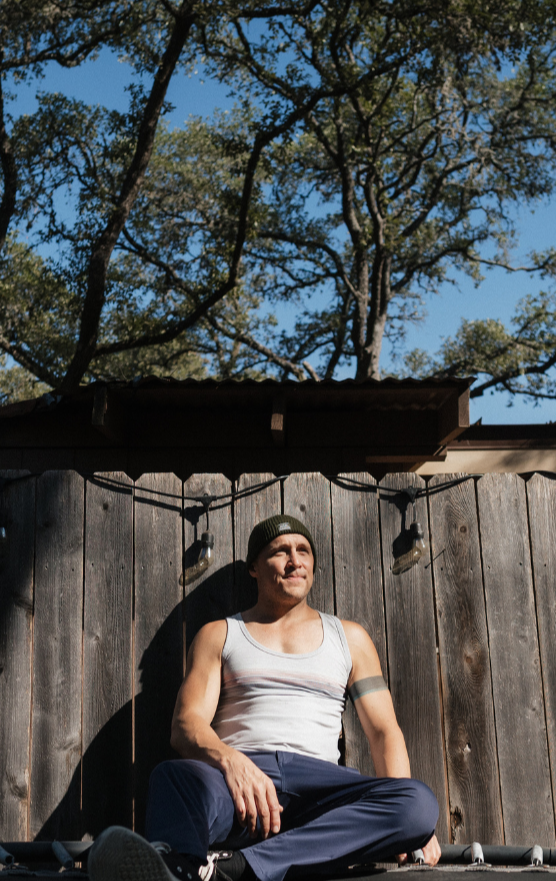
From dropout to self-made Millionaire with David Neagle
May 08, 2020
WELCOME TO EPISODE 64
A former high school dropout and minimum-wage forklift driver, David suffered a near-death incident where he was pulled into a dam, broke his back, and nearly drowned. No one expected David to survive the accident and the rescue workers even told his family that he was dead.
But David survived. He made the decision that day to begin the journey responsible for changing his entire life. Through the power of mindset work, he incrementally and systematically increased his income and eventually became a multimillion-dollar business owner.
Since then, David has helped thousands of entrepreneurs and aspiring business owners tap into their unlimited potential in order to grow their businesses and achieve their dreams - including New York Times best-selling author Jen Sincero.
David is a perfect fit for The Beautifully Broken Podcast. He shares his powerful redemption story, three simple changes that unlocked his life, exercises to help anyone get through COVID (and any trying time), and how David would improve the world after we get past this pandemic. This is an inspiring and encouraging conversation. Please enjoy.


Episode Highlights
1:24 - David's pain to power scenario
10:09 - Three things that David tried for one year that changed his life
16:00 - Why those 3 things unlocked David's future
17:28 - The role of mentors in our lives
24:23 - The dangers of living in absolutes
26:45 - How COVID is impacting the conversations and divisions in the US
33:25 - What if things don’t go back to normal, what then?
38:36 - Exercises to cultivate what's necessary to succeed during and after COVID
45:08 - Actions to take to feel good and safe right now
46:48 - What does it mean to be beautifully broken?
48:50 - Three things that would change post-COVID with David's magic wand
UPGRADE YOUR WELLNESS
Silver Biotics Wound Healing Gel: https://bit.ly/3JnxyDD
Code: BEAUTIFULLYBROKEN
LightPathLED https://lightpathled.com/?afmc=BEAUTIFULLYBROKEN
Code: beautifullybroken
STEMREGEN: https://www.stemregen.co/products/stemregen/?afmc=beautifullybroken
Code: beautifullybroken
Flowpresso 3-in-1 technology: (https://calendly.com/freddiekimmel/flowpresso-one-on-one-discovery)
CONNECT WITH FREDDIE
Work with Me: https://www.beautifullybroken.world/biological-blueprint
Website and Store: (http://www.beautifullybroken.world)
Instagram: (https://www.instagram.com/freddie.kimmel
YouTube: https://www.youtube.com/@beautifullybrokenworld
EPISODE TRANSCRIPT
Freddie Kimmel and David Neagle (00:00.59)
I wrote this down on a card that I was going to do this. I was going to act like I love what I did, every job to the best of my ability, treat everybody with total respect. And I started doing this and 30 days later, my income went to 62,000 from 20,000 to 62,000. My whole life changed in 30 days.
Freddie Kimmel and David Neagle (00:22.563)
Welcome to the Beautifully Broken Podcast brought to you by AmpCoil. I'm your host, Freddie Kimmel, and on this show, we discuss the common thread survivors share after walking through the fire, the practitioners making a difference, and the treatment modalities that deliver healing back into the hands of the people who need it most. Witness the inspiration we gain by navigating the human experience with grace, humility, and a healthy dose of mistakes. Because part of being human is being beautifully broken.
Freddie Kimmel and David Neagle (00:54.543)
Ladies and gentlemen, welcome to the beautifully broken podcast. We have an incredible guest here today. have David Neagle. David, welcome to the show. Hey, how you doing? Glad to be here. David, I am absolutely floored. was just sort of, I've been digging into some past year interviews and your story and this being a beautifully broken podcast, you are
You're, you're the example, you know, you're, walking the walk. Can you tell the audience a little bit about your story? Let's, let's call it your pain to power scenario. Sure. So I think that if we go, if we go back to my childhood, it was, it was a pretty crazy childhood. There was a lot of, was born in the mid sixties. So coming out of the probably up to about 1971, everything was pretty cool.
And there was a tragedy in my family in 1970. My mother's brother, my uncle died in a horrific house fire. And his two kids were, which were my cousins. One was a year older than me. One was a year younger than me. They died in the fire also. And I don't think anybody in my family was emotionally prepared to deal with that tragedy. So these, and these two kids, they were my playmates from birth till, you know, four or five years old. So
you know, everything was great and then everything was not great and it progressively got worse as time went on. So like at 13, my parents got divorced. We had moved around a tremendous amount. I was born and raised in Chicago. In 76, we moved to Phoenix. Parents got divorced, moved back to Chicago in 79. And then my mom disappeared for three years. So from about 13 to 16 and a half or so, I was pretty much on my own.
going through high school, which was a total disaster, trying to help my brother who was four years younger than me. Like I said, my mom wasn't around. My dad was pretty much in Arizona at the time. So he was there by phone, but he wasn't there in guidance type of a scenario. So I was just trying to make it, you know, and I was doing okay. I wasn't doing too bad. Although I ended up quitting high school at 17, moved out, gotten a big blow up with my mother and I decided that I was just going to try to chart my own path.
Freddie Kimmel and David Neagle (03:17.741)
in life from that point on. And I was making some bad mistakes. Like, not bad like you end up in jail or prison, you know, you kill anybody, that type of mistake. But, but mistakes where I did not know what priorities to put first. So I got married, I had a couple of kids, I had no education, I had basically no skill sets. I was driving a forklift on a dock, overspending, under earning and not, you know, filed bankruptcy.
Had to leave our apartment in the middle of the night because we couldn't pay our bills. Every time I would seem to get some kind of a leg up, it was like somebody kicked the stool out from under me and I'm back down again. This is just going on for a long time and I can't figure out how to get out of it. So I had a couple, I had a couple of very interesting things happen probably in close succession to each other. One was that right after my son was born in, he was born in June of 89 and this was in September of 89.
My wife and I went out on a boat with my mother, my stepfather, my aunt, my uncle on the Illinois River. And I was supposed to water ski that day and I got separated from the boat and I got sucked through a dam. And I was one of only two people that ever survived going through it as of September of 89. But it was, it was a bad, it was a bad accident. Like I had broke my back. I was beaten up pretty bad. I came very close to drowning and
After that accident happened, I remember thinking to myself, there's a reason that I survived this. And part of the reason that I was thinking that was because when I was in the emergency room at the hospital, they had the Army Corps of Engineers who ran that dam. They had the Ottawa River Rescue. They had the state police. They had the local sheriff. They had the conservation department. They were all in the emergency room and they all kept asking me the same question. How did I survive going through?
And I thought it was the most ridiculous question ever because it wasn't like there was some technique. was, I was lucky. had a life vest on. I was lucky. The gate was open on the dam and I didn't get stuck inside. I was lucky that I managed to grab onto a tree branch off of an Island and it's smart enough to buckle my vest to it so that I didn't get swept away in the current again. And that's where they found me. That's where they found me hanging from this, from this tree branch. So
Freddie Kimmel and David Neagle (05:39.507)
They're, you know, they kept asking me, how did you survive? How did you survive? You don't know how lucky you are. Somebody's watching over you. Somebody up there likes you. Just, you know, don't waste this. You don't get another chance like this in life. All the cliche stuff that people hear when they survive something that people chalk it up to luck. So I started believing in what they were telling me to some degree. And I was thinking, yeah, there must be some reason why I survived this. Why am I only one of two people that went through this and lived? The other guy that went through it's a paraplegic.
They told me a story about the year before there were two guys on a motorboat on the river fishing. The boat went out, the engine, the little motor went out on their boat. They got stuck in the current, sucked the whole boat in to the dam, suck the guys into the dam. They sent three firefighters down with scuba gear to try to get the guys out of the dam. All five died. So it, you know, it was just one horrific story after another. And I'm like, okay, so there must be a reason that I survived this. So I get healed. I go back to work. I'm back on the forklift.
back on the dock again. And life's just getting worse. It's not getting any better. I'm waiting for, you know, like Moses to part the sea and something actually happened here and nothing's happening. And it's progressively getting worse. And I remember distinctively, this was a Tuesday night in February. go into work because I worked the night shift. I go into work. I got disciplined the day before. I got called in the office immediately when I walked in the door. I got disciplined again. I got in a screaming match with my boss.
It wasn't his fault. Like I was just doing shitty work. You know, I mean it was, that's what it was. I had a terrible attitude. I didn't care about my work. I deserved, you know, I should have been fired on the spot actually. was, you know, it was, it was, you know, like by the grace of God that he didn't fire me and I'm just mouthing off to him and I go and I'm in the back of this trailer on the forklift and I just start crying. I just broke down because I didn't know.
how to change it. I had no idea. I wanted to change it. I really did. And I actually asked people, how do I turn, I realized I made a mistake. I should have stayed in high school. I should have found a way to go to college. I shouldn't have gotten married. I shouldn't, I shouldn't, I shouldn't have, but I did. So now what do I do? And their answer was work hard. That was it. Take all the overtime you can work hard, go back to school if you can, which was, it was an impossibility at that time. There was no internet. had two children.
Freddie Kimmel and David Neagle (07:57.496)
We were living in low-income housing, like next door to a drug dealer that used to beat his wife, like seriously nasty. I had a car and a Ford Escort wagon that I used to drive to work. It was 56 miles to work one way, and it would take a quart of oil to get there and a quart of oil to get back. So I would buy it at the discount shops, like the big cases of oil and keep it in the back. And I'd have to put a quart of oil in it every time I drove big cloud of blue smoke behind me.
I managed to keep that thing running for two years. So anyway, you know, nobody could tell me how to get out. They were like, you shouldn't have done this. And that's, and that's all the advice that I could get. So I break down crying in the back of this trailer and his voice in my head says, David, change your attitude. That's all it said. And it was very distinct. It was in the moment. I couldn't decipher if it was in my head or if it was actually audible. I remember looking around to see if somebody was there. Like that was really weird.
So I started thinking about it and I realized that this was not the first time that I heard that phrase, change my attitude. I had been hearing it my whole life. So when I would get in trouble in school or I wouldn't do my schoolwork, they would call my father in and the teachers would tell my father, know, David's a pretty smart kid, but he's got a terrible attitude when it comes to his schoolwork. If he would change his attitude, he could probably get really good grades.
So I would go home and I would be told to change my attitude. And then my parents philosophy was send me to my room from one quarter to the next. So when I get the report card and it would be all D's and F's, I'd have to go, I could not have any privileges. So I'd have to stay in my room and study till the next quarter. But nobody even taught me how to study. Like it was the worst possible thing they could have ever done to me because I wasn't picking up a book. Right. So
I'd started playing with the idea of, so what is this attitude thing? What is it? Cause I really didn't know what it was. And I started asking myself, let me pick somebody that is like way ahead of me because here was the weird thing. Even though I had this terrible attitude, I wanted to be really successful, but I, you know, people would be like, it's a pipe dream. You're a dreamer. You're never going to do anything. You can't stick to anything in your life. So I took the guy that owned Ki-hi foods in Lyle, Illinois was just the company that I worked for at the time.
Freddie Kimmel and David Neagle (10:15.188)
And the story that we were told was that he had started this company in his garage. And I think it was in Melrose Park, Illinois, or Highland Park or something like that, one of the suburbs of Chicago. And he's the largest food importer in the United States at the time. Like he was the major importer for Evian Water. Most of the imported foods and spices that we get in this country would come through Keehee Foods. And he started it in his garage. And I'm thinking,
Okay. So I can relate to that. I can relate to like starting something in your, in your garage, because the one thing that I did do, even though I didn't have it, I didn't have any respect for authority was that I worked my most of my childhood, like from having two paper routes to working in McDonald's for four years to buying used cars and fixing them up and selling them for a profit, you know, to a little dabbling in weed here and there. You know, when I was a kid,
any way to make money, right? But I never considered it like entrepreneurial or business or you know, anything like that. was just fight, find a way to hustle and make money. So I could relate to this guy that he started this business in his garage and I'm thinking, all right, so what's the difference between where he is now and his attitude in mind? And three things stood out very staunchly to me. One was that he must've loved what he did because I could not get past the idea that
Most of what I was doing that from a work perspective, I hated, I just absolutely hated it. I didn't even have like a middle ground where it was like, yeah, I like this. It's okay. It's all right. I could, I, maybe I could do this for a living. just either I loved it or I absolutely hated it. And I hated what I was doing. So I was like, he must've loved it to some extent to build it out of his garage into this huge major corporation. He must've loved it. And then I realized that
If he loved it, he probably did all the work to the very best of his ability. And I was not doing that. I worked to go home. Let me just get it done as fast as I can, forget about the quality, forget about the consequences and just get the hell out of here and go home. And then the other thing was that I didn't treat people with respect because I was angry. So I was, I was snarky. I was sarcastic. I was demeaning and degrading in a lot of cases, abusive.
Freddie Kimmel and David Neagle (12:31.413)
I just wasn't treating people nice because I was, I was, I didn't like who I was. I was angry at me. I didn't know that at the time, but which caused me to be angry just about everybody else, you know? So if you weren't on my side, you were definitely on the other side. And I realized that this guy that owned this company, you know, he would walk, he had a state of the art warehouse that was mostly automated. So it would, they would have these huge racks.
that would go up several stories to the ceiling and they were all stocked with all these different foods and these orders would come in from different stores and they would have these guys up in these racks that would pick the food, put it down on conveyor belts and it would come down in the precise order for the deliveries. It would get stacked up on pallets and it would get shrink wrapped by a machine and then we would take it and load it in the trailers based on how the drivers would make the deliveries at the time. So other companies would come in and they would want to see how he automated this system.
And he was always walking through with suits from one company or another, but he would never pass an employee without stopping to say hello, asking how your wife was, asking how your family was, how's your kids. Most of the people that worked in that warehouse didn't even speak English. And it impressed me that, that because I grew up kind of hearing that the boss, the owner of the company, the rich people, the man, whatever you want to call it, had no respect for the working man.
And here was a guy who was showing me that he respected everybody that worked for him enough to even to say, hi, how's your day? How you doing? You know, I he wouldn't spend an hour with the people, but you know, he would not pass you without acknowledging you. And I, and I saw something in that. So I said, I'm going to change these three things inside myself and I'm going to try it for a year. And I'm going to see if anything at all happens. Like if there's any difference whatsoever, because I couldn't figure out how do I go from 20,000 a year to 40,000 a year?
without nickel and dime raises, that's going to take me 30 years to get there. And I didn't know how to do it. And I didn't have the time or the money to go back to school. So I wrote this down on a card that I was going to do this. I was going to act like I love what I did, do every job to the best of my ability, treat everybody with total respect. And I started doing this and 30 days later, my income went to 62,000 a year from 20,000 to 62,000. My whole life changed in 30 days.
Freddie Kimmel and David Neagle (14:55.277)
And even though I could not directly relate it to the change in the attitude at the time, I knew it had something to do with it, but I didn't know what. So I decided from that point on that I was going to find out how that played a role in this significant change. And what I did was I knew that those three things were making a difference. So I stuck to those three things and that kind of gave me this encouragement.
to really apply myself, probably for the first time in my life, apply myself more than anybody could ever ask for me. I would ask more of myself. So I would do things like I would be an hour and a half early for work because I switched companies and went to work for a petroleum company that was a hundred miles away from my house. And I would leave three hours before I started work. So I was there an hour and a half before I started, if the traffic was good and they'd be like, what the hell are you doing here?
I'm like, I don't want to be late. They're like, but you got an hour and a half. I'm like, but I live a hundred miles away and anything could happen that would cause me to be half an hour later, 60 minutes late because it's all highway highways here and it's this Chicago, right? So it's no storms. It's like the whole, the whole deal. So I was never late in seven years and I went from a truck driver in that company to being in charge of expanding that company across the country before I left and started my own business.
And really the only three things that I ever changed and stuck to was those three things act like I love what I did, do every job to the best of my ability and treat everybody with total respect. And it caused me to just advance, advance, advance, advance, advance. And it never, it never went backwards. Like it never, it never turned around. Now I learned a lot of things along the way to add to it, but I found out that changing those things. Number one,
What it did was it allowed me to see opportunity that I couldn't see before because my mind was so clouded with anger and hate and self pity that I couldn't see beyond my own misery to actually see an opportunity in anything. And the opportunity was around me to change that, to change my income the whole time, the whole two years that I worked for that company, but I couldn't see it. So in 30 days, it allowed me to see it. It allowed me to take advantage of it.
Freddie Kimmel and David Neagle (17:04.333)
And then one thing led to another and I spent seven years studying. then out of that seven years, I helped a lot of people and I decided I was going to start my own business coaching, consulting and speaking and being an author and all that. was 21 years ago. David, that's incredible. I, my God, I made so many notes. I want to go back. I want to go back just if I could for a second to, you know, you've, you've developed sort of this tribe of mentors that you found internally.
your guides, your examples, you know, you had your boss at work, who was your pillar. You were looking to him. Who else were your good guides that you really found valuable information in? There were a few, there were a few along the way. So I would say that the first one that, kind of game, cause I, cause if you were, this is like I said, this is before the internet. So I had to go to a library to find books or I had to go to a bookstore to find books. I didn't know that there was a self help section.
I didn't know there were self-improvement books. had no idea. So it was picking up, started off picking up biographies of people. Like let me read about these people that were successful and see if I can like put it together. Like what is it that's causing this? And then I came home one night in the middle of the night and I saw a Tony Robbins commercial for his personal power tapes. This is back probably around 1992, 91. We had the personal power tapes in my dad's truck.
Do you really? know that I know the set. Yeah. Yeah. Yeah. Yeah. Yeah. So, so that was when he first came out with those, he would do the infomercial with Fran Tarkenton. He was talking about everything that I was looking for. And I was, if I remember right, it was like 160 bucks for those, for those tapes, like three, three easy payments, but a total of $160. It took me three nights of coming home and watching that infomercial before I had the guts to get up and actually pull the trigger and buy them. But I bought them.
and I listened to them religiously, like constantly listened to them. I turned my car into an audio library, right? Like I got all the music out of my car and for the hour and half to work every day and back, so it's three hours a day, I just listened to books on tape, seminars on tape, anything that a guy could get on tape, I turned that into a library to study and I was militant about it. So for seven years, I didn't really, like I was married, I was raising kids,
Freddie Kimmel and David Neagle (19:29.177)
I would do things with my wife and my kids, but for myself, I stopped doing like things that were hobbies of mine. Like I stopped fishing. I stopped going to movies. I didn't watch television at night. It was just constantly reading and pouring through material to try to put the pieces together. So Tony Robbins was one of the first ones. And then I went to one of his events, which was a total culture shock for me because I remember, I remember the first day being there and there's all these
people jumping around and it's crazy and everything. And I had two experiences simultaneously. One was like, I got to get the hell out of here. I don't belong here. These are not my people. And the other one was this is the exact people that I've been looking for because I've never seen so many positive driven dreaming people in my entire life. I didn't know this. Many of them actually existed, let alone to be in one place at the same time. It develops such a curiosity.
that there was this other world that I didn't know that existed. I just had to keep moving in that direction and find out everything that I could about it. So I had a mentor that took me under his wing a little bit. His name was Tom Bolino and he was the guy that talked the bosses at my, at my job into hiring, into promoting me from a truck driver into management. And he was really on my side and he was a, he was a, he was a big manager for United Parcel Service. And then
he kind of retired from there and he, he did this, I don't know, like as a second gig in life or something that he came to work for this petroleum company that I was working for. He saw a lot of potential in me and I was the first person that they ever hired, from truck driver into management because the company was owned by a very large Irish family and they were very tight. And so everything pretty much from management perspective stayed within that.
within that family. They had never brought anybody up out of a driver. And they were union drivers in Chicago. So it was not really something that was done very much to begin with. Usually if a driver moved up in rank, it was into the union. It was actually into the union, not into management of the company. So I managed to cross over and then I just kept going up and up and up through the ranks within that company. So he was a, he was a mentor of mine for, for quite a few years.
Freddie Kimmel and David Neagle (21:50.95)
And then around 1996, I met Bob Proctor. And Bob was a person who started putting things together for me with a lot of questions that I had that nobody else was putting together. And primarily what it was, the conflict that I had between my religious upbringing and success in life. So I was raised Catholic in an Italian family in Chicago, and it was very Catholic, very Italian, very Chicago. So
It was, you know, they had their beliefs about a lot of things and to them, that's the way that the world was, period. There just was no changing it and there was no leaving it. There was no other opinions. You didn't disagree with it. Nothing. So I needed to find answers to a lot of that stuff that I had learned, you know, plus, you know, being born 66, you start, you're seeing a lot that's going on. Remember, you know, like you got RFK, it's killed. You've got
the Vietnam War that's going on. You've got Martin Luther King Jr. that's assassinated. You got the Democratic Convention. Like all of this stuff is in my awareness as a little kid, not even really understanding what it means, but you're seeing it, you're hearing it. It's in your life. People are talking about it, Watergate, you know, all that kind of stuff. So I needed answers that all I realized that I was getting was people's opinions and a lot of me thought,
These opinions are bullshit. Like there's something that's so not true about what they're telling me. There was a tremendous amount of racism too going on and I just didn't believe it. I just didn't believe it. But I had nothing in my life that says here's why this is not true. Right? Even when I went, even when I was, was learning from Tony years ago, back then he didn't talk about spirituality at all. You know, he was all about peak performance and, that was it.
You know, there was no setting goals. was, it was a lot of the rudiments that he was preaching back then. Plus, plus he was very, very heavy NLP. There was not a lot of like awareness and, you know, raising of consciousness and stuff. None of that was there. But Proctor was talking about those things and he was talking about how they actually fit together and they were one in the same thing. So I spent a lot of years learning from him and then he was my, he became my, my personal mentor and then we had a business together.
Freddie Kimmel and David Neagle (24:13.504)
for a period of time. Him and I traveled all over speaking and working together for a number of years and then I went out on my own. So that was that that journey up until that point. That's incredible. I what do you think? What do you think was the contraction? If you can go back to the mindset of that young guy who's working a forklift and you just like you said you couldn't see options. Why do you think you were so pulled in and that anger and that rage was?
Why do you think those blinders were put in place at that time in your life? Because I think so many things that I had, I had very severe things happen in my life that gave me a lot of false absolutes about life. So it was very difficult to see beyond those absolute opinions or ideologies that people gave me because I never got to hear the other side of them. never not, I never got to hear.
like an opposing opinion or idea all the way through to where it made sense. I remember when I was a kid, if somebody had an opposing opinion or an argument, I mean, they were ridiculed and berated to the point where they were made to look like a total idiot, right? So you never really got to hear it. And it was like this weird thing inside of me that said, there is another truth here. You're just not hearing what it is because you would hear bits and pieces, whether like, here's a, for instance,
So I was raised in a very racial time and in a very racial area and heritage in Chicago. But at the same time, that's when all the PBS stuff started happening. So you had Sesame Street, you had the Electric Company, you had Zoom, you had a lot of shows that were bringing racial integration to the forefront in society. The kids were watching, right? So...
Our minds are wide open and here they are. You have blacks and whites and Asians and Mexicans and people integrating in a very happy, loving, teaching kind of way, which was the total opposite of what I was being taught at home. So I think that things like that, I don't know for a hundred percent sure, but if I look back on my childhood, I think it was those things that actually planted the question there. There was a...
Freddie Kimmel and David Neagle (26:33.108)
big difference in what I was experiencing outside of my family versus inside of my family. And it was like night and day. And this is a bridge. This is a bridge right now, but I'm, I'm seeing this when you described that, that portion of your life, I'm seeing this happen a lot right now online, social media, especially I'm seeing lots of anger. I'm seeing contraction, fear, polarization.
And I'm watching people create these avenues for thinking that are very small, very linear. And when you say you had mentors in your life that allowed you to bring in the spiritual, the consciousness, the idea that we are all in this together, and that was a part of your shift, you know, and look at the area of access that it opened up for you. I wondered if you couldn't just speak to that a little bit. If you're witnessing this as well, you know, obviously,
we can't not talk about COVID-19 right now. We cannot talk about the viral epidemic, but how it is forming people's opinions. And I do want to bridge it over into the world of business and finance and you know, how we navigate this incredibly tumultuous time. But I wondered if you couldn't just offer your opinion on some of these items. I think what it's doing is it's amplifying people's opinions right now. I think we were extremely divided before COVID-19.
That was the experience that I had been watching for a number of years, especially politically divided, like ferociously politically divided to the point where they're too steeped the own dysfunction of their opinion to even cross the aisle to any kind of an agreement whatsoever. It's just about making the other person wrong, period. They don't care who they hurt. And it's both sides, right? So it's craziness. It's insane.
And of course that spills out into society. But the, the, the COVID thing I think is amplifies in this situation in a very interesting way, because if you also, if you pay attention to something, cause I was doing a lot of research on this when this first happened, you know, if you basically look at every 20 years for the last hundred years, we've had a major incident that does something to bring us together.
Freddie Kimmel and David Neagle (28:45.45)
about every 20 years or so. And yeah, this goes all the way back to the 1800s and I didn't go much further back than that. But I was just looking at, the, last, the last hundred years or so. And there is a process that happens where something happens. It brings us together. We have to fight to survive. We have to fight to make it through some kind of an obstacle. And then we, once we make it through it and things start getting good again, we go off into these.
crazy different ideas and ideologies that divide us apart. They split us apart and then they get very, very, very wide and then something else happens that brings us close again, you know, to some degree. And I think that that's also something that we're experiencing now because now one of the right, as we do this podcast, there are a lot of states where people are marching in the state
for the opening of the economy so people could get back to work, right? People are fighting for something that means something to them. Now you've got to divide, even that creates a divide because you have the doctors and the nurses on the other side saying that those people don't represent the state, we represent the state. I was just watching this today. And it's like, it's very interesting because people are fighting for something that...
that they believe in that affects the core of their life, the core of their existence. So you've got people that are fighting for people's lives in the medical community. You've got people that are, their businesses are being threatened to go in under, their businesses are going under, people can't pay their bills. They're not getting the money from the government. It's not enough from the government. know, people are going stir crazy in their house. People are fighting. There's a lot of craziness that,
that's going on, but then it starts to, well, what are we fighting for? And everybody's trying to fight to get back to some kind of a normalcy again, right? Like that seems to be like the underlying opinion. Can we get back to life as we know it? You don't hear as much about the things that we were fighting about eight months ago. know, like those things we're not hearing about at all. So it's interesting how it has shifted.
Freddie Kimmel and David Neagle (30:58.37)
the view of people, not just in the United States, but in the world overall, like what has become important at this moment in time, and where is this actually going to lead us, you know, overall, you know, with all of this. So when I worked with Bob, the thing that, the first thing that he did was he got the idea of spirituality in my head correct, and I needed to get the religion out of my mind.
So, you know, religion is very dogmatic. Most religions are very dogmatic. And they say it's this way, everybody else is wrong, and that's what the deal is. Well, what that kind of creates is that you go through the world very judgmental, and you say if the world is not the way that you've been raised to believe it, then everybody else is wrong. So, he helped me break those barriers down in my mind and see people for who they are and their individuality and their own individual ideologies, what they believe in.
you know, really going through the big three that we call them, which is sex, money, and God, and really understanding what those things are from a truth perspective and not a judgmental perspective, and getting those things straight, you know, in your life. And as I began to really understand the way that I think that things are in the world,
it made a lot more sense and the world and everything became more easy. Like earning money became easy. I became a millionaire very quickly. That's never gone backwards. You know, like it's just kept getting better. And I remember when, you know, there's this statement that you hear people say sometime when they were in poverty, they were like the poverty was unmovable. Right. And I remember when it was like that in my life, like it would not budge. didn't matter how hard you work. It would not budge. But once the awareness around that changed,
Then it like, not only did it not budge, it just vanished. It was gone. Like poverty has been a thing of the past for me for 25 years now. It just, there's no, it says not there. But I realized that it was an awareness. know, making money is an easy thing if you're aware of how to do it. Loving your brother and your sister is an easy thing if you're aware of how to do it.
Freddie Kimmel and David Neagle (33:12.814)
So I think it's about getting these things straight in our mind and really understanding from the point of what moves us forward as a species or nature or spiritually, where we all actually come together and we're not divided. It's interesting what you say. cause I feel that too, this desire and need to go back to before, you know, it's like open up the country quick so we can run back. Well, I think
You know, what's, what's painful for to me is that we've had this chance to just sit and breathe for a minute and as uncomfortable as that is for so many people to do. I've, I've, I've questioned what I'm running back to. You know, I look at, I look very clearly now I can see where I spent my time and I can actually see for me as an entrepreneur, like I'm sure you've experienced. Not so much has changed. I've realized I work a lot and I left the house to.
You know, maybe I'd go to the gym, right? I'd run to Whole Foods, but I'm generally, you know, I'm doing an interview. I'm creating content. I'm working with the startups that I work at and that's everything that I've chosen to engage in is filled with purpose. There's not a thing in my life that I'm doing that takes up my time that I don't absolutely love or I don't absolutely believe in. And what I've seen is that it's very uncomfortable.
to be sat down in your home for 30, 60, 90 days and to not have that experience with what you're spending your time on. So we're getting this civil unrest. I wonder as a coach, so you must be working with some very high level elite people, probably across the board. How are you coaching people through this situation where there is this incredible level of uncertainty? Where do you direct people? Well, it's interesting that you talked about, about
everything that you're doing in your life is, very much on purpose and what it is that you believe in. Because I think that most of the people that I know that, that are my peers are exactly the same way. They know what they're doing. This may change something for a period of time or changed how we're doing it for a period of time, but it has not taken their eye off the ball for what it is that they're here to accomplish. Just that they've had to make some adjustments, excuse me, along the way. However,
Freddie Kimmel and David Neagle (35:29.264)
There's other people that I would say they have not mastered their purpose in life. They're still working toward it in a way. And when I talk to them, they're having a very different experience. The experience is more of a victimized experience. Not to say that they really have a victim mentality, but they don't, the changes that are being made, they don't know how to overcome them. They don't know how to adjust to them. They don't know how to pivot with them.
they're very stuck in not being able to see opportunity. So their mind defaults to, need to get back to the way that it was instead of trying to find a way around through or over whatever the obstacle or challenge that the virus thing has created for individuals. And when you talk to them about it, there's almost an obstinance to, I just need to get back. I just needed to get back to the way that it was. And it's like, well, what if it doesn't?
What if this goes on for a long time? Right? Like this isn't going to get better tomorrow. So you, you know, you have to move into some kind of acceptance and start to see your way through what it is that you have. But if they won't let go of that idea, they become very much stuck just like I was on the forklift. They can't see anything. They stay or stuck right exactly where they are. And then they default to anger. They get very anger and very bitter. And that's where you have people and their families fighting with each other. And you know, it, it just starts to get pretty ugly from there.
And then you then I will say this, there are people that I've talked to that are kind of in the middle and they've been open to the idea of what is this going to bring to me? Like what awareness am I going to gain out of this? What do I need to pay attention to, to see about myself in this situation or see about others in this situation? And there's some, there's a lot of interesting things, a lot of interesting conclusions people are coming to in their life. But I do think that it's going to be fascinating to see
Because I think the longer that it goes, the more difficult it becomes to run back to the way things were, because there will be permanent change that happens out of it. But the other thing is, think what's unfortunate is for the people that won't adapt, they just become victims to themselves in this situation. It's not that there's not a way out. There's plenty of people that are out there right now looking to help other people. If you want help, they will find a way to help you, to guide you, to do whatever.
Freddie Kimmel and David Neagle (37:56.315)
But you have to want to move out of that situation yourself. I couldn't agree more. I, you know, the, the other thing that I wanted to, I just wanted to, I made a couple notes here. you know, it's, it's funny when you were talking about all the things that you did as a kid to make your way through that you were an entrepreneur before you realized you were an entrepreneur.
side money, selling a little weed. I had a flashback to when I was like, I was like, I did that. I was like, I made some fake IDs in college at one point. You know, I had my scanner out and was had my little razor cutter, you know, all the, all these things, but yes, yes, very much in alignment. So, so we find ourselves in this unique time again. What do you think? do you have any techniques or advice for people who may be looking to cultivate that seed that, is inherently there within all of us to
Be creative, to find a way through. Are there any exercises you can point people to, to, you know, go out and you write it down on a piece of paper, do a mind map, anything in that vein of thinking? The first thing that I'm having people do is to identify things in their life that they can easily be grateful for. Because I think that part of the idea is moving your place, you're moving your mind to a place of acceptance.
So I'm not even asking people to look for things with the virus to be grateful for. What are things that are already in your life before the virus happened that you could be grateful for? Maybe it's your health, maybe it's your kids or your spouse or your parents or your house or your dog or your cat. What can you already be grateful for? To really get the mind to focus on the abundance that we currently have. And then can you work out from that inner circle?
Are there things that you can be grateful for today that you didn't necessarily have in your life that you can appreciate more now than you could then? Because I think that if, you there's this law, there's this universal law called the law of polarity, and it basically states that everything in the universe has an opposite and it's equal and opposite. So, and that's also for non-physical things.
Freddie Kimmel and David Neagle (40:06.513)
concepts, ideas, whatever. You cannot have one side of something without the other being present simultaneously in the same place. But that doesn't mean that a person can necessarily see it or recognize it. So what's the process for us to be able to see or recognize opportunity in our life? So there's a few. It depends on the individual. However, it can either come from inspiration or necessity.
So if you move to a place where anger overthrows your necessity, you won't see it. But if you can move to some kind of inspiration, if you can be grateful for what's going on right now, you open your mind to see things that are good. Like you're giving a command to your mind that says, look for good things. Look for good things. So even though yesterday you might be angry that you were stuck in the house now for 45 days or whatever it's been,
you might start to see something good about it that you didn't see yesterday if you start practicing gratitude right now. And I've been doing free calls for just for the general public on this since this started. And we started off with the idea that this is a change. This is a change that we really don't have any control over, right? It's like all of a sudden our country became communist, right? The things that we choose in our life, a lot of them have been removed temporarily. So it's like we put our life on pause.
but it doesn't take away our ability to choose. So that's very important to understand. We may not be able to choose the things that we chose yesterday, but we still have the ability to choose. So what are we gonna choose right now? We're gonna choose what we can see. We're gonna choose what's important to us. But we have to focus on it know what it is in order for it to recognize its importance. So if we start off with gratitude, we can start with our inner circle. We can move out.
And we could start to see things about this that we can be grateful for that we weren't grateful for before, or that we didn't notice before. When we see that, that's what allows us to then see the opportunity in the things that are all around us. You know, I was talking to somebody and I said, can you imagine if this happened 30 years ago, 40 years ago when we didn't have the internet? They talk about a disaster, right? I mean, it would have been, it would have been a real, you know, much more difficult without the internet. We have a, we have a
Freddie Kimmel and David Neagle (42:21.772)
a vision into the world here with the internet, with the phone, being able to do Zoom and chat rooms and stuff like that. We can navigate through this much differently than we could have at any other time in history. That's something to be tremendously grateful for that we can do that because it means a lot of people can still adapt their business to this current situation.
if they're really thinking about it. So that's where I start. That's where I'm starting with people. And that has had, we have had literally thousands of messages come from those calls of people saying, thank you, that it totally changed their mind around. It's they like, they say it saved them. found opportunities in their business. They found opportunities to make money. They found opportunities to help other people. Yeah, it's, funny. You, you always want it to be some like, here's what you're going to do for you. You're to follow the treasure map to your million dollars. And it's like something simple like gratitude.
And it is amazing, know, I, the last two days I've started off because yes, I'm generally a pretty high vibe, positive person. The energy is really, really good. And, and you know, going through metastatic cancer for me, it's like, I like coffee. Like if I can pour a cup of coffee in the morning and walk to go get it, I'm good. I'm like, this is a, this is an amazing day or like, you know, yesterday, the flowers are starting to spring in, in the yard and like the smell of a lilac it's heaven.
It's heaven in the moment to moment, breath to breath. So I think when you, when you go through something of that nature, you do have the ability to sit and be present and to experience joy in the moment to moment. But last week for me was, was, it was a beast. The collective, was a beast. just felt, I was like, wow, I am really for the first time in a long time, feeling the depression, the weight of just the stagnancy of
you know, not being able to go to the gym, my one outlet or not being able to go sit in a coffee shop. And I started to just do a simple I am meditation, you know, and I am, I've got like 30 phrases, you know, I am love, I am loving kindness. I am open to experience. am head up. I am eyes forward. I can see my neighbor, whatever. And it's shocking the vocal cues. It, you know, it could be your five minutes in the shower where you just
Freddie Kimmel and David Neagle (44:41.612)
You're reminded of when you see those high vibe things come into your life. You're like, I'm aware I'm open. I'm looking for the good in life. I'm looking for, I'm looking for the helpers. Like Mr. Rogers used to say in these horrible situations, you know, we look for the helpers, but it's always shocking to me how simple it can be just to like, just move that energetic vibration where you can at least come to a place of taking action. Yeah. A hundred percent. I totally agree with you. I have a, I have a, I have a
Another question about just health and wellness. How are, how are you advising, your own family to mind and navigate this COVID-19 situation? What precautions are you guys taking or, what do you, what are you doing to make sure you feel good and safe? Well, I mean, everybody's doing, everybody's doing like whatever, what's being recommended. Like nobody's going around anybody or anything.
Like all my children are grown and they don't live at home anymore and I'm not married. So I'm just here all by myself, but my team, we're not in the office right now. So our office is closed, but everybody's working from home and everybody's, you know, they're, they're exercising. They're trying to eat and drink, as clean as possible. They're having conversation. We're going around every week and we're talking to everybody. What do you need? How you doing? And just listening, you know, just being, just listening to what everybody's going through and,
You know, one day you'll have somebody they're doing great. The next day they're very down. They're very, very down. I had a friend who was doing fantastic. And then I talked to her the next day and she was in such a depression because somebody had jumped out of a window and killed themselves over the virus in New York. And she was really having a rough time, you know, with the, with that, you know, so it, it is, it is, I think it's doing the simple things and reaching out when you have help and then also checking in on everybody.
that you love and care about on a regular basis, just to see how they're doing and see if you can help in any way. sometimes it's just listening, just listening to somebody, know, let somebody talk about what their experience is. Don't try to make it wrong. Hmm. Beautiful. David, I just want to, I want to ask you a couple more questions before we go. Beautifully Broken Podcast. What does it mean to you to be beautifully broken on this journey of life? that means that's the beautifully broken
Freddie Kimmel and David Neagle (47:03.04)
is I think where you elegantly look at the shit in your life and you realize that that's where the gifts are. That's where, you know, that I remember when I discovered the idea that my greatest gifts were in the deepest parts of my pain when I was a childhood, but that's when I was learning the most. And I had never looked at it that way before.
And I realized that there is no perfect person, that we've all gone through things and we're all going to go through things. And those things are trying to show us something greater about ourselves that we can then take and make our life more beautiful, but other people's lives more beautiful also. I don't see broken as a final thing in anyone's life.
It is, it is a, it's like a correction. It is, it's the, it's the doorway to the next, to the next journey. You know, I have a, I have a dear friend Darla do who, when she was going through some very difficult times in her life, she was seeing a therapist and she, every time I think of this cracks me up. Cause I'll never forget the first time she told me this, I was not expecting this. She said, you know, the best advice I ever got from my therapist.
And I guess this is when her husband had left her or something like that. She's sitting down and she's talking to her therapist and her therapist say, says, you know, Darla, when one door closes, another one opens. It's the hallways that are a bitch. I love that. Yeah, I love it too. that's the hallways that are a bitch. That's amazing. And then this is a, this one just.
was downloaded. you have all this insight, you work with a very unique portion of the population, and I'm sure you have a vision for the way things you would love to see this COVID-19 situation unfold in the country. If you could have a magic wand and wave it, what would be three things that would change about the way of life as we know it right now coming out of this COVID-19 situation? Magic wand.
Freddie Kimmel and David Neagle (49:21.648)
Oh wow. Well, I, you know, I honestly, if there was a magic wand, I would, I would like to see them come up with a, some, some kind of a drug that would make it go away, like a vaccine or something. I would actually like to see that. But I think that, so that would be one thing because I, what I don't, even though I, even though I do understand like the spiritual essence behind suffering and going through difficulty and what that means for people.
And of course, everybody has a choice on how they see it. It's still difficult to see the world in such turmoil over one thing. But if I had a wand, I would also love for everybody to be able to see that no matter who we are, what we are, how much money we have or don't have, all in the same situation. Like, this has been a great leveler for everybody because it doesn't discriminate, right? It is what it is, and it doesn't matter where you are or who you are.
You have the ability to be effective. You will be affected by it in one way or another and that the other thing would be that People would just stop judging each other and they would love each other and give you give people the space to just be human beings and stop You know condemning everybody to death over over an opinion that isn't agreed with hmm. I Couldn't agree more David it's been an absolute
pleasure to have you on the podcast and to hear your story. Your story is beautiful. It's so inspiring. If people, if people want to connect with you or they want to learn more about your coaching program, if they want to learn more about maybe possibly listening to some of your content online or possibly an event in the future, where should people go? Well, they can always go to the successful mind podcast, which is, which is my personal podcast.
It's totally free and then go listen to it on any of the podcast platforms that's there or davidnagle.com and everything that they would want to know about me or what we do or how to get in touch with us is at that website davidnagle.com. Thank you, sir. I really appreciate you being on the show and giving us an hour of your time. Namaste. Same. Thank you very much. It's been an honor to be here. Thank you. Ladies and gentlemen, you made it to the end of the podcast.
Freddie Kimmel and David Neagle (51:40.381)
Now in a world where the average attention span is less than 10 seconds, we just spent almost an hour together. And I think this is the beginning of something really beautiful. Now one way to support the podcast is to head over to freddysetgo.com and check out my newly launched page, Freddy's Faves, where I've linked every five star product and healing modality you hear about on the show. Most offer significant discounts by clicking the link. And please know it doesn't cost you anything extra
and at the same time, they support the show through affiliation. So check out Freddie's faves on freddysecko.com. This episode of the beautifully broken podcast was brought to you by our sponsor, AmpCoil, upgrading the vibrations of hearts, minds, and bodies all over the world. Thank you for tuning in. If you enjoyed today's show, head over to iTunes and leave a five-star review. Grabbing a download is like giving this virtual thumbs up that we're doing it right.
And if you want to connect with me, shoot me a message on Instagram at freddysetgo.com or at freddysetgo. That's all for today. Our closing, our closing, the world is hurting. We need you at your very best. So take the steps today to always be upgrading whatever it takes to move the needle. Remember, while life is pain, putting those fractured pieces back together is a beautiful process. I'm your host. I love you. Namaste. Have a wonderful day.