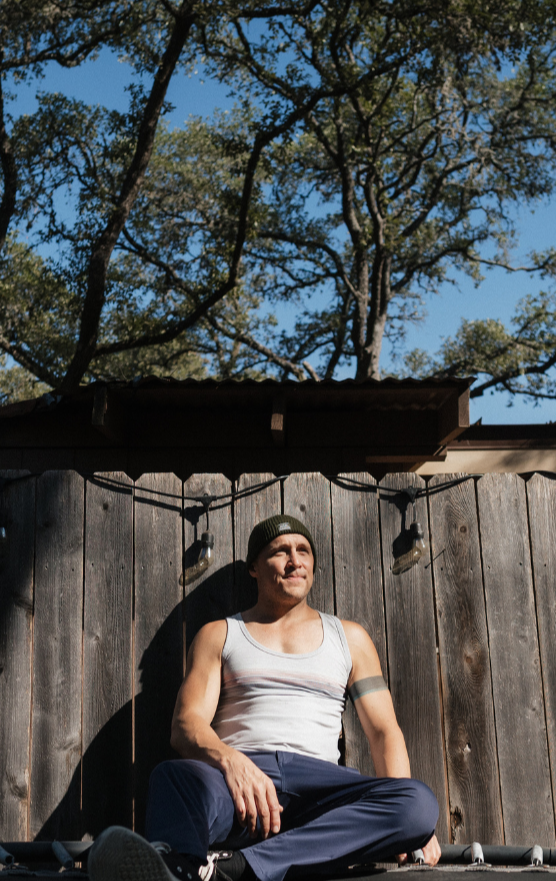
Gene Sambataro: Biological Dentistry, Breathing and Biohacking
Jun 13, 2019
WELCOME TO EPISODE 20
Dr. Gene Sambataro has been a leader in the field of dentistry for more than 35 years. Gene’s holistic approach to dentistry is rooted in an understanding of the interconnectedness of oral and whole-body health. As director and clinician of his practice - the Julian Center for Comprehensive Dentistry - Gene focuses on healing the mind, body, and spirit, with an emphasis on treating sleep-disordered breathing issues, like sleep apnea.
A published author with his acclaimed book “Stop the Snore,” Gene delves deep into the topic of sleep apnea, examining its long-term impact on health, its root causes, and how it can be treated using cutting-edge, dental care technology.
This conversation will have immediate, positive outcomes and give you some helpful takeaways for living your best life. From changing how you take care of your teeth, to how you sleep, to how you help your kids grow up healthy, this conversation will help listeners and people of all ages. Make sure to check out the resources in the show notes as well!


Episode Highlights
- 2:08 - What is biological dentistry?
- 3:20 - How melanoma led Gene to second guess tooth fillings
- 6:24 - Oh crap - I have mercury fillings. What do I do?
- 9:08 - How do I get the mercury baseline in my body?
- 10:27 - What is the MTHFR gene and how does it affect my body?
- 12:47 - You can't attack the dental profession and get away with it
- 16:15 - The actions biological dentistry takes to heal you
- 19:28 - Gene explains why he's a "biohacking dentist"
- 22:51 - Some tips to help you wake up energized and avoid SAD
- 24:39 - Why you get poor sleep and get up to pee at night
- 29:18 - How do I know if I'm breathing well at night?
- 37:59 - How modern dentistry practices are damaging children
- 41:43 - Where do I start to address these issues?
- 48:11 - Why Gene likes the Oura Ring
- 49:16 - What does it mean to be beautifully broken?
- 50:23 - Gene’s question to inspire change
UPGRADE YOUR WELLNESS
Silver Biotics Wound Healing Gel: https://bit.ly/3JnxyDD
Code: BEAUTIFULLYBROKEN
LightPathLED https://lightpathled.com/?afmc=BEAUTIFULLYBROKEN
Code: beautifullybroken
STEMREGEN: https://www.stemregen.co/products/stemregen/?afmc=beautifullybroken
Code: beautifullybroken
Flowpresso 3-in-1 technology: (https://calendly.com/freddiekimmel/flowpresso-one-on-one-discovery)
CONNECT WITH FREDDIE
Work with Me: https://www.beautifullybroken.world/biological-blueprint
Website and Store: (http://www.beautifullybroken.world)
Instagram: (https://www.instagram.com/freddie.kimmel
YouTube: https://www.youtube.com/@beautifullybrokenworld
EPISODE TRANSCRIPT
Freddie Kimmel and Gene Sambataro (00:00.534)
We're trying to treat something that's been going on 30, 40, 50 years. What if we go downstream and try to address this in the beginning and prevent this from happening and think about the health savings because you know, with sleep apnea, have cardiovascular disease, you got diabetes, got hypertension, you got dementia, you got erectile dysfunction. I mean, there's, I can go on and on all the things that are associated. Clearly, I mean, this is not just a correlation. There's a cause and effect, even cancer from sleep disorder breathing.
Freddie Kimmel and Gene Sambataro (00:31.555)
Welcome to the Beautifully Broken Podcast brought to you by AmpCoil. I'm your host, Freddie Kimmel, and on this show, we discuss the common thread survivors share after walking through the fire, the practitioners making a difference, and the treatment modalities that deliver healing back into the hands of the people who need it most. Witness the inspiration we gain by navigating the human experience with grace, humility, and a healthy dose of mistakes. Because part of being human is being beautifully broken.
Freddie Kimmel and Gene Sambataro (01:05.475)
Ladies and gentlemen, welcome to the beautifully broken podcast. Our guest today, Eugene Sambitaro has been a leader in the field of dentistry for more than 35 years. Dr. Sambitaro's holistic approach to dentistry is rooted in an understanding of the interconnectedness of oral and whole body health. As a director and clinician of his practice, the Julian Center for Comprehensive Dentistry.
Dr. Sam Bataro focuses on healing the mind, the body, the spirit, with an emphasis on treating sleep, disordered breathing issues like sleep apnea. A published author with his acclaimed book, Stop the Snore, available on Amazon, delves into the topic of sleep apnea, explaining its long-term impact on health, its root causes, and how it can be treated using cutting edge dental care technology. We are gonna have a lot to talk about on this podcast.
Welcome to the beautifully broken podcast, Dr. Sanbutaro. Yeah, thank you, Freddie. What a great introduction. Yeah, we have a lot to talk about. Listen, it's, I've been, I mentioned this to some friends today. This is definitely one of the interviews I've been looking forward to since I started the podcast and we can jump right in. And if you could just tell the audience at home, what is holistic or what is biological dentistry?
Well, it initially was called holistic dentistry for years, probably when I first jumped into it. And I'll tell you a little bit about how that all happened in the second. But and then this whole new term came about and a lot of it came from European medicine, which is biological medicine. A lot of that came from Germany and Switzerland, specifically the Paracelsus Clinic and the work of Dr. Rao, who I studied with. So we sort of shifted it from holistic dentistry to biological dentistry. they're, you know, they're kind of intertwined.
We do have the Holistic Dental Association. We also have the International Academy of Biological Medicine and Dentistry. what's the difference? They're the same. They're basically dealing with the mind, body, and mouth experience and how they're all related. So, and from a dental perspective, we've got to look at this as a dual relationship, like the body affects the mouth and the mouth affects the body.
Freddie Kimmel and Gene Sambataro (03:21.112)
Now in your practice, you you've been in the industry for 35 years. Did you start out that way? No, no, cause actually, I'm working close to my 40th year in practice. So I feel very fortunate and grateful, not exactly how it happened, but that it did happen. so, you know, I graduated from university Maryland, 1980.
I was practicing standard traditional dentistry. was placing mercury fillings. I was doing root canals. And in 1986, very dear friend of mine was diagnosed with a stage four melanoma and they gave him three to six months to live. Just I'll stop for a second, Tate. He's still alive. Thank you. Thank you. Thank you. I started to sweat. Yeah. 1986, three to six months to live. Here it is. 2019. He's still alive. Doing well.
cancer-free. So what happened, and I'm not sure exactly how he ended up there. You sometimes just the universe works in very strange ways, but he ended up in this clinic in Southern California. It's called the Livingston Wheeler Clinic. And they were doing some alternative stuff, probably, you know, far before any of the things we've heard about now. And I know they were doing some like auto-vaccines, you know, drawing his blood and making a vaccine. But the important thing, why I want to bring this up is that when he got back from the clinic,
He said, you know, we really need to get together. I want to tell you something really important. I said, sure. You know, how did it go? How are you doing? No, no way. You need to know. First thing that happened when I walked into the clinic, they said, open your mouth. And he said, before we start any treatment on your cancer, you got to get rid of all the amalgam. All the metals got to come out of your mouth. And I just went, you got to be kidding me. What, what does that have to do with your cancer? I had no idea. I mean, it's, I mean, it's hard for me to even relate now because of where my mind is set now is I can't imagine being
of that mindset, but that's what we were taught in school. Merku was fine, it was safe, it doesn't come out, it doesn't leak out, it's perfectly safe, there's not enough in there to cause any damage. So anyway, as heaven's sake and the universe helping me, also I found this book, it was called It's All in Your Head by Dr. Hal Huggins, who was the true pioneer. The guy had more arrows in his back than anybody I know.
Freddie Kimmel and Gene Sambataro (05:39.545)
He was in Colorado Springs. I flew out there. I studied with him. I'm reading this book and on my way out there, my wife sat next to me and said, look, Cindy, you wouldn't believe it, but I think we're poisoning our patients. We had no idea. So I went out and studied with him on the dangers of it, how to safely remove it, how to create a protocol in your office. So as as I got back from that weekend, I called my salesperson and said, come in my office and remove all the mercury. We're not placing mercury in anybody else's teeth.
So that was the beginning of my journey. So it was kind of interesting, but it was a shift. It was a paradigm shift. It was so big. was probably the biggest paradigm shift in my life. And what year was that when you made that change? 1986. 1986. is way ahead of the curve. So I know I can already tell you right now there are people listening to this podcast and they might be gripping their wheel of their car a little bit because they're saying to themselves, well, I've got mercury in my mouth. So
If you couldn't just paint a clear picture because that's not the standard. Many people still use mercury fillings and it's considered, I believe by many still considered safe. So where would somebody go to get some data like on, on exactly the harmful effects of these amalgam fillings? Well, there's several places. I mean, if you just Google mercury toxicity, you'll find lots of, I I even have a site, toxic free dentistry.com.
but you can go to the Holistic Dental Association, the International Academy of Oral Medicine Toxicology, it's called the IAO-MT. thanks to Dr. Google, you can find lots of stuff, but it's no problem to find that. Of course, you might find the controversy also that says it's still perfectly safe. And here's the truth, really. With all we know now, with MTHFR and other detoxification issues that people have,
certain people are going to be much more sensitive to it. There is a five to 10 % population is sensitive or I mean, so say allergic to mercury. And then there's probably about 95 % of that are sensitive to the toxicity of it and some being more than others. So if you have really excellent health, good immune system, good detoxification pathways, it may not be a problem now, but what about in the future? And so now
Freddie Kimmel and Gene Sambataro (08:03.827)
There's clear without a doubt science to back that up in relationship to things like Alzheimer's and other neurological issues. So why, why use it? And here's, here's the bottom line, Freddy's that it's horrible material. We're in 2019. That material was discovered in 1840. So I don't know about you. I'm not using many things that were around in 1840. You know, got rid of my little circular telephar whatever that is.
Yes. Hopefully we found materials that are far better. And there are the materials we have today in dentistry are far, far better. They're superior. They're stronger. more biocompatible. They don't break down. They're more aesthetic. And really that's what's happening is the public's actually pushing this because they don't want it. One, there's a certain population that know that it's that it's toxic, so they're not going to use it. And there's another population of people that don't want it because they don't want, they don't want dark,
material in their mouth. So from an aesthetic standpoint, because of that, it's going to slowly go away. so let me ask you this, when you, when you see somebody, do you ever happen to run a, let's say a urine collection test or a blood sample to see levels of mercury in the tissue or the blood before and after extraction? Yeah, we do. I think the best test right now, and for years we didn't have any way like either hair analysis or urine analysis. And that was the best thing we had.
And I know there's some still doing that and this is not to criticize anyone, but anyone listening to this, the best test out there is Quicksilver Scientific. Dr. Chris Shade, he's a genius. And it's called the TRITEST. So they're looking at urine, blood and hair. When you look at those in combination and the ratios, that's gonna tell you a couple of things. How much organic mercury is in your body? How much inorganic mercury is in your body? And how much you're retaining? So what's your excretion rate?
So if you're a slow excreter and you have high levels, say you got a mouthful of amalgams, you eat tuna fish every day, and you got the MTHFR or other poor detoxification, you're probably gonna have a lot of issues. So that's a great way to test it, the quick silver test. Beautiful. So I love that, that people can kind of quantify and see what's going on in their body and they can kind of assess, you know, do I need to get this out? Is it a priority for me?
Freddie Kimmel and Gene Sambataro (10:27.626)
You know, one thing that comes up for the audience, can you just explain if they, if, people are listening and they don't know what the MTHFR gene does and how it affects the body? Well, it's a genetic mutation. It's what we call a SNP, a small nucleotide protein. So, when that is occurring in your body and you can have that tested, mean, I think even, 23andMe tests that. Yeah, I think 23andMe and then I think you can crunch the data through a data service like Genetic Genie or something like that. Or, what's the other guy who does it?
clean genes guy there. There's DNA fit. There's a bunch of them out there. I think even ancestry.com does it. I don't know if they check for MTHFR. Anyway, if you have that, if you have that particular, I don't want to defect, it's a mutation. So it's going to affect your ability to detoxify or methylate, should say. So if you can't methylate, you can't get rid of the mercury.
And that's only one of the issues that occurs with somebody with MTHFR. And there's some other snips too that could be also associated with that. So if your ability to retain and not be able to excrete it, means that say, for example, if you eat a lot of fish that has mercury in it, or you have a lot of fillings with mercury in it, that's constantly being leaked into your tissue. And that stuff will be stored in your cells, especially your kidneys, your liver, your brain. So especially organs that are high in sulfur content.
man, I know I'm thankful I had one tooth. I had one tooth that was left and it was funny. was after it was a root canal that they had done halfway and I needed a crown on it. I had started it before I went through treatment for cancer and then they said you can't touch your teeth while you're going through chemotherapy, you know, for the obvious reasons of infection. And I said, fine, fine, fine. And when I finally got through treatment,
I remember walking into a dentist's office and he's like, well, you know, we can make a crown. We can fix that root canal. And I was like, I want you to get your pliers and I want it gone. Just get it out. So that was like my $160 fix. And he was like, sir, you're going to want that tooth. And I was like, and I didn't know I wasn't into biohacking or dental health at the time, but I knew I was like that that root canal has been half done for like two years. I want this. This should be good. That should go.
Freddie Kimmel and Gene Sambataro (12:48.052)
I want to sidebar, I want to jump onto, you know, on Netflix recently, there was a documentary that I loved. I thought it was so cool. It's called Root Cause. And it looked at a lot of these things we're talking about, biological dentistry. And I thought it was so neat because it was like kind of a blend of like storytelling. It had this performance element because it had like an actor kind of doing your through line protagonist.
And he went through all these amazing health complications that were started from a botched root canal where the onset of his symptoms. Now cut to today, you can no longer find that documentary on Netflix. What can you give us some insight there? you can get it on Amazon. Okay. I actually bought like 10 copies of it. So I have it. yeah, I think, the ADA had something to do with that. obviously influence the Netflix to take that off.
They felt like it was damaging to the dental profession. But I don't understand that. Isn't that what a documentary is? Not necessarily damaging, but it's providing information. Or an opinion. Or opinion. So I don't know how they, with the first amendment that was allowed to be done, but somehow it got pulled. It did kind of attack the dental profession. But then again, it was just one person's story. And as you saw it, so
He tried so many different things that nothing seemed to resolve his health issue until he had the root canal out. We see that in patients and I'm not going to say every root canal needs to be taken out. Again, sort of like the mercury issue. If your immune system is compromised and you have bacteria or other microbes, anaerobic microbes leaking in your body, that's going to create havoc on your immune system and many other systems. So it really depends on who's more susceptible to it. So if you have a flaring acute
abscess you have to get that thing out and if you remember Dr. Tom Levy on there has associated in fact he wrote a book and he's got plenty of references showing a strong link between breast cancer and root canals and also between that and cardiovascular disease. Why would you want to have that in there especially now we have so many alternatives? Yeah I know when I kind of saw that that statistic on breast cancer and
Freddie Kimmel and Gene Sambataro (15:07.638)
you know, correlating with the side where women had had root canals, that was pretty shocking. was a really high percentage, wasn't it? Yes, it was. I mean, he claims about 85, 90%, whether that's a correlation or a direct cause and effect, but regardless, I mean, it's reason to be alarmed, at least be informed. think here, here's what, even with the, whether it's a mercury root canal, let's inform our patients. Let's give them an opportunity to make the decision themselves, you know,
So let's present both sides and I do present both sides. Obviously I'm a little biased, but I do present, I do present to the pay and look, you know, there are other dentists that believe Ruchina should be saved. Other dentists believe amalgams are safe. I want you to really investigate so that you can make a very informed decision in terms of what you want to do and where you want to move forward. So there's no pressure on, on from our perspective. So, but the thing is, they're not going to get that.
in the traditional dental practice, they're only going to get one view. not, they're, they're, they're going to debunk everything else. And that's unfortunate. And I think it's the right of the patients to have the right to choose. When somebody comes into the office, you know, and let's say somebody is presenting, you know, they're symptomatic, they're in some pain in the jaw. Let's say they've got a couple, um, amalgam fillings and they've, they've got a root canal that, could possibly be something that's addressed.
On a visit where to where do you start people out? Do you just start going in and doing work or do you prep the body at all for that that? Procedure yeah, great question It depends on where they're coming from a lot of these patients that come to us are already on some other track whether they're working with a a Alternative practitioner maybe a naturopath or a nutrition counselor or and I've done a lot of work themselves These people are really pretty educated these days. They really have a lot going on
So if not, yes, we want to prep them nutritionally. want to make sure their diet's okay. We want to make sure their gut is okay because one of the things that we start removing mercury, they have to have minerals to help detoxify. So if their gut's not healthy, we could throw them into some kind of hook timer and they may detox too quickly. So we want to make sure that they're actually ready for this process. And now in terms of an abscess tooth, you got to get that out right away.
Freddie Kimmel and Gene Sambataro (17:27.77)
because that's just leaking in your body and that can cause a sudden heart attack or even a stroke. So, and I'm not saying again, if you have an asymptomatic root canal, your immune system is strong, you have no stress in your life, your diet is perfect, the air, your breathing is absolutely pure, your emotional state is, all your relationships are great, it may not be a problem. Well, you just left planet earth.
Yes. So where are you? You just left planet Earth. I don't know where that scenario exists anymore. And then if somebody comes in and they do have this situation and they do have an infection in the jaw, you being a biological dentist, how are you going to go after that with what's your alternative to, guess, antibiotics would be something that a standard dentist practice would prescribe? Yeah, and I sometimes, although rarely, will prescribe an antibiotic.
If it's an acute infection, especially if they have swelling, a fever, and you can actually see facial swelling, we want to get them on an amyloid because we want to make sure that infection does not get to the brain or the heart. If you're going to die from dental infection. we want to get them in as soon as possible and get some ozone injected into the area to help cut down on the bacterial load and allow the body to handle that. And you can get that tooth out as quickly as possible.
Get the tooth out, ozonate it, clean out the socket, make sure it heals properly. There's a whole protocol for that. But also looking at their nutrition and making sure their nutrition diet is good and making sure they're sleeping and resting. So a little bit about that and important in the healing process. So it really, you you have to look at each single patient as an individual. They're all different. They all have different needs.
We're just here to kind of educate them and help them in whatever path that they want to they want to go down So we're here to give them a different perspective Yeah, so let's let's touch on that for a second So actually and I'll tell the audience this you know the first time I came across your name It was on Instagram, and I think your tag is it's the bio hacking dentist. Yeah. Yes, right So can we elaborate on that? What is why do you consider yourself the bio hacking dentist? well
Freddie Kimmel and Gene Sambataro (19:49.5)
That's interesting because I didn't even know that's what I was, but I've been doing a lot of things for probably 20 or 25 years. Did not know the term biohacking. So for example, I've had an infrared sauna for probably well over 20 years, a vibration plate for 20 years, pulse electromagnetic frequency. I bought my first one in the nineties, uh, doing a lot of, um, training electrical stimulation.
So all these things that now they're calling biohacking, I was doing a long time ago. I just saw that there was some value in this. I'm a little bit, well, Freddie, you can relate. It's my toy collection for sure. It's like my adult obsession with upgrading human biology. It's like walking into Toys R Us as a kid. I love this stuff. Yeah, I'm definitely into the toys.
My two girls remind me all the time when they were very young, think less than 10 years old, they came into the kitchen and I had a candle in my ear. I was doing some ear candle and we get the wax out and know, this thing's on fire and it's in my ear. So they were like, what are you doing? So they understand now that nothing will surprise them. And actually interesting, they just started their own, they're gonna start a podcast called Biohacking Chicks.
Wait, is it biohacking chicks or biohacking babes? Babes, that's it, biohacking babes. I want to be sure to give them the right plug. So that must be genetic. So something wore off. I love it. They're very much into all the toys. And like you said, why wouldn't you take advantage of anything that's going to improve your biology?
I mean, if you can walk around the average American home for me, and I always take note of when I visit somebody's house and this is now everybody's going to think I'm judging them when I walk into their home. But it's it's I look at all the stuff that's that's in the home. You know, we really we fill our homes with stuff we rarely touch, you DVDs or, you know, look in someone's garage and look at them. This stuff is piled from floor to ceiling. And in my head, I'm like, I'm kind of a minimalist, but.
Freddie Kimmel and Gene Sambataro (22:03.867)
You know, I do have an ozone machine. I do have a hypoxic breathing machine. I do have red lights and a little mini fold up sauna. And for me, that stuff, it like makes me feel better, increases energy and allows me to pursue all the things I want to pursue in life. It a really, really high level of engagement. Yes, absolutely. I was thinking just from a dental perspective, I bought my first low, well, they call it low level laser therapy. Then now it's photobiomodulation. So yes, more scientific, but
I bought my first one in the early 90s. So was using it on extraction sites and for desensitizing teeth, and of course some other areas in the body. now it's become common to use photobiomodulation. Yeah, it's big now. It's really on the wave. know, know, one thing for me, it's like, and I've been experimenting with this lately and tracking my sleep is I really, I've been trying to wake up and get...
directly outside in the first 15, 20 minutes of the day, do a little sun gazing, as much skin exposure as natural sunlight. And it really does set that circadian rhythm. So when nighttime comes, I am ready for sleep. Yeah. And that's about the least expensive biohacking thing you can do. You don't have to spend a lot of money to buy any toys to do that. I mean, it's right there. So why not get some sunshine?
We need that. Don't lather all this sunscreen on you walk around on the earth get some electromagnetic pulses around yourself Yeah, and and then when I can't in the winter in the winter, you know January February or really wet spring here in New York City Then I will I'll do 15 to 20 minutes of my red light therapy device Yeah, and that also helps especially with that seasonal depression Absolutely. So I think it's crazy not to take advantage of things
I mean, some of them can be a little pricey, but you some, some, I mean, you can buy, you can buy a red light, a small one. It can be fairly portable and expensive. I mean, everyone can buy that. What's a, what's a brand that you love for your red light device? Uh, I think the Jove is a very good product. So, um, now I have a, uh, photo by my modulation system in my office called Thor.
Freddie Kimmel and Gene Sambataro (24:23.654)
but it's got many modalities on it. So I can use it externally on the cheek. I can use it in the mouth on teeth. I mean, we can use it a lot of different places. So it has a lot of variables. That's, that's a pretty expensive machine, but JOOVE is definitely, something that most people could afford. Great. Great. Yeah. I'm gonna, I'll put that in the show notes. And so we're on this topic of biohacking, right? And right now, I think if you go, you know, if you go to a convention, let's
So there's the Bulletproof Conference, there's PaleoFX, there's the Toronto Biohackers Convention, and everybody's focused on reducing the blue light and not eating too late, and the blackout curtains, and what type of supplements you're gonna take. But there's something that is missing in this field, and you've written a book on this. So can we talk a little bit about that? Yeah, it's a little disturbing, because I do listen to all the different biohacking.
podcast and I read the biohacking manual, you know, and so I go to the conference, go to the paleo, A4M, bulletproof. So, you know, we're in tune to all that and all of that's great. And I'm very much into that. Like as soon as I get home this evening, my blue blocker lights, glasses are going on. My screen's gone blue, blue blocking. You know, I'm quieting down. I've got my meditation ready to go right for you in a bit. I lay on my pulse electromagnetic frequency.
pad before I go to bed. Yeah. Some, um, some brain stuff to help me, uh, get into more alpha states. I'm doing, you know, Freddie, the crazy thing is my wife doesn't do any of this and she sleeps like a baby. Yes. I, just, it's frustrating. She'll be sitting there in the bed with her iPad and she can just sleep and she gets, we use the aura ring and her sleep is better than mine every night. And I'm doing all this biohacking, but that aside some
People, think, don't need that. Others do. And I'm one of those that need it. I need a dark room. I need it quiet. I need it very cold. So I need all that to sleep well. That was sort of an introduction, but the most important thing that's being overlooked, are you breathing while you sleep? Are you breathing adequately? Are you getting enough oxygen to your cells to support your system and to keep your body into that parasympathetic state?
Freddie Kimmel and Gene Sambataro (26:46.822)
So when our body is deprived of oxygen, and that can quite often be because our airway is blocked, and that could be anatomical, it could be nasal congestion, could be your mouth breather. So there's lots of reasons why that could be happening. We go into a fight or flight state. So we wonder why after sleeping eight, nine, 10 hours, we're still tired. Cause you didn't sleep really. You didn't get into that deep sleep.
And deep sleep, of course, is restorative sleep. So if you have any kind of chronic issues, you're not going to heal. If you have any kind of brain fog, you're not getting into REM sleep. So breathing to me is the most important thing. And think about it, nutrition's obviously very important. Exercise is very important. Those things really don't matter if you're not sleeping. And I think you and I and all your listeners will agree, one bad night of sleep
And we are, we don't want to, people don't want to be around us or horrible. It's the worst kryptonite in, my paradigm. And, and it's, it's not one day that I'm subpar performance. It's usually two or three that I can really feel it. Yeah. And so if you're doing all those biohacking things, but you have a compromised airway, whether it's from your tongue or just anatomical changes,
you're overweight, there's nasal congestion, any of those things. If you're not getting adequate oxygen, and it's not just when you're sleeping, even during the day, wonder why people are so anxious because they're not breathing properly. So, but during the night when we're resting and restoring, we're supposed to be in that parasympathetic state. We're really not. We wonder why you wake up to go to the bathroom. So we say, it's a weak bladder, it's prostate. No, you're in a sympathetic state. So
when you're in that sympathetic state by your flight, what happens? You stimulate the bladder and the kidneys. And there's actually a protein that's released by the heart when it feels like there's excessive pressure. that can be because when you're not breathing, it creates this negative pressure into the thoracic area, up into the throat. That can cause a sensation to the heart that there's excessive pressure even like there's
Freddie Kimmel and Gene Sambataro (29:11.725)
fluid, it will release this protein to allow the kidneys to release urine. So that's why you're getting up and go to bathroom. That's unreal. That's so so how do you integrate this into your dental practice when you're working with someone? Well, I would imagine listening to you speak right now. I've always had a horrible deviated septum. And I had I did have always had breathing problems as a child, I had
very, very large tonsils. had my adenoids taken out, had tubes in my ears. This, you know, it was a, I was a strep throat, a child of strep throat. We'll say that. That was like my, my kryptonite is a little kid. So that was always an issue for me. How do I know if I'm breathing at night or not or breathing well? Well, you could do a very simple thing and get just yourself a pox oximeter for your finger plasmography. So you can measure your oxygen levels. That would be the simplest thing to do. Okay.
Obviously, if you're if you're doing any kind of metrics like the or a ring or Fitbit, anything like that, you can see what your sleep is. It's not going to tell you what your oxygen level is. But if you get the and check your oxygenation just with a finger pulse oximeter, that will tell you where your oxygen levels are. And what am I looking for? There's there. I believe we we could probably link one in the show notes. I actually can see mine on the table over there.
I'm trying to think the model that I have, but it's a really good one. But I just bought it on Amazon. was pretty cheap, 39 bucks, something like that. Yeah, pretty inexpensive. I mean, even during the day when you're feeling really tense and anxious, just see what's happening. Are you breathing? What's your oxygen level? I mean, ideally, it should be 98, 99, 100 % oxygen saturation. If you're desaturating, that's not good. Like in my office, anytime we're doing a major procedure, especially surgery, we're checking people's oxygen.
If their oxygen drops in the low 90s, we stop the procedure. We make sure that person's, cause a lot of times people will just hold their breath. So that's not a healthy thing to think. In the evening while you're sleeping, people actually stop breathing as much as 30, 40, 50, 60 times an hour for as a minimum of 10 seconds or more. Now we had a patient who had no idea he lived alone.
Freddie Kimmel and Gene Sambataro (31:29.956)
He went away on a family trip. They recorded him snoring. He came in and he told us that story and we said, my God, we really need to test you. I want you to go home and do this home sleep study. His score came back and let me allow just explain the score. It's called apnea hypopnea index, A-H-I. Five and below is normal. Five to 15 is mild. 15 to 30 is moderate. Above 30 is severe. His was 85.
85. was he alive? I don't know by the grace of God. But yeah, so we I mean, we just we saved this guy's life. I mean, who knows when he would take his last breath. And when what was his course of action? We immediately recommend him go on a C TAP machine. Okay. So that's still the gold golden standard. And for someone that high, you got to get them oxygen right away. So we also do implement
dental appliance therapy for those who are CPAP intolerant, people who don't want to wear a CPAP, which is most people. Yes. So, know, the stigma that comes with that. Well, I listen, I, you know, in my apartment here that overlooks Manhattan, you know, I have a spare bedroom. I'm a huge fan of Airbnb, even though the government is trying to crush it right now. But it's been it's been it's been amazing. However, once in a while, I'll get someone in with a CPAP machine.
And it's like, feel so, I just feel for them, you know, I'm watching them lug around all this gear. They got to clean it out every night. It's messy. It's, you know, it's a lot. It's a lot to keep the body going. And all three people, I have three people stay with CPAP for it. Very interesting to me that it's, that I've had that many guests, but you know, every person struggled with obesity and you know,
It was clear from the people that stayed, they were not doing nutritional advancements to try to mitigate like what was going on. But it's a lot. It's a big responsibility to drag around that machine. Yeah, I forget the comedian said that CPAP machine is a perfect birth control. my goodness.
Freddie Kimmel and Gene Sambataro (33:49.169)
I know. Well, I think about that with half the stuff that I do, because like I got like the spite, you know, I've got the the spiky Matt I'll lay on. yeah. And then, you know, I've got the intranasal red light therapy and, you know, I get some weird stuff going on before bed. I'm like, I'm lucky I'm single. yeah. Well, my wife looks over. She just shakes her head like, what are you doing? Because it's always something new. So but yeah, these CPAP machines are life saving.
But a lot of people are intolerant and they can't handle them. But like you said, those are the very severe cases and almost always they're obese. And if they're not willing to lose weight, it's going to be very difficult to help them. So they're going to may stay on a CPAP machine for the rest of their life. So, but it might keep them alive, but it's very awkward for them to wear it. It's hard to keep them clean. They get difficult to travel with them. So we have some other options. And that's what I talk about in the book, or the dental contributions.
and what are the dental options to treatment. And that is one dental appliances that can actually hold your jaw forward and in the forward position while you're sleeping. it's the tongue is attached to the jaw. If you bring the jaw forward, the tongue comes out of the back of the throat. The tongue is the major obstructor of the airway. Okay. Other than nasal, if you have nasal congestion, you're breathing through your mouth and the tongue's in the back of your throat. And if it's partially blocked, that's what causes snoring. So if it's completely blocked,
That's what causes apnea. You actually stop breathing. And sometimes it can be, we've seen on tests, somebody starts breathing for 30 seconds, 30 seconds. So just go ahead and put your hand over your mouth and hold your nose for 30 seconds and do that over and over throughout the day and see how you feel. You can wonder why people wake up fatigued. They have chronic fatigue. Is it because they've got Epstein-Barr? It's because they're not sleeping. So there's all kinds of things from treating fatigue. No one's talking about breathing.
And to me, it's the most important thing we do. And the second thing that we offer is another type of appliance where we can actually correct and stimulate epigenetically jaw development. So if we can open up the jaw and make it wider, and this is all in our genome. So something went disarray when we were infants, probably because we weren't breastfed or we were given soft, gooey foods, processed foods.
Freddie Kimmel and Gene Sambataro (36:11.515)
So you didn't get the chewing that requires stimulation to the mastectoid muscles, which then causes bone growth. So this is not something that shouldn't happen because it's in our ancestors. If you look at the work of, for example, Weston Price, when he looked at these populations around the world that weren't eating processed food, guess what? There were no dentists, no orthodontists, perfectly straight teeth, nice wide smiles, no cavities, no gum disease. So not a dentist or orthodontist anywhere near them.
What's happened over the years, stopped breastfeeding, eating processed foods, our jaws are getting smaller. Hey, I'm a victim of it too. I was not breastfed. I was a thumb sucker. I was a bed wetter. I had four teeth taken out. I had braces, had everything pushed back. All that's affecting your airway. So now we can actually stimulate that. What I'm actually doing myself is stimulating the growth that's in my genes. So epigenetically, I'm stimulating to go back to where it should have when I was
a young child or infant. And you can even see if you look at my photos as a child, I had a big chubby face and then it started getting more more narrow, more and more narrow. Yeah. And then breathing through your mouth, not being able breathe through your nose, all those things are affected. So we're now focusing our attention on children. So we can, we can initiate treatment at the age of two and actually get them back on track. So
So it's never absolute black and white. So we do see some children that were breastfed and they still didn't get the proper growth and development, but most of them have not been breastfed. So we can get them right on track because I'm not here to try to get that culture change where every woman should start breastfeeding. I think that's going to happen. And that's not a criticism or judgment. It's just that's the reality. Yeah, no, we're doing what we can when you can.
So you have, this is something specifically you do in your practice and you have hardware for this. Yeah, so we have appliances. We have, we start all the kids out with something called a habit corrector. So we want to get their tongue back in the right position, which would be on the roof of the mouth. So they're swallowing properly. that's just changes that the swallowing, the speaking, some of these kids have speech pathology issues. And the biggest thing, there was a study done in 2012 that showed that 50 to 80 % of the children with ADD
Freddie Kimmel and Gene Sambataro (38:32.362)
have sleep disorder breathing. I mean, that's huge. So look at our population, how are we treating those? Pharmaceutical. So now we have a way to get these kids to breathe and sleep. And so they're not hyperactive. They don't have that attention deficit. They're not wading to bed. They're getting normal growth and development. Yeah. I'm thinking right now I can already, I'm seeing like questions arise from parents in like Rochester, New York, Ohio, Kansas.
They might not have access to a dentist that offers this. Well, they should ask. One of the programs that I'm very supportive of something called the healthy start. They could, they could just Google that and see if there's a provider in the area who's had that training. Great. There's another company called myo brace. I kind of liked the healthy start better, but they're comparable. Okay. There's another company called Vivos, but I'm really supportive of the healthy start.
but they all have the same philosophy and that is to treat these children young epigenetically stimulate the genetic genome that puts them back on the right path. So here's the other benefit, not just eliminate some of those health issues as a child. You know, think of the social issues that children have. I know it was an impact on me as a bed wetter. I really didn't want to spend the night over at a friend's house, right? It was pretty embarrassing. So how about...
And you know, kids are cruel, right? I think they're worse now than when I was growing up. So just think about the impact that has. And then here's a huge benefit. How about if your child does not have to get teeth extracted and does not have to get braces? God. So not just the cost savings, to put not to have to put your child through that. We had we had all three, my brother and sister, everybody. We all had braces.
And then I had a W expander. You know, I had the thing in the top of my mouth where they turn the key every week to open up the palette. And then I had a face mask. I mean, talk about something. I didn't want to go to anybody's house. No, that's true. Well, at least they did the palo expansion. That's good. They probably didn't. But the face mask itself does just the opposite. Now you're expanding and the face mask is pushing everything back. So we don't recommend that. So what everything to come forward.
Freddie Kimmel and Gene Sambataro (40:55.049)
There's a dentist that has, what does he call it? Extraction, retraction, regret syndrome. So taking the teeth out, pushing everything back, causing these airway issues in adults. And this, think, is probably why you see so much sleep apnea in even young children now, in so many adults. And that's what led me down this path is we're trying to treat something that's been going on 30, 40, 50 years. What if we go downstream and try to address this?
in the beginning and prevent this from happening. And think about the health savings because you know, with sleep apnea, have cardiovascular disease, you got diabetes, got hypertension, you got dementia, you got erectile dysfunction. I mean, there's I can go on and on all the things that are associated. Clearly, I mean, this is not just a correlation. There's a cause and effect, even cancer from sleep disorder breathing. Yeah, I mean, that's it's it's it is truly as we're going over this, this is not talked about within the biohacking community.
well, I never talked about this with anyone offering, you know, dental care to me. You know, one, another thing that's popping out, that's, that's just, that is really connected with everything we're talking about. It's, I also want to paint a path for people. Where do they, where do they dip their toe in the water with all of this? Cause it can seem, I'm sure you experienced this. It can be a little overwhelming whether you're someone who knows that they're currently not like breathing great. Someone that knows that they're
You know, they've got a lot of amalgams. They know they've got to get this dental work done. And where do you suggest people get started? Wow. That's a, I don't know the answer. I think you have to start what's going to work for you. What do know? What's your tolerance level? Can you handle a huge change, huge paradigm shift, or do you need a little bit at a time? And I know my daughter, Renee, when she talks to her clients about nutrition, says, you know, let's just start with
cutting out Coca-Cola, you know? How about drinking more water, you know? Because that person who's drinking Coca-Cola and eating McDonald's, they're not gonna go out and buy a Pem Pad, infrared sauna, a Juve light, get all their amalgams out, change their diet. I mean, it's not gonna happen, right? So I think you gotta take small steps. But once in a while, and we get this sometimes, and you probably experienced too,
Freddie Kimmel and Gene Sambataro (43:18.848)
We get people that want to go, I just want to do it all. Yes. I know those people. I'm that person. mean, if I identify a problem and I know it's possibly holding me back from being a really high performer, then I'm making a plan to get it done. Yeah. Well, that's why I reached out to you. I want that amp coil. Yes. Yes. I love it. So we're to get an amp coil into the paradigm at Dr. Sanvataro's office. Yep.
Absolutely. but you know, that sometimes can be so overwhelming for someone that, you know, we got to kind of take it slow on them. I had a patient, know, severe airway issue. said, you really would really help if you lost some weight. I mean, you have the girth here, your neck's really large. So, you know, he says, well, I don't want to be a vegetarian. I said, I didn't say you had to be a Why do you think that eating healthy means you're a vegetarian? I said, I'm not a vegetarian. So, and that's nothing against vegetarian said, but
But it was just so shocking to a system. Yeah. Well, we've been fed a lot of, you know, misinformation over the years. I mean, look at look at like my parents generation, like our refrigerator was filled with like, you know, special kinds of mayonnaise. I can't believe it's not butter diet coke. You know, we had all the quote unquote health. We had a health movement. It turns out everything that we were told was healthy. And I remember my mom's pretty paleo, you know, and she's she's amazing.
amazing example of someone who's just like embrace things that she wasn't comfortable with just like, is adding them into the paradigm, you know, personal trainer, paleo really no gluten anymore, no sugar. And it was I remember starting off, it was really hard for her because there were so many years of, you know, look at the food pyramid, you know, grains and bread and pastas and that was good. That was took up the majority of your diet.
And that's, you know, it turns out we're finding out the science is saying that's not necessarily great. Well, the beauty of it is that one, it's never too late. And two, the information is readily available if you're open to it. Now, I know there's so much information, it's hard to steer in the right direction. But I think if you read enough and stay in tune, you'll start to see something that really vibrates with you and what's important to you and take tiny steps. I mean, I wasn't born with that.
Freddie Kimmel and Gene Sambataro (45:44.372)
I think I was born with Twinkies in my mouth. So I ate so many Twinkies when I was a kid. And by the way, I had 14 amalgams. I did get cavities. 14 amalgams. So I had them safely removed, obviously. And let me ask you, so you must have done this work as well. Did you, did you find that you did a little diagnostic work and did some testing? How were your mercury levels having 14 amalgams and being a dentist working on people all the time?
Well, initially, the tri test wasn't available. So I did a hair analysis and it actually showed low levels. But at the time I didn't understand how to interpret it. What it really meant is I wasn't excreting it. So it didn't come out in the test for some people. And least what I thought that was good. Now, once I started taking them out on regular basis, I was doing a safe protocol. So I was protecting myself, taking the right supplements.
wearing a mask, wearing a suit. So when I did do the tri test, believe it or not, they were surprised that I was a practicing dentist taking out mercury. It was very low. My excretion rate was good. So my NTHFR was good. So I was fortunate, but that's unusual for most dentists. They're very toxic. Yeah. No, can only imagine biological dentists or not. If you're working with that organic material all day, every day, and you're on a low level of exposure.
just because of your work environment, it's got to be a liability. Yeah, and I'm old enough to remember when I practiced without a mask and gloves. So I was mixing the amalgam with my hands and of course I was breathing it. my goodness. I would guess if that hadn't transitioned, I wouldn't be sitting here right now talking to you about this. Probably not in the vibrant state that you are now, no.
Yeah. And so, but this has been, you know, a process for me. had to go down this path and I feel like it's made a difference. I mean, I don't take any Medi-Cal, I'll be 66 this month. I take no medications. I work out regularly. I try to eat as best I can. I'm still working on my sleep. I'm trying to hack that. I'm trying to figure out how my wife sleeps so good, so much better than me. So, um, you know, but at least now with the aura ring, I can, uh,
Freddie Kimmel and Gene Sambataro (48:08.554)
You know, I can do some quantification to figure out what's going on. Yeah. Tell me a little about about the aura ring. Why do you like that ring so much for getting biofeedback information from your body? Well, I've used some other things before. A lot of them were, you know, like Bluetooth. So you had to have your phone on the thing. You don't have to have your phone anywhere near you. In fact, I put my phone on airplane mode. It's going to pick up all the data right on the ring. And so when I take it off in the morning, put it in the charger and hook it up to my phone.
that's when all the data gets loaded into the phone. So I'm not getting bombarded all night long. So I think these guys are geniuses. and to be able to pick up and so, especially with my experience in sleep medicine where, where you're really looking at things like deep sleep, just in general, the sleep architecture, how much light sleep, how much deep sleep, how much slow way sleep REM sleep. How do you do that without monitoring the
brain at the same time using EEG leads, which is what's typically in a sleep study. So how they're able to do with this is beyond my capability, beyond my pay grade, I should say. That's amazing. That's amazing. Gene, I know we could do like five or six episodes. We're definitely going to do another one because we, feel like we just touched on like all these different topics, which we could go so deep down the rabbit hole in. I want to ask, I always end the podcast with a couple of questions.
And number one, I want to ask, what does it mean to you to be beautifully broken? I think it's to be honest with myself that I'm not the Superman that sometimes I think I am or thought I was to accept that I have faults, both physically, mentally and spiritually, and to acknowledge those and to accept them and not be so
you know, so harsh on myself because I'm not so perfect, but also at the same time address those in any way that I can to make them better without setting unrealistic expectations along the way so that if I come short, I'm not going to let down. then tomorrow and tomorrow's another day. Tomorrow is always another day. The other one I want to do is if you can just, if you can leave this audience,
Freddie Kimmel and Gene Sambataro (50:28.714)
You know, this audience, a lot of people on here listening are seeking better health, looking for the upgrade. if you can leave everybody with a question just to ask themselves, just to inspire a little change to this audience, what would it be? Do you feel as vibrant as you'd like to be? Are you full of energy throughout the day? Are you the person you really want to be and try to figure out what it is that you need?
to support that and keep an open mind to all the possibilities out there. And it's a big world now that we're living in. So open your mind to everything that's possible. Yeah, it's a beautiful, beautiful answer. And it makes me it makes me so thankful that we have access to all these things that we talked about in the show. And and it's true, the world
The world more than ever needs you at your very best. So I think you've got to take I think you've got to take that question. I think you've got to go write down that answers and really and and take yourself to a hard line. And and and I promise everybody out there, everybody can be upgrading just a little just a 1 percent to 1 percent a week. You know, do 1 percent a week for the next 30, 365 days. Yeah. And the thing is.
We're really here to help other people and if we're not feeling ourselves physically, mentally, spiritually, how do we help other people? How do we make this a better place for others? But we can only be accountable and responsible for our own well-being. So take responsibility there. Don't rely on someone else to be accountable and responsible for your health. And I think that's part of the medical system is that, I'll get sick, someone will take care of me. And that's not a good healthy way to approach it.
And it's obviously not working. No, it's not. Gene, if people want to get a hold of your book, give us a title and where they can get that. And then where can people follow you on social media? Yes, the book is Stop the Snore. You can get it on Amazon and Barnes and Noble. It's like 14.95. It's it's like really, really inexpensive and it's a good read. I wrote it not for other doctors. I wrote it for the public so they that they can read it.
Freddie Kimmel and Gene Sambataro (52:54.611)
In a short night, I have patients that read that in one night. They call me next night and go, wow, I had no idea. Social media that you had mentioned, biohacking dentists. I'm on LinkedIn, just under Dr. Gene Sanbattero. Facebook, you can find me on the same name. I'm pretty easy to find. There's not a lot of Gene Sanbatteros. And then if people want to, if people want to reach out and connect to you about seeing you at the clinic, where would that be? They can go to either the JulianDentists.com
or they can just go to my personal site, drjeansambatero.com. Beautiful. Gene, it was an absolute pleasure having you on the show. I cannot wait for everybody to hear this. We're going to do it again. Thank you so much for being here. Ray, you're awesome. Thank Thank you, buddy. Namaste. Namaste. This episode of the Beautifully Broken podcast was brought to you by our lovely sponsor, AmpCoil. Guys, a heartfelt thank you for tuning in.
If you enjoyed today's show, if you found yourself moved and inspired, I would ask that your next stop today is to drop a review on iTunes. Nothing helps a movement like sharing, downloading, and spreading this message. You can follow me on freddysetgo on all social platforms and throwing a screenshot and a favorite quote of your episode in your Insta story or on Facebook. That is the extra credit next level engagement I am manifesting. So like these little ripples in a pond your action helps connect this inspired information with the people who need it most. Till next time. I'm your host, Freddie Kimmel. This is a beautifully broken podcast. Namaste.