Healing Lyme Naturally with Dr Bill Rawls
Mar 21, 2022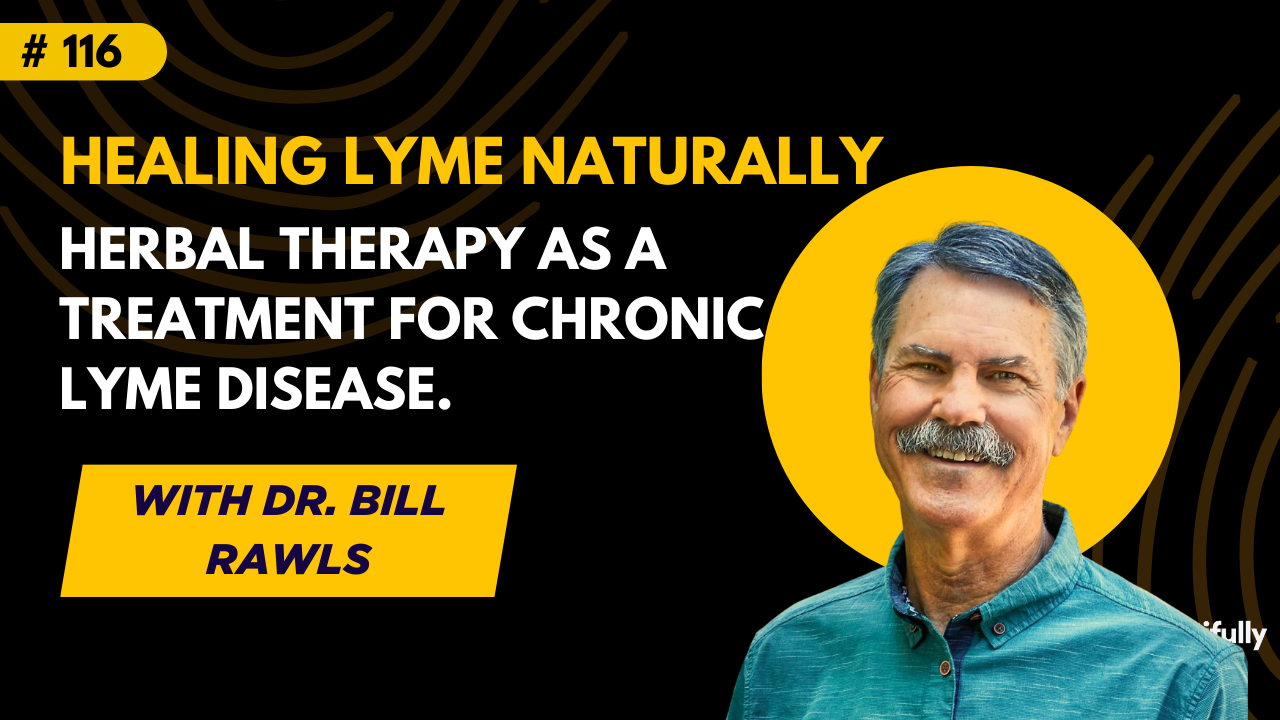
WELCOME TO EPISODE 116
Today, information is accessible anytime and anywhere, thanks to the internet. Yet, despite the information, there are still people struggling to get better and faster from chronic illness. There has to be a catalyst that will guide them to find their way towards a solution – one that is cost-effective from the available options. In this episode, Freddie has Dr. Bill Rawls join him on the show to talk about herbal therapy as a treatment for chronic Lyme disease. Bill is a doctor who was diagnosed with fibromyalgia in his mid-forties. He shares his journey navigating through illness and conquering it, which led him to write extensively on health topics, including Lyme disease, fibromyalgia, and Chronic Immune Dysfunction. Listen closely to learn more about chronic illness from Bill!


Episode Highlights
[00:35] Why Bill speaks on chronic illness
[05:13] Herbal therapy as an option for Lyme disease
[12:28] The symptoms that Bill experienced and his pursuit to regain his health
[30:54] Lyme disease is curable; death from it is rare
[36:37] Standards of testing are built around acute illness
[42:25] How Bill explains an herbal regimen to someone
UPGRADE YOUR WELLNESS
Marion Institute BioMed Course: biologicalmedicine.org
Code: beautifullybroken
Silver Biotics Wound Healing Gel: https://bit.ly/3JnxyDD
Code: BEAUTIFULLYBROKEN
LightPathLED https://lightpathled.com/?afmc=BEAUTIFULLYBROKEN
Code: beautifullybroken
STEMREGEN: https://www.stemregen.co/products/stemregen/?afmc=beautifullybroken
Code: beautifullybroken
Flowpresso 3-in-1 technology: (https://calendly.com/freddiekimmel/flowpresso-one-on-one-discovery)
Medical grade Ozone Therapy: https://lddy.no/1djnh
Code: BEAUTIFULLYBROKEN
AquaCure Machine + Molecular Hydrogen
Website:https://eagle-research.com?ref=24931
Code: beautifullybroken
DIY Home Cold Plunge Experience: [https://www.penguinchillers.com/?rstr=6757]
CONNECT WITH FREDDIE
Work with Me: https://www.beautifullybroken.world/biological-blueprint
Website and Store: (http://www.beautifullybroken.world)
Instagram: (https://www.instagram.com/freddie.kimmel
FULL EPISODE INTERVIEW
EPISODE TRANSCRIPT
Freddie Kimmel and Dr. Bill Rawls (00:00.226)
Ladies and gentlemen, what a treat. We've got Dr. Bill Rawls. Like so many of us, his very successful career, his medical career as a physician was interrupted by Lyme disease. In his journey, in his recovery, we do a deep dive on what he sees being the biggest driver of improved wellness, struggling with the symptoms of Lyme disease, the benefits of herbs, complimentary treatments, and the mindset.
that one may benefit from holding, walking into a diagnosis of Lyme. This is a show you do not want to miss. If any of your family members or community members have been touched by this terrible illness, then you'll know how valuable high-level insight is, and this is that episode.
Freddie Kimmel and Dr. Bill Rawls (00:50.562)
Welcome to the Beautifully Broken Podcast. I'm your host, Freddie Kimmel, and on the show we explore the survivor's journey. Practitioners making a difference, and the therapeutic treatments and transformational technology that allow the body to heal itself. Witness the inspiration we gain by navigating the human experience with grace, humility, and a healthy dose of mistakes. Because part of being human is being beautifully broken.
Ladies and gentlemen, welcome to the beautifully broken podcast. We're on season four and we have the honor of having Dr. Bill Rawls with us today. Welcome to the show, Bill. Thank you very much. My pleasure. Do you go by Bill or do you prefer people say Dr. Rawls? You know, I don't specify either way. A lot of people call me Dr. Rawls, but I certainly don't mind Bill.
Yeah, it's funny. I only mentioned that because I interviewed a doctor at one point and he said, I called him by his first name a couple of times and he said, you know, I went to school for a really long time to get that dirt in front of my name. So I'd like you to say it. And I was like, okay, it was interesting. Interesting moment. I was like, respect respect for whatever you want to be called. love it. Some people get really particular about it, but I do not. I know.
I know, well, we have so many things we could talk about and I know we could easily go for three to four hours on the podcast. So I want to jump in and I want to talk about Lyme disease and chronic Lyme. And you are somebody who always comes up in my research. Always. mentioned that, you know, 2001, I'd been researching Lyme and different methods in different ways. Obviously the internet has changed dramatically about access to information.
With that better information, I don't see people getting better faster or finding their way through chronic illness easier because of access to information. And I'd love to just jump in with a little bit about your story, why you speak on chronic Lyme, why you show up as solutions for the subset of the population. So if you wouldn't mind just taking us in, maybe a little intro to the audience, who you are and why you're involved with this topic. Yeah, sure.
Freddie Kimmel and Dr. Bill Rawls (03:12.795)
Well, I think part of the problem out there is just information overlooked. You know, you've got the latest, greatest newest line therapy that pops up every week, it seems like. And so people are constantly trying things, but the things that helped me the very most have become more the things that people are gravitating toward now. And that one thing that is overriding everything else is herbal therapy.
I list herbal therapy is the primary factor that helped me regain my health. But at the same time, herbal therapy is complicated. You have to use multiple herbs. And where people mess up is they'll buy a $30 herbal product, they'll dabble with it, they'll spend a month or two, they don't get better. So they abandon that and move on to other things which doesn't help them.
What I found is if I can get people to make an investment in herbal therapy, and when I say investment, it's not as much a financial investment as time and effort. And if they embrace it, do it to a full extent and they keep going with it for not weeks, not months, but years, they get their lives back almost near 100%.
but it just takes a lot of effort and a lot of time. Yeah, that hits my heart. The investment. And I love that you didn't put it on the financials, that it was that investment in time and heart and finances, which you really need to be. Everything needs to be on the table. Well, that's the thing. Herbal therapy ends up being one of the most cost effective options you can choose. And I've also learned that, and I actually read this in an article published in a medical journal.
90 % of recovery from any chronic illness is self-care. Yeah. And I think that's really important. And people are always constantly reaching out for someone to fix them. And it just doesn't work that way, not for chronic Lyme disease, not for any chronic illness. What we're missing, I think, is we're not dressed for chronic illness in general.
Freddie Kimmel and Dr. Bill Rawls (05:33.291)
We're trying to fix the symptoms and manifestations of the illness and not address the underlying causes. And we think that the underlying cause of chronic Lyme disease is a microbe called Borrelia and now co-infections. And I found in my journey, it's just not that straightforward. It's more complicated than that. Yeah.
Yeah. If we could go into your journey a little bit, why don't you tell us where were you in your life when you first noticed something was off or out of balance? Yeah. Like a lot of people, it wasn't a tick bite. So, you know, I've literally talked to hundreds, probably thousands of people over the past decade or so. 95 % of the people that I talked to do not remember becoming ill around the time of a tick bite. 95%.
I think what we call acute Lyme disease that people become symptomatic. It's pretty rare. It doesn't happen very often. Most people pick these things up and I spent my whole childhood in the woods. I was constantly being bitten by ticks and you know, I, there were times in my life where I felt like I just don't quite have the energy or push that some people have and I just got used to pushing through that. But
What happened was I chose to practice obstetrics and gynecology, which required being on call every second to third night, which is highly demanding. And unlike my partners who could just crash in the call room and go to sleep when they were waiting for a delivery, I was alert. I, know, that pretty patient's life was in my hands and I just didn't sleep when I was on call every second to third night for 20.
years. And I finally lost the ability to sleep and crashed badly. And during that time, you know, it was, it was just that high stress lifestyle, trying to do a really busy practice and keep up with everything else in life, which all meant not eating as well as I should have, even though I knew what a good diet was. But the only thing that I did was write was physical activity. I stayed physically active.
Freddie Kimmel and Dr. Bill Rawls (07:59.846)
About age 47, I crashed. And I can remember, you know, just reaching a point where I recognized that I just couldn't do a call anymore. And I was able to defer with my partners. I gave up call, but I just wasn't getting any better. And finally had to leave my practice because I couldn't carry the call responsibility.
started a medical practice that didn't require a call, but that was stressful in itself. But that trapped me financially that I couldn't do what a lot of people do, which is fly around the countries seeking help. I had to figure it out myself. I had to bring things to me. when I exhausted all conventional options, I turned to herbal therapy.
And of course, along that time, I did what a lot of people do. I did the obvious things. I cleaned up my diet, I reduced my stress, I looked at my environment for the possibility of toxins, you know, and so I did all the things that I could do. But the one thing that I evaluated that seemed to make sense was herbal therapy.
Did I really trust herbs at that time? No, I was skeptical. It was like, no, I've been taught that herbs are just weak versions of drugs and they don't really do anything. But I was desperate and I happened to read Steven Booner's book that came out in 2005 called Heathling Lime. And it was like, you know, so when I started looking at therapies, I was aware of everything out there, IV antibiotics, all of those things. But
I looked at, I used three parameters to define what I was going to try. Efficacy, was there evidence that that thing actually worked? Safety, what was the risk that I was going to actually make my situation worse? And cost, at that particular time, financial demands were such that I just didn't have a lot of financial capital to work with to chase therapies.
Freddie Kimmel and Dr. Bill Rawls (10:16.378)
And so looking at those things, know, IV antibiotics, wasn't any evidence for it, really expensive. And a lot of people were getting messed up badly by the antibiotics. Ozone, kind of the same thing. And it wasn't practical for me to go and get these things. I didn't have the resources. So I looked at herbal therapy and it's like efficacy. Well, there were no published studies at the time, but
There were accounts on the internet of thousands of people using herbal therapy and getting benefits. Like, okay, maybe. Safety. I couldn't find any safety issues. It was like, man, that's probably the safest thing I could try. Cost? It's just buying stuff off the internet. It wasn't that bad. So I did it. I embraced it.
I had a shoe box full of different bottles and I was taking handfuls of capsules every day. My wife thought I'd lost my mind and I started getting better. And three months I could tell a difference. It was like, yeah, something's happening here. And after that, you know, I gradually got better and it was one of those things where would wax and wane and I'd run out of the supplements and some stress would come along and I'd...
fall down and be flat on my face again and I'd restart the herbs. And I finally got to the point of going, you know, these things don't seem to be having an adverse effect on me. I'm just going to be really conscientious about taking these herbs and I'm going to try different herbs and I'm going to really explore this thing. And I kept getting better every year. So by age 50, my joints were shot.
I really thought I'd probably be having a hip replacement at some time in the future. had bad brain fog. I had a lot of issues, but probably my biggest issue was my heart was skipping beats every second to third beat. And I had continual chest pain, which was really scary. I ended up with a cardiac cath. My vessels were clean. The cardiologist said, you know, I don't really know what's going on. You can take a beta blocker if you want to. And it's like, you know,
Freddie Kimmel and Dr. Bill Rawls (12:31.679)
I'm done. You guys haven't helped me. This is it. So that's when I really dug into the herbs. And it honestly took about two or three years of taking the herbs before all the heart symptoms resolved. And it took about five years before my joints weren't aching anymore. But the point is, that's been a decade ago, and I'm 64 years old, and I've been taking herbs continually ever since.
My joints are fine. My heart is fine. My energy level is better than most 64 year olds. I'm still kite surfing. Yeah. That's the power of herbs. Yeah. It's remarkable. Rock and roll, rock and roll. That's amazing. I think that's a big one. I'm still a kite surfing on 64. So you kind of framed it well for us. You said about 47 is when things really started to fall apart on a scale of lime, because there's so many people out there with
different symptoms. I know people with mild fatigue. know people with just debilitating joint pain. know people with inflammation in the heart. And then there is this also this very extreme version of people that are out of work, they're on disability, they're bedridden. Whether you want to frame that as neurological, why, or a complete systemic breakdown of all the body systems, where were you in that range of like your symptoms and where was your body attacked for the most part?
Yeah, it was almost like it was a prescribed journey, like fate or some force was putting me through this. every time I'd get rid of one symptom, something else would pop up. So I experienced virtually every symptom of chronic Lyme disease. But it was almost like we're going to hit you with this stuff, but we're not going to make you so bad that you're bedridden.
because we want you out there figuring this thing out. We want you still in the office and seeing patients and helping people and figuring this thing out. And that was my real transition. There was a point where there was a lot of anger where I was going, why is this happening to me? What did I do to deserve all this? And at some point I went, okay, I'm supposed to be learning. So what are you trying to teach me?
Freddie Kimmel and Dr. Bill Rawls (14:58.673)
And how can I take that information and learn from it and turn it around and help other people? And that was the transition in my recovery that was so remarkably important when it was like, okay, this is an experience that I'm supposed to be learning from, that I'm supposed to be helping other people. And that's why I'm going through this.
Then I started making headway and it seemed like information just started coming to me. You know, I would do internet searches and the right studies would just fall in front of my face. And it's like, you know, so it was almost like, yeah, we're going to trap you where you're supposed to be. So you can't go and try all these other things that aren't working for people. And we're going to force you into seeing this other thing that's really important.
And it was kind of like that. It was really weird. Yeah. It's almost like the universe was conspiring for your growth. Yeah. Yeah. I know that sounds out there a bit, but that's how it felt. Yeah. It doesn't sound out there to me. I'm a firm believer that we're not here. I listen. I used to think this. I remember being a young human being in New York city and watching everybody kind of going after this, a similar dream, which for me was, I wanted to be on Broadway. So
I remember watching people who I would look at their path and be like, they just got here. They're in a Broadway show. Like day one, it's so easy. And so you start to compare yourself to other people. You're like, life is about joy and achieving your dreams and having a beautiful home in Manhattan and you know, all those things. And as I've gotten older and as I've learned.
Some of my most magical friends and dynamic human beings are the ones who have experienced the most hardship and moved through that adversity with a little bit of grace. And seen that from experience, my friends who are really, they bring a lot to the table are the ones who have been through really terrible pain points in their life. I don't see that wonderful growth happening from friends who have a million dollar trust fund.
Freddie Kimmel and Dr. Bill Rawls (17:14.967)
or have never had to work a day in their lives or never had anybody in their family that they've never had anyone who they've lost close to them. They've, you know, it's just a different journey. And I, I really do see pressure made, you know, it makes diamonds again and again and again. So it sounds like this was your experience to become a diamond in the rough. It seems to be. And what I'm very grateful for is that I actually did regain my health and I've had so many years that have been so wonderful.
But if I can do anything to help people cross that threshold, that's become the passion of my life. a big part of that is figuring this thing out. But understanding chronic Lyme disease has really helped me understand all of chronic illness. It's fundamentally a lot of the same things. And that's probably my biggest frustration in life right now.
is this blessing of knowledge and being able to see things that others aren't seeing and looking at the medical system and going, my goodness, it's so off-bound, it's so misdirected. And not having a huge voice to try to really change that, but maybe if I can have a small one, so if I can reach out to people, it's a grassroots effort.
we have to change the way we're approaching chronic illness in this country. And I don't think the medical system is going to change it, but people are. Yeah. Yeah. People are people are, I know it. And it's interesting to hear you say, you said, I don't know if I have a big enough voice to change it. You know, and again, from my experience, it's like sitting up on a soapbox and yelling everybody that this is all broken and it's got to change is rarely the time.
the action which creates change. It's usually you saying, listen, do what you want, move through this how you want to. I'm 64. I'm kite surfing again. For me, I hear that and I was like, I want to listen to what this guy has to say. So by you sharing your story and individually us getting really clear on what our story is, what helped, what didn't, and speaking out of integrity, I think that's so powerful. I think people, yeah, it's easy. Listen, we're in this
Freddie Kimmel and Dr. Bill Rawls (19:34.556)
hyper-connected society where we said a couple of times, we're in more, we're drowning in information, starving for knowledge, but to be able to get clear on the story. So I want to go back to it through your story. said, I just want to check off some boxes quick because we mentioned things like we mentioned things like IV antibiotics. We mentioned ozone therapy. There's so many treatments out there for Lyme. When you start to experience yourself not being able to get better,
I mean, I quickly was like, let me look elsewhere. Let me look everywhere else until I found my couple things. My desert Island five, I like to say that really helped me across the finish line. So I also experimented with ozone for a little while with a really questionable doctor in New York city. was pretty scary looking back at it. Some of the stuff I did. And I would agree with you that safety box isn't always checked by some of those therapies. And I just want to love your opinion.
IV ozone, IV antibiotics, we could argue that those are powerful agents for killing bacteria. But from my research and from my experimentation, if it was about killing the bug and all of sudden the body is restored to health, we've got great tools for those and those arms of the military, if you will. And that was never the thing that did it for me. again, just doing lots and lots of ozone injections and ozone therapy.
I could always find a little relief, but what I found was is that my body would usually swing back twice as bad. And in my head as a non-medical person, as not a doctor, I guess my thought would be ozone is working in the bloodstream. It's primarily gone within a couple seconds because it's a molecule of oxygen O3 that's reactive to any bacteria mold or parasites. So pretty instantly it's not ozone anymore. It's really oxygen. It's going to split off and have a reaction.
And from my reading, Lyme is very systemic. It's in hollow organs. It's in your bones. It's in the valves of the heart. It's in these areas where maybe the blood and the lymphatic, which were driving these treatments, we could kind of put ozone and IV antibiotics in that cup. They're not really going anywhere and everywhere. And it's this, feel like the thought process is just not, people haven't thought that through. So I'd love to hear your thoughts on that.
Freddie Kimmel and Dr. Bill Rawls (22:02.097)
I'm going carry a little bit further. Great. The microbes are in your tissues, but very, very specifically, they're inside your cells. All of these microbes, everything that enters your body has the capacity to have an intracellular existence. Okay. And this is well-documented in the literature.
all of the Lyme microbes, Babesia, Bartonella, Borrelia, all of them. And so those are what are called facultative intercellular microbes. They can live outside cells, but they can very readily live inside cells. Other things like mycoplasma, chlamydia, so many others are what are called obligate intercellular microbes. They have to live inside the cell. That's the only way they can survive.
they need the machinery of the cell to work. They're inside your cells. So I think what's really important, so just to carry everybody a little bit deeper. So we have this approach of, well, to get well, we have to kill the microbes. And so that implies that microbes in our tissues is an abnormal state.
And therefore, if you have microbes in your tissues, you're sick and you need to eradicate those microbes. Turns out that's a huge myth, a huge myth. So microbes are constantly entering your system. Right. And what microbes want is basically food. Everything's got to eat all living things or food for something else. We are food for microbes. So microbes are trying to constantly get inside of us.
and we have barriers to keep them out. We have our skin, the intestinal lining. So, you you can think of our intestinal tract as an extension of the outside that allows us to take food inside, process the nutrients, and expel the waste. But it's kept separate from our tissues. So we have linings of the lungs and the genital tract. So we want to keep microbes out.
Freddie Kimmel and Dr. Bill Rawls (24:18.056)
because we are food for microbes and microbes keep growing as long as food is present. Yeah. Right. So they get in your tissues. Not good. But turns out they do. Microbes are constantly trying to trickle across barriers. And when what we define as an acute infection is just a microbe trying to cross a barrier to get into the body. All right. So we think of COVID as a respiratory infection.
So the microbe, that's the entry point. So we label microbes by how they enter the body. We have tick-borne microbes. We have respiratory microbes. But all the microbes want exactly the same thing. So when the SARS virus that causes COVID makes an assault on your lungs, it's not the lungs that it's interested in. What it's interested in is getting to your bloodstream because
bloodstream is the highway that gives them access to every single cell in your body, right? So that confrontation we feel is that we call a bronchitis is just the virus trying to break through our defenses of our immune system to get to the bloodstream. COVID autopsies, found it in kidneys, brain, heart, everywhere in the body. So think about ticks.
They inject the microbes right where they want to go. Wow. Yeah. It's pretty wild. You think about the delivery mechanism of nature. Right. But when a microbe hits your bloodstream is less about the microbe. What happens is less about the microbe than your immune system. All right. All microbes are aggressive. All microbes want to consume food and make more microbes. That's their only purpose.
They're all exactly the same, whether you're talking about bacteria, viruses, protozoa, everything. What happens when something hits the bloodstream depends on whether you have built-in immunity. So when something like Ebola hits your bloodstream, humans have never been exposed to that thing. And when it hits your bloodstream, there's nothing to stop it, and it ravages all the cells in your body. Mortality, 60%.
Freddie Kimmel and Dr. Bill Rawls (26:43.09)
Mortality of acute Lyme disease? You're zero. People don't die from it. They might die of the chronic manifestations later, but they don't die of acute Lyme disease. And the reason is because we have built-in immunity to all the tick-borne microbes. They are low-grade pathogens. have been biting humans since the beginning of time. So we have immunity.
So when these things hit our bloodstream, the immune system is really mopping them up and getting rid of them fast. And it's a race. Can the microbes course through the bloodstream and get the tissues before the immune system eradicates them? And most of the time, the immune system is pretty good. It's successful. But all it takes is a few to get through. And when they do, they basically pepper your tissues.
And when they're in the bloodstream, they're vulnerable. But once they get to tissues and infect cells, immune system can't get to them and antibiotics don't work anymore. Because once they get inside cells, they change. They lose their cell wall. They become an L-form and most antibiotics don't do anything to them. Plus they're inside cells. So if you can imagine getting a tick bite and just all of your tissues, your brain, your heart,
Every part of your body just kind of gets peppered with microbes. Few cells scattered with, it's few cells that are inspected with microbes scattered here and there. Not enough to make you sick. And if your immune system is strong, it can keep a thumb on them, but it can't necessarily eradicate them. It becomes like a war on terrorists that are hiding out in a city full of civilians.
If you want to eradicate all the tears, you end up wiping out the city. So to get rid of those cells that have been infected with microbes, the body makes antibodies to those cells, but it also makes antibodies to normal cells, autoimmunity. That's the price of trying to eradicate them. So the immune system kind of backs off and says, well, we're going to keep a thumb on these things, keep them dormant, but we're going to live with some cells that are infected with microbes.
Freddie Kimmel and Dr. Bill Rawls (29:04.387)
And that is a normal state of being. Studies are now showing that we have a microbiome of the brain, low concentrations of bacteria that live in our brain and our heart and throughout our body. And these things are there. And if you're healthy, you'll never hear from them. But eat bad food, take night call every second and third night, go through stress after stress after stress and trash your immune system. These things start becoming more active.
and they start infecting other cells and your immune system starts reacting to that and tearing up your tissues. And that's what chronic Lyme disease is. Yeah. It's wild to think about the systemic nature of this. I've, you know, through my reading and understanding, that's what I've kind of built my wellness protocol around is really supporting whole body. Like you said,
90 % of recovery is lifestyle behavior. And I believe that and I see it to be true. I watch it work and people all the time. It's usually really committing and investing a hundred percent, whatever your treatment is that you're going to go forward with, but it's so important. Hi friends. I hope you're loving the show. Let's take a quick break to hear a word from our sponsors. If there's one word that makes me feel really intelligent, it's photobiomodulation better known as red light therapy.
Photobiomodulation has been clinically shown to increase energy, circulation, increase testosterone production and workout recovery, hair growth, even the improvement in the depths of fine lines and wrinkles. You actually don't have a lot of reasons not to incorporate red light therapy in your home. And not all panels are created equal, which is why the panel I recommend my family and my friends is Lightpath LED for the following reasons. This company continues to evolve their technology
including up to five wavelengths in each bulb. They include a three-year warranty. This is one of the most robust in the industry. And they also have pre-programmed frequencies to add the benefit of pulsed light to the body. And most importantly, after purchase support so you know how to best use your device for your specific needs. Now, what does the evolving science say around pulsed light? Pulsed light yields benefit to the mitochondrial health, leading to increased production of cellular energy.
Freddie Kimmel and Dr. Bill Rawls (31:25.828)
thus improved outcomes. So say it with me, let's mine the mitochondria. So check out their beautiful new website at Lightpath LED and use code beautifullybroken all lowercase for a discount and checkout. Now let's get back to the show. I just want to grab a couple things in there that you said that it's rare that somebody dies from Lyme disease. From acute Lyme disease, right? From acute Lyme disease. an acute infection.
Yeah, I have known people and known people and I mean an N equals one relationship, younger people, heart failure. Eventually the Lyme led to a neurological condition in which even I've known someone where they're respiratory, their body just stopped breathing. mean, wildly, wildly sick. And I know people think that if you're on the outside, you don't know Lyme disease. I'm sure you've seen people, I've watched people be carried in to
patient rooms and just look like, like a Holocaust patient. mean, like no weight on their body and everything's just shutting down. So systemically, guess a way to frame that would be that the body is just failing and choosing to, guess the balance of systemic microbes over the human population just becomes too great. Is that, would you say that's accurate? Well, yeah, but there you're talking about chronic manifestations. You know, I'm talking about people getting sick from acute
from a tick bite within weeks and become deathly ill is highly unusual. But there are cases and it turns out, it's really a factor of which microbes you pick up. So we test for half a dozen or a dozen different co-infections. My list of potential microbes that...
could cause Lyme disease like symptoms is now well over 100 species of microbes. So what we're testing for is really a drop in the bucket. I think there's a lot more out there than we have the capability of testing. People have different manifestations of illness because different microbes have different preferences for different cells in the body, right? And even different strains of Borrelia will affect different cells.
Freddie Kimmel and Dr. Bill Rawls (33:42.949)
You know, some strains are more apt to affect neurological cells in the nervous system. Some strains are more apt to affect muscle and collagen tissue and affect heart. But the deal is that people don't pick up a microbe from a tick bite. You know, they researched one tick species and found that it could carry 237 different genera or families of bacteria.
Yeah. So what we know about is really, you know, that's a big missing component right now is we don't know all the possibilities and we don't know how they affect us. But what I'm saying is we do have immunity to a lot of these things. Some are worse than others because of the cell types they infect. All right. And so Borrelia by itself really doesn't cause as much acute illness.
but you pick up rickettsia. So is rickettsia any more virulent than, know, is it any more aggressive than Borrelia? No, but it infects the blood vessels. It infects the cells that line blood vessels and that causes constriction of blood flow and that can be really bad. So it's just the difference in the cell type.
And there are dozens of species of rickettsia that we know can infect humans. And I just don't think we know everything about them. But really interestingly, going back to some of Dr. Bergdorfer's original research, he had some ideas later that it wasn't just Borrelia. So he also found those species of rickettsia.
that was common in New England and a lot of the original Lyme specimens from the seventies and later speculated that possibly these could have been part of why those people got sick. But, you know, he was pretty sure that Borrelia was causing the rash and that's pretty well defined now. But what wasn't so sure is the fact that people got other microbes at the same time. Yeah. And I think
Freddie Kimmel and Dr. Bill Rawls (36:06.171)
we always get multiple co-infections. So it depends on what you pick up with that tick bite or tick bites, but also what you picked up through your lifetime. You know, picking up microbes from the time we start putting things in our mouths when we're babies. And the idea that we clear all these things is turning out to be a misconception that, you know, a lot of things that we have during our lives and
You know, some of the studies that I'm looking at are finding microbes in tissues, know, brain studies, finding microbes in brains, and they're finding microbes from the gut, the sinuses, the skin. There was a study in 2015 looking at brains of people with Alzheimer's. They found hundreds of species of bacteria in the brains of the autopsy specimens.
but one of the prevalent pro-inflammatory microbes was P-acnes, the microbe that causes acne in people's brains. P-acnes has also been connected with lupus and prostate cancer. So we're infested. We have things happening all the time. And if your immune system takes a downturn, you're in trouble. Yeah. It's a great, scary as that may sound to people, I find that very empowering because
all of it becomes clear, what can we work on? Right? So I think that's a good thing too. I do want to just, before we go into, I want to go into herbs. I want to go into the benefit of herbs and what herbs and why. and I, like you started my first herbal educational platform was Steven Berner's book. I bought that book. read it cover. was like, I'm doing this, you know, and I jumped in with whatever varying degrees of success, but can we just touch on testing for a second? You know,
Again, that's another podcast, but where would you tell someone to start exploring when they're looking for a comprehensive test that's going to give you some decent information, which you might be able to take some action on and not be in that state of overwhelm? That might be a loaded question, but where would you point someone for testing? Don't think that's wrong, but I don't. I think our ability to test is so limited that sometimes it's misleading.
Freddie Kimmel and Dr. Bill Rawls (38:27.722)
What we're testing, the way that we're testing is not ideal either. So you have to recognize that the standards for testing are all built around acute illness. So if a test says, well, there's a 95 % sensitivity that we're going to find this bacteria, what they're referring to is acute illness when there's a high concentration of microbes coursing through the bloodstream and
there's a high reaction by the immune system. What their standard isn't based on is chronic infection. So as I said, most people don't sit sick around the time of a dick bite. Most people are getting showing up with illness later in life. So most people being tested are being tested for chronic infection. Yeah. The other side of it is everybody wants a positive test.
Everybody wants a positive test. The biggest difference in my book between fibromyalgia and chronic Lyme disease is somebody's figured out how to get a positive test for a microbe. The symptoms are identical. Identical. And so I think, you know, there's a microbe foundation for that in just about every chronic illness. So people really want that test because nobody wants chronic fatigue or fibromyalgia because they have the sense that if they have
Lyme disease, can be treated. You got a disease. people are so funny, hand over fist at labs getting those positive tests. And so a lot of the labs have tweaked their indicators to give the highest probability of a positive test because that's what people are paying for. And so do I think there's value in testing? Yes. You know, it helps push the envelope for us to know more. So if we're doing
zero testing, then we don't move the needle forward. But where we are now and where we need to be, there's a huge gap. And I think we're going to need more sensitive testing, because again, a lot of these microbes are intracellular. And by then, the immune system's reaction to the microbes is somewhat attenuated or even suppressed by the microbes. And the microbes don't have a high presence in the bloodstream.
Freddie Kimmel and Dr. Bill Rawls (40:51.421)
So, you know, the testing is really difficult. And I always tell people, whatever you think you have, multiply it by a factor of somewhere between 10 and 100, and you might be getting close. So on that side, I don't find that helping people get well, I don't find that there's a necessity to do testing. I find that people who have done no testing respond just as well as people who have done testing.
But again, the other side of that is the only way we're going to know more is to keep pushing the testing. So as long as people are willing to pay for it and we're willing to do the testing and labs are willing, you know, the labs are motivated. They're out there trying to learn everything they can to learn more. And every year we find that they offer more tests that are available, more things that we can do. So, yeah, you know, it's kind of a mixed bag. so
I think both are okay. But again, I'm all for knowing as much as we can. So the better the testing gets, the more sensitively we can say, you know, I mean, it would be great if we could get to the point where we could say, okay, this is exactly the spectrum of microbes that are present in your system. And here is how these microbes affect specific cells in your body.
And this might help tailor your herbal therapy so we can really cover all those possibilities. But we're not there and we're not an inquirer close to there. Yeah. Is there a lab that you identify with or a couple labs that you find decent where you can at least garnish base level information and just take it with a grain of salt at this point?
You know, I, GenX is the big one that everybody goes to. There is a lab based here in North Carolina that I know the people that run it called CalXE Labs. And even though I recognize the limitations of the testing and don't think testing is an absolute necessity for getting well, I know those people and they're good hearted people and they're really, really trying to move the needle forward and make things better.
Freddie Kimmel and Dr. Bill Rawls (43:09.554)
And so, you know, I have to be behind that. Yeah. Yeah. I think that's valuable for people to hear. I agree. People are out there. They're putting on their pants one leg at a time. They're trying to better the experience of life on planet earth. Most people, nobody's out there, you know, trying. They're not a Lord Farquaad and Shrek trying to make an evil dominion for everybody. I think that's great. That's a great, just to frame it that way. If we pivot to, if we pivot to herbs a little bit, and we mentioned Stephen Berner and
What does that herbal protocol feel like? From my experience, it's always, I think about it like a pyramid. There were always layers that I'd work through first. And I was like, I have some foundational herbs. Then I build on that. And then I build on that. So it was like a process of moving through. How would you explain like an herbal regimen to someone? How are you going to build that for the body? And you've mentioned timeline. You you mentioned timeline a couple of times that, that this is a, for you, it's been a lifelong endeavor.
but to really set appropriate expectations on when I might be able to start to feel better with herbs. Right. Yeah. It does take time and it depends on the individual and depends on, you know, the microbes they have in their body. So how I look at this thing is less about how do we kill the microbes and more about how do we create an environment inside the body that cells can recover from stress. All right.
So what a symptom is, is when cells in the body are stressed. When cells are stressed, they release substances that activate nerves that tell our brain that something's wrong and they can't do their job. So we lose that function. So in a chronic illness, a lot of different cells in the body are stressed. And obviously one thing that we've talked about is the microbes being inside cells and the immune system reacting to that. That's definitely
a cell stress, but at the same time, you know, if you're eating bad diet and exposed to mold toxins and all these things are weakening your cells too. So you have to clean that up. Herbal therapy really is in the category of promoting that environment that allows cells to heal. All right. So, you know, if you're following the herbal world, you know that there was a series of Johns Hopkins studies published last year.
Freddie Kimmel and Dr. Bill Rawls (45:36.641)
that showed some of these top herbs that were using some of the Booner herbs actually killed the microbes in a test tube situation better than antibiotics. And that was true for Borrelia, Babesia, and Bartonella. So we know that the herbs actually has some killing power. But what are they doing inside the body? That's a big question. And so which herbs do you use?
It's not as specific as you might think, which is good. There are a lot of different options out there that are very good, but some are kind of tried and true. I think Steven Mooner set the pace for that back in 2005 and everybody's been building on that ever since, which is good. So I have my own core that I use, but even then if somebody said, well, those herbs aren't available anymore, I'd say, that's fine. I've got another set over here I can use just fine.
Sure. So there are a lot of things you can use. it's important to recognize what we're doing with an herb and how it is different than an antibiotic. right. An antibiotic is a single chemical agent that affects a bacteria in a very specific way. All antibiotics come from nature. lot of people don't realize that.
All antibiotics come from nature. All antibiotics are either from a plant source, a fungal source, or a bacterial source. So nature protects itself from microbes and we're using that. But the difference is we've pulled one chemical to target bacteria in one way. And the problem with antibiotics is they're not selective. So when you take these things, you're not hitting these intercellular microbes very hard, but you're wiping out the normal four in your gut.
which is the main thing that keeps the pathogen suppressed in your gut, which isn't a good idea. So what you're getting with an herb is the plant's defense system. So when you take an herb, you're getting hundreds of different chemicals. So all plants are producing a wide range of antimicrobial substances to protect their cells against bacteria, viruses,
Freddie Kimmel and Dr. Bill Rawls (47:58.576)
protozoa, yeast, everything. But in the mix are also substances that protect cells from antioxidants, from toxic substances, from radiation. So you're getting this robust defense system that the plant is using to protect itself. The difference in an antibiotic and an herb is that there's a certain intelligence about that defense system. Very specifically,
The plant wants to fend off pathogens, but not affect bacteria that could be favorable, friendly. Herbs typically don't disrupt gut flora. And that is the key that allows you to use them for long-term. And that's something that interestingly, I found a study just this last month that somebody had actually done that. They had taken an animal model and used various different herbs and found that
The herbs that suppress gut pathogens and didn't kill normal flora, which is really key. So are you actually wiping all the bacteria out that you've got cluttered through the cells of your body? No, I don't think you're getting to them. But what you are doing is you're killing microbes that are emerging from cells and you're strengthening and protecting your other cells. So it's not just your immune system.
Your cells can repel invasion by microbes when they're healthy. If your cells are stressed, they're vulnerable. So what we're doing with the herbs is multiple things on multiple levels. So we're killing microbes that may be out there wanting to invade cells. We are protecting cells from that invasion. We're protecting cells from free radicals and all these other things. But we're also
Another component is we're balancing immune system functions. And we're cooling down those overactive parts of the immune system to allow the immune system to function better. So the herbs are doing a lot of things all at once. All plants have antimicrobial substances, but some plants are better than others. It depends on the natural environment of the plant and how much microbe stress is there.
Freddie Kimmel and Dr. Bill Rawls (50:19.742)
When you choose different plants from different locations that have been used traditionally to treat things we know are infectious, and Steven Booner did a really nice job of doing the research to define some of those things, then you end up with this really broad spectrum of coverage for a lot of different possibilities. Using multiple herbs, and typically my core,
It's still a little bit of the Booner protocol. I like Japanese knotweed, cat's claw, Chinese skullcap. I always add garlic into my protocols because other studies have shown that's a really exceptionally good substance. Chinese skullcap is a really good one. Several of those were on the Johns Hopkins studies last year that showed that we're actually, we're as good as antibiotics.
But I usually balance my protocol with immune modulating verbs like cordyceps and reishi and red sage. And I tell people, you know, to get a core, build that foundation. And a lot of people are okay with that. But what I found in my recovery though, is that sometimes I would seem to develop just tolerance to a set of verbs. I...
You know, after several years, I started getting in this habit of every six months or so I would rotate in a new herb and rotate one out. And I just kept doing that and doing that and doing that and got better every year. So what I tell people is build a foundation, but then individualize that and learn how to work those herbs. And that is the key to making herbs work.
is just to keep working them and working them and working them. about every time I get to the point of, the herbs have run out, I need to go do antibiotics or whatever or chase some other therapy, I'd go, nah, that's not going to work. And I'd go research and find another herb and then I'd be back up again and just kept doing that. Beautiful.
Freddie Kimmel and Dr. Bill Rawls (52:29.894)
Well, I could talk to you for 18 hours, Bill. And there's so much I want to go. I feel like we just started to touch on herbs. So I'm going to suggest we schedule a part two, just because I feel like the content we covered is so valuable, but there's, there's so many other directions I want to go with this. Yeah. I really, I love the information and I love your energy. Most of all, I feel like that's one of the most important things. And I'm like looking for people that are going to show up as healers in my life, like the energetics behind your message and your
everything you're saying really resonates with me and the personal experience. You've come from the medical establishment and you've went through a dramatic change in your life and you've changed your belief system based on new information. think that's so important right now that, yeah, if there was one thing you're like, is my voice loud enough to change the whole paradigm? It is actually. we just need more people. Maybe we need more doctors to go through their N equals one experiment where they see
Things need to change. They need to change. And I just, I applaud you. Where can people go to find out more about your work? Also the herbal formulations that, you offer specifically. Yeah, we, we try to get our information out there and I, you know, have a team of people that we've built a website called RawlsMD and we are just constantly loading that thing full of information. It's like,
We've been lately working on looking at all the Lyme therapies out there and actually doing a little rating system. And, you know, it's partially my opinion, but also research to looking at the sulfur and ozone and all these different things. And I think we've done about 30 of them now just to look at, know, is this a primary therapy? Is it supportive? And just try to give people really good, solid information.
Because yeah, I think there are other things out there besides herbs that can compliment it, but I want to steer people the right direction. And the herbal protocol, we have a separate website called vital plan.com that I do have something to that's called the restore kit that it's influenced by the Booner protocol, but it's also just my knowledge over the past decade to that. We built out a program.
Freddie Kimmel and Dr. Bill Rawls (54:55.666)
And they tell people it's not a one size fits all. This is your foundation to build upon. And we have like a six month email series that helps people help people learn and help them build on that pathway to make it better and better. So those are the two big things. RawlZoomD.com and VitalPlan.com. Beautiful. Well, I'll put all those in the show notes, but we will, I will get you on for a...
a part two sooner rather than later and probably release these in a successive format just so people can really have the best possible shot to make a plan that makes sense for them and their body. And thank you for being on for part one, Bill. It's just an honor, wonderful conversation. Our hour flew by. you for the opportunity, Freddie. Every time I can have an opportunity to talk to people, you know, it gets that grassroots effort going out. So I really appreciate it.
100%. And I have a list of things we can do for part two. So thank you for being here and thank you for being a guest for part one on the beautifully broken podcast. Namaste. Same. I've become increasingly aware of the way environmental toxicity affects my body. Now in the past, I've tested high for mercury, lead, cadmium, glyphosate, and mycotoxins from mold. Now I know what you're thinking. That is a full bucket.
And even worse than the list of toxins was the fatigue, the neuralgia, and the brain fog due to the burden on the system. So luckily, I was introduced to the ion cleanse foot bath by AMD at a wellness conference. The system uses both positive and negatively charged ions to help eliminate these harmful toxins from the body. So my N equals one experiment? After four months, I've watched most environmental toxicity fall by more than 30 % through diagnostic testing. So for me, this is a win-win.
The Ion Cleanse by AMD is a fan favorite of the podcast because it's safe, it's effective, and it's a non-invasive way to cleanse and purify the body. So as a special promotion, Ion Cleanse by AMD is offering a free 15-minute consult where you can explore your personal needs to see if this technology may be the right solution for you and your family. So schedule your free 15-minute phone consult by selecting the link in the show notes.
Freddie Kimmel and Dr. Bill Rawls (57:15.317)
my instagram at freddysetgo or freddysetgo.com. Friends, this is a heart centered company, the support team is amazing, and they offer a 60 day, 100 % money back guarantee. That is zero risk for the customer. So if you're ready to purchase, visit www.amajordifference.com and mention the beautifully broken podcast is your referral source. Namaste.
Freddie Kimmel and Dr. Bill Rawls (57:45.834)
My friends, you made it to the end of the podcast. Can you believe this is season four? Wait, don't turn it off yet. Before you go, I have something very important I need to say. There are two ways in which we can build this relationship that we've been working on. The first one is to join me on my membership program at buymeacoffee.com forward slash freddysetgo. You get early access to all the podcasts, bonus episodes, discounted coaching, and free webinars.
with thought leaders in the wellness and technology industry. The second way to support this guy right here is to go to freddycedgo.com and download the Beautifully Broken Buyer's Guide. This is my ebook. It's a collection of transformational technology, supplements, and courses that have worked for me, my clients, and my family. These are things that I have found incredibly helpful in my personal healing journey, like the Ionic Foot Bath or Amp Coil or the Red Light.
Most offer significant discounts by clicking the link or using the discount code. Now please know they don't cost you anything extra and at the same time they do support the podcast through affiliations. Friends, thank you for tuning in. If you enjoyed today's show, head over to Apple Podcasts and leave a review. Five stars if you loved it and well...
I guess if you're compelled to listen to this entire thing and leave a one-star review, I'm gonna take that too. If you want to connect with me directly, I spend most of my time on the social media platform known as Instagram at freddysetgo. Or you can find me at buymeacoffee.com forward slash freddysetgo or freddysetgo.com. And lastly, from my vast team of legal internet lawyers, which I pay a lot of money to, the information on this podcast is for educational purposes only.
By listening, you agree not to use the information found here as medical advice to treat any medical condition in yourself or others. Always consult your own physician for any medical issues that you may be having. That's all for today. Our closing? The world is changing. We need you at your very best. So take the steps today to always be upgrading. Remember, while life is pain, putting the fractured pieces back together can be a beautiful process. I love ya. I'm your host, Freddie Kimmel.