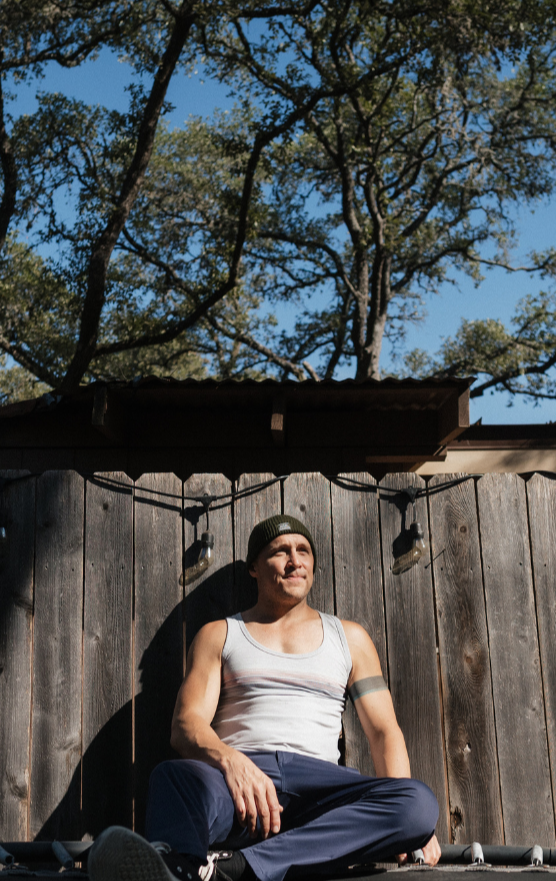
HRV, Vagal Nerve Training & Nervous System Recovery with Matt Bennett
Sep 14, 2026WELCOME TO EPISODE 306
HRV, vagal nerve training, and nervous system recovery are having a real moment — but most people using a wearable to track any of it don't actually know what the data means or how to act on it. Matt Bennett, founder of Optimal HRV and a former mental health therapist specializing in complex trauma, joins Freddie to explain what heart rate variability is really measuring, how resonance frequency breathing trains the vagal nerve directly, and why a validated baseline matters more than any single readiness score.
They get into RMSSD vs. SDNN vs. high frequency HRV, the science behind resonance frequency breathing, and how vagal nerve training works like a strength practice — the more you do it, the more resilient your nervous system recovery becomes. Freddie and Matt also cover the everyday levers that move HRV most: alcohol, sleep consistency, fasting windows, walking, and nasal breathing. Matt closes out with how clinicians, coaches, and military performance teams use HRV data differently than the average wearable user, and why he built Optimal HRV to make vagal nerve training and nervous system recovery accessible at every price point. Podcast Highlights: Try Optimal HRV: https://www.optimalhrv.com/ Connect with Optimal HRV on socials: https://www.instagram.com/optimalhrv/ Upgrade Your Wellness: LightPathLED Red Light Therapy: https://bit.ly/4gwYiUh Code: beautifullybroken Explore Aurawell PEMF and Magnawave: https://calendly.com/freddiekimmel/let-s-conect-clone Silver Biotics Wound Healing Gel: https://bit.ly/3JnxyDD 30% off with Code: BEAUTIFULLYBROKEN MaxGen Labs: https://maxgenlabs.com/BEAUTIFULLYBROKEN CONNECT WITH FREDDIE Work with Me: https://www.beautifullybroken.world/biological-blueprint Website and Store: (http://www.beautifullybroken.world) Instagram: (https://www.instagram.com/freddie.kimmel

0:00 – Welcome Matt Bennett & Freddie's Optimal HRV experience
2:01 – Matt's path into wellness: mental health therapy & complex trauma
4:04 – The missing piece: quantifying nervous system healing
6:23 – Partnering with a Harvard HRV researcher on resonance frequency breathing
6:46 – HRV 101: what heart rate variability actually measures
9:53 – Why the autonomic nervous system runs the whole show
10:03 – Is low HRV always bad? Population norms explained
12:32 – Can HRV be too high? Pacemakers, beta blockers & outliers
14:18 – Freddie's data: fasting windows, exosomes & recovery spikes
15:17 – The real cost of alcohol on HRV
18:36 – Sleep consistency, cold plunge timing & circadian cues
21:03 – The four pillars: sleep, nutrition, movement, breathing
23:25 – Nasal & diaphragmatic breathing vs. mouth/chest breathing
24:33 – Sprint intervals, Carol Bike & low-tax cardio
25:30 – Finding movement that fits your life
28:12 – Why hiking is Matt's HRV sweet spot
28:41 – Readiness scores: are Whoop, Oura & Garmin actually valid?
31:23 – RMSSD, SDNN & high frequency HRV, explained simply
36:48 – The one metric to track if you only track one
37:11 – What makes Optimal HRV different from a wearable
39:19 – Resonance frequency breathing & finding your number
41:30 – The vagal break: training your nervous system like a muscle
45:17 – What strengthening the vagal break actually changes
49:13 – Pricing, compatible devices & getting started
53:16 – How much daily practice actually moves the needle
58:01 – Resonance breathing for sleep, performance & flow state
1:04:29 – How clinicians, coaches & military teams use this data
1:08:43 – Device compatibility & where to start
1:11:09 – Closing thoughts & where to find Optimal HRV
EPISODE TRANSCRIPT
Freddie Kimmel (00:01.104)
Ladies and gentlemen, welcome back to the Beautifully Broken podcast. We are joined today by Matt Bennett, all the way from Colorado. Matt, welcome to the show.
Matt Bennett (00:10.626)
Thanks for having me, Freddie. I'm excited to be here.
Freddie Kimmel (00:13.82)
Yeah, I'm excited to have you. I reached out because I was using your tech. Your tech is well, one of one of the technologies you work with is Optimal HRV. And I will give people a really quick my experience. It's a it's a very simple app that pairs with any tracker, not any tracker, but most trackers. I got a chest strap and I d went through 14 minutes of breathing exercise, roughly 14 minutes, different patterns, in for six, out for four, in for five, out for three, in for blah blah blah blah.
Matt Bennett (00:21.87)
Mm-hmm.
Freddie Kimmel (00:43.845)
And I came up with a breath rate, my resonance breath rate. And this is something that I've always used, but I found your technology really great in finding this. And my offering is that when you find the right breath rate for your nervous system on that day, it's it's incredible. There's no better reset, there's no better recalibration, there's no better tranquilizer for your nervous system, how you're running hot. And that's what I've really noticed that
Matt Bennett (01:08.184)
Mm-hmm.
Freddie Kimmel (01:13.293)
Man, does it take me down into a level of stillness and I am a type A, go, go, go, go, go, high energy human being. And for me, it really does feel like a tranquilizer. Like it just takes me down. I'm like, is what is this feeling? Because I never ride there.
Matt Bennett (01:24.534)
Mm-hmm.
Matt Bennett (01:29.742)
I love that. And and it's you know, having d taken a deep dive into the science, same thing for me as well. It's it's been really a game changer for my mental health, my stress response, you know, especially going through everything in the world nowadays. You know, that that that
Grounding breath has been a huge tool in my toolbox as well.
Freddie Kimmel (02:01.542)
That's right. Matt, how did you get into the world of wellness, health and wellness? Like what what brought you in?
Matt Bennett (02:07.586)
So, my background started my career out as a mental health therapist, and that's working with individuals with what we call complex trauma. So, not just that one difficult thing happened in their life, but my work in homelessness, child welfare, addiction, HIV, you know, I was working with individuals who, you know, you you could argue.
experience trauma at conception when we look at the intergenerational aspects of trauma that the research is now clearly demonstrating. And so, you know, I I've been doing this work and you know, in the early 2000s, there was a lot of research coming out around the adverse childhood experience study and others that really show that there was a a neurobiological impact of of trauma. And I just want to say for the audience, untreated trauma, because all this can
Can be healed with neuroplasticity, epigenetics, and a whole bunch of other really cool science backing up the efficacy of trauma treatments that are out there nowadays. You know, but what so I knew that the young people, the adults, the families I was working with, you know, had this disrupted neurobiology. And you can see that in their behaviors, rates of addiction, mental health diagnoses, struggles with things like homelessness, unemployment.
et cetera, et cetera, et cetera.
And so it it really helped explain the why behind some of the behaviors that I was trying to help people adjust to get better life outcomes. But one of the real frustrations for me was while I knew and I I could see, you know, behaviorally the impact of the disrupted neurodevelopment, I didn't really need a functional MRI to know. The research demonstrated that and their life experiences demonstrated it.
Matt Bennett (04:04.0)
What really frustrated me is I could not quantify post-traumatic growth. that that was our interventions, and as I kind of evolved in my career to work in running programs, creating programs for youth, adults, was our interventions
Helping to heal the underlying disruption caused by trauma, addiction, traumatic brain injuries, etc. And there wasn't a really good major outside sending somebody to a laboratory and honestly paying thousands of dollars to to get assessments done on a regular basis that there was no reason. And and in mental health we know that what might work for Freddie might only kind of work for Matt. So, you know,
While we had our best practices, was how we were implementing these, really helping to heal the disruption of the nervous system impacted by trauma. And so when I came across heart rate variability, you know, and initially in Vandercolt's The Body Keeps the Score, which some of your audience members might have heard of. And then looking at Polyvagel's Stephen Porgis' polyvagel theory, it's like here's my metric. And it was just, you know, about
About nine years ago, it was the kind of at a time where Bluetooth technology and wearables were allowing HRV to start to get out of the laboratory. And that initially I was I was really working to make an accessible platform for mental health providers to track heart rate variability for folks in programs and services. And then was lucky enough to meet.
Ina Hazan from Harvard Medical School, who's one of the world experts on heart rate variability biofeedback. So that was the residence frequency breathing that you mentioned. you know, I was fortunate enough, I knew that science existed. and, you know, one of the great you know, events of my life was you know, I called up the world expert after reading her book, and she was kind of looking to bring her science.
Matt Bennett (06:23.376)
To consumers in a wider way. So she became a partner in our company and you know the residence frequency breathing assessment and then the HRV biofeedback and mindfulness work, you know, instead of having to learn all that science on my own, I could just learn from the master and start to implement her technology right away.
Freddie Kimmel (06:46.802)
That's amazing. I want to walk it back a little bit and just for maybe somebody's hearing this for the first time and they don't know the term HRV, heart rate variability, the way the way I would explain it to somebody is that we have just like a musical scale, there's a timestamp between every heartbeat. And a very rhythmic frequency, b, bup, bup, bup, up, bup, up, bup, up, the efficiency.
Is the nervous system moving into a place where it can pump blood to the muscles and either fight or flee something? And then the rhythm where it's like beep, beep, beep, beep, beep, beep, there's this high variation that we are more trending towards this parasympathetic rest and digest. I'm ready to assimilate food, nutrients, I'm gonna repair tissue and repair immune cells. And I find that because I look at HRV.
the readings all the time for people that many of us sit in this fight or flight we're ready to engage and that's not where our body is healing and repairing, so we can see why that's problematic. Now, I would love your unfiltered explanation of HR V as well.
Matt Bennett (07:48.206)
Mm-hmm.
Matt Bennett (07:57.378)
Well y you did a great job.
I the the thing that I would add to that for for the user, and we can dive deep into the autonomic science, the connection between the autonomic and the brain. but but it's really your ability to handle or recover from stress. And and that variation in heartbeats that you did such a beautiful job of describing, it's it's really measuring your ability to handle or recover from stress. And it gives you a beautiful snapshot. just
Taking an HRV reading gives you a little bit of data, but but as you know, Freddie, when you start to measure this over time, that's when the real power of this comes to the front. Because you know, as that they're working with a professional or they're trying a new medication or a new exercise routine or a breath work practice, are we seeing a heart rate variability trend in a positive or upward?
direction. And so we we can see this and you can start to test things like you know you know calorie you know wind eating window or sleep consistency or a lot of the the things you talk about episode after episode up after episode is this really working? and if it works for the autonomic nervous system we have a high rate of confidence it's working for all the other systems
Of the body as well. The autonomic nervous system, which is the parasympathetic, sympathetic, you know, controls 80% of the body's systems, most of that underneath the level of consciousness. So if it's working efficiently, then you can assume the rest of your body is as well. If it's working inefficiency, and in other words, if it's struggling to handle or recover from stress, illness, etc., then you know, likely your cognitive.
Matt Bennett (09:53.656)
cognitive functioning, your emotional regulation, your your physical health also is not trending in a positive direction as well.
Freddie Kimmel (10:03.864)
Yeah. I I I always have the question, and you know, people ask me, like, my my my level is low, is is it important? I guess the first thing I'd like to establish is that we often view this very pragmatically in a Newtonian way, that low is bad and high is good and more is better with HRV. So I've listened to tons of people speak about this, but can you give us your explanation of like how it's not
that simple and cut and dry for heart rate variability.
Matt Bennett (10:35.286)
Yeah, and really, I mean we have population norms and everybody says is my is my HR V high or low? Is this good or bad? And we we go back and forth on whether we should provide those in the app. people ask for so we do provide but the standard deviation is just to get a little nerdy with you. In other words, when we look at the average for somebody like you know, a fifty one year old person like my male like myself, the average is around twenty three, but the standard deviation is eight points either direction.
And the standard deviation is just based on genetics. It's not based on anything else. So you can look at it, you know, so for example, if your your population norm's 23, RMSSD, and we can we can go into different metrics, and you're 23.
Okay, you're you're probably okay, but but really it's comparing it against yourself. so this is where you start to get in if you look at the literature, if we can get five readings, consistent time of day, consistent position, over a seven day period, you have a good baseline. And that's the ma where the magic happens. Because then you can start to compare higher or lower?
Than my baseline. And that's where you really good get the good data. so the lower score is typically bad. you know, that there's no real, you know, lower is less variability, is showing less of that parasympathetic vagal break on the sympathetic energy, and that's universally not a good thing. So and then higher HRV is better.
you know, and that's that's pretty standard. There's I don't know, a little bit you'll hear people say is like, too high of HRV can be a problem as well. Well, if you get good data and you're addressing artifacts like arrhythmias, you know, I I sometimes
Matt Bennett (12:32.278)
You know, we'll work with like 80-year-olds who have like a hundred, and remember, for a 51-year-old, my my population norm is 23. They have a hundred and seventeen average. And you know, the the follow-up question is do you have a pacemaker or are you on beta blockers? Two things we know can drastically offset HRV. And if the answer is usually yes to that. And it's going to be harder to get
good accurate data for those folks. so so yeah is can you have too high of heart rate variability if you're getting good accurate data and there's not a medical interven intervention that artificially throws off HRV, then the answer is really no. w with that. So you know for for for most folks, the higher is the better. you're working off your own
Baseline. So if you take it for more than a month and you have a monthly baseline, you can compare your last weeks versus your last months. And so the more time if you can get a habit or you've got a a platform that takes it for you automatically during sleep, that comparison is going to be where the real power is. And then if you've been like me taking your HRV for 10 years and continue to get older, my my battle is to
try to not have it not decrease that significantly because the one thing that will you know get your HRV lower over time is is age. So you know I'm trying everything I can to hold on for dear life to my my averages, but knowing also that I'm gonna see a natural decline as as the years go by.
Freddie Kimmel (14:18.45)
Yeah, that makes a lot of sense. Makes a lot of sense. I will tell you that you mentioned it and teased it a little bit. I've talked about it probably three podcasts in a row, but I made this adjustment of I'd say most days of the week, at least six, not eating four hours before bed, and that's been a huge, consistent improvement in my recovery score. You know, I've tracked with Biostrap since twenty nineteen, so I've got a lot of data and that has been a big needle mover. I've also noticed things when I've done
Matt Bennett (14:41.619)
Mm-hmm. Yeah.
Freddie Kimmel (14:47.813)
exosome infusions, s some type of biologics, a really, really definable, noticeable peak. I've both done intranasal and I've done intravenous. And that's been consistent. G a really big stipe. Like mine goes up to eighty or ninety for a few weeks. And you can see that the body is certainly responding in some way. And then the other thing I wanna say is is everybody, if like if I work out too late, like for me, if I work out like
Matt Bennett (14:49.294)
Mm.
Matt Bennett (14:59.437)
Awesome.
Matt Bennett (15:05.474)
Amazing.
Matt Bennett (15:14.476)
Mm-hmm.
Freddie Kimmel (15:17.203)
S 5367. I don't have a good recovery score. I don't have a good HRV. And then if I have one cocktail, Matt, one cocktail. It's such a big hit. It's a it's a 20 to 30% hit. And I mean one. I'm not a big drinker, but even if I like I love to go out to my favorite Mexican restaurant and get a like a reposado or a tequila and sip on an old fashioned once in a while. And man, every time.
Matt Bennett (15:21.645)
Yeah.
Matt Bennett (15:29.718)
It's huge.
Matt Bennett (15:44.576)
It every time. Yep, I I mean it it's sort of the joke in the field is if you really like alcohol and you want to be healthy, beware of HRV because it it really shows, you know, the that it's a poison, really. I mean they you you look at it, I I just I had to kind of hit the question of, you know, is it is it worth it?
You know, because I I too saw, you know, one drink and my wife reminds me, you know, you are having double IPAs, you know, but still like, you know, like two of those and forget about it. Like, yeah, I mean, I just see a twenty-five-thirty percent drop with that. And the older I got, boy, it just was that thing that would tank my HRV. And if I had more than those two, you can measure it out.
Freddie Kimmel (16:19.003)
Ha ha ha.
Matt Bennett (16:37.364)
you know, multiple days and you know, HRB allowed you to ask the question, is it worth it? And I'm one of the sort of all or nothing people. So like, you know, it's just easier for me like not to drink than anything else. So yeah, it's that it really allows those behaviors. But you can also see like something with sleep consistency. Do I love getting up at like 5:30 or 6 a.m. on a Saturday?
Not really, but but I've gotten myself into this pattern and I know I'm gonna be healthier and you know, being fifty one, I'm not you know, I'm not hitting the raves on a Wednesday anyway nowadays. So like, you know, I I just kind of fallen into this pattern of, you know, go to bed around nine, nine thirty and wake up
you know, five to six and you know, my HRV is really, really high. It's funny, even if I sleep until like six thirty or seven, I see it I see it drop dramatically. you know, there's this there's a concept of like sleep lag, like jet lag, but for sleep and, you know, even that little bit more, you know, I I I I see it. So my body's kind of in this set pattern now. But yeah that
that not eating, you know, kinda getting your last calorie in.
you know, four hours before bed, you know, trying to maybe have fourteen, sixteen hours of a you know, window of no eating, if that is safe for you medically, which I think for most people it probably is. You know, you can you can find these little hacks that really, you know, build your HRV up over time. And you kind of find yourself with these, you know, sort of personal best practices.
Matt Bennett (18:24.14)
for you. because again, what works for you probably works for me, but but we can measure this against our own physiology in in really cool ways.
Freddie Kimmel (18:36.534)
Yeah, Matt, when we talk about things like drinking, we've established takes a hit. Obviously your circadian let's your circadian housekeeping, going to bed at the same time, waking up at relatively the same time. I find a cool mattress for me is a real real big winner. I find that cold plunges in the morning are a real big winner for me.
not so much at nighttime. Night nighttime it will be a sleep disruption always. Is there any other thing that you would flag for people that is a lifestyle intervention which can be really helpful aside from the timed the time sleeping, the eating we've established, obviously alcohol's gonna be a trigger.
Matt Bennett (19:19.766)
Yeah. So I mean g sleep hygiene, you know, the sleep consistency, having a a good sleep environment, a cooler temperature, you know, I wear a sleep mask to block out. I I get I got the privilege of in golden, I get a watch the sunrise over a
a Mesa every morning. So I I want my blinds open so I can take off the mask and just sort of get the Chamber of Commerce sunrise view every every morning out of it. But but but just really looking to alcohol will also disrupt sleep. So if you're gonna drink
Have a drink for lunch. And you know, then you start to think about is it really worth having that drink for lunch? you kinda get in that pattern. So, so sleeping is so dramatically tied to HRV. I would say some morning natural light in the in the morning. I would never tell anybody to stare at the sun. I know some people are big at s doing that. but just you know, l just get out. get those protons in there, assess the circadian rhythm.
With that, we've already talked about food. Pretty much, you know, and I know you've had other guests talk about this. you know, a healthy nutrition is going to support healthy autonomic functioning as well. So more anti-inflammatory foods, less inflammatory foods, you know, a little bit of
Just watching how much you eat. Carbs are a big thing for me. My body actually likes carbs if it's a treat. It's kind of funny. It just my HRV, like when I have my I I have a
Matt Bennett (21:03.998)
just a few meals, you know, because most of the meals I'm eat at home. So it's like might as well eat healthy. I'm I'm not I'm not somebody that loves to spend three hours cooking dinner every night. So like I I just go quick, I go healthy, and then the ones I enjoy, I actually see improvements usually in HRV, even though technically they may not be the healthiest meals of the week. So it's just kind of a fun thing, that those little I hate the term cheat days, but those those fun meals is
Like to call, you know, can have that as well. Then movement is a big one. you know, if you're thinking about what is from an HRV, honestly, nervous system perspective, walking. it's walking. you know, is you know, can Matt, should I run a marathon or should I walk? Which which one would be healthier for me? I really think it's clearly walking. Now, if you enjoy distance running.
Okay, go run a marathon, take care of your knees, take care of your muscles, stretch a lot. I mean, I'd I'd want to tell you to do 20 other things as you're training for the marathon to not injure yourself. But really from an HRV perspective, is that zone to activity? Now you can do other things if you you know, again, have fun taking 50-mile bike rides through the mountains on the weekend, great. Do that, you know, but really if we're talking about autonomic health and really overall health and wellness, stress.
Response that zone two activity in nature is even that's gives you some bonus points, and then some resistance training. I think what we're seeing in resistance training is that additional kind of dramatic pump of blood through the system is having really powerful impacts not only on physical health, and as you get older, like I am, you know, bone density, obviously, you know, you look at me, I'm not going to be competing.
In Mr. Universe, anytime soon. But but that that you know, bone density, but we also see a lot of great cognitive impacts of resistance training. And then the final kind of foundational one that I do is healthy breathing. you know, if you do everything else with the other three, but you're breathing through your mouth, if you're
Matt Bennett (23:25.972)
A chest breather, like most Americans are. it's like, you know, if you think about from a dietary perspective, mouth breathing, chest breathing is kind of like going to eat fried chicken every day for every meal, right? You're you're just not maximizing the energy you get from oxygen, which is one of the main energy systems of our body. So
Breathing through the nose, you get that nitric oxide, you warm it up. that's like ri eating a really good healthy salad with lean protein, maximizes your you know oxygen, carbon dioxide mix, and then the diaphragmatic breathing where on the inhale your stomach
goes out, the exhale, the stomach comes in. that's that's often the overlooked thing, but just the science behind healthy and unhealthy breathing, that that has that has brought that science into my kind of my four pillars, along with nutrition, movement, and sleep.
Freddie Kimmel (24:33.643)
Amazing. The other thing I'm gonna add where you just kind of sparked an idea is I've seen a really good improvement when I do a couple cardio days a week. But what I do is I get on an assault bike and I just ride as hard as I can for twelve seconds. And then I chill out for the rest of the minute and I do that anywhere from three to ten cycles. It absolutely kills me. But that will often
Matt Bennett (24:43.042)
Mm-hmm.
Matt Bennett (24:48.536)
Yeah. I love it. Yeah.
Freddie Kimmel (24:58.809)
give me that really good pump that you're talking about without going to run a mile. And from my understanding, there's some great research that the company, there's a company called Carol Bike, which has a little bit of a biofeedback workout bike. And that's essentially what they're doing. It's high, high intensity, you're pushing it as hard as you can, and then you're taking a long enough window for recovery that people are seeing this like longitudinal improvement in cardiovascular health, but there's no taxation on that
Matt Bennett (25:02.05)
Yeah.
Matt Bennett (25:19.371)
Isn't
Freddie Kimmel (25:26.328)
That it's not the same nervous system taxation as like going out and running ten miles.
Matt Bennett (25:30.198)
Yeah, yeah. And just with the the walking thing, I I I like to start there and then find other things that that work for you. I I think so many like I said, I go to movement instead of exercise because I think again, and I live in you know, you I know you're in Austin, I'm in Colorado, like my joke is when you move to this state you get one those skin tight street biking outfits that you have to wear around. it's just
Y you you gotta have one and I'm six seven at lanky as heck, so I I gotta do the mountain biking because I just don't fit into a street biking outfit without looking ridiculous. So yeah, you know, it's you can do that. And you know, so if if you've got the baseline of some zone two, so
you know, walking at a a brisk pace, but you can have a conversation and then build things that w that work for you. But I just like that that most people and I you know, and I I understand walking is not something that everybody can do. I wanna acknowledge that. But I but I would imagine most of your listeners probably can do that. you know, we were joking I was I was in Texas the other week, Fort Worth where it was 110 degrees and a gazillion percent humidity.
You know, so the treadmill at the hotel was was my walking, but hopefully affordable, accessible most of the year to get that in. And then again, you can build up from that, find things. If you love pickleball, if you love tennis, you know, if you love bike riding, you know, you you can build up on those things. But but for most folks, there's free access to probably the best baseline activity you can do, and then you know you can figure out.
what what is safe for you, what is medically appropriate for you. and and what do you enjoy? I love hiking as well. That that's my other go-to thing. And so taking long hikes, just I I just love it. And again I I know that it's something that my nervous system can recover from fairly well. I'm out in nature, which also brings me great energy and recovery. And you know it's it's just a really that that's kind of my sweet spot right
Matt Bennett (27:42.672)
right now with where I see my HR V.
Freddie Kimmel (27:46.835)
I really love hiking and I love the idea that you don't especially when it's a new trail and there's that kind of just around the river bend energy where you're wondering what you're gonna see next and your body's kind of scanning for what unique outcroppings and trees and nature you see, that process of discovery. It's so it's so rich when you think about a good hike, you know?
Matt Bennett (27:52.525)
Yeah.
Matt Bennett (27:56.141)
Yes.
Yeah.
Matt Bennett (28:08.076)
Yes, absolutely, absolutely.
Freddie Kimmel (28:12.682)
I love that. Well I wanna talk about HRV and th th the reason w and again, I've had like clinical systems where I'm trying to think of the system. HR V scan. It's actually a company out of it's the system that BrainTap uses. and and they're kind of wrist colored, a red and yellow wrist strap. You can sit down and really do a high high end testing s they do a they they have a bunch of algorithms and they make other inferences off the data. But I've
Matt Bennett (28:28.622)
Okay, yeah.
Freddie Kimmel (28:41.804)
used some really high level systems for years and years and years and I believe in it so much. But what I'm seeing in the space right now is you have companies the it's kind of the big three. It's like the Aura and the Whoop and you know, let's just say, you know, Garmin are taking HR V and some other metrics and they're coming up with these readiness scores. Which is from my understanding it's sort of a fictitious algorithm and maybe not the best score to
to A, give yourself permission to have a great day, or or B base like the trajectory of your health on. what's what's your understanding of some of these readiness scores in which HRV is part of that equation?
Matt Bennett (29:25.07)
so then this is kind of a soapbox for me, so I I will apologize, but I promise I'll step off it pretty quickly. Is that if you especially if you have either paid or are paying for a membership or have bought an expensive device, you have a right to know where that data comes from and if it's validated.
Freddie Kimmel (29:32.723)
Well it's your podcast, Matt. It's your podcast.
Matt Bennett (29:52.696)
You know, so if you get a readiness score and the companies you mentioned, I would say I I wouldn't argue they're doing a bad job, you know, of of of HRV. Yeah, you know. I I think those are three now we could get into some other companies that I think are are not
Quite acting ethically, but though those are three companies that I have a lot of respect for. and I've used I I haven't used Aura's platform, but the others I've I've used in my journey as well. But you know, the question that you should be able to get a really easy answer to is how, if they're giving you a readiness score, how is this score configured? And where's the validity to show that it is truly measuring what it is.
It says it is measuring. Now, I believe all of those, in fact, I'm about 99% sure the their current model is. you can go in and get your RMSSD score, which is going to be the best metric, along with S DNN and high frequency, to say, okay, how am I doing today?
You know, so you you can go in and look at your RMSSD. and I believe all those give give you ability to track just RMSSD over time. that's gonna be your go to. I I believe the readiness scores or I th does Garmin have like the recovery or energy battery or something like that. You know Yeah, ex with
Freddie Kimmel (31:23.837)
Yep.
Matt Bennett (31:27.116)
Biological yeah, but that that's a whole different question mark in the research community. But but but you know, you so you can get the the real metrics. so I would just ask, ask, reach out to say, okay, where where how do you configure the the readiness score? Because that's the score they're giving you, or your recovery score or whatever it is. you know, and where where's the research that shows
What you tell us that you're you're measuring is actually what you're measuring. if they don't give you that, I would not use that platform. I I was told part of my journey was it's proprietary. Well, can you at least show me the research that that it is measuring what
You you say it's measuring. I I was kind of joking with you. One one gives you an energy score and a productivity score. I'm like, man, you can use this to measure productivity. I got all excited early in my journey. There's no way you can use HRV to measure productivity. that's that's unethical in my mind, because there there's nothing out there that shows it. Now, is HRV part of a productivity score? It it can be, but you gotta be very, very careful with that claim. So
So I would say that that readiness score
Ask your ask the the person you're paying hey but how do you measure it? Where's the validity behind it? and if you still want to use the device, but they won't answer that question, go into the RMSSD for the readiness score. You know, they'll give it to the because they're probably measuring it five minutes during sleep with those devices that you mentioned. so you should be able to get the RMSSD with that, which is gonna
Matt Bennett (33:18.882)
be your best metric for again your body's ability to handle or recover from stress.
Freddie Kimmel (33:26.055)
Can you just for the audience define RMSSD?
Matt Bennett (33:29.9)
Yeah, root mean square of the standard deviation, I believe. so it is basically it's a time domain measure. so five minutes is really the gold standard. doing any more than that. I I mean if you can get somebody to sit still for 10 minutes, great. But but it it's really the gold standard, five-minute RMSSD score.
snapshot to your autonomic health when compared to your own individualized baseline. That that's gonna give you the gold standard of using heart rate variability. Say, how am I doing right now? How am I doing today? S DNN is another one we use. That's what Apple uses for the Apple Watch. I don't understand why Apple does HRV the way it does. call me Apple. I'll
I'll help you adjust it. you know, so S DNN is sort of, you know, kind of number two to RMSSD. High frequency is a frequency domain, so it's measuring something a little bit different. But but current with the current research, you know, does RMSSD, SDN, and high frequency all measure slightly different things about HRV? Yes. Do we really have?
A great understanding of looking at those three metrics, telling you slightly different things. Do do they tell you a whole bunch more than RMSSD alone? And I right now the answer to that is no. Maybe AI will help us understand that hey, putting these three metrics together tells us significantly more than RMSSD or any one of those metrics alone. We might get there.
But I haven't seen any research-backed justification for that really anything is significantly better than RMSSD. So don't get lost in the complexity. that's gonna be your go-to metric with that, you know, because most folks tracking three metrics.
Matt Bennett (35:40.622)
That tell you roughly the same thing, just gonna get you lost. So RMSSD helps like if you sneeze during a five-minute reading, RMSSD is more likely to remove the artifact associated with that, that outlier piece of data than SDN or or high frequency. But honestly, too, Freddie, if you're just measuring SDN and you're looking at that every day, you're still getting an a really good validated piece.
of data same with high frequency higher the better on all of those so that they're gonna give you different numbers that aren't comp you don't wanna say okay my my sdnn is one number my rm sd is another you don't want to compare those two because they're again they're they're using different algorithms you want to compare sdnn to sdnn high frequency to high frequency rmssd to rmssd but again until ai tells us something different
You know, RMSSD's probably just gonna be the best go to metric for for everybody listening.
Freddie Kimmel (36:48.464)
Amazing. When we when we talk about, you know, the the the service, the product, the suite that you're offering with optimal HRV, what have you guys brought to the table that is different than, you know, a whoop or an aura ring? Where are you focused and why would people turn to this as a as a adjunct to improve their position?
Matt Bennett (37:11.746)
He yeah, so one we do the tracking, and that's what you get from Whoop, the Garmin. You know, anybody that's doing HRV is likely doing some form of HRV tracking. we are not a twenty four seven wearable, so one of the benefits or you know, depending on
You know, if if you want a device on 24-7, most of and and I'm not an expert on all the platforms, but most of the platforms you mentioned, I believe this is still true. Even though you might be wearing them all the time, they're probably taking a five-minute HRV reading during sleep. the good thing about that is if you take it during sleep.
There's a consistency there that as long as you have it on, you're getting data. we encourage people the first thing in the morning when you wake up to put it on and take your reading. we could probably list five benefits of doing a morning reading versus reading at night during sleep, but there's also benefits of taking it during sleep versus the morning as well. It's it's consistency of time, position, are gonna be those.
Key things. And we have you breathing normally during that morning reading. So we we do the HRV tracking. So if you're not doing anything as far as tracking right now, we are I would believe pretty much the most affordable of the options mentioned to get tracking there. The other side of what we do, which is really becoming more and more of
you know what what we do that differentiates us from other devices is the HRV biofeedback. So we within the app allow you to get your residence frequency breathing rate. Now we need to put a clear line between HRV tracking when when I say RMSSD, those readiness scores, SDN high frequency, all belong to normal breathing
Matt Bennett (39:19.982)
HRV score. So let's put that in a very different bucket and now let's shift into HRV biofeedback because we are changing our breathing rate. And as soon as you do that, you are in a different science. you're still in heart rate variability, we're still in the same definitions that we did earlier, but we're shifting the focus because my RMSSD score, if I start breathing at my
If I slow down my breathing, it's gonna dramatically change my res my arm SSD, my SDN, my high frequency in a way that no longer makes those metrics all that useful. so we wanna put those in a separate bucket. So your resonance frequency breathing rate is you you will hear in
The the majority of the science is our best guess of what your residence frequency, in other words, your breathing rate that peaks your HRV is six breaths per minute. And I would say, hey, if you don't have any way other way to get your residence frequency breathing, six mess breaths per minute is our best bet. that that would definitely hit, you know, is the most common.
breathing rate to peak heart rate variability. However, there's a lot of variation in there. So we go from seven breaths per minute down to 3.5 breaths per minute. And we have you breathe at two breaths per minute. And this all comes out of best practices in HRV biofeedback. You're breathing two minutes at seven breaths per minute, and then you do that two minutes of breathing down to at least four breaths per minute. And if you're comfortable there to go down.
Down to 3.5 breaths per minute. And we're looking for the breathing rate that peaks your low frequency HRV. So this is where we get into a different metric from what we've been talking about with HRV tracking. Low frequency HRV is really your training rate, so you don't wanna be low frequency dominant.
Matt Bennett (41:30.26)
all throughout your day. In fact, the more high frequency dominant is at normal breathing, the better. Low frequency is your training rate. If you want huge biceps, you're you're not gonna walk around 24-7 doing bicep curls.
Because you're gonna injure yourself, you're never gonna give yourself a chance to recover. So it's a way to think about your low frequency, is something you wanna do to train your autonomic resiliency. And if I can just go a little nerd with you, Freddie and your audience, it's the vagal break that we're training. So we have sympathetic, often called the fight or flight response, but I
You know, whenever we label a very complex thing with two words, we really do it a injustice. I like to think about the sympathetic as the Iron Man part of your nervous system. One, 'cause Tony Stark has, I believe it's called the apex conductor, that sits in the middle of his chest. And as far as I know, I've just watched the movies, I'll admit that, is it keeps Tony Stark alive.
And your sympathetic nervous system is keeping you alive. We often think, it's just the fight or flight, and we want to turn it off. no, you don't, because you'll be dead if you turn off your sympathetic nervous system. It is giving you energy, it's keeping your heart beating. It's so central to all the functions of your nervous system with that. So it keeps Tony Stark alive.
However, if he needs to be Iron Man and fight or flee, it also gives him that power as well. And it gives you, if you need the fight or flight response, it gives you the ability to swerve out of lane in traffic or run away from a predator, or if you're trapped in cornered to fight back. But I hope for most of your audience, you don't need that very often.
Matt Bennett (43:22.38)
You know, I I hope for most of your audience, I want to be very respectful to know that having worked in domestic violence or homelessness, that there there is a significant part of our population who who doesn't live in safety.
For good stretches of their day, much less their lives. But but I hope for most people listening to this that you live the vast majority of your time in safety. But your sympathetic nervous system is still there keeping you alive, keeping your heart beating. You know, it contributes to digestion and pretty much every other function of your body. And without they can actually take the heart out of your body and detach it from your vagal nerve or your parasympathetic.
Nervous system and your heart would be at about 120 beats per minute. Give or take for a whole range of variety of factors.
So that would be like for me running a sprint. And you know, the last thing you want to do for most of us in our jobs, and it would you'd probably die pretty quickly, 120 beats per minute is not how you want to walk through life. you know, you talked about that, those sprints that you do on the bike. You know, get up to those levels or higher for that short period of time. Hey, it's a it's a good training activity, but you don't want to do a podcast at the in that state. So, you know, the cool thing we call this.
Respiratory sinus arrhythmias every time we exhale, the vagal, the it's part of the parasympathetic nervous system, puts a break on that activation. So that 120 beats per minute goes down dramatically. Then on the inhale, that break lifts, the heart rate goes up, the exhale, the break comes back on. So when we do our residence frequency breathing and we find that rate, and mine's 4.5 breaths per minute, and I do this practice.
Matt Bennett (45:17.376)
I'm taking that vagal break to the gym. So I'm not dampening down sympathetic, I'm strengthening the parasympathetic vagal break. Now we often call that rest and digest, but again, two things to describe this beautiful part is just not enough. This is highly tied to cognitive functioning, central to emotional regulation.
Freddie Kimmel (45:23.217)
Mm.
Freddie Kimmel (45:34.985)
Ha ha ha.
Matt Bennett (45:45.714)
social engagement, the prefrontal cortex, and just helping your your autonomic nervous system and increasing your HRV, that HRV tracking over time. So I what we measure in HRV biofeedback is that low frequency. So you get your residence frequency breathing rate, then you practice biofeedback and in our device we just give you that that
you know how much you know we call this optimal zone, but very specifically because we we do define our metrics we're giving you, we look at how much of the last sixty seconds you were low frequency dominant. So
You you can have high frequency, low frequency, very low frequency. There's something called ultra-low frequency, but you didn't need like 24-7 measurements to do that. And for most people, not really that important. So we're looking at, you know, as you're doing this, are you getting into that low frequency training zone where you're getting the maximum benefit from your practice? So
That's where you're strengthening. You can think about it's taking that vagal break associated with all sort of outcomes, both as you know, treatment for things like substance use, mental health, autonomic, things like Crohn's and other autonomic pieces, but the mental health from the stress response, you know, anxiety, depression, et cetera, et cetera. Substance use, you know, really helps with substance use disorder.
So we're strengthening that area that's highly associated with mental, cognitive, social health and regulation. So it gives you that ability to really train that aspect of the nervous system and do it. Honestly, you can spend hundreds, thousands of dollars trying to get a vagal nerve stimulator or you know, other fancy device.
Matt Bennett (47:54.582)
Yeah, it's all in your breath. and even, you know, while I believe practicing with this, you know, is is good, you know, because you get that immediate feedback and you can really, like you said, hey, maybe a little bit of extended inhale, exhale, but boy, just breathing at that rate, you know, is going to have tremendous impacts. you know, and your breath is free. so you know, i it's just you you've got the the best tool.
They're accessible to you. And yeah, we we can give you, help you find that breathing rate and give you feedback to really hone in your practice. But but the takeaway is that the the breath is going to be really the the key powerful driver of health and wellness. This is where all the mindfulness, breath work, all this comes in that you know, thousands of years of
you know, spiritual knowledge and development. we're just bringing the scientific aspect to give you feedback of how to maximize your practice and then, you know, basically giving you a coach during that breathing practice to ensure, you know, you're getting the most bang for your buck time wise.
Freddie Kimmel (49:13.024)
Yeah. Incredible. It's just a great tool. I I wanna speak to Matt, the affordability of your product. I mean, I think the app was like five bucks a month. And I wanna say your what's your tracker? Is sixty five, seventy sixty nine dollars, something like that?
Matt Bennett (49:19.298)
Yeah.
Matt Bennett (49:23.118)
Yeah.
Matt Bennett (49:29.226)
Yeah, so 65, I'll just round up because my soul dies every time I say 99 cents. So yeah, you buy our tracker and and and one of my one of the key values behind optimal is accessibility. So I I got you know I I think Woop does a great job. I think Garmin does a good job. I think Aura Ring does a good job. But but also like those aren't affordable to a lot of people. And you you keep having to buy
Freddie Kimmel (49:34.946)
Ha
Matt Bennett (49:57.388)
New hardware every every time you change platforms. So if you've got a device sitting around that gives you RR intervals, which is a little bit of a more detailed you know, not every heart rate monitor goes into RR intervals. you know, but like a polar H10, for example, is a great example of a device.
That that is sort of the gold standard. Other chess monitors. We just wanted to bring an affordable, accurate alternative to the market. And not everybody likes to the chess monitors there. So we we test against the the the Polar H10, and our sampling rate gets us very similar data to what they're getting. So if you need a device, we do offer one for $65. you can do a lifetime membership that includes a
lifetime membership to the app and a device for $150 with that. So we know that not everybody can afford that, but again, our closest kind of competitor on the biofeedback pieces like HeartMath and theirs is $100 more. So we we really try to price this and give people the best science possible while giving trainings and other things in the app.
to help you understand your data. But you can have, you know, HRV biofeedback right aligned with all the best practices out there. and HRV tracking on top of it for, yeah, like I said, a one-time price of $150, which we we hope is it's affordable to compare to our competitors for sure. But we we hope that most people can afford what we're trying to to get to the masses.
Freddie Kimmel (51:48.712)
It's just a really it's a really beautiful product. I believe in it so much. You know, I had the original heart math device. It's something that I have danced with often. Just using this as a therapeutic, it's probably the thing that I hold the most shame about for how often it falls out of favor and I just life be life in and I forget about it. But it's so good. I I you know, I'm aware of like I'm aware of that.
Matt Bennett (52:09.666)
Yep. Yep.
Freddie Kimmel (52:18.526)
You know, the body's major detoxification system, the lymphatic system, is smooth muscle and it is working for you, the smooth muscle, when you're in this really beneficial recovery state. There's so many things that happen aside from that number that I I know not everybody is awareness in in their awareness, but guys, it's there's no probably no greater return on investment. You know, I can argue sleep, walking, understanding of your breath, what's in the end of the fork.
Matt Bennett (52:21.452)
Yeah. Yep.
Matt Bennett (52:30.958)
Absolutely.
Matt Bennett (52:45.656)
Mm-hmm.
Freddie Kimmel (52:48.242)
What's the quality the conversation when you look at yourself in the mirror? This is this is endogenous. This is the endogenous system regulator that's already inside that you really don't have to do anything. As you said, Matt, you know, even try a six by six breath if you don't want to buy anything and just sit with that, set a timer on your phone. Matt, I I wanna ask you before I like blow too much more sunshine on your side of the podcast, w how much should people be training?
Matt Bennett (52:56.94)
Yes.
Matt Bennett (53:04.269)
Yeah.
Matt Bennett (53:11.032)
Yeah.
Freddie Kimmel (53:16.635)
Like what's give gimme a flag to sh to shoot at, to to stomp to the ground.
Matt Bennett (53:21.79)
So it it is the key question. so y you should be training. It is the is the key I mean five minutes is better than four minutes. you will the the typical answer to that question is 20 minutes. but honestly, there's also not spectacular research behind that. And if you look at the peer reviewed area.
Even 10 to 15 minutes of practice seems to get really good outcomes for folks. So here's how I I look at it. I I would encourage and knowing your audience, Freddie, may lean a little bit more towards a motivated cohort. So, I mean, I I if you want the A plus plus answer, it's 40 minutes a day, but you're usually trying to
You're very goal-oriented with that. as you're maybe treating something like a severe anxiety disorder, eating disorder, depression, like you're really this is part of your clinical intervention. I would in no way start, I don't care what your diagnosis is, I would not start the person out at 40 breaths per minute because they won't do it once, much less a second time. So
You know, we you can think about that number of if you really want to get the maximum benefit. There's some indication that that 40 minutes a day is the gold standard. But five minutes of this training a day is worth the investment of time. So my current if if you were to ask me, okay, Matt, I'm a normal person. I'm gonna struggle finding like you said with art math, Freddie, you know you should be doing it, but again, it's something that can slip out of practice.
pretty easy is I have a 15-minute morning practice. kind of I I combine my mindfulness, I combine my spiritual side. I actually do a Wing Chung Kong Fu set during it. muscle contractions. I I like it's like the bastard of all bastards of practice in my morning. But I would encourage folks to think about
Matt Bennett (55:40.76)
What amount of time, maybe in the morning, to kind of get you ready for your day? is it five minutes? Is it 10 minutes? Is it 15 minutes? That that you can get that focus practice. If you can do 20 minutes, great, do 20 minutes. And then, but if you can only do five, do five. is it ideal? No, but is it way better than nothing? Absolutely, yes. And then think about a time maybe right before bed. I've I've
This I I've really looked at and because I'm if you don't do anything, you're not getting any of the benefits. Now, ideally you would sit there and like apps like ours, you know, we have mind a range of mindfulness practices depending on your goal. You can also listen to something on Spotify or YouTube or do something mentally, a prayer, a mantra, whatever it might be for you, where you have that focus practice.
And then, and I've started to do this as well. I do 25 minutes, so I do 15 in the morning, and then I do 25 in the evening while I watch television. now is that ideal? No. Would somebody with a guru of mindfulness kind of roll their eyes at me? Sure, but I can get in low frequency for 20 minutes during a 25 minute practice. So, well, I'm not getting any of the mindful benefits or the self compassion.
Or this, I'm just working the biology. So I do all my mindfulness, self-compassion, loving kindness, spirituality in the morning. And then I'm just trying to get into low frequency for a sustained period in the evening. Because I'm not gonna do 25 minutes of mindful practice. I wish I was that guy, but I'm just not that guy. I'm gonna I need to like watch the game or watch.
And so I've got, but here's the real benefit of this pro I got a distraction going on. So I'm distracted while I'm trying to stay in a a really mindful, you know, training state of HRV. And I believe that there's some benefit to that dual focus. because the other thing that your resonance frequency breathing rate will do for you is let's say you've got a big presentation at work, or or you've got
Matt Bennett (58:01.932)
You know, something you're nervous about, you're given a speech, or something like that. You can do a little bit of resonance frequency, and it also gets you into a state of performance as well. And this is the fascinating thing about this practice, is because I can't think about too many things that help me sleep at night. You mentioned cold plunges. Cold plunges will really do magic for your HRV afterwards.
They're great. But you don't want to do a cold plunge right before bed. so cold plunge, I I I if I can, I love to do that before I give like a virtual presentation. Cause like if I'm doing an in-person presentation, taking off my clothes and jumping in a a bathtub is not is not a skill that I have. But residence frequency, I get in a state that I'm gonna perform at my best. I also in the evening, it's helped my sleep, time to sleep.
Dramatically. I've never been a good sleeper my entire life. And now instead of needing like an hour to process everything that I heard throughout the day, I it pretty much down to like 15 minutes and I'm asleep. It's been a huge thing. So this that autonomic state of regulation, it is going to be hey, if you've got an athletic event, you know, you watch this and you'll see LeBron James, somebody told him how to breathe, but they told him wrong, like
You know, you see people at the free throw line, they're taking a a big deep chest breath. I'm like, what are you doing? Like, why why this is not the your nervous system you want to activate right now. You you wanna take that low, slow, diaphragmatic breath. You know, you're sympathetic during a basketball game in front of twenty thousand people. Don't worry about your sympathetic. It it's gonna be active, but if you want to shoot a free throw, you wanna kick a field goal,
You know, I know you're a Bills fan, Freddie. If you want Josh Josh Allen to be focused and do good Josh Allen things and not bad ja Josh Allen things, you know, that resonance frequency breathing is going to bring out more chance to bring good Josh Allen out and not bad Josh Allen out. So, you know, it it's this really powerful thing that that if you need to be cognitively engaged and some level of regulation.
Freddie Kimmel (01:00:05.276)
Yeah.
Matt Bennett (01:00:24.182)
it's gonna be a good tool, much more so than doing that, which whoever taught athletes to do that, there's re it's really bad science because you're the inhale, you know, is taking the break off, the chest is furthering the sympathetic energy coming in. And so the time I think you want the person to be relaxed and focused, your breathing skill that they're being taught does the exact
opposite. So now if you're maxing out on bench press, go go ahead, do that. That there are some activities where, you know, I I'm assuming like a clean and jerk, for example, you've got so much muscle memory you don't need necessarily. So you might do resonance frequency before the competition, but then do whatever breathing you need to do to get all that sympathetic there. because it will help you with that pure muscle-based
activity that you want to be as close to fight or flight, you know, trauma response kind of 'cause you want all that energy coming out. But then between your clean and jerks, do residence frequency breathing for the recovery.
Freddie Kimmel (01:01:38.938)
Yeah. Yeah, that makes a lot of sense. And I know there's a big there's a big difference in performance breathing and there's a whole school of thought and education around that. But there is, like you're saying, there is this there is this window of athletic skill of achievement, which is very quantum. You know, we're kind of we are in a game, we're in game mode, game ready, but it's also stilling the field and kind of clearing through the noise where you're able to
See the th the math that is happening about where do I need to place this ball so there is nothing but net. And that is a that really it's an art form more than anything.
Matt Bennett (01:02:11.8)
Yep.
Matt Bennett (01:02:15.394)
Yeah, exactly. And we know that those like the the study of the flow state is is highly unconscious. You know, I I'm not thinking you think about baseball player catching a fly ball, like running, sprinting I mean there's no real, you know, intentional cognitive processes. Go I mean, they know how to do this, it's it's automatically. So if you're gonna breathe, you know, get that regulatory piece in there.
Freddie Kimmel (01:02:24.658)
Mm.
Matt Bennett (01:02:44.204)
you know, bring it in, like I said, before big presentations I give, if I'm given a keynote address, you know, I I try. Sometimes people just want to chat you up the whole time, which is fine. I've done enough of these that, you know, I I can go into automatic pilot and I know I'm going to deliver a high quality, but boy, if I can hide behind the screen before I come out and do the talk, you know, I'm doing my 4.5 breaths per minute.
and I'm getting in that good state. Now it doesn't mean I'm gonna have any less energy when I go out and start doing my talk. So that's the thing with residence frequency breathing. It's not necessarily something you do to relax, that that you're getting yourself in an autonomically optimized state that will serve you just as good to promote healthy sleep as it is to help you perform.
Athletically, because as soon as you start, you know, the basketball game, the football game, again, you're going to be mostly in automatic pilot. Even again, Josh Allen doing check downs, he's done that. How many tens of thousands of hours of practice, film study? You know, as soon as he
Engages a long thinking problem. Should I throw to this person or this person? He's sacked, right? So so there's that that that flow state that comes on. And again, everything about HRV biofeedback is going to get you in a state to perform at the highest level, whether it's cognitive, whether it's engaging with people socially, whether it's it's that flow state side of athletic endeavors as well.
Freddie Kimmel (01:04:29.632)
I love it. Matt, I could talk to you all day. I wanna be respectful of of the hour and and our listeners. I know if I know people are busy with their schedules. I I really hope you guys explore this. I wanna do one last question. I have to imagine that there is a world I wish this was the world, where clinicians were using this on a professional grade or a dashboard to work with patient population because
Matt Bennett (01:04:55.948)
Yes.
Freddie Kimmel (01:04:56.949)
I I know we can we can pull the levers on hormones and drugs and peptides and all the things, but I'll go back to this place where like as as a patient who wants to feel well, if there was an investment to make, you have this internal system of regulation, you know, we talked about this vagal break. How are how are clinicians using this in a practice? Is there a special software for them to track like I would be if I was running a patient patient population and I were having people work for me for a cash pay?
I w I I would not well I I'll say this. I won't consult somebody on Lyme or mold or chronic illness unless they're willing to do limbic system retraining, DNRS, the Gupta program, something of this nature. That's a non starter for me because part of the story is part of why we're ill. How are people using this in in that clinical practice?
Matt Bennett (01:05:26.616)
Yeah.
Matt Bennett (01:05:36.696)
Yeah.
Matt Bennett (01:05:46.796)
Yeah, so one of the original problems that that Optimal worked to solve is, you know, as as a therapist and working with people who, you know, there the there's two studies that really stuck out to me that was the fuel for my journey to create Optimal.
Was that three-day significant drop? So we're probably talking about 20-25% drop in HRV tracking. So again, back to RMSSD, could predict things like self-harm or suicide attempts or relapses. but you know, as a clinician, that may be happening while between the the week my my Tuesdays that I see you every week.
You know, if something traumatic happens on a Thursday, you don't always call me. I hope you call me, but you don't. So we from day one had a clinician's dashboard where anytime a tracking or a biofeedback practice happens, the clinician gets that information uploaded to their dashboard. And that has always been free for the clinician. So you know, that this is and we're about ready to come out with a a call.
clear version 2.0 with this. So with within, you know, by by the end of September, we hope to have both an individual dashboard and a new clinician's dashboard where it just allows a flexibility on a desktop or a laptop that's just hard to get on
a phone because we're talking about a ton of data that you can look at in a ton of different ways and just having that availability on the desktop is going to be great for our individual users who really want to go deeper into their data and it just gives our clinical users we're gonna give a much better snapshots trending
Matt Bennett (01:07:39.454)
with a new dashboard as well. So that's where a lot of coaches, you know, even even though I thought, this is gonna be great in homeless shelters and addiction clinics and we are in those environments, you know, our our number one client is the military.
performance coaches in the military followed by professional sports teams. So now now my mantra is we're good enough for Freddy's Buffalo Bills, but at the same time we're we're affordable enough to be in the homeless shelter down the street. So it's trying to hold both of those. and you know I ironically I'm I'm talking to more folks who are working with Navy SEALs than I am.
with the population we we set out for, but the tool works just as well for for that population. And and maybe honestly, the the readiness to integrate technology in and the the the resources to do so you know is is higher in in those arenas.
Freddie Kimmel (01:08:43.794)
Beautiful, beautiful. Yeah, my mind is spinning with ideas, but we'll we'll let's circle around. We could definitely do another one of these. I'm gonna train for a while on this. and I've started my training on it. I'm gonna get a new tracker to that's that's gonna be a little more compatible. I do wanna mention that if I think if if you have a polar strap and you you might have a a a tracking monitor, a chest strap that already works for this, what are the ones that you know definitively integrate, no problem, no issue?
Matt Bennett (01:08:51.874)
Love to Yes.
Matt Bennett (01:09:12.952)
So the polar, but then there's the polar arm strap doesn't for some reason. heart math works with our our app that that's been pretty consistent. I know you have bio straps, part, some of them work. We'll we'll w if the device gives us the data, we could take it. So the the polar range, the Garmin chest straps have have worked historically with us.
But but if you're if you you have a device already sitting around, go and download the Optimal HRV app. We give a 30-day free trial. And even before you sign up, you can test your device. So we we you can ensure that you you can determine whether your device currently works or if you need to purchase whether again it's a polar strap, another chest strap, our device. but but test out the device.
Again, I know I know with your audience, Freddie, yeah, they might have a drawer like I do that has hundreds of dollars of devices that I tell my wife I still use every day. But you know, I I may or may not in reality, but you know, that but test those out. See see if one of your devices works with ours. and so we c we can give you that data and tell you how well it's working.
two, there there's a little bit of a thing we're stuck in is we look at the signal strength and you know kind of sampling rate for what to give. but you know chest straps work really good, hard math works really good. Past versions of the bio strap have worked really well too.
Freddie Kimmel (01:10:58.596)
Great. I know they rebranded. It was now it's sensor bio and I I I I mention it 'cause I use it, but I don't think it's available to consumers right now. I think they're more B2B focused. So we'll just go ahead and we'll put some options in the show notes. Matt, it was such a pleasure. Thank you for jumping on with me today. Really and truly. It's just a great show and I appreciate the work you're doing. Most of all, I appreciate the science behind it and I appreciate the affordability that this like you said, for your words.
Matt Bennett (01:11:09.112)
Yeah.
Freddie Kimmel (01:11:27.288)
This'll work for the Buffalo Bills. It also works for our homeless shelters. So I just want to celebrate you and your work and your team. Thank you.
Matt Bennett (01:11:31.266)
Yes.
Thank you so much, Freddie. Thanks for having me on.
Freddie Kimmel (01:11:37.293)
Yeah, big love.