Hyperbaric Oxygen Chambers with Dr Scott Sherr
Apr 11, 2022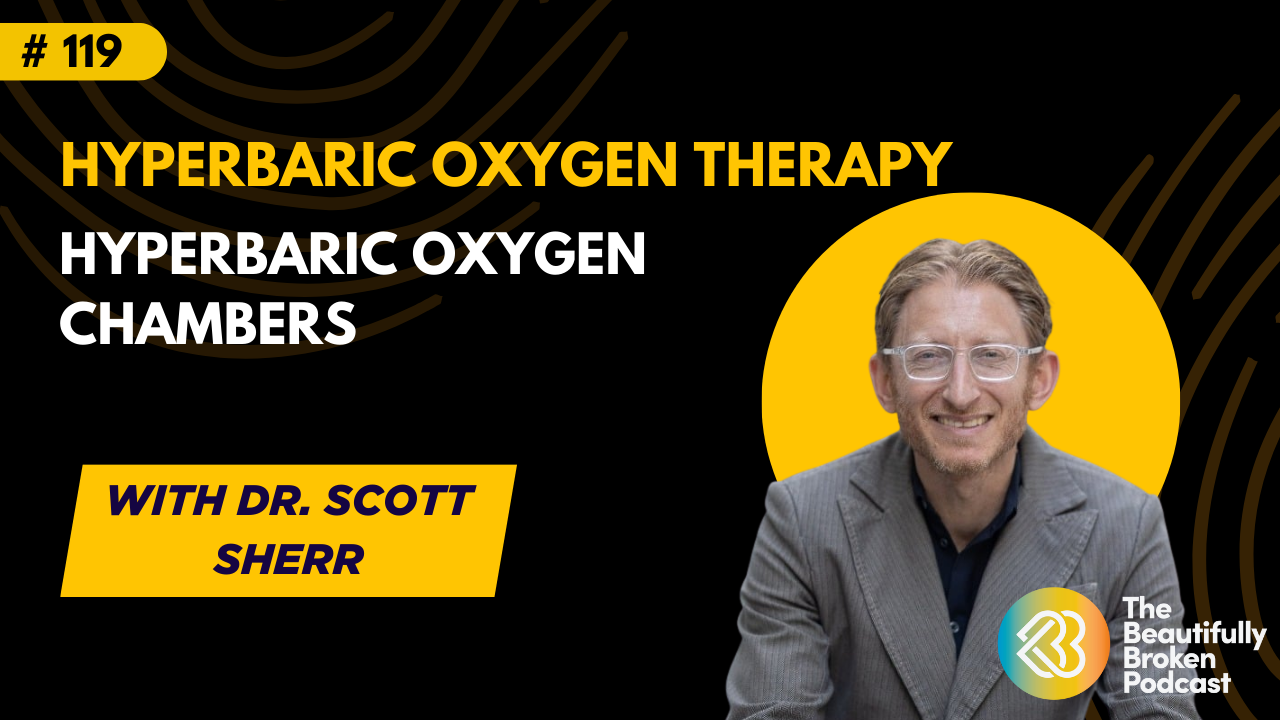
WELCOME TO EPISODE 119
Oxygen is the primary component that carries out all bodily functions. When there is less oxygen supply in the body, a person may experience hunger, inflammation, neurological symptoms, and fatigue. The chronic presence of a low oxygen environment is often linked to chronic illness...and that is why we've invited one of the world's foremost experts on the show. Join the conversation around medical-grade oxygen therapy with new studies focused on oxygen and the advantage of an increased level of 02 in the tissues. In this episode, Freddie has Dr. Scott Sherr join him on the show to talk about the wonders of hyperbaric chambers and oxygen therapy. Dr. Scott Sherr is the director of Integrative Hyperbaric Medicine and Health Optimization at Hyperbaric Medical Solutions. In this role, he facilitates protocol development, patient engagement, and outreach efforts. Let's party with Dr. Sott as he shares the benefits of hyperbaric medicine!


Episode Highlights
[00:46] Why Scott chose to study hyperbaric oxygen therapy
[07:47] How the hyperbaric treatment works
[15:06] The heart as a hydrophilic dam and hyperbaric therapy for Lyme disease
[30:45] Benefits from lower atmospheric pressure units
[49:08] About Health Optimization Medicine and Practice nonprofit organization
UPGRADE YOUR WELLNESS
Marion Institute BioMed Course: biologicalmedicine.org
Code: beautifullybroken
Silver Biotics Wound Healing Gel: https://bit.ly/3JnxyDD
Code: BEAUTIFULLYBROKEN
LightPathLED https://lightpathled.com/?afmc=BEAUTIFULLYBROKEN
Code: beautifullybroken
STEMREGEN: https://www.stemregen.co/products/stemregen/?afmc=beautifullybroken
Code: beautifullybroken
Flowpresso 3-in-1 technology: (https://calendly.com/freddiekimmel/flowpresso-one-on-one-discovery)
Medical grade Ozone Therapy: https://lddy.no/1djnh
Code: BEAUTIFULLYBROKEN
AquaCure Machine + Molecular Hydrogen
Website:https://eagle-research.com?ref=24931
Code: beautifullybroken
DIY Home Cold Plunge Experience: [https://www.penguinchillers.com/?rstr=6757]
CONNECT WITH FREDDIE
Work with Me: https://www.beautifullybroken.world/biological-blueprint
Website and Store: (http://www.beautifullybroken.world)
Instagram: (https://www.instagram.com/freddie.kimmel
FULL EPISODE INTERVIEW
EPISODE TRANSCRIPT
Freddie Kimmel and Dr. Scott Sher (00:00.116)
Ladies and gentlemen, welcome to the beautifully broken podcast. We are going to sit down with Dr. Scott Schur and talk about pressurized oxygen, specifically hyperbaric chambers. Now, this is one of the best biohacks. However, what we'll learn from Scott is that hyperbarics might not be the thing you run to.
when you're struggling with long-term chronic Lyme. Why you always want to evaluate a person's biomarkers and lab work before we add oxygen and how this incredible therapy can also be life-changing when introduced at the right time in a person's journey. It is all about bio-individuality. Please join us for an incredible show. Let's get started.
Welcome to the Beautifully Broken podcast. I'm your host, Freddie Kimmel, and on the show we explore the survivor's journey, practitioners making a difference, and the therapeutic treatments and transformational technology that allow the body to heal itself. Witness the inspiration we gain by navigating the human experience with grace, humility, and a healthy dose of mistakes, because part of being human is being beautifully broken.
Freddie Kimmel and Dr. Scott Sher (01:20.13)
Ladies and gentlemen, welcome to the beautifully broken podcast. I am here with Dr. Scott Scher. Scott, welcome to the show. Thanks for having me, Freddie. It's a pleasure to be with you. Yeah, it's a pleasure to have you here. I long waited interview and I've had some people you work with from the Troscription family on the show before with Dr. Ted. Wonderful conversation. One of my know most downloaded episodes. So I knew I'd seen you in Orlando.
And I was like, we gotta, we gotta do this. did have the feeling of for some reason I'm getting this intuitive hit. Do you, do you like the Muppets at all? The Muppets? Well, I have four at my house that are continually climbing on me. If that's what you mean. Yeah. I have four kids. So I have a nine, 11, nine, six and four year old. And right now their favorite movie is in Kanto, by the way. It's like their favorite movie of all time for now, all time.
Now that's the thing about kids. It's great. It's that there is no past or present or there's no past and future. There's just the present. Like I love when my daughter comes home and said, dad, I had the best day of my life. I'd be like, that's it. And she says, it'll say it tomorrow too. Like, that's amazing. Like having every day, your most amazing day. I like this. This is a fantastic to be six year old sometimes, but Muppets specifically, I can't say that I have a, can't say that there's like Kermit the frog or, or, or little miss piggy flat foot around too much.
I was just, you know, I had this, I had this and hit, I want to, I want to amplify the onboarding of a new, a new person, a new interview. And there's this great thing that Kermit does. He's like, and now it's fuzzy bear. And I was thinking I could get someone. like, do I do that for Scott? Or you definitely do that. You definitely do that. That's your intro that you record when we're not paying attention. Like that's the one that you do after the podcast. And then you say, it's like your intro before your podcast and you throw your
Kermit the Frog on there for very specific guests. Yeah, with that being said, we'll jump into some wellness content here. I had you on and really I've had your name is like synonymous with hyperbaric chamber and oxygen therapy. I've heard you speak on the topic before and it's something I've had a limited exposure with breathwork, oxygen.
Freddie Kimmel and Dr. Scott Sher (03:40.173)
And I'm really interested in it. I understand it's a major driver in balancing the terrain of the human body. When we talk about chronic illness, Lyme, MS, all these fun topics. And I wondered if you could give the audience, like, why is that something you spend time working with, studying and how did you become an expert on hyperbaric chambers and oxygen? Yeah. I mean, oxygen is kind of a big deal. It's like the easiest way to say it, right? We need oxygen to survive and
Without it, we don't live very long and tissue starts to generating very quickly if it's cut off or if you start having less of it for whatever reason. common reason why all of us will have less oxygen is that we go on an airplane. Airplanes are pressurized to 8,000 feet above sea level. And as a result of that, instead of getting 21 % oxygen in the air that you breathe, which is at sea level, see I'm at in Colorado. So I'm about 16 % oxygen actually where I am 5,000 feet up, but
On an airplane, you're at 8,000 feet and you're getting about 15 or 16 % oxygen. And so as soon as you start getting on an airplane, you get less oxygen, you get hungrier, you get more inflammation, you get these weird sort of neurologic things, like you get fatigue. And some of that's related to time changes, but a lot of that's actually related because you're not getting enough oxygen or as much oxygen as you're used to. So I knew from a very early on that oxygen was a big deal. All of us too. Right. So it's not like that was out of the realm of.
possibility for anybody to understand. But I think for me, I grew up the son of a chiropractor, very out of the box and always thinking of things sort of more from a health focus. But then I decided to go to medical school and I decided to go because I thought I could bridge this chasm between the alternative world that I grew up in and this conventional world that I knew nothing about. And I was shockingly wrong in a lot of ways initially, because I didn't realize how big that chasm was in the beginning. Like, especially this is like in the early 2000s and
There's very little in the setting of people outside of the conventional world that were doctors outside of the conventional world. were chiropractors and there were some naturopaths and acupuncturists, there really weren't too many doctors doing this work. And then I learned about hyperbaric oxygen therapy in a trauma center in Baltimore, where I was training and in a trauma center, they use hyperbaric therapy for traumatic types of things like limb amputations or partial limb amputations, flesh eating bacteria, something called necrotizing fasciitis burns.
Freddie Kimmel and Dr. Scott Sher (06:04.22)
They're using it for a bunch of other things too, but carbon monoxide poisoning. And you could see how hyperbaric therapy had this fantastic benefit very quickly. Some people that were on respirators going into the chamber and then they would actually get excavator. The tube would come out inside the chamber and they would walk out of the chamber on the other end of it. So like pretty amazing kinds of things. And then I realized how simple the technology was using oxygen that we all need. And then just driving more of it into the body using pressure, using increased atmospheric pressure.
And the atmospheric pressure part was really interesting to me because I was never a diver and never a scuba diver. really have. You ever been a diver before a scuba diving or my haven't now. No. So when you're under the water, even if you're in a pool, for example, all the water above you, if you've dove down to the bottom of the pool, that water is really heavy. If you've carried water up a bunch of stairs, you know, water is extremely heavy. And it's that heaviness that we actually simulate inside of a hyperbaric environment. And it's that heaviness.
that actually drives oxygen into the plasma or the liquid of your bloodstream. Like typically, oxygen is carried on red blood cells. Red blood cells have these sites on them called hemoglobin, this molecule called hemoglobin where the oxygen binds. There's 250 million hemoglobin molecules per red blood cell. And we have four sites per hemoglobin that oxygen can bind. So red blood cell carries one billion, one billion oxygen molecules from...
when actually carries all that oxygen from the lungs where you pick them up to the rest of your body so that you can make energy at your cellular level. And that's in your mitochondria. Your mitochondria are the places in your cells where you make energy. And so that's a lot of oxygen. And most of us do a very good job overall. So if you've ever put a pulse ox on your finger, which everybody has during COVID, they know that most of the people, normal lungs, 96 to a hundred percent of those sites are bound with oxygen already, those hemoglobin sites. But.
You can actually drive more oxygen in circulation by using the plasma or the liquid of your bloodstream. The liquid is like where how everything gets from place to place. It's mostly made of saline like solution, like a water, salt water, like, like solution. And you can get a lot more oxygen in circulation that way. And that's what we do in a hyperbaric environment. So you drive more oxygen into the plasma or with a liquid of your bloodstream and that you can get about 12 X more oxygen in circulation that way, if you want to, depending on what pressures you use. Yeah.
Freddie Kimmel and Dr. Scott Sher (08:26.228)
And that's the power of hyperbaric therapy is driving all that oxygen into the liquid of your bloodstream. When you talk about hyperbaric, what comes up for me is you said we have this potential to drive this 10x, 12x. Would you view hyperbaric as a treatment that is going to have a very timeline effect or are there applications of the process of entrainment with over time with additional sessions?
that you'll change the mechanism in which your body functions? Yeah, that's a really great question. So I like to describe it as there's the acute infusion of the oxygen, all that oxygen going into circulation and all the benefits that happen in that capacity. And then there is the long-term benefits of an oxygen infusion protocol, which is mostly based on epigenetic shifts. So these are shifts of expression of your genes as a result of the oxygen exposure.
And that shift in genetics is at least 8,000 genes that are oxygen and pressure sensitive, if not more. And what that does over the long term is it actually up regulates genes or increases the expression of certain genes that are responsible for growth and decreasing inflammation as well as preventing cell death. And then actually down regulates genes that are responsible for creating inflammation, creating cell death and a couple other things as well. in general, so that's what's happening.
to use your word entrainment, that's what's happening at the cellular level. It's basically shifting your expression of these various genes that are responsible for optimizing recovery, regeneration, those kinds of things. To go back to the acute side briefly. So what's happening acutely when you go into a hyperbaric environment is that you're immediately getting more oxygen into tissue. Obviously that's really important if you've had acute trauma. That guy was describing before, or if you've had a heart attack or if you've had a stroke or a traumatic brain injury.
And so there's more and more data, even though those three conditions are not covered by insurance in this country, there's a lot of great data in this country and across the world that hyperbaric therapy can be helpful in those settings, for example. So for any acute issue, getting more oxygen to the tissue is almost always going to be a good idea. And so that is why we're using hyperbaric therapy in a lot of acute settings, whether it's a planned trauma, like a surgery, for example, or unplanned trauma, like a traumatic brain injury or a stroke or something like that.
Freddie Kimmel and Dr. Scott Sher (10:47.421)
And so that acute infusion of oxygen is huge. Also, there's an immediate decrease in inflammation. There's a decrease in swelling. There's also stem cell release. These are stem cells. These are these baby cells that our body makes that can make any new cell in our body. And there's also the increase in blood flow into tissue and lymphatic flow out of tissue as well. So all that's happening immediately when you go into a chamber, even after just one session and some of that epigenetic stuff, some of those entrainment things that are happening, those are starting to happen relatively quickly as well.
that they pick up speed, the more treatments you do. And we see that entrainment, that epigenetic shift will be happening usually after the treatment 20 for most people. So that's, and that's typically done with five sessions a week for 20 sessions. And usually over about a month's time, but there is obviously, there's a lot of, there's a spectrum here. It's not like immediately at 20, everything starts happening. It's more, it's happening throughout that whole process. And so we're using hyperbaric therapy in the acute setting.
for lot of different reasons, but mostly we're using it in people that have long-term or chronic issues or goals that want to optimize, regenerate, and recover. And that's when it really becomes more about a whole picture of how we're going to help people as opposed than the just putting somebody in the chamber. I was asked, and I'm sure you have questions, but I'll finish with this for now. I was asked about a year ago to give a lecture to my peers, hyperbaric peers on hyperbaric therapy and my approach, which is an integrative approach.
which we can talk about. And my first title for the, for my lecture was please don't put them in the chamber. And that's the hammer and the nail scenario, which we were talking about offline. It's like, if you have some hyperbaric chamber or whatever therapy you have, you're to want to use it because you think it's going to help. But in my experience, it's almost always better to be thinking about it in the context of the individual in front of you, especially if they have a chronic or long-term goal that they're looking to accomplish.
Mm-hmm. Yeah, it's fascinating. There's a couple bookmark questions. I just want to dovetail back to you said and I've never heard this before and I guess I didn't think about it But the idea that a red blood cell which happened it was about five to ten micrometers wide You said the oxygen molecules are carried on the outside inside of it inside of it. They're inside Yeah, they're inside. Yeah, how does that exchange happen? Just an interesting visualization. So you're taking your breath, right? So you breathe in
Freddie Kimmel and Dr. Scott Sher (13:14.198)
the air around you, which is 21 % oxygen and the rest of it's mostly nitrogen. If you're in a city or if you're near a cow pasture, things might change a little bit as we know, depending on where you are in the world. And what happens is that oxygen is exchanged for carbon dioxide in these small sack like structures called alveoli in the lungs. These alveoli have huge amounts of surface area. And what happens is that the deoxygenated blood, the blood that comes to the lungs,
from the right side of your heart that's been throughout your body already and dumped off oxygen, is now back in your lungs. And the hemoglobin, the molecule there that's on the red blood cell has a confirmation shift that allows it to be more sensitive to the oxygen that's coming in this greater surface area location in the sacs. And so the oxygen comes in as a gas and then it gets transferred into the bloodstream.
And it gets picked up by the red blood cells and hemoglobin that have a very high affinity for the oxygen molecule. So that's typically what's happening. then carbon dioxide is released. Yeah. Beautiful. And so as a result of that oxygen coming on, that oxygen then is bound to the hemoglobin in a certain confirmation. And then as it gets into your more peripheral tissues, then changes confirmation and then releases the oxygen into the tissues that need it. The body is this. I mean, I was just talking on the phone a minute ago, like it's magical.
how it does this. I mean, it's really how it knows where to triage blood and how to get various blood to areas that need it more in this almost instantaneous way. mean, the brain is a really great example of this. You and I are speaking on the phone and our brains are working really hard and oxygen is more preferentially going to the particular areas that are helping me with memory, with cognition, with keeping things in my mind and what we're talking about and not forgetting the last thing that I said.
And all that's happening in real time right now, almost instantaneously, but my toe isn't getting as much blood flow because I'm not exercising my toe. And so the body has all these sort of these valves and these ways of triaging blood. And so, and also how much oxygen gets dumped off in tissue is very much related to what's happening in that localized area. So the more oxygen that you're utilizing, the more energy that you're making, the more that blood flow is going to go to those areas. And so that we can leverage that in how we use the chamber as well.
Freddie Kimmel and Dr. Scott Sher (15:37.538)
integrated with other technologies, for example. And so there's a lot to say there potentially, but in essence, the body's magical and we're using oxygen in higher quantities to leverage that magic in more magical ways. Let's call it. Yeah. Yeah, it is magical. I did a deep dive over the pandemic on the heart and the structures of the heart. came across an article from Rudolf Steiner and he was talking about all these valves and microvalves around the body and talking about the pressure.
that would be needed from the heart to pump the blood around the body in one circuit. And it would explode the heart based on its design and the thickness of the muscularity of the walls. And anyways, I did a deep dive on that and it was just, I don't know if you've had any thoughts about that ideology or thought process that the heart might be more like a hydrophilic dam and not a pump. Well, I mean, I don't know if I'm completely on his camp as far as completely being. I think that there's pumping that's happening from the heart for sure. That does help with the larger blood vessels.
But I do think that he's right. mean, and I've done, I've looked at some of his work in this way too. And I have a colleague of mine, his name's Dr. Robert Cowan. Is it Robert Cowan? Dr. Cowan. He's in- Thomas Cowan. Thomas, Thomas, that's it. Yeah. And he has a book that I've read and I think Thomas is a really smart guy. And he's the first guy to actually introduce me to this work back in 2014, I think. So a long time ago now.
Sorry. think they're confirming that we're on that. This is what we should be talking about. You guys are spot on. Don't roll over this topic, please. Yeah. Animals are smart. Yeah, they are. I agree. And they're also crazy when people come to the door, but that's, that's okay. So the way I think about this is that there's localized factors that are helping with movement of blood and lymphatics and others through the actual blood vessels themselves. So what are those localized factors? And this goes through some other work that I'm not sure if you've ever
taking a deep dive into, it's a by guy named, I'm forgetting everybody's first names today, Dr. Pollack at the university of Washington and his work on easy. Gerald. Yeah. Gerald. At least you got the first name. my smart drugs today. So I just, have last names only for whatever reason. So his idea was that you create this polarization of water around what are called lipophilic membranes, which are, which are basically fat loving not membranes and blood vessels are one of them. And so
Freddie Kimmel and Dr. Scott Sher (17:57.883)
We know that this sort of structured water is inside cells. know that it's around blood vessels. And we think that hyperbaric therapy and the pressure itself is actually creating more easy water around blood vessels to create more flow. But even outside of a hyperbaric environment, I think, and I'm pretty convinced of this, although I don't, it certainly hasn't been settled. What's actually happening on the localized environment, the ecosystem around a capillary, for example, like the small blood vessels, and only can get one red blood cell in it at a time. But I think that likely what's happening is that you have these localized
pressure, these localized environments with pressure that are pumping and that are creating these easy water that's helping them pump through. So, and I think hyperbaric therapy is actually making that happen at a higher clip. And that's why you get more blood flow into tissue and you get more lymphatic flow out of tissue as a result of that. Yeah. Yeah. Two part question to follow up on that. My first time at hearing about hyperbarics is an intervention for chronic illness was when I was really, really in the weeds from Lyme disease or whatever that diagnosis label.
markers that came back from a lab were. It's vast and it's complex. And I remember there were lots of YouTube videos and this is early. This is like 2004. And I'm just, I didn't really, I was sort of seeking information on the internet. It was wild and dangerous. And I remember people talking about this number. They're like, I did 20 sessions and I was healed from Lyme or I did my 40 sessions. And of course there would be other people to be like, I just sold out $8,000 and I don't feel better. I still got the Lyme disease.
It was framing a time amount in relation to how many sessions you needed to do, what might be expected from the body. And it's something that I never did because I'll be honest with you at the time I was trying to leverage Airbnb in my spare bedroom to make enough money for the supplements and ozone therapy and other things that I was doing. Yeah. But I've always, I've always wondered what the role of hyperbarics were in
the improvement of symptoms of chronic Lyme disease, A. And then B, can we just talk about the mechanism of action of sitting in a hyperbaric chamber? Because I'm not sure everybody knows what that looks like at home and what is the nature of that process actually feel or look like? I think it may be best to start with your second question and then can go over the Lyme from there. Yeah, me too. I think that the experience is relatively relaxing for most people.
Freddie Kimmel and Dr. Scott Sher (20:20.061)
The idea really is that, as I was describing before, we're simulating the pressure you feel under a certain amount of seawater. And so that pressure sensation you'll feel in your ears, like you were on a plane or you're on a train that's going underwater, like in a tunnel, for example. It's that same pressure sensation that'll happen until you get to the pressure that's prescribed for your particular condition. Once you get down to that pressure, you no longer have any issues with your ears. You're just kind of hanging out like you're on an airplane, for example, and you're just relaxing.
depending on the type of chamber you're in. Sometimes you can bring things in there with you. If it's a mild unit, one that you have at your home or like a soft shell kind of unit. And then in medical grade units that go to deeper pressures, typically you're not bringing anything else other than actually very little most of the time. And then you have, usually you can have like a TV or something outside of them to listen to music or to watch TV or, or to listen to a meditation or whatever you want to do kind of thing. So my experience is very comfortable for most people. There are,
some reasons why you wouldn't want to go into a chamber. Of course, if you have any issues with your heart or your lungs that are significant, then you want, you have to make sure you get cleared by a doctor to go into a hyperbaric environment. It's a medical treatment. That's a, it's a prescribed treatment. So you, these are, something that should be done with intention and should be done with an idea of what you're really looking to accomplish by getting in there. And as you were describing, Freddie, it's not usually just about getting the chamber one time. If you have an acute issue, something that's just happened, maybe you can go in one to five times and see.
a significant benefit. Absolutely. But if it's like a long-term issue, something that's been going on for a while, it's really what we're talking about is a dedicated four, six, eight weeks, sometimes longer in the chamber to really see the benefits of a hyperbaric protocol. And this kind of dovetails here to Lyme disease specifically. And so when I moved to San Francisco in 2013, I became the medical director of the facility in San Francisco at the time that was being run by a nurse who had Lyme disease.
And had used hyperbaric therapy amongst lots of other therapies to help her with, with her recovery. So I learned a lot from her and her network of Lyme disease patients over the first couple of years of my hyperbaric practice, how spectacularly well hyperbaric therapy could go in Lyme and how spectacularly terrible it could go in Lyme disease as well. So in the sense that I don't want them to say that people would get worse in the chamber, but certainly not help them as much as that I would, would have hoped.
Freddie Kimmel and Dr. Scott Sher (22:45.627)
And what I found over the years was a couple of things. The first was that you had to be, it's kind of funny to say, but you had to be healthy enough to really be able to benefit from hyperbaric therapy. If you were so sick from Lyme that you couldn't get out of bed and that you were so fatigued and, had, you were just really not doing well. Hyperbaric therapy was very unlikely to be able to help you because it would just make you feel sicker, unfortunately, because in a hyperbaric environment, what we're doing.
is we're increasing the amount of oxygen in circulation, as I described. But what's also happening as a result of that is we're actually creating what's called oxidative stress. We're actually increasing the number of reactive oxygen species, the reactive, what else do we call them? Reactive oxygen species, oxidative stress. Those are the main ways that we usually talk about like oxidative molecules. And that's one way hyperbaric therapy works is by creating these and then the body responding by having an antioxidant surge and then.
that balancing itself out. But if you're already under a lot of oxidative stress because of high grade inflammation, because of nutrient or gut issues, because of hormone deficiencies, it can potentially exacerbate those kinds of things and make you feel worse. over the years, I found that if people were about 60 to 80 % better already, then hyperbaric therapy was a fantastic way to get them that last 20 or 40%. But if they came in too early, then I didn't see
the long-term benefit that I would see if they came in a little bit later. And they also really needed to be working with somebody that specialized in Lyme disease in general. So I think they still go by Lyme literate physicians. that's how, for the most part, I worked with people with docs that were specializing in Lyme disease and had a lot of experience in understanding how to support patients with Lyme, both outside of a hyperbaric environment, but also we would work together.
they were getting hyperbaric therapy to support them and make sure that they were getting enough support from like an antioxidant perspective from a from a detox perspective that they were able to tolerate therapy really well. It's fascinating. I know it would be great. It's such a complicated conversation to have, as you know, the terrain of each human being or individual is so wildly different from minerals to hormones, to emotional trauma, to support systems. Sure. And
Freddie Kimmel and Dr. Scott Sher (25:07.698)
It's just wild. I, I know because of the nature of the severity of the disease, people, myself included for over 15 years made decisions about my health out of a little bit of desperation. I was like, this is really scary. Like I'm looking at my shoelaces, not sharing which way is going to go first to tie the bow. And so you're like, I got to do something now. So I had reached out to a nurse in Jersey who had a hard shell.
And she was doing great. And you know, she had all these amazing testimonials. And when I, what I heard from her when I called was that, you know, it's a good chance that this is going to be a strong benefit for you. 40 sessions. and don't stop going. Cause if you just do the hyperbaric, you know, we're, we're supplying the body with energy or fuel or possibly oxygenation. And that latent infection can also be, can be in the bones. It can be in the tissues. If you don't have the right herbal regimen or if you haven't done the appropriate
IV antibiotics. know people sometimes will stack those to get the medicinal elements further into the tissue, which is totally changed the way I think about chronic illness. And before that reason, I tend to stray away from that. You know, the idea that we're going to war in the body and want to blast out the bad guys, maybe there's a way to strengthen that terrain. I've seen to be really helpful for me anyways, when I stopped doing antibiotics is when I started to get well. Sure. So
It was wild to just hear these different stories and just, was actually dissuaded by her. was like, I can't come to do an hour trip to you, to Jersey, to a hard shell chamber. And she was like, don't do this off shell, you know? So it, again, it was her experience, her understanding, and in a place of fear, me not knowing any better. I'm like taking that as fact and running with it. So the devil's in the detail, right? And the nuance of that information. Absolutely. I mean, for me, it's always about optimizing health at that foundation.
You're calling it the terrain. We, I know you had Dr. Ted on the podcast before, and he'll talk a lot about health optimization medicine and how that's our foundational health framework. And that's what I use now is being mentored by him. And now we have a nonprofit education company that's educating doctors and practitioners around the world on the framework that Dr. Ted developed. But I have lots of colleagues. have one in the cancer space, Dr. Nisha Winters, who likes to call it optimal terrain. had a program like that. She would work with cancer patients. It's.
Freddie Kimmel and Dr. Scott Sher (27:27.968)
It's a very similar kind of idea where, I mean, you have to put sort of the condition aside for a minute and say for a minute, it's not like it doesn't exist. It's still there. But then how do you focus on optimizing that cellular health, that gut health, that hormonal health? And then if you can do that, then everything else becomes easier. Treating the underlying condition becomes easier. You're more resilient or whatever it might be. So, you know, I work with people like, like you were Freddie many years ago where you had, you know, really, really sick with Lyme and
And like those patients, really do want to send to somebody that's a Lyme literate doc because they all, the ones that I work with at least will look at that terrain side and then are specialized enough to be able to take it the next level for patients with Lyme and co-infections and all those kinds of things. And you're right. Sometimes antibiotics can be work can work for people. But again, if you didn't work on that terrain stuff too, I mean, it's certainly not going to be good over the long run is what I've, what I've found is it. And that's what happens with hyperbaric therapy is like, yeah, I can put somebody in the chamber for 40 treatments and then.
They can feel better, but if they didn't do all that work ahead of time, oftentimes those symptoms come back. And the nurse that I worked with, even in the clinic that happened to her, she was doing great. And then she rebounded. She, what's the word? She, relapsed her relapse. Thank you. Yeah. And you took your new tropics this morning. didn't take my, whatever. I'm trying to do one actually. Oh yeah. Oh, nice. Okay. Yeah. Yeah. I didn't, I didn't have time this morning. It's been busy, but, but the idea was.
that she had this relapse and then I was like, well, that's really it. And I thought terrible for her, of course, but then she rebounded again and she got better and she's doing great overall now. Good. But the challenge is that if you're not working on that foundational stuff first, or at least in concurrently, you're going to get into trouble. I don't care if you go into a hyperbaric chamber where you decide you want to go in antibiotics for your Lyme or whatever, like you're still going to have issues if you're not looking at that terrain or that foundation as well. So that's why I often say that
people come to talk to me about hyperbaric therapy, but 80 % of the time I'm talking about something else entirely. And then like 20 % of the time we're talking about hyperbaric therapy and the protocols that may help them. And it may not be hyperbaric therapy right away and may not be a hyperbaric therapy at all really. If it's not helpful, if it's not going to be optimal for them. mean, it's oftentimes what it comes down to is the hyperbaric therapy would be beneficial for almost everybody at some point in their life. As far as when that is exactly, it's just,
Freddie Kimmel and Dr. Scott Sher (29:52.749)
It's a matter of when you can optimize it because as you were alluding to earlier, Freddie, it's not an inexpensive thing to go and get done, especially in medical grade units. And you want to make sure you're getting your best ROI you can. Ladies and gentlemen, I've got to speak up about a brand new technology I've been using, the upgraded formulas HTMA test, which is a hair test mineral analysis. What this test allows me to do is from my home.
and my bathroom more specifically is send away some hair and look at how the minerals in my body are balanced. These are the building blocks of how my body holds energy, burns fat, how easy I fall into sleep, and how I manage stress. This is a test so valuable I've found that I had my mom do it, not once, but twice. So please use code FREDDY10, all caps, and get your own HTMA test.
and see how your body is doing with the building blocks of health and vitality. If we could just maybe dig into that statement a little bit, because I know when I was looking and seriously considering, I was looking at units in terms of atmospheric pressure. I would see often home units at 1.3 and then there's a huge price jump for like 1.5 and then it's like 2.0 and then there's a really big price jump. So could you explain
Can someone find benefit from those lower pressure units? And if somebody is dealing with something like chronic Lyme, we've already established that they got to understand the terrain and that the chamber is right for them. Is there a pressure that they might want to lean into or look at to find optimal benefit? The best way to describe this is that there are certain pressures that have been studied for more neurocognitive optimization and recovery. And there are pressures that have been better studied for
systemic optimization, infection, and things outside the central nervous system. the, the milder units, the ones that go to about 1.3 to 2.0, but really 1.3 to 1.75 seems to be the sweet spot is for neurologic optimization recovery. So these are my patients that have had brain injuries that I've had strokes sometimes that have had that are on the spectrum, for example, in younger kids and, things like that. That's where the pressures seem to be the best.
Freddie Kimmel and Dr. Scott Sher (32:12.717)
Also for people that are just looking at for more for like cognitive optimization and for the biohacking kinds of things. And those chambers can be great for those kinds of roles and also for brain inflammation as well. So put a pin on that for a second. then the deeper pressures are usually for more things outside the central nervous system that are more systemic optimization. So infection being one of them. And so for Lyme disease, for example, Lyme bugs, we don't have any evidence that
milder pressures can be helpful for these patients in general. Now, especially because most Lyme is not just Lyme itself, it's usually co-infections as well. And some of these co-infections are oxygen savvy bugs as well. So we think that if you're giving them a little bit more oxygen, like in a mild unit, it might actually make them grow. Certainly it won't potentially have any benefit. But if you give them a lot of oxygen, like at deeper pressures with more oxidative load, that's happening with the extra oxygen.
That still may be beneficial, especially for Lyme. And especially if you're also supporting the system in other ways, if you're directing treatment towards the obesity or the Bartonella or the chlamydia or whatever else might be ongoing at the same time. So. However, and the caveat here is that in some patients that have infection, but they have a lot of chronic neuro or brain inflammation, what I will sometimes do with these protocols. And I've worked on these protocols with Lyme specialists over the years.
Is actually go to milder pressures initially to help with the brain inflammation. And then once we get that under control, then we go deeper to try to start doing more sort of Lyme eradication, like killing them, killing the bugs themselves. But if sometimes if you go too deep, too quickly, you can cause too much stress to the body and that it can cause people to feel very, poorly initially as well. So, that can, that can be something like a hurt timing, like the hurts. I'm a reaction. Like, could be flu like symptoms and.
and people are not feeling very, very good at all. So it depends on the person coming into my office or that I'm consulting with. I can talk with people all over the world. And if I get a sense that they're pretty highly inflamed neurologically from their Lyme, for example, then often we're going to start at the milder pressures first and then slowly ramp into the deeper pressures if possible. Yeah. If we could pivot from the, you know, the chronic illness category to the optimizer, the biohacker, the person who wants to
Freddie Kimmel and Dr. Scott Sher (34:36.571)
go grocery shopping till they're 102. Like what would a person be looking at as far as again, what type of chamber and how many sessions might I want to be doing in a year over a different timeline? If I really want this to be part of my daily practice, like brushing my teeth or going to yoga. Right. So from a longevity perspective, there's some really great data that's come out of Israel over the last four or five years. And they have what they call their reverse aging program.
where they put in healthy individuals, usually greater than 65 years of age. And they put them through this protocol of 60, six zero hyperbaric sessions over three months. And they dive them at, we call them dives. Each session is called a dive. Two atmospheres of pressure, which is the equivalent of 33 feet of sea water. For those that are interested in what we're talking about, that's the simulated pressure of being under 33 feet of sea water. No water involved, just simulating the pressure that you're going to feel under 33 feet of sea water.
So they do 90 minute sessions for three months. And what they've done is they have a cohort of people that they've looked at and they've done all these research papers as a result of that. The first paper that came out on this reverse aging cohort was on erections. So they looked at erectile blood flow after 60 hyperbaric sessions and it's good, it works. And they have pictures of penises, which I love to show in my lectures. They don't look like penises. knows what I'm talking about.
because they're actually MRIs, they're called functional MRIs. So they actually show blood flow and you can see the difference of the blood flow before hyperbaric therapy and you can see it after hyperbaric therapy. So you can see the difference. So that was the first study that they published and they published another study. Nice, nice work. I had throw that in there. So that's how the Israelis got all the guys to sign up for 60 hyperbaric sessions, right? Penis before, penis after. The next one wasn't as popular. Cause that's a time commitment.
It is. It's a huge, huge time commitment. And I'll get there in a minute, but because I don't think you need that many to get a significant benefit is what it comes down to, especially if you've optimized your health in other ways or are continuing to optimize your health. course, the other, they came out with the study looking at brain function and how our brains as we get older, especially after the age of 50 or so start shrinking. And the reason why they start shrinking is that the small blood vessels that feed it start dying. And so this is not a stroke. This is just natural.
Freddie Kimmel and Dr. Scott Sher (37:05.095)
natural. This is not really natural. It's just the aging process of living in an inflamed world in Western society, really. And so the brain starts shrinking. And so the hyperbaric environment after 60 sessions can regrow and regenerate all these blood vessels that have been lost over that time. And so then they published another study that looked at one of the more recent studies on some cellular markers, including telemeter length and senescent cells. So telemeters are these ends of our chromosomes, these caps that
get shorter and shorter until they get so short that the chromosome actually has to die. The cell dies as a result of the getting, and that's related to aging. And then there's also senescent cells, which are these cells in our body that increase the number as we get older as well. They're called zombie cells and they don't divide. They don't provide any function. They cause inflammation. They're associated with cancer, death, and you know, all the seven sins of hell or whatever. And so, um, the hyperbaric environment for these 60 sessions decreased the number of senescent cells.
by about 30 % and increased the telomere length about 20%. So that got a lot of splash in the news from a longevity perspective. And so I certainly think that hyperbaric therapy is a reverse aging technology. And I also think that as a result of the other things that I do and the other work that it's possible in the longevity space, that it could be something that's in addition to other work that you're doing and not have to require you to be three months inside of a hyperbaric environment.
I think if you're relatively healthy and you're looking for longevity, longevity benefits, we're looking for that. And then we mentioned this earlier that, that entrainment, that epigenetic shift to happen at the DNA level where you're now having oxygen utilization better. You're having better expression of genes that are responsible for healing and growth and all those kinds of things. So usually somewhere I think around 30 is where most people can get that reverse aging benefit. And that's in the mostly medical grade chambers at two atmospheres.
But, or in addition, I think that in the mild units, the 1.3 unit chambers that are mostly for neurocognitive optimization, I think if you're using other technologies, other practices that are increasing blood flow, for example, that are optimizing cellular functioning at the same time, I think you can likely get a lot of the same benefits. Although there's no data right now for me to say exactly that for sure. It's just, I'm working with my clients over, and some people have them, like me, I have a...
Freddie Kimmel and Dr. Scott Sher (39:29.865)
1.3 atmosphere chamber in my house. So I'll use that with some other technologies to improve blood flow and do other kinds of things. And then it's a little bit more easy. It's easier for people to do it rather than going into a hard chamber as a result of just the mechanics of all that. So, yeah. Yeah. Incredible. That was my question is if you're in a chamber, you always, it's always interesting to know if people are actually doing it themselves and what is your frequency that you're in the chamber at home? Yeah. I mean, for me, it depends. mean, for the most part, I'm in there two to three, maybe four times a week.
just for like a maintenance kind of thing. also go on protocols where I try to go in for 10, 20 sessions in a row if I'm looking at for a particular condition. So I have a company that I developed. It's the company's name is HBOT plus. And it's the idea with me developing the company was figuring out ways for people that, especially the mild units, because the mild units are becoming much more popular. You'll find them in clinics, but you'll find them in people's homes. And 90 % of people have no clue how to use these things.
Unfortunately, there's a lot of chamber companies out there that are selling chambers and telling you that everything except, you know, your hangnail was going to get better inside of these things. And then I get these people that they reach out to me and say, well, I have these chambers, right? This chamber, like, what am I going to do with this thing? And so I created the company to try to be an education company so that you had a way to kind of give yourself a framework on how to use these things. And then also not only just the chamber itself, but also the integrations of what other technologies, other practices.
practitioners, other things that you could do to really optimize your experience inside the chamber. And that's really where I specialize. Freddie is like, specialize in, people find me because of hyperbaric therapy. And then I'm like, well, let's talk about what you can do before, what you can do during, and what you can do after hyperbaric therapy to really optimize your experience and really reach your goals. And, it really becomes a smoke screen for optimizing people's health anyway, because the chambers are great and they really do have these fantastic benefits. And I do it all the time.
myself and with my clients, but like if you've worked on the stuff before, you're likely going to get like a lot of the benefit right there, even if you never go inside a hyperbaric environment. that's the trick really. Yeah. I've been preaching that across the probably the last three months. It comes up a lot in the world of biohacking. have so many tools and gadgets and great things, and it's a great shiny thing to get people in the doorway.
Freddie Kimmel and Dr. Scott Sher (41:49.079)
But at the end of the day, they're going have a better experience with your product. If they've optimized the terrain to a certain degree and understand, you know, Dr. Sun, Dr. Air, Dr. Water, Dr. Rest, Dr. Spirituality, they're all free and 24 hours a day on call. So if you get that in alignment, you know, you're really going to have a great experience. And I think it benefits the company's making products and the end user. And you're going to have a better happy customer that's going to profitize what the work that you're doing. Right. That's my clinical practice really, Freddie, right? I don't.
do this in a vacuum. I'm working with people all the time, all over the world. And I always put it in this framework because I don't see that there really is any magic bullet. Really. Maybe there is one magic bullet that I haven't found yet, but I'm maybe there. I mean, I mean, neutrophils can be, I mean, nothing really is, is a magic bullet in the sense of in a silo. For example, we have the transcriptions company, right? And we have one of our products called blue canateen, which launches your brain and you feel great for three to five hours.
Is it a magic bullet for three to five hours for some people? Yes. But over the longterm, if you continue to use it and you're using stimulants all the time and you're not optimizing your terrain and you're going to get in trouble. mean, I mean, I've been in this, this book before being a medical student and being in residency and drinking coffee and not sleeping. And like, have, have all these experiences. run yourself into the ground. so the only magic is that your body is doing what it's doing right now. And somehow you're, you're still here and you're able to talk about it.
And so I, what I always emphasize always, always is except under, I guess there's a couple of caveats. Like if somebody comes to me, like they had a concussion yesterday, I'm like, we'll get into a chamber tomorrow. Don't optimize your health for four weeks until you go into the chamber. You know, like if you're going having acute issue, like you throw the kitchen sink at it for the most part. And that's what I do for people all the time. I mean, my relatives with COVID, for example, I'm throwing the kitchen sink.
at them. I'm not telling them to wait until they have to go to the hospital. That's just stupid. And so that's the major inflection point for me is if it's an acute issue, we throw all the kitchen sink at it if we need to. And then if it's a more chronic or long term goal or issue, then it's about being intentional about it, intentionally working on the terrain, optimizing health. then what other things, what other supplements, nootropics maybe, or something like methylene blue, or, or even, you know, doing meditation retreats or going to the jungle in Peru. don't
Freddie Kimmel and Dr. Scott Sher (44:15.02)
A lot of things can play into how you, especially with the trauma on the side. mean, it's huge, right? So that's a big piece to all of this. And I don't work with people directly that have trauma, but I refer like crazy to people that I know can help in all these various ways. Because I've seen actually, it's really, mean, a lot of people know veterans and traumatic brain injury, for example. And I've seen many veterans over the years do remarkably well in hyperbaric environments, getting better, healing their brain injuries.
But as I'll also see many that don't get better and oftentimes they don't because they need to deal with the trauma. need to address the, that aspect of their, their circuitry, before they really are going to be able to heal. Yeah. And so I'm very cognizant when I, when I see people initially that this is likely going to be the trajectory if they approach it one way, just in the chamber and that they do these other things, this is likely going to be the trajectory and let people decide where they want to go.
Yeah. I think it's sobering to me. And it's also, it also gives the ego a shake when I meet somebody and they ask me and I'm like, what are you doing? And they list off like $300,000 of tech and nutrients and supplements and the Austin Texas. on, man. mean, every doctor you've ever met and they've done all the blood work and all the things. And you know, I could
I could say it's like, well, from speaking to you, it's like there's an intensity and a seeker nature of your voice, which sounds like there's a step you might be skipping that could be internal. I don't know. You know, that's not my area of expertise, but maybe, you know, look at this. Well, I've done the ayahuasca and I've done this and it's like, you know, it's about the thing. It's not about the energy behind the action when it's like someone can be there to tie it all together for the person.
But there was a time when I was like, oh, if I just had 20 grand, I could get better. Like, I really, really believe that with Lyme or 50 grand or whatever it was. There was a monetary figure and I was like, I was angry. I was angry that I was like, why don't I have access to this? Why doesn't my doctor know about this? Blah, blah, blah, blah. And at the end of the day, I had to go around and around and around and then down to the knees. And it was very humbling and just had a total, the moment with the moment with the source, you're like, let's make a deal.
Freddie Kimmel and Dr. Scott Sher (46:31.823)
And then you start to, and then it was like, can literally pick the day where it was an upward trajectory, you know, through all the things. So it's fascinating to me. That's awesome. Yeah, it was awesome. Yeah. And I, and I see that be a very, you know, there's a spectrum, there's lots of people in the middle. It's going to be outliers. And I think you just got to work with what life is offering you and that like to loop it back to the Muppets and your kids.
Today's amazing. It's like everything could be approached to this energy of curiosity where we have the realm of possibilities. There's nothing that's not in the table. And that's a powerful brainwave entrainment state to actually bring those things into the physical. I think it's, you know, to say loop all that in together. It's like, there's always something more we can learn or garnish. think you really hit the nail on it, which is it's daily practices that matter. It's the things that you do every single day that are going to sustain you.
or, or break you depending on what they are. And so what are your foundational things that you do? Are you, you talked about all those doctors before the water, the air, the sleep, the hydration, those, mean, if you're not doing the basics, anything else is not going to be as helpful and also potentially be detrimental over the longterm as well. Even if it's a healthy thing, right? If you're eating something, eating something healthy every day, you're taking, you know, if you're getting an hyperbaric chamber every day for the rest of your life, that's not a good thing either. Right? So like everything needs to be done.
with sort of defined understanding of goals and needs and things like that. But daily practices, like, do you have a contemplative meditation sort of practice? Do you have a gratitude practice or are you getting exercise? you feeding your body the right nutrition? Or trying to, you know, as best you can. And so I've said no to many people that have been interested in high career therapy. I'm like, now's not a good time for you. You really need to be thinking about doing these other things first before it's even a good idea.
to even approach going into it, into this kind of environment. Is this going to go to rev up your whole body's metabolic rate? It's going to increase energy production. going to cause oxidative stress, which is not a bad thing. It's actually good. That's how your body recovers. That's what exercise does. Exercise causes oxidative stress. High heat saunas cause oxidative stress. These are not bad things as long as they're done in the context of understanding your own physiology. Dr. Ted likes to say that health optimization medicine, for example, is a framework for biohacking. It's a framework for people that are looking to stay healthy and optimize.
Freddie Kimmel and Dr. Scott Sher (48:53.275)
and want to have all these tools, but they want to have that foundational cellular architecture that sound and that can benefit and then optimize and then even be more helped because of some of the other things that you're going to be doing on top of that. But that's the framework that he likes it wasn't saly, neo 10, holo bioontology. I think that's what he calls it. So yeah, big words. Yeah. The big words, big words. I've become increasingly aware of the way environmental toxicity affects my body.
Now in the past, I've tested high for mercury, lead, cadmium, glyphosate, and mycotoxins from mold. Now I know what you're thinking, that is a full bucket, and even worse than the list of toxins was the fatigue, the neuralgia, and the brain fog due to the burden on the system. So luckily, I was introduced to the ion cleanse foot bath by AMD at a wellness conference. The system uses both positive and negatively charged ions to help eliminate these harmful toxins from the body.
So my N equals one experiment? After four months, I've watched most environmental toxicity fall by more than 30 % through diagnostic testing. So for me, this is a win-win. The Ion Cleanse by AMD is a fan favorite of the podcast because it's safe, it's effective, and it's a non-invasive way to cleanse and purify the body. So as a special promotion, Ion Cleanse by AMD is offering a free 15-minute consult.
where you can explore your personal needs to see if this technology may be the right solution for you and your family. So schedule your free 15 minute phone consult by selecting the link in the show notes, my Instagram at freddysetgo or freddysetgo.com. Friends, this is a heart centered company. The support team is amazing and they offer a 60 day, 100 % money back guarantee. That is zero risk for the customer. So if you're ready to purchase,
visit www.amajordifference.com and mention the beautifully broken podcast is your referral source. Namaste. Scott, I want to be mindful of our hour and I want to wrap up to a degree, but I also, we've touched on nootropics just a couple, you know, we threw it out there. And I think for the people at home, because it was quite a few podcasts ago with Dr. Ted and transcriptions and the idea of a smart drug or blue canitine, know, something I'm a huge fan of and I've
Freddie Kimmel and Dr. Scott Sher (51:16.497)
I've studied and studied and studied since we did that podcast and played around with in my own life. I've found great benefit from incorporating this, especially when I have a big event or a meeting or something, I really want my brain to be on point in your experience. Like what are transcriptions? Like where does that come into play in, you know, the average optimizers life? Well, health optimization medicine and practice was the nonprofit organization that we founded. Dr. Ted.
is the pioneer of this particular foundational practice that we've been describing. And we decided to create a for-profit company, for-profit arm of health optimization medicine. And the name, the big heading of the company, the umbrella name is Smarter Not Harder, which is a great name, of course. That's what we Marketing rights itself. It does, right. And so, but underneath that, our first company is called Troscriptions. And this is a company that we developed to kind of address the bottlenecks that we all face in the path to optimizing our health.
And some of those bottlenecks are really challenging, especially brain function, especially brain fog, optimizing cognitive abilities. When we're going through things that are challenging everything from Lyme to, people post COVID, which we're seeing a lot of chronic fatigue and patients that are peri-metapausal actually, interestingly, there are a of brain fog during that timeframe when hormones are shifting as well. And so we decided to start off with brain focused products.
And now we have one for sleep, not actually not sleep yet. That's coming. We have one for stress and anxiety or anxiousness that's coming. That's, that's out on the market. And we really went, we approached this in a way that was very much like our clinical practices. know, Dr. and Ted and I are seeing patients and, we wanted to create something that was precision dose that was pharmaceutical grade that you could really rely on and can titrate on your own to the dose that you needed. And so we work with a compounding pharmacist. do everything.
very much at high end high level and make things that optimize your brain that stimulate your brain as well, potentially as well. So we have one called blue canateen, which is a combination of two stimulants, nicotine and caffeine, along with CBD and something called methylene blue. It's the reason why you see people on Instagram with blue tongues. That's because of the methylene blue that we have. We've, created somewhat, somewhat of a Renaissance for methylene blue. have to say, with more and more companies that are using it now and.
Freddie Kimmel and Dr. Scott Sher (53:39.153)
Nothing blue is great. It's got this fantastic ability to optimize your mitochondrial function. actually improves energy metabolism. works just like oxygen at your cellular level. So it actually supports and actually supplants and that's the plans, but supports and can even work in the play. If oxygen is not around in high quantities, you can take the place of oxygen in your mitochondria to help you make energy. So it's also an antioxidant and it's got some mild anti-depressing capabilities. It's got an at higher levels. It's an anti-infective it's being studied in.
COVID as well, actually, but we make no claims in post COVID. It's been very interesting as well, at least in my clinical practice, that's personal. That's not my company. I don't make any claims with my company doing that just as a heads up, but, but really interesting work that methylene blue is doing on its own. And so we took this blue can of team product, which is great for three to five hours of focus, getting shit done, productivity, verbal fluidity, et cetera. And then we took just the methylene blue out of that and made it its own product called just blue.
which is just pure methylene blue. That's really great for people that are looking at the mitochondrial optimization side of things and don't want the stimulants as well because it's no nicotine, no caffeine in that one. And so they work really, really, really well. And we've been really happy. We're actually approaching our two year anniversary at this point. We launched the products right before the pandemic started. And then just in September, we launched a product called Trocom, which is for stress reduction, taking the edge off.
And it's titratable like all of our products. come in these like they're called the trochee and a trochee is like this small square dissolvable lozenge that goes between your cheek and your gums and dissolves there about 15 to 30 minutes. And they come squared. The square comes squared. It's complicated, but basically you can, you can break it up into quarters. And so we have most people start off with a quarter and then titrate their dose up to a full trochee if they need to. And Trocom is no different. It's the same structure. It's the trochee and it's
Like a quarter truck is great for performance. If you're really stressed about a presentation, a podcast, giving a lecture, whatever it might be, like your brain starts to shut off. It's like, like you can't think everybody says like getting, get in front of people and they'll start, they can't think that's sympathetic dominance and that's fight or flight. And so if you can just relax that, bring that down a notch, you can really perform better. So that's what a quarter truck is really good for. then I have to a full, depending on your, how anxious you are and how much stress relief you need.
Freddie Kimmel and Dr. Scott Sher (56:03.977)
It's really a great, great way to wind down a great way to kind of quiet your mind as well. If you have difficulty with thought rumination before you go to bed as well. So, but again, these are not magic pills. These work really well for what they do. But the idea is that you really need to be at least considering what you can do to optimize your foundation. What are those daily practices that you can do? What kind of fun are you going to do? Are you going to roll around with your kids on like outside later today? Like I will, or you.
Like having fun with friends and connecting. And those are the things that are really important to really optimize your health. so if people ask me, well, this blue canteen stuff, it going to change my life? mean, like for three to five hours, yes, absolutely. It'd be fantastic. But if you're using it a lot or if your health isn't really that great ahead of time, maybe not as much. So. Yeah. Yeah. Beautiful insight. I love it. It's a tool there in my fridge and I.
I do, try to go sparingly and I try to save them for my, my special moments and always a level of awareness around, know, what is my body? Am I leaning into this too much as a patch or a band-aid? And yeah, it's great. Again, it's a great social media thing. So there's, I have a code on those for freddy set, go.com. I think it's beautifully broken 10. You can try them and get a discount and yeah, it's a fun little biohack again, a gateway, a gateway transcription, if you will, into a little.
peak mental performance. And I've, really noticed it. I'll be honest. It's like the first one that I've ever tried that's labeled as a smart drug that really had an effect for me because I trend towards a little ADHD. when I have a lot of voltage in my brain and when I ever do that, like the Wavi scan, they're like, Ooh, you must struggle to really knock down those looping thoughts. And I'm able to just, I don't feel amped or high. just feel like I can get you done. Yeah. And that's common. We have.
we don't make any claims on the ADHD side, but certainly we've had users respond in very similar ways that you've described. The cool thing about Methylene Blue though, Freddie, is that it is a health optimizing nootropic and Ted's created these categories and I don't know if you spoke about them on your podcast, but basically there's nootropics that optimize your brain, but also support it. And there's also nootropics that clock your brain so that you can really get shit done and like you really feel.
Freddie Kimmel and Dr. Scott Sher (58:23.512)
So a blue can of teen is a performance optimizing utropic, it has methylene blue inside of it. That's supportive at the same time and CBD that's neuroprotective at the same time, but something like modafinil or something like Adderall, even caffeine and nicotine on their own. These are performance optimizing. They're not really helping your brain be healthier. They're just making it work better or faster. And, but methylene blue is one of those that's super interesting because
It actually is very supportive. And so we do have people that use it on a daily basis for that supportive quality, because it doesn't have that clocking kind of mechanism where it's going to overclock your system overall. So as long as you're using it low dose and as prescribed and things like that. it's just, it's a very cool and a very blue comment. Yeah. Scott, thank you for being here. You are a wealth of information and I love your, I love your even balance, even handed perspective on everything.
The one thing I want to just offer to people that might hear this is if you happen to be a person and you maybe you have a hyperbaric, maybe you're thinking about doing it. You mentioned, supporting education around this and understanding. Do you have a place where you'd point people to get some of these almost like an assessment? Is this right for me? What do I do? What's my checkbox before I jump in? I consult, educate and advocate for people all over the world. And I do it through my website, which is actually just my name. It's drscottscher.com.
DRSCOTTSHERR.com. Or my previous website was integrativehbot.com as well. can still find me there. And I work with you, as I said, all over the world. work with clinics all over the world to help optimize and understand how hyperbaric therapy might be helpful in their particular situation condition for their goals. I did mention that I'm creating some education around this whole world and that's coming out soon. That's with my company HBOT Plus.
It's HBOT dot plus. If you're looking for it online, you can find me there too, actually, but that is coming out soon. It'll be a phone application that you can use. That'll be built in with all these wellness protocols of how to use hyperbaric therapy and all the potential integrations that you can use like low level light therapy, sauna, hydration, foam rollers, all these different other things as well. Supplements that really can help just optimize protocols along the way. So those are best places I'm on Instagram and not as active as I likely should be.
Freddie Kimmel and Dr. Scott Sher (01:00:47.636)
I guess, but I'm there and obviously you can find transcriptions on Instagram as well. Very easily just look for the blue tongues or the orange tongues with Tracom actually, and more products along that coming along the way hopefully soon too. Incredible. Scott, thank you so much for being here and being a guest of the beautifully broken podcast. I just got one closing question. Okay, do it. I'm going to give you a magic wand. You can gift something to the people of the world right now in this time in 2022.
Imagine all the things that are going on in the way we're interacting. What would you gift the people of planet earth? LSD. Just love it. I mean, I've had conversations with people about, you know, dosing water supplies, but that's, that's not a good idea. Give to the world. I think it would be space just in the sense of giving them like space from the time that they experience something to the time that they respond to something.
If you can just create a little bit more space in that window for people, would be a much happier place. So it's the difference between reactive versus being responsive. And if we can create like a little more space there, I talk about this with my kids every day, but I neglect to tell them that I'm still working on this now. So, but I, it's lifelong thing, right? But, of course it's moment to moment. are you feeling?
at the moment. Like if you're feeling like shit, it's hard to have any space between your reaction or your response. Right. So, but if we can create a little more space for people and there's lots of different ways to do this. And we talk about this with meditation with my kids and, taking and breathing and all these different little tricks, of course, I think that would make a huge, huge difference. So that's what I would gift if I could. a beautiful gift. Thank you for being a guest on the beautifully broken podcast. Namaste.
Freddie Kimmel and Dr. Scott Sher (01:02:44.942)
Hi friends, I hope you're loving this show. Let's take a quick break to hear a word from our sponsors. If there's one word that makes me feel really intelligent, it's photobiomodulation. Better known as red light therapy. Photobiomodulation has been clinically shown to increase energy, circulation, increase testosterone production and workout recovery, hair growth, even the improvement in the depths of fine lines and wrinkles. You actually don't have a lot of reasons not to incorporate red light therapy in your home and
not all panels are created equal, which is why the panel I recommend to my family and my friends is Lightpath LED for the following reasons. This company continues to evolve their technology, including up to five wavelengths in each bulb. They include a three-year warranty. This is one of the most robust in the industry. And they also have pre-programmed frequencies to add the benefit of pulsed light to the body. And most importantly, after purchase support so you know how to best use your device,
for your specific needs. Now what does the evolving science say around pulsed light? Pulsed light yields benefit to the mitochondrial health, leading to increased production of cellular energy, thus improved outcomes. So say it with me, let's mind the mitochondria. So check out their beautiful new website at Lightpath LED and use code BEAUTIFULLYBROKEN, all lowercase, for a discount and checkout.
Freddie Kimmel and Dr. Scott Sher (01:04:10.863)
My friends, you made it to the end of the podcast. Can you believe this is season four? Wait, don't turn it off yet. Before you go, I have something very important I need to say. There are two ways in which we can build this relationship that we've been working on. The first one is to join me on my membership program at buymeacoffee.com forward slash freddysetgo. You get early access to all the podcasts, bonus episodes, discounted coaching, and free webinars
with thought leaders in the wellness and technology industry. The second way to support this guy right here is to go to freddysetgo.com and download the Beautifully Broken Buyer's Guide. This is my ebook. It's a collection of transformational technology, supplements, and courses that have worked for me, my clients, and my family. These are things that I have found incredibly helpful in my personal healing journey, like the Ionic Foot Bath or Amp Coil or the Red Light.
Most offer significant discounts by clicking the link or using the discount code. Now please know they don't cost you anything extra and at the same time they do support the podcast through affiliations. Friends, thank you for tuning in. If you enjoyed today's show, head over to Apple Podcasts and leave a review. Five stars if you loved it and well, I guess if you're compelled to listen to this entire thing and leave a one-star review, I'm going to take that too.
If you want to connect with me directly, I spend most of my time on the social media platform known as Instagram at freddysetgo. Or you can find me at buymeacoffee.com forward slash freddysetgo or freddysetgo.com. And lastly, from my vast team of legal internet lawyers, which I pay a lot of money to, the information on this podcast is for educational purposes only.
By listening, you agree not to use the information found here as medical advice, to treat any medical condition in yourself or others. Always consult your own physician for any medical issues that you may be having. That's all for today. Our closing? The world is changing. We need you at your very best. So take the steps today to always be upgrading. Remember, while life is pain, putting the fractured pieces back together can be a beautiful process. I love ya. I'm your host, Freddie Kimmel.