Integrative Health with Caleb Greer: Uncovering the ABCs of Precision Medicine
May 01, 2023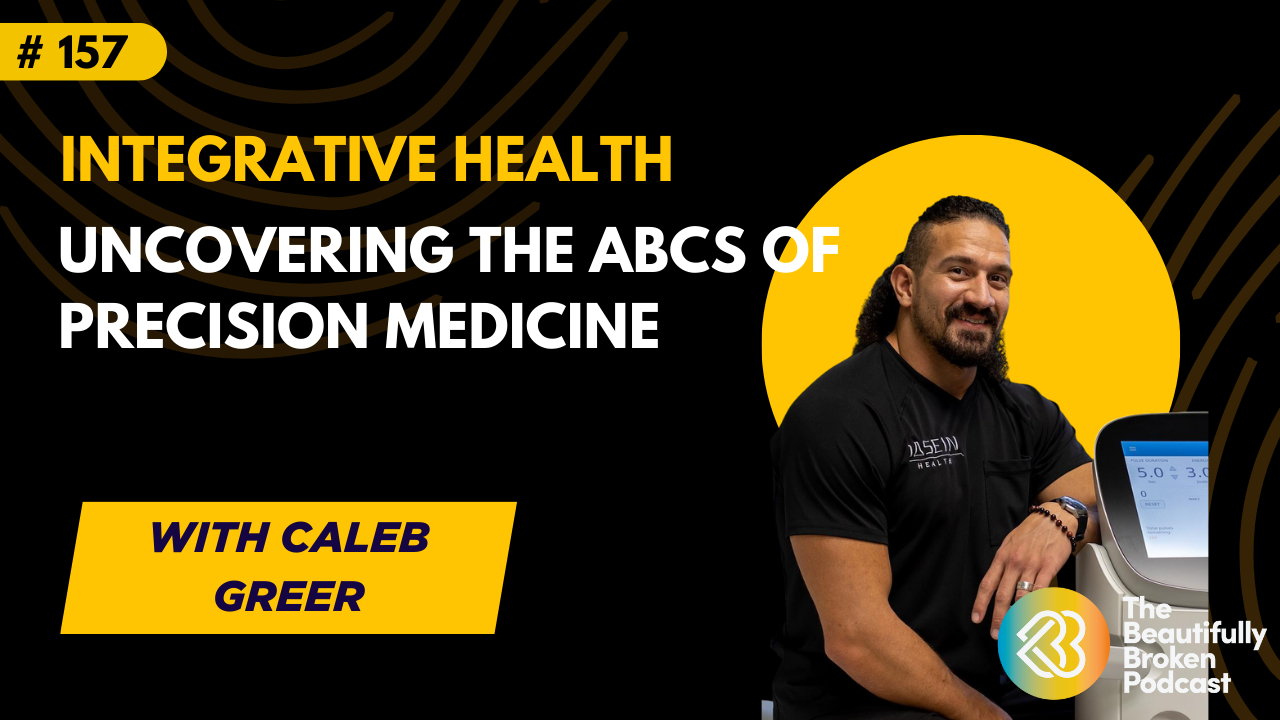
WELCOME TO EPISODE 157
Caleb's approach involves guiding individuals based on an evaluation of the 'ABCs' of precision medicine in relation to the fundamental pillars of health: sleep, nutrition, exercise, and emotional resilience. He uses blood-based biomarkers to diagnose and treat health problems, deploy risk mitigation strategies to counter the effects of aging and enhance the already well-functioning human system.
As someone who has personally worked with Caleb for my own holistic healing journey, I can attest to his empathy and vast knowledge in his field. I'm excited for you to tune in to this episode and learn more!


Episode Highlights
[0:00:00] Introducing Caleb Greer, Daesin Health, and His Approach to Healing
[0:10:09] The Daesin Health Model and How It Can Incentivize Holistic Healthcare
[0:15:06] How to Move Past the Biggest Hindrance to Reach Homeostasis for Individuals
[0:18:23] Transcranial Magnetic Therapy
[0:22:57] The Daesin Health Model and Subscription
[0:30:29] How Caleb Manages His Time Between Himself and His Work
[0:33:18] On Caleb’s Favorite Treatments From His Clinic
[0:34:51] Unraveling the Existence of Outliers
[0:38:44] On the Challenge of Establishing Daesin’s Healthcare Model
[0:45:16] Why Caleb Started in Healthcare
[0:48:07] Content Creation in the Health and Wellness Industry
[0:55:55] On Developing an Awareness of the Self
[1:04:33] Caleb’s Personal Biohacks
[1:06:53] On the Power of Expressing Emotion
[1:12:45] On Bloodwork and Lymph Fluid
[1:16:56] Caleb on His Work and What It Means to be Beautifully Broken
[1:18:53] Outro
UPGRADE YOUR WELLNESS
Silver Biotics Wound Healing Gel: https://bit.ly/3JnxyDD
Code: BEAUTIFULLYBROKEN
LightPathLED https://lightpathled.com/?afmc=BEAUTIFULLYBROKEN
Code: beautifullybroken
STEMREGEN: https://www.stemregen.co/products/stemregen/?afmc=beautifullybroken
Code: beautifullybroken
Flowpresso 3-in-1 technology: (https://calendly.com/freddiekimmel/flowpresso-one-on-one-discovery)
CONNECT WITH FREDDIE
Work with Me: https://www.beautifullybroken.world/biological-blueprint
Website and Store: (http://www.beautifullybroken.world)
Instagram: (https://www.instagram.com/beautifullybroken.world/)
YouTube: https://www.youtube.com/@freddiekimmel
FULL EPISODE INTERVIEW
EPISODE TRANSCRIPT
Freddie Kimmel (00:00.15)
Ladies and gentlemen, welcome to the beautifully broken podcast. Today is a historic event because we have Caleb Greer of Dasein Health in Austin, Texas. He is my own nurse practitioner. Well, he's not just mine, but he does care for other people in the Austin area. And he is on a list of five people that are the most empathetic, deeply caring, knowledgeable practitioners I've ever worked with.
I love this guy and he is a rock star cowboy in the world of peptides, hormone optimization, weight loss, functional medicine, you name it. You got to come here to Austin, Texas to check him out. However, he's on a wait list because he's that good. And I want to give you a little insight into the way he works with the body. So we got to sit down for over an hour and do a deep dive without any further ado. Ladies and gentlemen, Caleb Greer.
Welcome to the Beautifully Broken podcast. I'm your host, Freddie Kimmel, and on this show we explore the survivor's journey, practitioners making a difference, and the therapeutic treatments and transformational technology that allow the body to heal itself. Witness the inspiration we gain by navigating the human experience with grace, humility, and a healthy dose of mistakes, because part of being human is being beautifully broken.
Freddie Kimmel (01:36.194)
Ladies and gentlemen, welcome to the podcast. We're gonna get going, but before we do, I have to mention a product that I've been talking about for over six months. This is Silver Bionics. Silver Sol Technology, which is a technological play on silver, but they've coated it with a silver oxide that can steal thousands of electrons. This particle that Silver Bionics has invented is AG404, which makes a supplement hungry for electrons.
If you've listened to this podcast in the past, you know when something can take electrons away from the bad guys or the pathogens, your immune system is going to operate better. So I use their immune support daily. I have not had a cold since I started doing this. It's been over six and a half months. The other product they make that I absolutely am in love with is their toothpaste.
Your mouth and gums feel fresh and pink. It's very, very effective. And this has been validated by one of my favorite biological dentists, Dr. Gene Sambitaro. The other thing that I have to tell you is they have a burn cream. Now, I wouldn't tell you that I needed a burn cream. However, I was just in Maui and the fair skinned individual that I am. I was blessed to have this and would literally watch a sunburn melt away after an hour because the cooling effect
of this burn cream was amazing. check it out. They are offering this podcast 30 % off on any of their products using the beautifullybroken. So check that out today. The other sponsor I just want to mention and shed a little love on is Light Path LED. This is my favorite light company. Red light therapy is shown to be beneficial to every cell in the body.
helping to release nitric oxide and increase microcirculation and increase ATP, is the energy currency of the cell. Lightpath makes one of the best lights on the market because in my opinion, they use pulsed frequencies. They have the most robust warranty on the market and people are so happy when they get this thing in their home and they start their day with 10 to 20 minutes of red light therapy. It increases joy, helps with mood, it helps with chronic pain.
Freddie Kimmel (03:56.088)
There's really not a losing case here. So check that out, same code, beautifully broken. And last but not least, I gotta give some big love to AMD Ion Cleanze, which is an ionic foot bath, which yes, I know, Freddie, you got a little woo-woo on me, but it's not. You put your feet in water, you put in the ion plates, and both negative and positively charged ions are added to the body. What does the body do with these ions?
It binds and forms covalent bonds with metals, toxins, biotoxins, mold. And through studies over three to four months, we can watch levels of environmental toxicity like glyphosate. Glyphosate is a weed killer that you don't want in your tissues. It affects everything in a bad way. And again, you're noticing a theme here. Energy, electrons, light, the stealing of electrons, team.
I align with these companies and these sponsors because they work, they're effective, they're affordable, and they do the good deeds. So check them out when you shed love on them and their shopping carts, you shed love on this podcast. That's it for now. Let's jump in.
Ladies and gentlemen, welcome to the beautifully broken podcast. I'm here with my medical Sherpa, Caleb Greer.
How's it going, guys? Ciao. Thank you. Nice to be here. It's a great Tuesday. Nice and muggy out here in Texas. And couldn't think of a better place to be.
Freddie Kimmel (05:21.4)
Caleb, welcome to the-
Freddie Kimmel (05:29.516)
Yeah, so we got this beautiful sign on the wall. DaySign Health. I say DaySign, but DaySign Health is your model of what you consider wellness to be. Can we start there?
Sure. Yeah. you know, Dasein comes from a German philosophy from, from Martin Heidegger. And essentially it's conglomerating someone's whole life and purpose and meaning in, grounded in what's called the here and now. And so that's kind of, you know, exemplifies the program that someone is brought up in, know, their adolescence and early life and how it manifests in their kind of mode of being when they come to see me. And then also how that also influences their future.
because there is no future without kind of having an idea of where you're at and aiming for something in that near goal-oriented kind of position. So really it's kind of taking their physical presentation and then it's adding an element of their mentation and mental life and emotional life, and then also appreciating the spiritual aspects of what it means to kind of be a human and also have the burden of consciousness on the side of that.
Yeah. What do you consider healing to be? Like if somebody said, Caleb, what is healing? I always, you know, you're my guide, so you understand my health history. I come at it at a very unique lens. It's always, you know, I've moved through some heavy, heavy shit. And now it's really fun to be optimizing. But I get to talk to people all over the world and everybody has a different experience. So what do you consider healing to be?
So healing, I guess, at its most fundamental level for me is the return to all preferred states that would otherwise get all of an individual's needs met from a very low level needs as far as homeostatic effects are concerned. you know, thirst and hunger and, you know, sleep and rest and restorative functions. And so making sure the organism, number one, has all those things met and means to have those met. And then on the higher level of it means to kind of
Caleb Greer (07:30.67)
promote more opportunity and to promote better means of getting those needs met once they're already foundationally met. So again, there's the baseline return to homeostasis and then there's the optimizing all the different methods of maintaining that low level of what we'd call kind of free energy.
Yeah, it's really interesting to understand our blind spots and our bias and things that I believe to be true for everybody, which are just not. And one of the things about meeting you and coming in your clinic is understanding how you've set this up to really meet a lot of different people coming with different beliefs about health.
you know, there's optimization, you have the ARX machines, have red light panels, you've got an ice bath, you've got katsu bands, you've got the green emerald laser. Now, if anybody doesn't know what this is, don't get worried, we'll unpack it all. But you provide so many different stacks in which people can, it's just, it's a different way of looking at health. Can you talk a little bit about why you've designed the clinic in this way?
Yeah, so, you know, really kind of all bird that this, the amount of excuses that people have to not do things that are beneficial for them. Right. And so essentially doing what I could from the practitioner side of things is, you know, guide people to make better decisions or kind of open them up to the experience of choosing how things are going to impact their health in different ways. But at the end of the day, once they leave, it's kind of out of my hands. And so, you know, when I separated and made this clinic as a unique entity,
What I wanted to do was as much as I could take excuse out of the picture. So finding things that had the biggest bang for buck, the most return on temporal investment, things like the Aerox, things like, know, ice bath, those really kind of consolidate the amount of time that someone has to spend doing those things outside of their day-to-day life. They can then pay dividends on the back end because, you know, they can spend 40 minutes a week doing exercise for sure. Not only that, but then those 40 minutes are actually
Caleb Greer (09:37.708)
the most beneficial they could think they could do from a resistance training perspective. And once people get into that habit, it kind of opens the door to be motivated to do more things. And then we just kind of pass them on to the next phase of the clinic, right? So then they'll start to do the ice bath. They'll start to do the red lights. They'll start to, you know, stay on the vibration plate. They'll start to use the cats who bands because it all becomes this funnel and a good avalanche down into really taking care of themselves because they see the benefit.
on the back end.
Yeah. So you're the other big advantage you have is you're running a clinical practice. You're looking at labs, hormones, biomarkers. Have you got to work with a lot of people who are doing none of these things versus people who are just coming in to get their labs looked at and try to manage it on their own? Have you seen, what does that look like? Cause what's that split look like?
in terms of plants that just come for the medical piece of it and don't use.
Yeah, yeah, do you see a big difference at this point? I know it's relatively new what you've set up.
Caleb Greer (10:38.478)
So, you know, I'd say for the most part, unless people just kind of live way out, you know, either north or south or outside of the kind of the pocket here, I would say a majority of the clients use most of the tools that are available. Number one, because they're mostly included, you know, in their kind of concierge membership. So they're paying for something and they want to have the value truly extracted from it. So it kind of behooves them to use the tools. And then it really just becomes a, why would I not come and do this? I feel so good. I get great benefit and,
I reduced the time that I have to spend doing exercise, doing stress management techniques, and really the opportunity cost is too high not to.
Yeah, yeah, I would agree. I will often post a video in my Jeep. I'm like, I am headed to my doctor's office where there is the ARX and maybe I'm going to jump on this high gravity vibration plate. And people always it's always like a post that people are like, your doctor has that your, you know, your nurse practitioner, which we said we mentioned in the beginning, you know, has these things in practice for you to use. It's included as part of the service.
It really is a model that's incentivized for people to be well. Yeah. Yeah.
And that's really the thing, right? I want to elevate the health of, you know, not only my service community and eventually expand it, for me as a practitioner, right, my intrinsic motivation is to ultimately see the population get healthier. And if I don't do what I can to really augment that and to kind of mitigate the reasons that they can't be healthy, then I'm doing myself a disservice, you know, then the next time I see someone and they haven't implemented their exercise program, it's not about looking bad. It's about feeling that they could have done better in that timeframe.
Caleb Greer (12:20.5)
and that I could have supported them in a way that now I have.
Yeah, there's a thousand different ways I could go here on the slope of questions. And I just, I'm going to own this right now because I'm going to jump around a little bit. You mentioned population, the most impact on the population. There's a lot of people on the planet. Like, how are you going to integrate this model for the vast population to make this change in society that is needed?
Yeah, well, ideally it's just starting small and doing, you know, my due diligence and kind of being good steward of the small population that I have, making sure it's a model that is sustainable and does work, you know, over time. And then, you know, eventually it's going to be, how did I get this done? How did I do this and make it something that was sustainable and profitable and obviously has a good impact on people.
And so down the road is probably going be something, you know, either my ideal is to going to be have kind of a residency type program where I can train people in the clinical experience and not just teach, you know, this the actual knowledge aspects of what it means to do this and how to interpret labs, but actually how to take in the design of individuals and see the uniqueness and nuance of every person. Because, you know, once you start to see patterns and get a better recognition of
how things pop up in different regards, you get this real humility. And I think that is one of the largest pieces of being an effective practitioner is just knowing that I'm gonna have someone walk in the door today and not box them in to my own patterns. It's like I have an understanding and prediction of what things could be like, but I never walk in thinking I'm gonna have the solution or the answers right off the bat. And that needs to be seen
Caleb Greer (14:11.454)
on a training level, right? When people can understand that I'm asking questions at the same rate that the clients are asking questions, right? I'm not always saying that I have the answer, right? It's walking through things and looking at probability distributions and kind of having more of a humility in interpretation and not leaning on any one kind of for sure diagnostic pathway. And it's a lot of trial and error. So that being one of the avenues and then obviously kind of having a
program to teach other practitioners to implement or using the model and helping them into consult and how to actually navigate that process too. So those are the two real methods that I see branching out.
Yeah, I love the word humility. And, you know, there have been so many times from my experience where you felt like, guy's trying to get me in his treatment box right now and it's not, doesn't feel good, it's not working. In your clinical practice, what have you seen? Is there something that really sticks out as like maybe the two or three biggest hindrances to people moving into homeostasis, getting everything that they need? Is it movement? Is it nutrition? Is it mental health?
Honestly, it's mental health. I mean, it's the value systems and belief structures and really the biases that people have kind of moving into what it means to be healthy. But also it's the decisions that people have made to be successful and to have, you know, the life that they desired. But it kind of ends up robbing Peter to pay Paul in a sense because they use their conscientious attitude or even, you know, early life.
traumas to cope and defensively strategize for how to kind of be at the top of the hierarchy and really kind of at the expense of others, become a high performer or exact opposite, right? So they might have some kind of coping strategy that really hinders their ability to be a fully recognized, you know, individual self. And so helping people navigate who they think they are and really kind of get their sense of self up to speed as far as where they want to be and how they want to live the rest of their life.
Caleb Greer (16:20.01)
That's really the biggest piece that most people appreciate outside of just physically healing.
Yeah, I'm so glad you set a value system. It's so important. And I'm always reminded how much the percentages of the brain that's running on the subconscious telling us what to do. And unless we, you know, the power of pause or I'd love to hear to make a question for you. I'd love to hear the three or four things or the few things you have in the office that you like to start using as a tool.
to let that work be broken open or introduced to a client.
Yeah. So, you know, in the broad scheme, I think one of the best things really is to journal and write kind of a comprehensive, small autobiography. And that the tool that I use is actually Jordan Peterson's self-authoring suite. And so I tell people, you know, the best way to kind of identify where you are and how you got there is to write out the journey of themselves. And so that tool in and of itself has been really helpful for people, not only to
reimagine their past, but to also find out where they've forgotten that there's residual affective disturbance, right? And so people will kind of start walking through this and they'll start to feel emotion about different events that they kind of thought that was over, they processed it efficiently. But in lieu of walking through this extensive past, they actually see that, hey, you know, I wrote about this thing and it made me feel a certain way. What's that about? And so then we'll kind of navigate, well, feelings are
Caleb Greer (17:57.57)
kind of what generate that subconscious driver to correct something. And so going back into those states of mind and figuring out how to process it as their younger self, number one, but then to actually put their older adult self in that scenario and grow out of it. Right. So we use a lot of mental visualization and, you know, that journaling technique and also, know, ketamine assisted therapy and transcranial magnetic therapy.
Yeah. Talk to just for people about transcranial magnetic therapy, just if nobody's ever heard that word and it sounds interesting. And I've seen this unit in the back. It's really cool. You're going to sit in like a dentist chair with like this like gnarly helmet and there's some cool noises that come out of the machine. What's it designed to do?
So the transcranial magnet, you know, it's repetitive transcranial magnetic stimulation. Basically, it's a magnetic coil that, you know, produces an electromagnetic field and stimulates parts of the brain that the coil is over. So for the uses of anxiety and depression, you know, it's the left and right dorsal lateral prefrontal cortices. And what that does, you know, based on the parameters that we set with the frequency patterns and the burst and those parameters, we either stimulate
airs the brain that are underactive in those cases or we inhibit the part of the brain that's overactive in those circumstances. So, you know, it's a neuro stimulation technique. It's not modulation. We're actually getting actual potentials and changing the underlying firing patterns of the neurons. And what that does over time is it disrupts kind of the default mode network and encourages better communication with more of the subcortical midline structures that generate how you feel about yourself and how that
self-talk is kind of generated. And, you know, on top of that, when we do more of the psychedelic assisted therapies as well, we can kind of take the cortical representations of those voluntary thought processes and then use that to augment what we do on a more subcortical level too. So we're kind of meeting both top-down and bottom-up processes.
Freddie Kimmel (20:01.218)
Yeah, yeah, this is certainly a different model than just going in and saying you need Prozac. It's different.
For sure. Yeah. And that has its case, right? I mean, you some people just can't deal with the affective burden of, you know, certain experiences. And so those, those medications have their place, but it's never going to be a long-term scenario. Someone has an event that they need to medicate for a short period of time. The idea should always be to go back and process the event, not just live with a medication suppressing those feelings to the point where, you know, again, you're just going to start building this stuff under the rug and eventually
You're going to trip over something.
Yeah, yeah, that's a great way to put it. And I agree with you, like medicine is needed. I think it's we could also, we could redefine what the medicine is. Could it be a heavy dose of psilocybin? You know, could it be some of these more natural compounds that do allow the brain to repattern or reprogram? It's really, it's really interesting thing to explore. When you have somebody come in in the scenario, how would you make that assessment as a guide as a Sherpa through health that they would need the transcranial magnetic stimulation?
Is this all by subjective experience? Is there way to map the brain and look at areas that are not firing correctly?
Caleb Greer (21:14.626)
Yeah, so we actually just kind of invested in a QEEG to start doing brain mapping kind of before and after from a diagnostic perspective to see not only with TMS, but you know, what does the premenopausal mind look like? What does the postmenopausal mind look like? What does it look like after hormone replacement therapy? So we're really trying to use brain imaging as a biomarker for not only success of different therapies, but also the success of the actual mental health intervention.
That is one way, but before that, because we literally just got it, we'd use different questionnaires and psychometrics to see what the affective life of an individual looks like on paper. And then you just listening to people and talking, it's like you would benefit from less mental chatter. Really, anyone from even a cognitive enhancement perspective can benefit from increasing left prefrontal cortical activity and reducing right. as far as kind of...
getting someone's brain optimally functioning from a neurofeedback perspective will have those tools online, you know, eventually. But really when people have had therapy for a long time and they're kind of stuck or they're not getting anywhere after that, or they kind of have the same experience over and over, or they just can't integrate the changes they know they need to make in therapy in real life, like that translation is more of an issue, then sometimes they just need more of an in-depth.
therapeutic intervention to break through those barriers and then to ingrain it with the neuroplastic changes that you get from something like TMS.
Yeah, incredible. It's a great way to explain it and describe how that's different as far as like an assessment, moving somebody through, and then you're to have all this great data because you're in clinical practice, which is exciting. as you're talking about teaching this to other people, you know, the other place my head goes is when you're seeing people, this isn't about a visit. It's not come and see me when, you know, that like you so eloquently said, I've tripped over something I've fallen and now I have
Freddie Kimmel (23:15.788)
really high blood pressure or my A1C is spiking through the roof after ice cream. You know, it's a community model or a, you know, you do a monthly subscription that people sign up for. Is it a year contract? don't even know. should know.
Just per month. Per month. Cancel any time type of thing.
Cancel any time. What a great thing, just like Netflix. I'm done with this. I've done enough for my body and my health and my mental health and my functionality and my human vessel.
Exactly.
Caleb Greer (23:45.718)
And interesting, you know, that's kind of partially a goal to have people graduate to the point where they no longer really need the kind of supervision that the membership kind of concierge model is about. But, you know, I'd say really 95 % of the population is not going anywhere. Right. I think, especially through COVID, realized the utility of having kind of someone on call, so to speak.
And you know, things just pop up and until people actually recognize how difficult it is to get these kinds of services on a normal basis, they're just kind of surprised. And so once they have it and realize how good it is, you know, they keep it rolling.
Yeah. We got a puppy outside that's like, usually I usually take a dog barking on a podcast is like an energetic signal that like you're on the right path.
Yeah, yeah, Aries is, she's a girl.
What kind of puppy is Aries? She's a toy Australian Shepherd. My grandparents always had Australian Shepherds. Great dogs. intelligent. Hyper intelligent dogs. Yeah, that's really cool. I didn't realize that. You know, when we talk about the model or the idea of, you know, being for me, I feel like I'm invested on a different level. Do you know what I mean? Yeah, I obviously there's two places I want to go with this like
Caleb Greer (24:37.166)
She's a toy Australian shepherd.
Freddie Kimmel (25:04.462)
there's a little more ownership in how I'm showing up for my health, even though I'm like, you know, I'm very type A. I'm like, no, people that are listening to this, they're like, yeah, you're super. But it's different. There's a responsibility. Like I'm showing up for my ARX workouts. You know, I'm showing up to even where I do an IV infusion. You know, I'll come work in here. I'll bring my computer and laptop sometimes. So I really enjoy the aspect.
Yeah. When, know, too, it's like in between, you know, appointments when I'm in and out and I see people here, like I get to talk to them. I get to catch up even outside of a normal office visit or circumstance. Like usually, you know, before it was just email and visit. And now I can see people kind of as they come in and out, I can, I can watch people change literally before my eyes. If I miss somebody for a month and I see him, like, you know, how much weight have you lost? Like, I'm down 20 pounds and my, my Aerox machine, you know, force outputs are going way up and I feel amazing.
So it's really nice to just get small touch points throughout the day.
Yeah. I would love to have all your clients stacked up outside and like align and like take pictures. Like you have like a sexy clientele roster. Yeah. Like you have a very like people are like looking really good. You watch people come in and you know, they're doing their peptides and they're on hormone optimization and they're pushing weight and they're in the ice and they look really amazing. Like I'm thinking about the clinics I used to go to in New York City, which was just no judgment on anybody's body, but people are
kind of racked and they're hyper stressed out and they're not doing any of these lifestyle things. So I'm really impressed by that every time I come into the office.
Caleb Greer (26:39.214)
Yeah, when it's been a journey, man, I mean, you know, again, I've had some of these clients for, you know, three or four years now and watching them go from, you know, unhealthy in the sense from their literal physiology, not even using anything from a body composition perspective, but again, just seeing changes in the blood work and seeing changes in their mood and their attitude and their ability to be motivated to do the things they need to do to continue those changes.
That's been the most substantial thing for me to see kind of over time and track.
Yeah. One of the big questions I get online is, you know, I post a lot about the toys and it's like people like, well, Freddy, should I buy this or should I do this? Or that looks so cool. Should I get one of these? always, the more I'm in the space, the more I pause and the less eager I am to say, yes, it's awesome. It's amazing. Cause I understand how the human psyche works. Like the Peloton bike or the light path LED can quickly turn into a close.
Yeah. And I see this a lot. Like I always said, a great business model for anybody out there. can, I give business model for people a lot online. You should start a website called biohackers garage and you should start buying up all the ice baths. Cause I know this, I know this to be true that people are buying these ice baths. And I bet you, I bet you it's like the jacuzzi times 10. Cause not only is it not, it's not even really warm and enjoyable to get in. It's just like, it's this pain point like
No, I'm not going to get in that without someone cheering me on to do it. You know this is happening. So without a guide, without a Sherpa, these things, they can be really problematic. And then it becomes this other failed attempt in which your psyche is like, I didn't show up for myself again. Look at how bad I am.
Caleb Greer (28:27.148)
Yeah, those are really good points. I mean, I haven't even thought about to that extent, but I mean, even personally speaking, would buy these things as investments for the future, but I would have access to them like in my home and I would hardly ever use them. I mean, I still have this stuff in the clinic and I use probably half of it as much as I should. Right. And so you do tend to kind of lose the urgency behind accessing the tools when you own them.
Yeah, unless you've been through metastatic cancer and Lyme and like it helps you move through the day.
Yeah, and that's like the same thing with dietary changes, right? If I ask somebody to be gluten-free and they don't feel any bit different, it's a lot harder to maintain than someone who has, you know, gluten intolerance and they eat a piece of bread and they blow up and have, you know, intestinal pain for two days. So yeah, the intrinsic motivation when you have benefit from using the tools is a lot greater than just having it there and thinking you're going to use it for, you know, some physical problem that you really haven't gotten to the root of anyway.
Yeah. I talked to a girl yesterday that was pretty famous. It's wild. I'm in the gym and this name pops up. was like, is that from the thing and the movie and the television? Yep. Yeah. No. So we just start chatting and as great human being, great energy has doing all the work, know, doing all the like doing the breath work and she's in the ice, she's meditating, she's journaling. By the time she got done telling me the things, I was like, I got to breathe. And I was just saying like, who's your guide?
Who is your person that's, have you ever heard the word energy behind the action? Or have you ever thought about where does this apply? Where's the space in between the words? Where's the space for you? Where's the pace, the pacing that you're allowed or not allowing yourself to unpack some of this stuff. And it was, it just wasn't there. And I just, I see this, it's part of capitalism. It's part of, you know, our perception of what other people are doing in the world.
Freddie Kimmel (30:18.83)
I'm like, wow, how are they putting out all that content and they're a functional medicine doctor and they have a podcast and they speak all over the world and they have a book, is that real? Probably not, you know? So how do you make time for yourself to both stay educated and continue to learn and be able to see all these people and work in this very functional model that you've birthed or birthing?
Yeah. So, I mean, that's a good, it's a good question. And honestly, there's been a lot more me to a lot less me time with the development of the practice because, you know, all the backend work that, know, typically people have two or three other employees doing these kinds of work, like with the billing and all the back office stuff, you know, that people kind of don't think about. you know, generally speaking, I got to do my work when the kids are asleep. Right. So I got two young kids and, know, and a family to also be a good husband and father.
in my job description as a self, right? And so, you know, usually that means waking up early before so I can get some reading done or maybe do some emails before, you know, the day starts. And then fortunately with clinical practice, it is its own educational system. I'm getting, you know, exposure constantly to things that not only generate new questions for me to ask in research and actually get adept in, but it's also reinforcing all the patterns that I've already
recognize and kind of facilitate on a much more rapid basis. Right. So I can read and interpret most blood work within a very short period of time that actually lets me do more background research on the things that I don't know. Right. So just kind of opens up this whole window. And then it's really just about managing time. And that's where the ARX has come in super handy. I don't have to work out four hours a week anymore. I can just work out for 20 or 40. Right. It takes out the need to do, you know, a lot of standard
cardio, right? I've got the air or the assault bike that I do my interval training on, right? And I can see with the devices that I have that every metric that I would ever want to increase as far as VO2 max and my force output, you know, the actual muscle mass that I carry, you know, they're all improving. And so as far as opportunity cost, when I have all of these buckets to fill, finding things that were important for me to also increase the amount of time that I can spend with personal growth and
Caleb Greer (32:37.25)
familial growth has been really important. And that's what I've also kind of translated into the practice in general. Less time doing the things that we need to do, but get the minimally effective dose for longevity and health band while opening up time to do other things they actually enjoy from a habit or hobby perspective.
Yeah, that's a great answer. Yeah, I appreciate that. I'm always concerned for people when they start a business, because you know, you're like, man, this is going to be, you know, part of the growth is the beauty and the hardness or the difficulty or the challenge of unwinding the challenges where your Everest moment is going to come from. So I'm excited for you. I know you have the resources to be able to get through it in a beautiful way. What do you see in your clinical practice? What are some of your favorite things?
to watch people get into and add into their lives where you see it just a huge return on investment.
Hmm. I mean, I'd say probably women going through the menopausal transition and the second one being weight loss. Right. So I think those two have the greatest temporal satisfaction because they see benefits so quickly and you see their attitudes and motivations and behaviors kind of change so rapidly that it's just, it's a huge kind of dopaminergic burst for me to just incentivize.
that kind of thing more and more and more and more. It's also one of the biggest challenges too, because when I get people that have been to other practitioners or so forth to kind of manage their hormones, it just hasn't been the best. It's not usually because that practitioner isn't good. The individual is just going to be more nuanced and have different receptor proclivities than the normal population. So it's a little bit more of a puzzle to solve. Same with weight loss. I get a lot of weight loss resistant people where...
Caleb Greer (34:26.786)
They're eating right, they're exercising, they fast, they do all the things. And then even the interventions that we have now available with, you know, the GLP-1 class like semaglutide and terzepatide, sometimes those still don't work, right? So really having the population that again, keeps you humble as far as seeing the people that they're outliers and outliers are what drive best practices.
That's amazing. Outliers are what drive best practices. So can we talk about that a little bit? Why does that present in a human being? Why that resistance to weight loss? You've obviously had some success with unraveling some of these outliers. Maybe you can give a couple examples.
Yeah, I mean, for some people, they're just genetic, right? So some people have initial or intrinsic variants in how they metabolize triglycerides, for example, or how well they release insulin in response to their blood sugar spiking, right? And so using different tools to augment those physiologic responses really just takes a deeper dive into their physiology beyond just the blood work. So looks like getting their genetics done and looking at those single, you know, polymorphisms. For other people, it's environmental.
toxicity, It's what's in their water that's keeping them in a kind of internal, intrinsically stressed state to kind of promote fat storage and prevent fat loss. For some people, it's dysfunctional mitochondrial enzyme function, right? So all the steroidogenic enzymes that live in the mitochondria that take cholesterol into pregnenolone and so forth, sometimes those have little blockages or just not as sensitive. So using peptides or different
compounds to augment the different genetic outputs like PPAR gamma or the bile acid kind of receptors in the gut too. So, you know, it's a lot of trial and error and fortunately the more trial and error you get, the more pattern recognition you get for those nuanced cases and you could say, okay, well, this didn't respond classically to that so that kind of puts them in this bucket and then we're going to try these things and maybe they respond to that great. If they don't, then we've got these kind of tertiary level things to use to see.
Caleb Greer (36:37.804)
what's the problem? Sometimes it's just adding a whole slew of things. But you know, getting their water taken care of, getting their beauty products taken care of, right? To make sure that it's not the environmental overexposure to chemicals and intoxicants that are backing up the ability to kind of recycle lymphatically.
Yeah. What's your favorite way to assess mitochondrial health at this time?
You know, I don't think I really have one, right? It's more of a, it's a symptom presentation, right? So it might look like T3 resistance, right? It might look like high reverse T3. It might look like just fibromyalgia or just pain across the board. Right. And so usually in those cases, you know, there is a test out there that you can take a buccal swab and look at mitochondrial complex activity. And that can kind of be a good insight, but you know, it's still kind of getting developed in.
It takes a while to get the results back and it's not super actionable. But generally speaking, it's what is their respiratory quotient? What are they burning at a resting state? Are they in fat burning mode when they're kind of offline in their steady state? Or are they burning carbohydrates all the time? I've actually had a couple of clients that just don't tolerate the removal of carbohydrates or even like a normal blood glucose. So they'll be sitting at 85 or 90 and feel
fatigued and tired and hypoglycemic and then they'll eat and they'll feel better. And so in those circumstances, it gets really difficult to do all the things to get them fat adapted or to be metabolically flexible because they can't tolerate even normal glycemic control. And so navigating that process is really difficult and takes time because most people think that they're going to lose weight quickly because they've seen their friends do it and that's why they're here. It's like, well, okay, there's a reason that
Caleb Greer (38:24.298)
You're still this way, even though you've done all these things for the past years. And now we're just going to navigate this in a much slower fashion.
Yeah. Yeah. There's so many questions I want to ask. I got to check time. Okay. Third grade. I always feel I'm like, it feels like it's been two hours. Yeah. Because because you just get in the rabbit hole. When we're looking at the field of health, and we're looking at the current model, and we said we're trying to, I'm trying to advocate for a new model. I'm talking to people like you to advocate for a new model and explore what's possible.
I watched a documentary yesterday, which I mentioned, where it walked through the steps in which it just looked like there was some terrible bad actors in the regulatory agencies specifically dealing with Lyme disease. know, Lyme spirochetes and Lyme bacteria is being like one of the most patented bacterias. it's literally, you look like it's, it's like a play on the market in which all these biotech companies is like, I want a piece of that.
I want a piece of that. want a piece of that. And it's like, it's something near and dear to my heart, you 425,000 people diagnosed every single year with Lyme. And often the great mimicker, you know, of all these weird conditions. Do you feel at times that there is like, I hate to use the word conspiracy theory, but there's like some sort of agenda towards
the model of health you're trying to develop and the one that is in existence or is it just gross negligence and incompetence or maybe both?
Caleb Greer (39:59.778)
You know, it's really hard to say, and I'm not a huge speculator either way, but you know, as far as what I see, the most difficult barrier to, think, you this model of medicine is the fear-based tactics that people have in the back of their mind for what health insurance is supposed to do. Because I think, you know, if you look at how much people spend on health insurance and what they get for it, this model makes more sense, right? So there's always the issue with catastrophe and having problems with
big ticket items. But, you know, from a probability perspective, it's low on an individual level. So if you take that and kind of hedge your bets, you'll err on the side of I'm going to get most of my health under control, the 90 % of things that I can actually change to improve my quality of life and to kind of prevent the onset of acute and chronic illness and leave that 5 % chance for catastrophe. Right. And then
Also with, you the no surprises act that, you know, that Trump administration passed to make sure that hospitals and different organizations tell people how much things are going to cost, or at least give them the estimate ahead of time. So there's no surprises, right? So there's no more excuse for getting a surprise bill after you go and get a procedure done or after you go to the ER, because they have to do their due diligence and actually tell you, here's what this is going to cost. Is this okay? And then you sign the consent to have the stuff done.
If for some reason, you know, you do your procedure and the hospital sends, here's your $20,000 bill. you're like, hold on, you told me this is going be like 2,500. You can actually just not pay it. Right. So then the hospital has to go through this whole debacle of getting things kind of squared away and getting reimbursed in a fashion they can. But that's going to be huge as far as transparency goes for clients or for people to know what something costs. So I always tell people, you know,
You think if you have a heart attack and you go get a bypass or you go into the cath lab and it's going to be some $40,000 procedure. But realistically, it's nowhere even close that amount. You know, I tell people the story of the circumstances of my son's birth. know, we ended up having, know, birthing center was the plan and just kind of do everything naturally. Well, you know, that laughed at us and we had to have plans, emergency section, all that kind of stuff. you know, we didn't have insurance. So I'm thinking the back of my mind.
Caleb Greer (42:25.422)
This is going be crazy. And so, you know, we got the bill and there was a cash pay discount because we didn't have insurance and, the bill got reduced from, you know, over 30,000 to less than 10. And so if I had actually gone back and said, my healthcare premium, what I pay for a month for healthcare insurance would have been around 750 for the family. So you multiply that by 12 and over the year you're spending, you know, 12 grand on health insurance, right? So just from my premiums, not getting anything.
back yet, not paying my deductibles, not paying my coinsurance, not doing any other out of pocket stuff. I already would have spent more than what I pay out of pocket for having the baby, for my wife having the baby. So, know, contextually, people just don't understand that because it's not in their ballpark to understand, right? You take your car to the mechanic and you know what they tell you goes, right? You don't have the capacity to know everything. So you trust professionals to give you the right assessment and that's what you're looking for.
Yes.
Caleb Greer (43:23.374)
when you have any kind of whether it be for car or body. So the number one thing I think to help shift our awareness as a country for what health really looks like is to be transparent, right? What are the costs of these things really? If I just set aside that money that I'm paying in my healthcare premium every month for a rainy day for a catastrophe, will I have enough? Right? If you don't have a healthcare issue in two years and you've been saving up two years of healthcare premiums, you know, in quotes,
then you're kind of prepared for anything. You just have to the discipline not to use those funds for anything.
Yes. So important. just understanding our country's relationship with credit. It's challenged. There's many ways in which we could build that new model. The collective, I did a collective here in Texas for a while, which was like newer health or new health in which it was kind of like everybody paid in like a sharing company. Yeah, like health share, like, you know, 290 or $320 every single month. But you were covered for catastrophe or a heart attack or
an emergency room visit, which was, it was interesting. It was so new and foreign how it operated and they were figuring out the kinks. didn't go with it for a while. I did it for like a year and I was just, but people raved about it. People are like, no, my husband went through lung cancer and everything was cut. They negotiated everything on behalf of the collective. So there's definitely people that are, they're looking at different ways that we can be doing this.
Yeah.
Caleb Greer (44:51.82)
Yeah. I think the most difficult thing with that so far that I've come up, you know, with the people that have the share accounts is they do have to pay for it upfront and then get reimbursed after the fact. So there is still kind of like a need for some kind of financial stability heading into those kinds of procedures.
Yes.
Freddie Kimmel (45:08.108)
Yeah. Yeah. It's pretty wild, but everybody knows there's something new that needs to be done. That's a shift from where we're at now. Why medicine? Why health? What got you started into all this? Did you know from a very young age you wanted to be a healthcare provider?
No, honestly, from a young age, wanted to work. I basically wanted to be either Jeff Corwin or Steve Irwin. Like that was my thing. Like I'd watch Animal Planet all day. I'd be outside hunting for, not hunting, but you know, trying to find frogs and critters and all that kind of stuff. So that was, that was my childhood, man, just exploring. And, you know, I think what that developed into was just an intellectual curiosity. So it went from just wanting to understand biology and nature in general and kind of translating that to
an endeavor that I could still be financially secure, but also stay true to that explore type of personality that I had. so with, with medicine, you know, starting in alternative with chiropractic and kind of figuring out that, you know, from a scope of practice perspective, I wanted more. And that's when I went back into, you know, conventional allopathy with nursing and the nurse practitioner route, but the whole time, you know, working in the integrative and functional space with clinical neuroscience as well, really just helped me
gain an understanding of what it would truly take to get people from point A to point B. And, you know, through that process, I really figured out that, you know, solving problems was really what whet my whistle. Like, you know, just seeing something and working it out and kind of figuring out how to piece this puzzle together once you found the pieces was really what kind of drove me from an internal perspective. you know, I never, you know, again, never having really worked a day in my career.
because it's just always something new and exciting and I'm novelty driven. And so there's always something new and then starting the business, it's just been the perfect avenue for me to really exploit all the personality characteristics that kind of drive me forward.
Freddie Kimmel (47:07.182)
Amazing. Yeah, you're really good at it and you have a great team. You you have, yeah, you have a great crew here. It's, it's a Montley crew and it's fun to show up and see. I already envisioned, you know, the next gen and I know there's, you're going to grow, you're going to run out of space. You feel that, right?
Yeah, mean, this place is technically already full. Like even if I wanted to hire another practitioner now, it's like there's no room for them. Yeah. So it's definitely, know, once this lease is up, we're moving on for sure.
Yeah. I'm always called, where is the the co-working integrated with this would be wild or like daycare integrated with it. It's like, it's like almost like, you know, you a little bit of a Mecca and maybe everything's in one building, but there's just, it's great to sit here and take phone calls after I've done my ARX or I've been on the light or the vibe plate and you've been injected with some peptides. Cause you're like, I'm ready to go. Yeah. I'm fired up.
Yeah. Yeah. So it's just preconditioning for an optimal cognitive workday.
Yeah, it really is. really is. Do you ever look around in the field and you're just like, you know, it's funny. There's like this, it's a movement in which there's a lot of wellness practitioners and maybe it's my bias, my bubble and my silo, but you see people that are like, they're kind of ditching their practice to go do content creation or they're like, well, I'm going to be, I obviously have a judgment about it because I'm mentioning it in a judgment.
Freddie Kimmel (48:31.662)
But you're what you see people they're like, they're doing the book and the tour and the speaking and the yada yada yada Like I've done this before with especially with lime. There's some big lime rock star some lime stars and you go and you there is no time slots You you go see the assistant to the assistant they're off doing, you know the book tour and stuff You can't even talk to this person, but it's a really interesting time. It's like I always say, you know, there's a great quote in Fight Club where we wanted to be gods and rock stars
And when that doesn't happen, we're pissed. know, so there is this poll. Do you ever see this? Do you feel like this is a real thing where people are like pulled away from like the real work, which is sort of here?
Yeah. Yeah. No, for sure. I mean, I think that's, that's always kind of been, you know, especially now branching into more of this kind of media space and then kind of, you know, trying to put my face out there in the clinic out there more. The day that I leave clinical practice is the day I die. Right. So I've, again, this is where I feel most meaning. Right. And so, you know, I feel that when people transition from clinical practice into being more of the kind of social media personality or,
do the books and you know, there's nothing against that. They're just driven more by that kind of validation and success than they are by where their patients are moving again from the A to B, right? So me always wanting to solve problems, that's where I want to stay. You know, eventually, you know, if I do have some material for education, it's going to be more so to just educate. I don't, people kind of laugh at how long my newsletters are in terms of
You know, the average person doesn't read this much and you know, no one's going to read it and blah, blah. I'm like, well, look, it's for me to get my thoughts down in a cohesive manner that's structured that somebody might find useful. All right. I'm not trying to sell things. I'm not trying to get this massive uprising to validate me. It's more about just here's my experience. Here's how it might be helpful for this circumstance. Read it or leave it. Like it's not, it's not an issue. Right? Again, it's for me.
Freddie Kimmel (50:19.651)
Yeah.
Caleb Greer (50:38.26)
structuring my thought and structuring the way that I do things for me that might be helpful for other people.
Yeah, it's really well done. If anybody that your newsletter is great. Do you send that out to only your clientele only your roster?
Yeah. So it will be available. All the content that I make will be available on the Patreon. for the people that do kind of want access to the content that we make with, with Dazine, it'll all be in that format.
Yeah, it's really well written. Yeah, it's very original. I appreciate it. I remember your first newsletter, I was like, who does this guy think he is? This thing is long. But it was amazingly well written and structured. And there was obviously lots of intention behind the work. So yeah, I applaud you for that and your efforts to make this something new and special and unique to you. Yeah, I don't mean to call people out or call people in.
but I witnessed that there is a cost. There's almost like a, well, you know, you know the way the brain works, the way the dopamine pathways work. It's that phone is, it's powerful. Do you know how many times I go in and I'm like, let me grab a number. And then like 20 minutes later, I was like, what happened? I'm on the Kardashians like black page and there's like, you know, liposuction treatment. And I'm like, what, how did it get here? I went for a phone number.
Caleb Greer (51:45.56)
Yeah.
Caleb Greer (51:52.511)
Yeah
Caleb Greer (52:03.064)
I'll look at my phone and I'll get distracted. like, why did I look at my phone? What was I trying to do? yeah, I was going to calculate this, you know, whatever, just a little math problem. And yeah, from my finger trying to go to the calculator always finds the red bubble notification instead. But yeah, I know it's, it's phenomenon that really needs to be addressed in terms of, especially when there's so few professionals that do a really good job with these kind of siloed conditions.
And then they kind of get on this train of just educating other people. But, you know, they kind of miss out on the fact that if they're the best at what they do, they should probably be doing what they're best at for the people that need the most help. There is kind of this, again, it's an opportunity cost, right? What are you losing out on by moving with a different opportunity?
Yeah.
Freddie Kimmel (52:53.196)
Yeah, it's wild. It's wild. My head spinning about how many times I've had this experience where, yeah, because as a patient, you see that you're like, that's what I need to see. That's what I need to see to get better because they speak great. And they got a great body of work. have some, there's a time when they had clinical practice. But I do witness a, and getting to interview these people too, it's also fascinating. I do witnesses there's like, there was a cost, there's like an energetic cost or like,
to building your community in this virtual space as opposed to the physical. always say it's like, I love doing, and I learned so much from podcasts when I was not well enough to read, but I could listen and like Tim Ferriss and Dave Asprey and all these guys that were just like having these great conversations around health. was like, God, this is fucking valuable. I remember just what a great way to download information. Podcasts are pretty unique.
when you do start to put out content or when you do start to refine your message in that way, you said you're doing Patreon a little bit right now. Another idea, just why not give ideas, you could partner with somebody that was like a media person to help again, like build the bridge. just heard this on the Map Society interview on Rogan. We always say building bridges or the age of collaboration. Like it almost could be like you could have like an internal media team with the office.
Yeah, I mean, fortunately, you know, I do kind of have a work with the name is Omnia. They're a little new startup here in Austin. they're the ones that are handling all my media right now as far as like putting this stuff on Patreon and getting me, you know, interviews and doing my little shorts on YouTube and Instagram. you know, it's been really nice to just kind of hand it off to people to do this. Because, you know, again, it's just one less thing I got to do.
tell me what's most common on Reddit. Like what are people asking? Like what kind of questions are people asking that I have competence and actually answer it. So it's been really fun, you know, actually to get these thoughts out on, on video, because you know, with writing, it's really easy to get thoughts clear. And then in a conversational level, it's a lot, it really, is a technical test of the epistemic like success, right? So to really know what you know, and to be able to have a conversation about it and, just
Caleb Greer (55:14.942)
lay it out like just back and forth, it really does kind of indicate a different level of mastery. And so it's good to practice that because I've been devoid of that kind of practice.
Yeah, I find the conversations you unpack these nuggets of gold that are just you had no idea you never would have got there by yourself. Yeah. And there's lots of times I'll be on with a friend or Natalie Nidam or or Kristen and we'll be talking I'm like we should have recorded this. This is gold. This is gonna save the world someday.
Yeah. It's like you should always have a GoPro just like 24-7 recording.
Yeah, well, that was the thing with, you know, is I've unpacked, you know, my journey and my healing. I'm amazed that, you know, I never would have told myself that I was a people pleaser. I was like, I'm pretty independent. I do what I want. Like all my ex-girlfriends be like, no, he does exactly what he wants. He doesn't please anybody. Don't take that in sexual way. That was weird. But I've realized, I've had this awareness that when you are in the state of like achievement, like a crime, a chronic achiever.
So the idea of like always showing up, always doing a good job, always crushing it, what's on the other side of that? There's validation and love and you see that cycle, it could drive you to be insane.
Caleb Greer (56:30.998)
Yeah. Well, I mean, and that kind of boils down to like really, and I do this a lot with the individuals I do the academy with is expressing kind of who you are without all of your other roles and attachments besides just the self. Like who are you if there is no one else here? What does so and so do to kind of show that they love themselves enough to make this existence meaningful?
Yeah. Yeah. I interviewed Apollo Ono last year and, you know, most decorated winter Olympian ever. And it was really fascinating. And he said he, when he first got out of being a gold medal winner, you know, that game, he was like, I was so lost. He's like, and I would go to these retreats with these other entrepreneurs and they'd be like, who are you? He's like, I'm Apollo Ono. I'm gold medal winner, most decorated winter Olympian. They're like, who are you? Yeah.
You know, and they just kept going down like 10 questions. He's like, by the last one, you're you're blubbering and you're crying. You know, I've heard the, I don't know if you ever listened to Alan Watts. He also says, he's like, when you start to examine who you are, it all just fades away. Cause who are you? Like, what is this collection of like pathways and choices and decisions and, you know, violent physical movements or soft physical movements that is a human being.
Yeah. Well, so fundamentally, you know, again, it kind of goes back to I am, I'm designed to survive and reproduce, right? That's at the forefront of my purpose here in life as an organism, right? I mean, that's, that's the fundamental purpose and need, right? So within that, you know, there's the subsets of what it means to survive. And, you know, there's the basics of, you know, figuring out how to get my homostatic needs met, kind of going back to that whole conversation. And then beyond that,
you know, figuring out where I am along that process and, you know, essentially discovering, you know, I'm someone that with novelty will seek out new methods to make sure that I get those needs met all the time. And so that's more of, okay, now I'm going to use that motivation and drive in the society that we're in to mitigate my own suffering as much as possible, and then to mitigate other people's suffering as much as possible. And that will again, feedback and elevate
Caleb Greer (58:48.322)
you know, across the board, if I were to lose, you know, body parts or, you know, God forbid my mind, that's always the question of, you know, if something were to take away my fundamental mode of meaning and pleasure in the world to reduce suffering, like that's the self, right? So what keeps me, you know, from ultimately just kind of bowing out of existence? And that's ultimately where my, myself is. And, you know, if I love life to the degree that it's
mediated by my desire to survive and to help other people survive, not just in the way of getting fundamental needs met, but really reaching that conscientious perspective of not being satisfied completely with where you're at, but always moving towards potential, potential, potential, potential. And so that's, that's kind of where I identify myself as an explorer and as an intellectual in the term of
always moving the collective forward. And that's who I am.
Beautiful. I've never asked anybody that question, so you did great.
Tough one. Unfortunately, I've thought about it before.
Freddie Kimmel (01:00:01.23)
Yeah, it's big. It's a big one. And we never, we never paused to do that. There's so many, when I look back in my rear view mirror, I was like, man, there's so many things that it was just, it was, pushed along by a lot of the constructs that I'm very lucky to be born into the constructs I was born into. I thought that yesterday I was like, a friend came over, we were doing, we were doing, a friend came over, we meditated together and then we did some bio magnetism and then we did some Brown's gas. So,
And then we went and got burgers at Hop Dottie. Nice. But we were thinking about this as like this, how we're pushed along in these constructs and how we, until you really pause to examine, you know, what's driving me to make these decisions? Like what's getting me up in the morning? But I just, I was thinking about the constructs to which I was born into and how unbelievably king-like and royalty-like we live today. And was like, look at this home.
It's like I have all these gadgets that leave pain and suffering at the push of a button. open up the refrigerator. It's like everything I could ever want to eat. I get in this mechanical automobile that drives me anywhere I want to go. Like for hundreds and hundreds of hours. You know what I mean? It's mind blowing the way we live today. Like if you had gone back 600 years on this feudalistic society and said one day,
seven generations after you, they're gonna have all these, like, it'll make the king's life look like dirt.
Yeah. No, mean, seriously, that kind of also boils down to one of the concepts within Dazai and Heidegger's philosophy is the concept of authenticity and what it kind of consolidates into is knowing thyself, right? And so knowing kind of what are the unconscious motivators and drivers to be a certain way and to behave in a certain way, and then actually utilize that to facilitate where you want to be and who you want to be.
Caleb Greer (01:02:05.294)
And so there's kind of this living inauthentically where you just kind of are running the programs that kind of were gifted to you as an adolescent. And you kind of just latched onto coping-wise and defense strategy-wise, and then developing into someone who understands why you do the things you do. And then taking that forward with ownership and responsibility and kind of being awakened to what it means to be a conscious individual and an agent that can make life better.
Yeah. I want to gift you something for the office. I think it'd be really cool. Have you ever seen like the death calendars with like the little like, it's like the hundreds of and you start filling out the years as you go by. So you can see how much of the sand, the hourglass you have left. It's so motivating.
That's it.
Caleb Greer (01:02:51.266)
Yeah. Yeah, it's one of the momentum-worrying counters.
Yeah, it's hard to when you know something needs to be moved on when you know an action needs it taken. It's almost impossible to deny.
Yeah, there's a great YouTube video that uses skittles as an analogy. And they've got this whole table full of skittles that represent like the days that you have. And they go, you know, like with how many days you waste sleeping and how many days that you'll spend on the toilet, how many days you'll spend like doing this. And then at the very end of it, it's like, here are the amount of skittles you have to do something like with your conscious waking hours that are not spent doing things that you have to do otherwise.
And it ends up being a very small portion of your life, but that's where meaning is made. And when you understand that you only have this small allotment of skittles, that's actually where you realize, wow, I actually do need to be more of an agent in how I decide to use these pressures.
Yeah. Yeah, this certainly like this work, like for me, like all this stuff, like the biohacking and the optimization and the peptides, just, it's amped me up so much as a human being. It really hasn't changed my fabric that is my DNA, but it certainly has amplified it. And it carries with me through everything I do in the grocery store, interactions with people. And the reflection that I get back is like people are always like, I want more of what you have.
Freddie Kimmel (01:04:17.954)
whatever you're doing, what are you doing? And you know, I usually start to talk about like, what a day looks like, you know, so what does a day look like for you if you're let's set work aside, if you can just feel like a day in which you're like, like you would a person would brush their teeth. What are some of the optimization things that you'll do really, you can give me some real specifics.
So as far as like optimization techniques, okay. So let's use a day that I kind of do all my things, right? So I'll wake up, I have my pre-workout set up next to my bed. So I send an alarm, I drink that, go back to sleep. And so 30, 45 minutes later, the beta aloe kicks in and I'm itching out of my sheets and I'm just ready to go. So get ready, I come to the office, I hit the AX machines, we'll put the catsuit bands on, I'll use the vibration plate. And so we'll get a...
a full body workout then and then we'll jump in ice bath. I'll do the red light after that kind of front and back with the LED panels. And then, you know, throughout the rest of the day, you know, kind of using my PerfectDomino's to get, my protein intake in. I've got plenty of different little supplements and the things that I take. You know, I've just been experimenting with some NoTropics, C-Max and Cell Ink and 9-MABC. And so really it's using kind of that as a platform to say that's my normal for a day like that.
Yeah. And then how do I augment that with a different, you know, variance? You know, obviously I've got my hormone optimization program that I run on myself and, always kind of tweaking things just to see, you know, is there something that I can take from being kind of already optimized, you know, where I feel like I am? Cause that's actually the hardest population to work with, I feel like, is people that are generally optimized and still want more. Because it's a two to 3 % change they're looking for. And.
It's very hard to find things that are going to make that two to 3 % difference that actually justify the cost of some of these things. So really it's about working through on a personal level, what worked for me so I can generate data to actually help someone make a decision. And then that person becomes part of the pool of data. So that I can say, now there's two people that done this and they've felt this. So now you have a better updated model for generating the kind of expectation that they should have.
Caleb Greer (01:06:35.15)
So, you know, after that day of office work, you know, I'll go home and we'll play with the kids and make dinner and just kind of have that family reset time. And then typically at nighttime, we kind of cap it off with, you know, a few emails and reading and catching up on some of the personal stuff.
Amazing. I'll tell you what one of mine has been lately is I have a laminated sheet that has feelings and needs on it. So I'm trying to expand my emotional vocabulary, which would be a fun worksheet for you guys to have here. Laminated. Because I'm always amazed when I'll get into it with somebody and their vocabulary for expressing what they're feeling is so limited. It's like there's like four words. You how many words there are for like
Yeah.
Freddie Kimmel (01:07:18.638)
for gratitude or joy or fulfillment or community or connection or, and then, and then on the flip side of the sheet is needs. It's like, so if you're, if you can constantly go into this, you know, the nonviolent communication model, the model I follow is be loved now that I've just, I just love it. It's just like, great. It's like that for me. Do you remember when they used to give you crayons at restaurants? They should have feelings and needs playing cards. Like how crazy would that be?
That'd be interesting, yeah.
Maybe other people don't think of it as fun like I do, but I just feel like it's so, once you start to do it once in a while and you want to start to unpack, you're like, man, we wrote over and you said that thing to me. was feeling, you know, hurt, frustrated. was feeling sorrow because I have the core need for connection, sovereignty to be seen. And you, you get these crazy emotional releases from it. You're like, I had no idea I had that core feeling. That comes up lot for me.
Yeah.
Freddie Kimmel (01:08:18.68)
You know, anyways, I would never call it a biohack, but it's a biohack.
Well, again, it's kind of, it's being more authentic, right? It's taking ownership over the very reasons that you're conscious in the first place, which are feelings, right? It's, it's, it's, emote is to move out, right? And that's, that's the root word, you know, for emotion. And at least my personal understanding of consciousness is that it did develop out of the need to contextualize different needs across time. And so to basically have the ability to have the interpretation of different sensory stimuli coming in.
that mean, okay, hey, you're hungry or hey, your osmolarity is off and you drink water or hey, know, it's that time the testosterone surging is time to actually go, you know, procreate. Like there's these different homeostatic affects that arise up that motivate you to move in a certain direction. And if we didn't have those, there would be no value to process to choose one thing over the other. So when it kind of boils down to the primitive emotions that we're kind of born with or endowed with evolutionarily,
You Jak Peng said, laid these out in a book called Affective Neuroscience. And it's seeking, so it's the euphoric drive of actual dopaminergic pursuit, right? And so that underlies kind of every movement for positive or negatively valence as far as emotion goes. And then you've got care, which is the need to attach to, you know, caregivers as infants. And it's a mammalian circuit in particular, mediated by oxytocin and opioids. And then you've got...
rage, which is fundamentally driven when you have withdrawal of expected reward, or if you're held against your will, or if there's a dominance dispute, right? And so a lot of people's rage, it's about that expected withdrawal of expectation.
Freddie Kimmel (01:10:04.842)
Yeah, I want you to say that one more time, Rage. Can you give me those definitions? That was really powerful.
Yeah. So fundamental rage, like how you can elicit, you know, across the board in a bunch of different species is to withdraw an expected reward. Right. So basically set a mouse up to think that once you pull these levers, after he's been trained to get a reward at the end of it, they'll get certain neurocircuitry activated that are immediate through vasopressin and some a bit through testosterone to actually mitigate or to fix the problem, right? To be upset to the point where they can figure out
why they didn't get the reward. And the other aspect of that too is that grief is also a fundamental emotion and that's to essentially, well, it's called kind of a separation distress is the more legitimate term, but it was designed to basically be able to protest when something of care or attachment is missing, right? So when you lose something, you're supposed to have this
vocal distress and actually cry out, you you think of an infant when he loses his mom or they play peek-a-boo and they disappear for little bit, baby doesn't know that you're coming back. So, they activate this distress circuitry to vocalize that they're upset. But it's not rage, right? You know, a baby crying because it's angry versus a baby crying because it's lost, you know, two different distress calls. So, we've got seeking care.
Lust is another one, fundamentally, for reproduction, right? So the feelings of, you know, motivated behavior from a sexual perspective. And then you've got play, which is another distinctly mammalian circuit for development of the prefrontal cortex. And then I think that's, I think that's a little seven.
Freddie Kimmel (01:11:51.436)
Yeah, or five. What's the book again? Okay. That sounds like that's an sounds amazing.
affective neuroscience.
Caleb Greer (01:11:58.51)
quite a tome, but yeah, it's really, really, really solid for understanding the kind of evolutionary drivers of emotion and by proxy consciousness.
Yeah. Yeah. want to be, I want to be okay. Now we're past our hour. Ladies and gentlemen.
We did it.
Well, we more than did it. literally, we could totally like pick like one topic, a quarter and do these. Cause I think it'd be fascinating to unpack and go deep, really, really deep on one of them. Yeah. There's so much here. I'm so excited for people to see this interview and see what I have access to. If you want to come here, you can't cause it's way listed, but you can get on a list, but there'll be a plan to facilitate for more people. Yeah. It'll be a minute. It'll be a minute, but there are other people doing it and
Give me a couple years.
Freddie Kimmel (01:12:46.038)
Again, it's one of the most common questions that comes in. It's like, Freddie, do you think I should do this? Do you think I should do this? My number one answer is, who is your guide? How is that guide trained? What are their interests? know, what are they really invested in as far as do they have an understanding of this big picture of mental, emotional, the physical, all of it? And they do exist. There are good programs that set people up to Sherpa. People, I'm stealing.
Sherpa Breath and Cold from Kristen. I should mention Sherpa Breath and Cold is a place you can get certified for breath and ice. Check that one out too. But that's really what you're doing. And so I just think it's so important to have that guide. So I celebrate the training that you've done and the care that you've taken and putting this together. Yeah, it's impressive. Yeah, and I'm a difficult, you know, I would say I'm sort of a difficult case. I'm like, you know, as I'm really feeling into
Appreciate it,
Freddie Kimmel (01:13:41.314)
I'm really feeling like the data and the numbers and my blood work and all the things that I have I've learned about myself and are like short, I don't know, six months together or something like that. That I'm, yeah, I'm as curious as ever. So I'm stoked.
Yeah. Yeah. And you know, the other interesting thing is, know, when people still have issues post blood work that looks really solid, right? It's like, hey, on one hand, it's really nice because, you know, most of the stuff that would kill you is not going to kill you, right? But it makes it even harder to kind of parse out what exactly we can do to get those small things that are still big things, but are segregated from the kind of classic workup that we can do with, you know, functionally integrated medicine. And that's where, you know, tools like the ozone and
know, hemotherapy and, you know, using rapamycin, for example, right? different toys and different tools.
Yeah, we could do a Freddie episode one day. We could pull up labs on computer screen or something. would share all that with everybody. Yeah, it's fascinating to me. And I'm also amazed that blood work is the standard for diagnostic when it's like, from my understanding, the body is going to try to keep blood work at a homeostatic level. So there are other areas in which we don't really diagnose the lymph. There's so much lymph fluid, right? That's how our immune system proliferates organs.
That's sort of an undiscovered country. You know.
Caleb Greer (01:15:03.17)
Yeah. Yeah, it would be nice to definitely have a validated measure through, you know, lymphatic sampling, but yeah, it's a different level of difficulty.
Yeah, think there could be, you know, not to make this a long interview because we already did, but there's a, I was watching this documentary again and it was Neil Spector's team who's since passed away at Duke University looking at imaging spirochetes through a scan. It was like, the left knee is hurt. It's full of spirochetes, you know, and they've tested it on animal models. It's really wild.
Well, you know, think if they use synovial fluid as a sample because, know, especially with spirochetes wanting to be anaerobic and out of oxygenated environments, that's kind of where they navigate to the places that are typically low oxygen to begin with.
Right. Yeah. Yeah. Without pulling flu. This is like an MRI. They're going to like image it based off the proteins that are falling off these spirochetes in real time. So it's really wild to see some of the, you know, there's these brains out there that are just like working. It's so exciting. Yeah. Yeah. Anyways, we'll get, we'll get the spirochete imaging machine in the center. Closing questions.
and she's-
Freddie Kimmel (01:16:18.552)
We're walking down the street. see you and I was going to say Walmart, Whole Foods.
I haven't been in a Walmart, I can't remember.
I went into Walmart a couple months ago. It's interesting. It's a different, you know what it's a great reminder of? That there's people that are thinking, feeling and behaving and buying in a different fashion than you do. And that is a majority of the country. And that is the bridge we need to build. That's the bridge. It's not the biohackers and the people shooting peptides. Yeah. It's how do get people excited about that? What's the shiny thing?
Yeah, it's the general population.
Freddie Kimmel (01:16:54.998)
Anyways, that's what we're gonna do. if we're in, let's just say we find each other in Walmart. What do you tell me that you do like 30 seconds?
God. I hate this question so much. Woof. mean, so if I'm walking up and someone has a conversation, they ask me what I do. Basically, to keep it at 30 seconds, I just say I'm a healthcare consultant, right? So I take care of everything from conventional medical illnesses and needs and obviously with the hopes of reversing those kinds of conditions all the way up to hormone replacement therapy and an optimization and really kind of plugging in the mental health aspect of it too. So it's really
conglomerating in physical health, cognitive health, and emotional and spiritual health kind of all in the same bucket. And that's generally enough to kind of garner a response that's, this is different. And then you say, here's my card or go look at the website and let finish shopping.
Great. All right, second question. The Beautifully Broken Podcast, what does it mean to you to be beautifully broken?
So, you know, when I hear that, I definitely think of in terms of guiding people through trauma and different experiences that lead to, you know, either aberrant belief structures or value systems or whatnot. Basically, accepting, you know, radically accepting that things happen and there's nothing to be done about it after the fact and that the only thing to do with the brokenness is to adopt it as a part of you.
Caleb Greer (01:18:25.25)
that's led you to a certain place and that now you have the opportunity to make that life beautiful. Right? So out of brokenness, you know, that has different definite degrees of what it could mean, but essentially rising from whatever ashes came from it, right? And just making a new life out of, out of the past. Because again, you you get dealt the hand of cards that you're dealt and how you play the hand is ultimately what's beautiful about it.
Beautiful. Ladies and gentlemen, I'm here with Caleb Greer. This is the Beautifully Broken Podcast. Thanks for hanging with us. Check this one out on YouTube. Love you guys. Namaste.
Freddie Kimmel (01:19:06.914)
Ladies and gentlemen, you and I are moving on a four year relationship. That's gotta be some kind of a record. Thank you for tuning in. If you enjoyed the show, head over to Apple or Spotify and please give us a review. I know how busy you are. I know you got a list of things to do that's a mile long, but it makes more people across the world hear this mission. And one more ask, before you go, there's a way that you and I can continue learning?
There's a way that you and I can continue to deepen the relationship that started in this episode. You could visit beautifullybroken.world and you can check out our brand new website and store listed are all the wellness tools, the supplements, the articles backed by scientific protocols to move forward in a wellness, the products that I am using and I personally love. Most of them offer a significant discount by clicking the link or using the code.
And the beautiful part, they don't cost you anything extra and at the same time, they do support the show. Now we have another new feature alert. I don't want to overwhelm you, but if you want to see the beautiful faces of our guests, if you want to watch me unbox and review products, head over to our brand new YouTube channel, Beautifully Broken World. This last message is from my vast team of internet lawyers.
The information on this podcast is for educational purposes only. By listening, you agree not to use the information found here as medical advice to treat any medical condition in yourself or others. Always consult your own physician for any medical issues that you might be having. Our closing, the world is shifting. We need you at your very best. So take the steps today to always be upgrading. Remember, while life is pain,
Putting the fractured pieces back together is a beautiful process. I love ya. I'm your host, Freddie Kimmel.