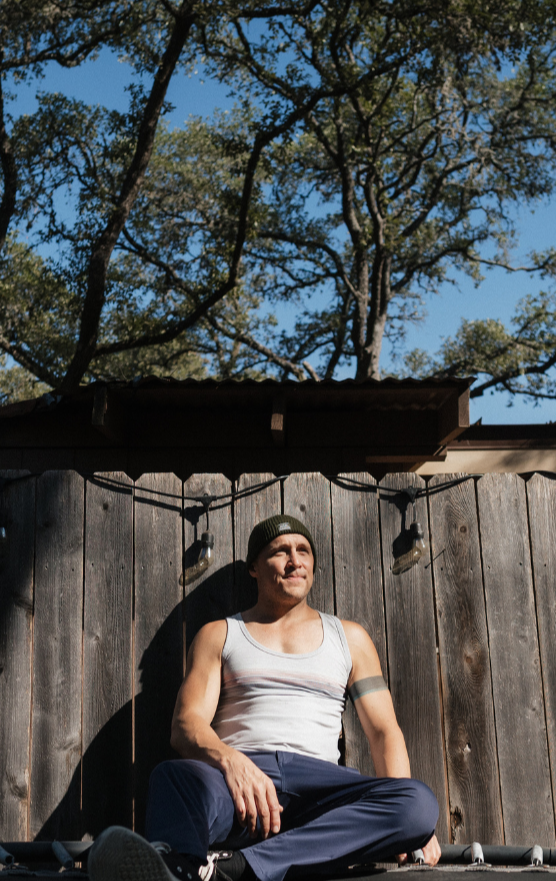
Kiran Krishnan: The Ultimate Gut Health Guru
May 02, 2019
WELCOME TO EPISODE 14
Kiran Krishnan is a Research Microbiologist and has been involved in the dietary supplement and nutrition market for the past 17 years. He comes from a strict research background having spent several years with hands-on R&D in the fields of molecular medicine and microbiology at the University of Iowa.
He left University research to take a position as the U.S. Business Development and Product Development lead for Amano Enzyme, USA. Amano is one of the world’s largest suppliers of therapeutic enzymes used in the dietary supplement and pharmaceutical industries in North America. Kiran also established a Clinical Research Organization where he designed and conducted dozens of human clinical trials in human nutrition.
Kiran is also a co-founder and partner in Nu Science Trading, LLC.; a nutritional technology development, research and marketing company in the U.S. Dietary Supplement and Medical Food markets. Most recently, Kiran is acting as the Chief Scientific Officer at Physician’s Exclusive, LLC. and Microbiome Labs. He has developed over 50 private label nutritional products for small to large brands in the global market.
He is a frequent lecturer on the Human Microbiome at Medical and Nutrition Conferences. He conducts the popular monthly Microbiome Series Webinars through the Rebel Health Tribe Group practitioner training program, is an expert guest on National Radio and Satellite radio and has been a guest speaker on several Health Summits as a microbiome expert. He is currently involved in nine novel human clinical trials on probiotics and the human microbiome. Kiran is also on the Scientific Advisory Board for five other companies in the industry.
Kiran offers his extensive knowledge and practical application of the latest science on the human microbiome as it relates to health and wellness.


Episode Highlights
- 1:09 - Meet Kiran
- 3:28 - The benefits of your company being run by a super nerd
- 4:51 - The power of Megaspore (Freddie gets honest)
- 11:41 - Two things of paramount importance to gut health
- 18:18 - How big a change is necessary? Can I take a great probiotic and get better?
- 22:51 - Re-establishing your microbiome and a caution on prebiotics
- 28:12 - It starts in the gut
- 30:08 - How your dog could save you
- 33:31 - Actionable tips to a healthier life
- 40:08 - Take the challenge
UPGRADE YOUR WELLNESS
Silver Biotics Wound Healing Gel: https://bit.ly/3JnxyDD
Code: BEAUTIFULLYBROKEN
LightPathLED https://lightpathled.com/?afmc=BEAUTIFULLYBROKEN
Code: beautifullybroken
STEMREGEN: https://www.stemregen.co/products/stemregen/?afmc=beautifullybroken
Code: beautifullybroken
Flowpresso 3-in-1 technology:
https://calendly.com/freddiekimmel/flowpresso-one-on-one-discovery
CONNECT WITH FREDDIE
Work with Me: https://www.beautifullybroken.world/biological-blueprint
Website and Store: (http://www.beautifullybroken.world)
Instagram: (https://www.instagram.com/freddie.kimmel
YouTube: https://www.youtube.com/@beautifullybrokenworld
EPISODE TRANSCRIPT
Freddie Kimmel and Kiran Krishnan (00:00.046)
And the beauty of that new understanding of the human body is that most chronic illnesses, even infectious illnesses like Lyme disease and all that, can be traced back to some disruption in your ecology, right? And then your ability to heal from that is also determined by some disruption to your ecology. And even things like Parkinson's and Alzheimer's, which are some of the scariest aging conditions, the two most prevalent neurodegenerative conditions we have.
those all can be traced back to some disruption in your gut ecology. It starts in the gut. to the beautifully broken podcast brought to you by AmpCoil. I'm your host, Freddie Kimmel. And on this show, we discuss the common thread survivors share after walking through the fire, the practitioners making a difference and the treatment modalities that deliver healing back into the hands of the people who need it most.
witness the inspiration we gain by navigating the human experience with grace, humility, and a healthy dose of mistakes. Because part of being human is being beautifully broken.
Freddie Kimmel and Kiran Krishnan (01:09.999)
Ladies and gentlemen, welcome to beautifully broken podcast. have an amazing guest that I've been waiting two months to have on. have Kiran Krishnan. He is a very famous microbiologist and works with the company Megaspore Biotic, one of my favorite probiotics on the market. Kiran, tell us a little bit about Megaspore. Yeah. First of all, thank you so much for having me. This is really fun and an honor to be on your program. I love that...
the theme of what you talk about in this program. think you're helping lots and lots of people. But, know, Megasport was a bit of a journey and really it came about purely from a significant need in the marketplace. You know, if you asked me six, seven years ago, would I have, you know, be involved or have my own kind of probiotic or product company, I would have told you you're completely crazy because I'm the guy behind the scenes doing the research, you know, helping with the product development.
running the clinical trials. I'm not the guy that has his own brand of products on the market. But in our investigation of the probiotic industry, and we were doing this as a research company for a large multinational company brand, in our investigation, we found a significant lacking in the probiotic space. And a lot of that lacking came from just a pure lack of scientific integrity to how things are being done.
and a very significant lack of scientific understanding of the microbiome and how bacteria function in the most basic sense. So it was because of that and because I have this really strong scientific clinical passion for how important bacteria can be for our health and wellness, I was compelled to do it myself and with the right partners and the right team to really bring about significant therapeutic
advantages to people dealing with stuff. We know how hard it is out there to be dealing with problems, be dealing with health issues, and many of these health issues snowball into other things. a lot of times the gut is at the root cause of all of this. So our vision was that we can help a significant number of people by just going about it the right way. That's beautiful. So I love this. You guys have this on your site. And there's really
Freddie Kimmel and Kiran Krishnan (03:34.011)
There's really this element of direct public access to you and your company. You guys were at 148 conferences in 2018 and you completed and invested back into 14 clinical trials with your own product. Yeah. And then that's the advantage of a company being run by a super nerd. Right. If we were run by a CEO or business professionals or, or marketing experts or any of that,
They would think we're absolutely crazy to invest that much into clinical trials at the stage that we're in. But we're doing, you know, pharma level clinical trials as a supplement company and nobody does that. And a lot of it is just being driven by an amazing amount of curiosity to figure out how all this stuff works. And when we understand how this stuff works and we understand how we can influence the microbiome, we can influence the gut ecology, how that plays,
a role in people's overall health and wellness, you know, we really feel we can leave our impression on this world. And ultimately that's what we're here for, right? We're here to affect people's lives in a positive way, or at least that's what we should be thinking, and leave some sort of lasting impression. And that's the way we plan to do it. Yeah. You know, it's funny, I had this...
this sentiment, it's like we're all trying to improve our position every moment of every day, no matter what that means to you or me, we're trying to escape pain and probably seek a little bit of pleasure. Human experience enjoyable. And I'm just going to go right into it. so I talk about this quite a bit on the audience. in this, within this audience is that part of my journey was through, cancer and Lyme disease. And the big piece of the puzzle for me,
was somewhere in between some of the surgeries that I went through for metastasized testicular cancer was a surgery called a retroperitoneal lymph node dissection. Go into your peritoneum cavity, take out the intestines. You're going to clip away some lymph nodes. You're going to put everything back in. Well, you can imagine one of the symptoms of that was that I started to grow adhesions or scar tissue around the small bowel. And it was probably, it was probably a year and a half out and my digestion
Freddie Kimmel and Kiran Krishnan (05:53.233)
just went to hell in a handbasket. Motility slowed right down. Obviously you've got some physical blocks and some limitations there. You know, I had to go in for a couple small bowel resections and that just really, it was like this snowball that just kept getting worse and worse and worse. And one of the things that I never appreciated till it was gone was the ability to like poop on a normal schedule. So I did a deep dive into probiotics and
One of the products that I came across early in my journey was Megaspore. And I started to research soil-based probiotics. And I want you to speak to that. But initially, when I tried Megaspore, it gave me awful diarrhea. I mean, could lick my finger, just to give an idea how powerful these probiotics are. could lick my finger, touch an open capsule, put it on my mouth. And in 15 or 20 minutes, I was...
I was sealed away to the bathroom for a little while. Wow. That's awesome. Yeah. Right. I love that that's your response. That's awesome, dude. You know, as a microbiologist and understanding what's happening there, that excites me. You know, to me, that's like that's so amazing what these strains can do. I mean, these are bacteria, right? We think of them as these really simplistic, unintelligent creatures. And I mean, they are they don't have the kind of intelligence that we we think of as intelligence.
But their capabilities and what they're programmed to do is so fascinating. And the reason you were experiencing that is because their whole programming is designed around fixing our gut environment. And they do that in a very robust way. And that's why it can lead to things like cramping, bloating, severe diarrhea. I mean, they're not being gentle about it at all. They're designed to get in there. They know what the gut is supposed to look like.
and they're designed to get in there and fix it. And that fixing can be harsh depending on how messed up your gut is at the time. So when we first started, you the first thousand patients that we put the product on, this was about a year before you started, this was around 2013, we started seeing that type of response in somewhere around 15 % of people. And those are the people with the really severe gut issues. And at first it was kind of like, I mean, you you take a step back and you go, wait, is that a good thing?
Freddie Kimmel and Kiran Krishnan (08:17.108)
Because you we all think of cramping, bloating, diarrhea as a bad thing, but then you start to understand that any change in the gut, whether it's positive or negative, can respond in a similar way. Just change alone can create diarrhea. And we started to see the people that had that response were being able to break through, through that healing crisis and get out to the other side, where they then started experiencing a whole new aspect of their bowels.
they were better than they have been a decade for the last decade. So it's interesting. mean, then this is why we honed in on those spores. our idea was this. were looking at what were the types of organisms that our ancestors would have consumed on a regular basis. The whole idea of these refrigerated probiotics or things in special capsules and taking them meticulously in between meals and all that, we didn't do that for the...
better course of the human evolution, right? For 99.9999 % of the time as humans, we never did that. And so our question was, where did our answers get their probiotics? Where did they experience a relationship with bacteria outside of being born and passing through the birth canal and breastfeeding, you know, the rest of your life, you're interacting with the environment. So we kind of honed in on environmental bacteria that could play a role.
in modulating or orchestrating changes in our microbiome. And what brought us to the spores was in our discovery that they've been used in the prescription industry in Europe, Latin America since 1952. They've been prescribed as a way of treating dysentery and gut infections because these spores have the capability of going into the system, doing something called quorum sensing where they read the microbial environment
they can find pathogenic or overgrown organisms, they'll sit next to them and they'll produce upwards of 20, 25 different antibiotics in that little micro environment to kill off those bacteria. And that's a fascinating capability for a bacteria because remember, bacteria work through programming, right? They don't have the intelligence like we talked about earlier, like human intelligence. They don't go in there and sit and figure things out. They just work based on what their genetics are programmed to do.
Freddie Kimmel and Kiran Krishnan (10:40.149)
kind of genetic programming doesn't occur overnight. That occurs over tens of thousands, not millions of years of coevolution with us as a species. And so our thinking was if they had the programming and the capability to go into our gut, find pathogens that are causing us trouble, eliminate those pathogens, they likely have the capability of also supporting the good beneficial bacteria that live in our gut. So that was our push.
towards the spores. We knew they were already good at getting rid of pathogens because that's been over 60 years of pharmaceutical use. We wanted to see can they also support the rest of the microbiome and then support things like healing leaky gut, reducing inflammation, improving the mucosa, all of the other things that are really important in the gut. So that was a simplistic approach. We just asked the questions, what did our ancestors take as probiotics inadvertently?
Of course, our ancestors didn't know they were taking probiotics, but that's what they were exposed to. Yeah, I love that. I can get that visual of that little programmed, know, Megasporus sitting next to the bad guys and just kind of giving off, here's my little healing medicine. Here's my little healing medicine. if we think about this, and there's an evolution of how people speak to gut dysfunction. I've known from being on this journey since, you know,
probably started in around 2006, 2007 when it went down the rabbit hole. you know, at first, when I started reading, everyone had Candida and then it was dysbiotic flora and then it was SIBO and now it's leaky gut. is, are some of these terms, um, how do they, how do they blanket over like what we're really dealing with at a base level of dysfunction?
Yeah, that's a really important question. In fact, so, you know, one of the things your audience may not be aware of, I lecture at about 50 conferences a year. Most of these are medical conferences, nutritional conferences, focus on functional medicine. And my role there is teaching functional medicine, integrative medicine doctors on what is going on with the gut and how do you understand the problems in the gut. And like you said, there are lots of terminologies, right?
Freddie Kimmel and Kiran Krishnan (12:59.48)
And then if you look in the allopathic world, they call these same things different terms. So leaky gut, which has been a term that's been very prevalent in the functional medicine holistic world, is being referred to as enteropathy or permeability or hyperpermeability or barrier dysfunction in the allopathic world. So they have all of these different terms. And at the end of the day, it comes down to the same couple of things.
And this is what my lecture has been for the last 15 conferences is helping them understand how there is a universal dysfunction in all of these disorders. That universal dysfunction starts with dysbiosis. a lot of people have heard that term. Dysbiosis simply means a dysfunction or disarray in the population. But the problem with that is how do you define that dysbiosis, right?
Everybody's microbiome is different. So if you and I did a microbiome test to look at similarities between our microbiome, we would see maybe 50 % similarities at best, right? There are people that can have 90 % differences in their microbiome when it comes onto the species level, when you look at each individual bacteria that's present and their relative amounts. And so with everyone's microbiome being different, how do we know what a dysfunctional microbiome looks like, right?
because there is no standard. We can look at blood tests. We can know what elevated CRP is because we know what normal CRP levels are. We know what elevated triglycerides are because we know what normal triglyceride levels are because normal levels are uniform within the population. And so when it comes to the microbiome, when there is no normal, then how do you know what's dysfunctional? So when you dig into the microbiome research over the last 10 to 12 years, what you find
is that there are two major characteristics of what is considered a dysbiotic or dysfunctional microbiome that starts all of the processes that lead to all of those labels. The first thing is low diversity in the microbiome. So diversity in your microbiome is absolutely paramount to health. Not only is it paramount to the function of your digestive tract, the function of your intestinal lining, but it's
Freddie Kimmel and Kiran Krishnan (15:18.517)
also paramount to your overall systemic system health, your systemic biology, including up to longevity. Now, the recent study showed that the more diverse your microbiome is, the longer you're going to live. And it's just that clear how the data worked out. And then your risk for disease, for things like cancer and Lyme disease and autoimmune and all of those things are also determined by the diversity in your microbiome. So diversity is paramount.
The second thing is a presence of these things called keystone strains. Keystone strains are identified strains within the microbiome that basically hold up the rest of the population to some degree and also offer significant protective benefits to the host. So one of the well-known keystone strains is acromansia mucinophila. In a healthy microbiome, it can be upwards of 5 % of your total microbiome. That's a huge
number for that one strain. And then dozens and dozens of studies, in fact, now the studies are numbering into the hundreds on acromancia itself, showing that acromancia is inversely correlated with everything under the cardiometabolic umbrella. So cardiometabolic umbrella incorporates somewhere around 62 different diseases, right? And acromancia protects against all of those conditions. In fact, it can reverse diabetes.
This has been shown not only in animals, but in human studies as well, right? And then another keystone strain is Ficalum Bacteria Prosnitzi. Ficalum Bacteria Prosnitzi protects against Crohn's, colitis, colorectal cancer, all sorts of inflammatory conditions that start in the bowel that also become systemic. So these are some of the examples of keystone strains that have been a half a dozen or a dozen or so that have been identified. These are the most well studied ones.
What tends to happen in the Western population, because we live in a very antimicrobial world, know, everything around us kills bacteria constantly, right? Besides the antibiotics we've all taken numerous courses of, our water system is full of fluoride and chlorine. The foods are full of pesticides, herbicides that kill bacteria, all the off-gassing from all the stuff around us, you know, all the preservatives, all the personal care products, all of those things.
Freddie Kimmel and Kiran Krishnan (17:40.739)
are designed to kill bacteria. And as we're doing that, what we're doing is shrinking our diversity and shrinking the presence of these keystone strains. Those are the two fundamental things that go wrong in everybody's microbiome that leads to the SIBO, the leaky gut, the chronic constipation, the IBS, all of these different labels. They can manifest a little bit differently depending on all the other things that occur.
But at the end of the day, those are the two most fundamental problems. And if we can start fixing those two things, we can start reversing the process of most of these conditions. if somebody was looking to dive in and they know there's an imbalance, they know they're not in a healthy state, as far as you know, when your ever to spot on, or your energy is really suppressed, would someone look at like a weed feed and seed paradigm?
Or can someone just go in or is someone looking at, like we said, like the life that we've designed right now, like people are sick for a reason, which I think I always implore people, it's not an attack, but to look at the life and lifestyle and behaviors that you're choosing, chronic stress, the water we're drinking, obviously the food, the relationships, know, working 60 hours a week, never taking vacations. That, I don't know what you could take to keep that.
that body sustainable? don't know. I think environment is a part of it. But is it possible for someone with an imbalance of dysbiosis to just go in with, you know, maybe looking at stress and environment and adding in probiotics? Or do they need to go in and annihilate some of the infection? know, and that's been the thinking all along, right? So the idea is that if we have bad bacteria that's overgrown because a good bacteria is suppressed,
then the natural knee-jerk reaction is let's go in there and kill stuff, right? But I rarely find that health can be achieved by killing stuff all the time. Because the problem with that is we don't have any tools at our disposal that selectively kills bad stuff, right? So every time you go in there with the idea of killing stuff, you're gonna be killing the good stuff as well. You you're bringing down the growth of everything and then you're hoping...
Freddie Kimmel and Kiran Krishnan (20:01.136)
that somehow the good bacteria will bounce back faster than the bad. grows back first? Yeah, that rarely happens, you know, because the moment you go in there and start hitting that environment with things that kill more bacteria, you're really taking a chance that you're making things significantly worse. know, and so my whole philosophy behind that is, you know, the vast majority of bacteria in your gut, in your home, on your skin,
that we've ever discovered, the vast majority, I'm talking 99 % of bacteria that have ever been discovered are good or benign, meaning they benefit you in some way or they just don't do anything. They don't do anything bad, they don't do anything good in any way to our health and wellness, right? And it's 1 % or less that can be problematic. And so the simple philosophy is the best way to control that 1 % is to let that 99 % flourish.
They're the ones that will control it. If we go in and we try to be precise about attacking that 1%, we're really going to screw up that 99 % and make it easier for the 1 % to proliferate. That's what happens in hospitals. So hospitals are an amazing collection of opportunistic bacteria because everything is so sterile. And they're really hurting that 99 % all the time.
And so you end up getting the MRSAs and the pneumonias and all of those that do really well in that environment because you're removing the bacteria that'll control those problematic bacteria. So it's all about an ecology, right? So the way I think of it is we need to use bacteria to control bacteria. They are the ones that know how to do it. And that's where the spores come in handy. So we developed a system called a TGR, the Total Gut Restoration System.
and it's really a three step system. It starts with recondition and then reinforce and then rebuild at the end, right? So for the vast majority of people following this simple same three steps will work. The recondition part is about sending in spores that have the programming to essentially understand how to reset the microbiome. They themselves will go after the overgrown and pathogenic and problematic bacteria.
Freddie Kimmel and Kiran Krishnan (22:24.412)
without harming the rest of the microbiome. Well, how do we know that? Well, we're actually about to publish a study on that very fact that we completed. And again, we don't talk about anything unless we have some sort of scientific validation for it. But we had this hypothesis for a long time, and now we've done two studies to verify that. the spores go in. What you see in as little as three to four weeks is almost a 50 % increase in the diversity of the microbiome.
Oh my goodness. Right? So imagine sending in five strains and you can increase the presence and growth and uniformity of over four or 500 species because of their presence. That's why we call it a reconditioning phase because what they're doing is they're changing the environment in the gut so that it favors the growth of more of your beneficial commensal bacteria while they are specifically removing
the overgrown pathogenic competitive bacteria, right? So that reconditioning phase is really important. So now what they're doing is they are bringing about a more uniform diverse microbiome that specifically has increased growth of those keystone strains. So for example, in the study we're publishing, we looked specifically at acromansia, at Ficillin bacteria prosnitzi, at Bifidobacterium longum. So these like really well established keystone strains. What we saw in that three week period
was as much as 100 to 1,000 fold increase in Ficalum bacterioprosnitzi. So imagine this bacteria is, this really, really important keystone bacteria is at a level of around 10 million cells per gram of stool. After three weeks of being exposed to the spores, they're now at 10 billion cells per gram of stool. That's the level of increase we're seeing in these protective keystone strains. And so we're getting a complete
revamping of that population. Then the second step, once you've got that new population and it's starting to take hold, is we reinforce that population with the right type of prebiotics. Now we worked on prebiotics for about three years because what we were looking for was something we call the precision prebiotic. Something that has been shown to have enough complexity, enough chain branching structures in the carbohydrate structure.
Freddie Kimmel and Kiran Krishnan (24:45.311)
where they specifically feed certain groups of bacteria and not others. Because one of the problems with a general kind of fermentable prebiotic is that it can feed bad bacteria just as well as it feeds good bacteria. I know most people when they hear the word prebiotic and you've struggled with SIBO or small intestinal bacterial overgrowth, there's a little bit of a knee-jerk reaction of fear. Totally, absolutely. And rightfully so because it's going to exasperate their condition quite significantly because those bad bacteria
are gonna feed off of those prebiotics just as well as any other good bacteria. So we work really hard to find these oligosaccharides that have what we call a high degree of polymerization. That means their carbohydrate structures are quite complex and very long chain, which means that they make it farther down into the intestines before they reach a bacteria that can actually break them down. And in particular, these keystone strains. So we were going after one's
that could feed the keystone strains specifically. So now, the first step of reconditioning, the spores are in there, they've made your microbiome more diverse, they've brought down the pathogens and the problematic ones, they're starting to increase the keystone strains. Now we want that to be your permanent microbiome. So we bring in the prebiotics in a phase we call reinforcing. So we're reinforcing that new microbiome by selectively feeding those bacteria.
So they take hold because again, the microbiome is a very dynamic system. You know, it can change from day to day, right? Depending on what you're exposed to. And there's a lot of negative influences on the microbiome. And so we want this to be the strong positive influence. And we do that for another four weeks. And then after you've now have this new established microbiome, we go into the rebuild phase where we give the microbiome the tools they need in order to repair the gut lining, the mucosal structure, the immune system, and so on.
And those are a combination of polyphenols, a bovine immunoglobulin product, four key amino acids, and so on. So everybody can go through this step of rebuilding their system to reestablish a healthy microbiome. And here's the thing that is surprising to most people, is that everybody still has, no matter how many courses of antibiotics you've been through, no matter how poorly you were breastfed, whether you were C-section,
Freddie Kimmel and Kiran Krishnan (27:08.33)
everybody still has some number of these important keystone strains and diverse microbiome within their gut. They're just at such low levels that you almost can't detect them. In one of the subjects, for example, in our study, at baseline, we couldn't detect any acromansia at all in his microbiome. And we were using a method called qPCR, which is a very sensitive method that can pick up just a few bacteria that may be in this milieu of
of thousands and thousands of bacteria and we weren't able to detect it at all. And then we add in the probiotic and there's no acromantia in the probiotic, right? So we're adding in the probiotic to recondition the system. And then all of a sudden we have these huge measurable amounts of acromantia. So it was there. It was just at such an insignificant amount that it didn't have any function in the microbiome. So there's always hope for regenerating your microbiome.
no matter how much you've been through, no matter how much your ecology, your body has been through and it can be done. And that's what's so exciting about all of this. That's beautiful. I, yeah, I, there was a time when I never thought, you know, you go two or three years with a, with just chronic constipation, you never imagine you're like, Oh my goodness. Every single day I wake up and it's healthy. And that's just something to jump up and down and praise the higher power for.
Yeah, absolutely. the beauty of it all, and one of the things that I always want to leave people the message is, you know, we are a beautiful ecology, right? We are a walking, talking rainforest. As a species, what we are actually made up of is thousands of microecologies made up of thousands of organisms that all have to work together in concert in order to perpetuate the health and wellness of the whole. There's an actual term for it. It's called a holobiont.
a super organism, right? That's what we are as a human being. We're not this, you know, collection of organ systems and skin and neurons and all that. We are a walking, talking rainforest. And the beauty of that new understanding of the human body is that most chronic illnesses, even infectious, infectious illnesses like Lyme disease and all that can be traced back to some disruption in your ecology, right? And then your ability to heal from that,
Freddie Kimmel and Kiran Krishnan (29:29.474)
is also determined by some disruption to your ecology. And even things like Parkinson's and Alzheimer's, which are some of the scariest aging conditions, the two most prevalent neurodegenerative conditions we have, those all can be traced back to some disruption in your gut ecology. It starts in the gut. And because of that, because it's an ecological issue and it's not you just had bad luck or you just have bad genes, it's really exciting to know that we can fix it.
Right? Because it's an ecological problem. We can change the ecology and make things better. You're a living example of that, you know, and that's, that's really exciting about the age that we live in right now. it's amazing to have access to this information hands down. It's, it's an incredible time to be alive. say that all the time. And it always makes me think of when you're doing this description, I love this, the metaphor of the fish tank. Yeah. You know, if we have this beautiful bubbling fish tank,
with a beautiful fish and you got the treasure chest and the plants. Well, if you take off the bubbler and you take away the sunlight and you leave it for four days, there's mold in the tank and nobody came by and dumped a couple of mold and viruses in the tank. was there in that mill you in that ecosystem in a checked phase because the pH of the tank was right. There was enough oxygen and we can't think of our bodies as anything different. Is this just a, it's a symphony. is everything singing and working together.
Yeah, it's all about balance. once, once any one thing goes out of balance, even a good thing goes out of balance, you know, too much of a good thing can lead to other problems too, right? Like for example, too much water can create something called hyponuria. yeah. Yeah. And, and, and you can die from too much water. And we know that water is really good. you know, but, too much of any one thing can throw the system out of balance. you know, you brought this up earlier about the lifestyle and the environment that we put ourselves in and that's a
huge part of healing and recovering and thriving and becoming better is the environment that we put our system in, right? So if you think of it as like, if you think of yourself as your house plant, right? When we have house plants and if you're somebody that cares about plants, you really do a good job of making sure that the house plant is put in the environment it's supposed to be in, right? If it's a plant that needs direct sunlight, you're not going to put it in the basement somewhere in a corner because you know,
Freddie Kimmel and Kiran Krishnan (31:51.969)
It's going to die. That's not the ecology that it needs. If it's a plant that will die from too much watering, you're going to be careful about how much water you give it. You know that if you take that shampoo that you have and pour it into the pot, it's going to kill your plant. Right? So if there's anything that you wouldn't do to your plant because you understand the ecology needs to be in, you understand how delicate that biological system is, you shouldn't do that to yourself either.
You know, and as a human being, there are certain fundamentals that we need. We need rest, right? We need relaxation. We need community. We need to bond with other people. We need that release of oxytocin when you hug somebody else or when you have laughter with somebody else. you share a meal. You share a meal. Exactly. You know, we need we need to be clean. We don't need to have a sterile environment. Studies show that households that use
chlorine-based cleaners have kids with much higher incidence rates of allergies, asthma, and immune dysfunctions. So that's significant. Studies show that households that have dogs have much improved allergic conditions in kids, meaning a much lower incidence rates of asthma and allergies. Because a dog is an animal that's going to go out there, bring all kinds of bugs and things back into the house, and inoculate your house with all of this wonderful biology from the outside environment.
You know, there was a big Finnish allergy study where they were comparing a town in Finland because Finland has this like insane epidemic of asthma and allergies among kids. And there's a town in Finland that is about a hundred kilometers away from a town in Russia. So they're very close geographically, essentially in the same environment. But in that Russian town, the incidence rate of asthma and allergies is like a fifth of what it is in Finland.
So they did this long, like three year study to figure out what is the difference between those two communities that changes this outcome. It had nothing to do with genetics. It had very little to do with the food they ate. What they found was that in the Russian town, they actually did not sterilize their home. So they did not use all of these chlorine based cleaners and all that. And they had their doors and windows open much more frequently than the place in Finland.
Freddie Kimmel and Kiran Krishnan (34:06.359)
and just having doors and windows open and having that osmolarity with the outside environment, change the outcomes so significantly. So cleaning up your environment is going to be really important. So my recommendation for that is simple. Number one, choose organic. If you're going to eat food, try to eat the cleanest food that you can possibly get. At the moment, that's organic food for us. If you can find and have access to as much organic food as you can, do that. That's going to help as well.
Growing a little bit of your own stuff is gonna help as well. So have a small garden in your backyard, grow some tomatoes, some cucumbers, it doesn't matter what you grow. As long as you're growing two or three things and you're eating some of that, it's actually gonna get you closer to nature, it's gonna get you closer to that ancestral type of diet that really changes the outcomes over time in your own health and wellness. And then the other thing is, start to minimize those toxic cleaners that we have in our house.
that chlorine based smell is not the smell of clean, it's the smell of death. Right? There you go. Right? Spoken to someone that rings very true for me when I walk into a hospital and I smell that hand sanitizer, it makes me want to gag. It does. And we've been programmed so well to think that killing, like you see that badge on all of these cleaners kills 99.9 % of bacteria. Right? That's the last thing we want.
You know, those are our friends. We are made up of bacteria. And I always tell people we are a species that's basically a collection of microbes and we've put ourselves in an anti-microbial world, right? So how are we going to survive through this? We're putting ourselves in the exact opposite of the type of environment that we should be in. So clean up those household cleaners. Like I clean my home with basically a cloth and water and we put a couple of drops of essential oils in the water.
just give it some sort of smell. And that's how I clean 90 % of the surfaces in the home. And you don't have to sterilize your home at all. Then take a look at your personal care products. Go as natural as you can with them. Your soaps shouldn't be those robust antimicrobial soaps. Your lotion shouldn't contain all of these parabens. Everybody, there's no more Axe body spray for any gentleman in this audience. Yes.
Freddie Kimmel and Kiran Krishnan (36:31.527)
Anything aerosolized you try to get away from, you know, and it seems minimal and it seems like it's not really going to have a big impact, but those things will have a huge collective impact on your outcome. If you have a yard, never use any Roundup anywhere in your yard, please, or any of the herbicides and pesticides and things that are designed to kill weeds because those things also kill your microbiome. And if your neighbor is out there using them,
Try to get them to stop it if you can. Be that annoying neighbor and go, you know, that's actually causing cancer and killing people. So those are the basic things you can do. And one of the most important things you can do about your diet, besides going organic, is to increase the diversity of your diet. So the diversity in your diet will dictate the diversity in your microbiome. Our ancestors consumed up to 600 different types of foods annually. They foraged, they gathered, they hunted for whatever they could find. They ate.
seeds, nuts, fruits, insects, roots, tubers, animals, all types of animals, everything from porcupines to wildebeest, if you will, large ruminant mammals. And so an average American eats maybe 10 types of foods annually, right? And I want to add, as far as any of the foraging goes, when you look at the animal, there was nothing left of those animal parts. was snow to tail. was right down to the feet and the bones were boiled into a broth.
the tendons, the collagens, the heart, the brain, everything. There's a, and I know it sounds gross to everybody, but to eat a muscle meat of an animal is not a natural diet. No, it's not. concentrated with this certain cuts of the muscle and so on. Right. And in fact, if you look at the, at the nomadic tribes right now, like the Hadza tribe in Tanzania and the tribes that have been studying in Papua New Guinea, one of the first things they do collectively,
and I can assure you they didn't send each other emails to say that this is the next cool thing to do, is when the hunting tribes go out and they hunt an animal, the first thing they do is cut open the intestines and they eat the contents of the intestines on site. And these are animals that have been going around picking up bacteria over hundreds of square miles, fermenting them in their bellies, in their intestines, and then these hunters have realized over thousands of years that this ferment, this stuff that's in their intestines gives them
Freddie Kimmel and Kiran Krishnan (38:50.683)
a huge amount of virility and function. And so, you know, now we know people aren't going to be going and doing that, but what you can do at least is try to increase the diversity of your diet. My easiest recommendation for doing that is start visiting some ethnic grocery stores that are around you. You know, like close to me, I have a Middle Eastern grocery store. have a big grocery store called H Mart, which is a big Korean Asian grocery store.
you'll find roots and tubers and vegetables and fruits there that you won't find at your Whole Foods and Trader Joe's. And all you have to do is buy one or two of those things each week and add them into your diet. You don't have to make a whole complicated Asian or Middle Eastern meal. Just buy a cabbage that you find at the Asian grocery store, which is gonna be molecularly different than the cabbage you find at Whole Foods. And it's gonna feed different types of bacteria in your gut.
So just cut some of it up and throw it in your salad, you know, or toss it with a little olive oil. You don't have to be a chef to figure this out. It's all about eating a little bit of a lot of different things. So if I can challenge people to each week, start adding in something new into their diet that they've never eaten before, you will see that that's going to have a huge long-term impact on your health outcomes. That's beautiful. I think we've given people so much to think about and examine. I know I'm going to go.
My shopping list is going to alter this week. where can people, if people do want to take the challenge, examine their digestive health, their gut, and look at this system, your three system product line, where do they go to get that? Yeah. So come to microbiomelabs.com. that's microbiome, which most people know how to spell it, then labs with an S.com. You'll see a lot of information there about the total gut restoration system, which starts with that flagship probiotic of ours, Megasporbiotic.
Uh, which I think now you are an absolute expert on because you're taking the doses I take, um, you know, and which is, which is phenomenal to hear that you've been able to like shepherd your gut to that pro to that stage. Um, you know, because I think you, you said like you, you, any spec you would take would cause diarrhea, but now you, can take upwards of seven, eight caps, right? Yeah. I really, you know, when I really notice it and this, this, you know, I, don't know how you can back this up on a study, but when, especially when I'll fly.
Freddie Kimmel and Kiran Krishnan (41:16.067)
When I'll do a travel day, I'll really up my dose and I'll notice less inflammation from a transcontinental trip. Or I'll notice less jet lag if I really am diligent about supplementing with those probiotics when I'm putting myself in a stress environment. And I could speak to that myself because that's my biggest stress in my world is travel. I fly about 300,000 miles a year. You know, because I do all these lecturing and a lot of times I'm lecturing in
two or three different countries in one week. You know, I've done trips where I'm in Portland, LA, Hong Kong, India, London, and then New York all in one week. know, and so, yeah, so it's endless hours on the airplane. But I take upwards of eight caps a day in those situations to really protect myself. And that's the only way I get through all of the toxicity involved in that kind of travel.
You know, come to microbiomelabs.com. If you are a doctor or practitioner of some sort, you can set up an account and get access to the products yourself. If you're not a doctor or practitioner, you're a listener, a patient, a client, you can actually go on there and there's a find a practitioner tab where you can put in your area zip code and it'll find you all the practitioners in your area that we work with and carry the product. You know, we now have somewhere around 17,000 doctors and practitioners in the U.S.
that work with the system or the product. So you'll find somebody somewhere near you. So is that quality control why people can't just go into Dwayne Reed or Whole Foods and pick up Megaspoor? You know, part of it has been part of my philosophy is that people should get a bulk of their supplements from some sort of qualified health professional. And the reason for that is there's just so much nonsense in the supplement world. You know, there's a lot of misinformation. There's a lot of marketing.
And people can be basically persuaded into the wrong path very easily. I when I look at the stuff that's being sold at Costco from a supplement standpoint, Those like $8 gummy vitamins and all those things, just, makes me cringe. But an average lay person walking down the street cannot discern that that thing has no health benefits to them at all. And in fact, could be an adverse thing to be taking.
Freddie Kimmel and Kiran Krishnan (43:40.501)
And so when you have somebody that has the ability to vet information to some degree, looking at different supplements and kind of curate and decide what is the best approach, that's going to give people the most bang for their buck. And so because of that whole idea, we said, all right, let's start working with health professionals first. If we can educate them, then they can educate the patients on what the best approaches are. Beautiful.
Beautiful. Well, I can't wait. I'm sure we could talk for another hour. I have so many more questions, but I want to be respectful of your time. And I just really appreciate you addressing this audience. And we will definitely have you back. Yeah, it's been my pleasure. I'll be happy to come back. And congratulations to you, first of all, on your amazing journey and where you've come to. then, you know, and I'm very grateful to have people like you who are doing this to put this kind of information out there to people. Because to me,
the future of healthcare is gonna be people empowered with this kind of information, right? We can do our best if we advocate for ourselves. We can't count on the medical systems and the health systems to do the best for us. We have to do that for ourselves. And that starts with education and knowledge. And so, I really appreciate any option to come on a platform and talk to people. So thank you. Thank you for this opportunity.
Of course. No, I just at one point, I just really wanted to hear it from somebody who had walked the path. I was tired of listening to people dish out information that had no idea what I was talking about. And it's just it's great to be able to come full circle and address this audience from a place of knowledge and practice. And that's that's giving wisdom. So again, thank you so much for being here and we will do it again. Thank you. Namaste.
This episode of the Beautifully Broken Podcast was brought to you by our lovely sponsor, AmpCoil. Guys, a heartfelt thank you for tuning in. If you enjoyed today's show, if you found yourself moved and inspired, I would ask that your next stop today is to drop a review on iTunes. Nothing helps a movement like sharing, downloading, and spreading this message. You can follow me on freddysetgo on all social platforms.
Freddie Kimmel and Kiran Krishnan (45:53.877)
and throwing a screenshot and a favorite quote of your episode in your Insta story or on Facebook, that is the extra credit, next level engagement I am manifesting. So like these little ripples in a pond, your action helps connect this inspired information with the people who need it most. Till next time. I'm your host, Freddie Kimmel. This is a beautifully broken podcast. Namaste.