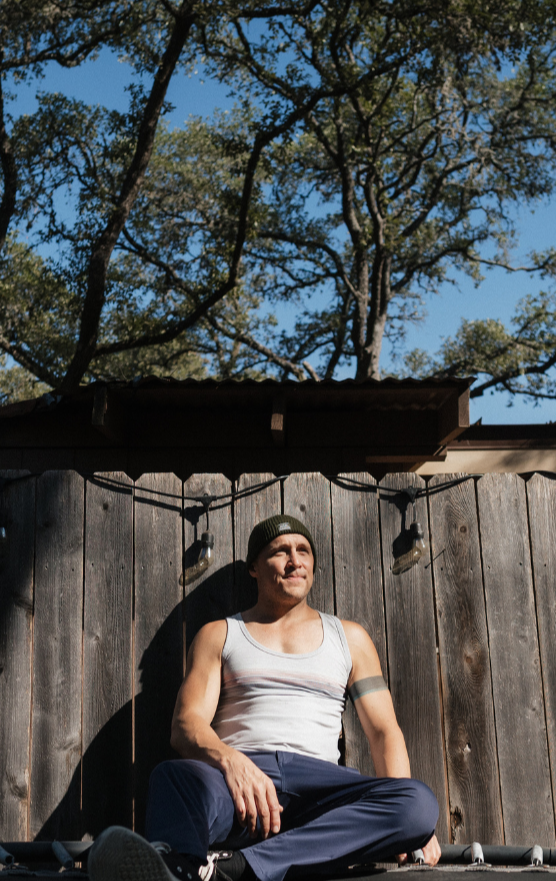
Movement is Medicine with Darryl Edwards
Apr 15, 2024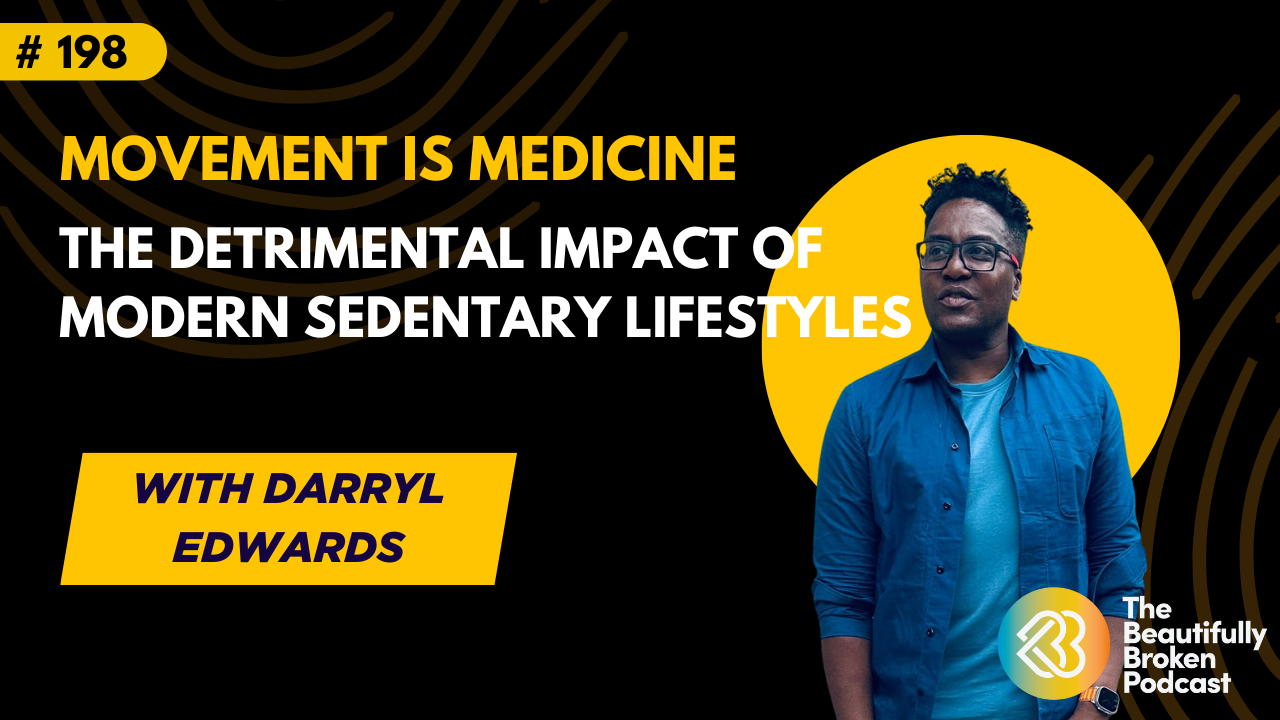
WELCOME TO EPISODE 198
In today’s world, the sad reality is that we’ve become far more sedentary than previous generations, with most of our lives forced into desk jobs or innovations that encourage us to prioritize convenience over movement. In this episode, we’re rewiring the way we think about movement - as a form of medicine against chronic disease. Meet Darryl Edwards, a movement coach and author who spent nearly two decades in the corporate world -- and realized something needed to change. Today, he is the founder of the Primal Play Method and a physical activity, health, and play researcher, specializing in combatting chronic lifestyle diseases that plague modern society. In 2019, Darryl’s TEDxTalk, "Why working out isn't working out," garnered over a million views, exploring the root causes of physical inactivity and our inherent resistance to traditional exercise routines.
In this episode, we talk about how modern sedentary lifestyles, with prolonged sitting and limited physical activity, are contributing significantly to the rise of chronic diseases. Darryl stresses that movement is not merely a form of exercise but a fundamental aspect of our health—a powerful medicine that can slash the risk of disease by up to 50%. We discuss the need for restructuring of daily routines to incorporate more active habits and natural movement throughout the day instead of relying entirely on 1-hour workout sessions.
As a play researcher, Darryl believes that embracing our inner child is the key to fostering a more positive and playful attitude towards active movement. He shares his everyday morning routine, showcasing practical ways to infuse movement into daily life beyond traditional exercise formats. Tune in for an engaging episode with Darryl Edwards as he champions the transformative potential of playful movement and its profound impact of movement on immune function, cancer prevention, and overall longevity.


Episode Highlights
[1:15] Why Natural Movement Matters
[2:35] Darryl’s TED Talk on Our Love-Hate Relationship with Exercise
[4:20] How Being Sedentary Leads to Chronic Disease
[8:00] Modern Society Is Making Us Sedentary and Sick
[14:50] Why Embracing the Inner Child Is Necessary
[18:38] Darryl’s Everyday Morning Routine
[24:25] The Community Power of Crossfit
[26:15] Why Our 1 Hour Workout Is Not Enough
[31:05] How Movement Is Medicine
[38:44] Aeorebic Exercise and Its Effect on the Metastasis of Cancer Cells
[41:40] Improving Your Immunosenescence and Immunosurvelillance With Movement
UPGRADE YOUR WELLNESS
Silver Biotics Wound Healing Gel: https://bit.ly/3JnxyDD
Code: BEAUTIFULLYBROKEN
LightPathLED https://lightpathled.com/?afmc=BEAUTIFULLYBROKEN
Code: beautifullybroken
STEMREGEN: https://www.stemregen.co/products/stemregen/?afmc=beautifullybroken
Code: beautifullybroken
Flowpresso 3-in-1 technology: (https://calendly.com/freddiekimmel/flowpresso-one-on-one-discovery)
CONNECT WITH FREDDIE
Work with Me: https://www.beautifullybroken.world/biological-blueprint
Website and Store: (http://www.beautifullybroken.world)
Instagram: (https://www.instagram.com/beautifullybroken.world/)
YouTube: https://www.youtube.com/@freddiekimmel
FULL EPISODE INTERVIEW
EPISODE TRANSCRIPT
Freddie Kimmel (00:01.486)
Ladies and gentlemen, welcome to the beautifully broken podcast. We are here with Daryl Edwards. Welcome to the show.
Darryl Edwards (00:08.123)
Thank you so much for the invitation. It's a real pleasure to be here.
Freddie Kimmel (00:11.438)
Yeah, honor to have you here. I was just saying before we started that I had, I remember you at paleo effects for years and years with this, with this talking about movement and playful movement and the importance of this body is like a dynamic animal like machine.
Darryl Edwards (00:27.579)
Yeah, it sure is. And yeah, I was involved with Paleo Effects back in 2012. That was the first conference I attended. It was probably 100 people in the room. And then it grew to this huge conference taking over the Palmer Event Center. And although I'm no longer involved in Paleo Effects or what,
Freddie Kimmel (00:41.646)
Yeah.
Freddie Kimmel (00:49.422)
Yeah.
Darryl Edwards (00:57.339)
whatever's happening there. I certainly still espouse this benefit of primal, natural movement and the benefits of physical activity and exercise and why we should be, most of us should be moving more and why we should be moving naturally. And yeah, and that's what I do. Movement is medicine.
Freddie Kimmel (01:25.39)
Movement is medicine. I've watched your Ted talk as well and I thought it was really really charming. You know, you had great science. He had great an amount of evidentiary proof how important it is that we move and we move with joy and playfulness and then you had brought all these kids up to do on stage demos. Tell me about your Ted talk. What was that experience like?
Darryl Edwards (01:43.963)
Yes.
Yes, my TED talk, Why Working Out Isn't Working Out. And it's really discussing the love hate relationship we have with exercise and working out. We all know we should be doing it. We all know we should be utilizing our gym membership if we have one, but most of us don't. We procrastinate. We feel that exercise is a chore. It's something that we...
Freddie Kimmel (01:51.022)
Hmm.
Freddie Kimmel (02:15.47)
Hmm.
Darryl Edwards (02:16.507)
We plod through, we don't enjoy the process, we enjoy the end result, we enjoy the goals, the outcomes, but most of us just do not like working out. And I am certainly one of those individuals. I don't love to work out. And my TED talk was talking about one possible solution to this epidemic of sedentary behavior is playing, is being...
a more playful version of ourselves when it comes to physical activity. So active play, play psychology is something that I practice as one of my pillars, my three pillars of the primal play method. One pillar is play psychology. And by having this mindset of play, you're more likely to be engaged in the process. You're more likely to be receiving these...
benefits of the feel -good hormones, where you are activating serotonin and dopamine and endorphins and having oxytocin release from interacting with your peers in a play -based session. So you can have improvements in your mental health, in your physical health, and also in your emotional health as well.
Freddie Kimmel (03:39.118)
Yeah. Darryl, you mentioned the epidemic. What, tell me the problem that we're trying to solve and what is the world facing right now with its lack of movement from your understanding of the data that's presenting.
Darryl Edwards (03:49.499)
Yeah, well, it's one of the leading contributors to chronic disease, physical inactivity, being physically inactive, being sedentary. And the evidence tells us that even if you exercise, that being sedentary, spending a significant amount of your day sitting, being idle, inactive, is very difficult to overcome by exercise alone. So...
If you are sitting for six to eight hours per day, which most people would take that box for sure, you need to do 60 to 80 minutes of moderate intensity physical activity, i .e. going for a run, just to undo the harmful effects of six to eight hours of sedentary behavior. So for most people who are exercising, let's say they are doing a 60 -minute jog daily,
All they're doing is just pretty much staying in maintenance mode. They're not really receiving the benefits of physical activity. They're just combating the harmful effects of being sedentary. And many people aren't achieving that 60 minutes to 80 minutes per day. Right? So...
Freddie Kimmel (04:53.326)
Mm.
Darryl Edwards (05:09.307)
Physical inactivity basically increases your risk of metabolic issues. So that means increased risk of insulin resistance, of type 2 diabetes, of elevated blood sugars. It increases your risk of cardiovascular disease, so heart attack, stroke, elevated cholesterol, triglycerides, lipids, et cetera. Increases your risk of cognitive issues, so cognitive decline, increased risk of Alzheimer's, dementia.
increased risk of stress, chronic stress, you know, chronic stress, you know, dealing with depression, anxiety, so there's a mental health impact by being sedentary. And also there's this emotional health impact as well. So if you're sedentary, you tend to be sedentary in isolation, there's less interaction with others.
Freddie Kimmel (05:53.198)
Mm -hmm.
Darryl Edwards (06:06.555)
So there's an emotional health impact as well. So I think it's important for us to recognize that sedentary behavior alone in isolation has an impact on one's health. And being physically active actually undermines, breaks up that sedentary time. And then we have these other interventions like exercise or training.
where you're actually trying to increase the intensity of physical activity to enhance the health impact even more. So there's exercising for fitness, there's exercising for performance, for achievement, for sporting pursuits, but there is also the option to use exercise as medicine.
Freddie Kimmel (06:42.734)
Yeah.
Darryl Edwards (06:58.747)
or in my case, using movement in a broader sense as medicine. And the research nowadays tells us that the sort of lowest levels of detail how exercise impacts our cells. So exercise physiology is the second pillar of the Primal Play method. So there are three pillars. Play psychology is one. Exercise physiology or exercise science is the second. And the third pillar is evolutionary.
biology or evolutionary fitness. So those are the three pillars of the Primal Play method.
Freddie Kimmel (07:35.502)
Yeah. When we, it's really fascinating to think about there's actually, there's a new documentary. Do you know Kevin James is a comedian in the U S yeah. King of Queens. You know, he's a long time standup comic. You know, he just made this documentary in which he was going to do kind of like a, like a full body makeover. He hired all these trainers, dieticians, and he was going to, you know, he's going to have a human transformation. Totally failed.
Darryl Edwards (07:43.739)
Yes yes yes yes yes yes yeah yeah
Freddie Kimmel (08:05.422)
Didn't lose any weight, you know went through the whole filming process and it just never happened. He knew it was like, you know what? I'm gonna put the documentary out anyway because I need I need people to see with all the resources in the world and all the great minds behind me I still failed it. He's like that's interesting to me. Why didn't I show up for myself? So How do we how do we how do we work with the psychology of we know it's good? We know we need to do it. We know it's making us sick
Darryl Edwards (08:08.763)
Move.
Darryl Edwards (08:25.115)
Yes.
Darryl Edwards (08:32.187)
Yeah.
Freddie Kimmel (08:34.318)
What's the hack to break through that barrier?
Darryl Edwards (08:38.779)
Well, we have a significant disadvantage when it comes to using our willpower to get things done when it comes to our lifestyle, because we're ignoring our biology, we're ignoring our DNA. So our biology tells us to conserve energy. Our brains tell us to seek out convenience, hence why we...
Freddie Kimmel (08:51.438)
Mm -hmm.
Darryl Edwards (09:07.547)
invented the wheel and why we worked on the use of fire and clothing and building structures and the advent of agriculture. Why hunt when we can plant seeds and capture animals and have them grazing on the land that we live on. So we're driven by convenience. And in the 21st century, we have
Freddie Kimmel (09:10.958)
Yeah.
Freddie Kimmel (09:16.846)
Yeah.
Freddie Kimmel (09:31.054)
Yeah.
Darryl Edwards (09:36.987)
we're surrounded by convenience. It's overly engineered in our environment. So we have labor saving devices, we have technology, which does a lot for us. And in that environment, our biology goes, this is incredible. Do you mean I don't have to do anything at all apart from click a button? And I can have this bounty of whatever I need. I can be entertained, I can date, I can receive food just by interacting with the screen.
click a button, it's there, right? So that advantage of us utilizing convenience means we don't have to do the work that was previously necessary in order to achieve those objectives. So for us to have to exercise, we have to say to ourselves, exercise is one, is something good for us, but it's a substitute.
Freddie Kimmel (10:07.246)
Yeah. Yeah.
Darryl Edwards (10:34.331)
for the lack of physical activity I get in my day -to -day life. So in the past, our ancestors didn't have a choice. That's the point. Their choice was, if I don't get up and go out, I won't get any food. If I don't go out and source and seek fertile lands for us to be able to obtain food, if I don't build shelter, if I don't protect
Freddie Kimmel (10:53.134)
Mm -hmm.
Darryl Edwards (11:03.419)
my family, my habitat, if I don't do that physical work, we're not going to survive. It's as simple as that. Then you go through the agricultural revolution, right? If I'm not a farmer and farm food and grow food myself, or have the means to be able to pay for food that is farmed and labour is involved, if I can't do those things, I'm not going to survive. And fast forward to now, we're literally the currency of obtaining the things that we need to survive.
Freddie Kimmel (11:05.71)
Hmm.
Darryl Edwards (11:32.699)
is digital. So our DNA is very happy with that in the sense of thank you for the convenience. The downside it means we are physically doing less to achieve the same objectives. And so if we look at a chart of physical activity from our ancestors, Paleolithic ancestors, you know, industrial revolution, beginning of the 20th century, you know,
Freddie Kimmel (11:38.51)
Yeah.
Darryl Edwards (12:01.339)
in the 1940s, 50s, if we compare physical activity levels from then to the present day, even in the 21st century, if you go to the beginning of the millennium to 24 years in, we're significantly more sedentary than any period ever in human history. And so we are paying a cost of that lack of movement. So it isn't, unfortunately, isn't as simple as just saying,
Freddie Kimmel (12:25.742)
Hmm, yeah.
Darryl Edwards (12:30.555)
Hey, move more. We hear that message all the time. Hey, move more. Exercise is good for you. Exercise more. Join a gym. Move, move, exercise. Find something you enjoy. We need a few structural changes in our lives to make this happen. So one is we ideally change their environment, the sort of like the landscape that we're in, which makes us more active. I will.
actively commute to work, for example. I will decide to do more movements at home. I'll use the broom and brush more often than the vacuum cleaner. I'll be more physically active whilst at home doing the things that I can let other machines do for me. Making those type of decisions. Active commuting, having...
Freddie Kimmel (13:24.366)
Mm -hmm.
Darryl Edwards (13:26.939)
breaks at work, where I go outside and go for a walk, or utilise that gym membership that I have. Those sort of things can make significant changes for us based on making changes in one's environment. Moving to cities where being physically active, i .e. more pedestrianised, increases our likelihood to be more active. So in the main, people in New York with good public transport system, people in Manhattan are more active.
Freddie Kimmel (13:47.982)
Mm -hmm.
Darryl Edwards (13:55.835)
than those where you pretty much have to use a car to get from A to B in your city. So that isn't luck that that happens. It's because it's a more convenient way to get around the city. So to use the metro, you have to take the stairs. You have to be rushing from A to B. So London as well, we're a very pedestrianized city. So walking.
Freddie Kimmel (14:02.062)
Mm -hmm.
Darryl Edwards (14:22.779)
is not something that you're surprised by when you see it. I've been to cities in the US and I'm like, I haven't seen, I've been here for hours, I haven't seen one pedestrian. I haven't seen anyone walking. Sometimes you don't even see sidewalks in neighborhoods. You just see the car parked in the front yard and then straight into the road. That's it. So yeah, so we are disadvantaged by...
Freddie Kimmel (14:33.07)
Yeah.
Freddie Kimmel (14:38.158)
Yeah.
Freddie Kimmel (14:46.926)
That's it.
Darryl Edwards (14:51.739)
one, our biology, two, we're needing willpower to move more in the absence of having to do it. And so my solution is to utilize our desire for play and playfulness and to embrace our inner child. So when you think about your inner child and you think about the activities that you couldn't wait to do, right, the chasing games, the climbing trees, the like,
Freddie Kimmel (15:07.182)
This is nice. Nice.
Darryl Edwards (15:21.691)
playing hide and seek, playing kick the can, all these universal games where we've all got different names to them globally, but we play the same games as kids. It revolved around the same type of activities, running, chasing, being caught, climbing, jumping, piggyback carrying, riding bikes, exploring, getting dirty, falling.
Freddie Kimmel (15:42.222)
Yeah.
Darryl Edwards (15:50.395)
In and out of love with your friends, right? Having conflict, risky play, doing things that you know adults will say, don't do it, right? All these things are universal. Unfortunately, even that sort of childhood is largely absent right about now. You know, we have less outdoor play, less free roaming, free ranging of kids because of our perceived...
Freddie Kimmel (16:00.014)
Yeah.
Freddie Kimmel (16:09.934)
Yeah.
Darryl Edwards (16:19.291)
you know, our concerns around, you know, perception of danger. We don't want our kids to play like I played as a kid. So our kids aren't having this adventurous childhood. Their child is becoming more sedentary as a result and that just feeds forward into their adulthood. So it takes a lot for one to decide, I want to be more active. But if you have a more playful spirit around being more physically active,
Freddie Kimmel (16:23.118)
Yeah.
Freddie Kimmel (16:38.126)
Yes, ma 'am.
Freddie Kimmel (16:43.694)
Yeah.
Darryl Edwards (16:49.403)
then you're going to be driven to seek out these playful opportunities. And that's why I'm an advocate of using play as a way of seeking out joy through movement, of being in the moment, of finding pleasure in movement.
Freddie Kimmel (17:05.358)
What was your, what was your, this morning, have you moved already today?
Darryl Edwards (17:10.651)
I have moved away today, yeah.
Freddie Kimmel (17:12.686)
Tell me what your morning movement looks like in which you are integrating this sense of play somehow.
Darryl Edwards (17:18.363)
I'm at that age now where, you know, when I first get up in the morning, I'm like, I'm a little bit stiff, right? I need... I'm like the, yeah, I'm like the kind of the Tin Man from The Wizard of Oz. And I don't know if you guys use WD -40 over in the US, but, you know, yeah, you do, yeah. So I feel like I need some WD -40 just to kind of loosen up and to lubricate my joints. So which is, in a way, I'm thankful for because every single morning...
Freddie Kimmel (17:25.998)
Yeah.
Freddie Kimmel (17:35.662)
Yes we do.
Darryl Edwards (17:47.387)
I have to spend a few minutes of my day, you know, limbering up, right? And I don't do this because it's a hate. It's quite, you know, it's quite being part of the status quo to say, Hey, I do my mobility session, my 10 minutes of mobility every morning. For me, it's a necessity. I'm like, I, you know, I'm feeling a bit achy. I'm feeling a bit, you know, like an older man than I am. I need to move. So I go through this lubrication of my joints.
Freddie Kimmel (17:54.222)
Mm -hmm.
Freddie Kimmel (18:08.078)
Yes.
Darryl Edwards (18:17.179)
moment in the morning. And then I start to feel myself again. And from that moment on, I have a few levels in my apartment. So I notice I'm kind of springing up the stairs. And I'm more gazelle -like after a few minutes. So I'm springing up the stairs. I've got a bit of a kind of like a.
this desire, this itch to move more. And usually when I get outside, like I did today, I had a meeting in the city center downtown. It's about eight miles away. There's a e -bike, line bikes. I think they're available in many parts of the world that you can hire from your phone. I'm like, instead of me taking public transport, it's eight miles or so to...
to central London, I'm getting myself a line bike. Hide the bike, I'm going as fast as I can, get to my point, park up, had my morning meeting, and then I rode, you know, got something to eat, then I rode back. So my day, you know, my morning was an active morning. So, chosen active commute, I chose an active commute back, when it'd be very easy to say, I've done my movement today, let me just get the tube back.
Freddie Kimmel (19:18.606)
Mm -hmm.
Freddie Kimmel (19:35.118)
Yeah.
Darryl Edwards (19:43.611)
So I have a tube station, a metro station, five minutes away from my home. So it'd be very, again, very convenient to get onto the tube to get home. But I made this conscious decision to, I'll get back on the bike again. Weather's quite nice. So, so yeah, my, I can't say every single day is like that for me, apart from the WD -40 moment. But, but I'm, I'm constantly looking for these opportunities of moving more.
Freddie Kimmel (19:44.91)
Yes.
Freddie Kimmel (19:48.718)
Mm -hmm.
Freddie Kimmel (19:53.07)
Yeah. Yeah.
Freddie Kimmel (20:06.99)
Yes.
Darryl Edwards (20:13.851)
of taking the less convenient option. And sometimes that would include something which is structured. So structure will mean, OK, I'm going to do a block of movement which is more purposeful. So I'm going to do some animal moves. I'm going to lift something heavy. I'm going to lift some weights. I'm going to go out to my local park and climb trees and balance on railings.
Freddie Kimmel (20:17.646)
Yeah.
Freddie Kimmel (20:21.87)
Mm -hmm.
Darryl Edwards (20:42.843)
I'm going to catch up with my friends because I want to play tag and I want to play some games. So yeah, I have, I suppose, three strands of streams of movement throughout my day. The one where I'm saying I could do this thing in a very physically inactive way or a more sedentary way, or I could decide I want to get more movement in.
Freddie Kimmel (20:49.87)
Mm -hmm.
Freddie Kimmel (21:07.439)
Mm -hmm.
Darryl Edwards (21:12.251)
So in other words, I'm going to take the stairs rather than taking the elevator or escalator. I'm going to make that decision throughout the day. The second will be, I have to go from A to B, wherever that is. Do I reckon I could do that in an active form of commute? Yes, I can. OK? That's my commuting handled. And then the third is around a more structured pursuit.
Freddie Kimmel (21:18.638)
Yeah.
Darryl Edwards (21:41.019)
I'm saying, right, today I plan to do X or Y because that's something that I need as part of my movement week. So there's a day -to -day demands and decisions. And there's the bigger piece of movement where I go, you know what? I haven't got my hit in this week, or I haven't got my mobility in, or my lifts and carries in, or whatever it might be. I need to make sure that's done.
Freddie Kimmel (21:49.742)
Yeah.
Freddie Kimmel (22:07.982)
Yeah. I love the, the idea of the energy. Um, as I recap a couple of these things for the audience, the energy of, um, getting in a 16 mile bike ride to and from a meeting is so different than going to a gym and fluorescent fake lighting sitting in a corner and just riding it, grinding it out. Right. There is purpose. There's a different energy. There's a different level of achievement. I find that's unlocked when you're walking somewhere, you know, when you're, when you're using it as a transport.
Um, my, my neighbors over here, we were just talking about the other day. They're like, isn't it silly. We go and lift, like we lift all these weights when we could be, we could be building something. We, you know, we just, um, we just, we're, we're in the process of building a big sauna here. My neighbors have a big eight person sauna and it's all wood fired. So even though it would be easier to create a, uh, uh, an electric sauna and push a button and turn it on or turn it on from your phone, you know, the process of gathering wood, gathering kindling.
Darryl Edwards (23:04.059)
Mm.
Freddie Kimmel (23:07.534)
building a fire and now we're now we're just playing around with like really learning how to use an axe again and splitting firewood and holy cow do you want to talk about a full body movement that like crushes you and and it's fun because look I made something I didn't just move bricks back and forth which feels as far as like uh it
Darryl Edwards (23:12.507)
Yeah, wow, yeah.
Darryl Edwards (23:21.467)
Yeah, oh yes.
Darryl Edwards (23:26.459)
Yes.
Freddie Kimmel (23:32.43)
We only have so much life force. You know, we only get to do so much. There's only, there's a limited amount of output, like do something with it. It's like, there's something about a gym for me, which I think, uh, if you contextualize it in play, I think that's one thing that CrossFit did really well. It's like people were, you know, we're cheering each other on and there's community and there's rope climbing. And, and even though I have questions about the long -term nature of that type of a workout in that high of a frequency that.
Darryl Edwards (23:35.995)
Yes.
Darryl Edwards (23:51.483)
Mmm.
Darryl Edwards (23:59.163)
Yes.
Freddie Kimmel (24:01.742)
play element is also something that can, um, I think it can kind of negate that idea of just picking away up and down, up and down, up and down. There is that community or joy sense of togetherness.
Darryl Edwards (24:09.691)
Yeah, the group, I mean, CrossFit have done that aspect of getting people to move together so well. That group camaraderie, the cheerleading, the competition, right, helping people to get the best out of themselves because you're seeing your peers, you know, it's very inspiring. Yeah, yeah.
Freddie Kimmel (24:28.334)
Yes.
It's inspiring. And to see the transformation on the bodies, like I'm like, Oh, look at these people are like crushing it.
Darryl Edwards (24:39.899)
Yeah, and there's a lot of variety, which is also very playful. We're not going to do the same thing all the time. We're going to mix things up. And I would say, even though it is known as the sport of fitness, CrossFit, and it is very geared around fitness rather than just movement. And so with CrossFit, I find it's very difficult to take CrossFit out of the box. Right?
Freddie Kimmel (24:44.398)
Yes.
Freddie Kimmel (24:55.854)
Mm -hmm.
Darryl Edwards (25:09.147)
You know, you need the kit. I mean, of course, you can do handstands anyway, say, right? Or you could do pull -ups at home, you know, put up a bar at home, or get a kettlebell and do kettlebells. So, of course, you can take some equipment out of the box. But in the main, you need certain type of equipment. You work on certain types of movement patterns. And it does feel better when you're doing it in that group, right? In that box, you know, with your shirt off, being cheered, right?
Freddie Kimmel (25:10.35)
Yes.
Freddie Kimmel (25:14.99)
Yes.
Freddie Kimmel (25:38.094)
Yeah.
Darryl Edwards (25:39.067)
Um, but, but for lots of people will be surprised to hear that you could still live a sedentary existence, even though you're doing a CrossFit what every day. That's the downside. People feel, Oh, I've done my, I've done my workout. I absolutely smashed it. I worked out a max intensity. I've done my thing. Then they, you know, get back in the car, either go home and work from home or go to the office.
Freddie Kimmel (25:51.278)
Yes.
Darryl Edwards (26:07.963)
And then they're sedentary for the rest of the day. And they feel, because I've done my WOD, I'm good. And unfortunately, that sedentary individual, based on their total work output, is negating a lot of that really good work they did in their 6 .30 morning class at CrossFit. So it's more important. Of course, if somebody's sedentary all day,
Freddie Kimmel (26:30.222)
Mm -hmm. Yeah.
Darryl Edwards (26:36.059)
versus somebody does a CrossFit one then Sedentary, CrossFit one plus Sedentary is going to be better. But even better than that, somebody moving at even lower intensity throughout their day, right, every 20 minutes they're moving for a couple of minutes, can have better health outcomes, not necessarily fitness outcomes, but better health outcomes than the person who does the 30 minutes workout.
sedentary for the rest of the day. And there's, there's 14 lots of lots of research comparing those cohorts of those who do movement in terms of movement breaks or movement snacks versus those who have their one big workout meal a day. Right. And people aren't aware of this benefit that literally just breaking up sedentary time can be enough to disrupt your, you know,
Freddie Kimmel (27:09.486)
Yeah.
Freddie Kimmel (27:19.918)
Yeah.
Darryl Edwards (27:30.459)
your metabolic dysfunction that occurs. Right? So if you sit down and you're kind of running idle, then your blood sugars will start to rise, your triglycerides will start to rise, especially post meal. And if you don't move, you're creating this sense of, you know, disharmony and discord in the body. You start to move, your blood sugars will lower. You start to move, you break down these harmful blood fats just through
Freddie Kimmel (27:33.55)
Yeah.
Freddie Kimmel (27:52.526)
Yeah.
Darryl Edwards (28:00.027)
physical activity. And it doesn't have to be intense, right? It just has to happen. So yeah, my messaging, and that's why movement is more important to me than just exercise, or just being physically active, because I'm aware that you have to do more than just, okay, I'm standing now, so everything's great, because I'm not sitting down. No, we need to be moving through our full range of
Freddie Kimmel (28:02.446)
Yeah.
Freddie Kimmel (28:06.862)
Yeah.
Freddie Kimmel (28:14.478)
Yeah.
Darryl Edwards (28:28.283)
of abilities and capabilities, right? We need to feel our heart pumping into our chest. We need to get out of breath. We need to feel our muscles burning when we're trying to lift something heavy. All of those aspects of movements are really important at the right type of frequency, obviously having adequate fueling, adequate recovery. But once you add this, as I say, this playful element, I'm going to tell you straight, I would rather...
Freddie Kimmel (28:32.846)
Yes.
Darryl Edwards (28:57.243)
I would rather put like two, three humans on my back and carry them. Then I would popping, you know, weights, weights onto a bar and doing some deadlifts. And I probably wouldn't know how, how much people weigh, right? You know, I wouldn't be like, okay, you waste, you know, 70 kilos, you weigh 65. Let me, okay. Yeah. Let me work that out. Let me, let me work on my one rep max carry max. It's more the fact that like one, Hey, I can.
Freddie Kimmel (29:09.934)
Mm -hmm.
Darryl Edwards (29:27.163)
I reckon I can do this. Two, it's really awkward and challenging, not very easy to do, but it's also a lot more inherently fun. It's reminiscent of our childhood. And that's why if you give a child a choice, hey, carry a tree trunk or just carry something really heavy or carry your sibling or try and carry your parents or one of your friends, what are they going to choose?
Freddie Kimmel (29:35.79)
Yeah.
Freddie Kimmel (29:39.47)
Yes. Yeah.
Darryl Edwards (29:56.315)
They're going to be like, you know, they're going to choose. Yeah, they're going to, they're going to choose, hey, get on my back. Let's, you know, let's do this. Right. So, so there is something about being and working with other humans where you're physically interacting. So I would say with CrossFit say you're working together in a group, but you are, you're separate individuals within that group. You're very much an individual.
Freddie Kimmel (29:59.822)
Come on, let's do this together.
Freddie Kimmel (30:24.718)
Yeah.
Darryl Edwards (30:25.851)
working hard, maybe you're getting cheered on, but when you take it to the next level of actually working together, of cooperating, of working as partners, working as a team, then imagine what that work output would be. You can achieve far more. And that achievement is not just a physical one, it's also what you feel emotionally.
Freddie Kimmel (30:33.806)
Mm -hmm.
Freddie Kimmel (30:41.742)
Yeah.
Yeah.
Freddie Kimmel (30:51.246)
Yeah, it's so true. It's a great reminder. It's like life is better shared movement is better shared. Darrell, if we can, you know, one one topic that's so near and dear to my heart is, is cancer care and oncology and, you know, to, to speak of this epidemic in which we have this lack of movement. And that that for sure, in my experience, in my, in my deep knowing plays into our dramatically increasing rates of
young human beings dealing with cancer, MS, chronic illness. I think we were, we were emailing the other day, I had come back from a funeral from one of my friends who had passed away. I think you were experiencing a similar thing. How does movement and medicine, from your understanding, come into play in the world of oncology or cancer care?
Darryl Edwards (31:43.195)
Yeah, well, 14, there is a field, a subset of oncology called exercise oncology. And this is a body of research looking at the beneficial role of exercise on patients, on those dealing with cancer. And one branch looks at prevention. So there's a significant body of evidence on exercise role in prevention. You know,
from breast cancer, colon cancer, pancreatic cancer, there's percentages in terms of risk reduction. And there are reasons as to why that is. So we can link, say, reduction in risk in colon cancer, which is about 25 % reduction in risk, pretty significant reduction in risk for people who meet the 150 minutes per week of moderate intensity activity.
versus those who do less. So a very significant intervention, a remarkable reduction in risk. And we know the underlying mechanisms for that are, one, you have better motility through the gut. So in other words, pathogens or things that cause more likely to be causing cancer spend less time in the gut. And also, there's improvements in bile app.
Freddie Kimmel (32:44.686)
Mm -hmm.
Freddie Kimmel (33:09.518)
Mm -hmm.
Darryl Edwards (33:11.387)
acid metabolism, which is also two kinds of causal factors of issues in terms of colon cancer. And for different types of cancer, we can one, see the reduction in risk, and secondly, we can see what the underlying mechanisms are. So that's for prevention. In terms of therapy, even more remarkably, we can do the same. So we now know...
Freddie Kimmel (33:32.558)
Yeah.
Darryl Edwards (33:41.179)
Somebody with a primary breast cancer tumor, for example, that has a hormonal express breast cancer like esoteric receptor positive breast cancer, we know those who exercise more vigorously, higher volumes, will reduce their risk of a secondary cancer, can reduce their risk of metastasis, can reduce their risk of dying from that primary tumor by being more physically active.
Freddie Kimmel (33:52.526)
Yes.
Darryl Edwards (34:10.747)
And again, we can see the evidence in terms of what underlying mechanisms are responsible for that benefit. So it's a wonderful area of research and it's now outside of the research sphere and used in a very practical setting. So there are oncology societies around the world, Australia is one, whereby...
Freddie Kimmel (34:34.606)
Mm -hmm.
Darryl Edwards (34:40.443)
patients who are undergoing post -surgery, chemotherapy, radiotherapy are taken under pretty serious exercise regimen whilst undergoing treatment. And those treatments, as difficult as they are,
exercise actually helps alleviate some of the side effects of those symptoms. It reduces the risk again of secondary cancers, reduces the impact of nausea, say. It can help with fatigue. So it's actually now being used as an adjunct to some of those therapies, which is pretty incredible. And that's now becoming the advice.
Freddie Kimmel (35:26.606)
Yeah.
Yeah.
Darryl Edwards (35:33.147)
is now becoming more popular around the world, where you have physical therapists, personal trainers, PT's who are trained in exercise oncology, who are part of the treatment pathway. And there's remarkable evidence on, again, the reduction in risk of secondary cancer, the reduction in mortality, and oncologists looking at the reasons as to why. One really fantastic study,
Freddie Kimmel (35:49.294)
Yeah.
Darryl Edwards (36:03.099)
that I saw recently was a study on prostate cancer. So for prostate cancer, one of the markers that are looked at is known as a PSA, prostate -specific antigen. So it's a blood marker which is looked at to detect one, if there's any abnormalities, but also if you do have prostate cancer, it basically can track...
progress of disease or the effect or impact of treatment. So the higher that level is, PSA level, usually the more harmful it is. And there's a study done looking at 12 -week intervention of those early stage prostate cancer where this is before they need surgery or they need radiophobic or anything like that. But they wanted to see
Freddie Kimmel (36:33.71)
Mm -hmm.
Darryl Edwards (37:00.571)
Could they keep PSA levels suppressed just for exercise alone? So one cohort, 12 weeks, pretty hardcore exercise regimen. The other cohort just went about and did their usual thing. The cohort doing exercise, structured exercise, their PSA levels came down significantly. So they had huge drops in PSA levels just with exercise as an intervention. So this is...
Freddie Kimmel (37:22.958)
Hmm.
Darryl Edwards (37:29.786)
This is now has come to the stage where we like to see exercise prescriptions being given for management of cancer, as well as other chronic diseases. So this evidence exists for people dealing with multiple sclerosis and Parkinson's. One of the best interventions for Parkinson's is actually physical activity. Obviously helpful for people dealing with osteoporosis, maintaining bone density.
Freddie Kimmel (37:37.55)
Yeah.
Freddie Kimmel (37:41.71)
Yeah.
Darryl Edwards (37:59.611)
people dealing with Alzheimer's and dementia. So diabetes, you can significantly reduce the risk of going from pre -diabetes to full -blown type 2 by incorporating more movement in your life. And again, there's evidence to support the underlying mechanism. So yeah, we could go on and talk about lots of different physical conditions and ailments, but...
Freddie Kimmel (38:00.174)
Yeah.
Darryl Edwards (38:27.611)
One headline that I think is one of the most important for anyone to remember is that there can be up to a 50 % reduction in all -cause mortality risk comparing a physically active person, so somebody meeting the minimum guidelines, versus those who don't. And this 50 % reduction in risk of all -cause mortality is what scientists basically state as any cause of death. So pretty important as a headline.
Freddie Kimmel (38:43.406)
Mm -hmm. Yeah.
Darryl Edwards (38:57.339)
And up to a 50 % benefit is more significant than any other intervention you can think of. So when we think of movement in terms of that benefit, if movement was a pill, if we could take that pill and all reduce our risk of chronic disease by 50%, wouldn't that be amazing? But even more amazing is the fact that we can take the pill as long as we do the movement. Yeah, take the movement pill.
Freddie Kimmel (39:04.718)
Yeah.
Freddie Kimmel (39:18.958)
Yeah, well.
Freddie Kimmel (39:25.55)
take the movement pill. I love it. I love it. Yeah. There was a study I was looking at in looking at metastatic cancer and high intensity aerobic exercise. Um, looked at a decrease in cancer metastasis by 72%. And this was a Tel Aviv study. And it was looking at the ability of the organs when they're metabolically active to absorb more glucose, move lymphatics. Um, and so the body from a cellular standpoint can better deal with that tumor.
Darryl Edwards (39:27.355)
Yeah.
Darryl Edwards (39:42.203)
Hmm.
Darryl Edwards (39:48.219)
Yes.
Freddie Kimmel (39:54.638)
And I think it's a great reminder. All the things I'm hearing you say is we have this body, this, this wonderful muscle mass that does fight cancer, that has a, uh, an immune system when properly mobilized, um, is very effective and has a huge impact on outcome. And that's that information right now. I would all, I would say if anybody's hearing this, I would say number one, you gotta go listen to Darrell's Ted talk. Cause it's very inspiring. Um, tell me the name of your Ted talk again.
Darryl Edwards (40:02.107)
Yes.
Darryl Edwards (40:20.507)
Yeah, why working out isn't working out? Yeah, thank you.
Freddie Kimmel (40:24.654)
Why working out isn't working out. We'll put that in the show notes. Um, and go just go find the fire inside yourself. And if you're finding yourself up against that wall, when you know you should be doing this, you know, I think this is a great reminder that it may be the context or the energy behind the action. It's not always fun to go to a gym by yourself, you know, and until that is an ingrained habit and you keep falling off.
I think we've got to, we've got to try something different. And I really like this idea of, uh, joy and playfulness. It's so, it's not funny. It's always like universal. Hey, did you notice my coffee cup?
Darryl Edwards (41:03.195)
Good old London double decker bus.
Freddie Kimmel (41:07.502)
So I got a London double -decker, happened to pick this cup this morning as I'm, you know, my one trip to London a couple of years ago. But this morning, you know, I was really like, I got to go to the gym. I have two podcasts back to back. I know this is important and I just didn't feel, I didn't feel it. I was on my own, didn't have a workout partner. So I put my slide board out and I did some skating. I did a...
Darryl Edwards (41:32.027)
Yep, nice.
Freddie Kimmel (41:34.542)
I did a vibration play on red light therapy with a little breath work and had some good tunes on. So I'm jamming and dancing. And then I got a brand new pull -up bar in the backyard. And I just did some like hangs and just being out in nature and kind of rotating. You know, I was like, Oh, I've got a little game going for myself. I've got stations. Um, and it just made all the difference in the world. My, my 15 minute movement turned into an hour. Cause I was like, I just, I was having fun, you know, and I could feel.
Darryl Edwards (41:47.963)
Yeah. Yeah.
Darryl Edwards (41:58.587)
Mmm. You having fun?
Freddie Kimmel (42:02.99)
feel my, I was like, man, my brain's turned on. I feel all the oxygen. And as a result, um, you can just feel it, especially when I'm in an interview, you can feel where I'm like fighting for a question and there's clarity and extra words. And the usually when I do movement first, pretty seamless. And it's just, it's a great reminder that you can bring all these systems online that we inherently own. Um, and movement is movement is just, it's such medicine.
Darryl Edwards (42:25.339)
Exactly. Movement is medicine. And I think just really want to touch on a couple of points. So, all of these benefits that I discussed around movement, exercise and cancer, one of the benefits is this improvement in immunosenescence. So that's the ability of our immune system to continue to work as we age.
So we know that as we age, it increases the risk of cancer, unfortunately. So immunosinicence improves. Immunosurveillance, so the ability of our immune system to find, target and kill pre -cancerous cells, cancerous cells is also improved. And the ability of the immune system to mobilize itself, so through circulation, is also improved. So that's the one thing I wanted to mention. But secondly,
Freddie Kimmel (43:20.237)
Yeah.
Darryl Edwards (43:22.747)
double -decker bus. In 1953, there was a landmark study done by London Transport. This study looked at sedentary bus drivers versus more active bus conductors. This study looked at...
Freddie Kimmel (43:26.35)
Hahaha.
Darryl Edwards (43:50.875)
all of the other factors in relation to their lifestyle behaviors. So they came from the same part of the city, you know, same number, similar numbers of smokers, non -smokers. They ate a very similar diet, et cetera, you know, et cetera, et cetera, et cetera. But however, the bus drivers were 95 % of their day sedentary, the bus conductor. So these are the people who would, you know, help you on and off the bus, help with luggage, going up and down the stairs to give tickets to passengers.
90 % of their day was active. And what they found was the bus drivers were three times more likely to one, have a heart attack, two, to die from a heart attack than the conductors. And that study, because people said, well, hold on a second, maybe it's because of the additional stress of being a bus driver, right? Maybe it's because the bus conductors are having lots of conversations with passengers. Maybe there's all these other factors.
Freddie Kimmel (44:31.758)
Wow.
Darryl Edwards (44:49.531)
So this scientist started looking at other sedentary populations. So he looked at postal workers, office workers, and that research carried him from the 50s right up until the early 2000s. Remarkable. And it basically was the first evidence of sedentary behavior in itself increasing the risk of disease. So thank you for mentioning the... It sounds like we set this up, but thank you for mentioning the double -decker bus.
Freddie Kimmel (45:04.782)
Wow.
Darryl Edwards (45:18.683)
There was a Lancet study in 1953, Jeremy Morris. I think it's Jeremy Morris, but it's definitely Morris. Lancet, 1953. And it started because people were asking the question, why is cardiovascular disease on the increase? Why is there an epidemic of heart attacks? And this was one of the studies that was undertaken.
Freddie Kimmel (45:19.278)
Yes.
Freddie Kimmel (45:39.534)
Yeah.
Freddie Kimmel (45:44.27)
Yeah, I love it. Well, we certainly, I need to have you back, Darrell. There's so much we could do, five or six podcast episodes. And there's so much to unpack here, from the joy, from the technology, which is such a blessing, but it's almost orchestrating the dopamine pathways in our brain to program us to be still. And so we got to fight against that and engineer. So I think it's a reminder we'll need often.
Darryl Edwards (45:50.715)
Yeah.
Freddie Kimmel (46:10.702)
So I'd love to have you back on in the future. Where can people find you and follow you and follow your work?
Darryl Edwards (46:12.443)
Azure.
Yeah, best place is my website, primalplay .com. I'm known as a fitness explorer online, at fitness explorer on Instagram. And if you search for Daryl Edwards on Google, fortunately, I'm the first name that appears and you'll find a lot of my work, my TED talk. I had a feature in the New York Times late last year that you'll also see as well. So there's some good bit of information out there.
are me and my work. So, yeah.
Freddie Kimmel (46:45.454)
Amazing. Amazing. Well, it's been such a treat to converse with you this morning all the way over on the other side of the pond. I applaud what you're doing and I can't wait to connect more and learn more about Primal Play. Movement is medicine. Let's shout it from the rooftop. Thank you for being a guest on the Beautifully Broken Podcast.
Darryl Edwards (46:59.003)
Cheers.
Darryl Edwards (47:04.187)
Thanks so much, Freddy. It's been an absolutely fantastic day. So thank you so much.
Freddie Kimmel (47:08.942)
Yes, big love.