Navigating Liver Love, Conquering Heart Failure, Obesity, and Defeating Insulin Resistance with Nurse Doza
Nov 27, 2023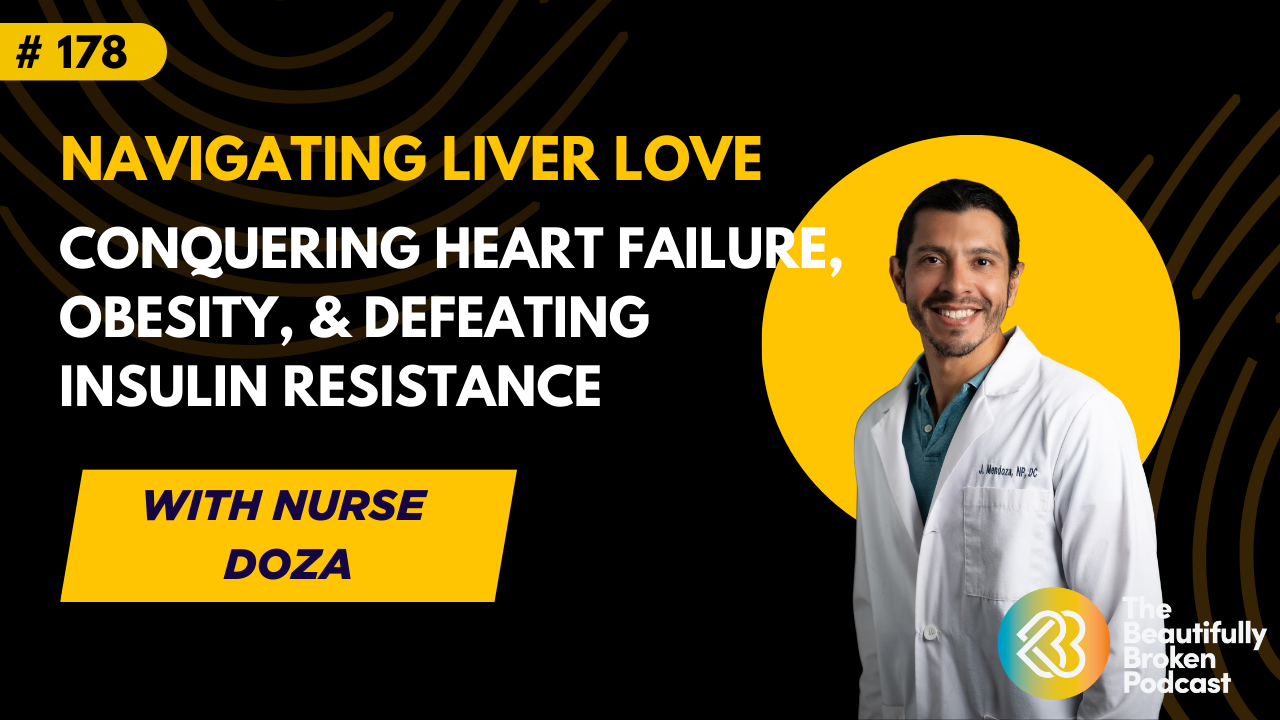
WELCOME TO EPISODE 178
Fatty liver disease affects a staggering 100 million people in the US alone, and yet so many of us are blissfully unaware about the dangers of neglecting our liver health. As a visionary in functional medicine, Nurse Doza joins me today for a riveting discussion on the science of liver health, the detoxification process vital for optimal well-being, and practical lifestyle changes to completely turn around your health.
Nurse Doza is a nationally recognized functional medicine practitioner and co-founder of the renowned MSW Nutrition supplement line and. Through his clinic in Austin, Texas, he has dedicated his life to helping people optimize their liver health, improve their gut health, and fortify brain function.
In this episode, we journey through a wealth of knowledge accumulated over a decade of research and practice, with a focus on combatting chronic conditions that afflict millions, including heart disease, diabetes, and Alzheimer's. The discussion dives deep into the intricacies of personalized lab work, the science of microbiomes, the nuances of weight loss, and the concept of bioindividuality, emphasizing the unique needs of each individual in their health journey.
Join us on this enlightening episode of the Beautifully Broken podcast where Nurse Doza provides valuable insights and practical advice that can ease you into advancing on your journey to optimal health and wellness.


Episode Highlights
[4:05] Creating Positive Morning Habits
[10:45] Finetuning Your Frequency
[16:30] Why You Should Prioritize Liver Health
[23:40] The Science Behind The MTHFR Gene
[30:46] Minimizing Liver Damage
[38:50] The Surprising Effects of a Damaged Liver
[43:00] Debunking Myths on Gallbladder Removal
[50:05] What Lifestyle Change Can Support the Liver?
[55:00] The Relationship Between Weight Loss and Your Liver
[58:25] The Problem of Relying on Semaglutide
[1:08:15] On the Hormone Called Leptin
[1:13:05] On Ketones and Achieving Ketosis
[1:20:25] What Are Interventions for Good Poops?
[1:28:20] On Fasting and Timing Your Meals
[1:33:30] The Importance of Having Professional Consults
[1:36:50] Looking Into Microbiomes in the Body
[1:43:32] Advice for Where to Start
UPGRADE YOUR WELLNESS
Silver Biotics Wound Healing Gel: https://bit.ly/3JnxyDD
Code: BEAUTIFULLYBROKEN
LightPathLED https://lightpathled.com/?afmc=BEAUTIFULLYBROKEN
Code: beautifullybroken
STEMREGEN: https://www.stemregen.co/products/stemregen/?afmc=beautifullybroken
Code: beautifullybroken
Flowpresso 3-in-1 technology: (https://calendly.com/freddiekimmel/flowpresso-one-on-one-discovery)
CONNECT WITH FREDDIE
Work with Me: https://www.beautifullybroken.world/biological-blueprint
Website and Store: (http://www.beautifullybroken.world)
Instagram: (https://www.instagram.com/beautifullybroken.world/)
YouTube: https://www.youtube.com/@freddiekimmel
FULL EPISODE INTERVIEW
EPISODE TRANSCRIPT
Freddie Kimmel (00:01.646)
recording there. It's such a clean shot. Yeah, it is. I have a wall, I have a room that I was thinking about doing this with and I was just like, I don't know. I was like, I'm not sure it's big enough, but it's probably, it's this and a little more. That's all I was like. Yeah, that's all you need. Yeah. That is all you need. The chairs, they're comfortable, they're big. Yeah. Right? So like you imagine you could probably fit a round table in here. Yeah. So.
I'm echoing, how does that sound on your end? You sound good. Okay. Here, I can turn down your monitoring. Wait, you're number two. Okay, there we go. Is that better for you? Much better. Yeah. Much better. Great. This is cool. Yeah, it's great. It's so easy. Yeah. We'll both be at seven. Wait, let me do that again. Okay. I'm actually gonna turn that down.
Freddie Kimmel (00:56.43)
Keep giving me some more. Some more feedback, some more talkage, some conversational words, blabber, That word. The blabbering, jibber jab. Yep. Conversation, talking words. We have good balance now. I'm hearing a little, I'm just on the left now, now back on the right. You good? Yeah, but I just hear you on the left now and myself on the left.
Yeah, that's right. That's right. So I won't hear anything on my right. Correct. Really? Yeah. Interesting. Yeah. Whatever. Yeah. So this guy is nothing. It's just because you don't want to like go because I want to be able to hear you good. Interesting. Yeah. That's probably the first time I've had this done. Yeah. OK. I throw that in at the end. I appreciate that. I'm great. Well, let's record. Let's do it.
Ladies and gentlemen, welcome to the beautifully broken podcast. I am here with nurse Doza who has been on the podcast before. Don't know what season, but it was in 2021. I do know that for a fact and correct me if I'm wrong, but you identify as both a chiropractor and a nurse. I'm a nurse practitioner. Oh, even better. Yeah. That's true. Yes. I love it. So how are things going? Things are great. Yeah.
talk today. I'm excited to be here. I'm in a good spot right now. So like you imagine whenever you're in a good spot in life, things kind of resonate. And you know, just hearing some Wayne Dyer today, you know, talking about there's like this connection, this frequency, you know, if you will, right, where just things lock in for you and things to continue to go that right, go that route. So it's like even today, I get to walk into the clinic with you. And you know, it's
It's calm, right? You know, there's not a lot of movement going on, right? We have our time to ourself. We have our space to ourself, right? We get to enjoy this, right? Yeah, yeah. So that's where I'm at. It's beautiful. And we had a nine o'clock go and you sent me a text. You're like, hey, I'm running late. And it was amazing to pull into the parking lot. And I was like, oh my goodness, what a beautiful blessing to be able to do about 10, 12 minutes of backwards walking in the parking lot and just soak up some sunshine.
Freddie Kimmel (03:15.934)
See, I knew you were gonna make use of your time. And this is actually just serendipitous, right? Because you had about 10, 12, 15, maybe 15 minutes at the most. I wasn't too late, but you had a few minutes to where you had that in the morning. You had sunlight, all right? You're outside next to the trees. I'm sure you heard some birds, right? And I usually talk about morning routine with a lot of people. Yeah. And so like 10 minutes to yourself, what would you do with it? You know, you weren't on your phone.
No. Right, you weren't looking down and scrolling and doing something like that, answering an email. Right, you've made use of your time. But can I be totally transparent with you is that I thought about it and the pull to go back into my car to get on Instagram was strong because I had a great post this morning and it was from this new biohack yourself movie on Amazon that I'm gonna be in. And it was like, I wanna see, and I see that my phone is like, ping, ping. Courtney says she liked your post. You know.
Dr. J just wrote you a private message and I'm like, I can feel the dopamine hit. And it was like pulling me back towards the car. And I had to pause myself, I had to check myself. I'm very aware of how powerful that phone is. Yeah, it's so powerful to where, if you counted how many times you probably looked at your phone in the daytime, just alone with your social media, you know, that's quite a bit more than you think. And it even goes for me too, because
If we're on social media, even posting ourselves, right, we are going back and checking and seeing the results of that. Right. And so it's staying with us, right. Especially if we know something's working or if it's not working, right. So then you're following it even more so, right. To see like, well, what is working or not working. And so it's part of our everyday lives. And I think now the transition is to where we have accepted it. And it's part of our daily routine. What I've tried to get people to do is exactly what you did. Yes, the urge is going to be there. However, you don't have to.
do that the second you wake up in the morning, or right before you go to bed, the last thing you do before you go to bed. It doesn't also have to be something where you're like, I have 10 minutes right now to kill, or just to waste, quote unquote that, you say, I'm just gonna do this. I mean, you made really good use of your 12 minutes, and you said, okay, I'm going to do something for my brain, I'm gonna do something for maybe my nervous system, maybe something for my mood, right? All in like 12 minutes.
Freddie Kimmel (05:37.214)
Yeah. So I thank you for making use of it. And I asked you, you know, if it was cool. And then you said, of course. And I think that's really great because that's something that you've learned to be able to do in your own life, because other people might not think that they can do that, I guess. And so you said, well, yeah, anyone can do that. It's just the awareness, I think. Right. Was like, I can do this today. Yeah. I think it's being able to pattern, interrupt and identify when things are going.
left or right because I don't know, I've, I found as an entrepreneur, maybe a wellness reneur that it's easy to project some achievement out in the future that I think is going to bring me like some sense of fulfillment that I don't have now. And if I can just be with the feeling it's like, well, where am I going? What, you know what I mean? Why, you know, contextually 10 minutes. If I added up
all the 10 minutes that I killed at the end of my life. And somebody showed me a spreadsheet, I'd bet I'd be, yeah, it'd probably be a couple of years. Yeah, you talk about sleep and we're doing about six to seven hours a night of sleep. And over the course of a lifetime, I think a third of your life at least is spent sleeping. I mean, if not more, depending if you get more. You have people who say, well, that's a lot. And you say, yeah, but like every day we don't put the value on that.
You know, when we do little things like 10 minutes or 12 minutes to ourselves in the morning, we say, well, you know, how did we fit that in? How do we manage to get that in? Oh, we're lucky enough to do that. You say, no, we have the same 24 hours every day. Right. And you say you're at 24 hours is the same as mine. You, what you choose to do with it is everything that you choose to do. And so I think that you just have to make an actionable decision to where you say I'm going to intentionally do this now.
And it now becomes the new habit, which you can call it neuroplasticity if you wanted to get really scientific about it. Right. And this habit can be good or bad, right? The neuroplasticity can be good or bad. Your morning routine can be good or bad, right? What you listen to in the morning could be good or bad. You know, I was fortunate enough that, you know, my wife and I were riding the car together and we were listening to Wayne Dyer together. Like that's.
Freddie Kimmel (07:57.322)
That's really cool that you can start your morning off that way because you know, you chose sunlight. I'm in the car with sunlight listening to this gentleman who talks about a higher level of consciousness. And not everyone gets to hear that first thing in the morning. Not everyone gets to experience sunlight in the morning, right? And you think about some of the most precious things that we still hold dear and we don't get it. We biohack our way into light because, you know, we miss down on sunlight. So we have to take our vitamin D and we have to get our infrared light panels, you know, and honestly, I'm guilty of it, too. Right. Because they're that effective.
Right? That's, I think what's really cool about is that you think about all the things that you do for your health. And it still goes back to the essentials of saying like, well, it's not going to beat me being outside in the sunlight, you know, for 10, 12 minutes and just being with myself. Yeah. Right. So, I mean, great way to start the morning. Yeah. It's amazing. There's so many different directions I could go with this right now. And I just, I'm so passionate about lifestyle change and behavior change. Because I feel that is something that is.
free. It's immediately accessible to everyone. And I don't think the gravity of those changes is always understood by the public. You know, we could go through a little short list of learning how to breathe and being outside of nature and sleep and exposure to a hormetic pressure of cold temperature that helps the body to regulate its own internal temperature.
you know, interrelating to the outside world, interrelating to our community. And without those, the biohacks, they'll always make the shift. This is what I've come up with. This is my working theory. They'll always make the shift. The chances are, unless the infrastructure is there, you bounce back into your norm. You aren't gonna keep that elevation and frequency or state change. Yeah, it's the loop, right? Humans are radio antennas, okay?
and you think about the radio station that you're always listening to, the type of music, the genre, right? And you imagine you bump into someone else who's listening to a different type of music, very different, completely different, right? Give me two bands, give me the two bands so I can contend with this. So imagine that you're listening to Metallica, right? And then the other person there is listening to maybe jazz.
Freddie Kimmel (10:20.478)
Okay. And I mean, you could be Miles Davis, right? It'd be Coltrane, right? Whatever. And if you imagine you're listening to Coltrane, you can listen to something soothing, you can listen to something upbeat, but it's not going to be something like hard rock Metallica, right? Especially if you're thinking about going to bed, listening to that, right? You're going to say, well, I'm going to probably choose the jazz, right? But if you think about someone who's listening to that all the time, let's say they're also having emotions associated with that music, right? And you just, they might subconsciously know it or not, but
Imagine it's either good or bad, right? Or maybe it's happy or sad, it's maybe angry, maybe it's joy, whatever it may be, most likely when you think about listening to a certain type of music, you sync with that music, right? If you're at Orange Theory and they're playing upbeat tempo music, it syncs with your heartbeat, right? And that's why the BPMs are increased whenever you're listening with EDM, right? It's a sync, right? So heart rock, fast paced, Metallica, blah, blah.
regardless of whether I'm angry or not, I'm going fast pace. Jazz can be slow tempo, which means my heart slows down. Just naturally speaking, I'm gonna have someone who's just upbeat and excited if they're listening to Metallica all the time. So if I set them off in the wrong way, are they most likely to get overzealous and then start coming after me for some reason, or the person who listens to jazz all day is gonna be like, no, it's cool, man, don't worry about it, it's good. And so just that, having that in the background, going back to the radio antennas,
We don't realize that sometimes we can also have that from the other end. Like there's a person who's going through maybe grief, maybe anger, right? And they're just pissed off all the time, right? We encounter them for a brief second because they're listening to a different radio station than we are. We don't sync. And our conversation doesn't understand, it doesn't converse, right? And you've met people like that. You walk in the room, the conversation's different, and you're like, ah, I don't know. I walked into something here, I don't agree with this.
So going back to the idea that we're on this loop, it's very hard to change this loop. It's very hard to change someone's opinion. It's very hard to change someone's belief. It's very hard to change someone's faith. Right, because this concrete belief or faith is that it was probably taught to them or ingrained in them, instilled in them from a very earlier age or something through a traumatic event. And now this becomes the new loop, the new radio station that people listen to all the time.
Freddie Kimmel (12:43.654)
And like I said, it's very hard to change it unless you intentionally go out of your way to change the radio station dial. And you're like, all right, I am sick of listening to Metallica. Like it just makes me uneasy. I'm drinking too much coffee with it. You know, like it's just, oh, I'm not getting good sleep. I need something calming. Maybe I will try Coltrane. You know, maybe I'll try jazz, maybe Lo-Fi, something else. I don't know, just anything else. Ben Folds Five. Ben Folds Five, yeah. Some of his new orchestral stuff makes me, I cry.
It's so stunning. Like when he has Australian Symphony Orchestra or he's been playing with an orchestra in the United States. It makes me cry. It's so beautiful. It's therapeutic. Yeah. And I think going back to like the lifestyle, and this is how we'll probably integrate what you wanted to talk about today was you are a product of your environment. And so we talk about health and I think that's how we met was through health, right? And health and wellness are enthusiasm for health.
people who want health, I was even thinking about it today, it is not, it's not a skill. It's more of like, you don't even have to buy anything. It's just more of just like this mindset shift, like you talked about, that becomes now the new habit. And I think a lot of times just wanting to be healthy is what we ask for most people. Like it's not that you...
or doing all these things, you buy all these things and then it's working. It's like, no, like intentionally, like you just had to want to find out what will work for you because some things might not work at first. And you gotta figure out what's your recipe, right? But, you know, sticking with it is hard because a lot of people will give up. Something's hard, they give up, right? And you say, okay, well, what does it take to make a new habit, right? Or maybe a better habit. It just basically means you do it longer than 30 days.
I mean, that's it. You do that same thing for 30 days in a row. It becomes the new radio station in your head, right? Because this is what you tell yourself first thing in the morning. You tell yourself, you're beautiful 30 days in a row, first thing in the morning. Your body believes it on the 31st day, right? And then you say, oh my gosh, if I feel beautiful first thing in the morning, it's because I told myself this every day. It wasn't that I waited for my spouse or my significant other, my coworker, someone to tell me.
Freddie Kimmel (15:00.93)
that I'm beautiful, I just had to tell it myself because if I wait till the end of the day to hear it from someone else and I never hear it, what does that do to my psyche? What does that do to my sleep? What does that do to my mood the next day I wake up and do it all over again? So you go back to we're a part of our environment. Most people don't have an environment that supports them. Right? And so they don't, if they don't tell themselves they're beautiful first thing in the morning or they get the sunlight first thing in the morning because they know it's good for their soul.
They say, okay, well, I'll just go about my day and I'll just go about my day. And you say, well, if you could just squeeze in 10 minutes in the morning, get out of your comfort zone. And some people say, well, who's gonna support me in that? Right? And so the second thing, I mean, I've always used to say like sleep was important. I think the liver is probably the most important organ outside of the brain that we should focus on. And
You know, also the most important thing in health, I believe now, is community.
Right. And so my community likes to hear that I talk about the liver so much. And the reason I talk about the liver is because if you're a product or an environment, what are you putting into your body from your environment that could be hurting or helping your liver? Yeah. Right. Yeah. We could shock people. We will. I mean, it's not, it's not, it's not a, it's not a,
It's not a way to pass judgment, right? Because if you start talking about the liver, you know what first people think about is alcohol, right? They say, okay, I know what I'm doing to my liver. I know it's not helping. And they think about the beer and the liquor, wine. And the last couple of years, people, I would probably say consume more if they were already drinking. I mean, it might be a fair assumption that most people just because of the pandemic and 2020 through 2022, they would probably say, okay, I drank more.
Freddie Kimmel (16:58.922)
this reason. And it wasn't happiness. It was never like I drank more and celebrate. Yeah. It was more like I drank more because I was sad. All right. So you go back to the radio stations, you say, well, if you're sad, I like to listen to sad songs. That's one thing that helps me instead of drinking. I will go listen to sad songs. So you talked about Ben Fold 5. Like I have a playlist. It's called, um, boys don't cry. You'll appreciate this.
And it's all these songs that will probably make me cry if I listen to it just at the right point of the day. Wow. Right. And you say like, oh my gosh, when was the last time people actually cried? There's a lot of people who do not cry on purpose, even when they know they need to cry. And if you imagine in the morning, I'm sure you will cry in the morning if you need to, because you're like, hey, I felt good this morning. This is part of my routine. Maybe it was your form of exercise or therapy, whatever you needed to do to get your dopamine and serotonin up. Right.
And you said, okay, this is what helps. And so I'll do that first thing in the morning too, maybe before I walk into the gym. So it's a part of my routine. And it's something that as a human, it's part of this toolbox that we were already born with that can help us heal. Right. If we activate it the right way. So think about that alcohol the night before, if it destroys your liver, which we know it does, how is your liver showing up the next day? If you're sad.
Right. And I want people to associate it because they think food all the time. I say, let's, let's look at just the overall person, their state of mind right now. Right. Like waking up, they're hungover probably from drinking. And then they could easily go outside and get sunlight if they wanted to, like you said, walk backwards for five minutes, you know, like to jog the mine, but they choose not to because they don't feel good. Right. And they got to go to work. Right. So then you say, well, what do they do next? Right. They pound coffee, right. Maybe they grab a taco because they think like this will help.
kind of get me going, maybe they choose not to eat.
Freddie Kimmel (18:54.034)
I still think they could do the sunlight, right? They don't want to, but I'm like, you can go outside and like just hang outside for a second. Just think about what you did last night and think about how you feel right now. And there is no judgment, like I said. I think behavior change, people look at the word addiction as a negative thing. Let's be honest, I'm addicted to sunlight, you are too. 100%. You're addicted to the idea that you like to tell yourself positive things, right? Like I don't think that's a bad thing.
So if you say, I'm addicted to alcohol, I say, what you're really addicted to is the idea that someone hasn't told you that you're beautiful in a long time. Or the idea that you haven't really cried in a therapeutic way in a long time. These are things that help us respond to stress. And if we don't do these things on a daily basis, then it builds up. Go back to the liver. Well, the liver is the organ that will respond to stress in a detoxifying way. If the liver...
is healthy enough to do so, the liver can battle almost anything you put into the body. And that includes the alcohol in addition to your environment, the negative thoughts, the negative people, the negative things that you look through your lens, like in C from your screens. Your liver will handle all that and process it. And the liver is the only organ that if it's healthy, you could cut it in half and it'll regenerate completely. And if you take care
it can do amazing things for you. Now, let's just look at the stats real quick. One in four US adults, and I would probably say actually one in four adults worldwide have fatty liver disease. And when I say that, these are what the stats say. This is the CDC, this has been commonly known for at least a few years, right? And it's not like they're saying it's getting better. And honestly, fatty liver disease is underdiagnosed. That's also common. So you imagine the numbers are probably more like one and two to one and three.
I had a, just to interject, I had a friend from New York, very healthy, Broadway dancer, great shape. He was diagnosed with fatty liver disease and he was floored. He was texting me, he goes, I just, I've been crying all day. He's like, this is so shocking. I can't believe this is happening to me. He's like, do you know why this would happen to a young, vibrant, you know, 40 years old, incredibly fit, very active human being.
Freddie Kimmel (21:18.878)
So it was, I've had more and more friends reaching out with this concern or diagnosis. You'll have a lot more too, unfortunately, because I have the same thing that's going on. And I'll have people that ask me, you know, same deal. I don't, what gives? I think that we have not put enough focus on what supporting the liver actually looks like, right? Because if you're just looking at the diet, the standard American diet, the sad diet, right? You're looking at...
a diet that doesn't have a lot of nutrients in the foods that we're eating. Let's just be honest. Right. And what I've learned in chemistry is that the body needs nutrients in order to function. This is not new science. This has been known for years, right? Ever since Hippocrates and Da Vinci were working on human bodies, right? We knew that the body needs things like sunlight in order to function well. We need sleep, right? And then we also need to eat in order to get energy, right? We need to get nutrients out of that thing. Well, the soil.
we know is not the same that it used to be. And then we also know that the food we're eating has a lot more chemicals in it than we thought. So when our bodies are trying to metabolize these things, it is looking for nutrients out of food. That's the reason why we actually eat. It's not the love of food. It's not the idea that our parents used to cook our favorite meal and this is the only thing that makes me happy now. It's the idea that we just need sustenance.
And if we get the right sustenance, our body functions well and we get the most out of our bodies and then we get the most out of our human experience. Or at least be able to show up to get the most out of our human experience. So then the liver is this fascinating organ that needs just the same kind of approach. It's like maybe it needs even more nutrients because the liver has a certain recipe and it's genetically supposed to work a certain way. There's this gene called the MTHFR gene.
And a lot of people have had labs done. And if you've had genetic panels, if you remember the 23 and me, okay. You remember that term. Yeah, we talk a lot about genetics on the show. I'm sure you've talked about Ben Lynch or at least listened to Ben Lynch. Dirty genes, baby. Dirty genes. Check out that book on Amazon, Dirty Genes. It's incredible. It's really good. It's incredible. And I learned about the MTHFR gene through labs and through Ben Lynch years ago when I was in practice. When I was starting off in practice, this guy was talking about, this doctor was talking about this gene.
Freddie Kimmel (23:37.794)
that could explain why people are depressed. So everyone should be listening to this. I'm like, yeah, this is interesting. Well, guess what? This gene I tested and I had a mutated gene. I had this gene that was really off. And I said, oh my gosh, so does that mean I'm at risk for depression? Well, it makes sense, right? And I look at my past history and I'm like, yeah, I guess I was depressed all these years because the MTHFR gene also means you have a folate deficiency risk, vitamin B9. Okay, vitamin B9 folate.
Think about green leafy vegetables. You and I both know I'm not eating 20 pounds of spinach in order to get all my nutrients for vitamin B9 that way. I mean, I like veggies, but let's be honest, I'm not gonna eat only veggies. I like meat, I like beef, I like chicken, and I like chicken eggs, or I like fish. And so I said, okay, well, what do I need to do? I need to take a supplement. All right, so go back to the MTHFR gene.
Well, the MTHFR gene for me is really off. And I do research and I say, okay, well, that also means I'm low, I'm at risk for low vitamin B9 and check the levels. Sure enough, it's low in me. I go to find out the MTHFR gene, a lot of those genes that we make and have are found in the liver. And I go and I look at vitamin B9, half of our vitamin B9 is stored in the liver. And you're gonna say, well, it's a water soluble vitamin. It is. However,
our liver stores half of our vitamin B9 in our body at any given point. And if our liver is fatty, which means we have an overaccumulation of fat deposits in the liver. My theory is there's less vitamin B9 in that liver, which means it's less than half, you know, of what our body needs. And then on top of that, if most people have a fatty liver and they're malnourished on top of that, they're malnourished to the point where their liver is not going to work to the degree they need to.
And if genetically they have this issue like I do, the liver is also not going to work that well too. So then I go back and I just say, okay, MTHFR gene, if you look at all the research, they've shown there's a correlation to things like dementia and things like depression and neurological issues because of the whole B9 thing. And B9 also helps make neurotransmitters, you know, dopamine and serotonin, right? And so you're saying, oh my gosh, like what else does a liver do?
Freddie Kimmel (26:05.166)
Like I said, because of this gene, you start to find this out. Well, the liver also helps with glucose and insulin. Okay, so then if you think about one in four people have a fatty liver, one in three people are pre-diabetic, which means they're about to have a fatty liver at any moment because fatty liver and diabetes go hand in hand. So then I look at how I was 20 years ago and everyone has their story in health and wellness, right? I'm 41. When I was 21, I was about 45 to 50 pounds heavier.
I was probably pre-diabetic, but I didn't know because I wasn't going to the doctor. I look at my MTHFR gene when I'm probably 31, maybe 34. I'm like, wow, this gene never changed. I've always had this gene. Did I have a genetically malfunctioning liver to begin with and then my years of college life and fraternity life and late nights just throwing gasoline on the fire? And then I look at my labs when I'm in my 30s because I want to get healthy. And I start looking. I'm like, oh my gosh. I'm a...
diabetic almost, I'm a pre-diabetic, right? A1c is high, insulin's high, you know, I'm really still low in B9, you know, like I had nothing's changed. And so if I'm looking at that myself, I look at my parents, guess what, I checked their MTHFR genes. They have the worst ones too, just like me. And I look at my parents and I love them. They're still alive, they're incredible, my heroes. My mom, diabetes for years, like 20 plus years, she had breast cancer.
My dad had diabetes for five to 10 years and then triple bypass like five years ago. So heart disease. And I can make the case that the underlying issue all along was the fact that genetically we all had a liver that wasn't going to be optimizing like it should. And as a Hispanic, a Mexican-American growing up in Texas, nutrition was not talked about the table. Our parents were not talking about vitamin D9. Yeah. Right?
So you talk about lifestyle and community again, product or environment, right? And I started talking about this with my parents and they look at me like, I'm like, what are you talking about NTHFR gene and insulin and like, you know, now I'm talking about heart disease and all this. I'm like, yeah, like, well, think about it. Like this makes sense. And so I started to keep doing research. I started looking at other people's labs because we do tons of labs here. All the labs that we've ever ordered are through this test called Boston Heart Diagnostics. Most of them actually are. And then we've added like a few other.
Freddie Kimmel (28:30.49)
labs out the years, but Boston Heart is very close to the Cleveland Clinic test that they run. So you look at cardiac markers, and Boston Heart was very progressive. They looked at cardio metabolic markers. So they wanted to look at insulin connections to the heart, right? Because they believed heart disease, one in three people in the world have heart disease. One in three people have pre-diabetes. One in four people have a fatty liver. And you see the connection. The heart's looking at like, okay, it's not just blood pressure and cholesterol. It's bigger, right?
And all the diabetes people are saying like, no, it's also like hormones. It's like insulin and metabolism, right? And then I'm thinking like, I'm thinking it's the liver. Right? If I'm seeing the MTHFR gene, I start checking it on everyone. Guess what? 70, 60% I think of our clients probably have an MTHFR issue. To a certain degree, I don't know. So then just genetically, they're born with these cards that are probably not the best card to be dealt with to begin with, right?
And you say, well, I got to override genetics. And that's why Ben Lynch talks about these dirty genes too. It's like, well, it's not just genetics, it's epigenetics. Right, and you've talked about this too. You said product and environment. Imagine you could influence your genes in a negative way by simply being in a negative environment, right? So be careful about your thoughts, right? Be careful about the people you hang out with. Be careful about the food you eat, right? Because it can influence your DNA in a negative way. Well, the MTHFR gene helps with DNA repair. And if you look at like,
longevity purposes like telomeres and like DNA and all that like methylation is needed in order to repair DNA after it's been oxidized. So you say like, okay, if I can't methylate correctly, I don't have enough methyl B9. How am I going to repair my DNA from all these years of stress and damage? Right? Yeah. So going back to the liver, the liver is where the MTHFR gene is mainly occurring. Like this is what's fascinating about this, right?
I've looked at labs, I can show you and go into geeky labs for the liver and say, what lab should I check for the liver and all that? Just assume that just looking at the numbers, you know, one or four people, fatty liver, one in three people, prediabetic, one in three people, heart disease at the moment. Look to your left and right. Their liver's at risk for damage right now. If not, it's already damaged because the second you consume processed foods, the second you consume a soda, you're damaging the liver. Let's be honest.
Freddie Kimmel (30:55.094)
It's not like you're helping the liver with Coca-Cola. Yeah, I would say it's on that scale, right? You're either helping it or you're hurting it. You know, there's probably a needle going each way. Right, so what's fascinating about the labs that we do, the Boston Heart test, they put them in green, yellow, and red for like the breakdown, right? Like optimized risk and borderline, right? So it's very easy to see like, oh, it's in the red. My stuff's in the red. Like, yeah, it should be in the green.
We need to get it in the green. They don't even care about the numbers because most people forget what their A1C is at. Most people forget what the, you know, they told me it was fine, right? You've heard that too, right? So you say like, what's not fine? It's on the upper outer range, right? It's trending towards the wrong direction. That's if you get someone to order labs again. Now we get people to order labs all the time because what we do is we say, look, here's our starting point. It's just data, right? You're wearing your bio strap, I see, right? You're just obtaining data.
All right, and you say, okay, how do I know that my lifestyle is helping or hurting me? Helping or hurting my liver, in fact. Because the person's gonna come in and say, like, how many drinks do you have? Oh, just a couple, just on the weekend, usually. And like, yeah, right, all right. And then how much fast food? Oh, I'm pretty good, I eat pretty clean. Right, you ever heard that? I eat pretty clean. And I'm like, oh yeah, clean, huh? And then you say, all right, well, how much sleep are you getting? Oh, sleep, nah, that's all you hear, right?
And that's the answer. So you already know that this person is not as healthy as they could be. No one thinks about, well, what's their liver doing? How is it healthy right now? Is it healthy, right? Most doctors and even nurse practitioners like myself, we're not taught anything about the liver in our schooling. Medications go through the liver, first pass metabolism, right? But there's no medications for the liver.
Right? Now, what's fascinating is if you went to CVS, Walgreens, you went to your grocery store, local pharmacy, you could go to the over the counter section and get a bottle of acetaminophen. Tylenol, right? If you took the whole bottle of acetaminophen. You would die. It would kill your liver. Yeah. Explain to the audience why. I know why, but that's it's I think it's really interesting.
Freddie Kimmel (33:17.906)
So when medication has to go through your liver, it has to be broken down. And when it's broken down, you also have to process it, right? Because when you break something down, just think about it, you break like a glass vase in your living room, you're gonna have to clean up the shards and the glass and all that, right? And then still look for it later, right? That's essentially what happens when you eat a cheeseburger. It's like an explosion goes off in your body by you breaking down this cheeseburger and you're like, what do I gotta do with it? Well, the same thing goes on with the medication, but medication...
always will have, and I say almost always, has a nutritional deficiency reaction in the body because medication is designed to activate enzymes, mainly, mechanism of action, and it causes you to then change your direction of a pathway in the body, and next thing you know, you start making more of this, less of this, or stop doing this, right? That's what medication does. In the process, it overrides a pathway, a genetic issue, if you will.
And it also somehow causes a nutritional deficiency. Like for example, antibiotics cause a deficiency in probiotics in the body, right? Metformin causes deficiency of B12 and CoQ10, proton pump inhibitors, which is for GERD, causes B12 deficiency, statins cause CoQ10 deficiency, right? And it's really fascinating because we're not taught this in addition to the medication when we're taught pharmacology. Like I'm taught to prescribe medication.
But no one said, hey, you're giving all these antibiotics, you should give a probiotic to the people too. And I'm like, really? Like that makes sense. So then if you go back to medications and they go back into liver, acetaminophen has a big thing that it does. It basically is an anti-inflammatory. Now, one of the things that it does is it basically kills fever, right? Suppresses fever, it lowers pain. And it basically replaces your body's own production of whatever is supposed to kill that pain or reduce the inflammation.
Your liver is what's supposed to make that thing that kills pain or reduces inflammation in the body. They're called antioxidants. And the big one that it makes is called glutathione. Now glutathione is, for you geeks out there, it's a peptide. It's a tripeptide. It's three amino acids in one. And if you've heard amino acids, now you've heard of proteins, you've heard of DNA, now we're talking, right? So glutathione is naturally made in the liver. And you release it.
Freddie Kimmel (35:39.51)
to not only help you with reduction of inflammation, but it also helps with cell damage. Your liver makes a lot of its own glutathione with the help of the MTHFR gene. And Tylenol will directly inhibit this production. It destroys the production of glutathione. And if you don't make a whole lot of glutathione to begin with, because you might have genetic issues like with the MTHFR gene, and you decide you're gonna drink and then take Tylenol because it's a hangover day.
you're destroying your liver even more so, because now the liver can't make something to help even protect itself in the long run or help it repair itself, right? Because when you do this over and over and over again, like I said, it goes back to the idea that just one drink, one soda, one meal will go and directly stop a little bit of that production of glutathione, a little bit of that antioxidant production, a little bit of the ability for the liver to function at its optimal level.
Right? Just from a standard standpoint. You say, okay, I can live with that. Okay. How many times have you had a cheeseburger in your lifetime? How many times have you had a soda or a diet soda or have had an alcoholic drink? And then you say, okay, how much Tylenol have you ever taken? And I go back to the idea of saying, what's the most scary thing out of all those things out of a cheeseburger, a soda or Tylenol? Well, I know that a whole bottle of Tylenol will kill me on the spot because it kills my liver on the spot. But the cheeseburger, if I eat 30 of them, it's a slow death.
You call it weight gain. You call it indigestion, IBS, leaky gut. I'll call it fatty liver. And so if you do enough of it, the liver is so resilient, like I said, that it can regenerate itself and also fight off long-term disease if you give it a chance. But if you took acetaminophen, which is over the counter, and you took too much of that, it literally destroys your liver and kills you in the process. And what's fascinating about this, going back to the glutathione thing,
If you overdose off Tylenol, and you went and overdose off acetaminophen, and you went to the ER, you know how they would bring you back to life? They would bring you an IV bag full of antacetylcysteine, NAC, the precursor to glutathione in our bodies. And they'd give you an IV bag full of NAC to regenerate your liver to the point where they'd say, okay, we're going to save you. That's been done for years.
Freddie Kimmel (38:05.546)
NACs and essential medication in the WHO book of essential medications worldwide. And if you don't make enough NAC, because you took too much Tylenol, or because you have too much alcohol, or too much fast food, or genetic issues, like the MTHFR gene, then you're not making enough glutathione. And so it's like a recipe for disaster, right? And it all goes back to the liver again. So then you say, okay, let's just say that the liver is not healthy. Just...
Just go with that idea. Let's go look at everything backwards because I'm a family trained practitioner. Preventative stuff. If we're trying to attack fatty liver, diabetes, heart disease, oh, and keep in mind in this country, every 65 seconds someone is diagnosed with Alzheimer's. We have vascular dementia as an issue long-term, and we still have to outrun cancer, right? We have metabolic issues. Now they classify this not as non-alcoholic fatty liver disease, they classify this as metabolic.
liver disease, which we're going to get into in a second. But the liver is involved as the underlying issue of diabetes, heart disease, and even vascular dementia. And you can make the case for some metabolic cancers. You can make the case for it's also you'll find fatty liver with leaky gut syndromes, irritable bowel syndromes, a lot of digestive issues, right, which I would also include heartburn and indigestion, gallbladder issues, right, how many people have a gallbladder removed? And the gallbladder is attached to the liver.
If you have gallstones, it was probably the liver to begin with, right? Because that was happening the entire time. Insulin resistance is fatty liver disease. Insulin resistance will occur 10 to 15 years before the diagnosis of diabetes occurs, diabetes mellitus, right? So imagine in your 20s, like I was, the pre-diabetes called insulin resistance was occurring, which meant I was developing a fatty liver, right? And so who's going to tell me that at 21 years of age?
tells me it's okay to consume beers on Saturdays and Sundays for football games. It's okay to do it after a long hike with my friends, right? A celebration, I raise a toast, a full of sugar and sugar alcohol to say, here's to my health, here's to your health, salud. And we do this till, legally, till 2 a.m. in some places around the country. And we say that- 4 a.m. in some cities. I wanna say Buffalo is full.
Freddie Kimmel (40:35.262)
Yeah. And you and I both know we're not up at 4 a.m. If we are, we're getting up going, going ready to probably go to work. Right. It's like some other people are. So as a practitioner. I have made it my life's work to study whatever it takes to help prevent the most chronic illnesses that are affecting us worldwide as a human being. It's my life's work. And I feel very honored. I get to do it every day. I dreamed that it was going to be different.
probably than how it turned out to be. But it's turned out even better than I imagined. I get to talk about diabetes prevention and I get to talk about, you know, helping people with heart disease and prevention of things like dementia. Because when you talk about it, it's a multidisciplinary approach. I still refer to like the American Diabetes Association, all their guidelines, you know, I just constantly study them. A lot of their stats, you know, just recently got updated. It gets updated every few years.
And when I was reading how their approaches are to diabetes, fatty liver is not really mentioned. It's like a newer concept. But they're saying, well, let's reclassify non-alcoholic fatty liver disease and call it metabolic disease. And now they've said insulin resistance is like the focal point in diabetes, right? Well, the liver is involved in insulin resistance. So they said, oh, we found out in addition to insulin resistance, you're gonna have a fatty liver.
I'm just saying the fatty liver caused the insulin resistance because you were polluting your liver with medications, fast food, sodas and alcohols that then spiked your insulin that then led to insulin resistance. It then was not the other way around. And so this concept of what I'm saying is like undoing 40, 50, 60 years of how we approach diabetes. But science tells you we have to continue to evolve. And the liver.
to talk about the liver in the way that we've talked about it now, it's not groundbreaking. This is stuff that I studied for the last 14 years of my profession, right? Because I'm studying research, the same research you're looking at, the same labs that you ordered or the same labs I ordered, right? And you say, okay, I'm getting to help a lot of people who might have diabetes issues, have NTHFR issues, they have fatty liver issues, they have gallbladder issues. Our podcast, our top podcasts are not just on the liver, it's on the gallbladder.
Freddie Kimmel (43:04.162)
people who have had their gallbladder removed and what to do about it. Yeah. And we were like, well, we're focused on the liver, but oh my gosh, all these people have their gallbladder removed. How many people? I think 1.1, 1.2 million Americans every year get their gallbladder removed. And you know how much diet is talked about afterwards? It's very, very small percentage. Small percentage. They say, oh, you don't even need your gallbladder. Go back to what you're doing. Good luck. The fatty liver was still there, right?
and I call it fatty liver. It'd be an interesting survey to put out and just say, especially in your community, email list, Instagram, social media profiles, who has had their gallbladder removed because it's very interesting in the world of Lyme disease, it's very, very common that, I mean, man, I wanna say one out of every two people I talk to, that their gallbladder will become so inflamed because the body is dealing with this biological burden that it-
They're just rushed to the emergency room with this incredible intense pain and they cut it out. And you think that, okay, let me ask you this then. When you think of liver issues, what do you think the first sign of liver issues is, in your opinion? Oh, goodness.
What would I say? I mean, I would say just a little tenderness around that spot, even a little pain around the liver. Okay, all right. So that is exactly how we're taught, right? You're gonna have tender liver, you might palpate the liver, you can feel it, it's tender, right? I think the first sign that your liver is off is that you do not feel good for any reason. Like I could just, and you imagine you say, well, okay, that's very general. I'm like, no, it's not. You should feel good all the time.
Like physically, like you're from a healthy standpoint, like your body should just not be tired. You should be clear headed. You should not be in pain. You should be able to pee and poop when you want to. You should be able to fall asleep when you want to, right? And wake up feeling refreshed. Okay, this is just how the body was designed. Now ask how many people feel like that at any point in their life. And they're gonna say, I haven't felt like that in years. And I'm gonna say, that's the problem. All right, and so if you say, okay, diabetes, heart disease, like, uh-uh, fill in the blank.
Freddie Kimmel (45:17.67)
What is the major underlying issue is that we are destroying our livers. Okay, we are destroying our livers, right? Just from just a simple standpoint, you say, okay, yeah, you're tying it all back. Yeah. Because if you go with this approach, okay, it makes it very simple. You don't have to worry about blood pressure pills and cholesterol as much, right? You're not focused just on blood sugar and insulin. You're also focused on inflammation. Because going back to what the liver does is the liver makes things like glutathione that reduces inflammation.
And if you go look up all the oxidative stress diseases and dysfunctions that you can find in research, it's what? All the things that people get sick with. And you say, okay, well, you say, well, what's the issue here? It's mitochondrial dysfunction. They will eventually lead to a disease, a cellular disease, genetically for some people, it might be liver, some people it might be heart, some people might be brain, but you only have so many things that can defend you against long-term inflammation that will eventually cause disease. Yeah.
The two things that I think that our bodies were designed with to fight off inflammation is the liver and sleep. Yeah. All right. I would join with you in that. And then I would also say that, you know, again, whatever the signal is that is coming up, like we'd mentioned Tylenol for pain. Yeah. I remember one time when I had went to the emergency room pre anything really heavy happening to me. And I had said to a nurse, I was like, you know, I'm...
I'm taking about five or six Advil every day just to be able to get up and down out of a chair. And she's like, oh my God, that's nothing. I take like 13. Yeah. You know, this is just what I do to be on my feet all day at the hospital. And I've had that reflected to me by quite a few nurses, especially in the hospitals I had been in and out. But it always struck me as why are we muting this voice from the body that is saying something is off and.
And it's only today that I understand the long-term repercussions of that. Yeah. Well, it goes back to that pain signal, right? I would make the case that if you had to look in the literature, which I did look in, what's the first sign of fatty liver? What's the first sign of gallbladder issues? They say there's no symptoms, which means there is nothing that you're telling a person to look for because they should not know or even know that a fatty liver is being built or being developed. They shouldn't even feel that gallstones are being developed.
Freddie Kimmel (47:40.854)
because everyone say, oh, that just happens. That's where we're at now in medicine. It's like, oh, people just get gallstones. You say, well, do they have to? Some people say, well, no, if they take care of themselves and eat healthy and they have good genetics and, you know, they say, okay, what, that's I'm interested in, right? Because in medicine, by the time you get to the point where something's off and you have to have surgery to remove it, could it be too late? We talk about the gallbladder stuff. And I tell you right now, someone will listen to this podcast and say,
I have surgery next week to get my gallbladder removed. Should I get it removed? And I'll say, did anyone along this course say, hey, you might have issues with your liver. Why don't we do something about that and see if that would help it? Because the answer is probably no. No one's ever said anything about my liver because they won't say anything afterwards about it either. And if you say, well, how could have I avoided this? Because it goes back to the individual that says, how did I get a fatty liver? I eat healthy, blah, blah. I'm going to say, look, maybe it was something genetic.
And yeah, you eat healthy now, but when you were 21, let's be honest. You know, when you were a teenager, let's be honest. And I, and I talk about females too. Female athletes could get by with eating junk food all the time when they were teenagers, because they were working out all the time, they were long distance runners and swimmers, right. And they could get by with not eating junk food or eating junk food and like not putting on weight. Yeah. Right. And we talk, I want to get into the eating disorders and the birth control that can follow with that as well. But now you're like, Oh my gosh.
You're like, yeah, now you're seeing a big picture. Oh, and by the way, where does all the birth control get processed? The liver. Yeah, I mean, you know, I would also go back to the idea that the idea or the concept that we're healthy from conception to 23 years old, if you're eating the standard American diet and you're living in a family with one of the members is an alcoholic and you're in that energetics and you're in a community where you feel
that you're not seen, you're not validated, you don't have a voice, and you're drinking the municipality's water supply, you are in a state of chronic illness. It's just not presenting yet. So back to the radio station, it's like when you have someone listening to Metallica and you have someone listening to jazz and you bump into each other, what gets poured out of the cup? Metallica. What gets poured out of the cup? Jazz. What gets poured out of the cup when your biological terrain is filled with all these things that I just mentioned?
Freddie Kimmel (50:06.222)
When it spills over, that's when we're in this disease state. So in your clinical experience, what are the big needle movers to start reversing that trend? Can you supplement the liver to health? Is it more lifestyle change? The lifestyle change is the first thing you have to do, right, and I think the second answer is yes, you can supplement for the liver. So the easy approach is I can tell you exactly what to take for the liver, right? We have a supplement.
and we have supplements, right? Like the secret is actually every supplement we offer through our company is designed to help support the liver in some form. Now, because people like convenience, we had to basically make it down into one pill. Give me just one pill. I don't wanna take a bunch of things. So I don't like to take a bunch of pills. I get it, I don't wanna take six pills a day either. But it's like, all right, take this one pill. This is the recipe for your liver. It's called liver boost, right? And our liver boost will...
Be the recipe that says, all right, how do I get it to work the way it should? How do I get it to detoxify? How do I get it to function better? It's like, you take this pill. Like, how many? I was like, well, depending on how bad your liver, take up to four a day, see what happens. And I tell people, it's gonna clean you out. Cause your liver is like this refrigerator that you've stored all your food and all your medications and process all this stuff and all the years, you know, the last 20, 30 years, how much is still in there, right? Because some of that food's very hard to process and get out of your body.
Right? Because you imagine like glucose, right? Can turn into very sticky something called age products, advanced glycated end products. So when you eat fast food and sugar from like sodas, it's not that easy to process and release in the liver when you need it for energy. It stays in the liver, it melts in the cells almost and turns them to mush, almost like a cyst, right? You think about like tall proteins, you think about like, you know, plaque.
you think about these things, these are what age products wind up turning into in the body. So if they wind up staying in the liver, you're like, gosh, well, you know, that cheeseburger ate 20 years ago, how do I get out of my body? You say you need to like activate your liver to remove it, right? And take something that will activate your liver. So like the ingredients, like there's NAC, there's like a methyl benign, right? I like quercetin, I like turmeric, I like milk thistle, I like dim, right? Resveratrol.
Freddie Kimmel (52:29.15)
Right? All these things you can take, and in combination for a lot of people, it helps you make more glutathione, helps you make antioxidants, helps you detoxify the body and reduce inflammation. Right? While you're doing that, the number one thing I said before was, yeah, lifestyle change. Because if you're still eating the same cheeseburger, while you're taking the liver boost, you think the liver boost has a chance to work to its optimal level? No.
But it was so simple for a lot of people. They're like, I need help losing weight. I need help with my liver. I need help with digestion. I need help with inflammation. All right, detoxify your liver. And like, no one talks about that. It's not a thing. And I'm like, it is actually, because one of the most important things the liver does is detoxify the body. Yeah. Right, so if you take something directly for that, let's be honest, you're not taking a bag full of broccoli every day. You're not eating and shaving down turmeric root every day. Let's be honest, right? Like you take a pill of that, right? And then the NAC.
If you can't do IVs, like with us here, right, and you don't want to wind up in the ER to get it, you can take it orally, right? And then that's why it's like in our liver boost, right? So you take it, you make the lifestyle changes, and then what you do is you check your labs. Now, for fatty liver, for liver health, there's lab work and there's ultrasounds. Ultrasounds are imaging that can look if you have fatty deposits on your liver. Highly advise you to get one done if you've had any type of digestive issues in your life.
This would be honest. Everyone should say, I could probably get an ultrasound. It's not invasive. It's just a screen over the skin. And that often picks up a lot of deposits in the liver. And that could talk about liver health. And then lab work. Lab work can tell you whether or not your liver's inflamed. And like I said, it goes back to lab work. Yeah, the MTHFR gene, genetics, that's something I have to live with. But can I see lab work that would tell me if my liver's currently inflamed? Well, yes, you can.
So if you order liver function panels, you order things like HSCRP, you order things that will show you whether your liver is healthy or not, you match it up with maybe like the ultrasound. And then now you have a tracking method, just like you would have your wearable devices, right? And I would say, okay, let's just say you're not gonna have the labs to do it. And you're like, well, I have an Apple watch. Okay, I can make the case that if your numbers are out of range with your Apple watch, there's probably a likely that metabolically
Freddie Kimmel (54:50.794)
you're off. And if metabolically you're off, let's say your energy is off, and you're possibly livers off. Right? Because let's say weight gain. You know why most people actually listen to us about the liver? It's because they want to lose weight. Sure. I mean, go back to your statement before about the insulin resistance and the craze of the popular peptide semaglutide right now.
wild to see it. I don't know if you feel like this, but I've watched enough of the rollercoaster rides come in and it's the hot new thing and it's new kid on the block and it's amazing and there's a great uptake and then what happens? There's a fall off and we discover, oh well it shuts down this pathway and it slows down transit time of food and it paralyzes your intestinal tract
Freddie Kimmel (55:49.398)
that's happening to us, excessive weight gain or metabolic dysfunction is a symptom of lifestyle. And the intervention is only gonna go so far. And I appreciate, I also wanna say, I'm gonna talk out both sides of my face, is that sometimes it's incredible to have the boost of losing 30 or 40 pounds to get you excited and amped about your health. And then what?
And then what? And then what are we gonna do? So I just think I'd love to hear your thoughts on that rolling into the popular conversation of liver and insulin resistance. Yes, so semiglutatide is a medication for diabetes mellitus. That's what it's been known for. The off label use, the side effect of it is that you lose weight. Now, I look at the numbers. One in four people in this world have a fatty liver, one in three people pre-diabetic, one in three people heart disease.
Could you make the case one in three people are obese or overweight? And you say, well, that's a big difference. I'm like, yeah, like if you depend on what chart you use, like in BMIs, like most people will probably be obese, right? Because most people are already overweight. They don't realize it, right? It's a very small, I don't like BMI, but if you do like body fat analysis, right? You look at like body fat percentage and all that, that can tell you a better picture, right? But not everyone has access to that. So
You still say, well, what's the underlying issue in all this? Right? They're all inflamed. They they're inflamed. And if they're inflamed, they've gained weight. Right? Let's just be honest. Cause if they have a fatty liver, they're inflamed, right? They're holding on to their inflammation somewhere. Fat cells get inflamed and they get bigger. That's how you gain weight. You know, and I've learned this a long time ago. I was like, well, how do people actually gain weight? Because it's not like you gain more weight in your foot. When you gain 30 pounds, right? Let's be honest, you lose 30 pounds. You're not like your foot lost 30 pounds.
You're like, where did you lose the weight? It's where you hold onto fat cells, your midsection, your chest, your arms, your legs. And so we would measure these labs, going back to those Boston Heart Labs, we measured these labs again, and all these people who wanted to lose weight, but they also wanted to say, well, I wanna look at my hormones. I wanna look at my like genetic markers. Like I heard you have really cool access to labs. I wanna check my labs. Cause that's what people wanna do. They wanna know more about themselves. They want more information, more data, right?
Freddie Kimmel (58:07.214)
I said, cool, so we order these things and we'd see all these inflammatory markers elevated in people who had weight gain. And I said, well, weight gain is a byproduct of metabolic dysfunction. And that's simply pre-diabetes or heart disease, right? Or fat inflamed cells that are really fat, like they're inflamed, like they're bigger, they're getting bigger, right? And you study these and you see them in the labs, like, wow, this could explain your weight gain.
because if your markers are still off, I'm like, that's why you can't lose weight. So go back to semi-glutite. This medication is for diabetes mellitus. One of the things that it does is it helps support insulin sensitivity. Okay, now could you make the case that insulin resistance is a big issue and diabetes, heart disease, metabolic syndrome? Yes, it is, right? Fatty liver disease, yes it is. There's only so many medications that come along that you say like, wow, like, you know, this is like, this...
does what it's supposed to do, okay? Now, here's the downfall. Just like everyone, people like convenience, right? So convenience comes with the idea of saying, I can give myself a shot of Ozempix, semi-glutide, Wagobi, Manjaro, right? I can give myself all this stuff and I can do it once a week and I lose weight. And they'll lose it fast without having to really do anything else. The magic bullet, if you will.
I'm pinning there, keep going. Now this is what is all known to be true in the last few years. Like this is recent stuff. This hasn't been going on for 20 years. You just heard about this. This, the craze is happening now. It's the biggest craze since Viagra, as far as medication goes. But what it does for people is it also suppresses their appetite. Now it brings up another conversation which we're gonna get into, but what semi-glutatide does is it suppresses your appetite by gastric emptying delaying. So it doesn't allow food to empty the stomach the way it should.
and it slows down the metabolism process of breaking down food when you eat. The problem is people still eat food because they still think they're hungry. That's another conversation we begin to, but when you still think you're eating because you're hungry and you're eating breakfast, lunch, and dinner, when you don't have an appetite and you're already having too much food in your stomach to begin with, the process, therein lies the problem. Because if you're thinking, this is my magic bullet, I have to do this forever now, then essentially you slow down the gastric
Freddie Kimmel (01:00:33.27)
delay for years, you never fix the whole underlying issue to begin with, which is why you, which was, you couldn't stop eating. You addicted to food, right? And then you ate too much food. And yes, the insulin resistance helps. What will happen is semi-glutatide helps with the insulin. When you help with insulin and you help regulate it, you reduce inflammation and you lose weight. Like that's why, that's why you can, they gain weight is because they had insulin resistance to begin with.
But if you say, well, they're also diabetic, say, well, yeah, like it makes sense. And you say, well, how many people are diabetic who don't gain weight? There's a small group of people, but most people who acquire diabetes later in life, the diabetes we keep talking about is type two diabetes mellitus, and you can acquire that in life. I almost made the case it's an autoimmune disorder.
Right? And then what will happen is you genetically can always have that happen to you. You can make the diabetes happen by simply having a poor diet like that can happen. You were born without diabetes. You got it when you were 30 or 40. Right. Because your lifestyle now semi-glutide will help you with your insulin. And it's so effective that people have seen their labs drop without having to change their diet or change their exercise routine.
And that's what is the scary part, because going back to behavior change, it was a long-winded answer and a long-winded conversation here to get to the idea that semi-glutatide will help you, but it's not the end result. It's not the end answer. You have to still make the dietary changes. Now, my personal thing is we do semi-glutatide here, because it has helped people lose a lot of weight. However, are we have a twist on it? We talk about, hey, you still have liver issues.
Guess what? This is the first time that anyone has talked to them about, you have to fix your liver. And they're like, no, I'm trying to lose weight. Like, it's your liver, man. It's your liver. You have a fatty liver. You just don't know it. I'm telling you, like you have inflammation. You already have insulin resistance. So I know you have to have an issue with your liver. And if you explain this to them on a phone call or a consult or a conversation down the street where they're like, yeah, I think I need to come talk to you about semi-glutite. I think I need it for my health.
Freddie Kimmel (01:02:51.434)
I say, well, let's talk real quick. How much weight you wanna lose? I'll just be straight up with them. They're like 50 pounds. People can lose 50 pounds with semi-glutatide. Now, go back to what you said, you mean someone loses 30 pounds. And I said this on our podcast the other day. If you lose 30, 40 pounds, somebody will congratulate you. Like you won something. Yeah, right? Like you lost 40 pounds, man. Congratulations, dude, you, awesome. You're kicking butt at life.
And you're like, yeah, I am, man, I lost 40 pounds. And that feeling, that feeling that person has is priceless, right? Because it's one of the few things as a human that we get to experience that's what, pure joy, pure satisfaction, pure accomplishment. There's only so many things in life that we can say, we did this, I did this, right? Like that I set a goal, I met it, I accomplished it, I can check that off my list.
So for most people, getting to the 40 pounds is the goal. And what I have to tell them is that when they want semi-glutatide, I say, we'll get you there. It's such a powerful medication. You call it medication, quote unquote. You say, we'll get you to 40 pounds. But then I say, how are you gonna make sure you keep it off? And then they say, well, I'll just take this forever. I'm like, no, that's not how this works. You can't take this forever. What happens when you take it forever is that you become reliant on it and other parts of your body don't work as well.
And that's what you start seeing with those side effects. Yeah. Back to the pin. It's the, um, Jordan Peterson has said in his clinical practice of, um, psychotherapies, never seen anybody get away with a lie. Yep. And every time I hear that phrase, I was like, Ooh, that's so good. Yeah. Not one. He goes, I've never seen one lie get away. It's in there. It festers. Yeah. And so the body knows, you know, the body knows we almost use this, like, remember the cheat codes in contra where you could pull up 30 lives. Yep.
And I think, you know, I'm a huge advocate of technology. I look at this as a technology and I'm like, so use it. And then also realize there is a balance. There is a debt that needs to be paid. We've used the cheat code. Now you really, it's almost, you got to double down on the, you know, the lifestyle interventions and the behavior change, knowing that we've had this 40 pounds leave the body. And now what? You know, now how are we gonna balance the scales? The other thing that scares me about slowing
Freddie Kimmel (01:05:17.858)
gastric emptying and changing the food reading, the food's already nutrient devoid. Minerals are devoid. So we have all these signaling molecules that those are going to be the major players in long-term chronic illness. Those are gonna be the players in cancer rates. So if we talk about the building blocks that were just like, let's take away more building blocks, what does the version of you look like in...
15 years when we've taken away all the raw materials to make a better you it's almost like, you know Robbing Peter to pay Paul. It is it is and I still look at it this way When you have someone who takes a genuine interest in their health it changes How they're gonna respond as far as outcomes Right if I have people who come in here who say I want to lose 50 pounds. Mm-hmm. I know they're serious
Because by the time they get to me, they're not like joking around. Like, it's not like, I've thought about 50 pounds. If they paid for a consult to come in and talk to me about their weight and they're wanting to lose 50 pounds, they're serious. And so the conversation comes up with the idea of like, okay, what have you thought of? And so they say, okay, well, I've been researching, which means they've heard it online. And they say, this seems to work for a lot of people. I talk a lot of people out of it. I talk some people into it, apparently.
They've already made up their mind, right? What I tell them is I inform them on what the possibilities are and try to allow them to make a decision. Education is powerful. So then what I say is like, here are your options. Here are three options. If you wanna lose 50 pounds, there's this way, this way, and that way. What feels comfortable with you? I would love to run a pod in which we got 100 people, 50 get nothing aside from some of glutein.
And then 50 do like the full on beautifully broken lifestyle adjustment. I would love that. We do sleep. We do cryo in the morning. We do meditation. We do lymphatic drainage. Love it. We do a total overhaul of the nutrient intake. Um, maybe there's some, maybe there's some, um, even intermittent fasting or some extended fasts in there. There's there's, and then, and then I would just say the other thing would be like the self authoring suite.
Freddie Kimmel (01:07:39.098)
write out your life story and see if you're happy with where that direction is going and where you're headed. And I just, I feel like you might see more weight loss in the semaglutide group, but I want to also, I would do a quality of life survey and I would do a happiness scale survey. I love that. Because I think people would be, I think people would be fucking shocked how they felt. I agree with you actually. What I would do from my standpoint clinically, I would look at labs.
Okay. And so I was going to answer your question, which you asked earlier, what would you see? So the interesting thing about like the semi-glutatite conversation is weight loss. Like we've always done weight loss forever. I think weight loss is very important in my clinical practice. One of the things I actually started doing because I said, well, if they lose weight, their diabetes gets better, right? They lose weight, their heart disease improves, right? They lose weight, it's going to save their brain, right? Like this is just known. You're like, yeah, that makes sense.
That's never been disputed. So weight loss will always be a thing because everyone needs to lose weight. They're always gonna need to lose weight. We're trying to do it safely, effectively, and we're trying to do it efficiently. So we need labs to back us up. So years ago, Boston Heart decided to add leptin to their lab panel. Now leptin is a fat cell hormone. And when they added this panel, it wasn't in color like the rest of the panels. Like you have insulin, you have insulin resistance, you know, I have adiponectin,
all the liver markers, I have HSDRP, I have cholesterol, I have NTHFR, all those things are in color. If they're off, they're in red. If they're in green, they're good. Leptin didn't come into color. It was at the very end of the packet in the report and it had one reference range underneath leptin. It had the number for leptin, and then it said a BMI scale. And it had according to BMI, the higher the BMI, the higher the leptin.
And this was just some reference that they had from years ago. And I said, huh, what is leptin? I go research leptin. Leptin is a fat cell hormone that comes from inflamed white fat cells. Its main job is to suppress our appetite. Leptin is usually released whenever insulin is released in the body. It's like insulin's wing man. So when you think about insulin resistance, you can have something called leptin resistance. So when someone has insulin resistance building,
Freddie Kimmel (01:09:59.714)
before they have diabetes, they have leptin resistance building, which means clinically, they make a hormone that goes to their brain and tells them not to eat. So they don't have an appetite clinically, chemically even. So why do they eat then? And you go back to why we crave foods and you say, yeah, you can't break the habits, you do happiness to what you said before. My guess is that leptin would be lowered in your clinical trial with your clients and your subjects. The semiglutatide,
It might lower the insulin, but it might not lower the leptin. Because here's what's really fascinating. There's a study that I was looking at the other day that talked about diet sodas. And they said one interesting thing about aspartame, which is the fake sugar that they use in diet sodas, is actually more detrimental to your body in the long run. And I say this all the time to people. I said, if you're going to drink sodas, drink the regular things. Don't drink the diet because it's worse. And then you have all these reports that say, no, it doesn't raise your insulin, blah,
We'll go look at all the sweeteners that are getting really bad press right now related to all their heart disease issues, right? Like there's tons of sugar sweeteners that are getting bad press. But aspartame is interesting. Aspartame doesn't spike insulin or leptin when you consume it. So think about this. Why would you spike leptin to begin with? You're trying to not eat anymore.
Your body's saying you don't need this soda, you don't need this cheeseburger, you're still full from that meal you had earlier, you didn't burn any calories off until then, you worked behind a desk all day. You need to go exercise and burn off this stored energy that you stored now in your fat cells and your liver, fatty liver disease, right? And then the adipose tissue getting bigger and bigger, right, lipogenesis, right? And you have this happening in the fat cells, that's how they gain weight, that's how they get bigger, right? So what happens is this fat tissue,
releases hormones, one called leptin. Leptin gets released whenever you eat at the wrong time, sends a signal to your brain, don't do that again, you're still full, but you miss the signal at dinnertime. So they keep eating again because it's dinnertime, oh, I'm not even hungry. And that's why I ask people, are you even really hungry when you're eating your lunch or dinner? Most people answer as no. And I look at these labs, because I'm like, your leptin is through the roof. There's no way you have an appetite.
Freddie Kimmel (01:12:16.898)
This is the conversation I'll have on labs. And it was like, yeah, now you mentioned it, I don't have an appetite. So I'm like, why do you eat? Diabetics get hangry because their blood sugar drops. Well, guess what? Yeah. You know how many people actually have the same thing happen to them and they're 20 years old, they're 30 years old and they're fit, they're in shape? Grown men that do CrossFit, I can make the case that people who run marathons are their own form of diabetes, right? That marathon runners and all that, like athletes, high endurance athletes,
They're their own diabetic. It's like probably type seven diabetic. Because think about this. What happens when you fast? You will actually release blood sugar, right? From where? Your liver, right? In times of fasting, you release cortisol, right? It's a semi-stressor. You mentioned hormesis earlier, right? You'll release cortisol anytime you're stressed out. And think about all the times you're stressed out throughout the day. What people forget is the first stressor of the day is waking up. You were sunlight earlier this morning, right?
You are getting tons of cortisol production because you were looking at the sun for like 10, 12 minutes or at least underneath it, right? Plus you were awake moving around so you had to make cortisol, not because you were inflamed, but because cortisol releases blood sugar into the body that then causes your blood glucose levels to go up because you've been fasting all night because you were sleeping. You need a blood glucose to start your day. And you were like, yeah, I don't need to eat. I know I can just spike my blood sugar naturally by just being awake. Yes, you can, right?
So when that happens throughout the day, you think about all the blood sugar that you can use, that you have stored up. Most people have a lot stored up. Well, if you use up all the blood sugar that you have stored up and you don't have a lot to begin with, you can now pull ketones out of your liver instead of blood sugar. The keto diet is known for this, right? Now, diabetics have to be careful because if they're too acidic and too dehydrated, which most of them are, they can go to ketoacidosis. But what will happen is for the healthy individual,
If you're running low on blood sugar, your body engages into fat mode and says we can burn fat for energy. And your brain loves ketones, loves ketones for energy. Like you run clearheaded on ketones all the time. And they just had a report the other day that ketones might be the key for anti-aging, especially when it comes to brain health. Yeah, I do hyperbarics over at Design Health and I'll do a ketone IQ. There you go. Before I go in the hyperbaric chamber. And it's a great, great brain stack.
Freddie Kimmel (01:14:42.258)
You've probably measured your ketone levels, haven't you? All the time. Of course. I'm trying to think of the unit I have. I have one of the newer fangled breath analyzers that does breath ketones. And again, it's great. No finger prick. Yeah, but I can really rock those. Even it takes me about a day and a half. But if I do the ketone IQ, exogenous ketones, I can really jack it up. But I notice a clear mental emotional benefit. I've tended to, over time,
adopted like a keto flex diet where I'll try to do four to five days in ketosis and then do two days of a car refeed. And that seems to do really well for me for my body. Yep. And what's interesting is I do a fasting now every day. My first meal today is usually like 6pm. Right. And I've trained my body to do that. But I've also done lots of long fasts, like long fasts and like six day water fasts. I'll throw a three day fast in. Usually that's about the long I'll go now.
but I'll do easily like a 24 hour fast if I really feel I need to just reset. And the fast is not intentional to lose weight, right? It's to basically help reset my insulin. Because going back to the ketones, you take exogenous ketones because we want to be in ketosis, right? That's what it looks like, right? You say, well, if I fast, I can get there too.
That's another tool, another option to activate this part of the body that then you can utilize for your benefit. Because when you're ketosis, you get a lot of stuff done. You have good clearheaded energy, your metabolism's reset, and then you get to activate something called autophagy. And autophagy is great because we've found that your cells, especially your mitochondria, the deep inside part of your cells, the nucleus almost, it's not the nucleus, but it's like the centerpiece of your DNA production and your energy production.
can be dysfunctional as you age, especially with damage to the cells. And mitochondrial dysfunction can be rejuvenated using autophagy, which is your body's ability to clean itself out and regenerate the cells on its own. The only way it can do that is in a state of ketosis. It can't do that if you're hyperglycemic, right? If you're insulin resistant, there's no way that you can promote autophagy. So what they've looked at recently, and even National Geographic came out and said this, you can promote your lifespan,
Freddie Kimmel (01:17:01.11)
by promoting a caloric restrictive diet. Yes. Right? And the reason why a caloric restrictive diet, and I'm saying like a five day fast, like, you know, can basically promote autophagy that then activates mitochondrial rejuvenation, which resets your insulin in a way to where you activate things like AMPK, the NOS system, like the EONOS system, right? Let's say sirtuins, right?
And what happens is then you can do something called mitochondrial biogenesis, which is if you're long enough in this fast and you're in a healthy state, you can make new healthy mitochondria. Yeah. New mitochondria. If your body's in a healthy state, which means it's not that you've eaten four meals a day, it's in a, you haven't eaten a meal in four days and that your insulin was regulated before that.
The diabetics can't get to there because their blood sugar drops way too low before that happens because it's way too high to begin with usually. And then they have to eat something to kind of pick their blood sugar back up. This is called hangry. And what happens is their insulin is usually insulin resistant. And in going back to the healthy individual at 40, this person, it could be the crossfader or the marathon runner at age 40 at 11 a.m. or 2 p.m. they're always tired, always tired. And I'm like, it's not your caffeine.
It's your blood sugar. Do you have a dip in the day? If I eat, that's why I was hungry this morning, but I didn't want to eat because I was like, I don't want to be tired later. And it doesn't matter what I eat, because even if I eat like sausage or whatever in the morning, I still have to process it, right? So then I'm like, okay, I'm just going to wait till later. That's why I usually don't eat because it slows me down. And I've found through fasting, autophagy, the human body is designed to thrive by not eating. And so let's go back to the digestive tract.
the vagal nerve goes into your digestive tract and your intestines, right? In a rest and digest state, parasympathetic mode, your digestive tract is always moving, right? It's like a one-way conveyor belt. In a sympathetic mode, flight or fight, it stops it. That's called gut motility, right? It stops the gut motility. Well, guess what happens with semiglutatide? It also stops the gut motility. If they're already in flight or fight mode to begin with,
Freddie Kimmel (01:19:17.634)
they've already had a stopped gut to begin with and they never fixed the fight or fight mode and they just take semi-glutatide. What we're trying to do is say like, we need to fix the fight or fight mode. If you can, it's okay to take semi-glutatide right now, but we're gonna work on lifestyle modifications. We're gonna support your inner child, your play time, whatever you need in order to get your body to calm down because I also know people won't lose weight if they're in flight or fight mode all the time. And so it goes back to like tying back to the liver.
The liver is part of this whole deal, right? So if you have leaky gut, you're also developing fatty liver at the same time. Research has shown they go hand in hand. So it's also not just the brain and gut access, it's the gut liver access. Yeah. It's fascinating how many different pathways. And I had somebody, we were in a similar conversation yesterday, not this deep with a friend. And she asked me a question about joint pain and gut health and the interrelated aspects. And I had mentioned off a couple of things. And it-
Five minutes in, she just kind of said, oh, health is such a moving target. As of late, I've really stopped myself from making suggestions about any supplements. I would really implore people to just take a basic intro course to the human body's organ systems and how they function together as a whole.
And with that basic understanding, which I wish we replaced like algebra or home ec in our public school systems, to really, I think if people understood how everything is interrelated and there are certain really important areas that we want to really, we want to know what the liver does. We want to know it's at times that it's really processing things at night and almost like a toothbrush pulling out these environmental toxicants. If there was that basic understanding.
I think we could start to again build, you know, build on these things so people could not feel that overwhelm. Yeah. Let me ask you just because we're a little past an hour here, what are some of the mechanical things of which I have in my daily practice, maybe I'll start with those, that I do for my liver? So I can tell you from experience and also looking at labs, things that have helped my liver have been coffee enemas,
Freddie Kimmel (01:21:42.21)
things that have helped my liver have been warm castor oil packs, probably the most impactful I've ever seen. And I would also say like a full body lymphatic brushing have been really good for my liver. And the big thing that I wanna just mention about the castor oil pack is I know people will think that's woo woo. I put a bunch of castor oil on a piece of wool. I put it on my liver and then I put an infrared heating pad on top. And in the morning, if I do that,
my bowel movements are incredible. I don't put the pack on the colon, I don't put it on the small intestine, I put it right over the liver. And supporting the liver in that way has given me some of the most impressive, I'm gonna put the seat down, I'm gonna leave a sign on and said, don't flush this, I'm going to get a camera, this is a world record, bowel movements. And have you experienced that? Or do you talk about any of these mechanical interventions to support the liver in practice? All the time.
All the time. So we have a phrase here called good poops. Yeah, that we've been using with our supplement company. We even put it on a shirt. And I walk around with a shirt that says good poops. I did it at a music festival this past weekend, you know which one. And I can't tell you, it was probably less than 20 minutes. I was there on the grounds and people kept coming up to me saying, Hey, good poops, man. Yeah, awesome. And they were like,
Freddie Kimmel (01:23:11.746)
Cause you know, in my mind, I'm thinking like, they're thinking about when they had a really good poop. And they talk, they think about it and they say, yeah, I'm proud of that, right? Like you said, you laugh and everyone's like, I know like I like having those. Like deep down, everyone likes having a good poop. And it's a sign of health. And we're trying to de-stigmatize the idea that we shouldn't talk about it, right? Because a lot of times you find that people don't have good poops. And they don't associate the liver with their good poops.
So you mentioned the cassia oil packs. So the thing that's helped me with my poops is activating my MTHFR pathway, because my MTHFR gene does not work. Because I know my MTHFR gene's off, it's genetics, what I'll do is I will take a methylated vitamin every day. And I know this because I measure in labs, I started with the methyl B9, like five MTHF folate.
I would just take that all the time and then there's methylcobalamin B12. I started taking that looked at B6 I was low in that so I started taking P5P. That's the methylated version even the resveratrol that we have here is Tirol-steel-bean and And that's and then I think there's another form of it transveratrol too I think it's like a methylated form too like one of the two is I got to double-check But that's like even the kind that most people like me can use because I can't I cannot process Sinocobalamin I cannot process folic acid
And if you look at some of those, like, well, how can you tell the difference between supplements? I'm like, that's how you tell the difference. Like if you say, all right, show me your supplements, like, Sinocobalm and folic acid. I'm like, yeah, this is inferior. Like, my body can't use this. It processes it weird. And there's people who come in here for B12 injections all the time, and they have pernicious anemia, right? Or they have anemia, and they're like, I can't do Sinocobalm. I have to do methylcobalm. And they'll always ask, is this methylated? Are you about to give me? I'm like, yeah, I have an NTHFR issue too. Like, oh, perfect. I can't process the other stuff.
If I know I'm processing the Methyl A-B vitamins, then my liver is processing them. So I always make it a point for years now to take a Methyl A-B vitamin daily. However, because there's lots of methyl donor supplements, and we full disclosure, we have a supplement company, there's different ways to take methyl donors every day. So like our Bliss, I don't know if you took that Bliss earlier, you need to. Not yet. So that's like the biggest methyl donor for the methylation cycle out of all our supplements actually. That and the liver boost. Because that's SAMe and trimethylglycine.
Freddie Kimmel (01:25:36.222)
So trimethylglycine is like betaine, right? So just from supplement standpoint, betaine, our body needs betaine in order to activate the methylation cycle, right? To make glutathione production, to help make neurotransmitter production. So another thing that's had an incredible effect on my poops has been taking berberine. Oh yeah, yeah. And it's really interesting. I remember the first time I was like, it had cycled in and out for some reason. You know, I had justified some interweb article that named it berberine.
and didn't notice much in energy, but I did notice the quality of my bowel movements immediately improved. And then I had cycled it off. I was like, damn, what did I change? It was the berberine. Yeah, there's berberine. You talk about some of the insulin regulators, known for that too. So if people wanna try like another approach to help with insulin and blood sugar, berberine's a really good one too. And in fact, I think actually we're working on a product too with that because I mean, it's just a no brainer. We've known about it for a while.
But now with the craze of semi-glutatide and everything, people are looking for other things as well. Well, you've tried it and you're like, what did it do? I think it probably helped with a little bit of the insulin and blood sugar for what it's worth. Did that mean you were able to process more of it out of your system? Right, like, think about it. Cause if you're regulating your insulin, if you go back and look at your labs, I would say go look at your fasting insulin for people keeping track at home. You should probably be around eight to 10. Like just standard. If you want to optimize, you could be around five.
Okay, now that's lower, right? Now some people can do that. Some people genetically can't. If you're around five, then I have to say you're more likely to go into autophagy when you go into ketosis or near fast, or when you take things that help support insulin, promotion, sensitivity into autophagy. So I think about Burberry, I think about Resveratrol, alpha-lipoic acid, right? Some people wanna say NAD or M&M.
But that's the thing. I don't think they promote insulin sensitivity the way that resveratrol does, the way birbrane does, the way alpha-lipoic acid. NAD and NMN, they tend to promote sirtuins, right? And so let's talk about resveratrol real quick. So like the birbrane you mentioned, I'm a big fan of resveratrol. Resveratrol is my go-to instead of things like metformin. Right, now National Geographic even said, in addition to caloric restriction, if you took metformin,
Freddie Kimmel (01:28:00.154)
and did caloric restriction, you will definitely promote longevity. Metformin helps activate AMP-K, right? Which if you promote fasting, autophagy, sometimes cold therapy, right? You can promote activation of AMP-K, which is an enzyme that promotes activation of the mitochondria, right? And so I take Resveratrol in the morning because I've known Resveratrol helps with insulin sensitivity, helps with blood sugar regulation.
And in the morning, I know my blood sugar naturally goes up even when I wake up in the morning. Yeah. Right, so then I'm definitely not gonna eat, but I wanna take my vitamins in the morning, especially that one, because then it can help kinda regulate my insulin blood sugar and keep it from coming down because I'm about to start my day, which means my blood sugar is about to go up. So then if my blood sugar is lower because I'm taking stuff to lower it throughout the day, by the end of the day, when I do finally eat, my blood sugar has been regulated throughout the day. I tend to think people will not crave foods.
And that's how you also regulate leptin, right? Because if you're regulating insulin, you're regulating leptin. And if you're regulating leptin, you're regulating cravings, right? And you're bringing your appetite back, which is a great reason why people should fast. Because if you do caloric restriction diets, you can starve yourself, literally, until you bring your hunger back. Diabetics can't do it right away because of the blood sugar drop. However, you eat fat before you fast. That's the easiest way to look at it. You know how about that? I mean, I, yeah. And I've...
you know, it's really interesting. So there is some degree of bio individuality within our genetics and who does well with fats and who doesn't do great with fats. I've just really been digging into my genetic report. And it's really the more and more data I get and the DNA company, I've done 23 and me, I put it through genetic genie, I've done all these different things. And the more information I garnished about myself is for me to limit my fats.
And I couldn't tell you what the genetic snips are that give me this information, but it's been reported again and again, and I felt better. I have actually adjusted opposite. Now I intermittent fasted for 13 years. Okay. You know, didn't do breakfast, eat two, three in the afternoon, stop eating at eight. I've actually flipped that, and I've started to do a bigger breakfast meal, and then really tried to make dinner, like almost like a light, very light snack. So I'm extending.
Freddie Kimmel (01:30:25.51)
the fasting hours at nighttime. And it's felt good. Yep. You know, it's felt good. I continue like you do, look at my labs all the time. But I think that actually makes more sense, to tell you the truth, the way you're doing it. Because if you heard the old idea, you eat like a king for breakfast and a peasant for dinner, is the idea that you're about to go to bed. You're actually not gonna burn off that energy that you eat, right? Because calories are still energy, right? Metabolism, glucose, carbs, right?
Um, but it's opposite for most people. They will skip breakfast and lunch and dinner and they'll eat way too much. And they'll think, well, okay, you know, I'm able to, you know, I miss my meal. So I'm going to enjoy my meals. Right. Well, I still imagine like if you skip breakfast and lunch, you didn't even realize it because you were stressed. Right. And so what will happen is if you help regulate your blood sugar by eating at the right times, you're just not going to eat that much to begin with. So I imagine your breakfast is probably not even that big of a breakfast. So when you do eat.
The fat, and I have to keep this in mind, it's not like three hamburger patties, right? The fat could be like half an avocado. Yes. Right? And you're like, okay, I can handle that. I'm like, yeah, that's the kind of fat I would prefer. Right? If people are like, oh, I eat a little piece of salmon. Yeah, about the size of your palm, right? That goes like, you could be full for two days off of that. Yeah. Right? So I don't think it's like, I need 2000 calories of fat.
when I'm doing my fasting, but I've seen that with the keto diet and I've seen it with the carnivore diet. And I love the guys on the carnivore diet because I do appreciate that it's an anti-inflammatory diet. However, a lot of the labs are high in cholesterol because their diet is high in cholesterol and they're not processing all that fat the right way because they had liver issues to begin with. Yeah. Right? Yeah, context, right? It's really context. You really gotta understand the body and it's tough.
It's a tough, I will go back to this again, you gotta have a guide. You gotta have a guide who knows more than you do. And it ain't the internet because a lot of the people out there that are prophesizing these dietary platforms, I see these people at live events. And every time, I'm not saying everybody, but I will tell you, people look yellow. I'm like, you look jawness, your liver looks stressed. Their skin color is not good.
Freddie Kimmel (01:32:52.462)
Something's going on. So we'll see, right? This is a new thing. It's gonna come through and come in a wave. I would also argue, and I have a working theory that because we know we are so dramatically outnumbered bacteria in human cells. So I'm always asking myself, is I diminish the diversity of foods I eat? I diminish the materials, the fiber, the different polyphenols that the bacteria in my gut are getting? Yep. And...
What's feeding your cells, it's not the food. We said this in the beginning. It's the downstream metabolites that the bacteria are creating from that fuel you're taking in. So what does that relationship look like? And long-term, are you doing yourself a favor? I don't think we have a long enough. I know people will argue that, yes, hunter-gatherers would eat deer, but they would also do things like forage for nuts and honey and even different medicinal barks and plant fibers.
You got to consider it all. And I just, I pause and I will admittedly say, I don't know. The only thing I can say is I am aging very slowly, not only from being a 40, gonna be 46 in February. I also look at things like true diagnostic, which measures my Dunedin pace of aging. I think it's my extrinsic age. It's like 30.
And that's looking at telomere length and genetic and organ function and all the things. So something I'm doing is working well, but most times I've done a diverse diet with polyphenols and some fiber and clean meats. Try not to eat any food out of a box ever. I mean, since 2009. Yeah, I can imagine. Yeah, I'm getting a good run on it here. So this is just my N equals one experiment.
And we're, you know, we're seeing how it goes day by day, but I'm always, I'm always challenging myself. I'm always asking myself, I'm like, does it make me feel good? Does it make sense? Is there science to support? And who am I getting my information from? Because it's hard right now. I will always go back and point someone to someone like yourself. You are a nurse practitioner, you were in a clinical practice, and you are seeing people
Freddie Kimmel (01:35:14.174)
every day. And so you see, is it working? Is it not working? What are the limiting factors? Is the trend on the internet showing up in the populations that have results that show benefit? And you're going to have outliers. I'm going to say you're going to see different things than what you're seeing in even the research. So if you were to accept the idea that one in four people have a fatty liver in this country, here's what I'm seeing on my end.
There's plenty of conversations I have. Most of them are with women actually, because most of the time it's females that come in here because they wanna do something about their health. So I talked to a lot of women about their hormones, inflammation, their autoimmune disorders, their gut issues, right? Their lack of sleep, their lack of tired, their weight gain. Guys wanna talk about their testosterone or they're just kind of stressed and they now just starting to talk about their depression because it's 2023. But I mean, the diet and all that stuff too, you're right. There's a lot of information out there. And so they're like, well, I don't know what diet to do. I've tried every diet.
All right, cool. And I've tried this supplement, you know, I'll try your supplement. I'm like, that's cool. You can try any supplement really, but I want you to take one that's gonna work, right? That's the easy part. I tell them the second the door, like, here's the gut diet, which is anti-inflammatory. It's like our version of, you know, an anti-inflammatory FODMAP diet. And I just know that'll work for anyone. It's a eat this, don't eat that list. Do you know, can you, it's FODMAP, fructose, olisaccharides, disaccharides.
And then it's like, just, you already say poly. Yeah. So it's, yeah, I think those true, I gotta look that up. We'll put that in the show. We'll put that back in the show. That's like a, that's like a great, that's a great social media clip that we'll pull and we'll be like, put the little question box up and be like, define, don't use a Google button, but define for me, fine. If you can, if you can actually name it in a row correctly, because yeah, it is. It's one of those, like I can't name the whole long thing, but anyway, so this kind of ties back into what you were talking about before. So.
The diet, if you're just looking at progressing research, if they eat something that comes from nature, that's probably my best bet, right? Like it wasn't in a box, it wasn't something that came out of a can, they had to heat up, you know? Like if it's just real food, when they're actually hungry, that's a win for me, right? Because then I can say, then take these supplements, and I have a pretty good way of getting people to take their supplements, right? Like they...
Freddie Kimmel (01:37:36.214)
cause they'll get labs done. They're like, oh, it worked in the labs. Like, yes, we keep doing it then, right? You know, but, but there's something called lip, lipopolysaccharides. And LPS, we just, we just had a, we just had Kiran on from microbiome labs. Talking about all our days in which these lipopolysaccharides just reek havoc in the body. Yeah. And so I was just studying this the other day about the liver. And so what happens with bacteria is that
the way I understand it, because I've done like GI maps and you've probably done that test too, right? If you- GI maps, Genova diagnostic, and now I'm doing biome effects. Right, and so you're looking at every which way to look at the microbiome and the makeup of your environment and your digestive tract, right? Just to blow your mind, I think, it might not be exact number, but I think we have several different microbiomes in the body, like women might have several different, because of the vagina. Sure. Yeah, so if you think about-
all those living environments, what they need is they need a certain ratio of bacteria, viruses, parasites, and fungus. Right. And there's good and bad, right. Which you could have some bad, but I don't think you need an overgrowth of some, right. What happens is you have small bacterial overgrowth or small intestinal bacterial overgrowth in a lot of people, and you can redefine it as gut dysbiosis. Well, years ago, they were saying it was irritable bowel syndrome. And years before that, you know, they were like, oh, it's leaky gut, Crohn's, colitis, you know, all this stuff. And so you say you have
Digestive track is a security wall. It's just supposed to not let in certain things, but it metabolizes everything almost like they're through a shaggy carpet rug, kind of like approach, right? Shag carpet, totally. So you have these finger-like things that absorb all throughout your digestive tract lining. The microvilla. The microvilla, right? And then what happens is you absorb food, you take nutrients out of it, and then you poop out what you don't need, and then everything else gets seeped into the blood, gets carried into the liver. Okay, goes through the portal vein.
gets into the liver. That's like another thing that does, it kind of cleans it out, takes whatever nutrients out of it. And then the rest of the blood is shunted back up into where the heart and the lungs, right? And then it gets recirculated. So the liver's cleaning out the blood too. It's pulling nutrients out of there that you needed to get out of the food that was digested through your colon, right? And then your small intestines and whatever else that came through, right? I mean, cause even involved with B12 in your stomach. So like you have a whole process throughout your digestive tract that's working to digest whatever you eat.
Freddie Kimmel (01:39:59.222)
And when it gets into the blood, it goes to your liver. Now the LPS is from what I understand. It's like if you had bad bacteria, like gram negative, like E. Coli that gets into your bloodstream. And eventually it latches onto another cell and it kind of transforms that cell into like this potential toxic bacteria, then to start almost duplicating and mashing into other things and causing a bacterial overgrowth.
or something like that extent, or it just changes the composition of the cell. And then essentially that cell is like unhealthy, almost kind of like, not necessarily like a virus, but like what a virus does, like it attaches to a cell and it takes over. Like I said, I just, I've been reading more about it. It's fascinating. I'm sure microbiome labs could have a lot more to say on it, but it brings up a good point. So like, let's say that you had tested E. coli in someone and you're like, oh, I can see in my titers, in my blood work, in any of my stool samples that I've had a chronic exposure to E. coli.
Like, yeah, you travel, you ate street food, and you ate all this other stuff, or maybe you were swimming in some lake you weren't supposed to. That stays in your system forever. That's how I believe. Because H. pylori is the same way. If you checked H. pylori in everyone, many people would have a prior infection. Or it would have chronic low-level infection of H. pylori, because guess what? You check for that in the GI map. And what will happen is if you check 10 GI maps on people, my guess is six or seven of them probably have H. pylori infections at one point.
which meant that they have some kind of response from an antibody standpoint, from an immune standpoint to say, yeah, like I can't have too much of this again because then it overwhelms my system and it makes things bad. Well, guess what feeds bad bacteria? Sugar. So you imagine this is what happens with the gut again. If you have sugar issues and you like are addicted to sugar or carbs, that feeds the bad bacteria for overgrowth in your digestive tract causing leaky gut and dysbiosis.
While that's happening, the food that was going through there, your liver was overproducing bile, right? Because that's one of the things it does. Well, guess what else? The intestinal tract makes bile. That's called secondary bile, liver's primary bile. So if the liver's making too much because you're eating too much processed foods, you have to store most of that in the gallbladder, or you spill over that into the small intestine tract. And guess what? Then the digestive tract doesn't make its own bile. It has to accept all the liver bile and use that. What happens when your gallbladder's removed?
Freddie Kimmel (01:42:27.57)
Same thing happens. You're just now accepting all the bile from the liver. You're still overproducing it. And then your digestive tract isn't making the digestive bile it needs, just accepting all the liver bile. Plus all the sugar is still feeding the bad vector overgrowth, right? So now you have dysbiosis, microbiome that's off, right? And the person wonders why they can't poop, why they're gaining weight, why they have digestive issues, right? That's all happening, but you know what it's doing? It's killing like your NAD production and your cell production.
The digestive tract needs certain ingredients in order to make other ingredients like NAD production. I could- And you don't mean gonad, you mean NAD. NAD, like not gonad, yes, NAD plus. So like NAD, NAD plus and sugar compete for the same receptors in the digestive tract. And if you have a carb heavy diet, which every American was told to go carb heavy for the last 30 years, that means they're all killing their digestive tract, which then eventually causes fatty liver.
but they're also suppressing their own production of NAD. Yeah. Plus the NADPH, you know, whatever you need in order to function better. So long-winded thing, you say, well, how much digestive issues do people have on top of the fatty liver? Just assume you have a digestive issue, if you've ever had heartburn. Yeah, everybody has. Like some, it's degrees of severity. Just knowing what I know about the water supply and how many things are out there that mute your bacteria expression.
and environmental toxicants and air quality is a big one. If you're traveling, I could go on and on and on. Oh yeah. But you just, it becomes a, you have to look at it like a lifestyle. It's, you're all in, or you're going to be managing some really bad disease at some point in your life, which I would, I don't wish that for anybody. I hope people can just, and there's so many great things to enjoy on the planet without having to navigate cancer or IBS or colitis or diabetes or heart disease. I mean. And it's becoming that.
Right? Everybody's a cancer warrior. Everybody's a digestive warrior. I'm the you know, the lime queen. And it's just, I would just again, I would implore people to go back out and what to build your foundation on. We need everybody that comes in this clinic and people to listen to this podcast. You got to go back to your to an educational understanding of the body and the way it interrelates the organ system, the blood, the immune system.
Freddie Kimmel (01:44:48.35)
None of it's separated, it's all together. I'm gonna plug, I love the Marion Institute's Intro to Biological Medicine, which anybody can take. It's a $200 course, it's 12 hours. That's nothing, yeah. $200 course, it's 12 hours, it's really good. It's Dr. Dixon Tom, and it's just, that's where I would personally start. Where is we closed on our podcast? What are you giving people?
that listen to this today. What is their action step if they're listening to all this and their head is spinning a little bit? It was a lot of information. I'll tell you that much. If you made it this long, hopefully you have something that you can say, all right, that resonated with me.
Freddie Kimmel (01:45:36.838)
I want you to just think about your appetite right before you're about to eat your next meal and then do that again the next meal and then the next meal after that. If we're talking about the liver, this is your liver speaking to you now. Are you really hungry or are you craving that food that you're about to eat? All right. Now, the difference and the way you're going to know the difference is that the hunger is coming from your belly.
the cravings coming from your head. Mm. Okay, because there's a big difference. Big difference. Now, if you can master this, and this is kind of a little bit of a skill set, this is actually skill, but if you can master this, it takes you doing this every single meal, checking with yourself right before you're about to eat. And what will happen is you will make a different decision on what you eat and how much you eat after that based off of your awareness. I love that, Tim. That's beautiful. Thank you.
It's a very different hunger when it comes from the belly, when your belly just feels empty. And there's so many times when I know that I'm eating out of stress, I was like, oh, I want to blunt the feelings right now with an opiate response from this big, juicy, grass-fed burger. Yeah, yeah. But you also realize that when your hunger is there, you can still function. Mm-hmm.
Right? Like you're not killed over. Yup. Like laying on the couch saying, I can't get up off the couch. No, never. You're doing stuff. Yeah. You can go 40 days without food. I say that as a dramatic number, but we really can go. You can. Quite a long time. So the idea that you miss a meal, it is okay. I would say really play with that edge. What's that balance feel like in your nervous system? However you can do to mitigate those feelings. Now I'm gonna give you a magic wand. You can...
Tune in everybody that's on planet Earth to a television screen, and you can give the people of the planet right now one message. What's in your heart that you wanna say to planet Earth?
Freddie Kimmel (01:47:44.77)
there's someone out there that really cares a lot about you. You might not realize it, but there's someone out there that cares a lot about you and hopes that you are healthy. Beautiful. And where can we learn more about MSW Lounge? And you've mentioned that you have a supplement company numerous times on the podcast. Where can people go learn and discover and research? Perfect. The clinic now is called Nurse Doza Clinic. So that's easy to remember, right? We just renamed that.
So Nurse Doza Clinic, if you want to come to Austin or if you want to talk to me online, we got lots of cool stuff we can run your labs. The company for the supplement is called MSW Nutrition. And we have really cool supplements. I know you can get your supplements anywhere, but ours are all about the liver and methylation. If you wanted two to check out, my favorite are Liver Boost and the Bliss. However, I drink our Boost every morning. That's my coffee replacement. So if you're looking for a caffeine kick that doesn't make you jittery.
That's, that's, I think that's what you just had. That's what I had. It was brilliant. There you go. So, but other than that, and then last thing, we have a podcast cause it's all about education. The school of those a podcast. Yeah. You mentioned the Marion Institute earlier. We have a classroom setting as well. If you want to start learning about labs, maybe, you know, fat cells, hormones, insulin resistance, you want to learn weight loss tips and all that, maybe even learn more about the liver, school of those are podcasts, wherever you find your podcasts. Beautiful.
Thank you. Well, we'll do it again. And we're going to have a play day soon. And I just really appreciate your dedication to your community here. And a beautiful, honestly, guys, if you, if you were in Austin, Texas, set up a, an appointment, come do, uh, they make baller infusions, um, IV drips. There is a beautiful lounge here. They've got lots of biohacking tools from anywhere from vibrating sound beds to ozone to red light therapy.
and they really care. So I would implore you to reach out if you're in the Austin area. That's the Beautifully Broken Podcast. Thank you for being a guest. Thank you, bud. Big love. Hell yeah.
Freddie Kimmel (01:49:57.047)
Alright.
What did we get? I don't have no idea. Oh, I think we had 150. Oh yeah? Yeah, I might break it up into two. I think when we get to some of gluotide, I might go to... To a... Make a part two? Yeah, do an A and B. That's awesome. That's awesome.