Ozone Therapy: Nature's Healing Molecule with Micah Lowe
Dec 05, 2022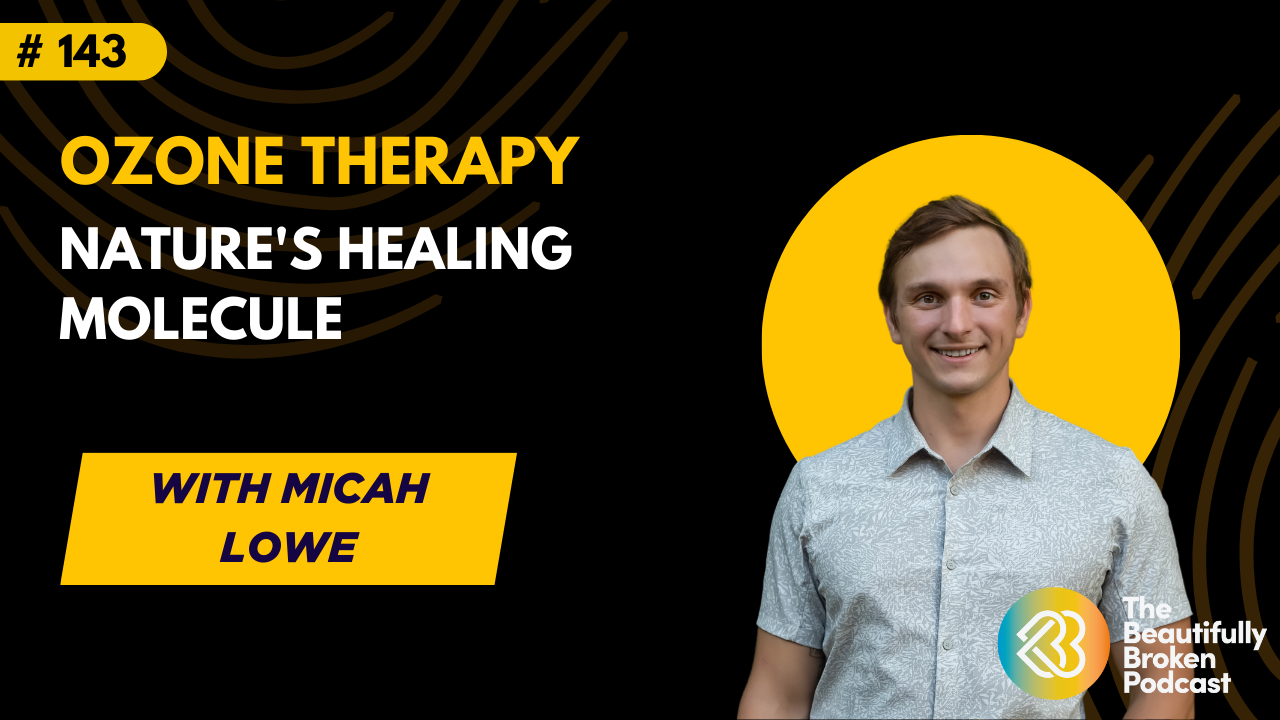
WELCOME TO EPISODE 143
Have you ever read about the application of medical grade ozone therapy?
I’ve been using ozone therapy for about a decade now, and I’m excited to finally introduce this amazing treatment to the BB audience.
In 2014 Micah Lowe started to develop equipment for ozone therapy because there was a need for a less expensive, stable unit that people could use at home. As the CEO of Simply 03 his mission is to reduce suffering in the world through innovation and education.
As you’ll soon discover, ozone therapy is safe, effective, and powerful technology that’s used successfully in clinics throughout the world. IMHO it deserves a place at anyones home wellness stack and an essential in the zombie apocalypse. Kidding (not kidding.) Let’s jump in!
Disclaimer: I am not a medical doctor, the conversations on this podcast are meant to inspire you to explore these topics and do your own research. Please consult your medical professional before experimenting on your own body. Go slow, be safe, find what works for you.


Episode Highlights
[0:00:00] Introducing Micah Lowe, the Ozonaut
[0:04:10] How and Why Micah Got Into Ozone Therapy
[0:08:52] What is Ozone Therapy?
[0:10:33] The Natural Occurence of Ozone
[0:12:04] Ozone as Beneficial Oxidative Therapy
[0:14:49] Safe and Effective Forms of Ozone Therapy
[0:21:37] Freddie’s Experience With Ozone Therapy
[0:26:30] The Mechanics of Ozone Therapy and Its Versatility
[0:30:20] The Mechanics of Rectal Ozone Therapy
[0:34:37] On Direct Injection Treatments
[0:38:20] On Value-for-Money Regarding Specific Methodologies
[0:40:41] Simply O3’s EBOO
[0:45:40] Supporting Data on Ozone as a Longevity Hack
[0:46:31] On the Availability of Ozone Therapy
[0:48:21] Expanding Our Wellness Toolkits as Individuals and as a Society
[0:59:43] Attachments and Accessories on an Ozone System and Other Applications
[1:01:54] On Ozone Saunas
[1:05:25] Where Can You Learn More About Ozone?
[1:06:18] Micah on Being Beautifully Broke
[1:07:05] Closing
UPGRADE YOUR WELLNESS
Silver Biotics Wound Healing Gel: https://bit.ly/3JnxyDD
Code: BEAUTIFULLYBROKEN
LightPathLED https://lightpathled.com/?afmc=BEAUTIFULLYBROKEN
Code: beautifullybroken
STEMREGEN: https://www.stemregen.co/products/stemregen/?afmc=beautifullybroken
Code: beautifullybroken
Flowpresso 3-in-1 technology: (https://calendly.com/freddiekimmel/flowpresso-one-on-one-discovery)
CONNECT WITH FREDDIE
Work with Me: https://www.beautifullybroken.world/biological-blueprint
Website and Store: (http://www.beautifullybroken.world)
Instagram: (https://www.instagram.com/beautifullybroken.world/)
YouTube: https://www.youtube.com/@freddiekimmel
EPISODE TRANSCRIPT
Freddie Kimmel (00:00.608)
Ladies and gentlemen, we have a very good human being on the show today. My new friend Micah from Simply03 is going to talk about and introduce us to the world of ozone. 150 episodes. We've never jumped onto this topic, which ozone therapy is something I've used since 2012. It is a technique in which I met a very famous human being who has played James Bond a lot in New York City, also doing ozone therapy.
This is, I don't even think I said that in the podcast, but that's actually true. We're going to go over Micah's pain to power scenario, his three favorite methods of ozone delivery, how his family and he had a hand in developing ultraviolet blood irradiation technology and why that synergistic was ozone. And finally, why SimplyO3 is an ozone equipment and training company to bring better understanding around this really powerful therapy. So as always,
Micah has supplied a discount code for anybody seeking an at-home ozone system, and that will be code beautifully broken on simply 03. I'm excited for you guys to hear this, story, my story with ozone. It's just, it's not come up and it's one of my faves. Let's jump on in.
Welcome to the Beautifully Broken podcast. I'm your host, Freddie Kimmel, and on the show we explore the survivor's journey. Practitioners making a difference and the therapeutic treatments and transformational technology that allow the body to heal itself. Witness the inspiration we gain by navigating the human experience with grace, humility, and a healthy dose of mistakes. Because part of being human is being beautifully broken.
Freddie Kimmel (01:53.272)
Ladies and gentlemen, welcome to the beautifully broken podcast. I am here with Mika Lowe. Mika, welcome to the podcast.
Yeah, thanks man. I appreciate it. It was great to meet you a few weeks ago and see what you're doing. So I'm excited.
Yeah, we got to hang out at the upgrade conference. finally got the name right because I keep saying bulletproof. It's changed. Probably one of the best fit of people looking for wellness, optimization and biohacking I've ever been to.
Yeah, I would agree because I kind of had a concept of what I expected it to be and the group of people. it was just, yeah, was really blew my expectations out of the water in terms of the type of people there and a lot of very genuine kind of people, very curious, trying to figure out what works and just into this stuff. And I'm a nerd, so it's kind of fun to talk with other people on biohacking stuff or health stuff or whatever it is.
I know, I know. I say this all the time, is I love the events remind me that I love people. I love meeting new people, especially when they're in that phase of wanting to stay curious. And I think that's this container of whatever you want to call it, bio loving, bio hacking, that so many people, they're curious about what they can do to upgrade their health and their wellness. So, which brings us to today's conversation. I'm having you on because you are a
Freddie Kimmel (03:15.822)
Would you call yourself an expert in ozone?
No, I wouldn't call myself an expert. I'm a huge advocate and I've read a good majority of the literature on ozone therapy, but man, it's such a big category and you know, I try to represent it in the best way possible, but I wouldn't consider myself an expert.
I know. Yes, I'm in the same category under pulsed magnetics and frequency. I'm four or five years into it, but you know, I'm not an engineer or a scientist and I've read and tried to apply what I could find in the literature to my body and then come up with this like, you know, what is my understanding or how am I creating a cornerstone of belief on, what I've experienced the literature and then what is like my go forward, like
product, am I applying this to my life under what pretense? So I'd love to get your backstory. Why are you involved in the world of ozone and what brought you to it?
Yeah. So it's kind of a long story just to preface. So I'll keep it shorter though. Yeah, we'll do bird's eye view. So essentially my brother was diagnosed with brain cancer at 18, like glioblastoma and a pretty rare form of it. So he was going through cancer treatments and different things. And it got to the point with like the Johns Hopkins medical system. They said most of our patients are dead by now, so we don't really have anything left, but we can do some experimental stuff.
Freddie Kimmel (04:19.149)
We can do bird's eye view.
Micah Lowe (04:42.206)
And the experimental stuff included like open brain surgeries. And like, for example, there was this drug that only worked with a certain genotype that they wanted to try on them. They didn't bother testing for the genotype because they just wanted to see what happens. And so he lost a lot of his critical thinking processes through the brain surgeries and the drugs and the different things he was doing. So kind of led our family to look into alternatives and just see what else was out there to improve his quality of life and hopefully help with the cancer too. So we found like hyperbaric oxygen and you
Just go down the rabbit hole and, found ozone therapy. And, my dad was kind of involved in looking into alternatives as well. And he found something called ultraviolet butter radiation, made some equipment for that. And then, I was working with him going through nursing school and kind of seeing the two different paradigms of like, Hey, let's do root cause versus symptomatic coverage, pretty clearly. Cause I was having conversations with people on both sides every day. So that was really nice for me to have and really inspiring, but.
I essentially landed that I want to look into non-toxic modalities and not drug so much as just like what really helps with underlying causes with root causes and help people to heal without toxic side effects. Because of the ultraviolet butter radiation, I came across a lot of doctors that were working with ozone therapy, but it was primarily in the hands of clinicians and the research out there was just scattered all over the place. Like there was thousands of studies, but it was just all over the internet, not condensed into one area.
And it was in multiple languages. So it was pretty tough to get a handle on ozone therapy. So I kind of took it on myself to take somewhat of a journalistic approach to ozone therapy and be like, well, I can read all this stuff and then just take that information and hand it over to people. And then through that process, I also ended up designing and developing some equipment. I mean, I wasn't the engineer, but worked with an engineer to do that. And,
We essentially solved some problems at the time, was equipment was really expensive and kind of hard to use. So we made it for a lot cheaper and a lot easier to use. And then that was kind of my entry into ozone therapy over the course of a few years doing that stuff.
Freddie Kimmel (06:48.822)
Yeah, I have to ask with your brother's journey through glioblastoma as I've had a family member go through glioblastoma and some members in my immediate community, did you find anything that improved whether it was functionality, energy, quality of life down your road of going through this rabbit hole?
Yeah. So he wasn't super, I wouldn't say super open to alternatives. He did hyperbaric oxygen, which actually helps substantially. So that was probably the biggest thing in terms of energy quality of life feeling good. Cause he would go under radiation, chemotherapy, that kind of stuff. And it would reduce some of the negative side effects of that. then in radiation, there's some studies that if you do it like hyperbaric oxygen, and then the radiation within an hour, can improve some of the results that you're looking for.
I know there's differing opinions on radiation and chemo, so I'm not here advertising that by any means. But yeah, I would say hyperbaric oxygen was probably the biggest. He did ozone therapy too, not a whole lot because he wasn't just, like I said, just wasn't super interested in alternatives. But yeah, I would say hyperbaric was probably the most helpful.
Yeah, there's some wild stuff out there. It's probably the most frequented. That and scar tissue are complementary cancer treatments. What is out there for people that are in the process of working through cancer or they've received some type of a late stage diagnosis, which there aren't a lot of other alternatives. So it's really wild. And that's its own rabbit hole. Like there's this company actually that I've had a few people try. It's called Optune. It's a helmet.
and it sends electrical fields to the cancer cells to implore them to stop replicating, which is a medically approved device. And they're using it for, they have a vest version now for small cell lung cancer. And there are people almost doubling their lifespan on an 18 month diagnosis. They're getting, you know, a few more years, which it's not a cure, but people are extending life with this and it's relatively, it's well tolerated in the body. So.
Freddie Kimmel (08:49.89)
There is definitely some stuff out there. I want to ask, because I know people are probably like, are they talking about ozone that comes out of the exhausts of my car and depletes the layer around the earth? What are they doing? What is ozone therapy?
Yeah, you hit the nail on the head, you just go to the exhaust of your car and suck it all in. Just kidding. Very different from that, extremely different. yeah, like a lot of people have misnomers about ozone or they understand it in terms of pollution. So there's like ground level ozone and pollution, which people are breathing in and it's not good to breathe. So that is the one thing you can't do with ozone. You can't breathe it into the lungs. There's no antioxidant defenses there. So
Yeah, why do I have to pay for a device?
Micah Lowe (09:29.44)
Most of our body parts have, or even like the blood, an antioxidant buffering system. So when you take pure medical grade ozone oxygen mixture and apply it to that area at a certain dose, it interacts with the antioxidants and causes a beneficial cascade effect. And I'll get more into that. yeah, essentially, it's very different from like pollution or the ozone layer. We're taking a small dose of a pure medical grade ozone and applying that somewhere into the body.
but we're not breathing it. That's the one thing you can't do with it. So basically if you breathe it, it irritates the lungs and over the course of time. So if you're in a very polluted area, there's a lot of ozone in the air. If you're in that area for years, it can cause some negative effects, some scarring of the lungs, some irritation and things like that. But everybody agrees that it's not good to breathe. there's really no, you know, nobody's saying, hey, go breathe the ozone. But we've found over the course of
about 100 years and really good research started about 60 years ago, that it's really beneficial when it's applied in other ways.
Yeah. so does ozone, this is great. I'm just like, this is a great question, Freddie. Does ozone occur naturally in the environment?
Yeah, two degree. mean, you have ozone molecules in your body that are naturally occurring. They're a part of the immune system. And then as far as like nature, there's the ozone layer. So that protects against UV radiation. So only the beneficial forms of light get through. Then there's like lightning storms, basically when there's an electrical signal, like a flash of lightning that creates ozone from the oxygen that's in the air. So you can find it in nature.
Freddie Kimmel (11:09.334)
noticed because I have a device that we'll talk about in the house and I've noticed sometimes after a really severe lightning storm, you can almost smell it outside in the air. It's like this hyper clean, this feeling.
Yeah, that's like the after a storm, the fresh smell is, is a little bit of ozone in there because as there's been lightning and thunder and stuff, it's produced some, so it kind of has a very distinct smell to it. And when you get like a medical grade ozone generator, it's one of the most detectable molecules we know of. So you can actually smell it at five parts per million, which is extremely, extremely, extremely low. I mean, you can smell it and detect it so easily.
But yeah, it has a very distinct smell. So when you get the generator or you have a generator or smell it, it's like super strong. you know, some people that smell has like a fresh smell to it and other people don't care for the smell. It seems like I love it or hate it smell for the most part.
Yeah. And what would you consider ozone? Is it an oxidative therapy? I've had Scott Schur on, we were talking about hyperbarics.
Yeah, I think it's actually, it's really interesting because it's so versatile. So it's used in so many different areas, the four primary being like medical, so that's like IV or at home use, then you have like dental care, joint injections, have aesthetics mixing with PRP to help with like hair generation and that kind of stuff. But it is an oxidative therapy. So what that means is we're using an oxidant to stimulate a beneficial response. So like vitamin C at a high enough dose is an oxidative therapy.
Micah Lowe (12:43.074)
The thing that's really interesting about it is it actually mitigates oxidative stress. So people see oxidant and think, well, oxidative stress is bad because oxidative stress is essentially when you have too many free radicals and your antioxidants aren't balancing it out. So when you get too many free radicals, they start to throw wrenches into the system, break down mitochondria, break down cells and do all sorts of bad stuff. one of the leading theories, and this is out of...
major institutions is that oxidative stress, chronic oxidative stress is the leading cause of aging and disease at the fundamental level. So the interesting thing with like ozone therapy is that mitigates oxidative stress. And it's actually a very similar pathway to what we would find in like doing a sauna or an ice bath or even exercise. So there are beneficial forms of oxidative stress that stimulate a different pathway than chronic oxidative stress. They stimulate something called the nRF2 pathway. So what happens
When I take ozone and let's say we're doing an IV, we mix it with some blood and then we put that blood back into your body. It actually tells the body, hey, you need to create some more antioxidant enzymes. So you actually get a net positive of endogenous or naturally occurring antioxidants. And through that cycle, you end up mitigating or reducing chronic oxidative stress. in theory, what that would do is that would
help reduce the rate of aging and help reduce the likelihood of aging. It's doing a ton of other stuff too, but I find that to be one of the more interesting things is that you can use an oxidant to actually mitigate oxidative stress.
Yeah, it's fascinating. just for our listeners at home too, in your car, I mean, I always think about oxidative stress as the body's rusting. You you think about your car, you think about how different automobiles weather in different environments, right? Look at a car in upstate New York versus Texas. Like that car in upstate New York because of all the damage, all the salt on the road, the rough winters, the change in seasons, they age so much faster.
Freddie Kimmel (14:49.272)
So the environment or the terrain is going to influence how this body ages. I always found that fascinating. And it's, guess it's just that the dose becomes the poison, right? How much, when, let's first go to, you mentioned a few different ways in which you can do ozone therapeutically. What are the ones you focus on, which you find safe and effective and accessible?
Well, first of all, I'm probably going to steal your metaphor in the car. So just so you know, if I'm talking on another podcast, please.
Just beautifully broken podcast. Go for
Yeah, but as far as like what forms I mean, it depends on we use the term indication. So like what is wrong with the person. And there are like performance enhancement and just like general biohacking. But I come more from the background of like working with practitioners and patients who have a chronic disease. So that's primarily where I'm most educated in. But I would say like, there's a lot of different ways to do it. So if you jump into the world of ozone therapy, you'll see a lot of stuff.
But the three ways to get like a systemic response, which is like the mitigating of oxidative stress. So reducing that free radical load, creating more antioxidants, improving microcirculation, improving oxygen efficiency, which is our cells ability to use oxygen. So what that means is you create more energy, which is why people get an energy response from ozone therapy. And then it's really good at modulating the immune system, which means if your immune system is too high, it brings it down. That would be like an autoimmune disorder.
Micah Lowe (16:20.79)
Rheumatoid arthritis is like a really common example of that. And then if the immune system is too low, it brings it up. So that's an immune modulation. And it's really good at those four different things. The mitigating of oxidative stress, the microcirculation, the oxygen efficiency and the immune modulation. It's really, really effective at those. And I usually talk on those four points because I feel like those are the four most fundamental. It's doing more in the body than that, but those are really four fundamental points of ozone therapy. So.
There's three ways to get that response in the body, meaning there's a systemic reaction, our entire body benefits. And that would be intravenous, taking the blood out, mixing it with ozone and then putting it back in. So that has to be done at a clinic, but there's ways that people can do it at home to get the same systemic response or it's not quite as effective, but it creates the same process or cascade effect in the body. And that would be rectal insufflation. like an enema, essentially the gas takes
three to five minutes, you don't have to hold it, which is kind of nice. Like, you know, you're done. I don't know how into this kind of world your crowd is, but like,
all into the butt stuff. mean, coffee enemas, you name it. Listen, if it's going to provide a reduction in symptoms, or it's going to provide value to energy, and so we can be more effective in the world, think everybody's open to the conversation.
Okay. Yeah. My perspective is just get over it. If it helps you to live better than who cares. But you know, I understand some people have their holdups with stuff, but like coffee enemas, you have to hold for like 15 minutes to get the glutathione response in the liver and some of the detox effects. So you don't have to do that with rectal ozone therapy. And then on that, it also has benefits to the gut, which is really interesting because it's an oxidant going into an anaerobic environment, meaning your gut doesn't like oxygen, right?
Micah Lowe (18:10.83)
But it actually, there was like a study done and I forget how many patients, I think it was like 120 or something, but they had a 76 % success rate in reversing dysbiosis with drinking ozone water and doing rectal insufflation, which is really interesting because you would think it would make it worse, right? Putting oxygen into an environment that doesn't like oxygen. But essentially what happens is it's just a small amount of the gas. So the gas goes in and probably in that local area, meaning, know, square inch, two square inches,
It does kill off some of the positive bacteria and the negative bacteria, but through what it's doing in the immune system and what it's doing through the rest of the body, the body actually is creating a better terrain for your positive bacteria to take place. And so that's why it doesn't mess with the biome. actually improves it, which I find one of the reasons I'm involved with it, because I just find it super fascinating. How does this thing work with like infertility patients with gangrene, dysbiosis? It's just like this whole rain that
range of things and Dr. Tom Levy, I don't know if we know who he is, but he likes to call it magic gas because it's just like our body responds to it in such an incredible way. But so that's rectal insufflation and IVs. And then there's the third systemic option is vaginal insufflation. And that has the systemic response as well as some benefits to the vagina. if there's like an infection, a lot of infertility patients will use it and for
like infertility. It's not like, yes, this is definitely going to work. It seems to be kind of hit or miss in my experience. But I had this really cool call with this girl named Lisa, and she's kind of in my network now. And I've developed more of a relationship with her. But at that time, this was like two months ago, I think we were getting on the call for something business related. So it wasn't related to like, you know, I didn't even know she was a patient of ozone therapy. But anyway, she
got on the call and we were talking business for a little bit and then like 15 minutes went by and her two kids came into the room and she introduced them and started to cry. And I was like, what the heck is going on? And she's like, well, I actually found your stuff like eight years ago. I was infertile. I'd spent tens of thousands of dollars, you know, pretty much a decade of just trying to have kids. did ozone and then I started having kids. And then she was, I believe, working in hospital, left the hospital, started her ozone clinic and has these two kids now. So she was just so, you know, so pretty cool.
Freddie Kimmel (20:29.474)
Where's her ozone clinic?
It's in London, Ontario. So it's called London ozone, I believe. But yeah, London, Ontario.
I know right where that is.
Yeah, but yeah, so with infertility, it's kind of hit or miss like I have probably I have a number of cases like that that have happened or that I've observed. But I wouldn't say it's like, yeah, if you're infertile, it's like the thing to do that's going to fix everything. Right. So there's probably a reality where there's some other things that she had to line up in her lifestyle for it to take that effect. But pretty cool, nonetheless. And I have tons of stories like that. so those going back to this.
Going back. are the three. And then like say you have ear infections, you can do ear insufflation, you can drink ozone water for stomach infections or dental infections, you can swish the ozone water, you can use ozone gas onto wounds. So like non-healing wounds, diabetic ulcers, you can do an ozone oil or an ozone water and ozone gas on that. And it's really effective at clearing those up and getting the body to heal those. So those will be the primary ways. There's a lot of others, but I think that's probably enough for...
Freddie Kimmel (21:37.398)
We could do a whole episode on rectal ozone. Like, that'd actually be a really good episode just to focus on rectal ozone. Because at the end of the day, know, my I'll give my like two cents here. I explored ozone therapy in the midst of it was like halfway through my 15 years of chronic illness, diagnosed with Lyme just
full on systemic dysfunction, you name it, I had it. And I ended up finding a doctor in New York city who did direct inject, which was a different way we didn't mention. And it was literally a 60 CC glass CC. Actually, I think he was plastic or whatever it was, silicone to direct inject right into the vein, the gas. And I did like 10 sessions and I can tell you, I felt benefit. had immediate, even though there was some
I want to say icky yucky stuff or like a Herxheimer reaction downstream. I was like, this is doing something. So that kind of opened the door for me. And I went out and bought a machine from a company in Canada. And I went home and I started doing rectal ozone for a while. I mean, I still have my machine. In fact, in celebration of today's episode, I did like an ozone and suffolation. was like, was like, Mika, I'm running late. And that's why I was like, I was like, I got to do it. I can't get on the ozone podcast and not.
do a self-administered treatment. And from my lived experience, was always, it was like, would add oxygen to the tire, because I had so much stuff going on. It didn't pull the nail out. It would always give me energy. It wasn't the thing that established the root, but really the root for me was like a deeper understanding of how the body functioned. It was never like one, I'm like, there's not one thing that was like.
You know, the only thing that got me better was like understanding how all these technologies integrate to provide a platform where somebody very, very chronically ill, Lyme, metastatic cancer, mold surgeries, you know, could get to a place of very high functionality. And I still intermittently use it. Now, interestingly started, said we were at the upgrade conference on September 14th. I have traveled till Monday. It's what is it? November, November 7th. It's been going right.
Freddie Kimmel (23:53.816)
So not only am I well, but it was like, I've gone to six different events, spoke all over the country, traveled nonstop, ate really non-ideal food. With travel becomes, I try to resource the best I can. And it's just been this, you start to feel icky. So I was like, let me bust out the machine, let me do. In my personal experience, I'd love to go down this a little bit more on the rectal ozone, because it is so easy.
Right? So I have a machine and it's got a oxygen tank and I like set the flow rate, which let's explain that to people, the flow rate on the machine. And then I just have a little tube. have a long tube. I just directly insert that tube into my butt and I wait, you know, really unscientific here, like until I feel I'm ready a minute, 60 seconds, 45 seconds. I hold it for three to five minutes and then
Maybe there's gas that comes out, maybe there's not, but then on the backside, I feel good mental energy, mental clarity, a little bit of lift. And yeah, yeah, let's break that down. I said a lot, but that's, I do that like once or twice a week. And I look at that practice as like insurance, right? It's a little hormetic stressor in the colon. I'm not wiping out the bacteria. I'm not doing it every single day.
but I would assume that I'm getting a little bit of benefit from that and incorporating. And I do go in and out of periods of, I won't do it for three months and then I'll get back into it. I'm like, why am I not doing this? It's really good. So thoughts and feelings.
Yeah, well, first of all, just kudos to you for going through the journey that you have and, you know, taking your health into your own hands and educating yourself. Like I can't imagine what it would have been like if you would have just listened to the white coat this whole time.
Freddie Kimmel (25:46.57)
Well, no, I could tell you where I would have been. would have, I'd still be in, I'd still be, still be cutting out feet of small intestine. Cause I was a wreck, you know, part of the recovery process from chronic illness was like dealing with the, and I'm full, listen, Western medicine saved my life. And I had to like figure out a way to deal with scar tissue and chronic pain and chronic fatigue because it was just, you know, they were giving me opiates for pain. You know, there was no talk about.
How do you fix this? What's the permanent fix? There wasn't one. So I had to go find it. you know, great that I've gained, I feel like a mountain top of information and energy because I had to go learn that for myself. So I'm very thankful for that journey.
Just so much respect for that.
Let's talk about the mechanic. I would love to understand, like I said, I have an ozone generator that's hooked to oxygen and it's like some type of machine. Like how does it work? Like I'm sure they all work a little differently, but I mentioned like flow rate and is, you know, from your understanding, what happens to one of these devices?
Yeah, so I mean, they actually all work pretty similar. And they basically have different methods to arrive at the same result. So you're not going to see like a whole lot of difference. We're coming out with some stuff next year that I think will be radically different than anything else out there. But yeah, right now, like between the three primary companies in the US, which is us, Simply03, Longevity and Pro and Life, it's it's more the company you're buying. And so some of the quality assurance is there and just kind of some stuff like that. But
Micah Lowe (27:15.712)
Anyway, as far as like how the machine actually works, so you have an oxygen tank. So people get intimidated by this stuff, but getting an oxygen tank for me, like my experience is like buying a cup of coffee. So I just go in and say, Hey, I need an oxygen tank. they send me on my way, but it's really not a big deal. So you have an oxygen tank and you hook that up to your ozone generator, and then you're pushing oxygen through the generator. And essentially there's this what's called a reactor inside and it's a high frequency.
electrical spark that's being made. So essentially, it's pulling apart the O2 and you're controlling the rate at which it combines back into O3. So that's why you can control how strong the ozone is, it's because you can switch how fast the gas is flowing through there. So if I push the gas really slowly through it, it's going to create a lot of ozone. And if I push the gas through really fast, it's going to create a little ozone.
And then you can control how strong that spark in that reactor is too. So that's also an aspect of it, but.
Is ozone measured in, is it PPM, is it parts per million?
We usually use micrograms per milliliter. This sounds intimidating. I'm trying not to make it intimidating because it is. Once you see a setup, it's like, that is pretty simple. It's just like the learning process. But we use micrograms per milliliter as like the technical measurement. And then most people say gamma just because it's easier to say than micrograms per milliliter every single time. So gamma is a really common way of saying it. It's kind of like saying units.
Micah Lowe (28:47.244)
It doesn't really mean anything, but in the context, everybody knows what you're talking about.
So yeah, so mine came with a chart. Now I'm remembering, because it's been a while since I've looked at Anita literature, that it would say, if you set your flow rate at 1 eighth first, one quarter flow first, one half inch, and I have like a little pediatric regulator on my oxygen tank, then that's going to decide the gamma. So there'd be like, use this gamma for this area, this gamma. And now I guess that's another way of saying the intensity.
Yeah, so essentially if your oxygen tank and there's like a little knob on there and when you switch the knob, that's going to choose how strong the gas is coming out of it. And so basically for like different applications, say you're doing it for like urine, so inflation, that's going to be a different strength than if you're doing rectal insufflation. So that's why you want to be able to change it is because depending on how you apply it, you might want a little bit of a different strength and all this stuff has like protocols and videos that walk through everything. But yeah.
I mean, the other thing I really like about it is that it can be used for a lot of different stuff. like, I don't know, I'm failing to think of something that is as versatile as ozone in some senses, just because it can be used like as a lavage, like I said, for wounds or infections, even something as severe as like gangrene. But then you could also do like rectal insufflation for peripheral vascular disease, which is like when blood flow isn't getting to your fingertips and all sorts of stuff. And you can use it in the mouth, the ears, on the skin.
just a lot of different ways that you can apply it. So I really like how versatile it is.
Freddie Kimmel (30:20.406)
Yeah, I would, I would agree. And from my understanding, so let's just to explore the rectal ozone a little bit more. Once the ozone goes in there, let's say that the flow is, you know, you're letting gas go inside your colon for 60 seconds. The ozone is gone very quickly. Like from my understanding, like the O3, which is ozone, is the second it hits bacteria or mold or viruses or a cell that it's splitting, the O3 is going into O2 and an extra
oxygen molecule.
Yeah, it's kind of a interesting story because in Germany, so there's this thought out there that you need to hold the ozone in, right? then kind of like a typical enema where you're holding it for like 10, 15 minutes. So where that started from was this organization in Germany that was doing some research and, you know, they had a clinic and some other stuff, but essentially patients would come in, they would give them a rectal insufflation. And then if you just like farted out right away or, you know, sometimes you just absorb it all.
and you don't need to, but they would feel like they didn't get much of a therapy, right? Because within like 60, 120 seconds, you're all done. So there's not much there. what they did was they say, just hold it for, you know, 10, 15 minutes. And that's how you get, but that makes you uncomfortable because it's like you have a gas in there. So you feel gassy, you feel a little bit bloated. Some people get a little bit of cramping if they hold it.
but that basically gave people the experience of, this is doing something. And then that just spread all over the world that they're like, oh yeah, you got to hold the gas. Even though all the scientists there were like, yeah, it happens like within 20 seconds, you're good. It's just for the patient experience, we decided to tell them to hold it for 10, 15 minutes. But yeah, ozone is very, very reactive. So when you put it into somewhere like the colon or an environment like that, it reacts almost instantaneously, like with the blood.
Micah Lowe (32:14.03)
pretty close to instantaneous of a reaction. So when you put it into the colon, it touches the mucosal wall and that creates some oxygen, lipid peroxide, some other stuff that are absorbed into the portal vein, which is a really big vein in our body that goes directly up to the liver. And that's where we get our cascade effect of like the antioxidant enzymes, the improved circulation and the oxygen efficiency, which is why you experience more clearheadedness and that kind of stuff.
Yeah, you don't need to hold it. It's like 20 to 30 seconds or so because of the reaction time being so fast.
That's great. Red light therapy has been clinically shown to help increase energy, circulation, increase testosterone production, workout recovery, hair growth, improve the depth of fine lines and wrinkles. I love red light therapy. It works. You stand in front of a panel naked, you turn it on, you repeat, you reap the benefits. I think the only challenge for the customer with so many lights on the market is how do I choose the right light for my body?
I use Light Path LED for the following reasons. They include a three-year warranty. They have panel options with pre-programmed frequencies or different pulse rates to add the benefit of pulse light to the body. Even Andrew Huberman, the famous neuroscientist from Stanford University, is celebrating the breakthroughs happening around 40 Hertz. Well, this panel goes from one to 9,999. Finally, they go deep. Light Path LED is 60 %
near infrared. So that spectrum is the range that penetrates deeper into the tissues of the body. And finally, I have to mention after purchase support. When you have a light and you purchase technology, you want to know how to best use it. And there is a 7,000 member group dedicated to helping you do that at Lightpath LED.
Freddie Kimmel (34:04.448)
All of my mentors speak of mitochondrial dysfunction as the root cause of chronic illness and Red Light is safe, it's effective, and it's an easy way to support full body wellness from home. So check out Light Path LED and use the code BEAUTIFULLYBROKEN for a hefty discount in the checkout. Also, if you're interested in joining the Light Path LED team, join their affiliate program and get benefits from sharing a product that you absolutely love.
Team Lightpath, I'm out. So going back to, also want to give a little disclaimer when I said my ozone experience that I did this thing called direct inject. You know, since that time I've heard a varying degree of absolutely not to it's okay to, know, it really matters who's doing the administration. I had some effects where the veins in my one arm really started to hurt. And even so today, still today,
Like I can still feel there's an area of like almost vascular tightness in my right elbow from doing these direct injection treatments. And so what's your thought on that? I noticed you didn't offer that one is a viable form of ozone. Why do you have that cornerstone of belief?
Yeah, so it's called DIB, which stands for direct intravenous. And that's when you're taking the gas and putting it directly into the vein.
Which sounds crazy, by the way. remember the first time I was like, I mean, sidestep, I was so sick, I really didn't care. A lot of the decisions that were kind of crazy at the time, I just didn't care. was like, and it's funny today, there's a woman comes out, Michelle Slater, she did a 30 day medically supervised dry fast, she not 30 days total, but that's fasting without water to cure her neurological Lyme.
Freddie Kimmel (35:55.298)
People do crazy shit when you just don't want to live anymore. And she was someone who was considering medically assisted suicide. She's like, I don't want to do this anymore. So that's, I was just so bummed out. So with that, sorry to take us off on a tangent there, but I was just, I was just didn't care.
Well, I'm sorry to hear that you're in that place, but you're super inspiring by the way, and the way that you conduct yourself and knowing your backstory a little bit. So I hope that's you know, lends to your story a little bit in terms of how you think about yourself. But yeah, so DIV, the direct intravenous ozone, that's a condemned method by all the scientific organizations that are credible, essentially. And the reason for that is because it's like the only form of ozone therapy that regularly has negative
adverse side effects being like chest tightness, anxiety, know, heart palpitations, like all sorts of stuff associated with it, burning up of veins. So the veins disappearing, not being in use anymore, having pain in them, like you said, but it's condemned because of that. And there's still a lot of people that do it, which I understand why, because essentially it's like cheap and kind of simple to do if you do it correctly. But I don't.
advertise it because I want to see ozone therapy gain credibility. so people can hurt themselves with that therapy. So I'm just not going to teach it right because we can pull the blood out. So we draw some blood into a syringe, we mix it with the gas, there's no gas in the blood left, it's created the reaction we want. And then we put the blood back in. And you don't have any of those negative side effects associated with it. So I just teach on that because
It's like you get all the upside with none of the downside. so long-term, what that's going to do is it's going to make more people aware of ozone therapy as an option. You know, if they have Lyme or cancer or whatever and side note, it's really good to do. And if somebody is undergoing chemotherapy, it significantly decreases the negative side effects of chemo in terms of fatigue, brain fog, weight loss, some of those things. So it can be really, really helpful for patients undergoing chemo.
Micah Lowe (37:56.15)
It was by a pretty large margin. can't remember the exact margin. want to say 72 % over the control group that it performed and some of those metrics, but yeah, it's DIV. mean, I get it. It's cheap and it's easier to do and people want to teach on it because I feel like it's the best way, but I think you get all the same benefits with pulling the blood out, mixing with the gas and putting it back in.
a great point. Let's talk about what are your favorite studies to pull from because I know that there were some studies from Cuba which I'd looked at on the rectal encephalation being very effective when compared to other methodologies. think it's the auto-hemotherapy is the method you're saying is pulling the blood, ozonating it, putting it back into the body, and then we have the rectal ozone. So how would we compare the efficacy of those two methodologies?
Nobody really knows for sure, to be totally honest. mean, you'll see people say it's 95 % as good. But to be totally honest, nobody really can make an accurate comparison. We do know that biochemically, the same systemic response is happening because we can look at the increase in antioxidant enzymes, the oxygen efficiency, that kind of stuff. But there's a spectrum on which that happens, right?
I would say from like personal experience and just all the people I've talked to, it's pretty good. It doesn't seem to be as good. Sometimes the IVs can just put people into a position. It's a more powerful therapy in my opinion. But I would say the overall value, if you're looking from like a value perspective, rectal insufflation is probably the most valuable treatment. And the reason for that is because you can buy the equipment for under two grand, have it in your house, do it within three to five minutes, and you can do it five, six times a week.
in those three to five minutes at a time, as opposed to IV, you know, once to twice a week is typically max. There's some different protocols out there, but most people don't do more than once or twice a week. it's depending on the protocol, you know, 300 to $700 a pop. So it ends up being really expensive. So I would say that the value equation is there for rectal insufflation and it kind of takes the cake on that.
Freddie Kimmel (40:01.23)
Would you qualify this as something that had diminishing returns? I was just at a wellness, one of the wellness festivals I went on my grand tour was Runga. It was in Austin, Texas, Ben Greenfield's there. And he went over to a place called Alive and Well, and he did a procedure. And I'm pretty sure it was a multi-pass in which blood was coming out. It was being ozinated. It was going back into his body. They were also treating it with a laser, and then they were also running it through like a HEPA filter.
So they were filtering the blood of anything that could be neutralized by the ozone, which sounds extreme. And I've heard people say really great things. And also there's this, it's a robust price point associated with it.
Yeah, we're actually working on some of that equipment. It's called ebu, but essentially you have a line in one arm and a line in the other arm and blood is circulating like you have an extra vein except it's tubing. Yeah. And then there's like this filter like piece in the middle that the ozone is going into. But there's some pretty big misconceptions about that. First is that it's not actually filtering the blood because they take this filter that's usually used for dialysis and use it in a way where the blood is not passing through the filter. So there's
a non-selective, like there's some stuff going into a bucket, but it's not selective. It's not like, this is the bad stuff. This is the good stuff. It's just that there's a little bit of overflow from that filter that makes it into the bucket because it's just unavoidable. But I would say that's the biggest confusion about eBoo is that it's doing that. I'm a fan of it, by the way.
Great. And why would you do that over one of the other methodologies? Maybe there's like something a little more extreme going on with your health or what are the benefits that it could provide?
Micah Lowe (41:40.728)
Well, if you're in an extreme chronic disease state, it's actually good to start on a low concentration or a low dose therapy and work your way up because of that Herxheimer reaction you mentioned. if you have a large pathogenic load and your immune system isn't killing it off, well, what happens when you stimulate the immune system? Well, it starts to kill off all these pathogens, create a bunch of endotoxins, and that can make you really sick, right? But that's avoidable. So if you started off at a high dose and you have that pathogenic load,
might undergo like flu like symptoms for a few days. That's, you know, a bad case for a lot of people. It's just like fatigue, just feeling of unwellness a couple days after, but that's totally avoidable for the most part. If you start off on like a low dose and work your way up. But I think Ibu, there's like 10 paths that ends up being like the same dose and the same amount of blood that is ozonated. So we don't really know if like Ibu has like a definitive
advantage over some of the other protocols to be totally honest. think people just see it and they see the filter and there's a psychology associated with that that that must be better because it's filtering the blood, which it's not. And that it's probably a higher dose of ozone, which it's not. But, know, there's some psychology behind it. So it's kind of like the new thing on the block. But I would say like, you know, spike protein, I probably can't talk too much about that on this podcast. don't want to take it down.
Yeah, all the things.
Yeah, so that thing, right? There's some people saying that it's really effective for wiping out that issue, which causes a bunch of negative symptoms and can be dangerous for people. So, but I think those higher dose therapies, essentially, if there's a large pathogenic load, and you've worked up to them, can be really beneficial. Otherwise, if it's like performance enhancement, and some of the other stuff, I would say just the typical major auto chemotherapy is probably the
Micah Lowe (43:32.492)
the one for you or you're just like midline symptoms, right? Like the bloating, the fatigue, but you're not quite to a chronic disease state. But hey, those are the signs that are telling you you're going to land there in 10 years. So yeah, exactly. So I think if you're in that space and you work on some of the lifestyle factors, just the standard dose, which is called major auto chemotherapy is the goal. It's really the best thing overall for the most amount of people. But yeah, if I had a severe infection, that's where I go to the higher dose, like the ebu that you mentioned, the 10 pass or there's one even called high dose.
And I think those, that's where they fit in the best in my opinion. But again, there's no good comparative studies between the ozone therapies. There's a lot of studies saying, Hey, here were people with this condition. We treated them with major auto chemotherapy and here's what happened. And so you see the same thing with the Ibu. You see the same thing with 10 pass. You see the same thing over here, but there's nothing saying we did a group on this protocol and this protocol and this protocol with all the same condition.
And this is how they performed over each other. Unfortunately, that's just not around yet. Ozone is kind of interesting because it started back in the 1870s. As far as I can see, there was a doctor in Germany, a professor teaching on using it as an antiseptic for wounds. Then World War I, there's this guy named Dr. Stoker, who actually was a brother of the guy who wrote the book Dracula. But anyway, he was treating war wounds with ozone and it's really tough to get a handle on the history because it just spread all over the world.
And then they isolated. like there are people in Germany, were people in Spain and France and England and Russia, even Malaysia, you know, and then they were all just independently studying. And so what happened was you had this development of all these different protocols based on what they had access to or just thought of, right? Like, that'd be a good way to get ozone in the body. So that's why there's so many different protocols out there. Major auto chemotherapy has by far by a mile.
the most research on it, but I'm a fan of if you're putting ozone into the body and you're not like overdosing on it, I'm pretty much a fan of it because it seems to only have upside as far as I can tell.
Freddie Kimmel (45:40.674)
What about some scientific literature studies that support its use as a longevity hack?
I mean, that comes, I wouldn't say there's like really any good literature that says, hey, we did it on this group of people and they ended up living longer, you know, looking in like rats and kind of that kind of stuff. I mean, you're seeing the mitigation of oxidative stress, which in theory should lead to longer, healthier life. But I wouldn't say there's like great research on it, but I do feel confident with what I understand about how it's working in the body. If I create a healthier terrain within my body, that's more capable of fighting disease.
that's not as stressed out, that's not acquiring the rust on the car like you said, I'm just going to live longer. So I feel really confident in the mechanism of which it's doing, but there's not something I can point to and say, hey, this on average added 3.2 years to the life of these people.
Yeah. Are there areas in the country now? I know it's if I'm looking for ozone in the United States, it's going to be with like functional medicine. It's going to be like an alternative therapy clinic. Are there areas in the world in which they're using ozone therapy in hospitals or emergency rooms? Or like you said, as a protective therapy while somebody's going through chemo or radiation?
Well, in 2020, during a worldwide issue, there was, I'm trying to talk around it for you, but yeah, they essentially, the universities there that work with ozone therapy got green lighted to work in the hospitals with that problem. And so there was a lot of hospital work done there. There was in Europe kind of scattered around different hospitals there. Cuba kind of has an interesting backstory on it because they adopted it. If you look at Cuba, they turned into a dictatorship a long time ago. So they basically,
Micah Lowe (47:21.784)
quit progressing in the fifties in a very, you know, poverty stricken country. So what they did in that situation is they look for something that, Hey, what is going to help a lot of people and doesn't cost a lot of money because we don't have access to all the stuff that other people might. And they chose ozone therapy. So they had ozone therapy hospitals that did millions of treatments for all sorts of stuff. But yeah, you're not going to find it in your typical hospital. There are places around the world that do utilize it.
Within the United States is primarily in like integrative functional medicine clinics, that kind of stuff. There's, don't know how many people doing it at home. There's a lot. I'm not sure exactly how many, I mean, we've, sell thousands of units every year for people doing it at home. So there's quite a bit, but, then we're working on this partnership that we'll hopefully go through where it'll add in the next couple of years, 3000 clinics in the United States to do ozone therapy. So I really hope to see that go through, cause that's gonna.
grow awareness of it significantly.
Yeah, incredible. And I always I look at it as a home therapy. You know, some of these things, it's like, well, what's the unit cost? Well, let's talk about that. What's the unit cost? I'm bookmarking a question for myself. What would you pay? You know, I remember going to I'm not going to say the name. I went to a very big clinic in New York City, which is a huge medical clinic. And I was, man, I don't know. They they injected blood a couple of times. They ran the blood back in. I was paying eleven hundred bucks.
You know that I bought a machine after after one, you know, after one treatment or I could have. So there is a to hold the information above the masses and say you need like medical supervision. Some of the modalities we've mentioned. Yes, obviously auto hemotherapy. You need a doctor, but at home, you know, ozonated water, rectal encephalation. For me, it's like.
Freddie Kimmel (49:19.02)
Why wouldn't you have a unit in your home?
Yeah, so I mean, the cost ranges. So there's basically the generator, which is the piece that actually makes ozone, then you got your tank, your oxygen tank. And then from there, it's just the accessories. So like, what do you want to do with it? Because it's a gas, so you can use it in a lot of different ways. So but you can get like the trifecta of ozone therapies, which is ear rectal and water. It's 1800 bucks. Like you said, I think an IV treatment can cost anywhere from 300 up to 700. It sounds like you were playing
quite a bit, might have gotten...
I was paying top dollar. Well, that's Manhattan, mean, listen, this is Manhattan. Like, yeah, it's tough. It's tough, bro. I wish I could have recorded some of the conversations of people in the infusion chairs next to me in Midtown Manhattan, because they were they're paying a lot of money. And, and they weren't necessarily getting better. Because, as you and I know, or maybe we know that whole this
similar belief system that it's like it's the treatments like so you know, it's gonna move the needle. But at the end of the day, like I am the consistent and all my failed experiments, like wherever I go, there I am. So if nobody's working with me on some of the mindset, the mental, emotional, the self talk, the belief systems that I'm deserved of radical love, then it's just a treatment. Just a treatment.
Micah Lowe (50:40.91)
100%. I mean, a lot of this stuff, yes, it can get you out of a pinch sometimes, but for most of health, 80 % of it, it's the basics, right? And that goes down into body, mind, right? That's what constitutes a person. So you have to look at your spirit, you have to look at your emotions and your health there, and you have to look at your body too, but we primarily only focus on the body when we're this complex system of thoughts and beliefs that...
change our course and change our health significantly. it's wild that that's not talked about more.
energy behind the action. like, when I go do, you know, many of these therapies that I'll go do, like this morning, I was like, let me let me amp coil. Let me do an amp coil session. I was like, let me get out a piece of paper. Let me write down what I'm feeling. What I want to shift with choosing to excite electrons in my system. Let me like put on breath work. And I did breath work and amp. That's how I started my day. And it was like,
just download an idea and insight are just coming. I'm like, you know, very different experience from me sitting there and like being on social media or, know, whatever, just doom scrolling. It's like that I chose to like make that experience like a little portal into like a better quality day. And I think you could do the same thing with your ozone therapy. I mean, you can like lay on the floor, you can do a little heart centered meditation.
You can like talk to your organs. I did this great. I did this app called Other Ship. It's great. And actually Other Ship would stack really well with ozone therapy because three minute, three minute journey, five minute journey, 10 minute journey. So it was a beautiful guided meditation. This woman's like, you know, with each breath, bring light into your heart, your body, the electrons excite, then the room, then the planet, then the universe. And then we brought it all back. You know, it's this beautiful expansion just to realize I was like, man.
Micah Lowe (52:20.878)
That's what I'm saying.
Freddie Kimmel (52:41.718)
It's so not about me. I'm just this little, I'm like one electron in the whole system. Anyways, it was awesome.
Yeah, it is incredible just how big of a factor like our beliefs and our perspective changes things. I mean, you could probably put somebody in like isolation, know, like padded room or whatever, give them all the biohacks, all the good food, they're not going to be a healthy person. It's just like, because there's there's the reality of like the beliefs and, you know, social connection and all those kinds of things. And like you said, perspective. And it's funny, I come from like a Christian background, and that's where my faith is at. But
Yeah.
Micah Lowe (53:17.336)
how much overlap there, like I use a different language to say a lot of the same stuff. And I find it super interesting as I'm communicating with people in this circle. It's just like, can I cuss on here? Okay. So like an example would be like we were at the biohacking conference or it actually didn't happen there, but somewhere and like Dara or one of my friends will be like, that person has like such and such energy. And I'm like, you mean he's an asshole.
Yeah.
Micah Lowe (53:45.239)
It's like, you know, so I'm saying the same thing through different language, but it's super interesting to me. It's just, yeah.
It's just important. It's important. Yeah. It's just, they're all tools. mean, it's so funny. I'm like, I always talk about my core four or core five technologies that are really profound. You know, I talk and it usually it's a balance of like accessibility and ease and then like safety and ozone is so powerful. You know, it really is. It's a very powerful, very clean, efficient energy that's affordable and that there's such a great access point for humanity.
It's really wild. like, it's a very like, and for some reason, it's kind of like, dangled along through history. It hasn't been like, my God, I don't think it's got the attention it deserves is my point.
Yeah. And I think there's a number of reasons for that. I mean, I think it's really tough to get it. It's medically approved in over 20 countries right now. It's not in the United States, which is why I'm really hoping this partnership with these clinics go through and they're fully aware of it. Cause it'll basically ring the bell. That's going to be really hard to unring for people, for the institutions essentially. But I think it's really hard to get through regulatory authorities cause it's so expensive to get through a regulatory authority and
so once you have the base equipment, like it's oxygen costs, which is cents, right? It's really not that expensive. So you essentially buy something once and you have a therapy for the rest of your life in your own house or in your clinic or wherever it is. But I mean, if you gave me enough money, I can put almost anything that you want through the FDA. And stuff that's bad for people, because I can look at very specific metrics and say, well, let's do this within the body. And there are a lot of things out there like that and say,
Freddie Kimmel (55:21.038)
Yeah,
Micah Lowe (55:31.006)
If I have enough money, can run it through the FDA. But you need hundreds of millions of dollars to do that. know applying for FDA approval is 50 grand, but it's all the bureaucracy and the studies and the double buying placebo that they require that you have to do, which isn't necessarily a bad thing. think the institutions, I'm not going to get too far off on that, but I think it's not a bad thing to have the regulations and those things in place, but it's become a protection of like
interests and a threat, a barrier to other things. Like a lot of people looking at like ozone therapy or other therapies that are not FDA approved will look at that and say, well, it's not FDA approved. It's basically therefore like a pseudoscience or something like that. And it's like, where do you think therapy start, man? Like, do they start as an FDA approved therapy? No, there's tons of things. Or just even the fact that there's this obstacle of the money factor. It's like it's probably never going to see the FDA approval, you know, so
It's interesting. There's a lot there that you can go into,
Yeah. I mean, I think there's a general awareness of like how like I have many, many friends that are going through cancer right now in their 40s, 30s. And there is a general awareness. I mean, I can think of one individually, she was like, she's like, I had no idea. Like, you hear people's stories, you watch pictures, she's like, I had no idea this would be this bad. Like what it's like to go in and just be have your body obliterated through standard of care, which is necessary.
but there's so many things we can do. You mentioned to mitigate the damage to the organs, the peripheral organs, right? That maybe you're treating a tumor somewhere, but we're going to annihilate the whole body with an APOM. There are scientifically proven, like amazing methodologies. Fasting 48 hours before your treatment is amazingly neuroprotective to the terrain. They're looking at really good studies. There's some really good science coming out of Japan on
Freddie Kimmel (57:28.95)
molecular hydrogen gas, you know, mitigating the damage to peripheral organs. There's good science about ozone mitigating peripheral damage, but here we are like just throwing money every day at like the pink ribbon for cancer research. like, we could help people tomorrow have less collateral damage going through standard of care treatment tomorrow. There's no research. There's no money. It's just, you know, so I think again, just
own it. And I wish it wasn't the case that until you get that diagnosis, that's when you start your learning. You know, as a global society, we could look at all the, you know, the reasons why this is happening. I just think there's too many people. And I don't mean I want to depopulate the planet, but I mean, society has gotten so big. Like, we're not talking to each other from a communal standpoint. It's really interesting. But tomorrow, it's like, so if you hear this podcast, and this resonates, like go look up other podcasts.
and start learning about it. It's a great therapy to have in your home. I mean, I always look at it like I have like the ultimate like wellness preppers kit in my house.
Yeah, we actually have a group of preppers that use it. Interestingly, there's a decent group of Amish people that use it too. There's this guy that works on their behalf is kind of like he goes out and seeks medical information and equipment and he uses like he has to run it on batteries for some reason. I'm not exactly sure why.
Yeah, yeah, there's a thing. My mom lived in Amish country in Pennsylvania, someone who came and clean their house and they had a Vitamix. Yeah, yeah. I was like, what? They love that Vitamix, but there was some type of thing and how they would power it. I mean, whatever, you got to get around the dogma to get your Vitamix time in.
Micah Lowe (59:16.448)
Yeah, but we have the Amish community because they use it for all sorts of stuff. So it's kind of cool. But yeah, we have a lot of preppers too. It's kind of interesting. I get to touch into a lot of different groups with it.
Yeah. mean, listen, if it were me and I would like, I had just lived through the world, which had been through this crazy pandemic. And you asked me what things I would have in my home, gonna have an ozone system. Like it's going to be there and a nice travel kit. Let me pivot to this. The system that you have purveyed or you said you didn't create it, but you helped the only engineering process simply 03. Do you guys have like a system that packs up in a little suitcase and you can easily travel around?
There's lots of attachments with an ozone system. Let's talk about that.
Okay. Well on the case, not yet. I'm making one for most people. They're doing it out of their bathroom. And so like for me, I just have it under my sink. I pull it out when I need to use it. It doesn't take up a lot of space, but yeah, if you're on the road, it's convenient to have a case. So because of all the mobile nurses now we're creating a case and kind of a carrying system just to make it easier on them. But yeah, as far as accessories depends on the therapy you're doing. like rectal inflation, there's like the catheter that's inserted.
and a little bag to collect the ozone. Or you can do the direct method like what you've done. Vaginal inflation. There's like a vaginal kit that goes, it goes into the vagina. There's ear insufflation, which you have kind of like the stethoscope, like what they use to check your heartbeat. We're creating a new one next year. That'll be more like headphones, like Bose headphone speakers. So it's going to be a little bit better, but for now it's like the stethoscope, like the doctor will have, except it's hooked up to an ozone machine and it's putting the ozone into the ears.
Micah Lowe (01:00:55.822)
There's like a water bubbler system. So if you want to make ozone water for drinking or swishing or washing onto a wound, you can take that gas and infuse it into water and it'll stay there for a couple hours. It loses strength pretty quickly. So you want to use it quick, but doing the ozone water, you can do an ozonated oil. So you can put an oil into the bubbler instead and create an ozonated oil that stabilizes as a peroxide.
on the carbon chains of the oil. And that's really helpful for skin stuff. So acne, rosacea, exmos, psoriasis, MRSA, non-healing wounds, diabetic ulcers, because it stimulates growth factor, regenerates collagen, and it's an antiseptic. So it kills off the pathogens in the area and it's really well researched too. So ozone oil is super fascinating. That's a whole topic in and of itself. So you can make that at home. It's honestly better to buy in terms of like strength and consistency and
just like how effective it's going to be, but you can make it at home and still get a good ozone oil. I mean, there's ozone saunas. I mean, we have some on our website, but I don't typically talk on those. think the jury is still out as to how effective those are for like a systemic response. But a lot of people say they love them and get great experience from it and, you know, feel better and all that stuff. So there's definitely something there. We just don't know how much. And then in a clinic, there's all sorts of different ways to apply it.
Yeah, I remember the ozone saunas were big for a while in the lime community. And the thing for me was, well, they were bulky. They're very heavy. They're expensive. Or you got a really cheap one that would break down like the ozone gas is going to break down the materials of any type of fabric in there. And then there was always this thing is like we said, you don't want to breathe ozone. So people would be wearing these like painter ventilation masks and like
wrapping towels around their neck so it wouldn't come out of the sauna. It always seemed like not a great risk versus reward. Personally, it seemed very clinical.
Micah Lowe (01:02:53.102)
Yeah.
A lot of people do it wrong too. So I think that's the thing with that that I don't like the most is like, and everything else I mentioned is like a closed system. other than where it's going and you can smell ozone, but you just don't want to inhale large amounts, right? For the time. like, cause you can smell it at five parts per million, which is way below like an OSHA standard of what is safe to be able to breathe in. But yeah, the ozone sauna is the biggest thing I see is like, there's companies out there that have the 10 kits and then they,
have like a little ozone generator that's typically used for like basically making your car smell better or like a shoe box or something like that. And then they call it an ozone sauna once you put in there. That is not an ozone sauna. It's not gonna do anything. The sauna is gonna give you benefits, but that ozone aspect is not because it needs to be hooked up to a medical tank. It needs to be a pretty robust, powerful machine to make enough ozone because ozone is very unstable. And the two factors that are the biggest in how quickly ozone breaks
down into oxygen is heat and moisture. So when you're in a sauna, there's a lot of heat and there's a lot of moisture. So as soon as it comes out immediately from that generator, it breaks back down into oxygen and you can smell a little bit, but it's not gonna be enough to get any sort of response in an ozone sauna. And that's still undetermined exactly how effective that response is. So that's my take on ozone saunas just really briefly.
Yeah, yeah, yeah. I think, again, if you have the setting and you have like the really high end equipment, you know, there are systems that integrate all these modalities like the HOCAT system, which is interesting. It's got like PEMF and frequency and ozone, but those are like clinical. So for me, it's never it always took it out of the realm of accessibility. And I talk about this diminished returns. It's like, if you can get benefit from ozone at a $2,000 price point, you know, do you need to go spending these either high
Freddie Kimmel (01:04:46.798)
per visit costs or 40, 50, $60,000 machines.
Yeah, I would be much more like I would say, cause you're, if you do the pop-up sauna and then you just get one of those little ozone generators, it's not even worth it, but there could be something worth it to going in and getting an ozone sauna session. You know, it's not my like preference, but you know, if I'm sick, I understand you want to try a lot of different stuff and see what works. So I don't think it's bad from that angle, but you also have limited funds most likely. So I think just getting something that works for.
the broadest amount of people and the broadest amount of usages can be really valuable.
Yeah, Mika, just being like aware of the hour and I want our guests to be able to like get back to their after their lunch break when they listen to this podcast. If you had a magic wand and you could gift the people of the world, either an invitation to explore Ozone or an action step, what would you have them do as like a first step?
Yeah, go to drsozone.com slash guide. That's drsozone.com slash guide. And what that is is essentially that's a guide you put your email in and then you're gonna get a guide that walks you through everything step by step, has videos, if you like to read, there's reading stuff, but I think that's the best place to go as far as learning about it, because there's a lot of information there and it covers all the different things that we've talked about today.
Freddie Kimmel (01:06:17.006)
Amazing. And then last question, the beautifully broken podcast, what does it mean to you to be beautifully broken?
Well, the first thing that comes to mind, the song by Gunger that I think it's called Beautiful Things, but essentially, yeah, through our brokenness, God can take and recreate us into something beautiful. And through that journey, we're able to help other people. you know, really relate to that. I often look at my life and just see that I'm so blessed and a lot of things that I haven't earned, but I've been given and I'm so thankful because just like anybody else, I've screwed up a lot, maybe in some areas more.
but I'm just so incredibly thankful for the relationships and the people I'm surrounded with all the time, because they're very inspiring and yeah, I can relate to that really strongly.
Amazing. Well, you are a great example of someone who's providing quality information to the world and doing purpose driven work. I celebrate everything you're doing. I think it's incredible. I can't wait to talk more. We should swing around in a few months and do we should just do rectal ozone, the expanded show. We got to come up with a good title.
Yeah, I didn't sign up to become the rec the low zone guy, but that's kind of what happened. it's like, yeah, it's a good therapy. Not my favorite word, but here we are. So yeah.
Freddie Kimmel (01:07:36.462)
it's needed and it's probably again, it's something I get questions on often and there's lots of nuance there. So from somebody who's been around, you know, the information and practitioners and users so long, I'm sure you'd have some great feedback on that. So we'll maybe we'll just like soft mark that in the calendar. And then where can people go to learn about Simply03?
It's simply03.com. I mean, that guide will walk you through everything, but that's just the equipment is on there. So it's simply03.com that you can find. And then on social media, I'm super sorry, but I don't have a ton on simply03. I do have my own personal social media that is Micah for Health, which is more me, not just Ozone. Although I talk about it a lot. So that's Micah for Health on Instagram. And then I'm going to, I'm told I need to start doing more social media for simply03.
Yeah, and then I've also been saying Mika the whole time, not Micah.
No worries. So I get meek and low all the time. It's Mike allow. I mean, but we just started rolling. I didn't bother correcting you. I'm sorry.
great. You're like, Freddie. All right. Well, listen, that's great feedback.
Micah Lowe (01:08:44.27)
Hey, I understand because my name gets said wrong all the time, so don't feel bad. It's Great, great. I'm used to it.
Wow, not me, hello.
Freddie Kimmel (01:08:58.134)
I love it. Well, listen, thanks for being here. I really appreciate the information and the work and like the non-dogmatic energy with which you present Ozone. We spoke at the conference and I knew I wanted to have you on. So, till next time, we'll talk again soon. Have a beautiful morning. Namaste.
Thanks, Freddie. I appreciate it,
Freddie Kimmel (01:09:23.8)
team. Thank you for creating a wave of momentum that is driving season five of the beautifully broken podcast. My heart thanks you for tuning in. And if you enjoy today's show, head over to Apple podcasts, and now Spotify, Spotify is new, and you can leave a review five stars if you loved it. And before you go, I have something really important I need to offer. There are two ways we can build this relationship. The first
is to join my membership program at buymeacoffee.com forward slash freddy set go. You get early access to all the podcasts, bonus episodes, discounted consults, and free webinars covering all the wellness technologies. The second is to support beautifullybroken.world. That's right, I have a brand new website and new store, beautifullybroken.world. Listed on here are all the wellness tools, supplements,
educational courses and products that I absolutely love. Most of them offer significant discounts by clicking the link or using the code. Please know that they don't cost you anything extra. And at the same time, they do support the podcast through affiliations. What? What's that? I just got a message from my lawyers, my internet team of lawyers. They wanted me to tell you that the information on this podcast is for educational purposes only. By listening
You agree not to use the information found here as medical advice. Do you agree? Yes, you agree. To treat any medical condition in yourself or others, always consult your own physician for any medical issues that you may be having. Finally, our closing. The world is changing. We need you at your very best. So always take the steps to be upgrading your energy, your mindset, and your heart. Remember, while life is pain, putting the fractured pieces back together is a beautiful process. I love ya. I'm your host, Freddie Kimmel.