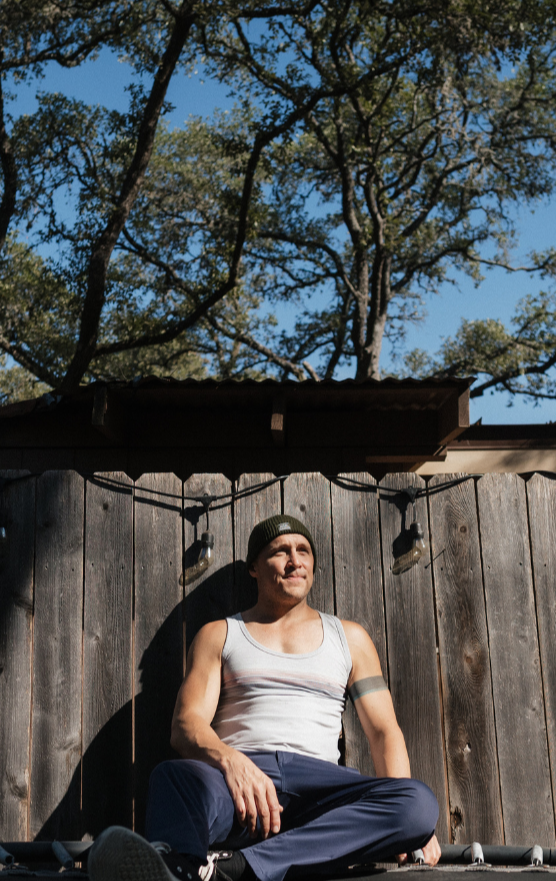
Quantifying your Biohacks with Elias Arjan
Jul 12, 2021
WELCOME TO EPISODE 99
This episode focuses on showing how Biostrap is a game-changer in the health and wellness industry. Elias will discuss its features and how its recorded biometrics can make you consciously aware of your health. He will also share on why we tend to overlook simple biohacks, seeing the shift in prioritizing rest, and how he sees the future with Biostrap.
Listen as we take biohacking to the next level with Biostrap.


Episode Highlights
2:34 How personalized healthcare is now possible with Biostrap
6:25 How the HRV score feature works and the proper way to use it
11:50 Quantifying your health and having a conscious awareness to it
17:30 Why you should rest when Biostrap tells you to do so
22:16 Empowering coaches and health practitioners to use Biostrap
24:34 On measuring your biometrics and why it’s clinically accurate
35:52 Nature and the basic human needs as the most powerful biohacks
38:43 How he went from being a troublemaker to certified biohacker
44:38 His preferred technological biohacks
47:58 Why healing is a long-term process and why behavioral changes is considered in improving health
56:02 How much can you purchase for a Biostrap (and other products they offer!)
UPGRADE YOUR WELLNESS
Marion Institute BioMed Course: biologicalmedicine.org
Code: beautifullybroken
Silver Biotics Wound Healing Gel: https://bit.ly/3JnxyDD
Code: BEAUTIFULLYBROKEN
LightPathLED https://lightpathled.com/?afmc=BEAUTIFULLYBROKEN
Code: beautifullybroken
STEMREGEN: https://www.stemregen.co/products/stemregen/?afmc=beautifullybroken
Code: beautifullybroken
Flowpresso 3-in-1 technology: (https://calendly.com/freddiekimmel/flowpresso-one-on-one-discovery)
Medical grade Ozone Therapy: https://lddy.no/1djnh
Code: BEAUTIFULLYBROKEN
AquaCure Machine + Molecular Hydrogen
Website:https://eagle-research.com?ref=24931
Code: beautifullybroken
DIY Home Cold Plunge Experience: [https://www.penguinchillers.com/?rstr=6757]
CONNECT WITH FREDDIE
Work with Me: https://www.beautifullybroken.world/biological-blueprint
Website and Store: (http://www.beautifullybroken.world)
Instagram: (https://www.instagram.com/freddie.kimmel
YouTube: https://www.youtube.com/@beautifullybrokenworld
EPISODE TRANSCRIPT
Freddie Kimmel and Elias Arjan (00:03.308)
Welcome to the Beautifully Broken Podcast. I'm your host, Freddie Kimmel, and on the show we explore the survivor's journey, practitioners making a difference, and the therapeutic treatments and transformational technology that allow the body to heal itself. Witness the inspiration we gain by navigating the human experience with grace, humility, and a healthy dose of mistakes. Because part of being human is being beautifully broken.
Freddie Kimmel and Elias Arjan (00:37.391)
Through my healing journey, I've become increasingly aware of the way environmental toxicity affects my body. In the past, I've tested high for mercury, lead, cadmium, glyphosate, and mycotoxins from mold. I've experienced this as fatigue, full body neuralgia, and brain fog. And after years of conventional treatments with limited results, I knew I needed to ask different questions if I wanted a different answer. Now around this time, I was introduced to the Ion Cleanse by AMD.
at an integrative wellness symposium. came across a technology where people put their feet in water and over the next 20 to 30 minutes, ions were released into the water that assists the body's natural ability to release toxins. As you can imagine, I was very, very skeptical, but after my first session, I felt clear-headed, lighter, and a little bit high, and I was intrigued enough to invest in a unit. My N equals one experiment,
I've watched levels of most environmental toxicity fall by almost 30 % after four months. Now this is a friend favorite and as people come over to my home they ask, Freddy, can I please do a foot bath? This is a heart centered company. The support is amazing and they offer a 60 day, 100 % money back guarantee. The ion cleanse by AMD is a safe,
non-invasive way to help the body detox naturally and it's trusted by the Beautifully Broken Podcast. So reach out to Glenn at AMD today and see if it's a good fit for your home or your wellness clinic. Visit their site for more details at www.AMAJORDIFFERENCE.com
Ladies and gentlemen, welcome to the beautifully broken podcast. I'm here with a very special guest, Elias Arjan. Welcome to the show, sir. Thank you for having me. Excited to be here. And this is like deja vu because we just had like a computer malfunction. So here we are again in the next two minutes. Now I've been waiting to have you on the podcast for a while. And before I did that, I needed to have an experience with the technology that you work with called BioStrap. And if you couldn't just
Freddie Kimmel and Elias Arjan (02:45.782)
give the audience a little bit of an intro on BioStrap, what it is, what it does, and why it's so important to health optimization. Well, I mean, I think for a long time, there's been this talk that someday we'll be able to focus on monitoring people's health as individuals and that they will become personalized. This idea of personalized healthcare. mean, most of it is focused around the idea of DNA.
based technologies like medications where they're targeted by your DNA. But we're already here in the sense that every single person who is wearing a bio strap can actually monitor their own health. They can have insights of what's going on inside their body through an objective data collection tool that has clinical grade quality, because that's our goal at BioStrap is sort of to democratize clinical grade data and give people the most powerful tool they could find.
be able to optimize their health. so it's really kind of the promise of wearable technology. And we've really focused on the data integrity and the exact information that people would need to understand their own health is best possible. it's been incredible for me. for people who are maybe some people watch this on video, most people will be listening on the podcast.
I have a strap that I wear on my wrist that has this little square nugget in there with some red lights on it, the beam into my skin and it's collecting data all day. And then throughout the day, I can have this dashboard right on my phone. And so what I can look at is my heart rate, my respiratory rate, my heart rate variability, my oxygenation. And then I can see even metrics like my sleep quality, deep sleep, waking hours.
my heart rate variability average throughout the nighttime. So it's almost like if you can imagine there was a dashboard for the human being that I can just have a glimpse anytime I want on my cell phone. For me, and I don't know how you feel about this, the data has been undeniable. You can't look at that data...
Freddie Kimmel and Elias Arjan (04:54.896)
and not make a change. How many days can you look at crappy sleep cycles and or a latency that I'm not my sleep isn't happening for 45 minutes and not make a change? Yeah, that's that's actually the that's the most amazing thing. Actually, what when you start to do this is that we've had recently actually, we just did a group of university students and 100 % of the university students reported that this changed the way they looked at their health and even changed their behavior.
So you can't hack it if you can't track it, right? So if you don't know what's going on, and I've heard this literally from every single person who's ever kind of picked with the bio strap who wasn't doing health monitoring before, that as soon as you start looking at that data and you start realizing, especially a lot of times these like top tier executives who considered a badge of honor to sleep five or six hours a night, cause they're so busy.
And then when they just see like what that's actually doing to them, and then they actually objectively see only sleeping five, six hours a night consistently, they start going, you know what? got to start prioritizing my sleep. got to start changing my behavior. So the first step actually is seeing that met those measurements, seeing the actual data. Then that starts to immediately usually have some impact on driving some behavioral change.
And then the next step though is when we start looking at the optimization, because once you start to have those metrics, then you can start to look at like, what are the longer term things you can do to improve them? Yeah. I want to talk first, if we couldn't just go into, you know, again, this dashboard, we've got a lot of different metrics on here. Can we just talk a little bit about HRV and specifically what the device is doing when we capture a score? Cause I've got an option on my app where I can hit record.
And I can kind of run like a biofeedback, a biometric on my body and I get an HRV score. So what's it recording in one of those sessions? So for those of not familiar with this term, heart rate variability is literally the beat to beat interval in the QRS cycle of your heartbeat. And so what it's measuring is the variation in the time interval between these, these waves. So if you know, you go to the hospital and you see the machine that goes, bing, right.
Freddie Kimmel and Elias Arjan (07:12.402)
Uh, there's the, between those pings, there's an interval space. Now it's it measured in microseconds. So it's extremely sensitive metric to measure. So that's why a lot of, uh, devices only we've been measuring it for since the beginning, since four or five years ago, lot of devices have recently added it. And oftentimes it's looked at as like a stress metric because it's to, without going too technical, I have to, but I have to break down HRV a bit because it is the most complicated metric. So.
It's the relationship of that variability between the parasympathetic and the sympathetic nervous system. So it's literally measuring your autonomic nervous system because your autonomic nervous system is in this dynamic interplay between parasympathetic, which is rest and digest and sympathetic, which is fight or flight. And so that dynamic interplay between sort of being relaxed and being stressed in the sense that you're, you're being ready for.
high intense response to the world. Cause being stressed isn't always a bad thing. There's something called eustress, which is like an optimal level of stress. So stress, you know, if we're, if we don't face some stress in life, we actually don't grow. So, the same thing, like you actually have to face a certain amount of stress, just like you stress your muscles when you do like a bicep curl. You know, if you did a bicep curl with the lightest weight possible, you're not going to get any growth. So you have to find that.
optimal level of stress. So you want to be getting that optimal level of stress, but then you also want your parasympathetic to kick in when you're not stressed and sort of you calm back down. And that interplay between being ready to face stress and calming down is a measurement that what HRV is trying to measure basically. And that's why it's so optimal to measure it nocturnally. That's a really key point. A lot of people
The biometric recording during the day that you're talking about, Freddie, it's great to use it, but you need to, it's more useful if you understand a little bit of the education about when to use it. So just randomly doing that recording isn't always insightful. I've done that. I've done that recording when I'll do an intervention. Yes, exactly. Specifically like, I can tell you three things that I've done and I have a couple other people already on this using this. And so,
Freddie Kimmel and Elias Arjan (09:29.714)
A lot of times I'll work remotely with people around the country that might have some technology I work with. One example is the amp coil system pulse electromagnetic field and bio resonance. I have someone sit down and they'll run a journey like demo harmonizer, which is 30 minutes of different frequencies and different magnetic fields. And we'll just check in before and after on HRV and they'll see these great jumps, you know, like 25, 30 % increase in HRV.
It really sets their body into a system. And then we can actually see how long that percentage increase lasts over one day, two day, three days. So that's been where I've been using the recording. But like you're saying, I notice it's very, it's such a telling story to look at what happens at night. And what you just described is exactly the right way to use the pulse report. Like that's exactly when we do bio strap lab studies, when we advise people to being measure interventions.
In fact, we even designing a flow for that type of on-demand biometric recording to make that intervention tracking even more effective because that's exactly the way we think people should be using it and how the system was designed because it's to see. And this is why we consider this kind of like, and this actually how I even came into BioStrap because I'm a biohacker and I was looking for the ultimate tool to quantify my own biohacking and for my community that I was a play leadership role in. I was looking for a way to give them the ability to measure.
these things. And that's exactly what you want to do. You do your baseline, you do your intervention and then you do another, another recording. And then you can see, you know, how does this intervention change? And then you're getting that objective data. And the key to that, because as I was thinking about, you know, this podcast coming and talking to you and sort of the way you talk to your audience, you know, it seems to me like you're often talking to people who may have some health issues already existing in their lives.
And one of the things I just wanted to mention is the reason BioStrap is so effective for that particular group is because self-reporting becomes extremely difficult, especially the more troubled your condition. People often will, and this is a lot of research backs this up, a lot of people will not self-report at a level that is proportionate to the objective change. So having a measurement that's outside of your own self-reporting
Freddie Kimmel and Elias Arjan (11:47.049)
can help quantify these things in a way that you might miss. It's also challenging with energetic tools, light therapy, magnetism. This is not a chiropractic adjustment or a massage. You know, it's subtle energy to see what the shift looks like inside the body to be able to quantify that some way is really powerful. I think also when you talk about, you know, this audience, lots of people with Lyme disease, lots of people with mold toxicity.
Lots of people with chronic fatigue and Epstein-Barr infections. And what that does sometimes for the body is it almost puts like headphones on and it sort of muffles your awareness of what's changing in the body. know, if you imagine your energetic field has been dampened for five years, 10 years, 20 years, you know, sometimes it's really hard. Our illness can become patterned. So it's hard to feel what the shift was. So heart rate variability for me,
It's been this incredible way just to see, to quantify if these things are really doing what they think, what we think they're doing, what we believe them to be doing in the human bioterrain. Yeah. And that's so important because what a lot of people don't realize as well is it really is autonomic, right? It's your autonomic nervous system. So it's not something you have conscious control over. so anyone who's, know, when you, when you talk about the unconscious mind or the autonomic nervous system, people get it, but then they think,
they can still influence it. And the reality is, is you can't. So anybody listening to this, if you think you can control this thing, I have a challenge for you right now. I want you to pause and I want you to go and pause five enzymatic reactions that are happening inside your liver right now. Go, right? And that's the most impossible task. Why? Because you're not in control of the enzymatic reactions happening in your liver with your conscious mind.
Your conscious mind is listening to our voices, is thinking about things in your life. It's not in control of the liver. It's not in control of the autonomic responses in the body. There's a whole nother layer of consciousness that is managing all of that. And you can't make it do things just by thinking about them. You can influence them with certain practices, mindfulness practices, certain interventions.
Freddie Kimmel and Elias Arjan (14:05.993)
You know, PMF therapy, PMF therapy, know, light therapy, these things can influence that system, but you can't think yourself through this. And so that's the biggest thing that I think people don't understand. And that's why I personally love something like BioStrap because it sort of, in a way it's measuring the thing beyond thought in that sense that you can't, that's what I mean about the self-reporting. So it's like, you kind of look at the data and you're like, okay. Yeah, that did have an effect. Even if you didn't cognitively recognize it.
Yeah. Yeah. And as we, I've found that as we do experience these God windows into what the body is telling us, we do become more attuned. You know, the listening does happen. The, the, the ability to hear what our body is telling us becomes more astute from an educational platform. I would also say that an empowerment piece, you know, what we're doing here, again, it's for me,
what it shows us when we get to look at something that has a shift in the body that if I can put my nervous system into a state of auto regulation, self healing, my body's doing the healing. It's not the biohacking tool or the nutritional supplement. I am the person allowing this by minding like this balance between the nervous system, which I, which I can lay into the five or 10 proven lifestyle changes or health techniques or
biohacking principles that we know to put our body in this beneficial state. Yeah. And that's, mean, that's the, that's the other side of it. That's actually kind of interesting to you. I've had a lot of people who said after using the bio strap for say two or three months that they play, start playing a game where they guess the recovery score. Now, but they said, and they've told me that they said before, I would have never been able to guess my recovery score because I had no conscious awareness of it. So I didn't know that this is how I feel when my recovery score is very low and under 30.
And this is how I feel when my recovery score is over 80 and they didn't cognitively make those associations. You know, they just kind of said, I feel whatever today. And, usually what most of us do in our go-go culture is we, may feel we don't, because we're not acknowledging this, we may have a recovery score that's 20, but we push ourselves to a hundred. Right. And then we wonder why health breaks down or wait, we, go to the gym and we do the most intense workout. We wonder why we're not losing belly fat.
Freddie Kimmel and Elias Arjan (16:25.171)
Because when you put yourself in a cortisol activation response at that high level of stress, you actually don't recover. And when you don't recover, you don't produce human growth hormone. don't, you you don't rebalance your neurochemicals, like all of these things to start going and playing havoc. When you start this awareness, it's like, today my biopsy app said rest up, you know, like my score was only 25. And really I shouldn't even be doing a high intensity.
cardio workout, should be doing like foam rolling and active therapy, active recovery. that's it. Like that's all I should do today. And once people start to try that, and we even had literally professional athletes, you know, Olympic level athletes, when you tell them you cannot work out today, they lose their mind, right? Cause they train every day. But we tell them, no, today's a recovery day. And guess what happens? They actually get better. actually become better at their sport. They become better in their athletic performance. So.
This applies to all of us. It's just part of being a human with a human nervous system. This is something to pay attention to. It's been really nice to test that on myself and to see, I really do have an alignment now with what a 35 is or worse for the 85 or 90 is. I was like, wow, clear headed, tons of oxygen, ready to rock and roll. And then I've tried to go to the gym at a 35 and I was like,
I, you're like, is this like a somatic? I'm like, man, the weights are heavy. my God. Every step on the stair master is crushing me today, but you can feel it. That just energy is not there in the system. Yeah. You're just not, you know, that's why it says like rest up. It's like, you know, it's kind of like the, you know, the fuel gauge on, on the amount of personal power you have to some degree of that recovery score. So, you know, and, there's even what's really fascinating is not only is it suddenly just physical, it's also mental. There's actually a lot of correlation between
poor decision making and low HRV scores. when you have that low HRV score, know, maybe that's not the day to, you know, decide the future of your business or your relationships or make like, because your mind and your body, your nervous system is a state of higher stress. tend to make poor decisions. Yeah. I couldn't agree more. And I feel, I can, I can feel that I'm starting to grow the awareness as I look at the metrics more and more.
Freddie Kimmel and Elias Arjan (18:45.487)
I think it's also a good reminder that as human beings, we were designed to eat and sleep and play. And it's, it's awesome that we found all these tools to be Johnny on the spot and, and Mr. Go, go, go. And the overachiever, this theme comes up again and again, especially in this world of biohacking. It's like, just because we can, I don't always think that we should, that there is, there is a reason why our nervous system doesn't want to give us a high performance score that day.
And to go ahead and honor that and give yourself permission to do that as a, as a human being really designed for, for joy. I think, you know, all cultures had periods of rest and reflection built into the cycles of time. Right. so, you know, whether that was the idea of even weekly honoring a Sabbath type of scenario or doing, you know, certain times of the year you would go and you would do.
sort of fasting or you would do retreats or, know, it's part of what the human system is sort of designed. That's, that's a natural way to optimize. I know for myself, like, if I just look at my own scores, when I go spend the day doing my favorite things in the world, paddle boarding and being on the beach and just sort of, you know, enjoying the sun and enjoying your life like that. mean, my, my HRV just like flies high, you know? so
One of the fun things to do is also just find out what are those things for you? Cause there is a little N equals one aspect to that. You know, and you go into biohacking and you have all these people become evangelists for their methodology or their product and they're saying this cured me. And so it's going to cure everyone. And you know, I'm a big proponent of evidence-based biohacking. that's why I like, know, I encourage people to use bio strap because you know, you got to find the combination that works for you and your nervous system. Cause we all, all are.
You know, it's a bit of a cliche, but we are unique in that way. And what works for one may not always work for everyone. Yes. I'm so big on program addicts, not the monotherapeutics right now. I think that's so important. And that's the whole idea of where we started. When you asked me that first question, you know, what is, what is Bostrap and what are you trying to do is trying to bring that back in, uh, also to the mainstream, you know, even, you know, physicians, concierge care, uh, chiropractors, you know, we have a lot of people who are trying to.
Freddie Kimmel and Elias Arjan (21:03.955)
understand how do we apply this? You you and fitness trainers, I've been doing trainings for fitness associations where we're trying to figure out how do we get more people involved in this idea of personalized health management. It just brings into this, the conversation, the idea that we don't have to guess, you know, it's so much more information and we can make an educated decision around program building and how we're going to manage someone's health, their wellness. I keep thinking of, I'm going back to the dashboard again in my head.
I would use my phone, but I'm using it as a, as I got this app that makes my phone a camera. It turns like my zoom into 4k, but on my bio strap platform, you know, another thing that's on there is I'm always looking at my oxygenation, the, my, the saturation of my tissue, which I mean, talk about the, need for a metric right now within this pandemic. Yeah. That became the COVID metric. mean, if you notice we've been measuring us PO two for four years, but as of December of last year, you kind of saw it.
come into every wearable. And I think everybody all over the country started, I think they were selling out of pulse oximeters on for your finger, right? Yes. you couldn't even get your hands on one of those, you know, towards the middle of last year. So, so important. Um, where do you see the future of bio strap going? Do you have a, do you have a vision for the next year? Yeah, we, we are really focusing more, as I said, we're trying to democratize this clinical grade data and
as much as we do love selling to consumers who want to use this, most of our people that are in our network today are probably what I would call prosumers. Maybe people like yourself and people who've already identified a need and have a desire to analyze the data because it's part of their own personal health journey and they're willing to take that ownership and they're willing to, I often talk about people, no longer outsourcing their health.
You know, cause most that's, that's, think why we're in such a chronic disease state around the world. 60 % of the population has chronic disease. 88 % of Americans are metabolically unhealthy. You know, these, these statistics are just completely staggering. And so that's what happens when you outsource your health to the powers that be the system, others, you know, so, so we, lot of the people who I think use Bostrap today have already identified the need for them to.
Freddie Kimmel and Elias Arjan (23:29.393)
own this for themselves. But now we're trying to stretch that to the coaches and the health practitioners so that they have a tool that they can use to maybe manage their populations because not everyone's going to do this completely by themselves. So how do we empower the people who are already well positioned to do this? know, whether they're some form of a health coach, concierge medicine, fitness trainers, we're talking to, you know, we're working with some very large
organizations and institutions, know, universities who want to empower their audience with this tool. And possibly we're trying to also create a lot more education around this. So we launched it this year, although it's still in its sort of infancy, the BioStrap Academy, where we're going to be providing more education around this content. And then we want to work with a lot of other partners and companies because despite all of the wearable technology that's out there,
the amount of educational content around these metrics is still relatively low compared to how much people need to understand. mean, I would agree with you. I think I'm probably using this thing right now at the, I'm probably using 20 % of its capacity. I've found working with many technologies that one thing it's very challenging to do is to get people to stop and read a manual or watch an explainer video.
when you take so much time to make these awesome educational materials. What do you, what do you have advice for somebody if let's, let's maybe your top three things to do when you get a, bio strap that you'd love people to just have a level of awareness or education around. mean, I think the, first one is like, what we talked about before is just starting to pay attention to the relationship between subjective and objective experience.
Right. So like you said, like we were talking about before, you know, how do I actually feel when my recovery scores are 30 versus an 80, you know, and, then when you start to get that awareness, it actually builds some self-awareness. So you start to become more self-aware of what's actually going on in your body. And that that's, that's pretty much immediate and organic happens for most people. And so I guess once that starts to happen, you may want to start learning a little bit more of what these metrics mean. Right. So HRV is a very, very deep.
Freddie Kimmel and Elias Arjan (25:50.281)
profound topic. You can go and start going down the YouTube wormhole of HRV videos, but you know, probably I would encourage people, we've created a couple ourselves. I've been on a number of podcasts talking about it. I would encourage people to try to understand what this metric means. But then the third thing might maybe might surprise you. But one of the things I want people to do is not to not panic around sort of acute fluctuations.
Cause I, what I see on a lot of biohacking forums and a lot of environments is people being like, my, this happened or that happened or they get like one or two days of something or, even the wearable itself is showing them to be abnormal versus the population. And I think people need, you know, so you don't want the wearable to start causing you stress that wasn't there before first off. don't worry about those minute fluctuations. What you're trying to look at.
And to be quite honest, he talked about the way to use it. You got to look at this as a long-term game. it's about trends over time. Like how is your HRV changing, not even day to day, but month to month. And what are you doing to kind of optimize those levels? So if you, you, there's a, that's one of the reasons why on the dashboard, we've put a thing where you can click and you can see day, you can click on your HRV and you can click month, day, month, week, month and year.
So once you have like a year's worth of data, you'll see a whole year of your HRV and where it's going. And if you're trending up, you know, then you must be doing something right. But if you're trending down, then that's the check to your point of the dashboard. That's the check engine light going off on your machine, right? Or on your biological machine and saying, Hey, pay attention to me. It's flashing. Yeah. It's, again, it's just undeniable data for me.
Even with all the health hacks I have, know that my tendency to push above and beyond what's natural is something that I have to listen to when I see that. And when I see some of the scores come back. it's been, it's been a game changer for me. It's honestly, it's, I've been talking about it to everybody. It's I'm as excited about bio strap as I am about any other bio hack I'm doing right now, just because it's just so comprehensive. And I, I really liked the fact that I can wear this as a wrist strap.
Freddie Kimmel and Elias Arjan (28:12.189)
Or I know you've got other other ways we can attach it to the body. I've seen the chest strap. That's for active heart rate though. So that's not the nocturnal measurement. So we have different devices depending on the use case. So that's the one thing maybe for anyone listening is, the, the biostrap main biostrap, biostrap Evo wrist worn device with its red light sensors is more is really good for nocturnal measurements. It's very, very clinically accurate been validated.
but it's, it's what's called motion intolerant and light. So motion and light impact the frequency of us ability to get recordings. So one of the things too, that people, how we're clinically accurate is, just to summarize this real quickly, if I can, is so we're acquiring the data off of your wrist, right? With the photoplethysmography sensors. It's a, it's a light sensor on your wrist, taking that information through your phone, sending it up to the cloud.
That's a big difference there. All the other wearables are doing the processing on the device or on the phone by sending it up to the cloud. We're able to run it through our confidence algorithms against 27 different parameters. So when we feed that data point back, it's done been done with cloud computing. And that's also part of why it's able to be so accurate. So we're feeding that clinical grade data back through the app. There is a small lag time, but if you were out for a run with the wrist worn device, you wouldn't get your heart rate data.
Your HRV data. That's why you would wear the chest strap or the armband, for example, if you want to record your workouts. And just one last note on that. Really the most important time to measure your biometrics is when you're sleeping and when you're working out. lot of the interval is noise without context. So for example, if we say your HRV at 147 on Friday afternoon was really low.
For your baseline, that means absolutely nothing without context. So were you in traffic and somebody was cutting you off at that moment? Were you resting calmly in the sun? If that was the case, then why was your HRV so low? We might want to investigate that. But a lot of that information is kind of noise, right? In terms of what we're trying to really understand anything. That's why the baseline change nocturnally is what is
Freddie Kimmel and Elias Arjan (30:36.981)
It's the most important metric to measure. So if your HRV and your SPO2 for that matter, your heart rate is at night, you're supposed to go into very deep rest and digest recovery state. And if that's happening accurately for your, for all of us, that's what sleep is for. Then you're going to see the sort of, you're going to get an understanding. What is your baseline during sleep? And if you can change that baseline for the
better during sleep, get that heart rate down, get the SPO2 up, get the HRV up during sleep, then that's actually going to impact everything else in your system. Everything. So sleep is the magic place. And there's been a lot of talk about this within, I mean, if you just follow the biohacking and the fitness trends and everything, mean, sleep, sleep, sleep has just become sort of the most important thing people are talking. And then those knock those measurements during sleep are really sort of the
gold of data tracking information. again, I think that's why I was drawn to this metric and kind of calling it in because I'm interested in a recovery. Right. I'm interested in, because this is, you know, this is a very common narrative that the person with MS, the person with Lyme, the person with mold toxicity, their HRV is forever compromised. You know, you'll see these people with just these low, low, low, low baseline cause they are
always, always in sympathetic dominance. always a threat going on, whether it's intracellular, whether it's trauma, whatever the five or six co-factors are, they're allowing this to exist in the body. That is a level of awareness that you need to have. so that's when we can, think, you know, something like this, really shows what the recovery metrics are. Then I can go and build a comprehensive program around sleep hygiene. And then there's a hundred, you know, there's a hundred things we can hack with that. can hack.
You had the temperature of your room, your hydration before bed. What are you doing your last two hours? What's the blue light look like? Everything. it's just, again, it's a really nice platform to make a decision off of. And in my opinion, yeah. And people are, I'm really happy to see, you know, we've been, I've been talking about this for a number of years now, trying to talk, like push the idea of the importance of sleep. And, and I think we're, definitely seeing that.
Freddie Kimmel and Elias Arjan (32:56.561)
shift happening where people, like I said, are no longer bragging about not sleeping anymore and seeing that as like an achievement. people are starting to brag about sleeping and say, got nine hours, look at me, you know, and they're, they're kind of proud of the fact that they're doing that. you know, we're seeing that, recognition that sleep and recovery are the essential factors. Yes, you can, you can, you want that stress, as I said before, stress is not a bad thing, but you need to be able to have a proportionate recovery.
to face the stress again. So it's like, if you go and you work out really, really hard, you're a high intensity individual training, you set a personal record for the most weight you've ever lifted, and then you go and you recover. Well, if that recovery is not good, you actually can't repeat that the next day, you know? And so that whole cycle is something that I know for myself, I appreciate having in my life now. And to your point as well,
I reason I think bio strap is great is because it quantifies all the other bio hacks you're doing. So it's like, gives you a tool to say, this works more of this, less of this. And even sometimes like you can get really into nuanced things, like exactly what time does that have the best effects of using like PMF or light therapy, you can start to do self experimentation. What happens when I do it at this time versus this time, you know, this cycle, this protocol versus this protocol and start to really get those nuance.
things into your planning. Hi friends, I hope you're loving the show. Let's take a quick break to hear a word from our sponsors. One of the consistent bio hacks in my home is red light therapy or photo biomodulation. If you want to sound fancy at a dinner party. Now red lights have been clinically shown to help with a plethora of health benefits, including increased energy, better circulation,
increased testosterone production, workout recovery, hair growth, and even help with fine lines and wrinkles on your skin. There are even multiple studies showing benefits with Alzheimer's patients. Personally, this is something I recommend for most of my clients to have in their home for its incredible benefits and relatively low cost. Now from my research, Light Path LED continues to innovate their designs and they include multiple wave panels and pulsing.
Freddie Kimmel and Elias Arjan (35:16.435)
with this initial research showing a greater depth of penetration and benefit to mitochondrial health, which if you're a fan of the podcast, you know this is the moving target when it comes to wellness, mind the mitochondria. So check out lightpathled.com and use code beautifullybroken all lowercase for a 10 % discount in the checkout. The inventor and founder, Scott Kennedy is a true gem of a human being and stands behind every light that he sells.
This is a beautifully broken podcast stamp of approval five stars. Now let's get back to the show. Well, to put you on a spot as an avid biohacker, what do you think makes the biggest impact in some of your scores on biohack, whether on on bio strap, whether that's HRV, whether that's sleep score? I mean, like I said, the ones that I mean, I have a lot of tech and I've been one of these biohackers who's probably spent like
hundreds of thousands of dollars in my life on tools and tricks and I've tried everything. The whole reason I got into biohacking is I was just the guy when I was a personal trainer in college who would test everything and then everybody would ask me, like, hey, Eli, I heard about this new protocol. I heard about this new nutritional supplement. Was it any good? And I'm still that guy to this day. Like my friends text me, hey, I just saw this thing online as an advertisement. Should I buy this thing? Is there any, is it legit?
But I still think the most powerful hacks are the ones that are really just about connecting us back to nature, to be quite honest, at the end of the day, going and spending the day in the park, in the sunshine, grounding is they're calling it now, which used to be just like, you just being a human being, right? Like we didn't have to think about grounding. It's like, I was walking barefoot on the earth. Humans are walking barefoot on the earth for, you know, since the beginning of humanity. Now it's like an activity, you know, now it's a hack. you know, so those things really,
You know, the basic ones, intermittent fasting, absolutely. Probably doesn't change my HRV, but it's just completely removed any brain fog that I used to have from, you know, probably not, you know, just the way my digestive system worked. Dialing in my nutrition. I don't know if you, you know, not, I don't, not saying this is, actually not the most scientific book in history, but even at the basic, like eating right for your type.
Freddie Kimmel and Elias Arjan (37:34.812)
finding out based on your blood type, what is the type, like how does your body run off of what fuel? And so, I mean, I was actually vegetarian for more reasons for over 20 years, but I found that actually I need to be more keto in my diet. And since I've done that, that's, that's been messy. So I think one of the things too, is people get into all this complicated biohacking stuff at the top up here and they haven't dialed in the basics, right? Like dial in your sleep, dial in your nutrition, you know, are you getting,
Some actually, like actually I have to start doing more cardio training because my resting heart rate has been going up the last couple of months. Cause I haven't been doing as much cardio just because I'm not like, I'm not going out and cycling and running as much. So I need to do that because I just noticed that, you know, if I look at going back to the idea of my trend of the last year, my resting heart rate has been going up because my cardiovascular system isn't as well trained. So that's why, you know, having a lower resting heart rate, this means your heart pumps less because the cardiovascular system is so effective.
So that's something I need to do more of that my bar strap, you know, recently I noticed that trend. And so now I'm like, okay, I got to do this to reverse. I got to start doing more cardio. Beautiful. Yeah. Those are great recommendations. I guess the other thing that I would say is, you know, just to give our audience a little, a little personal taste of where you come from now, how did you find your way into this in field of, of health and wellness? Like, where did you get the bug? Actually, it's a, it's kind of an interesting story. When I was a teenager, I was probably,
I know what they call it. I sort of was running in with the bad, bad kids, you know, so was like, sneak, you know, behind the, you know, high school smoking cigarettes and, you know, drinking when I was pretty young and was kind of unhealthy. And I was also the kid who could never do that pull up and like PE class. I couldn't, you know, I had no strength, I had no upper body strength. Um, and I was, and then like, I added to that, that it was unhealthy and,
when I was, uh, and I was also a bit of a troubled kid, troubled youth. So, um, I went to go live with my grandparents who were up in, Canadian. So they were up in Northern Alberta. So like, imagine like going from the big city to like rural Iowa, like to live with my grandparents was kind of like a, American version of that. So I suddenly went to go live with them and I was 18 and my, uh, grandfather was 68. So he was 50 years older than me.
Freddie Kimmel and Elias Arjan (39:57.256)
And he said, you know, if you're going to live under my roof, you're going to have to, you know, earn your keep type of thing. And I tried to keep up with him. He had me doing chores, like trimming the hedge and doing stuff. After around 40 minutes, I couldn't breathe. was like, I was like, I was hyperventilating. I couldn't keep up with his pace. And this guy was 50 years older than me. I was 18. He was 68. And I couldn't even hold a candle to his endurance and stamina. at that moment I had just this like,
complete epiphany and I joined the gym the next day and I've never stopped since. Because I realized, you know, I want that's, that's the model of what I should be. You know, here's somebody who, and again, he wasn't a biohacker, you he was an old, he grew up on a farm, you but that was just his whole life. He just stayed active. You know, he lived to 92. He was literally working until he was 85. I mean, the guy was just unstoppable.
Amazing. was, it was certainly a different time and people were so connected to the land and what, what people had to do to just to, just to stay as providers for themselves. You you made, you farmed, you farmed your food. was, there was a lot less rich and poor because people were, you know, there was a, there was an element, you know, a hundred years ago, 200 years ago that people were, their livelihood was sustained off the land and that's just shifted now. So I think we've seen huge shifts in.
how people show up as far as a robust nature of health. If you look around, I'm forever people watching, especially on the street and not judging, observing, but I'm watching how people walk. I'm watching for a deviation in their gait or if there's a limp, if they're trending to one side, I'm looking for posture in the shoulders. I'm looking to... Especially now I watch, I see people all the time and they're like, literally like I've seen...
20 year old kids and they have this like. I, have to think about that when I look, when you sit on, if you get on a, you know, when you're sitting in an airport, for example, and you walk through the airport and you see everybody hunched over, I just keep thinking, geez, you know, spinal surgeons, chiropractors. mean, these, these are going to be the biggest industries in the world. Once I saw cell phones come into play. So, you know, one of the things actually, I just want to bring up going back to my grandfather, cause I thought about this just recently, cause I've been growing a garden in my backyard. I've been.
Freddie Kimmel and Elias Arjan (42:21.338)
I built these raised beds and I had to truck in all this soil and then I had to move it with a wheelbarrow and a shovel. And I was thinking, you know, one of the things I think a lot of our health problems come from is we've devalued physical labor. We outsource all of our physical labor and we think the, you know, so it's like, think if you, I'm a, I'm an executive in a company, so I should just hire somebody to do that. And I could, but what did I do? I did it all with my own hands.
And I, you know, and I think there's a, there's not only a pleasure in that, but there's actually even a health implication of doing that because, know, I shoveled, I didn't have to go to the gym. was just shoveling. I was using it at any functional fitness classes. I was literally carrying dirt in a wheelbarrow and shoveling it around for a whole week. You know, that was like the best work and the sunshine. That's the best workout I could have. So I think, you know, in regards to our culture, I think it would benefit us all to recognize that physical labor is not.
just a menial thing for us to outsource as well. There's actually a joy and a privilege even in doing that. And I think that's also why our ancestors were healthier. didn't, they didn't think of that as menial. Yeah. It's connecting to that. Like you said, your top three hacks to move you back into a parasympathetic, sympathetic balance is to come back into alignment with nature. And that's, you know, you're working with the land when you're saying all those things of like constructing
the beds and crafting the wood and bringing in the dirt. this is, I totally, grew up on a farm. we shoveled horse shit all Saturday and Sunday and then like spread it throughout the field. we, that's even good for your microbiome. People talk about microbiome. I mean, like that's the thing. If you really want to think about what's good for optimizing your microbiome, it's almost like getting dirt in your mouth, know, totally, And even immune response, right? It's like, if we're in these little bubbles of like,
you know, not doing anything and not sterility and sterility. We're not doing ourselves any favors. Let's say, you know, nature is always been, nature is always there for us. I guess is the thing that I I've been, you know, as I've been thinking about all these complicated biohacks. mean, with that said, there are some technologies I do love. If you want to ask me some of those, could, I could give you my technological answer. yeah. Give me your technology answer. I just pitched this one of the interview before you and I'll be interested to hear what you say. So I,
Freddie Kimmel and Elias Arjan (44:45.574)
You know, mean, I can say it. think the basics, obviously, you know, resistance training, high intensity interval training, you know, all of those things, assuming all of those are there, the technologies that I really love right now that I, and I think from my experience as a biohacker, every single person I've seen use these has had some form of success. So I'll pick the ones that seem to be, to have the highest impact for people. think red light therapy, there's tons of studies, tons of research. I think that's a really.
important one, uh, as a piece of technology, there's a lot of different companies out there, you know, so I think a lot of biohackers too have gotten really, uh, one of the things they're targeting is Flickr and EMF. So maybe those are the two things for people to think about when you're looking at your red light therapy. I'd say Flickr even over EMF. think, uh, personally I've done a lot of testing with EMF technology. think unless you're one of these people who's very hypersensitive, I don't think it's something, you know, some people are very sensitive to it, but a lot of people aren't.
I guess is one of the things there. So red light therapy, uh, you mentioned pulsed electromagnetic frequency, PMF therapy, a lot of solid science there. And in fact, I have found with PMF again, many, many different companies. I find that's one of the ones where you need to find the one that works for you. So that one's a little more complicated because for some people like the really strong, like pulsing, you know, like intense PMF.
But when you talk with people who say it's someone with Lyme, like they do not want to touch that stuff. They're going to a total healing crisis with that. So it's great if you're an athlete already performing at the top of your game to get those strong hits of PMF. But a lot of people, need very subtle, more subtle technologies. So that's definitely another one. And at Bostrap, we did a validation study with Theragun.
And so the percussive therapy devices, think everyone, know, a lot of people are using those, especially because of the pandemic. A lot of people couldn't get to the massage therapist. I think a lot of a massage gun. think I've seen every, they're just selling everywhere. Everywhere. Yeah. And I don't want to sound like, I don't know, brand snob, cause I'm really not. That's okay. Go for it. But the fact is, is that, you know, we did validate the work with Theragun. It is
Freddie Kimmel and Elias Arjan (47:05.06)
most expensive, but it is the industry leader for a reason. The way they've designed that specific piece of technology, it actually has an impact on the nervous system and on the that the other devices do not. So we validated that. If you want, can search, know, Bostrap lab study with Theragun. You can see the infographic. It's online. we really, I've definitely noticed that you get a completely different experience.
And that's one of the things we do at Biostrap is we validate other products to make sure that they work because the wellness industry is awash. There's $4.2 trillion a year of wellness products sold and none of them have any requirement to be validated. That's why we spend a lot of efforts to try to change that. Because I think the public deserves some type of validation studies for these products. I would totally agree with you. think it is so unique.
You know, for the person that comes in and wants, you know, this, a sleep machine that's going to give you, you know, different balance frequencies in each ear and give you a visual component. For some people, that's going to be great. For other people, they have too many other factors going on that's not going to allow them to benefit from that. Whatever that may be. Maybe it's, maybe it's your heavy metal toxicity.
Maybe it's your, you know, maybe it's your insulin resistance. could be, but there's people come in with such a different background and such a different story, you know, into the game that like, I, I just want to reflect what you said again. And I think it's so important that you do the basics first. That's, that's a non-starter. You've got to do all those things and then you can go out and you can experiment and go, I always tell people to go demo, go try something and go see how it feels on your body. Cause you're going to know.
that conversation around, know, the PMF world is a great example. There's, we have those ringer devices that are going to cause a contraction in the muscle belly. Yeah. Like your body's like your, your leg starts like spasming. Yeah. And, for somebody with, you know, chronic illness, oftentimes you're going to have an involvement of thyroid dysfunction.
Freddie Kimmel and Elias Arjan (49:14.024)
You know, those heavy waves are shown not to be great and you're going to get a big dump inside the cell. The cell is respirating at a really fast rate and you're going to let go of all the toxins at once and you might not feel great. Yeah. You're going to have a healing crisis from that. that, that, that has happened with those people, uh, you know, depending on that. So yeah, I like what you said earlier, actually, I didn't highlight it, but I really liked how you said when somebody comes in with some of these intense health problems, there's the multitude of co-factors. And I think that's one of the other problems is we live in the magic.
hill reality in our society of looking like, I'm sick. There must be one cause. And, and it's often, as you said earlier, and you know, it's a multitude of cofactors that have all combined to make this, you know, scenario. And it's, it's never just like, can't, it's, it's like, have to unravel them one by one. And so you may pull one thread and that thread could be sleep and you can get all this stuff optimized for sleep. It doesn't mean the ball's gone, right? It's like, you just pulled up that thread.
And so now we optimize sleep. now we've got to look at, you know, like you said, mold, we got to look at heavy metals we got, know, and you just keep going through them and eventually you'll unwrap it and you'll have overcome that challenge. But, you know, a lot of people don't realize it might've taken you 40 years to build this up. You know, there's not going to be like, Oh, I did red light therapy for a week and it's all gone. You know, and yet we, still get these, we still get people talking that way in our society and that like,
completely infuriates me actually, because I've just never seen that. I have been in health optimization for almost 30 years and I have never once seen it be that easy for anyone. No, it's, it's, it's, it's really, it's not, I do see certain things move the needle very quickly for people. You know, the big one is hydration. People just have it's, it's, we, it's not something we teach. So there is a difference.
to the quality of water that you're gonna drink from a mountain stream, low deuterium levels, highly mineralized versus New York City tap water. And that's gonna change the way your tissues feel. So just integrating that with maybe a little breath work and then some awareness around what your last two hours before bed, know, those, just those like three little hacks can be really transformative to how your body responds to a treatment the next day. I think we host that if you go to our
Freddie Kimmel and Elias Arjan (51:37.992)
thing on our Instagram, had a quick quote from Jay Korsandi, some of the sleep biohacker and he treats people with sleep apnea. And so he talked about somebody who, uh, I guess I should say that never happens because actually I just realized that caught myself because he talked about somebody he treated with, uh, breathing devices that they were. I also, I'm just having a brain freeze and I forgot what they're called, but the, uh, know, people have CPAP,
So somebody who didn't realize how bad his, how bad his sleep apnea was. And so when he came in, the guy was having, I forget what it was, but he was having almost like a hundred episodes an hour or something insane of reduced SPO two. And so when they treated him with a CPAP machine, he literally just slept the whole, like he slept for the first time in like 10 years. So, you know, sometimes there are things like that, that may have like have an instant impact in terms of moving the needle.
But, like I said, it's, it's, it, they're relatively rare. And usually even then I imagine for this individual that was great that the calm, the sleep, but I don't think that cured all of his health problems, know? So there's a lot of other things there that you have to look at. it's, it's definitely a journey. And I think one of the things I would just, and I know you say this on your podcast, but I just want to add to this for anyone who's listening, who is facing those health problems.
You you also have to be really patient and gentle with yourself because it's going to not be, not always going to be easy. And one of the things I have found, you know, as someone who studies behavioral change is you probably would benefit not trying to do this alone. So whether that's working with a coach or joining a community, because behavioral change often doesn't happen in isolation. We always revert back to our previous habits.
very, very easily. It's our default. Our default is always the easiest thing to revert back to. So if you're really trying to improve your health, that's going to require a certain amount of behavioral change and you need accountability partners for that. you know, if you're, you know, that's why I'm a firm believer in, and that's why I, I, one of the things I'm doing right now is creating trainings for the international sports science association on how fitness trainers can use wearable technology to coach their clients. Because I think a lot of times we, we,
Freddie Kimmel and Elias Arjan (53:54.568)
You can't underestimate the power of having a good coach. That's where I got my certification. Oh really? 15, 18 years ago when I first got certified to be a trainer. Okay. Yeah. If you go to their most recent, they published, I'm really proud of them and I'm honored that they selected me, but I wrote in their latest certification on recovery. They created a whole certification just on recovery strategies. And there's a whole section, a whole chapter there on using wearable technology to monitor recovery that I wrote.
Amazing. Well, I feel like this is something I just want to implore everybody just to do a little reading on, check out the BioStrap website. I'm trying to think who this wouldn't be right for and nobody's jumping in my mind right now. I think maybe if you're like a absolute like data OCD person where seeing that data is going to completely drive you crazy. Maybe that'd be the only person who
couldn't benefit from biostrap, but even then, you know, maybe that's something you can just only look at it when you need to or something. But ultimately, you know, you're right. Everybody can benefit from having access to data. And as we said at the top, you know, the biggest problem you might have is often our own self-reporting isn't always going to give us the whole picture. So it's nice to have. That's one of the things actually, I just talked about an accountability partner. Even if you don't have a coach, biostrap by
share virtue of showing you your recovery score every day becomes an accountability partner for you because it tells you, you know, you're not recovered today or guess what? You're like nine, like go today and knock it out of the park. You know, like you're at a 90 score, go do your most intense high intensity interval training. Try to run, know, you're running four miles, go for four and a half today, you know, because your body is ready. You're in that state of readiness. What is your readiness to train? What is your readiness to face the day?
And when you have an accountability partner that's telling you, today you can go for it versus today, you can ease on the brakes a little bit, that can be a game changer for anyone. That's exactly what it's done for me. what can people... Can you just talk about the price point a little bit for people to get in on? I think we said what we're talking... Pretty much everything we've talked about is the EVO wrist strap.
Freddie Kimmel and Elias Arjan (56:15.782)
Yes. Yeah. So the BioStrap Evo, which is the nocturnal measurement device, the wrist worn sensor, the standard retail price is $249. And you can always start with that and you can add the accessories later. We do have an activity pod that you can clip to your shoe or your ankle. That activity pod is for, you want, if you have something like Sleep Lab, you can actually even monitor your nocturnal leg movement. And, but it's really great if you're a runner.
You can get your stride rate and your pace. If you're a cyclist, you can get your revolutions and your cadence. that activity pod becomes really ideal if you're a runner. And if you want those active metrics when you're running, you will need one of the heart rate monitors. So either the chest strap EKG or the, the green light PPG based armband. And a of people don't like wearing a chest strap. So they prefer the armband. I think we might be out of stock of armbands is the time of this.
recording, but we will have them back in soon. So just kind of that's personal preference. So most of what we talked about today, you can get with the basic EVO wrist warrant sensor. But if you really into getting those fitness metrics, you do need to add in the activity, ideally the activity pod and the one of the heart rate monitors. And what you can do is you don't need to wear all three. So you can just wear the wrist strap, the EVO nocturnally. And when you're working out, you can pair with
with your phone, you can pair the activity pod and the HRM and you're going to get real time heart rate, HRV, and then different metrics through the activity pod as well. Beautiful. Well, we'll definitely have a link to the band and the show notes. Elias, was such a pleasure having you on and I hope I'm going to manifest in 2021 that we get to see each other in person at some epic health event, some show as that starts to unfold.
I'd also like to just take a moment and just do a little PSA. As we went through such a tough year with 2020, 2021, we heard this story of a lot of, obviously we've had such an unbelievable variant of different reactions to the pandemic across the world. And the narrative you hear is when somebody has a really hard time with this pandemic that they had no air quo underlying health conditions. And I think
Freddie Kimmel and Elias Arjan (58:39.514)
just to point back to your phrase one more time, I'm a real bad assessment tool of my own health, what's going on. So feeling what's going on, enzymatic activity in the liver, the ability of my nervous system to be auto-regulating organs and organ systems is not something that you see or feel and it's not something that you're going to get from your doctor in a metric, in a chemical blood test. this is a totally different way to look at the body. And I think that again, if we're really looking at
preventative therapeutics, like this would be the one to take the step on is something like the bio strap. So I just can't, you know, it just seems like, it just seems like an absolute action step for anybody that listens to this, go do it, see what your body's telling you. Do you want to add anything to that? No, I mean, I think that's well spoken. I mean, obviously we're not, allowed to, you know, diagnose cure or treat any disease. however, as you said, you know, you,
can do a DNA test once in your life, right? You know, your DNA, you can do your blood test, you know, what every couple of months to see some changes, you, you know, make it your blood pressure every once in a while, but the biometric data you're collecting with BioStrap is literally the best tool to your point of looking at day to day covariance changes in your system. And it's it's a, it's pretty simple. Technology is very well refined. We've already validated it to be clinical grade data.
And our goal is to help people reclaim their health and give them a tool that's very easy to use to make that happen. So hopefully people can find some benefit from that. And we will continue to be creating more educational content and being on a great podcast with people like yourself, Freddie, to try to tell people what's possible. love it. think that's a great spot to sum it up. if you're... And we can just go ahead and we can set the whole medical field to the right. Because that's where we're talking about...
We're talking about managing our wellness here. We're not talking about disease. We're not talking about chronic illness. This is wellness. And that's something that we can all start doing today. And that is that I think that's something that we must do just to get clear. It's great to not have brain fog. It's great to have energy, but in the state that the world's in right now, we really need people grounded, clear headed and open hearts to solve some of the problems we'll be facing with that. I'm going to shut it down.
Freddie Kimmel and Elias Arjan (01:01:06.362)
It was an honor to have you on the podcast. Namaste. The honor was all mine, Freddie. Thank you so much. Thank you so much. Does anybody think that these health upgrades sound expensive? They can be an investment, but after truly learning how money works, the inflationary nature of our fiat currency, combined with the fact that big banks charged, are you ready for this? $34 billion to the poorest members of society. I knew I was ready for a shift.
In my opinion, money is energy and I've seen too many scenarios which compromised health is attached to financial distress. The energy is not flowing and to break that cycle, it's going to take a new level of thinking to come up with a different result. Enter Celsius Network. This is my bank that's not a bank. Celsius is a place to store cryptocurrency safely and get an incredible return on your stored wealth.
They share up to 80 % of the revenue with the users, not the board of trustees. So you can earn up to 17.78 % APY distributed weekly. I'd like to see a bank beat that. So what does that look like? Every Monday I get a direct deposit. The money I've earned is a reward for joining the community on my beautifully designed app with this high end customer interface.
I've made over $2,600 by joining Celsius in just over nine months. I've never made that in the history of time through my old air quote big bank. So they have 0 % in withdrawal fees, over 500,000 users and 10 billion in assets that are insured. And you can also use your crypto or borrow dollars or stable coins with loans starting at just 1%.
That's correct, you can borrow from yourself and keep your own money and pay it back over the next six months to a year. Say it with me, financial freedom is back on the market. check out the link in the show notes to join Celsius. I've got a special offer to earn $30 in stable coins by joining the community. Please don't take this as financial advice and everything I offer is an opportunity to do your own research and make the best choice for your abundance.
Freddie Kimmel and Elias Arjan (01:03:22.65)
Let the green energy flow so you can do more good in the world.
Freddie Kimmel and Elias Arjan (01:03:31.535)
My friends, you made it to the end of the podcast and here we are in season three. I think our relationship is developing into something really special. So there are two ways to support this show. The first is by joining my membership program at buymeacoffee.com forward slash freddy set go. Here you'll get early access to all the podcasts, bonus episodes, video clips,
Discounted coaching and free webinars with thought leaders in the wellness and transformational technology industry. It's a chance to take your listening experience and put it into action. The second way is to support the podcast through freddysecco.com and download the beautifully broken buyer's guide. This is my new ebook, which is a collection of transformational technology supplements and courses that have worked for me, my clients and my family.
These are things that I've found to be incredibly helpful in my healing journey and I put them all in one book. Most of them, most of them offer significant discounts just by clicking the link or using the discount code. And please know they don't cost you anything extra. And at the same time, they support the podcast through affiliations. My heart thanks you for tuning in. I'm so glad you're here with us. If you've enjoyed today's show, head over to Apple podcasts and leave a five star review.
And if you want to connect with me directly, I'm on Instagram at freddysetgo or buymeacoffee.com forward slash freddysetgo. Last message from my vast team of lawyers that I pay a lot of money for. The information on this podcast is for educational purposes only. By listening, you agree not to use the information found here as medical advice to treat any medical condition in yourself your family members or others. Always consult your own physician for any medical issues that you may be having challenges with. That's it for today. Our closing, the world is changing. We need you at your very best. So take the steps today to always be upgrading. Remember, while life is pain, putting the fractured pieces back together is a beautiful process. I love ya. I'm your host, Freddie Kimmel. Namaste.