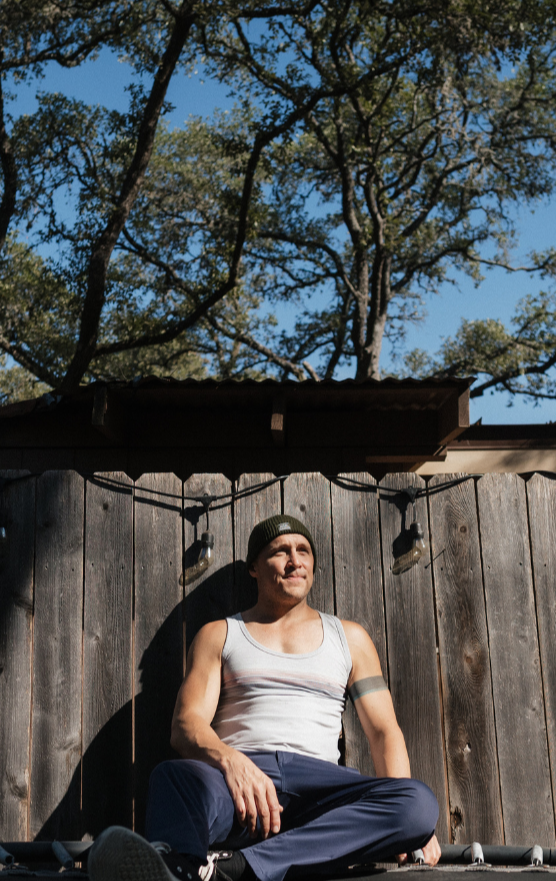
Ted Talks, Stage Four Cancer and Stress Management with Cort Davies
Jan 09, 2020
WELCOME TO EPISODE 49
In 2017 Cort Davies was diagnosed with one of the rarest forms of cancer on Earth called a malignant paraganglioma. He was given just three years to live. Instead of folding under the intense stress of having late-stage cancer, Cort set out on a mission to save his own life. After 7 surgeries, half of his bladder removed, and almost being paralyzed, Cort realized cancer and his journey were a gift and that his mindset and his resolve to survive was paramount in healing. He decided to translate this gift into a Docuseries, a TED Talk, and a cancer foundation to help educate cancer patients around the world, how to develop a healing mindset, and how to change destructive habits that could hinder their ability to heal. His goal is to help initiate healing for thousands of cancer patients worldwide.
In this inspirational conversation based in part on Cort’s TED Talk - The missing link in evolving cancer care - Cort and Freddie go deep on the causes of cancer, the best modalities for healing, trusting in yourself, learning from cancer thrivers, and so much more. For anyone living with a cancer diagnosis or supporting loved ones, this actionable episode will provide guidance, encouragement, and inspiration for your journey. You will want to listen to this one again and again!


Episode Highlights
1:10 - Cort breaks down his TED talk
4:04 - The role of adrenaline in cancer
5:48 - How early trauma may cause early onset of cancer
9:31 - Managing childhood trauma
11:50 - Considering your practitioner's diagnosis
14:34 - Making space for health decisions not driven by fear
20:26 - Being an entrepreneur and dealing with a cancer diagnosis
23:20 - Chronicling and learning from cancer thrivers
31:35 - Seeking your internal yes
33:25 - F cancer?
39:00 - What does it mean to be beautifully broken?
41:50 - Can you lose the battle with cancer?
46:56 - Freddie's challenge
UPGRADE YOUR WELLNESS
Marion Institute BioMed Course: biologicalmedicine.org
Code: beautifullybroken
Silver Biotics Wound Healing Gel: https://bit.ly/3JnxyDD
Code: BEAUTIFULLYBROKEN
LightPathLED https://lightpathled.com/?afmc=BEAUTIFULLYBROKEN
Code: beautifullybroken
STEMREGEN: https://www.stemregen.co/products/stemregen/?afmc=beautifullybroken
Code: beautifullybroken
Flowpresso 3-in-1 technology: (https://calendly.com/freddiekimmel/flowpresso-one-on-one-discovery)
Medical grade Ozone Therapy: https://lddy.no/1djnh
Code: BEAUTIFULLYBROKEN
AquaCure Machine + Molecular Hydrogen
Website:https://eagle-research.com?ref=24931
Code: beautifullybroken
DIY Home Cold Plunge Experience: [https://www.penguinchillers.com/?rstr=6757]
CONNECT WITH FREDDIE
Work with Me: https://www.beautifullybroken.world/biological-blueprint
Website and Store: (http://www.beautifullybroken.world)
Instagram: (https://www.instagram.com/freddie.kimmel
YouTube: https://www.youtube.com/@beautifullybrokenworld
EPISODE TRANSCRIPT
Freddie Kimmel and Cort Davies (00:00.046)
We all want to change and evolve as people, but cancer really forces us to evolve. It literally looks us in the mirror and says, you know, change or die. And that's really crazy to know that, right? It's really crazy to kind of look in the mirror and go, wow, we're looking at mortality in the mirror.
Freddie Kimmel and Cort Davies (00:19.609)
Welcome to the Beautifully Broken Podcast brought to you by AmpCoil. I'm your host, Freddie Kimmel, and on this show, we discuss the common thread survivors share after walking through the fire, the practitioners making a difference, and the treatment modalities that deliver healing back into the hands of the people who need it most. Witness the inspiration we gain by navigating the human experience with grace, humility, and a healthy dose of mistakes. Because part of being human is being beautifully broken.
Freddie Kimmel and Cort Davies (00:53.635)
Ladies and gentlemen, welcome to the beautifully broken podcast. I'm here in the woods of Connecticut with a very special guest that walked into my world energetic field. I am here with Court Davies. Court, welcome to the show. Thanks for having me, Freddie. Let's just jump in. Yesterday, I watched a TED Talk that you had recently done.
And I wonder if you couldn't just give us a little tidbit about the major themes of that talk and what it meant to you to put it together. Sure. Yeah, the major themes, the title of the talk was The Missing Link in Evolving Cancer Care. so long story short, I'm sure we'll get into it. I have cancer myself. I like to say my body has cancer, not myself. But it revolves a lot around stress.
and the correlation between the stress hormones in our body, the chronic stress that cancer patients have, and how it affects the growth of cancer itself. And that was kind of the basis of it. And so my kind of synopsis and takeaway from the talk was that I believe that there is a missing link in our cancer care, and that is having
someone to talk to from a psychosocial perspective, having someone to talk to about stress. When you're told you have three years to live. Did you have that person when you received your diagnosis? I did not. I did not. No. In fact, one of the things I said in the talk that rings true to this day is that it's been, you know, I was misdiagnosed for three years and I've been going through it for about two years now and no doctor's ever asked me how I was doing mentally.
So still to this day, I think a few nurses have asked me, which seems about right. But no doctor has ever asked me how I was doing mentally. And I've had seven surgeries in the last two years. And a lot of clinical trial drugs and a lot of testing drugs and a lot of radiation and starting chemotherapy. so there's a lot of stress that comes along with that. so my
Freddie Kimmel and Cort Davies (03:09.401)
My thought is that we're not doing a good enough job in attending to that stress in many cancer patients. Now, I've heard some people have had therapists and some kind of psychosocial support. Some hospitals are providing this help. But my big thing was really looking at it scientifically. Not just is this a nice thing to have, but
When you get told you have three years to live, when you get told you have cancer, what does that do scientifically to your body? What does that do from a hormonal and biological standpoint? so that evidence is incredible. we know now that adrenaline can increase the speed at which cancer proliferates.
And so we want to minimize that. Adrenaline was something very unique to your type of cancer. Can we talk a little bit about that? diagnosis and specifically how adrenaline was driving what your body was trying to rebalance? So the disease is called malignant periganglioma and it's a neuroendocrine tumor, which means that not only is it cancer, but it produces adrenaline. So you can really look at it as if my body has a bunch of adrenal glands all over it.
All the tumors are adrenal glands. And so, you my body at one point said, we don't have enough adrenaline. And so it started producing, started creating other organs. I mean, that's what these tumors are. They're almost, they almost act as organs. And so when they found the disease, I had, know, the normal adrenaline, the normal norepinephrine in the body is like 200 units per
know, deciliter, mine was like 17,000. So it was astronomically high, you know, astronomically high. And so the interesting thing about my journey is that, you know, the adrenaline in my body was the big, the big, you know, kind of indicator of, of, of the fact that I was sick because it was spiking my blood pressure. I was getting these crazy migraines. My heart was racing.
Freddie Kimmel and Cort Davies (05:26.841)
And so as you could imagine, I was chemically programmed to be stressed and have anxiety too. So not only do we go through the chronic stress of having the cancer diagnosis, but I also had all these endorphins and adrenaline and hormones going through my body that chemically made me more anxious and more stressed. Wow. What do you think? Have you ever thought about the initial signaling, what your body was asking for, for this
additional adrenaline? Were there other instances in your body where, like I had asked you before, was there other chronic illness you would struggle with as a young adult or a young human being? I think that, so I had an accident when I was seven years old. It was a really freak accident. I was climbing a tree with a friend and I touched a power line by accident. Wow. So this was like, really, I really
got interested in how the autonomic nervous system functioned in the human body. And as it turns out, as we're growing, in between the ages of about zero to seven and zero to nine, our sympathetic and parasympathetic nervous systems are forming, right? And so as you can imagine, when I was seven years old and I touched this power line, I went through, you know, it was a huge shock, you know.
essentially it was a huge shock to your system. And so what it did was it heightened my sympathetic nervous system. It heightened my fight or flight, right? But it was to the point where my body wasn't able to really handle that pressure. We don't really get, in between the ages of like zero to seven to nine to 10, there's basically what they say is that if you have a traumatic experience in that,
in that area of your life. really affects your autonomic nervous system. It could really throw you off, right? And so I had a huge accident that happened to me at seven years old. And so I think it really kind of changed the destiny of my life. And so I had always had chemically high stress and adrenaline because of that shock. I mean, I had all this voltage come through my body, right? And so I think that
Freddie Kimmel and Cort Davies (07:54.126)
It made me kind of, it programmed me to have this high adrenaline in my body. But here's the unique kind of perfect storm is that, you know, I was susceptible to this cancer because of this gene mutation that my father passed on to me. And so as we know with gene mutations, we, you know, we know scientifically that, that, that genes don't necessarily cause cancer. There's a correlation to cancer, meaning there's, there needs to be some kind of environmental factor that
that contributes to the cancer, contributes to the onset. And so for me, it was having this gene mutation and then having this accident when I was young and then constantly reliving that accident. And as we know about memories and as we know about trauma in our body is that our body believes the trauma happened yesterday. It's a fingerprint. It literally can be relived as it happened yesterday. And if you relive something as it happened yesterday, those same stress hormones could
could continuously be triggered in your body. And so my theory is that this accident and this trauma had a lot to do with the onset of my cancer. Yeah, I can only imagine. I know the value of zero to seven and how that initial programming is formed in our brains. The brain is washed in a specific chemical. The frequency and wave form and state of the brain is so impressionable to lessons. That's why children learn so quickly.
and they're able to adapt. So I can only imagine. I mean, that's so incredible. you know, sidebar and just to take that forward into the future, when was the first time you were able to address that trauma effectively? Wow. I think I'm still addressing it now. I think that's been part of my journey now is I think that, you know, I never saw anyone about that. I never saw a therapist or anything. I probably should have.
you know, but I was seven years old, who knew, you know, and I think it was something that my parents kind of, you know, just sweeped under the, you know, under the rug. And it was something we just didn't talk about. And I think that that, you know, probably made it worse because, know, it was just suppressed and you know, now I'm going through what I'm going through and I'm trying to figure out all these ways to, I mean, really what I'm trying to do right now is figure out how to.
Freddie Kimmel and Cort Davies (10:19.924)
get my body back into a constant state of homeostasis, right? Because I know that my body is constantly moving up and down based on stress hormones. And if I can get my body into that state of homeostasis more consistently and constantly, or parasympathetic, I know that my body can do what it needs to do. I know that it can, you know, I can assist in helping it heal itself. And so I think right now is the time that I've been really addressing it.
and through different modalities. think meditation has been kind of the one that's been the most effective to this point. But I feel like a lot of us are constantly adapting to these traumas in our lives on a consistent basis. Yeah, to be human is to be with trauma. Yeah. When people say, well, I've never really...
Let's examine that because it never has to be anything bad. I think oftentimes people think you need to be abused, you need to have had an alcoholic father. You know, it can be a baby crawling towards the edge of a couch in fall and to always feel that feeling of being unsafe. can be being birthed in the vaginal canal, having the umbilical cord wrapped around your neck and feeling that feeling of suffocation, which is very common in a high correlation with cancer and chronic illness.
I think a big takeaway is like, this is the work we have to do. So what have been, there's so many questions I want to ask you. If we went to a doctor today, let's say you're your lead practitioner guiding your standard of care, what is he going to tell you about your condition and the prognosis and expectations for success? I think, yeah, that's a good question.
My initial prognosis was three years. I kept on going to different doctors and they kept on saying, we don't really know much about this disease. I think that that led them to just kind look at the statistics and say, hey, you're a statistic and this is the destiny that you have. This is your life's path.
Freddie Kimmel and Cort Davies (12:39.063)
I found some really good doctors out in San Diego that would definitely say something different. have a team, a man and a woman, and when they met me, they were like, OK, this is exciting. You're a unique case. And they kind of looked at me from a different lens, and they said to me, they're like, we're going to create a different standard of protocol. And we want to see you.
Die is an old man, know, die of natural causes. And so that obviously sits better with me. Sure does. Most of the medical world would say that, you know, the outlook isn't amazing. I mean, it's, you know, I suppose I'm considered stage four and I rarely like to say that or allude to it because it just feels weird. You know, it feels like I'm giving up. Yeah. You know what saying?
And so- Can I go to stage five, stage six, they said, do I have to end it for- Yeah, exactly, Who made this grid for me to live in- Exactly. In my spiritual hope, in my body? Exactly. Terrible, terrible. Yeah, I can't even really look at the MRI reports anymore because when you read them, it's just like the radiologist is just doom and gloom on the report, you know I'm saying? I know. Tumors are getting worse, they're growing fast and you're just like, oh my-
Gosh, man, it's just like crazy. So I think that the medical world wouldn't think that I had a really good chance, but it's the complete opposite feeling of what I have in my body and in my mental state. Yeah, I get that. Yeah, so I don't, it doesn't feel that way at all to me. Like it feels like.
Everything I'm planning, know stuff with my vacations and the projects that I'm working on in my future like it feels like all of that's Obviously gonna happen. Mm-hmm. I Want to ask you about you know, because you're in a very special situation. I know people can be driven to treatment out of fear and I'm sure with your initial diagnosis. There was a lot of you need to do this tomorrow. Absolutely.
Freddie Kimmel and Cort Davies (14:50.496)
How do you manage that? how do you, because we've spoken, you you've done a lot of things outside of the box that, man, I tell you, when I was diagnosed at 26, and they were like, you gotta cut this out of you today, and you have no choice. I mean, there was no, I had no thought of anything else. I went straight to the emergency room, straight to surgery. And maybe that was the right choice for me.
but you've evolved and you've had space to entertain some of these other holistic modalities and looking outside the box at all these different things that can have an effect on cancer. How do you manage that and make space for an alternative choice that's not driven by fear? Well, so surgery was my, I had to have surgery. And so the reason I had to have surgery, again, the thing with the cancer that's in me that's different than most cancers is the adrenaline.
So the real reason, so I had a tumor in my bladder the size of a baseball. And so the real reason they had to remove that was not because of the tumor itself, because it was growing slowly, but it was because of the adrenaline. It was because of the fact that they had to get my circulatory system in my heart, you know, to a healthy state because it was just getting pumped. was just getting pummeled with adrenaline. So a lot of my surgeries have been based on just reducing the tumor load.
So we are reducing the adrenaline load. Interesting. So that's been a big thing. so obviously, I even had a hard time with the initial surgery. It was a scary thing because they didn't know if they were going able to see my bladder. And that was pretty tough. And I had two back-to-back surgeries within like three weeks. I had the bladder, and then I had a surgery on my spine. So that was pretty difficult. But back to your question, it's been two years now.
So I think for me, I think it's interesting. So I think that the stat right now is that Americans spend $30 billion a year on comprehensive or alternative health kind of things, whether it be supplements or going to chiropractors, going to acupuncture, anything like that. And so I had a history with Crohn's disease back in 1999. I was diagnosed.
Freddie Kimmel and Cort Davies (17:12.658)
I really solved it with nutrition. And so I went off my meds and my gastroenterologist to this day still doesn't understand how I'm not a medicine. But I kind of took it head on and I think that really changed my perspective of dealing with cancer. So I don't wanna say I was lucky, but I was like, it was teed up for me. Do you know what saying? Like I had already had a different perspective.
Also living in California for 12 years also is a big change too because it's a different environment. They look at food differently. They look at health and vitality differently. I think they're, no, I don't think. My lifestyle was less stressful. I got more sunlight. All these factors were huge, right? And they're very simplistic. so those simplistic things are actually the things that I kind of
incorporated in my life the most now. The simplistic eating, the sunshine, the walking, the movement, the non-stressful lifestyle. That has evolved to opening up space to allow me to learn about all these other different things. And I just let the adventure take me where it goes. And like meeting you, ending up in this kitchen, these things happen to me all the time. They happen to me all the time.
Yeah, court walked in and we were introduced through Kathy, who I'm living in the house with, and we know each other through AmpCoil. And, you know, we started to talk and she's like, you got to meet this guy. He's got an incredible story and you got to listen to his Ted Talk. And I was like, you got to do the podcast. So here we are. So the other thing I want to ask is, and if anybody hears this poor little whimpering dog behind me, Rosie, do you want to come over here? Hold on. Oh my goodness. Hold on. I got to pause this. You got a bone in her mouth. I'm gonna let her outside. So so cute.
So, so we just let the dog outside with her bones so she can go bury it. made bone broth. I've been making it for like a month here. I've actually been doing, you know, not to, not to derail us. I've been doing this, mad one meal a day, like a fasting, you know, 22, 23 hour and just trying to get my one meal a day. And I've done that for 16 days. And my, my pain and my body has dramatically dropped from these long periods of fasting. doesn't work for everybody, but for me, it's been really neat.
Freddie Kimmel and Cort Davies (19:37.334)
to see and experiment with. And there's a lot of overlap in a lot of these protocols for cancer. Dom DiAgostino is a doctor talking about the ketogenic diet for glioblastoma. If you go to the Deuterium Depleted Water Center in LA, where they're talking about removing heavy hydrogen isotopes from the cell to extend life in cancer patients, they're also finding greater efficacy with a keto diet.
There's lots of these things that are overlapping and when I see them overlap enough, I'm like, that resonates as true for me. So anyways, so we have all these extra bones and every single day I give this dog like these grass-fed femur bones and she's just so happy and so thrilled. I wanna take us back to what you're currently doing because so you're in this world, you're trying to find the map, your way through, your way around.
your way to exist. And it's not just about managing your disease and your symptoms, life goes on. And you've got some really amazing passion projects right now. I'd love to talk about some of the stuff you're working on that really lit my fire and I want to be part of and I want to make it happen and I want to help in any way I can. So let's let's ignite the audience a little bit. Yeah. So I think, you know, I think the,
The difficult part about life for me right now is the ups and downs, the pain. Some days good, some days not so good. I have been managing and learning to deal with that. I've been to LISO, I'm on disability. I think as a 40-year-old American man, we're always taught that we need to be working, we need to be contributing to society.
So it's interesting that there was a little guilt behind that, right? There's like a little built in guilt and it could be based on tribal conditioning, things along those lines, which really interests me, right? And so I have been giving myself this, a hard time, but at the same time, it's kind of like, as someone who's going through cancer, as someone who has cancer as severe as I do at the moment, it's like rest is the most important thing, right? It's like, this is what we're supposed to be doing. And so we actually have this,
Freddie Kimmel and Cort Davies (22:04.733)
You know, a lot of cancer patients have this battle going on in their head. What should we be doing? Like, sleeping 12 hours a day, is that OK? Like, do you feel lazy? I get up sometimes, I get up late, and I go, wow, why am I beating myself up for this, right? And so the reason I said that is because I have been working on these projects for a while now.
And they're really starting to come to fruition. And so it's really interesting. You think about any entrepreneur out there that's going through their challenges. And I have been through those challenges as an entrepreneur. But I am doing these projects and pushing hard. And sometimes I forget that I am sick.
And sometimes I forget that I have to deal with what I have to deal with on a day-to-day basis. That's awesome. So it's really cool sometimes, right? Because all of a sudden, you're just like, wow, I actually have to get through this gauntlet of a cancer journey that I'm going through to make these projects come to life. And so my life right now is balancing my health and these projects. And so to get onto the project, we're creating a book.
which is really exciting. It's with 100 cancer thrivers, I like to call them, not survivors. And so what we're doing is, and you're gonna be in my book, Freddie, awesome. I'm so excited. And so what we're doing is the book is called One Habit to Be Cancer, and it really comes from the TED Talk. It really comes from the subject of the TED Talk. And so this came from me talking to people that have gotten through cancer, and what I noticed is that
All of them really had a few habits that they really kind of changed. really evolved as a person. And that's life. We all want to change and evolve as people, but cancer really forces us to evolve. It literally looks us in the mirror and says, change or die. And that's really crazy to know that, right? It's really crazy to kind of look in the mirror and go, wow, we're looking at mortality in the mirror.
Freddie Kimmel and Cort Davies (24:19.04)
You know, I know it's really difficult to talk about death, but we as humans are always kind of pushing death off and we're not really looking in the face. And now all of a sudden as a cancer patient, you're really getting forced to look death in the face. And what it does and what it did to me is it really kind of me look in the mirror and go, man, all these things that I've been scared of doing my entire life, like why are you putting it off now?
No time to put it off anymore, right? Now it's time to make these things happen, make it real. And so this book's coming together beautifully and the feedback that I've been getting from cancer patients all over the world, cancer thrivers have been incredible. And again, we're going to be presenting this one habit from each of them that really helped them in their journey. hopefully we can spread, the new cancer thrivers and the caregivers are doing research and they're reading these books.
You know, my vision for this is that, you know, you're in the hospital, you just got diagnosed, you're scared, you you read a couple chapters in these books and go, okay, here's some small changes that I can make. Because we gotta meet them where they are, right? The small changes are, you know, the ones that turn into the big changes. I mean, for me, just meditating, you know, 15 minutes a day has turned into me meditating, you know, two hours a day for the last almost year now. And that little change has become a huge change for me. Yeah.
From the book, our big thing that we're really focused on right now is creating a docu-series. And the way that I like to explain the docu-series is very simplistically. When you're diagnosed, you're scared, you're isolated, you feel disempowered. You're very fearful. You're making decisions based on fear. You just talked about that, how the fact that you were told this needs to happen now, right? And as we are told,
you know in our lives you know decisions made in fear typically the wrong decisions so i want to get cancer patients to the point where they don't look at themselves as victims are patients anymore they look at themselves as drivers and so what i want to do is take them from again the isolation this is disempowerment the fear to you know feeling empowered feeling like they they they're taking their cancer diagnosis into their own hands there's
Freddie Kimmel and Cort Davies (26:41.913)
know, 5 % of the time that we spend with the doctor and in the infusion center and getting tests and doing MRIs and CT scans, but there's 95 % of our life that's going on. And that's the most important part is what do we fill that 95 % of our day or our life with? so this vision came with, you know, some friends of mine and I have become, you know, my business partners and it's really evolved. And so,
It really has a lot to do with the journey that I've been on, the things that I've tested, the things that I've tried, because there's no protocol for what I have. There's a lot of, if you have breast cancer, if you have prostate cancer, if you have some of the more typical cancers, there are alternative, integrative, and traditional protocols for a lot of those cancers. And so I had to do a lot of testing with what I went through. And again, what I realized is that
People are really quickly to tell you what to do. The peanut gallery is very adamant on giving you these miracle cures, which are most often dangerous. I'm all for trying as many things as we can, but I'm also all for doing it in a pragmatic way, like to get the necessary testing that we need to, to have as much information and knowledge as we can on our own disease. And again, is, cancer is like getting a PhD in your body and in your life.
And so that's really the direction we're going with that docu-series. And from there, it's creating these retreats all over the world. That's really what we're really excited about. And so going back to the TED Talk, it's about stress. And so what I want to do is I want to have 10, 20 cancer retreats going on around the world. It means 100 million people with cancer worldwide, which means there's 300 to 400 million.
family members that are worrying about that person with cancer. So it's really large number. And so I want to have 10, 20 of these retreats going on. We're 50, 100, 200. Maybe eventually there'll be 1,000 people. And I want to take them outside of their stressful environment. Because if we're in an environment and we're going through a lot of fear and we're doing the same thing over and over again, what we need to do is we need to break that state. We need to break that pattern.
Freddie Kimmel and Cort Davies (29:02.283)
And so I wanna take them in, I wanna help them break their pattern, I wanna teach them modalities to help them keep calm, I wanna teach them modalities to help them de-stress, and I wanna introduce them to things that are really gonna help them. And there's a lot of things that you and I have discussed. I mean, this retreat can turn into this amazing adventure for these people, and we wanna give them this plan to take it home with them and say, listen, you came as this person.
that was scared, that was fearful, that felt like a victim, that had a lot of anger. And you're leaving as this empowered human being with the Superman logo on their chest. And I get emotional thinking about that. It's so powerful to like, because I know we're going to be in a room of 100, I have this vision every day, we're in a room of 100 cancer thrivers, 100 cancer patients, and someone breaks out into,
hysterical tears like they've like they've been suppressing their anger and tears their entire time and it's a beautiful thing. It's like a it's a beautiful thing because it's this energy release right and we're going to embrace them and we're going to embrace this experience that we're going through because it's the you know it's the it's the biggest toughest challenge that we've ever been through. You've been through it yourself. Yeah as a human race it's it's incredible. I've actually it's if I've had five people come into my circle in the last week
with the topic of cancer, whether it was three were newly diagnosed, these are my close friends. One with a terminal diagnosis, one passed away last week, two other with stage four, both given six months to live. These are people I know intimately and then two reached out over Facebook over the weekend. And then I met you last week and it's just so...
I'm open to the information. You know, I'm watching this this influx of people come in young people everybody I'm talking about right now is is like 42 or under it's crazy. It's crazy and and it's a thing and you know the the odds, know, the way they calculate odds in stage four It's really crappy if you ever look at it in a book. It's based some things on on that you're
Freddie Kimmel and Cort Davies (31:20.322)
your closest proximity to the best practitioner in the world. they, get, you get, you get, you lose points for being a far distance away from the best hospital for your cancer. mean, you really can't take that number. You've got to look at your body, what you're doing. And you know, to speak to, you know, we've talked a little bit about, well, we didn't talk about on the podcast, but, cancer is big business. Cancer is a lot of money and there's definitely, I'm not a huge conspiracy person, but there's definitely.
There's a movement to drive how we have access to information. And I don't want to tell anybody to do anything weird or crazy or endanger your life or your cancer, but know that nobody makes decisions about your health. Nobody, not your partner, not your doctor, not your teacher, you do. So you have the power to change or decide what best is for you to eat or not eat.
or what kind of water to drink or what kind of meditation to do or what kind of retreat to go on and do plant medicine if your spirit needs that much clearing. It's up to you. Anything. You can create this paradigm for what your healing roadmap looks like. So don't feel stifled and you know, I would just, you know, take your time and again, your body knows like your body knew when something was right for you to try or go forward or to do again. Definitely. Our resonators know when we've lost
I think what excites me, I see what coming out of a retreat is someone learning how to listen to their body and find where the internal yes comes from, because we've lost that. We go outside of ourselves from answers on everything, everything, not just our health and wellness. And I think that was something that when you're around other people going through that struggle, you learn that really quickly, like how to tap into, okay, this is my why, this is my yes. that's, we need, we need that in the world.
My intuition guides me with everything I do. Everything I do. I think it's a lost skill, but it's something we've got to get back to, especially in this fight. Court, the other thing I kind of want to ask you is, what are your thoughts on, because this bugs me. You know, it bugs me when people are like, Cancer. You know, the F Cancer hats or the F Cancer t-shirts. I'm so glad that you brought this up. I hate it. I hate it. I do. here's, so I have two thoughts. Let's do that one first.
Freddie Kimmel and Cort Davies (33:44.45)
Let's do that for how we talk about cancer. I'm a cancer warrior. There's a battle, there's a war inside my body. I'm obliterating and blowing up cancer. I'm cutting it out. I'm decimating the battlefield. How does that feel to you when you talk about cancer that way? It's interesting you said that because the co-author of the book that we're writing wanted to call it One Habit to F-U-C-K Cancer. I was like, no.
I was like, no. It's great marketing. Yeah, of course it's great marketing, right? And it's interesting because we, you know what it really comes from. It comes from the fact that there's a lot of anger around the disease, right? A lot of people feel like they're a victim and that's part of the problem, right? That's part of the problem is that if you feel like you're a victim, you're already going in the wrong direction. And so to me, cancer is something that our body created.
and it was created for a reason. And by the way, it's not anything against the person. Like don't blame myself for getting cancer. Cancer is not anything that comes from the outside. They say potentially viruses can contribute to a weakening of system to create the malfunction of the cancer. But what cancer really is is your DNA creating cheap proteins and there's a malfunction.
And a lot of people say that, and I tend to believe this in a sense, a lot of people say that cancer is your body digesting some kind of biological or emotional shock. And I really like that. I really like that because for me, it really rings true because I've had a lot of biological and emotional shock. There's an interesting statistic and interesting data is that breast cancer, you can actually, when someone goes through breast cancer,
You can actually ask them where their breast cancer is and say it's in their left breast and it's in their mammary. That actually attributes to some sort of loss. So I mean, it could be as exact as if the woman had breast cancer in her right breast and it was in her right mammary, it could have had to do with a divorce. If it was in her left breast and her left mammary or left musculature, it could have had to do with losing a parent or losing a child.
Freddie Kimmel and Cort Davies (36:07.183)
And so all of a sudden, I got to interview a lot of people with breast cancer because there's a lot of women with breast cancer. It's by far the most common cancer. And I've spoken to probably 30 plus women that have had breast cancer and every single one of them has been through this emotional biological shock. There's not one that hasn't. All of them. It is like a domino effect. go, wow, all these people had something traumatic happen to them. And it was all within.
three months to three years prior. And so, you know, to me, what that shows me is that, you know, again, you don't quote me as a doctor or a scientist, but I do know my body really well and I do know cancer really well because of what I've been going through. And so basically what I'm saying is that cancer is often a gift. And if you look at it as a gift,
It changes your whole perception of what you're going through. And so life is about perception, right? I love the saying, we don't see the world how it is, we see the world how we are, right? It's very true. So we see the world from our blurred lens of how we have lived, the experiences that we have and the perceptions that we have. And so we can either view cancer as the enemy,
which makes the battle a lot more difficult because then all of a sudden chemotherapy becomes the hard artillery and it becomes the poison. Or we can view cancer as the greatest lesson that we've ever been through in our lives and that chemotherapy is love and light and neutrality and this beautiful thing that's helping us that was created from God. It's a totally different paradigm, right? And so again, I think the big thing is that
If you view cancer from an angry perspective, you're really kind of living at a lower frequency. And if you view it from a love perspective, from a gift perspective, from a healing perspective, from a perspective of this was, you were meant to go through this. This is a blessing and the other side of it could be the most wonderful thing that has ever happened to you. To me, I'm incredibly grateful for what I've been through and I'm incredibly.
Freddie Kimmel and Cort Davies (38:24.006)
excited for what's coming next. So no, I don't say F-cancer. I don't believe in that. don't believe that that's the right perspective. I'm not angry about it. Yeah, me too. Me too. We're in the same. But I hear that chatter a lot online and with other chronic illnesses and it just puts you in such a reactive pin cushiony position to be just continually hurt and manipulated and put upon and
you know, from an empowerment standpoint, it's a really tough way to, again, work with your disease. Yeah, absolutely. So, my goodness. So, Corey, I want to ask you also, I always ask people a couple of questions when we finish up the show. I want to be respectful of our equally busy days. So, you know, the Beautifully Broken podcast, what does it mean to you to be beautifully broken? Well, I think that what we were just discussing,
I think beautifully broken fits it well. I think that as human beings, we go through changes and a lot of us are really scared to go through the changes that are necessary to get us to where we want to be, right? I don't believe that the day we were born, we're good enough, we're worthy, right? We're worthy of love. And I didn't believe that before. I didn't feel that way before.
And when I see the amount of affection and love and community that I've experienced from having this disease, what I realize is that cancer can be very beautiful. And it could be, this whole experience can be very beautiful because it forces us to go beyond where we were previously comfortable to go. It forces us to, you know what mean? I mean, my friends,
you know, my friends, the people that I see all the time, like, it puts them in uncomfortable situations, but what I see is it inspires them to feel emotion and express gratitude for life more than they've ever had, because all of a sudden one of their good friends, you know, who's 42 years old and it's the same age as them, you know, is potentially having a life-threatening disease. And they all of a sudden see, you know, their life around them. Life becomes a little more clear.
Freddie Kimmel and Cort Davies (40:46.137)
And I feel like I have indirectly given people that gift. And I think that there's an incredible beauty around the human nature to really help each other. And I think that we're missing that. I think we lose that. I think that our society, our technology, has really kind of isolated us. And this has made me.
you know, embraced more people. It's made me hug more people. It's made me, you know, cry with more people. That has been a really big change for me. And that's been incredibly beautiful. And so I look back at that and I go.
you know, are we, you know, are we really broken or, or is this really just, you know, kind of the building blocks of getting us to where we want to be? Right. I mean, is it, is it, is it really, is it, it's, it's, it's almost the, it's almost the, forcing to change, to live the life that you were meant to live. Beautiful. The other thing I want to ask you is that, you know, people will often say to me, and this is another trigger.
that, you know, Cindy lost her battle with cancer. She lost, you it's like, if it doesn't end in you surviving, that somehow cancer was victorious, or you didn't come out on the winning side. Is that something you believe? No, no, definitely not. In fact, think the, in fact, I think that one of the most important things on my journey is being okay with death.
I mean, it's, death is a hard thing to discuss. And I feel like, you know, you and I are both marketing guys, right? It's like, death is the worst thing to talk about. Because it's like, people stop listening because they're scared of it, right? It's scary. And so, you know, even me saying that, you know, we're on a podcast and I go, hopefully I'm not making people turn the podcast off, right? Because it's a really scary thing. for me, it's like,
Freddie Kimmel and Cort Davies (42:54.697)
I have to be okay with it. I have to be okay with the destiny of what's been brought to my life. so, no, I don't believe that anyone loses a battle with cancer. I just believe that we all live the life that we're meant to live. Yeah, it's it's evident. I know everybody that hears this is gonna feel, especially your story, that it's defined by your actions and your words.
and what you're doing and how you're showing up and making these incredible architectural plans for these systems to be in place for millions of people for a long, time to come. And I have the same belief system. think it's really, but it's inspiring for me to hear. And I thank you for being on the podcast. Thank you.
It's just been a joy. I know we're going to do more episodes. should definitely do, we should definitely get Jeffrey Williams on here. Absolutely. Who is one of your business partners and one of the most wonderful speakers and insightful human beings about chronic illness and the power that you have in your own body without supplements or technology or anything to get better. And we do see those people, those people do exist. I know all the stuff I talk on here about on the podcast.
you know, these protocols and ozone and you know, these mistletoe supplements that can, you know, move people past what they're struggling with are great. They're great to do the heavy lifting, but the real work and the work that has longevity in it is the spiritual work, the meditation, you know, and that's what Jeffrey really excels in. So this is his open invitation to get on the podcast.
Jeffrey. think, you know, just to say something on that, Jeff's helped me out a lot. I he's a dear friend of mine. He is a brother to me. What I think Jeff helped me realize and what my journey has helped me realize is that, you you and I have talked about this. It's not the supplement. It's not the mechanism that's doing the healing. It's us that's doing the healing, right?
Freddie Kimmel and Cort Davies (44:58.447)
And so I think that there is the, if you look at, you know, Maslow's hierarchy, if you look at the chakras in our body, basically what you see is that, you know, the communication that you have internally is the most important and the first step because all the other things that you contribute that you find that you try don't work unless you believe in the internal ability to heal. And so if, if, if, if, if ever I had a takeaway, it would be this, it's, it's, it's the.
It's the fact that if you do have cancer, if you do have a chronic illness, and you are taking supplements, or you're on Western medicine, or you are doing these modalities, the most important thing is to deal with the emotional aspect of the disease in your body first, to have this communicative conversation with yourself every day that you're moving in the right direction.
and for you to allow yourself to heal and to get to another level and to know that you're worthy of healing. Like that's a big deal. A lot of people don't believe that they're worthy of healing and they continue to try things and they think they fail and they think they fail and they think they fail. But what they're doing is they're subconsciously telling their body that they're not worthy to heal. And so that has become so much more important than all these other things. And again, it's the fact of the matter is this is that
The placebo effect is the most incredible thing. mean, if you look at studies with antidepressants, 80 % of people that take the placebo have the same effect as the antidepressant. They get better. And so what that tells us is that we have everything inside of us that we need to get better. All these other things are great, and they're contributing to us. But it needs to start with that communication with ourselves, with our body, with us getting better from the inside.
and feeling worthy of it. That's the truth that we're going to close with. I thank you so much for being on the podcast and thanks, Freddie. I know we're going to do another one. This is profound guys. This is just, this is like step one. This is a great way to start your new year with some of this. Sit back and see, you know, there's so much content. So this is like going to be like episode number 50 or 51. You know, I do an episode a week for, the last year. It does a lot of content out there and
Freddie Kimmel and Cort Davies (47:22.951)
I think within entrepreneurs and marketers and some of us that are in this world of creating that it's, always need to be creating more and more and more. When you get a hold of something that resonates with you, sit with it, listen to it once, go for a walk, see how you feel, listen to it again in a week, see what else you pick up the next time. Some of my favorite podcasts I've listened to five, six times and every single time I pick up something new,
Pat Flynn, one of the best entrepreneurs in the world, great podcaster. mean, he's like my go-to, Ben Greenfield. They're movers and shakers, but they're so thoughtful in their words and intentions and the guests are so good. You're always gonna get more. this is gonna be one of those episodes I already know, Feels Like Magic. And Rosie the dog who barked and applauded the last couple minutes of the episode. I gotta give love to Rosie, because she's patient.
So again, Court, thank you for being here. And thank you. Thanks so much, Freddie. It was a pleasure. Namaste. Appreciate it. Ladies and gentlemen, you made it to the end of the podcast. Now, in a world where the average attention span is less than 10 seconds, we just spent almost an hour together. And I think this is the beginning of something really beautiful. Now, one way to support the podcast is to head over to freddysetgo.com and check out my newly launched page, Freddie's Faves.
where I've linked every five-star product and healing modality you hear about on the show. Most offer significant discounts by clicking the link. And please know, it doesn't cost you anything extra, and at the same time, they support the show through affiliation. So check out Freddie's faves on freddysecco.com. This episode of the Beautifully Broken Podcast was brought to you by our sponsor, AmpCoil, upgrading the vibrations of hearts, minds, and bodies all over the world
Thank you for tuning in. If you enjoyed today's show, head over to iTunes and leave a five star review. Grabbing a download is like giving this virtual thumbs up that we're doing it right. And if you want to connect with me, shoot me a message on Instagram at freddysetgo.com or at freddysetgo. That's all for today. Our closing, our closing, the world is hurting. We need you at your very best. So take the steps today to always be upgrading, whatever it takes to move the needle. Remember, while life is pain, putting those fractured pieces back together is a beautiful process. I'm your host, love you, namaste, have a wonderful day.