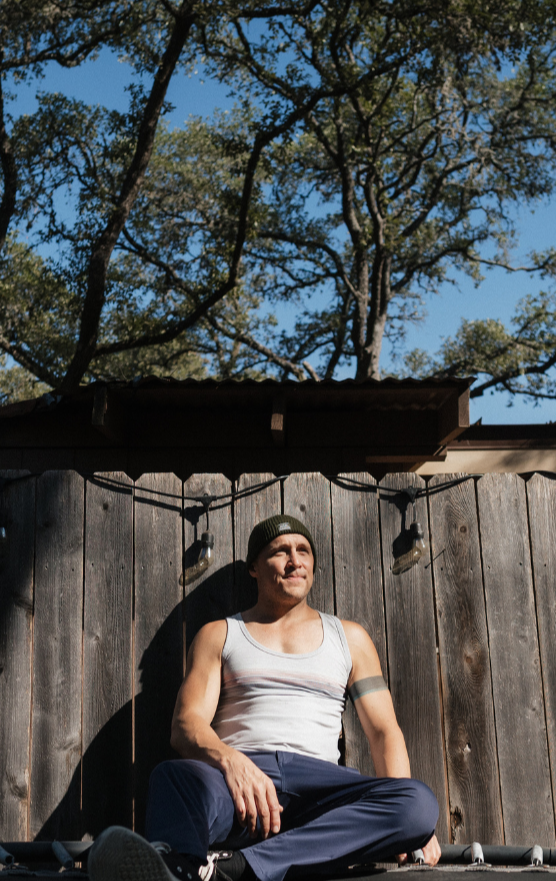
The Unbreakable Mind: Conquering PTSD, Mold Toxicity, and Chronic Illness with Chris Irwin, Retired Navy SEAL Commander
Jun 12, 2023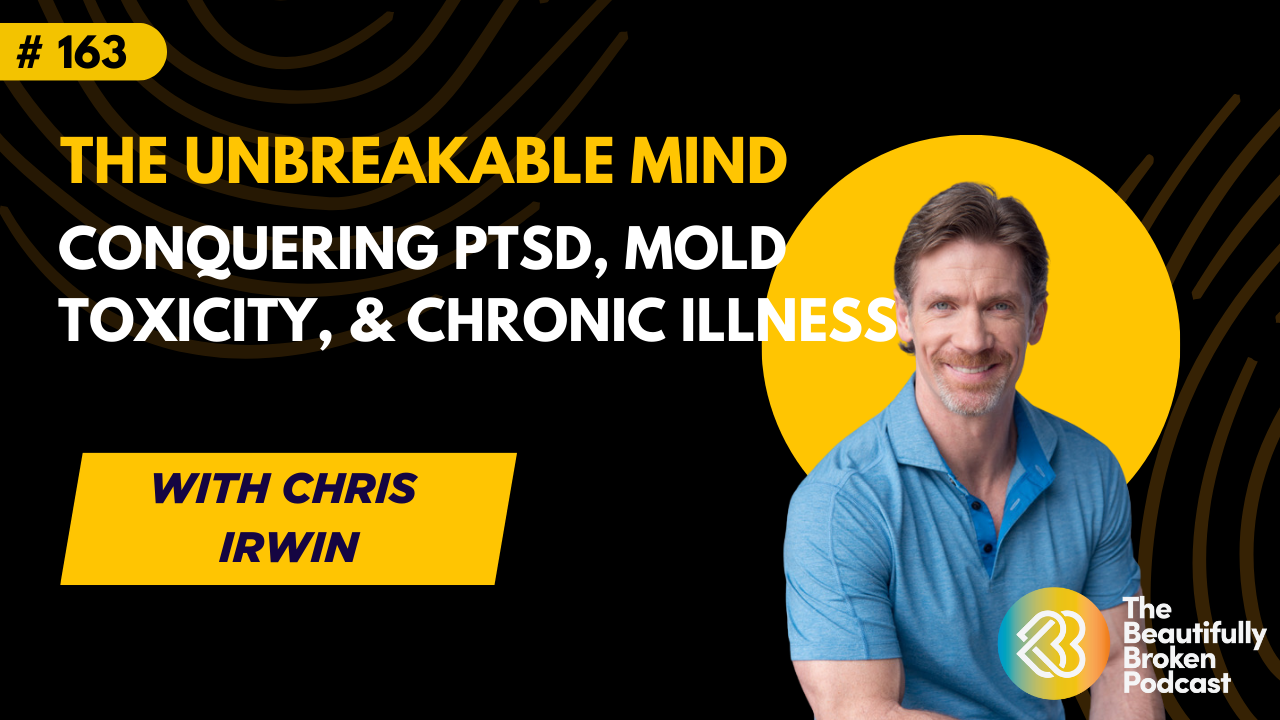
WELCOME TO EPISODE 163
Welcome to another episode of the Beautifully Broken Podcast. Today, we have the honor of sitting down with Chris Irwin, a retired Navy SEAL Commander whose journey from military service to overcoming severe mental and physical chronic illness is remarkable and inspiring.
After his time in the military, Chris faced significant challenges with his mental and physical health. However, through an extensive journey of self-discovery, he not only overcame these rare conditions but also developed a deep understanding of the mind-body connection. Now, Chris dedicates his life to teaching mind fitness through his brand, RARE SENSE.
Chris’s dedication to excellence and personal growth shines through in all aspects of his life, beyond his time in the military. Through his Substack platform, Chris shares his message and expertise with the world, delivering weekly training, monthly articles, and thought-provoking podcast episodes. His work is not only transforming individual lives but also challenging societal paradigms surrounding mental health and human performance.
Join us for this important conversation as Chris opens up about his journey of self-discovery and transformation. His insights and experiences will provide invaluable wisdom into PTSD and mental and emotional balance, and the fine line between them. For anyone seeking to overcome adversity and find their own path to wellness, this is a discussion you won't want to miss. Let’s jump in.


Episode Highlights
[0:00:00] Introducing Chris Irwin
[0:03:34] Using His Experience to Create Content Build a Platform Surrounding Mental Health
[0:09:26] Chris’s Life After Military Service and His Exposure Experience
[0:25:21] Managing Off Days
[0:31:56] Reframing Stories of Adversity
[0:39:36] Taking a Retrospective Look at Past Pain and How It Can Affect Our Behavior
[0:48:59] Health Therapies and Technologies
[0:55:15] “Rearranging” Ourselves and Creating New and Healthier ‘Loops’ or Patterns
[1:12:39] What It Means to Be Beautifully Broken
[1:14:39] What Kind of Treatments Should Veterans Be Given Access To?
[1:17:08] Outro
UPGRADE YOUR WELLNESS
Silver Biotics Wound Healing Gel: https://bit.ly/3JnxyDD
Code: BEAUTIFULLYBROKEN
LightPathLED https://lightpathled.com/?afmc=BEAUTIFULLYBROKEN
Code: beautifullybroken
STEMREGEN: https://www.stemregen.co/products/stemregen/?afmc=beautifullybroken
Code: beautifullybroken
Flowpresso 3-in-1 technology: (https://calendly.com/freddiekimmel/flowpresso-one-on-one-discovery)
CONNECT WITH FREDDIE
Work with Me: https://www.beautifullybroken.world/biological-blueprint
Website and Store: (http://www.beautifullybroken.world)
Instagram: (https://www.instagram.com/beautifullybroken.world/)
YouTube: https://www.youtube.com/@freddiekimmel
FULL EPISODE INTERVIEW
EPISODE TRANSCRIPT
Freddie Kimmel (00:01.942)
Ladies and gentlemen, welcome to the beautifully broken podcast. We have Chris Irwin. Chris is a retired Navy SEAL commander. Chris, you're an entrepreneur. You're a senior executive. Chris, your headshot is, is baller that you sent me.
Chris Irwin (00:18.351)
Which one? I think I sent you the, I sent you two. I sent you the one where it's a typical kind of headshot. And then I sent you the, the suit on the bike picture. Right? That's kind of the, my, my digital calling card. Yeah.
Freddie Kimmel (00:29.002)
I'll, I'll cut these into the YouTube video. I'll cut these into the YouTube video. Yeah, they're, they're great, man. I love the one for you on the excite bike with the fan and you're, you got the suit on and you're like, you know, it's, it's fitness meets the world of wellness, meets, uh, financial entrepreneurship.
Chris Irwin (00:48.743)
Yeah, that was a, that was like a shoot we did. It was kind of a commercial that I did for, um, men's warehouse, I guess. That's is that right? Now it wasn't men's warehouse. It was, oh, Kenneth Cole, I think was what it was in conjunction with men's warehouse. So we, I did it. It was like, um, they wanted to do a thing for veterans day years and years ago. This is when I was president at Kilcliffe. And, um, and so the.
they wanted to kind of like pay some veterans to basically do this like commercial where they were working out in these suits of theirs that were like stretchy fabric, awareness, aware tech, something like that. And I said, well, I don't want to get paid to do something like that, but you can give money to the Navy SEAL Foundation. And so they did that. But then that's what that's from. Like we shot this, we were like doing a workout all day long in this suit. And it was the idea was like, it's so comfortable you can, you can work out in this thing.
Freddie Kimmel (01:23.159)
Yeah.
Yeah.
Freddie Kimmel (01:44.186)
Go do your CrossFit workout in it. It's a great image. Chris, there's so many things that I want to ask you. For the audience at home, we've engaged online for quite a while, for a few years, but we've never met in person. I've been a real fan of your work. I love the stuff that you're doing on Substack and then the Rare Sense podcast I've been a fan of. I loved your last few episodes with Mr. Wolf.
Chris Irwin (01:45.649)
Yeah, exactly.
Chris Irwin (01:58.012)
Yeah. Yep.
Chris Irwin (02:13.104)
Yeah, with Rob, yeah.
Freddie Kimmel (02:13.142)
Um, it's, it's really, really good stuff you're, you're putting out. I, but I want to ask for some reason it's coming up for me intuitively. On your resume, it says entrepreneur. How do you, how do you generate green abundance? How do you, how do you generate money in the world? Like, what do you do for a living?
Chris Irwin (02:32.391)
Well, my day job is as a communications director for the Navy SEAL Foundation. Um, so I run marketing basically for the, the largest NSW nonprofit out there. Yeah. I don't, I don't generate any money with my rare sense stuff yet. So maybe one day that's, I mean, that would be great. I would love to do that. I would love to figure that out, but for now I'm just trying to put out valuable content for people to digest.
Freddie Kimmel (02:44.509)
Amazing.
Freddie Kimmel (02:59.05)
Yeah, yeah. And when you say the word content, when creating, whether it's writing or it's doing an interview, what part of that process brings you joy of making content?
Chris Irwin (03:14.139)
I really like, that's a great question. First of all, I should say thanks for having me on this. I mean, it's great. Like you said, we met kind of three or four years, probably four years ago, something like that, when you were starting this podcast. And I came across it as a chronic illness sufferer. And I was like, oh man, this guy's putting out some really good stuff. And as most of us in this situation do, trying to find solutions. And I just like, I
I think I DMed you on Instagram, and you actually responded and you were like, Yeah, give me a call. Like, let's chat. I was like, Holy shit, this guy's actually going to talk to me. So. So we've kept in touch ever since. And you've been a great sort of mentor and advisor and through like my own personal journey. So it's really an honor to be on this. I really appreciate it. Anyway, that Yeah, so what I derived joy from, I mean, I don't know, I just like I like being creative, a creative.
Freddie Kimmel (04:01.607)
Awesome. Thank you.
Chris Irwin (04:10.847)
person, that gives me a lot of, that's an outlet for me. So whether that's writing or talking to people or drawing something like, I like sort of digital art and that type of stuff, graphic artwork, anything like that, I really get a lot out of. And then I suppose I get a lot out of, look, the reason I put that content together in the first place, why I created the brand and the idea was to help people. I think a lot like you, where you just, you
learned a lot through your own journey and wanted to impart some of that wisdom, really anything that you have figured out in the process to other people. So I get a lot out of anything I'm putting out, getting the feedback of like, oh dude, I totally know what you're talking about, or like, oh, you know, I hadn't thought about it that way before. I mean, that's the whole point is to sort of make other people's lives better.
Freddie Kimmel (04:39.799)
Mm-hmm.
Freddie Kimmel (05:05.898)
Yeah. Yeah, we do. We build community. We create these shared realities with it through digitally now in this world. It's, it's wild to me. I, I was listening to an interview yesterday and in which you had, you had pulled, uh, you had pulled like a 40 minute piece and you had went through your story and I thought it was really fascinating. And I've heard you say this a couple of times that you will reference that you are a retired Navy seal commander.
Chris Irwin (05:22.899)
Yeah.
Freddie Kimmel (05:33.346)
But going into the details of that experience are not yours to tell. It's like you have this code about how you really don't go into the details of that career. And I find that so honorable and beautiful that you've chosen to create a sacred space around a portion of your life, which is just yours. Can you go into that a little bit and why that is, Chris?
Chris Irwin (05:39.379)
Mm.
Chris Irwin (05:56.955)
Yeah, I mean, I just think that I think often in interviews, people want to get into kind of my military background as a seal. And, and I understand that completely. There's a lot of interest in that type of thing. My feeling is that piece of my story, one, it's not different than really anybody else's story who's who has served in that capacity over the last 20 years or so.
And so I don't know that I have anything to bring to the table from that experience that's different or new or isn't already being said by somebody to, yeah, I just feel like it's not really mine. Like I was part of a unit and a team that, and that's where the, that's where the credit lies with that. And for me to sort of like take that on board as my own, I just think is not the appropriate
thing to do. So I just I keep that sort of sacrosanct and say, okay, like, you know, to me, it's like, the important thing for me too, is sort of what happened to me afterwards as a veteran. I think that stuff is very important to talk about because it can help other veterans. And that's really important to me. So yeah, it's just that's kind of like the path I've chosen, right? Like, I can acknowledge my military experience and
have that on my resume, right? Sort of like the wave tops of it, but diving into the details, I just feel like is not the appropriate thing to do.
Freddie Kimmel (07:32.978)
Yeah, it's, it's similar to if someone told me they went to Harvard or if someone told me they were a brain surgeon, uh, Navy seal commander that holds from, from the experience of seeing stories coming out of Hollywood or in television and film, you're like, wow, that is, that is a very small percentage of human beings on the planet who are able to do that physically, uh, be mentally. And then.
uh, come out the other side. So it's, it's a great conversation starter.
Chris Irwin (08:07.067)
Yeah, and like I said, I think it's part of my resume. I mean, the same way like a doctor or a lawyer, like you said, if you went to Harvard Business School or Harvard Law School, that would be on your resume, right? And then like that helps you get a job and that helps people understand some measure of your experience and background. And I view it exactly the same way. It's like, yeah, that's what I did for 20 or.
or so years if you include my reserve time and that's important to say it's it'd be really weird if you like, well, I can't talk about I can't tell you what I did for 20 years right now you're a weirdo. So I think it's, I think it's to be able to say, Yep, that's what I did. And then it's kind of like, okay, let's talk about what's what we're doing now, you know.
Freddie Kimmel (08:37.41)
Yeah.
Freddie Kimmel (08:47.902)
Yeah. So what we're doing now is, you know, a lot of the, a lot of the, um, content you put out is about survivorship through some of the trauma that you went through and then some other chronic illness challenges. And Chris, I'd love if, if you couldn't give the audience a, a peek into what your life has been since service and some of the pieces of adversity that you faced both physically and mentally.
Chris Irwin (09:02.142)
Yeah.
Chris Irwin (09:10.91)
Yeah.
Chris Irwin (09:14.503)
Yeah, sure. So, I mean, this is, this is, yeah, this is the meat of like what I, what I enjoy discussing because I think it's so relevant to the current landscape of the veteran struggle and for so many other people as well. So yeah, I'm somebody who, as I was getting out of the military, kind of developed a very severe, uh, mental health disorder. I don't really like those word disorder and illness and disease when it comes to mental health, cause it just, it puts it in that bucket of sort of almost like an
type thing where we've got to treat it in some capacity. And I think there's a lot of training that could be put towards it beyond mental toughness, too. I think that's another thing that we get so wrapped up in like, just be mentally tough. And that's going to solve all your problems. And I think that that's not accurate, because there's a lot of people like me that are I consider myself mentally tough, but that didn't save me from suffering mentally in a huge way post military.
So anyway, so I developed this kind of anxiety disorder based on sort of survivor's guilt and some guilt about other things. And just started really telling myself a story that I was kind of a failure and I didn't deserve to live and things like that. And it's just snowballed on itself as I think you're well aware through things that you've done as well and some of the programs that you and I have both been a part of trying to remove ourselves or get out of those cycles.
Um, I just got, it just got kind of worse and worse and worse and it turned into physical symptoms. So it turned into a limbic system disorder of scanning my body, looking for things that were killing me, things that could be, I was kind of in this mindset of like, you should, you're not, you don't deserve to be here. Therefore something must be killing you. Therefore let's go find it. Um, and that, as you know,
right through Reorigin or DNRS or Gupta program or any of these things. Once you start doing that, it's going to get worse and you're going to develop what feels like symptoms, um, that just make you worry more. And so, you know, I was just in this like constant state of kind of physical discomfort, dizziness, brain fog, fatigue, pain, tremors, you name it. And anxiety. Um, and I, I worked my way out of that to some extent.
Chris Irwin (11:37.495)
Um, initially with a program called the Linden method, Charles Linden is a British guy who was like a severe, do you know that one? Linden, Linden method? Yeah. So his is like one of the, I don't know about original, but it's like a specifically for anxiety sufferers program. It's kind of like some of the neural retraining out there, but it's got it's different. Um,
Freddie Kimmel (11:46.125)
I don't, I don't know. That's a first for me.
Chris Irwin (12:02.491)
And I can't, I don't know how I, I can't remember how I found him. I think I was just Googling stuff that where I, I had, I knew that part of what was wrong with me, I was doing myself essentially, but I didn't know how to fix it. So I, I used his method and I worked my way out of it, I think in part, probably not completely. And then five, that was so, so that was like 2011, 2012, and then about five years later, 2016, August.
Um, I had a mold exposure, like a hardcore mold exposure. At least I still, I think that's what it was. It's kind of, can I empirically say that that's exactly what happened? No, but all the data would that I have, if you can call it that would suggest that's what happened and my health fell off a cliff overnight. Um, so I went from one day basically feeling okay, um, to just being complete brain fog.
complete lack of ability to concentrate, just incredible amounts of pain. And at the time, I actually like that day, I didn't know what was going on. I was like, what the hell is wrong with me? Why do I feel this way? I feel so strange. Um, and I thought, I'm just. Yeah. So it was a, um, so I was pressure washing the, our driveway, um, in Atlanta where we lived at the time. So we had a house that was built in the fifties.
Freddie Kimmel (13:17.15)
Walk me through your exposure experience. What did that look like?
Chris Irwin (13:30.427)
And we had a concrete driveway pretty long, kind of went behind our house. And it was just, it hadn't been washed in a long time. And I'm sort of somebody who's, um, OCD a little bit and, uh, fastidious. And I like things clean and organized. And so I was like, well, let me just pressure wash this stuff off. It was just kind of like, it wasn't like super dirty, but it just had that like gray kind of film all over it. Right. Um, so I got a pressure washer from home Depot and
just with water, like I wasn't using chemicals or anything like that, but I didn't protect myself in any way, I didn't think I needed to, and I spent like hours just going really in depth, in detail, spraying all this stuff off. And then we had this detached shed, sorry, I always say detached, it wasn't detached, it's attached to our house, like this concrete enclosed area at the bottom of our house, and I was like, well, let me go in there and just spray the walls as well, and I think that's where I did the damage, where...
later on we would have somebody come in and be like, yeah, you have mold in here. But it was a small space. It's probably, I don't know, 10 by 10, eight by eight, something like that. And I was in there for, I don't know, five, 10 minutes just blasting this stuff and then obviously inhaling it, right? So I think I was just essentially taking a bunch of molds for us and shoving them into my sinus cavity, not knowing it. I had no idea that was even a thing.
Because like I said, the next day when I just felt super odd, I had no idea why it was. And it wasn't until that feeling wasn't going away. I was just feeling that way every day all the time. And you know, these symptoms like lightning bolt sensations through my head and just feeling like there's a vice on the back of my head and like, I remember being like at my office doubled over in pain.
Freddie Kimmel (15:21.184)
Yes.
Chris Irwin (15:29.803)
And again, not knowing why, but I went back to that day. I was like, well, it happened this day. So what did I do the day before? Like it was a very clear line in the sand. It was like a precipitous drop, right?
Freddie Kimmel (15:42.878)
It sounds to me like, uh, there's a high correlation there, right? I mean, one of the best ways to get things into the brain is a medicine is to nebulize. And that's essentially what you did with the power washer. You nebulized the mold on the driveway, all the spores that were meant to be outside and, and the mold count only from, you know, having a podcast with Jason Earl and looking at the fact that when we test a home for mold, it's no good unless you test the spores outside.
Chris Irwin (15:52.032)
Mm-hmm. Yeah, right.
Freddie Kimmel (16:10.346)
which are very virulent. And then of course, we've got this indoor structure in which you went in, you created for a self-contained human nebulizer and just started blasting stuff all over. So that sounds right to me. And then given the size of a mold spore, the spore is small enough to fit inside a red blood cell. They're very, very tiny. When we think about like the size of a spore and...
Chris Irwin (16:32.073)
Mm-hmm.
Freddie Kimmel (16:36.638)
Of course it goes right to the brain and that inflammation that it creates can be immediate from all the thousands of people I've spoken to about having a mold exposure and one day you're good and the next day it's like, you know, Superman went and doused himself with aqua de geo kryptonite. I only say aqua de geo because I just had a friend from high school post he's like, I love this color. Oh dude, it was this, it was this aqua de geo. It was this cologne from like
Chris Irwin (16:57.823)
I don't even know what that is. What is awkward to Geo? Oh. Ha ha ha.
Freddie Kimmel (17:04.67)
The late 90s, early 2000s, it was like the scent. It was like in the clubs. It's terrible. I mean, I don't, you know, I don't obviously don't wear perfumes or scents these days, but my friend had just posted it. It was pretty funny. But yeah, you know, you kryptonited yourself if you were, if that was your kryptonite.
Chris Irwin (17:16.176)
Me neither.
Chris Irwin (17:19.763)
Oh, that's funny. Yeah. Yep. Yeah. And but I mean, so the continuation of that is, look, my story. This is my chronic illness story is like a lot of other people's it's like we all I think we almost have the same story, the trigger might be different, the exact exposure or the pathogen might be different.
But like the way we feel and then the way we sort of try to chart a recovery path is so similar. Um, where I went to the regular doctors and they couldn't figure out what was wrong with me. And they told me things like mold where it couldn't harm you and you know, that whole, all of that, and then going the alternative path and trying all this holistic stuff, but, um, also running into dead ends there as well. Where.
Shoemaker protocol was kind of the first thing I found on my own where I'm like, Oh, this is okay. We there's a mold protocol here. I take all these binders and do, and I did all that. And it was like, well, I'm still not really better. I don't feel that much better. Like, why isn't that working and sort of scratching my head and trying to figure out what was going on and eventually coming to the conclusion that mold was a piece of it, but it was a trigger. And there was a whole bunch of other stuff from my background, from
my time in the military from childhood that I had to uncover and work with as well.
Freddie Kimmel (18:46.898)
Yeah. I, I couldn't agree more. The, the thing that's really interesting to me is, you know, something like the shoemaker protocol. There's a, there's a, there's a barrage of diagnostic testing that you do. You're looking for different spores that come up in the terrain. And then there's, you know, binders and amplifiers to push things out of the cell.
And then the idea would be you'd retest and you'd have some marked level of improvement of symptomology. And that really, that really wasn't my experience. I had really, I, and I remember just like you, you know, you say, you, you say the word shoemaker and I remember seeing the name and finding it on Google. And I'm like, here's a guy who knows he's got a solution. Uh, you know, this is all I need to come up with is the money for these tests and then the protocol and then I'll be good. And then you do it and you're not better.
Chris Irwin (19:17.011)
Yep.
Chris Irwin (19:30.171)
Yes. Right.
Freddie Kimmel (19:40.01)
And so that's really, it's one of those steps in the snowball of frustration that I can remember feeling very deeply on a physical level.
Chris Irwin (19:48.731)
Yeah, absolutely. I mean, I spent years, probably years, just trying to get somebody to give me cholestyramine, right? That like binder that's, it's a cholesterol binder that in theory, pulls all these mycotoxins out of your body. And I, it was like, and when I finally got it, I finally got my primary care doctor to be like, you really want this stuff? Like, okay, I'll give it to you. It's not going to hurt you. It's kind of going to go right through you. I'm like, yes, I need it. And after like,
dumping that into my system for a year and basically getting no better. It was, I mean, like the level of frustration you feel at that is can be overwhelming because you're just like, what the hell? Why didn't that work? Right? That was that was supposed to be it. And it didn't. It didn't work. Or at least. Yeah, I mean, I think that the challenge is that we think it doesn't work. But it's like, well, it may have worked. The problem is, it's not the only where we have this belief that
Freddie Kimmel (20:32.012)
Yeah.
Freddie Kimmel (20:36.298)
Yeah, for the...
Chris Irwin (20:47.643)
when we are sick, it's because of a thing, like one thing. That's how Western medicine works. It's like, hmm, let's test you. Oh, okay, we figured it out. You have the flu, right? Or you have COVID or whatever, and we've got a protocol for that, right? Or you have an infection, here's some antibiotics. The problem with chronic illness is that it doesn't work that way. It's not a thing most of the time. You're lucky if it is. I mean, it sounds weird, but...
If you only have Lyme disease, you're kind of lucky. Like that's, you just have one thing to deal with, but that's really not the case for most of us. It's a multifaceted, multi-causal thing, and you have to treat all of it. And that's a different approach. And it's like each little piece is gonna make you 1% better or 2% better or whatever.
Uh, and it's not going to be this, oh man, I feel so much better to five days later. Like I took the Z pack and now I'm good to go. It just doesn't work that way.
Freddie Kimmel (21:49.726)
Yeah. Well, and there were, but the, the frustrating thing again, to speak to that is there are things that will work like that. You know, there are times when they will be, we will have a very clear chronic infection that sometimes a heavy dose of antibiotics, people have had this experience where like, Oh, I turned the corner. It was immediate for me. Um, or something very physical, like a gunshot.
Chris Irwin (21:54.067)
Ahem.
Chris Irwin (22:05.407)
Ahem.
Chris Irwin (22:10.527)
Sure. Yeah.
Freddie Kimmel (22:16.898)
You're like, oh, I understand the incident. I need to go to the emergency room. I need to get stitches and be repaired. The, the thing I want to, I just want to mention about colesteramine is it's fascinating when you start to look into what it is, it's actually a, it's a binder that was used in the livestock industry to pull fungus and mold. They would, they would pour it on the grain supply cause grains are so moldy.
Chris Irwin (22:22.224)
Yes, of course.
Chris Irwin (22:37.531)
Oh really? I didn't know that.
Freddie Kimmel (22:43.914)
And if you've ever watched any of the videos about factory farming, which are just terrible, the poor cows would be so sick and dying by the time they would go to market to be slaughtered. Uh, it was barely worth it. So they found by putting colostermine, they could really free up the, the fungus, the acidity, the pH in the cows, the general health of the meat, the digestion track, and it works very well on cows. So. What I've come to understand is, is that.
Chris Irwin (23:09.663)
Hmm.
Freddie Kimmel (23:13.23)
colostermine, which I couldn't take. And again, the story I made in my head was I can't take colostermine. So I never got better from mold. I couldn't take it because of the intestinal surgeries. They were like, Oh, it'll, it'll cause an obstruction. It's very dangerous if you've ever had your intestines operated on, because it can cause the intestines to twist because it's so it's not going to lead the intestine. So cut to.
Chris Irwin (23:32.479)
Huh.
Freddie Kimmel (23:40.874)
Cut to, again, years and years and years of learning about this, your experience was that your mold was probably not just in your digestion track and just coming from the sinuses. It was probably anywhere and everywhere from the fact that it was nebulized. A binder like colostermine is just going to go from mouth to anus. That's why people have found benefit in using things that are more systemic, things like the humic and fulvic acid, some of the advanced carbons.
Chris Irwin (24:06.844)
Yeah.
Freddie Kimmel (24:09.006)
There's a product that I love called Carboxy from Cellcore, which is kind of an anywhere and everywhere effect, which, again, I've just watched pre and post testing change more for something like that than I did like, there's another one called Wellcall, I think, that was also a pharmaceutical grade binder. Yeah, anyways, I digress.
Chris Irwin (24:11.559)
Yep.
Chris Irwin (24:25.339)
Yep. Well, call up. Yep. Yeah. No, it's good. I mean, like the cell core stuff, I think is a lot of people recommend that right. And I have tried some of their stuff. I haven't tried all of it. I have yet to go through like their full front to back protocol. But I'd love to do that at some point, because I still deal with this stuff. It's not like it's, it's an ongoing process. And I tell people it's like, well,
I mean, I'd love to say I'm fully healed, but I'm not. I'm probably 80% of the way there. And I still suffer setbacks and it's still a roller coaster for me. And so it's like, you have to just keep chipping away at it, right? Like that's the...
Freddie Kimmel (25:09.47)
Yeah. I mean, I say, thank God, you know, thank God the waves are still coming, Chris. Cause when you're, when you're, when you get to, when you don't get to do any more improvements, you know, game over for this lifetime anyway.
Chris Irwin (25:15.596)
Hahaha
Chris Irwin (25:22.435)
Yeah, well, yeah, of course, obviously improvements. It's, it's, uh, it'd be nice to get what you're looking for. What I'm looking for anyway, is getting back to the point where you don't have the kind of the setbacks, right? Like you don't have the days you wake up and you go, the brain fogs back and the pain is back. And now it's not nearly the level that it was five, six years ago, right? Or God seven years ago at this point, seven years. Yeah. Sure.
Freddie Kimmel (25:40.266)
Yeah.
Freddie Kimmel (25:44.938)
Yeah, but can we play a thought experiment for a second? Let's imagine, cause I think about this, you know, I, I consider myself more functional than most human beings that I'm around just in conversation and witnessing other people's energy and struggles, yada, yada. And I will still, I still have days. I have days I'm like, wow, is it the moon? Is it me? Uh, not emotionally off gassing something. What is up?
because once in a while, and I want to say like every, every three or four weeks, I'll have a day where I just feel like, wow, I got whacked and everything's hard. Every conversation is hard. It's hard to like make notes and yada, yada. What I've been thinking about lately is, and it's funny, my friend Laura McCowen just posted online and she, she runs a big platform for recovery and sobriety, an amazing, amazing author and spaceholder. Uh, you got to look up her book.
Chris Irwin (26:26.365)
Yep.
Chris Irwin (26:36.799)
Okay.
Freddie Kimmel (26:41.77)
I think it's called the luckiest. Don't kill me, Laura. Laura, if I, if I, Laura McCowan, if I butcher that, that name, she actually just wrote a second book that's also been a huge best seller, but she just posted on how she goes, I'm creating this community I'm writing, I'm making content. I'm not okay.
Chris Irwin (26:45.587)
Hahaha.
Chris Irwin (27:02.939)
Mm-hmm.
Freddie Kimmel (27:04.89)
The degree at which I am outputting and am called to support and be and be in the light is not realistic for me. And I don't know what the solution is, but I am struggling. And I was like, Oh my God, yes, please. So I've been thinking about this and it's coming up all week. And of course someone puts it in beautiful words like, like Laura and go, go follow her. If you don't already. She
Chris Irwin (27:18.684)
Mmm.
Chris Irwin (27:29.777)
Yeah.
Freddie Kimmel (27:33.322)
She basically voiced what I've been thinking about, the idea of this, in nature, everything moves on a cycle. And even a tree, it's like the tree has a season of being barren and leafy and then fruiting. And we're like always expected to like just fruit. It's like output, make something. And for me, that cycle, that cycle, definitively will have an effect on your energy, how you feel, your joy.
Chris Irwin (27:53.488)
Yeah.
Freddie Kimmel (28:02.934)
being like, oh my God, I feel like I got whacked over a head by a club today. You know, what, what is that? What are your thoughts on that? Chris.
Chris Irwin (28:07.056)
Mm-hmm.
Well, I think, yeah, I think we all want, we want to be like, great all the time. And we and I think a lot of people out there who sort of put out a message of, here's my 12 step program, here's my recovery thing. A lot of them come at it from an attitude of like, I'm fixed, I'm perfect. I'm like, look at how kick ass I am, right? You can and you can too. That kind of thing. And
I don't know, maybe they are like that. My experience is that most of us are not like that ever. We have to your point, good moments, bad moments. And it's a path. It's like we're on a journey. And we're always trying to get better and we're going to have setbacks. Unfortunately, trying to sell that is challenging. So people want to sell, I can make you perfect because I'm perfect too.
or, you know, I can make you kick ass because I'm kick ass too. Okay. I mean, like inspiring people is great. But I think the more realistic thing is, okay, let's come up with let's try to sell a path, right, a journey that each one of us needs to sort out on their own. That's, I mean, that's what I'm trying to do with the content I put out, which is to say, my stuff is very mentally fitness focused, it's kind of
It's similar to kind of what you're doing with a real kind of mental focus. But it is like, hey, you're going to treat your mind, because this is such a big component for me, you're going to treat your mind like you treat your body typically, where we know that if we eat right, and we are at least eat better. And if we exercise appropriately and sleep, we can improve our physical fitness.
Chris Irwin (30:09.511)
That's on us. Like it's not a treatment. It is a training methodology. It's an approach to lifestyle. And we're the ones who affect it. It's our responsibility. It's a slow process. You don't go from being a hundred pounds overweight to having six pack abs overnight. And it's never ending. It's like, even when you get to peak fitness, you still just got to maintain it. You know, it's like you're never done.
Freddie Kimmel (30:37.822)
Or you don't.
Chris Irwin (30:39.215)
Or you don't. Yeah, right. But like the formula, you know what it is. It's I always laugh about. I remember when I was a kid, I don't know if they still have these, but it would be like there'd be some ad on television that'd be selling a pill or something. And it would be like scientists have found the secret figured out the secret to weight loss. And I was like, secret. It's not a secret. Like you don't, don't eat as much and exercise. I mean, they treated it like they were nuclear launch codes or something like that. And it's like, it's not a secret.
Like we know how to do this people want to shortcut. That's what they want. But that's not the way it works. And so my point with all that is, I'm trying to take a mental health approach. That's the same thing instead of thinking of all these things like depression and anxiety and OCD and PTSD as these like illnesses like it's a disease that's a that's pathogenic.
Freddie Kimmel (31:11.96)
Yeah.
Chris Irwin (31:29.595)
which is a terrible way to think about it because then it's out of your control and you have to seek treatment and you have to go to a therapist and you have to get drugs potentially. Not that any of that's bad. It can be good, but if you take ownership of it and realize you can make slow improvements day in and day out through a training regimen, so to speak, um, that never ends. That's the same thing. Like that. It's always going to be part of a path.
then you're in a much healthier mindset to begin with. And I think you can see better, more consistent results. Again, not like, hey, you'll get there one day. It's just that you're gonna be fitter mentally day in and day out and know how to deal with things when it's not so great, right?
Freddie Kimmel (32:16.562)
Yeah, 100%. I, I join with you in that, that sentiment of the path of the journey. And, and I was talking to a friend yesterday, we were talking, talking about, you know, what it, what it, what it is to be in this human experiment. And he just said, you know, the way for me, I'm just riding the waves, the waves keep coming. I love that I get to do this, these tips and troughs. And, and I feel that on such a deep level.
Cause we can make this story in our head, especially when we've had our tell health taken away from us. I know I have done this in the past that there was a narrative. Again, the story I told myself in the, in, in my head was that I'll be happy when.
Chris Irwin (32:51.486)
Yeah.
Chris Irwin (32:55.219)
You're right. Right. Yeah.
Freddie Kimmel (32:56.702)
I'll be happy when I have this, when I get back to this place, which, you know, it was my experience of, or my, my piecemeal memory of like, Oh, I always woke up great. No, you didn't. I don't think we did. I, I played this thought experiment out and meditation. So I was like, Oh, there's times and I guess I didn't feel great as a little kid or I wasn't, I wasn't always happy. There was lots of adversity going. I was bored.
Chris Irwin (33:13.055)
Bye.
Freddie Kimmel (33:25.93)
You know, I didn't know what to do with my time. I go back and I try to, I'm like, can you search for the negative moments? And the, and it's funny how the brain is like, no, I'm going to, I'm going to put the not so great things in a box over here. You know, it's really interesting the way, yeah, the storytelling, right?
Chris Irwin (33:35.86)
Mm-hmm. Yeah. Yeah, the storytelling.
Well, so that's I mean, I talk about that a lot because my mental health problems started with a story. Because basically, I sort of I had a I refer to it as a tactical error. And I don't go into more details than that. But I basically had an embarrassing moment that I was just super ashamed about professionally. And I just started and because of that it was
I refer to it as a Bill Buckner moment. So like, I don't know if people don't know who Bill Buckner is. He was the first he was the first baseman for the Red Sox in the World Series in 1986, and they were playing the Mets. And this is a big deal. The Red Sox hadn't won the World Series since 1918. I think that's right. And then they traded away Babe Ruth in 1920. That's the curse of the Bambino. Right. He became a Yankee. And then it was like the Red Sox never won again.
Freddie Kimmel (34:12.063)
Explain.
Chris Irwin (34:36.907)
um having won a lot of times previously. So they're in the World Series. It's game six. It's the 11th inning or 10th inning. I think it's 10th inning maybe um and it was tied and two outs and Mookie Wilson is up at bat and um he hits a grounder down the first baseline and Bill Buckner. All he had to do it was like pretty routine play literally right next to first base. All he has to do is scoop it up, step on the base.
inning is over, Red Sox are back up at bat. Now it's funny in my mind, I actually had remembered this as they were going to win had he gotten that out. It's not accurate. It would have gone but still would have carried on and had they won that game that was they would have won. But the ball went through his legs instead and it went into right field and they lost the game because the guy was a guy on second base who scored and then the Mets won the seventh game and the Red Sox lost the series. And and that moment was like
everybody focused on that as like, that's the reason we lost the World Series. Bill Buckner lost the World Series for us. And he got death threats, like really, I'm sure was horrible for him. So I had this kind of like professional moment that was similar. And again, I won't get into the details, but because it doesn't really matter. The point is that I felt I think exactly how he felt, which was I, I screwed up in a huge way. And I'm an embarrassment. And everybody thinks that about me.
And I'm a failure. And that turned into this persistent talk track in my head. That was just, I just said that to myself over and over and over for 12 years. I did that. Um, and what I eventually realized, I got out of it, um, with some help through a therapy called EMDR, which kind of reframed the, but the point, the way that works is for anyone who doesn't know that.
You kind of sit with a therapist. Um, they play these tones in a set of headphones that go back and forth. And then you have these paddles in your hand that vibrate and do it back and forth as well. And while you're doing that, you recount whatever it is, this memory that's bothering you in the story. And then you kind of tell a new story and how, whatever it does to sort of open up pathways in your brain, your neurology, maybe, you know, and more than me. It, it helps you just change the story. And what I realized through that therapy.
Chris Irwin (37:02.447)
was that I probably didn't even need the therapy. What I needed to do was just change the story. Like the event itself, the memory wasn't the problem because I still remember it now, right? Like it just doesn't bother me. So what I had to do was change the story. And we do that with so many things. We do that with disparate moments from our past. We do it about the future, like you're saying, where it's like, hey, once I get this thing, I'll be happy.
Freddie Kimmel (37:07.159)
Mm.
Chris Irwin (37:32.059)
Um, and those are all just bullshit stories we make up to try to make sense of our lives, to try to have it, have a reason and a purpose and all these things. And if we are, if we can step back and be objective about those things, we can realize that they're exactly what you're saying, they're just stories and we don't have, no one's forcing us to feel a certain way about any of this stuff. We're the only ones and we do it to ourselves, right? Um, and it's just getting.
not doing that, you know, and that's, it's not easy. I'm not saying that, but it's simple. You know, simple is not easy all the time, but it is almost as simple as that. And unfortunately, I think that's that basic thing, that basic kind of concept and pattern of behavior is essentially what leads to things like PTSD, which is so prevalent in the veteran community. It's like we witness something or we do something or we have something done to us and...
And the thing itself is gone. It's not here anymore, right? Whatever that is. And if we, maybe we suffered some physical trauma from that, but your body will heal unless it's some sort of real, really horrific damage. If you're in a car wreck and you break a bunch of bones, like your body will heal. It might take some time. But if we're reliving that over and over and over again, it's not the event. The event's gone.
right? It's just this memory that we have. And again, it's not the memory. That's the problem. It's this story we create around it. It's this, why did this happen? And what does it say about me and all of that shit? And you just don't have to do it. Like you just don't have to do it, right? Even the belief like, this will never go away, or this will always be a part of me. That's a story too. Like, that's not true. And I almost feel sometimes like
Freddie Kimmel (39:22.946)
Mm-hmm.
Chris Irwin (39:26.131)
The things we tell people about these conditions, the fact that we turn it into a condition in the first place, like we say, you know, PTSD is again, disempowering. It is saying you have no control over this and you are suffering with this illness that you need to go seek treatment for. And again, I'm not saying don't, don't seek help. However, you need to realize how much power you have to affect that. You're not powerless. And that's a
big part of the message that I try to put out.
Freddie Kimmel (39:58.11)
Yeah. You do put that out. That's amazing. The it's really interesting. You know, why, why these things come into our lives? You know, everything you just said, Chris, much like the, you know, Superman leaving his planet, his planet exploded, he lost his family. It formed who he was. It informed him. So your journey, rare sense, the discovery of these different techniques and tactics will serve.
Chris Irwin (40:18.92)
Mm-hmm.
Freddie Kimmel (40:27.49)
the military community better than maybe had you just had this wonderful, easy career in which you left and just became the marketing guru that you are today. It's just marketing guru, you can make that t-shirt. But it's sure. Yeah, marketing sherpa. You can take this and we just like the many surgeries and the cancer and the Lyme and the mold.
Chris Irwin (40:38.418)
Hardly. Yeah, yeah, yeah. I hate the word guru. It's like, blah. Like, yeah.
Yeah.
Freddie Kimmel (40:56.57)
I often say it's the best thing that ever happened to me because it informed. I was able to, to make it malleable and turn it into a very valuable toolbox to which I have a unique discernment today, which nobody else has, you know, it really, it's, it helps me sort through all, all the bullshit and, and suss apart what's real and what's, what's noise, and I'm so thankful for that. So how do you feel about that today? Some of these experiences you went through.
Chris Irwin (41:11.016)
Yeah.
Chris Irwin (41:23.447)
Yeah, yeah, no, I totally agree with you. It's like, you know, hardship breeds opportunity for sure. And so you have to take a look at that. And I think it's really, it's really challenging when it's sort of a chronic condition, mental, physical, both. It's a look that's all wrapped up together. I don't really distinguish between the two largely. But
It's easier when we sort of like, we have a path, whether it's like military training is a good example. It's like, okay, there's this super hard crucible I'm going to go through for the next six months, a year, whatever it may be. And I know that when I get, all I have to do is make it to the end. And then I get the thing that I want that to your point like that, then I'll be happy, right? Cause I'm going to get this thing I want at the end, uh, that can be super challenging. And in the moment.
day in and day out, you can still be like, oh my God, this is awful, like I really wanna quit. But you still know in the back of your mind, like yeah, but I know the end date here, presuming I don't get injured. The challenging thing is for, is when it's a chronic thing like we're dealing with, where it's like, we don't know the end date. And it's like, okay, you can sort of, if something like that starts,
especially an illness where we think normally it's acute. And it's like, oh, I might be sick for a week, two weeks, maybe a month or something like, when it turns into years where you're like, I don't know where the finish line is here. I don't know when it is. I don't know if it's ever coming. That's really hard, right? And so it's hard to find a silver lining there, but it is there to your point, which is, hey,
this experience and everything I learn from it can be very, very valuable to other people and can potentially be the best thing that ever happened to me. Cause to your point, if I'm tenacious and I stay with it, man, I'm gonna learn a lot about myself and I'm gonna do it on my own and I can impart that wisdom on other people, right? So yeah, I think about that a lot. Like it, I mean,
Chris Irwin (43:44.839)
Yeah, like our experiences shape us, right? Like, I mean, I'm here doing this stuff because of what I've gone through. And to your point, thought just been fat, dumb and happy and no hardship like this, then I wouldn't be doing any of this. And so it's, yeah, it's given me an opportunity to try to give back based on kind of what I learned, right?
Freddie Kimmel (44:06.75)
Yeah, it's deep in my empathy for the human experience. I really, having the level of suffering, I am deeply empathetic for what people experience on the emotional level, which I don't think I would ever have touched this level of awareness had it not been for the personal suffering. I just, I feel it. I feel it in my bones and I'm so deeply empathetic on how challenging this
Chris Irwin (44:10.469)
Heh.
Chris Irwin (44:14.087)
Yeah.
Chris Irwin (44:19.468)
Yeah.
Chris Irwin (44:28.156)
Yeah.
Freddie Kimmel (44:35.454)
that life is like it, and it does. I know I often wonder, I'm like, where was the time when I just, I was sold and maybe it was one of the programs running on the undercurrent that it ends in a fairy tale. You know, the story books we were reading as children, I was like, where's my fairy tale? You know, and that's just, I think most people, maybe Richard Branson has a different experience or whoever.
Chris Irwin (44:50.286)
Mm-hmm.
Chris Irwin (44:55.984)
Yeah.
Freddie Kimmel (45:04.502)
We want to put in that role of just, you know, flies around the world and makes billions of dollars and it's just happy, maybe, but you never, you never know. My experience has been most times when you sit down with those, uh, some of these highly influential people with all the money in the world, they've presented at times as quite sad, as, as quite lost, as missing a purpose. So you never, you know, you never know.
Chris Irwin (45:10.832)
Maybe.
Freddie Kimmel (45:29.902)
cliche, you have not walked a mile in their shoes, but that's probably the reality.
Chris Irwin (45:34.683)
Yeah, well, I yeah, and I think again, that's a really important message. Because to your point, I think we sort of put certain people up on a pedestal is having, having it all and having no problems. And, and I just don't think that's the reality. Everybody's got something they're dealing with. And I think the more open look, this is part of the reason why I wanted to start discussing what I discussed is to say, look, here's me, this is the like, I put out a picture of the day I almost killed myself on Instagram, to be like,
Hey, you know, I come from this background and this is how low I got. And like, it's okay if you feel this way too, right? Like you were not, like truly not alone. There's a lot of like, you're not alone messaging out there. But I wanted to be like, no, really, like I'm with you too, right? This is the way I was suffering. And I just think everybody's got some level of that. To your point about compassion.
I just recorded a podcast episode that I haven't put out yet, but it's with Chris Henderson and he's the guitarist for one of the guitarists for three doors down the band and he's been with that band basically since they started, like he played on their first album. Uh, and he's a friend of mine, uh, kind of met when I was running Kilcliff as president, but, uh, I had him on because I knew that he had struggled with alcohol and drugs and kind of wanted to talk about addiction and like what that does to you.
and then music as well as sort of like a therapy and like how that can help us in various ways. Well, he like, he went into just all this past abuse he had as a child, like really heavy stuff, stuff I've never experienced. And I didn't even know, quite honestly, you hear about some of these things, but when you don't know somebody,
Freddie Kimmel (47:16.918)
Hmm.
Chris Irwin (47:26.375)
that has been through it or you don't know, maybe you do, but you don't know that they've been through it. It's almost like really? Does that really happen to people? Holy shit. I mean, his, it was intense, heavy stuff. And so here, here I'm thinking exactly what you're saying. This is a rock star, right? This is someone who's had commercial success and like number one hits and everything and has this exceptionally heavy burden from childhood.
that they carry around and still deal with. And that's exactly the feeling I had at the end of that interview was, man, you just don't know what people are going through. And we should really be more compassionate with one another. Like, like, we're all dealing with something, you know.
Freddie Kimmel (48:11.394)
Yeah.
Freddie Kimmel (48:16.106)
Yeah, it's wild. It's wild. The phrase hurt people hurt people is what I always go back to. I don't think there are bad people. I mean, I guess everybody's on a, you know, nature doesn't do binary. Everything's on a spectrum. Everything is on a spectrum. There's like how many shades of blue are there? It's like, you know, we can just go with that. That is the way that this universe is designed.
Chris Irwin (48:21.744)
Mm, yeah, right, right.
Chris Irwin (48:34.859)
Mm-hmm. Yes.
Freddie Kimmel (48:40.798)
And so you just never know the degrees or the nuance or the secrets of which somebody is carrying around every day. And that might be why they, that might be why they're, they're cutting you off at a red light, but I promise you, if they're acting out in violence, it's, it, they're suffering, you know, they're suffering inside. Yeah.
Chris Irwin (48:56.903)
Yeah. I mean, there's two things there. One is the spectrum thing. Like, that's exactly what I talked about with mental health is that, you know, we don't have this binary, like, are you do you have mental problems or not? It's this is a spectrum, just like physical fitness or physical health. And I think that's a really important thing to realize. But then, yeah, on the I agree with you, I think there's a lot of people out there that sort of think there's we live in a comic book.
or a Marvel movie where there's good people and bad people or heroes and villains. And most people, everything, anything they're doing, they think they're doing the right thing. Right? There, there, there's very few people that are that wake up every morning with like an evil plan that they're putting together that are like that deliberately are saying, this is evil, and I want to do evil. The Nazi
Freddie Kimmel (49:52.134)
No, they think it's good. Ha ha ha.
Chris Irwin (49:53.255)
Yeah, the Nazis thought that they were doing the right thing. Right, right. Clearly, it's not but the point is like they're under the sway of very, very bad ideas. But in their head, it's not it's not we're doing evil here. And that's a tough, tough thing to kind of realize is that. And then, to your point, I think it's one of two things, it's either like they're just like misguided, like it's really bad ideas.
Or it's like a response, right? Like they've been wounded in some way, and it's a reactionary thing where it's unfortunately carried forward. I think a lot of that, things like abuse, I think a lot of it comes, like those people were abused too. And it's unfortunately for whatever reason, that type of behavior can perpetuate itself from like one person to the next. And I don't know the methodology of exactly why that happens, but I think it's.
pretty true that it does.
Freddie Kimmel (50:50.678)
Yeah. I would say, yeah, people not wanting to feel alone, people wanting to create a shared reality and to pull people into their world so they can feel seen and feel heard. I, Chris, I want to ask you, you know, you've, you've mentioned the PTSD and the mold and the things that you've been through. What are some of the, do you have like, I always say desert Island, top five, like the things that I've really noticed that have moved the needle for me as far as, is my health, my energetics, which, which continues to
Chris Irwin (51:00.2)
Yeah.
Chris Irwin (51:06.504)
Mm-hmm.
Chris Irwin (51:16.465)
Mmm.
Freddie Kimmel (51:20.382)
evolved to some degree. But those could be those could be that could be technology, it could be different therapies that you've done is anything stick out for you?
Chris Irwin (51:22.046)
Yep.
Chris Irwin (51:30.799)
Yeah, it's tough. I wish I had a tear. You made this point earlier where some people do like have some they finally find a modality or something where it's like, oh my god, that makes a huge difference. I really haven't had that. I've had I think just this very slow improvement again with a lot of setbacks over time, which make it challenging.
From an everyday modality standpoint, saunas seem to be a big help for me, like contrast therapy. So sauna, cold therapy, back and forth. Will.
Freddie Kimmel (51:59.426)
Hmm.
Freddie Kimmel (52:07.038)
And what do you use for your sauna right now?
Chris Irwin (52:10.079)
I have two things I use. We have a community center here where I live that's just got a regular dry sauna in it. Um, it's got a hot tub and a dry sauna and I'll go over there and I'll sort of, it takes like 30 minutes for the sauna to get up to heat. So I'll turn it on and then I'll go in the hot tub and kind of prime myself, like, you know, preheat basically. So I'm hot already. And then 30 minutes later, now the sauna is hot. I'll go in there, sweat.
wipe off and then I'll go I wish they had a cold plunge they don't but I'll just take a cold shower and I'll go back and forth on that a couple of times. That's one and then I've got a therassage I've got the IR sauna at home because of your podcast of listening to that and kind of hearing about how that's different which I'd always I'd never known and I'd ask people it was like what's the difference between a regular sauna and an IR sauna and I was like is the sweat difference somehow?
And the podcast, I can't remember the guy's name, that the Therasage guy, yeah, who was on with you, explain that. And I was like, okay, there you go. Now, assuming that's true, I get it. I understand the difference. So I use that as well at home. So that's kind of like an everyday modality that will, will always make me feel better in the moment. Exercise also always makes me feel better. You know, it's like, and I'm a really
Freddie Kimmel (53:09.122)
Robbie Benson. Yeah.
Chris Irwin (53:35.935)
avid crossfitter basically that's my physical fitness regimen but man even the times where I am really struggling I will if I drag my ass to the gym I'll feel better afterwards you know so that's one inter yeah and it's and it's hard because like there's days where I am so tired and so foggy and that's tough
Freddie Kimmel (53:50.01)
Always.
Freddie Kimmel (53:57.038)
hard.
Chris Irwin (54:03.195)
It's like the last thing I want to do, but I know that if I just do it, man, I will feel a lot better afterwards. Um, in terms of treatments, I went to, uh, as you know, went to New York center for innovative medicine and YCIM, uh, and there, I think they're sort of in-house protocol was, was helpful. It definitely moved the needle for me. Like it, it got me from probably 50% to 70.
70, 75% and I did six weeks there. It's intense, I mean, and there's so much they're doing there on a day-to-day basis. So for people that don't know this place, it's in Huntington, Long Island, New York. I learned about it actually because of Ben Aarons, right, of ReOrigin and his story. And man, I mean.
Freddie Kimmel (54:33.422)
It's amazing.
Chris Irwin (54:58.631)
like the amount of things they do. It's almost too much to list, but you do a whole bunch of IV treatments. You do NAD, right, which is super painful. I did ozone there. I did hydrogen peroxide there. I did various lasers. Like you're sitting there and, I mean, you look like a human pin cushion, right? So I've got, I've got like, oh, I don't know. You're not breathing ozone, but some kind of like energized oxygen.
Freddie Kimmel (55:02.267)
I know.
Chris Irwin (55:28.295)
that you're breathing. You got like, that's it. Yeah. Yep. So you're breathing that, then you're getting an IV treatment of some sort. And it can be hydrogen peroxide, it could be ozone, it could be like, they pull it out, and they send it through a UV light, and then they'll push it back into you. That's a piece of it while you're getting a drip. So you're getting like both arms at once. I've got this laser thing on my wrist.
Freddie Kimmel (55:29.515)
It's called Nano V. It's singlet oxygen therapy.
Chris Irwin (55:53.703)
that's like doing light things to me as well and then various light treatments and then oh gosh, what is that thing they've got kind of like a
It's like an, it's the same idea as an amp coil, but it's in a room where it's like a bio energy thing that just like spins up electrons or whatever. And you just, you just lie next to this thing. So anyway, six weeks of that moved the needle for me, for sure. Look, various like, like just kind of, you know, again, taking it on myself, mental things, meditation, breath work.
The neural retraining too, I've done all three of those programs. I will say that's the one that, um, If I'm being honest with myself, I should do more of, and I'm bad at it's just like the commitment there. Is really, it's just challenging for me. Like, and it's, and it's no excuse on my part. I think if I, if I
Freddie Kimmel (56:43.63)
Hmm.
Freddie Kimmel (56:52.502)
I wonder what it is about that work because I hear that often. I often have people reflect that they've done a DNSR or a Gupta or a re-origin. And they say, and I asked them how they did and they're like, I was doing good. And then I stopped and I'm, and I'm always like, what is that?
Chris Irwin (57:07.933)
Yeah.
Yeah, I don't know. It's funny, I'll go to the gym for an hour, no problem. I'll make myself do that. But to stand in my closet and talk to myself for an hour a day is, it's hard. I think part of it is, like a workout for me doesn't really require mental energy. It's just, I'm just pushing and I'm just like, get after it, whereas.
Freddie Kimmel (57:18.125)
Yeah.
Freddie Kimmel (57:37.922)
Well, you're a physical being. I'll argue that to people too. You are a physical being. It feels good to move stagnant energy through turning off all the looping thoughts and just moving something. I have often wondered this, and I'm spitballing here. I'm wondering if there is a way to combine those two in which, imagine this. What if I told you, Chris, you can
Chris Irwin (57:39.923)
Yeah.
Chris Irwin (57:48.892)
Yeah.
Chris Irwin (57:59.227)
Yeah.
Freddie Kimmel (58:08.062)
you can record, I feel like it's worth walking through dynamic neuro retraining system, ReOrigin, are both programs that work with the limbic loop, which is the idea that the brain is looping around a thought, looping, and it's doubling down on that signal or pattern, so it is the path of least resistance. I.e., I walk into a room and smell mold, or I think I smell mold, is gonna have the same physiological effect in my body. So we work with that loop.
by saying, Freddie, what's the experience? What am I losing from the experience? What's this negative story? And then you write a new loop. So I'm wondering, I'm just speaking this out loud, if there would be a way for you, Chris, to record 15 minutes of the good loop, do you know what I mean? Like the pause, stop, delete, and which you can just have that on in your workout. I wonder if there's value there. Because dude, I totally agree with you. Yeah. It.
Chris Irwin (58:54.972)
Yeah.
Chris Irwin (58:59.987)
I see what you're saying. Yeah. I think, yeah, but I think there's something too. I mean, if I understand these programs correctly, and like I said, I've done all of them, um, Gupta program is the other one, uh, like the acting out is part of it, right? Like I don't think the passive listening does the same thing and, uh, yeah. It's interesting, man. Like have everything I've done for some reason, I think the other piece of it is I found doing DNRS and I probably did it for three or four months.
Freddie Kimmel (59:08.354)
Yeah.
Freddie Kimmel (59:14.186)
Yes?
Chris Irwin (59:29.943)
it gets to the point where I don't even know what to say anymore. Cause you're trying to like tell these stories like from your past that bring you joy and everything. And like I run out of stories where it's, it feels like I'm going through the motions a little bit and I'm not. If you watch Annie Hopper, man, she gets on this emotional pitch of like she's, she's got tears streaming down her face. And I remember watching that and being like, holy shit, I don't know that I can do that.
Freddie Kimmel (59:48.334)
course.
Chris Irwin (59:57.211)
Like I don't know that I can get in that space.
Freddie Kimmel (01:00:00.578)
Well, no, but it's like you watching a concert violinist and be like, I can't do that. Well, you haven't played the violin yet.
Chris Irwin (01:00:07.619)
Yeah, I know, I know, I know. But it was just, it was daunting to look at that. Whereas, for me, like I said, I tried all of those. I liked Gupta. I like Ben's program. I just it's like one of those things I wake up every day and I go, man, I should really, really do that. And it's one of those ones where I've got, I've got Steven Pressfield's War of Art resistance to it, right? That's just, I've got an excuse not to do that. And I think
I think I haven't, I'll be honest, I don't think I've given that a really fair shot, and really gotten after it, and I do need to. But yeah, it's interesting to hear that there's other people that feel the same way, because I do think it's, I don't know, it's just daunting. I think because...
Freddie Kimmel (01:00:55.102)
Dude, I think it's because it's where, I think, this is just my guess, my shot in the dark, that it's probably where some of the deepest, hardest work lies is in those words and unraveling the stories we tell ourselves. And I think it's scary. I have tapped on some times where I've been in the baseball diamond of re-origin and going through the things and the negative, the negative.
Chris Irwin (01:01:07.808)
Mm-hmm.
Chris Irwin (01:01:14.18)
Yeah.
Freddie Kimmel (01:01:22.102)
you know, uh, self-affirming stories or whatever the repatterning is. And I've just, I've, I've just hit something where I've just been like, like blubbering and, and I couldn't tell you, I said anything profound. Other than that, I hit on something that was extremely painful. Um, it was something around the idea of, oh my God, you know, something about like how much life I had lost being sick or how much time I had given away, um, spend identifying as chronically ill.
Chris Irwin (01:01:32.063)
It's great.
Chris Irwin (01:01:38.429)
Yep.
Chris Irwin (01:01:46.413)
Oh yeah.
Chris Irwin (01:01:51.858)
Yeah.
Freddie Kimmel (01:01:52.238)
and all that, you know, that it was very profoundly sad, profoundly sad for me, you know? And so I don't know, I just, I think there's gold there. That's all I'll say. And I, and I do know people, I do know people, I'll do this one, I'm turning it over. I do know people that, that they don't do anything anymore. They've done some of that work and they're like, no, I'm good. I don't take supplements. I don't, I don't do, I just live my life. I don't worry about being healthy. I am health.
Chris Irwin (01:01:56.635)
Yeah.
Chris Irwin (01:02:02.822)
I do too.
Chris Irwin (01:02:08.093)
Oh, it's okay.
Chris Irwin (01:02:13.643)
Oh yeah, that's, that's the goal. Yeah.
Yep.
Freddie Kimmel (01:02:20.754)
And so I think there is that physical, mental, emotional division line, which we separate. I don't, I'm not sure that's real either. So, yeah, I'd love to hear your thoughts on that.
Chris Irwin (01:02:29.147)
No, I think you're right. No, the other reason why I think it's so challenging for people is because when for a lot of us, the chronic illness piece, uh, manifests itself as brain stuff or mind stuff, right? Brain fog, fatigue, dizziness, head pressure. That's how it manifests for me. Like trouble finding words, memory problems, all of that. And what you want to do is just go to sleep.
You just want to lie down and do nothing. Like that's, that's usually what fixes you when you're tired. Right. But we sort of know that that's never going to, it doesn't work with chronic illness, like it will, it'll help a little bit, but it's not going to cure the problem. So when you're asked to basically use mental faculties to fix a mental problem, that's where, where you are lacking already. That's really.
challenging, right? Because it's like, I already can't think very well, and I'm tired and I'm dizzy. And, and this program is forcing me to concentrate and talk out loud and be coherent. And that's really the challenge, right? What we want is to sit there and get an IV or take a pill or whatever, get acupuncture or something like that. Or sit, sit in a sauna. Yeah. And it's not even that those things are easy, but at least I don't have to tap into
Freddie Kimmel (01:03:48.246)
What's my easy button?
Chris Irwin (01:03:55.163)
Like I don't have to work with the thing where I've got the problems, right? Like that's the, I think that's the difference. I wanna get back to the other modalities that for me have been helpful because there's two other ones that I think are really crucial to talk about. One is psychedelics. And that's been really helpful for me in terms of emotional release. So a lot of suppressed emotion for me. I didn't.
Freddie Kimmel (01:04:06.007)
Yes.
Chris Irwin (01:04:24.403)
done a couple of these, you know, kind of legal, either out of the country or ketamine in country, off label treatment that for me kind of helped center some of my thinking and evaluate things for me and emotionally release things too. So like hours and hours of crying, like really hardcore crying where I had just suppressed so much emotion, especially over a military career of just, you know.
These guys died like, Nope, not going to deal with that. Just going to push that down and, and stuff that somewhere. Not realizing how detrimental that can be to our long-term health. Right. Like the idea that you can store emotion in your body somewhere. 10 years ago, I would have been like, fuck off. Like that doesn't make, that doesn't make any sense to me. And, and now I so firmly believe it. Um, after, I mean, as most people on this path, you've read
The body keeps the score, right? That's such an eye-opening book. But just realizing the depth of how much is there, it's like, and it's still not all gone, I think for me either. It probably is never completely gone. But I mean, I'm talking on some of these retreats that I've done, like literally hours of screaming, crying, of just, and not even knowing exactly what it is, but just finally getting out of me.
Freddie Kimmel (01:05:47.63)
Hmm.
Chris Irwin (01:05:52.583)
But then realizing after that, like that sort of gave me the ability to do it. And now I can tap into it when I need to. Like I can recognize it. The most recent example was I went and saw Top Gun Maverick and I've told this story before. And I got into the Navy because I saw the original Top Gun and I thought that was cool. And it was like, wow, you can do that as a job. You can be a fighter pilot. Like that's kick ass. I wanna go do that. And I went to this sequel, this 35 years after the fact sequel.
thinking, oh, this will be fun if we're good things about this film. And man, I was like emotional from the get-go. It was like, I don't know, it was something nostalgic about it or where I'd felt like, even though I didn't go this exact path, like the arc here is very reminiscent of things I've been through. And I don't know, but like I was holding in so much emotion in that movie.
And I did it deliberately knowing that I needed to get it out because I wasn't gonna just wail in the middle of this movie theater I'm somebody my wife can sort of sob to herself. She can have tears streaming down her face and do that I cannot do that. I am like it's like a violent Screaming yelling type of thing and I'm like, I can't disturb everybody in this movie theater, but I knew what was going on Didn't have to know why? But as soon as it was done, we'd taken two cars. I was like you take the kids
I got in my truck and just sat in the parking lot of the movie theater for probably 10 minutes and just cried my eyes out. Just let it all go and leaned in to it. And then it'll still happen from time to time. A couple weeks ago, probably a couple months ago, I was listening to music working as I do on a daily basis and this song came on and for whatever reason, that song triggered a bunch of emotion for me. And
Again, I just let it out and I posted on Instagram. Again, like trying to give people license to do this, especially veterans, like you gotta let yourself do this. And then I went this weekend and actually spoke with some veterans at a kind of a retreat here locally and we did a sweat lodge together. And in the middle of that sweat lodge, we were talking about children. It was sort of like you do these different prayers for children, for women, for living things, for warriors. And.
Freddie Kimmel (01:07:49.377)
Mm-hmm.
Chris Irwin (01:08:10.947)
same thing like in the children one man just like I started crying and it wasn't there wasn't a necessarily approximate cause there it wasn't apropos of like some something that was said I don't know but I just again let myself do it and I think that's been huge um and then the last one is a recent one that I've injected into things which is block therapy and I really like do you know this uh like facial release stuff
Freddie Kimmel (01:08:39.699)
Go into it a little bit.
Chris Irwin (01:08:40.751)
So yeah, so I got this from, there's a fellow substacker named, that's the right word, named Gary Sharp, I think is his last name. And he's a Parkinson's sufferer. But he does a lot of work with this woman. Her name is Lillian Sodenberg or something like that. I think she's Dutch. And she's got this hope method. And basically what he's talking about is these illnesses, even things that we think are sort of like,
foregone conclusions, neurologically degenerative diseases like Parkinson's, a lot of it can be reversed or even overcome through sort of nervous system reset, like a lot of basically chronic illness type treatments, like really tapping into like what's going on with your nervous system here and why is it doing that to you? Anyway, so he got into this thing called block therapy, which is, I think the woman who runs it, if her name's Deanna, I don't know.
name. And I would keep getting these he keeps writing about it. And I was like, huh, you know, and then finally, I'm like, Oh, what the hell, let's pull the trigger on this and give it a shot. And you get this wooden block. It's it looks like a yoga block, but it's wood, and it's beveled on the edges so that it's not sharp. And you just go through like they've got videos every day and you lie on this thing in different format. So you lie on your stomach, you lie on your ribs, you lie on your and the whole idea is it's just is that your fascia throughout your whole body.
over the course of your life gets glued down to your muscles and your bones. And it holds a lot of toxins and it doesn't get proper oxygen and blood flow. And by doing this, it's painful, but that pain is that stuff getting released. And if, and if you're on it for like two or three minutes, three minutes at a minimum, that the pain goes away and like, it then kind of opens those tissues up. And it, and they're also teaching diaphragmatic breathing as well.
as a way of sort of releasing those toxins. And I really like it. Like it's a therapy that, I mean, I did a 90 minute class the other day and for me to sit down and do a 90 minute anything like that is pretty impressive. So I really like that. And I think combined, the other one I would say is in terms of a home practices Qigong, I think from an energy movement standpoint. So I actually think if you combine the block therapy and Qigong, you're gonna do yourself a huge.
Freddie Kimmel (01:11:00.427)
Mm-hmm.
Chris Irwin (01:11:07.363)
service in terms of removing adhesions, probably getting into some repressed memories and emotions as well in the, in your fascia and then moving it appropriately through your body.
Freddie Kimmel (01:11:18.014)
Yeah, that's amazing. I often will go big chunks of time and leaving the body aside. And I just mean like, I'll be so into I'll be so into my head or like an energetic therapy or mitochondria charging or voltage that'll be like, Oh, bodywork. Oh, fascia cupping, dry needling, yada, yada. And I always get such great results from those. The other thing that I've been
tying in a little bit is this PRI, postural restoration institute, which is similar to block therapy in that they work with different positions in the body, and then they integrate the diaphragmatic breathing. So it's the position stacked with the expansion, the deep expansion of the diaphragm and the rib cage allowing to oscillate. And it's amazing how much the ribs naturally reset the nervous system holding, which is just like
Chris Irwin (01:11:52.286)
Hmm
Chris Irwin (01:11:59.928)
Mm-hmm.
Chris Irwin (01:12:08.04)
Yeah.
Chris Irwin (01:12:14.364)
Yeah.
Freddie Kimmel (01:12:15.37)
You know, and then what the other thing I find Chris is really interesting is sometimes I'll move three or four of these like Jenga pieces. And then I go around and then another thing that used to not work for me all of a sudden has big impact. It's like, wow, now this is there's a very there's a because of all the surgeries, I've always been like, chronically constipated for whatever reason. And I've
Chris Irwin (01:12:29.775)
Yeah.
Freddie Kimmel (01:12:41.918)
I've been moving on this like two to three bowel movements a day and I'm like, what? And what happened? And it was just like rearranging a couple of these things and things started to click and I'm like, oh, now this supplement is like, I can feel like the contraction of peristalsis moving through my digestive system. Like it never had. And it's just like, you know, again, it's like make space in your head for
Chris Irwin (01:13:00.226)
Mmm
Freddie Kimmel (01:13:08.182)
If I could erase things like, oh, that thing didn't work for me. And it just wasn't the right time. Like generally it all works. It's like, what's, what's. Yeah.
Chris Irwin (01:13:13.679)
Yeah, yeah, that's, yeah. Now I know exactly what you're saying. And it is true. It's like, um, just because something didn't work the first time around, doesn't mean it might not work later. And that's, that's the other big challenge for us that are faced with these issues is you're trying to, you're trying to put the onion back together kind of, right. Instead of peel it.
Freddie Kimmel (01:13:39.906)
Yeah.
Chris Irwin (01:13:40.863)
And you don't know which layer to put back on in what you don't know the order. And it's really challenging to try to figure that out. And the only way I found to do it, you just got to try things. You got to, you got to try something fully commit to it. And this goes back to like the neural retraining is like, you can't don't expect that, you know, you can't be disappointed by the results you didn't, uh, didn't get from the work you didn't do. And so if you're going to do one of these therapies, I'm big on like, you got to do it like.
Freddie Kimmel (01:14:04.673)
Yeah.
Chris Irwin (01:14:10.015)
all in because it's the only way you're going to know, okay, that worked or didn't work or I felt something but I'm not sure maybe I need to go back to that later. But it is a good
Freddie Kimmel (01:14:19.554)
Do you have a timeline in your head, Chris? Like, do you have a timeline? Like, if you were going to say a therapy, re-origin, exercise, breath work, creative writing, like, what's your, like, I say like 120 days minimum.
Chris Irwin (01:14:26.313)
Yeah.
Chris Irwin (01:14:33.867)
Uh, well for some of those protocols, they say it. I think DNRS is like, you got to commit to at least six months. I think goop to program says the same thing. I think Ben his is shorter. I think his is one of the things I like about Ben's is at least on paper. It's shorter. It's like three, it's 10 minutes, uh, three times a day. And I think it's like three or four months, right? Which like it gets bad. I'm sure I am saying like, I got it. I got a.
commit to that. DNRS, again, I got to like four months of an hour a day. And I was like, Oh, God, I just don't know if I can keep doing this. Although look, lots of success, right? Like one of the things that turned me on to that program was the testimonials of people just like, Oh, my God, this, this finally solved my problems, which I thought was so interesting, too. Anyway. Yeah, the other things I don't know, I, the stuff I put out in terms of various things to try mental training.
Freddie Kimmel (01:14:59.79)
Hehehehe
Freddie Kimmel (01:15:16.115)
Yeah.
Chris Irwin (01:15:28.071)
I don't say like you got to do this for four weeks or I think it's whatever works for you. Right? Like, and that's to each his own. I'm big on that too. I'm really big on things being bespoke to the individual. There's no way you and I are completely different individuals in all aspects. So therefore,
Freddie Kimmel (01:15:36.493)
Yeah.
Chris Irwin (01:15:52.807)
the same diet regimen, we're not going to have the same diet regimen, the same workout regimen, even the same amount of sleep potentially. And the same thing with any of these, it's like, you know, amp coil might work amazingly for you, and it might not do anything for me. And that doesn't mean that it doesn't work. It just means we're different. And so it's that it's the same approach. It's like, you can't go with this. And that's why I don't like the guru thing of like, here is my
Freddie Kimmel (01:16:14.06)
Yeah.
Chris Irwin (01:16:21.503)
program that's going to fix you. It's that's just not the way it is. It's like you as an individual need to be open-minded to trying things and figure out the ritual, the method, uh, the regimen that works for you and realize that it's unique to you.
Freddie Kimmel (01:16:24.191)
Yeah.
Freddie Kimmel (01:16:41.298)
A hundred percent, a hundred percent. Chris, I want to be mindful of our, I try to keep these two an hour. I find that people like are less intimidated by, by conversations, but I want to ask you a couple of closing questions. The, um, the idea of, of beautifully broken, you know, the beautifully broken podcast, what does it mean to you to be beautifully broken?
Chris Irwin (01:16:42.536)
Yeah.
Chris Irwin (01:16:48.027)
Yeah, it's all good.
Chris Irwin (01:16:54.524)
Yeah.
Chris Irwin (01:17:04.351)
You know, I know you asked this question to everybody at the end and I've been thinking about, I was actually sitting in my Therissage last night thinking, what am I going to say to this question? Um, it's interesting for me, or it's difficult for me to answer because one of the things that I tell people, especially veterans is that when it comes to mental health, they're not broken because I think that's part of the narrative that feeds into this state of helplessness and disempowerment.
It's and it's one of the things I realized about myself. It was like mentally I wasn't broken like a broken bone because even at my worst, I would have these moments of clarity and lucidity that meant, okay, I've got a software problem here, but nothing's like broken permanently. That being said, I think even if you're sort of using that terminology, you got to remember that broken things heal, right? And that
like my son has a broken arm right now. And broken bones heal stronger than they were before. So I think the idea of sort of being beautifully broken is getting back to something we talked about before.
whatever you're going through, it can be, you can tell a story of defeat and dismay and despair, or it can be sort of the greatest moment of your life that you can come back stronger from. And I think that starts with an attitude of treating it that way. Like, okay, think of this setback, whatever it is, this hardship you're going through, as a chance to be beautiful, as a chance to be stronger.
um right as a chance to make you better and I think that having that mindset is so critical to recovery.
Freddie Kimmel (01:18:56.798)
Yeah. Beautiful. And in the world of, um, post-service, uh, the, the world of veterans, uh, if you could have a magic wand, um, what are w what, and you could just wave it over the world and, and all the policy makers, what would you love veterans to have access to, um, at funding is not a question, therapies, modalities.
Chris Irwin (01:19:03.966)
Hmm.
Chris Irwin (01:19:08.848)
No.
Chris Irwin (01:19:22.447)
Yeah, well, I would love it if we could, I think if we could make some of these alternative treatments, whatever they are, more accessible, more affordable, more coverable, right? Like, so we don't, there's things that we don't have to pay for out of pocket that seem weird, but that work for people. That would be one. I think the other one is, I think for everybody.
we need to start looking at how we adopt sort of mental training practices ahead of time. So that we're not faced with a situation where people are on, you know, becoming suicidal. Like we're just, we get to this point where we're like a broken, sorry to use the term, but a broken veteran that then needs to be fixed, right? So much of it in my estimation is adopting sort of mental practices beyond just the mental toughness.
but sort of the mindfulness, right? And the breath work, like all of that kind of stuff, doing that like as you're, like before you're even in the military or during it, right? All of that kind of stuff I think could just lend itself to such a better outcome. Because those are things I didn't learn until I was in my mid forties, you know? Like I'd never meditated ever until I was probably 45, 44, I don't know.
And man, that would have been a huge benefit where some of these thoughts I was having, if I, I wouldn't have gone down this road, if I had been able to, at the time go, okay, wait a minute, that's just a bullshit story. You're telling yourself that's a thought and that's, and you are buying into that thought as being part of you, as part of your identity. So I just think that that's super important too. Like I hope we can get to the point where in various pipelines out there, we're, we're injecting some of that training ahead of time.
Freddie Kimmel (01:21:19.082)
Yeah. I can, I can sure identify very quickly four or five classes I could have done without in public school that we, I mean, right. That, that, that would be incredibly valuable, not only for our, our personal joy and our pursuit of happiness, but for the collective. I celebrate you, Chris. I love the work that you're doing. I'm so excited to get this podcast right out to the masses.
Chris Irwin (01:21:27.542)
Yeah
Yeah.
Freddie Kimmel (01:21:48.922)
And what we definitely got to do it again, because there's, there's.
Chris Irwin (01:21:50.999)
Oh, absolutely. Well, I need to have you on my podcast so we can go because I want to go over your story with the folks that listen to me because I think it's really valuable, right? Like you're what you've done in terms of like searching out all these modalities and bringing them together and kind of putting them out to people I think is a hugely valuable resource that more people should be aware of.
Freddie Kimmel (01:22:12.01)
I'm here for it. Thank you for being a guest on the beautifully broken podcast. Ladies and gentlemen, Chris Irwin. Chris, where can people find, again, your writings, the stuff you're putting out in the world?
Chris Irwin (01:22:25.147)
Yep. So everything is at raresense.com.com R A R E S E N S E raresense.com that links to the sub stack, which is raresense.substack.com, which is pretty much where I publish everything. So that's monthly articles, it's podcast episodes, it's weekly training, it's book recommendations. It's all contained there. And then I've got a personal website as well. This Chris Erwin, T H I S.
C-H-R-I-S-I-R-W-I-N, it's all I's in there. And that's what I am across the internet too, at this Chris Irwin.
Freddie Kimmel (01:23:03.106)
That's amazing. And then I got to ask, this is our last question. Super last question. How did you come up with the name rare sense?
Chris Irwin (01:23:10.231)
Uh, it came from a friend of mine, a teammate who years ago, gosh, probably 20 years ago at this point, he just made a comment one day. He said, common sense ain't that common. We ought to call it rare sense. And I thought, I don't know if he came up with that on his own or he stole it from somebody, but I just was like, I just thought it was funny. I thought that was kind of like a really valid point that people don't have common sense generally speaking. So it's not very common. And.
when I was trying to come up with a name for what I was doing, because I didn't want it to be sort of the Chris Irwin show. I wanted it to be sort of a concept that stood on its own. I just thought that was valid, because these are things that a lot of it is stuff we know. Like inherently we kind of know these things, we just don't put them into practice, and we don't holistically put it together. And so it just made, pardon the pun, sense to me to.
to call it that. It's like this is like stuff that we should be common sense, but isn't.
Freddie Kimmel (01:24:13.918)
Yeah. I let's do that work. Chris have a beautiful day. Thank you for being on the show.
Chris Irwin (01:24:19.54)
Yeah.
Chris Irwin (01:24:23.139)
Yep. Thanks brother. Appreciate it.
Freddie Kimmel (01:24:26.178)
Big love.