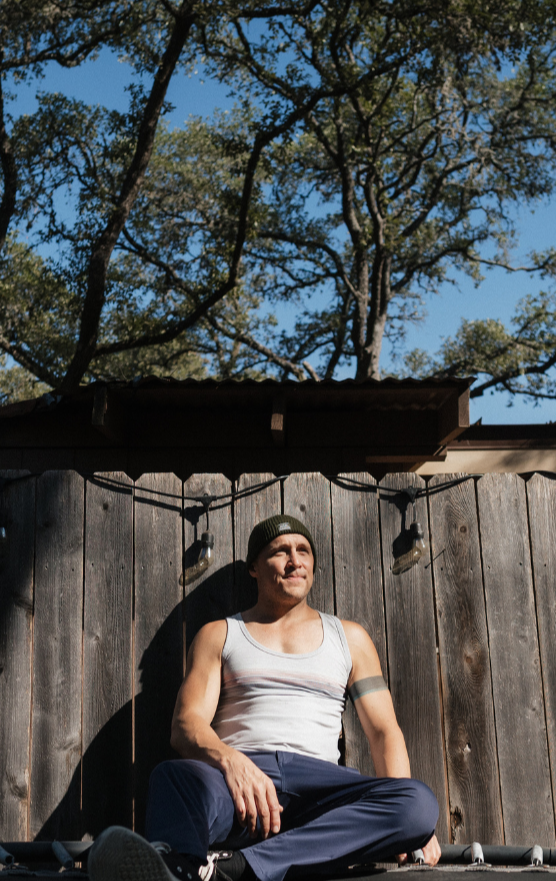
Tracy Harrison on Metal Toxicity, Health Coaches and the School of Applied Functional Medicine
Feb 07, 2020
WELCOME TO EPISODE 53
The School of Applied Functional Medicine™ (SAFM) began humbly in 2009 because Tracy Harrison felt restless to make a substantial difference. She taught those first classes right in her kitchen! In 2011, SAFM was transformed into an online school. Since then, the school has evolved into a distinguished online academy.
Tracy Harrison is a powerhouse of applied functional medicine insight (among many other talents), which she generously and liberally shares with her students. Plus, her energy and lightness make this challenging experience fun. She’s an engaging speaker and inspired teacher - as you will hear in this interview.
Tracy is the founder of Eat on Purpose Health Coaching (her private practice – which still has a perpetual waiting list!), The School of Applied Functional Medicine™, and the Good Medicine Movement™. Tracy has the mission to empower inspired health practitioners with cutting-edge competence in functional medicine know-how and the confidence to use it boldly, bringing abundance to both patients and practitioners.
When not out to change the world, Tracy enjoys following her passions, which include problem-solving, systems dynamics, public speaking, and inspiring people to reach for the powerful potential she sees in them. She lives with her sweetheart and beloved family of rescued puppies in the beautiful mountains near Asheville, North Carolina. Tracy loves evening fires, hiking, gourmet meals, and singing.
In this insightful and energizing conversation, Tracy and Freddie discuss the importance of seeking our her root causes on your health journey, why we should all have a goal of feeling fantastic (and knowing that it’s possible), what conventional and functional medicine both lack and one of Freddie’s favorite answers to what beautifully broken means.


Episode Highlights
1:53 - 3 factors that make The School of Applied Functional Medicine unique
6:09 - What does it mean to do the work, and why it’s essential
9:10 - Reminding the body that it’s fantastic and how to feel that way
14:33 - How Tracy started slinging health and wellness after watching ants for hours
20:46 - The origination of Tracy's passion for SAFM
25:51 - How can heavy metals, lead, and other environmental cues cause such negative health outcomes?
29:53 - One way to imagine how lead impacts the body
33:22 - How Tracy's fresh eyes helped her see a need in health
39:38 - What conventional medicine lacks
45:24 - What SAFM offers
48:38 - Why doctors and nurses need coaches
52:10 - Should clean food and proper health care be reasonably priced?
1:00:19 - "God was in the drug."
1:06:30 - What does it mean to be beautifully broken?
1:08:57 - Overwhelmed? Take this small step toward your overall improvement.
UPGRADE YOUR WELLNESS
Silver Biotics Wound Healing Gel: https://bit.ly/3JnxyDD
Code: BEAUTIFULLYBROKEN
LightPathLED https://lightpathled.com/?afmc=BEAUTIFULLYBROKEN
Code: beautifullybroken
STEMREGEN: https://www.stemregen.co/products/stemregen/?afmc=beautifullybroken
Code: beautifullybroken
Flowpresso 3-in-1 technology: (https://calendly.com/freddiekimmel/flowpresso-one-on-one-discovery)
CONNECT WITH FREDDIE
Work with Me: https://www.beautifullybroken.world/biological-blueprint
Website and Store: (http://www.beautifullybroken.world)
Instagram: (https://www.instagram.com/freddie.kimmel
YouTube: https://www.youtube.com/@beautifullybrokenworld
EPISODE TRANSCRIPT
Freddie Kimmel and Tracy Harrison (00:00.162)
What is wrong with your system? Because you are not designed to be this way. Again, every cell in my body knows that you're not designed to be this way. Nature would not design that. Nature does not design imperfect things. And so you must have an awful lot in your system that is dialed in suboptimally. And if we can be disciplined enough and thorough enough, I believe we can define those variables. And I was right.
Freddie Kimmel and Tracy Harrison (00:32.419)
Welcome to the Beautifully Broken Podcast brought to you by AmpCoil. I'm your host, Freddie Kimmel, and on this show, we discuss the common threats survivors share after walking through the fire, the practitioners making a difference, and the treatment modalities that deliver healing back into the hands of the people who need it most. Witness the inspiration we gain by navigating the human experience with grace, humility, and a healthy dose of mistakes. Because part of being human is being beautifully broken.
Freddie Kimmel and Tracy Harrison (01:06.873)
Ladies and gentlemen, welcome to the beautifully broken podcast. We have a wonderful guest here. wanna talk a little bit about the School of Applied Functional Medicine. We have one of the creators of the program. And not only that, but you know, there's a lot of schools out there. There's a lot of programs offering people upgraded knowledge, support, wellness, kind of really a methodology.
And I think Tracy's is one of the most in depth, profound and rivals most, would rival most medical programs out there as far as training. Tracy Harrison, welcome to the show. Thank you so much. I appreciate that introduction too. I'm really delighted to be here. Well, it's pure truth. And I know coming from a coaching background and having gone to a couple different schools and some different programs,
I know the unique nature that your school brings, the School of Applied Functional Medicine. Could we tell people a little bit about the program and what is involved when you enter into that training? Yeah, sure. It's really my passion. I know we're going to get into talking about the why, but the program offers advanced continuing education.
for a rich variety of healthcare practitioners. And I use the term practitioner very broadly. So everyone who is a student in our family of practitioners is an active professional, right? They already have their license or certification as required for their modality. They are in practice, whether that's entrepreneurial, small clinic, hospital system, integrative, functional.
conventional, whatever it might be. So everybody is doing the work. And we offer training in functional medicine that I think is unique in the combination of three factors. One is I'm a scientist by background. And so I'm a big believer in evidence-based education and rigor. And I think people are only able to really confidently
Freddie Kimmel and Tracy Harrison (03:22.636)
Speak to their knowledge when they have really learned it from a rigorous viewpoint I think as you can relate there's a lot of Fly-by-night educational programs out there, know quickie cliff notes to functional medicine and handy-dandy charts and where people get a lot of answers Or protocols, but they don't actually have a deep rich thorough understanding And so we're we're all about rigor and deep learning
But we pair that with two things that I have really noticed are missing in the world of advanced technical training for practitioners, which is first of all, that devil in the detail know how and know how is very different from knowledge, right? A lot of folks have pedantic learning, but they don't necessarily know what they're going to actually
Recommend to Fred tomorrow who's coming in at 930 a.m and has these seven diagnoses and these 42 symptoms in this history and this diet and so we teach a lot of that tribal wisdom devil in the detail know-how that I Created a school and started offering because when I started learning functional medicine almost 15 years ago That was nowhere to be found a lot of a lot of science a lot of theory, but not a lot of know-how and so we also offer a lot of
Practical case examples so that people can really jump in the pool as we like to say in practice with real life complex patient and client cases not artificial or overly simplified ones, but real life complexity So that's the second thing but I got to tell you the third thing is my favorite part. I really My team and I really worked really hard to create a warm loving respectful family of practitioners
And it's all about the love and the support. We've got in any given time, students from about 50 different countries and 15 to 20 different modalities interacting together. And nobody's throwing each other under the bus. No one's judging based on credentials and everyone is sharing and learning and supporting and lifting each other up because being out here on the forefront of healthcare can be a lonely or intimidating proposition.
Freddie Kimmel and Tracy Harrison (05:45.043)
As we well know, right? You have to be a bit of a deviant in order to be on the edge of anything. And that can be rough on your heart. And so I really believe in the power of creating a true family where we're all different, but we all see our common mission and lift each other up into that light so that the next day we find the energy, we find the passion to go in and do it again. Yeah, it's so true that you said a couple of things that I just want to touch on.
What does it mean to you to do the work? Because you mentioned that about getting in, getting your hands dirty, getting into this training. that, was almost like a qualifier. You're like, when you were describing the school, it's like, yeah, you want people to do the training. You want them to get the knowledge, but you want them to be out there using it. Why is that so important that they're doing it on the day to day? Yeah, that's an awesome question.
I believe with every cell in my body that there are no quote unquote problems or challenges that humanity faces, that we don't have the collective wisdom and skills to not only manage but to overcome, to master. But what I know from personal experience is that when people don't feel well, they can't access their gifts.
and they certainly can't give them generously and fully. And so I really believe that as we build more of this movement of more proactive, preventive, patient-centric, root cause resolution approach to healthcare and all the different modalities that are out there, we create the opportunity to allow people to move from feeling
okay or tolerable or even quote unquote fine to getting back to feeling fantastic, which is really what I believe we are designed to feel. I don't think the human body is designed for us to kind of crutch through and most days suck and you know, but we just power through and kind of tolerate it or make it through. I don't buy that. I don't think that's how we're designed.
Freddie Kimmel and Tracy Harrison (08:06.301)
But I believe we're collectively as a species making a lot of choices that take us away from our natural state of thriving. And when people aren't thriving, they can't access the richness of their gifts and their wisdom and their intuition and their intelligence. You we spend a lot of time in barka loungers, know, numbing ourselves with various things. And so I really believe that the movement for
not just disease management, but disease prevention, disease reversal, full disease remission, getting people back to feeling fantastic is a way to give all of humanity, even the whole planet, to give it back the gifts of all humans rising to their full potential. And in that sense, I think what we're all a part of in terms of healthcare has a much, much bigger purpose.
I live and breathe that why every day because when people feel awesome, the reciprocity, the joy, the exuberance to give back is huge. It's massive. You know, you also said something. You said full recovery. You said the words fantastic. Now this is something I'm really interested in because I see this a lot in the people I coach. You know, we'll see a full reversal in.
diagnostic work, blood work turns around. Let's just use like Epstein-Barr for an example. We can watch this chronic viral infection go away. sometimes it's beyond, I'd say all times, it's beyond the modality that brings that person forward. And there's such a level of programming reminding the body that the body is fantastic, that the body is safe.
that it's out of that disease state. And it's not always something that you would do as a coach or practitioner, but it's this emotional component of trusting that we're okay to thrive. It's almost like the body needs a reminder. It's, you know, I'm reading this book called, called the, I'm gonna blanking on the title, but it's called the Beautiful, like it's about addiction. It's by Lauren McCowen. It's about.
Freddie Kimmel and Tracy Harrison (10:27.326)
It's about, she's going to kill me. It just released, but she compares this idea of an alcoholic experiencing parties, birthdays, dances, meals, bowling, driving. Everything is with alcohol. So to be without alcohol is death. And I think I see in this long-term chronic illness, which a lot of this audience is, is a part of and cancer and you know, it's, it's, it's a struggle bus is a little bit bigger.
that it's almost like there's a retraining process to learn what fantastic was because you've been in this disease state so long. What do you do in the school to work with that component? Yeah, that's a great question. And in fact, I just want to affirm what you said in the beginning. I think you said there's often
You know, other things at play, they go well beyond the diagnosis. I would actually offer that there are always things that go beyond the diagnosis because I think the, you know, the human organism is designed first and foremost to survive. You know, thriving is a secondary goal that happens once our entire organism is convinced that survival is assured.
And that's not a bad thing because that's why you and I are still able to sit here having this cool conversation, right? We made it and it supports evolution and improvement of the species in terms of our resiliency. But we have learned ways of living. We have learned ways of showing up in the world. And that's not just, I think, intellectual perception. I really believe that the body and the mind are in cahoots.
in order to help us to be stable, to help us be safe. And when we have learned a way of being and doing that may kind of suck actually, but it's our way of being, it's our habit, it's the way our lives have been. It is not only frightening to change that life view because there's a whole bunch of uncertainty in that space, right? The whole devil you know versus that rare untrustworthy possibility of thriving.
Freddie Kimmel and Tracy Harrison (12:44.07)
And so I do think we have to retrain our expectations. We have to retrain our mind. We have to retrain our body to pursue, to expect something different. And that is a process. And that is why I believe it's not functional medicine or any medical modality on its own that is gonna get us where we need to be. I think it is the combination. And I call this good medicine math, right?
functional medicine, knowledge and know how plus effective coaching allows healthcare transformation. And my experience of one without the other has benefit for sure, but it doesn't get us all the way there. And I use the word coaching with a small C because we have this huge, I think movement industry of health coaches with a capital C because people are craving this, people want it.
There's something intuitive in people that wants that trust, that connection, that relationship, that accountability, that space, non-judgmental space to sort stuff out and choose a different path. Not because you've been told to, not because you have to, should, must, blah, blah, but because you want to. But you don't want to feel like you're doing it alone. And so I believe the coaching aspect, whether it's being given by
a health coach like us or a health educator or a therapist or a counselor or a really good friend or someone who can be that sacred space. I think it's huge because the part that you mentioned in my experience is a necessary step to help someone to not just get well, but to stay well. Yeah, that's beautiful, Tracy.
So there's a reason you're so articulate and so good about all this stuff and you've developed this plan and you're teaching other people and you're teaching other human and you're guiding them towards what would be this light. And you definitely have a light about you when you speak. Your Facebook Lives are amazing. If anybody isn't watching Tracy's Facebook Lives, you gotta get on it. It's really they're so fun. It makes me high to do that. Just awesome. Thank you. Yeah.
Freddie Kimmel and Tracy Harrison (15:00.619)
Yeah, it's a really good vibe, that came from some level of you working through a challenge or you working over your little mountain top or your really big mountain top. So if you wouldn't mind, I'd love to hear what that was and what brought you to this world of slinging health and wellness. Slinging health and wellness, I love that. I'm going to use that. I think there are a couple of
A couple of things to share. I had a nearly 20 year career in corporate high tech before I completely shifted gears. And I think the biggest mountain that really has brought me a huge level of self-awareness and a new focus and real clarity on my calling, my purpose, if you will. I was in the corporate world.
in the semiconductor industry, and I 16, 17 years in, and I went on an outward bound journey. And for those, for listeners who may not be aware, outward bound specializes in offers, offering these sort of transformative outdoor experiences, where you're usually being challenged in some physical way. You might be doing wilderness hiking or whitewater rafting or rock climbing or whatever.
And I was way up on the top of a 13-er in Colorado and sat down on a rock and there were other people in my group nearby and we were so far away from technology and voices and demands and just really in touch with nature. And I started to have this awakening around the difference between the person I was
and the person I was showing up as. the end of every hour bound adventure involves what they call a solo, which is 24, 36 hours, where you basically go away from the main camp and mark off like a 10 by 10 foot space with a sleeping bag, a tarp, maybe a water bottle. And you just sit and figure out what your soul has to say to you.
Freddie Kimmel and Tracy Harrison (17:15.137)
And after you've watched an aunt do some really fantastically amazing physical feats for hours and hours, things get very still inside. The brain really slows down. And I started coming to grips, Freddie, with just how much I was checking all the boxes for what everybody in my life wanted me to be, what I should be, all the right answers. You know, I had the...
the big important corporate job and lots of money and lots of accolades and promotions and a great reputation. And I had all of these tokens of security and had this strong visceral reaction of, don't want to feel secure anymore. I want to be alive. I want to feel alive. And what transpired for me after I spent that solo time and wrote a little letter to myself is that in the space of
12 months, I got divorced, quit my job, left my industry, sold my home, moved, and completely reinvented myself in the vision of who I wanted to be without regard to whether it was acceptable to anybody else, which was a period of a huge amount of uncertainty and fear. But I was really just following my heart, following this beacon.
And there was a time there where I was totally out of touch with even my friends and family. And I would just send out an email that said, I'm here, I'm good. Just let me have my space. And it was me and two precious dogs and nature just hunkering down trying to figure out who I was underneath all of these guises of coulda, shoulda, have to, you know, as I like to say, I finally stopped shooting on myself.
And so I started the exercise of really just rebuilding my life in a more intuitive way that was based on joy and exploration and adventure and security was not on that list. I really wanted to live in that free exhilarating space. And yeah, that involves discomfort and risk because that's how we grow. It's how we learn.
Freddie Kimmel and Tracy Harrison (19:33.724)
And so I, there was a lot of synchronicity that unfolded for me. I had no intention of becoming a health coach, to be honest. I just had a really good friend in New York who was going to go to the Institute of Integrated Nutrition and I quit my job so I have free time. And she said, hey, just come and do this with me. It'll be fun. We can go out to dinner a lot together. I'm like, sure, sounds great. I don't know what I'm going to do yet, but I knew I wanted to do something closer to helping people, not
working deep in a corporation, know, 35 people distant from a customer. And I wanted to feel like a beginner again in the scientific world. I wanted to be learning something from scratch again. And I wanted something, a new career that would allow me to express more joy because the corporate world is kind of joyless. You got to really be a deviant in most companies that certainly we've got some.
excellent renegade leaders now in that world, but I wanted to to have joy be a premise of my leadership and so I Was taking the classes which were live at the time this was a long time ago this was 2006 Taking live classes in New York with IIN about being a health coach
And I remember to this day when Dr. Mark Hyman got up to speak and started talking about the notion that the foods that his patients ate changed their biochemistry and therefore changed their symptoms and changed their wellness. And I had already heard a lot of lectures and they were all interesting, but his appeal to the scientists in me, the geek in me, and even then every hair stood up on my body like, what? Our food does what?
And long story short, what transpired was an amazing dive into what he was sharing and thousands of hours of study just out of raging curiosity and desire to learn. And I ended up becoming a health coach and being very passionate about it and building my own practice. And it was a good, successful practice.
Freddie Kimmel and Tracy Harrison (21:51.346)
But my passion for starting a school, my passion for functional medicine didn't really get to a fully ignited phase until the love of my life, my husband started having catatonic seizures out of the middle of nowhere.
And I got to know our local paramedics on a first name basis. And it was a deeply frightening, frightening time of my life because they would just come out of the middle of nowhere and we would have to go to the emergency room. because he was catatonic, they assumed he was having a stroke and they would have to do the same workup over and over again. And I'm like, no, this isn't it.
You just have to strap him down until he can find his mind again. And then we get to go home. But my experience of Freddie of the very warm, conscientious care he received in the emergency room that was not focused at all, however, on finding the root.
cause of why he was having a perfectly functioning, intelligent man who'd never had any neurological issues at all was having catatonic seizures suddenly, with no warning at all other than a week's lead up of tremor and talking to neurologist after neurologist in the aftermath who didn't really want to chat about what caused it. They just wanted to argue about what specific cocktail of drugs would be necessary to numb him enough.
that he wouldn't have seizures for the rest of his life. And I, I, at some point after like the fourth go around of this, I went from being frightened to being angry. Seriously, is this all we have to offer? Like I'm a really intelligent person. I'm very open-minded. I want to learn. want to know. And this is the best we have to offer him. And, and my, my anger, I channeled it into deep.
Freddie Kimmel and Tracy Harrison (23:58.163)
deep study and searching. And to make a long story short, over a four month period of time, you know, we did some targeted functional testing and we found acute lead toxicity and all sorts of nutrient deficiencies that further impaired detoxification and mercury masking lead and I mean, all sorts of things that I could understand based on my background. Like I, I'm not a
I don't officially have any credentials in this, but this is the love of my life and this is not happening on my watch. This is just not happening. There has to be an answer and there was an answer and there was a way forward. he's now, you know, many years later, a healthy, fully functioning man. And it took him a good year, year and a half for really full recovery for that. And now he knows what he has to be careful of.
But that experience galvanized me, Freddie, around how many people out there are in a similar situation. And because of fear and lack of information and lack of support, they just took the cocktail of drugs. And 15 years later, they're still numb and they're still deeply ill and managing this dysfunction and living a shell of a life.
And that whole experience just lit a fire in me of not just with him now, but with my friends, my family, my community, the world. This can't happen on my watch. Like I know better now. And I want to make it my mission to educate an army of people who can know better and therefore do better. Yeah. Yeah. That's truth. You said that you said that
he was experiencing these symptoms and you mentioned lead, mercury, heavy metal detoxification. Now I'm sure to people, there's going to be some people in the audience that hear this and say, well, what do you, what do you mean? Cause I mean, heavy metals, how could that cause a disease? How could that cause these terrible, terrible seizures in a human vessel? Can you explain that a little bit? yeah, sure. so
Freddie Kimmel and Tracy Harrison (26:20.831)
What we've learned in the medical world, and I think even more and more the conventional world is opening up to the fact that people don't have to be exposed to a singular acute toxic event, drinking paint, or swallowing Drano. I mean, people don't have to have this big, rare, me, acute exposure.
Instead, we've built a modern life here in the Western world where there's a lot of concentration of toxins in our environment, especially through all of the chemicals that we inhale and swallow and slather on our skin. And hey, I'm a chemist by background, so I believe in better living through chemistry, right? But we have allowed a lot of chemicals to come into ubiquitous use without really understanding.
the way that they're going to affect us when they slowly build up in our body, not in a gusher, but one drop at a time. And that there will be a drop that's great, know, straw that breaks the camel's back, right? And that if we have impaired detoxification because of our genetics, because of our stress level, because of being hypothyroid, because of being nutrient deficient,
especially if it's a perfect storm of multiple of those things, it's not that difficult, it's not that hard for our chronic drip, drip, drip, drip exposure to toxins to overload our ability to clear those. And then we just start storing them. And we store them and we may store them without symptoms, but then there may be a triggering event.
And we see this a lot, for example, in autoimmune disease, right? That there's a lot of predisposing factors there. And this is in a huge amount of the published research now. A person may be just fine, but then they get bit by a tick. They have an extremely stressful relationship event. They catch a really bad bout of the flu. Some sort of acute triggering event that
Freddie Kimmel and Tracy Harrison (28:40.044)
changes our physiology. And again, our physiology is designed to change on purpose during times of high stress. But if the things that we emphasize in the body during times of high stress are not about detoxification, they're not about healing, they're not about restoration of the body, it's about fight and flight and hide in the name of survival. And so he was experiencing extremely stressful time at work.
And I have no doubt that that was a real triggering event for him, but Lead had built up in his body in a dramatic way and I remember I still remember getting some testing back that it was all off the charts You know just tears started just pouring down my face because we hadn't we had at least an initial answer and then as we learned You know, he he's missing some of the genes to make glutathione, right? He has
At the time he had some pretty dramatic nutrient deficiencies and we started to look at all sorts of toxicity related diseases that run in his family like Parkinson's and the puzzle pieces started to come together. lead, just as one example, wreaks havoc through massive amounts of oxidative damage, know, just as an everyday thing.
It doesn't take that much lead toxicity to create hypertension because the lead in circulation in the blood does damage. I think the best way for a lay person to think about it is corrosion. It's like corrosion to the lining of your arteries. And then those arteries are damaged. And part of how we heal our arteries is to put plaque there, to put cholesterol there as a band-aid. But lead...
has easily penetrates the blood brain barrier. And it's taken up in places in the body where calcium goes, because it has a similar electrical profile. And so there are lot of calcium channels in the body directing neural transmission and directing muscle contraction and all sorts of things. And lead gets taken up as this like insidious infiltration in the body.
Freddie Kimmel and Tracy Harrison (31:00.686)
And it takes the place of calcium, but it doesn't function the same way calcium does. And so we end up with this bit by bit, dose by dose, drop by drop poisoning of places in the body where calcium is. I think it's important for the public in general, but certainly practitioners to understand we have a blood brain barrier designed to protect the brain from an awful lot of what we experienced in our environment.
But our physiology, which is so primal and so resilient, can struggle in the face of this concentration of toxins. know, lead is everywhere in the environment, right? I mean, every time you eat a stalk of broccoli, you're getting a tiny amount of a heavy metal. But you're not having this concentration of them in all sorts of industrial products, you know, in paint and commercial and building materials.
in pesticides and things that we would be exposed to more readily rather than these tiny trace amounts combined with times when we encounter more crap food, more toxins and more stress than we ever have before in our evolutionary history. So sorry, long question, long answer to your question, but I get really passionate about it because I believe in teaching practitioners using simple everyday story and example.
because then they can turn around and tell those exact same stories to their patients so that the patient doesn't just get told what to do. They really understand what's going on and they have an aha moment like, are you kidding me? my gosh, that makes so much sense. And then they don't make different lifestyle choices, Freddie, as we know, because they have to, but because they want to, because they finally understand what is at play.
Yeah, it's so important. It's so important. It's very interesting because you you came into this industry with like these virgin eyes. You know, you came from a totally different field and finding yourself in School of Integrative Nutrition, which I've had many, many friends go to. And that's usually the starting point for a lot of people. And they get their lips wet and then they want more.
Freddie Kimmel and Tracy Harrison (33:22.658)
So when you were in that program, what did you see? Did you, must have had moments of these unfolding ideas where you knew there were places to go deeper than, than beyond what was traditionally offered to a health coach. Cause I'll be honest with you, like the, some of the programs I've been to, it's a little benign, it's a little boring. It's like, you know, I could, I could get that information very, very quickly in a couple podcasts. And I've always, I'm like, when I am in a program, I'm like,
Get me to the gold. Get me to this like universal truth. Tell me more about detoxification. Tell me the different pathways. One, two, 2.5. Give me an example of a formula if I wanna get really, really Dr. Frankenstein on my house. If I wanna look at volt meters around my bed and see what frequencies are invading on my space.
You know, I'm always been that person. what was unfolding for you and you were in that initial program and you were, must've had visions of where you're at now. Yes, definitely. And I think that what you said is perfect. there's a, now that health coaching is a thing, right? Or in rapidly gaining popularity and demand in the public.
which I want to say, by the way, for your listeners who are health coaches, there is such a massive demand for what we do. I mean, it's just huge. I mean, just massive. And so if there's anyone out there who thinks that's not true, I'm sorry, you're just wrong. There is such a massive demand for it, right? It's just a matter of finding your, finding your confidence, finding your particular unique voice in doing it. But yeah, there's, there's huge demand and
I do think there is both an art and a science of health coaching, the actual act of coaching, but what I experienced, and I think this is a way in which you and I are quite similar in kindred experience, and I don't want to just be told the right answer. I want to deeply understand myself. I want to have really deep knowledge.
Freddie Kimmel and Tracy Harrison (35:35.6)
When I started health coaching and doing quite well and helping people to feel better, you start to not just mildly satisfy some of your clients, you start to wildly satisfy some of those people. And then reciprocity kicks in and they tell everybody they know about you, literally. Their friends, their family, their colleagues, the guys they play tennis with, the people they sit next to in the bleachers, random people at the grocery store. I mean, literally.
And you end up with all of these qualified referrals. But because the people you've helped speak so strongly of you, you tend to attract people who are sicker, who have richer, deeper issues. And it goes beyond now, I have occasional headaches or I got a little joint pain or I want to lose 10 pounds. No person shows up. They have three autoimmune diagnoses and they've had them for a decade and they are deeply suffering.
Their lives are not just slightly suboptimal. They're deeply suffering. And the scientist in me comes from the place of systems don't become perturbed at random on accident by themselves. Systems change because variables change. And this is where, to your point, my training from a completely different industry has been such a blessing because I have a massive amount of training experience in how to optimize systems.
and it's applying that same scientific, almost engineering focus on systems, definition, optimization, that I think is really the foundation of functional medicine. And so the first 50 clients I had, I did a massive amount of research simply because when someone showed up, I didn't come from the viewpoint of, I'm so sorry you have three autoimmune diseases, it must run in your family. I came from the viewpoint of what is wrong with your system?
because you are not designed to be this way. Again, every cell in my body knows that you're not designed to be this way. Nature would not design that. Nature does not design imperfect things. And so you must have an awful lot in your system that is dialed in suboptimally. And if we can be disciplined enough and thorough enough, I believe we can define those variables. And I was right.
Freddie Kimmel and Tracy Harrison (37:58.073)
And each individual case just sent me into hundreds of hours of research. And it amazed me, Freddie, how much published research there is on all of this. Not a lot of it sees the headlines of popular media because you can't really patent anything in the power of sleep. I mean, you can make a drug about it and you can develop some kind of product, fancy product that helps people to sleep. But no one's patenting a good night of sleep. You can't.
And so, so much about lifestyle choices is evidence-based. It is in the medical media. It's just not the things that you typically see promoted in headlines. And so it is that scientist mind where I know there's a reason. Natural systems, nature is not designed to be sort of kind of suboptimal and sucking a lot. It's just not. That's not the way that's, there's a wisdom. There's an intelligence in nature.
that if it's not happening, there's a reason. And I just have an insatiable curiosity about that reason and I love sharing it with practitioners. I do too. It's fascinating to me. And like you said, if you're a good, passionate coach and you know your stuff and you have two really, really phenomenal clients, you're gonna have 10 very shortly. Amen. It's just, that's the way it goes because the gift of feeling good, of feeling vibrant, of having
total access to the stream of conscious like truth pouring out of your soul. That's a rare thing. And with people tap into that from this newfound energy, it's like, it's, it's unstoppable. You know, and it's, it's not a model. This is the other thing I try to point people to because in the industry, if you're in the industry, and it's funny, I coached for a long time, like 10 years, and then I've recently the last year I've
I've taken a step back just because it is so time intensive. I'm starting again with starting to partner with a couple like choice coaches here and there and see if we can't build like a team because where it's something sustainable, but it's like the current model does not allow for the attention and the hand holding and the guidance and the sage like wisdom from our medical practitioners and in this coach.
Freddie Kimmel and Tracy Harrison (40:19.035)
fills like this perfect void. Like I've gone grocery shopping with people. I've gone and done, I've done this live and with Zoom, I'm like, position the camera towards your cupboard and we're going to go through item by item and we're going to say what's good and we're going to, and I'm going to qualify food and we're going to qualify poison. And we're just going to put them on a sheet. don't have to do anything with them, but just like, let's play. Let's see how much food and how much poison you have in your cupboard.
And then don't do anything with it. Just think about it. Let us sit on the cupboard and like see how small the food pile is. Cause it's always grotesquely small and see how big like the things that are possibly moving your body towards this horrible dysregulation. You know, and it's, it's, it's like people need like one or two, like these big aha moments like that. You know, I'm like, go, go, go to your local municipality and see what's in your local water. Just check it out. Check out your drinking water.
Tell me how many carcinogens, know, how many heavy metal, you know, I, just got a letter in my last apartment that was a letter from the city. Hey, wanted you to know the lead in your water has been sub optimal for the last 13 months. Like, no, this no, no, no, no planet. This is, this is New York city, Jersey. This is no plan of action. This is no,
you know, meet us at this convention center. Let's talk about what you should do. Nothing. Just letting you know, by the way. Yeah. And I got a letter. I think I'm probably the lucky one who got the letter. Luckily, you know, I have a Berkey filter. I structure my water with magnetics and red light. And even that people like, my God, that's so extreme. That's terrible. You have to do all that. like, no, it's amazing that I feel like I do.
after going through what I did and being such a high contributor to society. That's because I live the way I live and make the choices I do. have like this, and you know, sorry to get out of the soapbox, but like the time that we have to make these choices and upgrades is limitless when we start to prioritize and move things around. Cause just like phone screen time, Netflix, it just, just time being lost in social media.
Freddie Kimmel and Tracy Harrison (42:36.591)
I can take like one 16th and that's really all you need to do these health upgrades. It's not all day every day. And once you get them in place, like, you know, it's a system. Yeah, absolutely. You're building, you're, you're working the system over and over and over. So I just, I'm such a fan of coaching and I just, you know, I know many of your coaches in your school. Jen Ragazzo is one of my faves and my friend Caitlin just started, started training last week. Awesome. Yeah. And it's, it's,
It's profound, you know, it's profound. If people are looking for deep knowledge, if you're looking to really understand functional medicine testing, diagnostic testing, well beyond what you've ever seen before, school of applied functional medicine is your stop. It's your one stop shop and it's in different levels. Tracy, could you just say a little bit about, it's not like you have to, you know, commit to this eight year plan of education. You can do it in these small digestible doses.
Yeah, for sure. But if I can, I just wanted to say real quick, talking about just lifestyle change, right? Lighting people up and just discovering the power of it. Actually, one of my most favorite things. So at SEFM, we have all these different modalities and about two thirds of our students are various medical practitioners, physicians, nurse practitioners, nutritionists, PAs, mean, all sorts of.
modalities and then we have some coaches, have midwives and pharmacists and bodywork specialists. And there's a certain portion of that population who already kind of lives and breathes in the world of food is important, water is important, lead free water is important, movement is important. But it's so exciting for me to see
how much it lights up physicians, nurse practitioners, PAs, who have been practicing through a conventional lens for a long time. And they know viscerally this can't be all there is. They just know they're intelligent. They believe in the power of the human body. They know there has to be another answer. And it's so gratifying and exciting to see when they really
Freddie Kimmel and Tracy Harrison (44:56.647)
learn and deeply understand the power of these lifestyle choices and can start adding that to their practice in some big way or some small way, right? You know, mean, there's a lot that can be integrated in conventional practice even, right? We don't have to jump ship and hang an entrepreneurial shingle to do this work, right? I we can be a part of the movement with relatively small changes even to the classic 15 minute allopathic appointment.
So I love that part. But yes, from an educational viewpoint, we offer a certification program, which has three levels. And to your point, it does not have to be experienced sequentially all at once. And in fact, our semester programs, so to be certified, there are two of those. There's the Core 101 and the Advanced 202.
We allow students to complete that at their own pace. And so it's a lot of content. Some students are out of time in their professional careers where they've got a break or they've got a lot of downtime and they go through a semester really quickly in like five months. Other people are very busy with work and other passions and commitments and they take their time and they spread that content over nine or 12 or 15 months. And there's no right or wrong. There's no good or bad.
We're here and supportive, whatever time-paced people are on. Some people do the semesters one right after the other. Sometimes people take a year break or more or less in between them. It's all good. We really try to be super flexible so that people can feel like this is an integrated, certainly challenging, but not undoable goal. That it really can be integrated with all the other passions in their life.
So I'm big on flexibility for sure. Yeah. have this, I have this dream to sidebar back to like these pieces of the puzzle that you can create this system. So it's not built on a house of cards, right? So I have this dream for building, you know, when I say these, you say these physicians, I always get this picture of, I imagine me when somebody comes back from a coaching session and they haven't done all the homework that I've assigned them for the, like the last four to six weeks and how disappointed I am. can't imagine what it's like to be a practitioner.
Freddie Kimmel and Tracy Harrison (47:20.475)
and to have someone just prescribed, like, let's say your standard, you know, whatever treatment for lupus, and you just see them come in like time after time after time on this horrible autoimmune medicine where their hair continues to fall out and they have patchy skin and horrible psoriatic arthritis. And that's got to be depressing for a physician. I can't imagine the emotional trauma that that causes over a lifetime of a career of just, again, slinging pills.
I mean, I'm not not to be derogatory and not to be pointed or like that's not a slap in the face, but that's just what it is right now. And there's like, you know, even to like doctors need coaches, nurses need coaches, hospitals need coaches. Anytime I've ever spent in a hospital, I'm always like, man, these people look tired. It's like those.
shifts it's like there should be some sort of a room in a hospital i hope someone hears us and builds it where people have access to like some p.m.f. mats and there is no fluorescent light it's only red light in there and they've got structured water and they've got cocoon beds where they can relax and do a mini like 20 minute float tank to drop the nervous system back into its place but our doctors and nurses there as much as we want them to educate and learn about this other modality like
They need this help too. know, they need coach, they need us as much as we need them to hear this new line of thinking and awareness. Amen, Freddie. And there's no more galvanizing experience, I think, as a practitioner to go through your own journey. I can remember a number of my clients in my own practice who were physicians.
who came out so galvanized and completely transformed on the other side, not just personally, but professionally. And it started to really unravel their belief that the way they had been practicing for two or 10 or 20 years is the only thing reliable, right? The only thing credible. They'd had their own experience with their own bodies and they couldn't deny it anymore. But to your point, I believe that
Freddie Kimmel and Tracy Harrison (49:39.087)
the affordable and effective healthcare of the future involves coaching in every medical practice, big, small, urban, country, wherever it might be. And I think the multimodality practice is also the practice of the future where everybody can be in their unique brilliance, working as a mutually respectful team, but where people can benefit from coaching as
You know, in the same way we take for granted, we're gonna go to the doctor in whatever form it might be. We're gonna have our blood pressure checked. Well, I look forward to the day where it's just as assumed that I'm gonna get to talk to the coach because it's an entrenched part. We understand it's a necessary part of the comprehensive healthcare experience. And I believe we're gonna get there. A fascinating number of our students
you know, a physician will pair up with a coach or a nurse practitioner will pair up with a coach and find that together they can do an astounding number of things. And the super cool thing is because they've had the same in-depth training, they speak the same language. And so they can have their different expertise areas, but there's not this lost in translation understanding and nobody's talking over each other's head. Everybody's speaking the same language of
etiology and rapid relief and root causes and is on the same page about going after it in a customized basis. We see already just how transformative that is for the practice of medicine. It's one of the reasons why SAFM will never close its doors and say, we only teach these kinds of practitioners. We only teach that kind of practitioner because people, the public, they also vote with the
practices and the rituals and the support of modalities based on their belief system and their preferences and their history. And so trying to argue that there's one right answer is just silly. That's like saying there should only be one food or one religion or one sport or one color of carpet. I mean, the variety makes the world go round, right? And so I believe strongly in bringing the depths of knowledge and the language
Freddie Kimmel and Tracy Harrison (52:00.975)
and the know-how for root cause resolution of chronic disease to all healthcare modalities. Yeah. Tracy, I wanna touch on affordability because that's one point for me that it's still, there's still mystery around how we supply this to the mass population. Coaching,
You know, we could get into, we could do a whole show. Let's do a show. Let's come back. Let's do a show on supplements. Okay, cool. Because we could, we could talk about, you know, the validity or the functionality of the amazingness or the awfulness of some supplements. You know, it's so funny. Like I think as people get into health and wellness, they're like, this supplement does this and this supplement does that. And then you figure out, well, they also have fillers and binders and some have an energetic vibration that work and don't work with the body.
they get really, really expensive and you can hand up, end up having really expensive pee. You know, you can just, can, grow and grow and grow until you're all of sudden you can, and this is a model I meet these people too. Cause in the, in the long-term chronic illness, you meet people who have left the Western model of medicine. They've started in down this road of functional medicine and they've, and a lot of them, they get bankrupt before they get better.
They get bankrupt. That's so common with this with this with like the lime, the autoimmune, the chronic viral infections. They chase and chase and chase and chase and chase and chase. So there's something there's a checks and balances that needs to happen. Or there's like a reform in, you know, how we I guess it could also, you know, you need to take you need to take responsibility for your journey as well. So is
you know, is, is American to love to spend, spend. think we've got to reframe what healthcare is versus disease management. And that's another conversation. So I've already, I've just like launched like eight different topics. I'm going to be a frequent visitor because I love to dive into all of those. we're definitely kindred spirits. so, two points. the first one, just to affirm the very last thing you said, which is,
Freddie Kimmel and Tracy Harrison (54:21.831)
We have a valuation problem, at least here in the US with regard to healthcare. Because insurance has moved for us from being this coverage in the event of the unexpected, insurance has turned into free healthcare. And so I pay into this pot and then it should cover everything that I need, regardless of what's going on.
To your point, regardless of the lifestyle choices I make, regardless of all these circumstances. And we've all encountered people who will sit with their brand new iPhone and the very expensive accoutrements and tell you they don't have the money to afford health coaching. So there's a prioritization of where we spend our money. And I'm not criticizing any one person or profile. It's a problem, right? For the same reason that people think food should be cheap.
You americans are used to on average food being a tiny percentage of their budget And so they'll spend a ton of money on other things because they believe they have to to get the good stuff But we want food. We want really good clean food to be super cheap and and we want health care to be You know not impacting our monthly budgets. And so I do think there's a perception and an expectation issue and I can't speak to other countries. but certainly here in the u.s. I
seen this over and over again. But I also believe that to the bigger part of your question, there is a huge opportunity to provide the bulk of the power of functional medicine knowledge and know-how in group settings. And I want to give a shout out here to my friend James Maskell, who has just published a second book called The Community Solution.
which is all about group visits. And the whole notion of using a group community platform for bringing education and awareness and community support and empowerment to individuals. And if 20 people all want to learn about why vitamin D is important, why do they need to receive that education individually?
Freddie Kimmel and Tracy Harrison (56:39.815)
If we just push it to them in video, they may or may not listen, they may or may not be moved. But if we get people in a room all together to all hear the same information and then we invite them to do paired shares and exchanges of ideas and how they're going to move forward, their lives change. We're social creatures. And so I really believe that there is a huge opportunity there.
In the healthcare world, if you get a whole bunch of people who have a pre-diabetes diagnosis together, and there's plenty of them, and we teach them about root causes of pre-diabetes and how it's not the beginning. It's the late moderate stages of metabolic dysfunction and what's actually at play. And then, sure, they get individual lab work and they spend a small amount of time really getting more individualized customization.
But there's a lion's share of information where people have common goals that we could be using a lot of efficiencies in how we deliver it. And I'm not stuck on there being one right answer, right? I mean, I don't think anybody is going to like deliver the solution. There are lots of innovative and creative models being applied out there right now on the professional practice side. And those are affordable because when we use one to many
outlets to provide what I think are the three most powerful services that any healthcare practitioner provides to any patient, which is education, inspiration, and empowerment. Because it's the difference between whether people are actually going to change their lives or not. And the perfect diagnosis and the perfect intervention plan is worth absolutely nothing if it doesn't help someone to get well. And that's about what people go home and do.
And so I think we've got to get more creative and move beyond the classic one-to-one model because to your point, we can't cover everything we need to cover in that time without it being crazy expensive. And we're repeating an awful lot of information that applies to everyone who's wrestling with a common ailment or just people at large, right?
Freddie Kimmel and Tracy Harrison (58:53.763)
You know, I've joked for years that, you know, I have a big goal I want to be and it's it's prudent right now because before I die I'm going to buy a Super Bowl ad where I get on and talk about whole natural foods and how easy it is to do for 60 whole seconds sandwich right in between the Doritos ad and the Bud Light ad is going to be me with vegetables and I can't wait because there's general common information that people literally just don't know.
They don't know how powerful it is. So I agree with you. We have an affordability issue. And I think if we were to spend more of the money that today we devote to prescribing drugs too early as a first intervention, if we were to apply that money to grocery store tours or group education, we wouldn't have to spend new money. We just have to choose to spend some of our money differently. And I'm not against drugs. I think drugs are blessings. They can be
truly life-saving, they can be absolutely necessary in a healing journey because they stave off the badness, if you will, to create a window of time where people can really make change. And I just think we've lost our way around how often they are recommended as first-line therapy for lifestyle disease, which is not going to do anything other than perpetuate disease just in a different way. Yeah.
Yeah, it was fascinating. I was listening to Gabby Bernstein speak yesterday. It was written like, you know, seven books on self help. Yeah, one of the best speakers in the world. I'm a fan. Yeah. And she was just saying she had all this. She had an incredible about an incredible bout with postpartum depression. And she she took a, you know, an antidepressant. And she was like, the shame I felt over it taking that pill was
unbelievable and I held it off for two months and you know had all the suicidal ideation but she said that you know within within two weeks three weeks she felt like herself again and was able to move beyond taking that medication but it was a great bridge and she said she said God was in the drug there was source was in that she was there something inspired I knew it was the right time for me to
Freddie Kimmel and Tracy Harrison (01:01:16.039)
go down that hallway and I did it for a brief period of time and it saved my life. Yeah. And it was amazing how she framed it that God was in the drug. I love it. And I tell people all the time, if you're going to take a medication, be peaceful with the medication, right? I'm like, look at the pill in your hand, make friends with it. Right? Like I trust that you're going to go and create goodness in my body. Thank you for being here and set up a placebo effect.
in your body, can do whole show on that as well. that is one of my favorite topics. because I think so many practitioners have misguided understanding of what the placebo and the nocibo effects are. We teach about it at SAFM and I can't tell you the number of people who have been shocked to learn what really changes biochemically in the body based on people's expectations, not in some hocus pocus woo woo woo. made it up way, but in a very real biochemical way.
It's fascinating. And so to your point, it doesn't make any sense to keep taking drugs every day that you're terrified of. You have to question, is it the drug or is it the fear that's creating secondary issues? Fear is a toxin, a major toxin. And so, yeah, I'm not much ready for throwing things under the bus because I don't think that level of judgment and sparring achieves anything in the spirit of helping people get well. I think everybody involved in healthcare
on some level has real positive intentions in being of service. And some of us are maybe misguided or stuck in an old view, but I think everybody has the power to be a part of the solution. And that's why I'm passionate about teaching because when we know better, we do better. And we all at one time did not know, you and I both at one point were completely ignorant of everything that we're passionate about today. Completely.
And so we all stand on the shoulders of the people who came before us with immense gratitude. And then we try to pay it forward so other people can know better and do better. But I love that story. That's a great one. I'll definitely be sharing that because I'm a believer, right? Drugs have their place. I just, think it's overstated at this point, but I believe wholeheartedly we can get to a better balance.
Freddie Kimmel and Tracy Harrison (01:03:39.93)
If I break a femur in a car accident, take me to Cedars-Sinai. Don't rub Ashwagandha on my my gosh. Yes. Absolutely. Please. Absolutely. And I think that gets back to, you know, Dr. Jeffrey Bland, who's widely celebrated as being one of the founders of functional medicine, you know, talks about the notion of just the misstep in trying to apply the
the wisdom and the methodology of acute emergency medicine to chronic lifestyle medicine. And that those are two different things. And it's like saying, well, I'm really good at riding a bike. So how hard can it be to drive a car? Okay, whoa, hold the phone, right? I'm quite sure you could become a good driver, but assuming you're going to take the exact same skills and tools and methods that you use to ride a bike and apply it to a car is crazy talk. But I feel like we're at the same set of
misstep in saying this whole approach of, a single root cause, a single drug, a practitioner centric model that you want in the emergency room with your busted femur. Right. You absolutely want that, right? you want pain relief. you got to calm your nervous system down, right. to allow healing. it, we're just taking something that works really well. Bikes are great. I love riding bikes.
But we've just been misguided in saying we can just copy it over to driving a car. We just can't. It's woefully ineffective. Yeah, we need to go slow in some of these areas and just breathe. And the world speeds up. And in my experience, speeds up, speeds up, speeds up. And we have access to all this information now. it's like you're trying to do with the school and the modules. It's like slow down, breathe.
see it for what it is, see how it fits on your body. It's unique. It's a new conversation. It's a new conversation that we're having around this, around what wellness is and to actually not to manage the disease, but like you said in the beginning of the show, to feel fantastic, to feel really vibrant. Like what does that feel like and make that your goal? think that's so profound. And I celebrate everything you're doing, Tracy. I'm such a fan.
Freddie Kimmel and Tracy Harrison (01:06:00.622)
we're obviously we're gonna do another podcast. Thank you so much. It lifts me up to chat with you and to just toss around some of these ideas and opportunities and to share them with your audience. I'm so grateful for the opportunity and what you do to put more ideas and more possibilities out there in the world for people to consider and take what sticks and leave the rest aside and choose differently moving forward.
Thank you. I couldn't agree more. I got to ask you two more questions as we leave. Everybody has to answer. What is it? This is a beautifully broken podcast. What does it mean to you to be beautifully broken? For me, I forget who said it, but the first time I read it, the statement that the break, the crack is where the light gets in, is a really powerful motif, visual for me.
And I believe so many of us are kind of like I used to be. We're just going around in a bit of a trance. We're not really awakened. We're not aware. We haven't really found our light yet. And so being beautifully broken for me is about the opportunity to become much more aware and present with my choices and who I am and who I want to be. And then that's the beginning of learning and
and actualization, I really believe that all change and all growth comes from a place of discomfort. And so the being beautifully broken, the crack is where the light comes in and amazing things become possible. That's beautiful. It reminds me of this article when I was, I remember when I was diagnosed with cancer, I remember reading this time magazine article and the guy was talking about if you can imagine your life as a sidewalk and
You know, it's like, imagine the sidewalk has been built. It's 10, 15 years old and there's some cracks in it. And a cancer diagnosis, it's like, it's like pouring water over the sidewalk in January and it's going to fill those cracks and it is going to blow that concrete apart. And he was like, that is your life. He's like, this, this experience is going to shatter everything you thought to be true or your perception of how the path to your house was supposed to be.
Freddie Kimmel and Tracy Harrison (01:08:27.512)
And it just that image always sticks with me. It's like the cracks, the cracks, the cracks, the things that you want to mend and you want to, you want to smooth them out and you want to add cement and you'd know that's where you want to let this growth. It's meant to be there. Something is pushing on the bottom of that sidewalk asking for change. It's trying to get out and are you going to cover it up? Are you going to seal up the seams or are you going to let it fully express itself?
So I love that answer, one of the best answers I've ever got for that question. next one is, if you could give the audience, you have this chance to talk to all these people who are gonna listen to the show, and they're just looking, maybe this is overwhelming for some people. They're like, my goodness, there's so much I have to do. And then there's gonna be a place where they can say, okay, well, what's step one?
What would you give people is step one when they're looking to make an improvement in their overall wellness? Yeah, that's an easy one for me to answer. And it is finding their gratitude. My clinical experience over the years is that the easiest opening for just about anyone is getting in touch with their gratitude. And the simple practice of taking
five minutes in the morning and five minutes in the evening to write down three things that you're grateful for and not three high level toss away things like, my family, my friends, three very specific vivid things that have happened recently that by virtue of thinking of them and writing them down, we make more real in our lives things that are good.
We know that gratitude changes our nervous system state and our nervous system state changes our physiology and our physiology changes our biochemistry and it changes our wellness. And we know that our cells are always responding to our environment. And the biggest part of our environment is our thoughts. It's not the stuff out there. It's not the chemicals and all these things, right? They can feel so hard. Sure, they have their place.
Freddie Kimmel and Tracy Harrison (01:10:45.198)
biggest part of our environment that we're exposing ourselves to day in and day out is our thoughts. And I believe the easiest, most powerful beginning is to choose even for just a few minutes a day, even if your mind is just going nuts and ruminating and feel so negative and stuck and fear laden or hopeless or whatever it might be, just a few minutes of
attention to gratitude every day. To your point, we could get all clinical and fancy, but I don't know anything that's more powerful than that as a beginning. Because it's not hard to do. It's really fun once you get doing it. It doesn't cost any money. And it's a beginning. It's something to build on. And the hardest part of any journey is just starting. To begin, begin. Tracy, thank you so much for being here.
It was a joy and I can't wait to do it again. Awesome. Me too, Freddie. Thank you so much. Namaste. You too, love. Ladies and gentlemen, you made it to the end of the podcast. Now in a world where the average attention span is less than 10 seconds, we just spent almost an hour together. And I think this is the beginning of something really beautiful. Now, one way to support the podcast is to head over to freddysetgo.com and check out my newly launched page.
Freddy's Faves, where I've linked every 5-star product and healing modality you hear about on the show. Most offer significant discounts by clicking the link. And please note, it doesn't cost you anything extra, and at the same time, they support the show through affiliation, so check out Freddy's Faves on freddysecco.com. This episode of the Beautifully Broken Podcast was brought to you by our sponsor, AmpCoil, upgrading the vibrations of hearts, minds, and bodies
all over the world. Thank you for tuning in. If you enjoyed today's show, head over to iTunes and leave a five star review. Grabbing a download is like getting this virtual thumbs up that we're doing it right. And if you want to connect with me, shoot me a message on Instagram at freddysetgo.com or at freddysetgo. That's all for today. Our closing, our closing, the world is hurting. We need you at your very best. So take the steps today to always be upgrading, whatever it takes to move the needle. Remember, while life is pain, putting those fractured pieces back together is a beautiful process. I'm your host. love you. Namaste. Have a wonderful day.