Transforming Fear into Purpose: Navigating Cancer's Message with Dr. Nasha Winters
Mar 25, 2024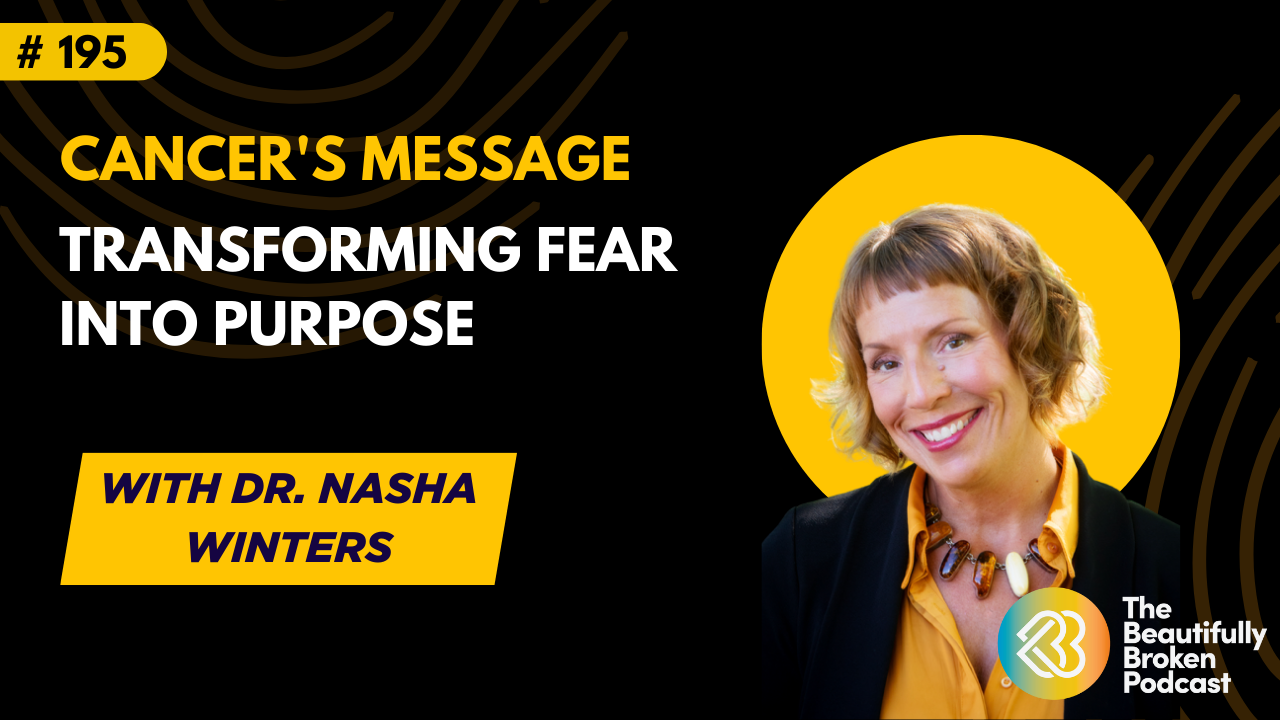
WELCOME TO EPISODE 195
In this episode, we're joined by Dr. Nasha Winters, a global authority in integrative cancer care and research. Dr. Winters' journey is deeply honest and personal, as she shares her own battle with cancer and how it has profoundly influenced her approach to understanding the body and healing others.
Dr. Winters is on a mission to redefine cancer treatment by integrating holistic therapies to optimize patient outcomes. Throughout the discussion, Dr. Winters shares her vision of establishing a comprehensive metabolic oncology hospital and research institute, which offers a unique blend of standard care and advanced integrative therapies. Alongside her team of practitioners and researchers, Dr. Winters is dedicated to empowering individuals on their cancer journeys, offering guidance and support every step of the way.
Join us as Freddie and Nasha bond over their own personal cancer journey. We explore the importance of finding purpose amidst adversity and how this can be crucial to one’s recovery. We also talk about the prevalence of cancer in today’s society as a result of our environment and culture that is designed to keep us sick.
Tune in as Dr. Winters shares her insights on celebrating our purpose, on the benefits of mistletoe therapy, and her personal biohacks and tests for optimal health. Through our guest's passion and dedication to holistic health, we hope this episode is a wake-up call for listeners to take charge of their health journeys and explore alternative therapies for enhanced healing and vitality.


Episode Highlights
[2:15] Sharing Biohack Fails
[4:25] What Is Nasha’s Life Mission?
[5:25] What to Do When Everything Feels Meaningless
[8:45] Nasha’s Personal Journey With Cancer
[14:30] Freddie’s Own Experience With Cancer
[20:30] On Celebrating Wins Wherever You Are
[27:30] Nasha’s Life-Changing Patient
[32:45] Tools to Help Repattern Your Thoughts
[37:15] How Purpose Is Important for Health
[44:50] The Prominence Of Cancer in Today’s World
[53:05] How The Health Industry Fails to Change Health Outcomes
[1:00:15] Dealing with Inner Frustration
[1:06:00] On The Power of Mistletoe Therapy
[1:12:00] Nasha’s Own Biohacks and Tests
[1:21:45] Her Must-Hear Advice for Anyone
GUEST LINKS
Website: https://www.drnasha.com/
Instagram: https://www.instagram.com/drnashawinters/
Podcast (Metabolic Matters): https://spotifyanchor-web.app.link/e/Vos8bSyw4Cb
UPGRADE YOUR WELLNESS
Silver Biotics Wound Healing Gel: https://bit.ly/3JnxyDD
Code: BEAUTIFULLYBROKEN
LightPathLED https://lightpathled.com/?afmc=BEAUTIFULLYBROKEN
Code: beautifullybroken
STEMREGEN: https://www.stemregen.co/products/stemregen/?afmc=beautifullybroken
Code: beautifullybroken
Flowpresso 3-in-1 technology: (https://calendly.com/freddiekimmel/flowpresso-one-on-one-discovery)
CONNECT WITH FREDDIE
Work with Me: https://www.beautifullybroken.world/biological-blueprint
Website and Store: (http://www.beautifullybroken.world)
Instagram: (https://www.instagram.com/beautifullybroken.world/)
YouTube: https://www.youtube.com/@freddiekimmel
FULL EPISODE INTERVIEW
EPISODE TRANSCRIPT
Freddie Kimmel (00:01.906)
Ladies and gentlemen, welcome to another episode of the beautifully broken podcast. We have the lovely Naisha Winters here on the show.
Nasha (00:11.113)
Yay! Blue tongue and all!
Freddie Kimmel (00:13.23)
blue tongue and all you are you are mid biohack do you want to just tell the audience what you're working on maybe why is your tongue blue
Nasha (00:18.979)
We were talking so... Freddie has a great idea for the biohack fails. And this morning I got a practice one. So we're in the process of developing a new delivery system for methylene blue and a combination formula. So I thought this morning at 5 a.m. I'd give it a try and see what I was feeling. I did not expect that six hours later I would still be smurfy. So there we are. There it is. That's my disclosure, my disclaimer. Yeah.
Freddie Kimmel (00:40.703)
Yeah.
Yeah. And that's not much of a fail. I mean, it's right. You know, I've done, I've done some things I want to think, I want to think about, I'll give this one. This is so vulnerable. I've never told this on a podcast before, but in my early mess of like, I'm like think there I've got Lyme cancer and like horrible abdominal adhesions going on. So I'm like four surgeries in and I couldn't go to the bathroom.
Nasha (00:46.038)
There you go.
Freddie Kimmel (01:10.642)
So because I had so much scar tissue bound up, so I'm trying to work on these adhesions. And somebody's like, oh, you need to do an enema. And I was like, great. I was like, never done one before. I was like, go down to the store, get an enema kit. Nothing. You know, all the squirt bottles, nothing. He's like, oh, and then I'm like, let me get on, you know, early. This is like 2009. So like health forums. Somebody's like, I got you, bro. You got to add a little bit of hydrogen peroxide to your enema kit.
Nasha (01:38.422)
now.
Freddie Kimmel (01:40.034)
And I was like, okay, so I'm like Googling, right? This is where my non-detail orientated self got me in trouble. And it was like, oh, you know, add, you know, I was like, read the thing and I was like, great, three tablespoons of hydrogen peroxide. It was supposed to be three drops. Basically, chemical burn, diapers, bleeding. I was like, oh, horrible, horrible.
Nasha (02:00.798)
You've heard it before, but...
Freddie Kimmel (02:09.218)
But this is, you know, this is where health can really go sideways if we're not informed and we try to go out of desperation. I always say, look, it was always at a desperation. I had nothing. So I did a lot of stupid shit.
Nasha (02:21.15)
and you're still here to tell the really beautiful, beautifully broken story of it all. So it's perfect, it's perfect.
Freddie Kimmel (02:27.074)
The beautifully broken, Naisha. I wanna let everybody in our audience know it's not Naisha, it's Naisha. And I think, nay, like a horse, like a little nay. Do you, if we pass on the street and somebody said, what do you do, what would you tell them?
Nasha (02:34.702)
Thank you.
Nasha (02:45.575)
No, I collect people's stories. That would be one of my first knee-jerk reactions of what I do. So if I'm on an airplane and someone's like, what do you do for a living? I'm like, I'm a story collector. So that usually kind of makes some pause. My next thing is I'm about helping people understand their terrain and helping them understand and support their terrain. And then third, I really focus with people dealing with cancer. And so I'm really clear not to say I treat cancer.
Freddie Kimmel (02:48.13)
Mm-hmm.
Nasha (03:13.27)
because I don't do that. And I also am very careful about saying things like, there's a cure for cancer, because I believe that cancer is simply a messenger, and there's ways to meet it and work with it, and that story, the collection of that story is so integral of how I understand. So this is probably a Bruce Liptonism, which is very much about your biography, dictates your biology, and vice versa. And so to me, those two go so hand in hand.
Freddie Kimmel (03:43.07)
Hmm. That's beautiful. I was talking with a friend this morning and we were, he is really struggling with some depression right now. And he's kind of in this, he's kind of on this, on the teeter totter of what does it all mean? You know, it's either all a miracle or nothing is. And he had said, you know, it's almost a relief to me to feel like it's just this one little poof and then that's it. And there's blackness. He goes, I have less stress around.
And I had said, I said, look, it's, this is the story I choose to tell myself is that I believe everything's a miracle. I always say cancer is the best thing that ever happened to me. We wouldn't be having this conversation. I wouldn't be, I wouldn't have these evolved thoughts or this deep capacity to just be so empathetic and love people unconditionally that I don't know had I not been through this crippling experience and then put it all back together. And.
That's my story and it really works for me. And I don't have proof either way. But these are the guiding principles that I choose to latch onto. What would you say to someone in that position?
Nasha (05:00.114)
Well, I mean, first of all, I really relate to what your friend is going through because at the time of my diagnosis at the age of 19, also god-awful terminal process, the years leading up to that, I tried to snuff my own candle on several occasions. And so it seemed far easier to leave than to stay.
And so for me, in that place where I would, to your friend hearing this, what I learned over time, thanks to my diagnosis, thanks to literally meeting my mortality face to face, was the understanding that I could have two very different, two very polarized belief systems inhabiting the same space at the same time. So I can still understand and believe that, hey, yep, death would be easier, or just giving up, or the poof could be easier, and...
Freddie Kimmel (05:41.852)
Mm-hmm.
Nasha (05:51.406)
I still choose to stay here on whatever level that means. I still choose to show up, lean into it, experience it, all of the ugliness and the painfulness of it and all to move forward. And so to make room for both realities simultaneously, I think is really important.
Pollyannaing over it and saying just think positive is absolutely it would actually backfire for somebody like me probably for somebody like you and definitely for your friend That actually almost just pisses you off and makes you want to just leave the building even faster when you get those placating, you know Recommendations so yeah I think that just being okay with the fact that you can have that desire to leave and desire to stay happening Simultaneously and there's room for both
Freddie Kimmel (06:24.8)
Hmm.
Freddie Kimmel (06:35.75)
Yeah, I deeply resonate with that. And it seems like everybody has a version of that right now in the world that we're living in. You know, there's an inability to accept two truths that both exist in the same container. And it causes a, you see, you must see the amount of pain that causes people. There can't be two. How can there be two truths? And I'm like, I see lots of double truths for lots of things. So
Nasha (06:57.203)
Ugh. So much.
Right, right, right.
Freddie Kimmel (07:05.354)
I have to assume that they exist for everything. It's like, how do we redefine truth?
Nasha (07:09.81)
Mm, that's huge. That's huge. Well, and even specific to the cancer piece, all these years out, standard of care would likely not consider me free of cancer. And so what's very interesting is I actually really push back against the concept when someone calls me a cancer survivor. I actually don't resonate with that at all and correct people and say, I'm a cancer thriver. I still have cancer happening, but it's not
Freddie Kimmel (07:11.842)
huge.
Nasha (07:36.47)
taken over the building. There's like a mutual symbiotic relationship here and I have a deep listening and deep awareness of that process in my body. And so I can choose to allow it to run the show or I can stay in the driver's seat of that. And so that's another very, that's a perspective that unless you've walked this path is probably very difficult to imagine. And even those on this path,
There, what I find in my practice, and you probably run across this, Freddie, in your experience, but I have so many people over 32 years of my career who have so focused on trying not to die that they completely forgot to live. And so while I have folks that are facing their mortality and perhaps facing, you know, death in that moment, whatever that is, you can still live the crap out of life in the process. And that...
Freddie Kimmel (08:22.496)
Hmm.
Freddie Kimmel (08:34.315)
Yeah.
Nasha (08:35.002)
often is what kicks the can down the road a little bit further. So you do start to create a new reality, a parallel reality, a different perspective that allows things to happen. Again, making room for both. It's not either or. And it's not good or bad or a failure or a success. That's the other thing that drives me crazy when it's defined. I mean, you were just talking about a mutual friend who just passed recently, someone that we all hoped.
Freddie Kimmel (08:51.967)
Yeah.
Yeah.
Nasha (09:00.854)
would continue because her light is so bright and continues to be. And yet, even in her absence, she changed all of us. And so she isn't gone. And just like the energy is neither created nor destroyed, we are just energy.
Freddie Kimmel (09:05.206)
Mm-hmm.
Freddie Kimmel (09:19.326)
Yeah. Yeah, I get this. Do you know, there's a Sting made a, wrote a musical called Last Ship. It's a story album and he has a song called The Night That The Pugilist Learned How To Dance. It's a beautiful, beautiful song about a fighter and a boxer who always knew how to scrap. But his desire to evolve was rooted in
Nasha (09:29.878)
No? Wow.
Freddie Kimmel (09:48.034)
the ability of a dance and he found this energetic exchange that was happening. And he goes, this is, this made my life beautiful. So he's trying to teach a younger human being that the value of the dance. I always think about cancer. It's a dance. We're dancing. You know, there's times when you're at a power position and the times when you pull your energy off and it's so interesting. And if we, if we saw it that way, just because I understand the power of language, I was like,
Nasha (10:05.634)
Mm.
Freddie Kimmel (10:16.478)
everybody's outcome would be different if we had that conversation. Um, but I don't, I don't blame the programming because when I, when I think about my, all the things that were not me that were given to me or, um, put in me in, in school, it's like you, you are awarded for achievement. That's when you're worthy of love. We like winners. You are the gold star. You, we want to be the quarterback. No one wants to be the water boy. Right. And so we, of course we live in this like very.
binary system of like, I'm going to fight, I'm going to, you know, I love Rocky three too. I mean, it's Rocky. Is it? Wait, is it Rocky three? It's Rocky four when he fights the Russian Ivan Drago.
Nasha (10:53.57)
I think you can just go there.
Oh, there. Yes. Well, it's funny, I'd love that you bring this up because even, I mean, we claimed the war on cancer in 1971. That was the year of my birth. And so we look at that and it came, it was, I mean, no wonder you look at what it birthed from. We were in the midst of Vietnam. It, you know, prior to that Korean wars, World War II, our world connected.
Freddie Kimmel (11:10.711)
Yeah.
Nasha (11:24.99)
and understood this war ethos. And so it made sense to harness that ethos and turn it into something for good, right? And so I appreciate that. And that belief system, like the battle, the war on cancer, the run for the cause, the fight for the cause, all those things, be a warrior, the F cancer movement, all these pieces came from that. And you can appreciate the power of it. And yet my personal, I guess, anthem
Freddie Kimmel (11:35.024)
Mm.
Nasha (11:54.494)
in all of this is that I have a different understanding, different relationship with cancer to understand that it is me. Those cells are not outside of me. They're not foreign invaders. They are me. And therefore, I don't wanna do battle with myself. And so instead, I want to understand myself and I want to keep the message of all of this and the deep learnings and the deep blessings in all of this. And that's an unpopular, I guess, belief system.
around this and it's not the common paradigm.
Freddie Kimmel (12:23.693)
Yeah.
Freddie Kimmel (12:27.614)
Yeah, it's hard when you're on the outside of it. It's hard when you're on the outside because I remember, I remember there was somebody in my community who was, I was dating at the time. Actually, I was, at the time, I think back, I was like, oh, I was filled with cancer when I was, and there's a girl who had thyroid cancer that I was very much in love with, and we started to date. And I just remember there was a reverence that I had about her because of what she had went through.
Nasha (12:31.082)
Yeah.
Freddie Kimmel (12:57.014)
And there was just an, I was like, I can't wrap my head around the fact that you're, you know, 25 years old, 24 years old, and, and you've had to deal with this. It was just a, it came in every conversation that I had with her. And to be on the other side of that, it's, I can see people, they're like, they can sort of understand it, but you cannot, you can't imprint the lessons and experiences that you go through. It's just something.
Yeah, I say I'm a lucky one, but that again, that can be really triggering to people.
Nasha (13:29.506)
Wow, wow, that's very interesting. Freddie, remind me how old you were when you went through this process.
Freddie Kimmel (13:36.294)
I just turned 46 in February, so I was 26.
Nasha (13:42.23)
Yeah, you were also before your, what they call your first Saturn return. So this crossroad in like, who am I? You know, like you fill in, you're like filling in the gaps of figuring out who you were at the time.
Freddie Kimmel (13:46.445)
Yeah.
Oh, I didn't know.
Freddie Kimmel (13:55.09)
Yeah, yeah, it was a wild experience. Look back, I knew nothing. I always tell people, I was like, oh, I was double-fisting egg McMuffins on the way to chemo. You know.
Nasha (14:05.062)
Yeah. And I went into the, I'm going to be a vegan overnight, but it was like iceberg lettuce and you know, like fake cheese whiz and of elastic dill pickles was pretty much my food of choice at that time because I just, I was still like a total junk food vegan, right? And then it just, yeah, it was awful. So where I thought it was doing myself good, oh, I actually did a lot of damage. A lot of damage.
Freddie Kimmel (14:19.637)
Yeah.
Freddie Kimmel (14:24.631)
Yeah.
Freddie Kimmel (14:31.922)
Of course. Yeah. Think about the metabolic value there as your body's trying to fight something, you're like, I'm going to take away all vital nutrients for you. All of it. Let's see how you do now, immune system.
Nasha (14:41.359)
Exactly. Let's take a look at the resources. Let's incorporate the gut even further than it already was beforehand. Yeah, it's crazy. So it's interesting. Yeah. Like, do you get a sense, I mean, you've probably talked about this on your podcast, because you said like, this is your realm here, but do you have a sense of the collective? Because there's never one thing.
Freddie Kimmel (14:53.278)
It's crazy.
Nasha (15:07.498)
I think people are like, what's the one thing that caused the cancer? What's the one thing that cured your cancer? It's neither. There is no such thing as one thing. So do you have a sense of like what accumulated in your bucket and what the final straw that broke the camel's back was for you?
Freddie Kimmel (15:08.22)
Mm-mm.
Freddie Kimmel (15:20.398)
Oh, to go, do you mean to lead into the cancer? I've actually seen it in a, in an EMDR session. I saw the moment when I shut down my heart and, uh, I got cancer. Yeah. I saw it and, and like a light, no, this probably sounds weird. Freddie, what do you mean? Um, I had a very traumatic first love experience, which ended very abruptly. And it just, it was beyond the pain. I remember to drop into my knees and remember.
Nasha (15:22.646)
Yeah.
Freddie Kimmel (15:49.534)
Yeah, I remember shutting down. I remember saying, I'll never do that again. Never going to hurt like that again. And, uh, it's been wild to un pattern. And I saw, I, I saw it and you know, I had these things it's like, and, and from 17, I had some pretty wild health stuff rolling up to the cancer. One morning I woke up with full body rheumatoid arthritis, you know.
Nasha (16:00.13)
Oops, sorry.
Freddie Kimmel (16:14.618)
hair started falling out at 18, just like in clump. You know, I had things that I look back and like, what were you doing, dude? Why didn't you go? You know, the amount of sadness and shame as a result of the loss of some of those things, like the vitality, I've done two episodes on hair loss, which I'll tell you, as bad as cancer was, when I was 18 and I had like this Brad Pitt mane and I brushed through it one day in my freshman year of college and a big clump fell out.
Nasha (16:24.821)
Yeah.
Freddie Kimmel (16:44.23)
I was making a deal with the devil. I was like, I will give you my soul if my hair can come back. I mean, I was that upset because it was this, I had like, I was doing Broadway music theater. I had a great voice. I was going to do this professionally. And in my head, that shut that door forever. And I would have done anything to get my hair back. And these things escalated, but it was.
Nasha (17:00.91)
Wow.
Freddie Kimmel (17:08.47)
Man, and to tell people at home the validity of an experience coming in and causing a malady, within the deep repatterning of a great therapist with a tool like EMDR, the way I smell is different. The way...
Nasha (17:14.954)
Yes.
Nasha (17:27.446)
the way that you smell things outside or the way your body smells out to the outside world or both.
Freddie Kimmel (17:31.574)
The way I smell things, like, oh, my smell, everything's heightened. Colors are brighter. Sex feels like amazing again. Tactile to all these things where my nervous system is just like, yeah, it's like, let's just turn the volume down for everything.
Nasha (17:37.454)
Right, right.
Nasha (17:44.741)
Woke up again
Nasha (17:49.758)
which don't you think that's the ultimate experience of depression, is the volume that has turned down of everything. That's super interesting. Well, a couple things that just struck me by what you said is that you recognize, like in that EMDR session, what was the stab, you know, the penetrating catalyst of this deep wound. And it's interesting because this showed up in your body physically in the colorectal region, right?
Freddie Kimmel (17:54.402)
Yeah.
Yep.
Freddie Kimmel (18:08.866)
catalyst. A deep wound.
Freddie Kimmel (18:16.17)
Yeah. Right.
Nasha (18:18.53)
from Chinese medicine that is, okay, well, but okay. So in that whole, right, the whole what we call the bowl, in the crotchal region, the crotchal meathers, but that whole bowl, right? And Chinese medicine is like where all the residue, like all the stuff settles out in life. So I think that was just interesting of where it physically showed up is very telling. And then the other part of it that you mentioned is, you had...
Freddie Kimmel (18:19.906)
Testicular. Right, in that zone, yes. Crotchal reason, as Ron Burgundy would say, yeah.
Freddie Kimmel (18:38.719)
Yeah.
Nasha (18:47.366)
symptoms you were in. So one of my patients calls it putting a sticker over the check engine light on the dashboard of your vehicle. And that was the same type of thing. The thing that happens for me is when patients tell me or the colleagues that I train to support them now is that, oh, I was healthy until I got cancer. And that one just gobsmacks me every single time that, I don't mean this harsh, but it's just a reality. That's delusional.
Freddie Kimmel (18:53.407)
Mm-hmm. Yeah.
Freddie Kimmel (19:07.423)
Yeah.
Nasha (19:13.186)
There's no way, now talk about the polarities here. You can be healthy and thriving with cancer, but you do not end up with cancer while if you're healthy and thriving. Like once it's established, you know it's there, you can thrive with it, but to turn it on and get it moving about the building and doing its thing requires some other things to develop over a long period of time. And so that's why I asked you if you kind of had a sense of.
Freddie Kimmel (19:13.824)
Right.
Freddie Kimmel (19:17.306)
Mm-hmm.
Freddie Kimmel (19:38.733)
Yeah.
Nasha (19:41.09)
building, big kablam. Hello, here we are. So super interesting, yeah.
Freddie Kimmel (19:45.97)
Yeah, it's wild. There's, there's other little layers that, and it's always a process of discovery. You know, I'm always peeling back another layer of the onion, but truly, you know, I hear people say this. It's like an onion. My functionality is just one, like, you know, I'm the point, like putting muscle back on and food sensitivities are gone and I'm sleeping good again. And it's always every year I've got like six or seven pretty big wins, but I am, I am, um,
I bring in a deep level of awareness to celebrate the wins, which as you said before, it's like, we kind of make this agreement. Like I just want to live or dot, dot. I'll be happy when, you know, and until I get to the bar, there'll be no happy. I'm not gonna allow myself happiness. So I, that was a thing that I really needed to kick, um, early on. And I think that's why I've had upward growth where that's not, not always the way.
Nasha (20:40.558)
So you pulled conditional out of your vocabulary. Like you pulled that and so like, conditionally I'll be happy when, or conditionally I will love when, or conditionally I'll feel better when, or conditionally. So you seem to have removed that. And I feel like that's a superpower. So that's a very difficult one to relinquish. Hoof.
Freddie Kimmel (20:56.43)
Mm-hmm. It's hard. Yeah, it's hard. It's hard. And I understand, yeah, I did it because I'm me. I did it because there's something in my DNA that is wired that way to allow that happening. But now I preach that. You know, I preach that. I'm like, I did it. I didn't know what the fuck I was doing. You could do it. Yeah. Can we, I want to go back to the funeral, Amelia's funeral. You know, we're in this building and...
Nasha (21:05.742)
Hmm.
Nasha (21:17.405)
No one knows what the fuck they're doing. Wow. Yeah.
Freddie Kimmel (21:26.306)
It's just heavy. And there's all these little kids running around and they're playing and they're giggling and they're running up and down the aisle. And then they're, you know, they, they didn't know they were just like, I'm like, I love, I would like, I love this reminder. Like this grief is taught, you know, I know grief is a part of separation and like these little kids, they're just like, they're wired for joy.
Nasha (21:53.326)
And you showed exactly in that moment that there were two things happening simultaneously, filling the space simultaneously. That's huge. And I love that you brought up the grief piece in Sanskrit. Grief is guru and guru is teacher. And so from that even, we can learn. It's like that. And that's just what's so huge is you've got to live and witness. Now, I'm curious, Reddy, because a lot of people would sit in that room.
Freddie Kimmel (21:59.72)
Oh yeah.
Freddie Kimmel (22:19.17)
Mm-hmm.
Nasha (22:19.262)
And I kind of imagine three personalities coming forth with what you just described. One of them is that they would not, they are so caught up in the grief and loss, because it is really hard. I mean, grief and loss is just, it just is, right? It's just very, very difficult. That they won't even notice the joy, the life that's actually flying and moving around them.
Freddie Kimmel (22:24.055)
Mm-hmm.
Freddie Kimmel (22:32.142)
Hmm.
Freddie Kimmel (22:38.414)
Mm-hmm.
Yeah.
Nasha (22:41.974)
That's one category. Then you have the category of you like recognizing the polarities happening simultaneously, room for both that actually fills you with hope and a knowing that you have got it resilience and a ways to deal with us, right? There's the other group that's actually pissed off that someone's letting kids run around in this room.
Freddie Kimmel (22:54.708)
Yeah.
Freddie Kimmel (23:00.678)
Oh yeah, yeah. Totally, totally.
Nasha (23:02.846)
And that's an interesting persona, because you see that a lot when someone is in a place of struggle. My husband said this to me once about a thing he recognized about my relationship with my mother. And so she's still with us, and she may watch this or may not watch this. But the one thing that my husband said to me, and it really brings something to me, is my joy brings her pain.
Freddie Kimmel (23:21.507)
Mm-hmm.
Freddie Kimmel (23:30.87)
Hmm.
Nasha (23:32.046)
And that hit me really hard to recognize that I limit my light around her, for her to feel comfortable. And it was almost like the moment he said that, it released something in me that said, I don't have to do that anymore. I mean, this is like just a few years ago. This is, you know, this is a journey. I'm on my own health journey for so long, and I feel like that was such a piece missing for me to recognize places where I dimmed my light for the comfort of others.
Freddie Kimmel (23:39.042)
Hmm
Freddie Kimmel (23:47.712)
Mm.
Freddie Kimmel (23:52.799)
Mm-hmm.
Nasha (24:02.226)
And I just was curious if you ran into any of that at that, at Amelia's celebration of life, if you saw those kind of silos showing up in that space and felt what people were experiencing in that space.
Freddie Kimmel (24:16.818)
Yeah, I always think it's interesting like this. In the past few years, kind of the Marvel universe has went into the multiverse. And I, that's exactly what I see a lot in life. I'm like, man, everybody's like on a different level of experiencing the same Whole Foods or, you know, the same funeral. I'm looking around and, you know, people are heartbroken and sad and people can barely speak. And yes, other people that, you know, that of course there's anger and...
Nasha (24:32.482)
Yeah.
Freddie Kimmel (24:43.57)
I mentioned her brother got up and he was such an interesting character. And there's no masculine feminine. So he kept saying he. And I would like, I'm like, oh, this is so endearing. But I'm sure there were other people like judging his language. And yeah, I had to sing. She was like, asked me to sing. I know. I was like, oh my God. And so I had this experience where I didn't know. I had two songs in my head. I had this beautiful, beautiful song.
from Full Monty, which is, it's basically like a, you'll never walk alone. And then there's another one that's kind of cheap and cheerful, it's called Old Friends from Marilee We Roll Along. It's such a cute song, so cute. It's about, there's nothing like an old friend. There's new friends, they'll do in a pinch, but who's like us, damn few. So I didn't know what to sing, and I was like, you know, I'm sitting there and,
Nasha (25:16.043)
Mm-hmm.
Freddie Kimmel (25:42.134)
Two nights before the funeral, I'm in my room in my bedroom over here. And four in the morning, the door goes, door opens up and someone walks in the room and says, friend. And I had my fan on, you know, you know, and so you have a fan on and someone stands in front of the fan and the noise changes, noise changed. I was terrified. Full body goosebumps. I'm hiding under the sheet.
Nasha (26:05.673)
Yeah, yeah.
Nasha (26:10.486)
I'm gonna make that up. Holy crap.
Freddie Kimmel (26:12.846)
under the sheet and I just kind of breathe, I could feel my heart was like boom, boom. I did breath work just to bring myself back into my body and fell asleep again and I didn't think about it. And so I didn't pick the song to write till I got up there. And I looked around, I was like, she wants me to sing Friends, Old Friend. Yeah, yeah.
Nasha (26:40.462)
That's beautiful.
Freddie Kimmel (26:43.379)
It was wild. Yeah, and I mean, just like, you know, this happened to me one other time in my life. I was like, ah, somebody just sat on the end of my bed. And the bed went down and I like, but there was a crease there, I'm not crazy. So that realm.
Nasha (26:59.091)
Yeah. Wow. I love that you just gave me goosebumps in remembering a moment of a family, a woman that I cared for. Her whole reason I got into naturopathic medical school. So just, this is important. So I promise there's a place with this story because I brought it in here. So I was in pre-med and after my diagnosis, no one, I kept my diagnosis very secret for there's a whole.
Freddie Kimmel (27:14.259)
Oh, it's all important. Yeah.
Nasha (27:24.15)
That's a whole nother thing. But I just needed to get through this program. And I decided instead of going to conventional medical school, I wanted to go to naturopathic medical school. But all of my professors, I needed letters of recommendation for my application. They all refused to write it for me because they said I was wasting my brain, my knowledge, because I was a really good student, to go to naturopathic. They thought I was under, you know, like settling or really selling myself short to go into naturopathic.
Freddie Kimmel (27:48.055)
Mm.
Nasha (27:50.754)
Catholic medicine versus conventional medicine. Now little did they know that conventional medicine had failed me miserably and the only reason I was even alive. And in those classes to begin with was because of stepping outside of that arena because standard of care said, there's nothing you do for you, go out to pasture and die. I was like, well, while I'm dying, I wanna understand why. And in that I started figuring out a few things along the way. So I didn't expect to survive, but I also knew that I was not gonna go to the conventional medical training that I had spent my whole life preparing for, right? Wanted to change.
the only professor who was willing to write my letter of recommendation, ended up, years later, I became the doctor for his wife, going through her end-stage cancering process, who standard of care had taken a very aggressive, very rare cancer type and taken her as far as it could go. And in the end, quality of life was what was so important to her and her family and the relationship. Her husband was my biochemistry professor.
Freddie Kimmel (28:28.928)
Hmm
Freddie Kimmel (28:41.582)
Mm-hmm.
Nasha (28:46.07)
Her family became patients of mine. It was generational. I watched grandchildren being born throughout her dying process. So I got to be with them very, very close. And in the last few months of her life, I was at her home, doing a lot of home visits, care for her at the end, and I was with her in her last moments, in her last breath, and the whole room, like the singing, everything that happened in this bird that came to the windowsill while we were there, it was pretty powerful. Well, two nights later, I am sleeping, much like what you described, and I...
Here, somebody walking made old, we lived in a 1908 house with wooden floors. And you hear the creaking on those floors. And I heard those doors open to my room. My husband and I were sleeping in the same bed. Heard that they come around to my side of the bed and exactly as you described, I feel the bed sink as someone sits down. And I open my eyes enough to see in the light that there is a woman sitting there and she takes my hand and she presses something into my hand.
Freddie Kimmel (29:19.148)
Mm-hmm.
Nasha (29:42.09)
And I feel it so specifically. I know exactly the weight, the temperature, the knobs. I feel everything so specifically. So I get a sense of who this was and what this was about, but there were no words spoken. It was just something handed to me. So the next weekend was her memorial. And her family came to me and said, we've got something for you. Margaret wanted to share something with you. And I said, I've got to tell you about this dream I had. And I explained to them what happened in my dream. And they all just get this look on their face.
And one of the daughters like, I'll be right back. And she goes into the house and she comes out and she takes my hand and she presses this thing into my hand. And it was exactly what had been pressed into my hand from that night. And it was this rock, this like fossil rock that was given to her by a shaman in the last few months of her life. And it was like a healing rock for transition. And it's still on my altar today of this piece,
Freddie Kimmel (30:28.608)
Yeah.
Freddie Kimmel (30:36.91)
Hmm.
Nasha (30:40.598)
When folks say these things aren't possible, don't happen, those leave with you. And like you, I've had so many experiences like that. But when you shared about the walking in the door, opening up, it's like we all have these experiences, but we often don't choose to listen to them or certainly share about them in a public platform.
Freddie Kimmel (31:02.298)
Mm-hmm.
Nasha (31:02.722)
you're a little bit of that shit crazy, but it was one of the most extraordinary experiences of my life. And to be able to share that with her family, it brought them such peace to know that she was able to reach out in such a way. It brought a level of peace and connection into the state. I mean, that was my God, that was so many years ago and I'm still so close to her family. In fact, her granddaughter, who was very young, young at the time she died, is now going to college and her plan is to become a cancer researcher. I mean, like
Freddie Kimmel (31:05.377)
Yeah.
Freddie Kimmel (31:21.752)
Yeah.
Nasha (31:31.562)
Generations later, this is impacting all of us. So people like Amelia and these other amazing people, they may physically not be in this form anymore, but they are certainly with us. And so my fear of death is not, I don't have a fear of death. I just don't. And I don't know if that's because I faced my own so deeply, but I've also helped other people in that transition. And so...
Freddie Kimmel (31:33.955)
Hmm.
Freddie Kimmel (31:43.106)
Yeah.
Freddie Kimmel (31:55.511)
Mm-hmm.
Nasha (31:56.65)
I haven't fought the I have to live no matter what. So therefore I'm going to focus so hard and not dying that I'm going to forget to live. I'm the opposite. And you know, I just, it's just interesting to me. It's hard to, you can't do that for somebody. You can't shift their mindset to help them understand the importance of living fully now in this moment with as much exuberant joy and vitality as possible. That's something you can't give a methylene blue for.
Freddie Kimmel (32:19.831)
Yeah.
Freddie Kimmel (32:25.186)
No, no, none of it. None of it. I think there's so many of it, so many things that reside on that program that's running inside. And how do you repattern? How do you repurpose some of those thoughts that loop?
Nasha (32:26.517)
Yeah.
Nasha (32:36.405)
Yeah. You started the repattern. You said, you mentioned EMDR. That is such a powerful tool. It's a tool I use, used and continue to use today. What's, what were the tools that helped you start to repattern?
Freddie Kimmel (32:43.403)
Mm-hmm.
Freddie Kimmel (32:49.77)
I mean, a lot of it was physical for me. You know, I started, my short list is like, I started like organically found out that I needed to add electrons to the body. My body was tired. So I really got into PMF for years and years and years, pulse electromagnetic field and frequency therapy and found one that really worked for me. I started doing full body red light therapy, you know, standing in front of a panel and just like letting that soak in for 20 minutes. I, my food and,
And one day I picked one day I was like, okay, everything changes from now. Never bought another piece of bread. Never ate sugar. Didn't have dairy, just clean vegetables, clean proteins. Um, just elite. Every time I drink water, I think about what's the source. Where does it come from? You know, is it structured? Um, things like sleep really making a sleep sanctuary, um, sleep.
was a challenge for me for a long time. I'm just really dialing in sleep, honestly, like now, like the last year, it's been a lot better. Finding some way, whatever it is to off gas to the nervous system. So.
Nasha (34:02.403)
Mmm. Ooh, that's one shape you can describe it. Off gas the nervous system. I wanna, let me check out a little bit more for me.
Freddie Kimmel (34:05.638)
Yeah, I mean, yeah, well, I mean, I always think about like, what are the ways in which something other than self can leave the body. So I think of like the primary monkteries, like large intestine, kidneys, skin, breath, the lungs, and then nervous system. So I'm like, how am I getting things other because none of those things aren't me. So how am I letting that out? And there's, you know, I've been to therapy is, you know, cognitive behavioral therapies never like
nailed it home for I never noticed a state of improvement where see, you know, there was a, there was some tons of woo in there at different levels. And, you know, I'll say a little sometimes plant medicine and sometimes ice baths, which I experienced as a spiritual experience for me, I have a crazy shift in my awareness around ice. Really high states of holotropic breath work have been great. But the biggest like nervous system
for me has been EMDR. You know, and you know, you stack that with microdosing and an ice bath and you push a little weight in the morning, then you got some magic. Then you're like, oh my God, people are like, I want what you have. I'm like, it's a lot of work.
Nasha (35:05.302)
missing. Yeah.
Nasha (35:19.668)
And it took you a lot of years to find the cocktail that's working for you in this current moment.
Freddie Kimmel (35:25.07)
Right. I mean, the thing is, is like, you know, I was looking for the, I looked for the long time, I looked for the golden bullet. You know, I was like, I want it to be PEMF or I want it to be red light therapy or hyperbaric chamber or, you know, stem cell, full body stem cell procedure. I wanted it to be just the one thing that would have just such a dramatic reduction in my pain and suffering and that I never found that thing. It doesn't exist.
Nasha (35:49.762)
that doesn't exist.
Freddie Kimmel (35:53.162)
Yeah. So now it's just all layered it, you know, I love my casserole packs at night. You know, it's like castor oil nebulizing. And then I like, you know, in this, this midst of searching, it's like, well, where, where does this exist in nature? Where's the free version of that? You know, you know, where it's accessible for everybody. Cause I do, I do think it's, I know it's there, you know, as a wandering around, do you know Dean Hall?
Nasha (36:07.426)
Gorgeous. Yes.
Nasha (36:16.37)
Oh, just of. Yeah, I don't know personally, but yeah.
Freddie Kimmel (36:18.21)
So Dean, I was teaching at a retreat with Dean in Wisconsin two weeks ago. I didn't know Dean from a hole in the wall. And we just like, now he's gonna come stay at my house. Oh, well, also with Dr. Viper, all the people, like come stay, such a good guy. But he, you know, people would read his book and they'd be like, oh, you cured your cancer from swimming in a river for 183 miles with an ice. He's like, actually.
He's like, I was walking barefoot in these special pine needles in the woods on overnight excursions. I was swimming in this cold water. But more importantly is that what I heard was I wanted to die and I wanted to let my daughter know that I was a hero. So I latched onto this purpose of being able to do something was so much bigger than myself. He goes, I think it was the dream that was like.
this incredible air balloon that drove me right up through the atmosphere. I stepped out of the river and my cancer was gone. My stage four lymphoma leukemia was gone. So I, yeah, purpose.
Nasha (37:24.022)
Wow, that's huge. Exactly, that's what I was going to say because there's actually, there are studies that show people that lack purpose have poor prognosis. And so my three questions to patients are always for what brings you joy, for what are you grateful, and what did you come here to do? What is your purpose? And I will tell you the people who suffer the most, the people who are struggling the most, the people who are less responsive to whatever therapy, the best of the best standard of care, the best of the best alternative, the best of the best combination of the two,
Freddie Kimmel (37:32.395)
Mm-hmm.
Freddie Kimmel (37:40.48)
Yeah.
Nasha (37:50.206)
they are the ones who are without joy, gratitude and purpose, or some limitation in one, if not all three of those. And so that speaks volumes. And it also just reflects back to, I started having visions and downloads of what was to come from being dealt this set of cards in my lifetime. And purpose was definitely, that has been my guiding light. And so I knew exactly what that looked like and have not faltered from that. Like it's, I'm 32 years in, I'm
Freddie Kimmel (37:53.622)
Yeah.
Freddie Kimmel (38:09.194)
Mm-hmm.
Nasha (38:19.738)
I'm trotting towards that goal. And so I'm like, well, I can't go yet, because I haven't done it yet. So I'm close, but I'm not. So I'm like, I'm not this like, I can't go yet. There's still too much to be done. And so I really love hearing, I do remember hearing a podcast with him about some of this story, but I don't think I understood. I don't think I heard it to the depth of what you just shared. Wow.
Freddie Kimmel (38:25.422)
Mm-hmm. Yeah.
Freddie Kimmel (38:41.382)
Yeah. He's a great, great speaker. He's, you know, Owen Wilson. Yeah. If you close your eyes, he's like an older Owen Wilson. He's very, just very charming, real easy. Just an awesome guy. I'm excited to get to know him more on a deeper friendship level. You know, the thing I left out is this is kind of funny about cancer is that...
Nasha (38:49.482)
Yeah.
Nasha (39:01.64)
I love it.
Thank you.
Freddie Kimmel (39:08.858)
my cancer had spread to all my lymph nodes in my belly. So I had like nine tumors wrapping around my heart and my vena cava go to my heart. My left kidney was surrounded with a tumor and they're like, oh, it's everywhere. And that's all we ever talked about, my lymph. They were like, oh, we're just going to cut it out. There was no conversation about lymph nodes. And so I've been working with this company, Flopresso, and this woman Desiree Despong over the last year. And I didn't know.
Nasha (39:33.454)
Cool.
Freddie Kimmel (39:36.894)
I'm like, wait, all my B cells, T cells, macrophages, my whole immune system is in my lymphatic and that's how it would proliferate an organ and nobody talks about this? Yeah, it was wild to me. I was like, what a blind spot. So I've been doing FloPresso once a week since March and had, again, just great things that I never thought would go away. I'm like, that's not a thing anymore.
Nasha (40:06.254)
Wow, that's so, it's so interesting you brought that up because a lot of people, again, we like, oh, it's in the lymph nodes, so therefore it's stage four and now it's on the move and they forget, like you just said, but they're doing their job. That's their, we're gonna cut all those out, we're gonna take away our garbage collectors because what happens over time, and so there were studies over my career, this has been an ongoing debate and even conventional oncology.
Freddie Kimmel (40:07.083)
Yeah.
Freddie Kimmel (40:18.524)
Mm, yeah.
Freddie Kimmel (40:24.812)
Yeah.
Nasha (40:32.722)
as to whether lymphatic involvement is the body doing its job or the cancer progressing. It's been almost a 50-50 split in that philosophy. And so it's very interesting to me that this came up sort of organically because I will tell you, it has not been... No one has made a definitive answer to what this is really about, but as a clinician who's seen this...
Freddie Kimmel (40:39.447)
Mm-hmm.
Mm-hmm.
Yeah.
Nasha (41:01.574)
in so many patients, my inclination is that the lymphatics are our friend doing their job and we need to support them to ingest, metabolize, whatever it is they're taking in and help it rid out of the system. But that terrifies people. Still a massage therapist and other people are like, oh, don't do massages. You can't do massage. They're like, no, that's not true anymore. We debunked that decades ago. And yet...
Freddie Kimmel (41:24.1)
Mm-hmm. 100%.
Freddie Kimmel (41:29.047)
Yep.
Nasha (41:29.678)
still the ethos, you know, that's out there. Or careful with pumping the lymphatics or seeing a lymph massage therapist. This is a place that really does need some re-visiting. Yeah, definitely.
Freddie Kimmel (41:43.858)
Revisiting, yeah. They, you know, I just, again, because I'm an all-miracle person, I don't think the body makes mistakes. So I always go back to that. I was like, are you a mistake? Is this cancer progressing as a mistake? Body seems pretty smart for me. And so it's just that, yeah, I kind of, that's my default. So I say, I'd say, and then the other thing, it's like,
Nasha (41:52.012)
Oh yeah.
Freddie Kimmel (42:12.098)
If we look at the lymphatic system and it's kind of where the physical meets the soul. You know how one side is this little trunk over here and then 70% is served on the big side? It's really fascinating to me when we think about the energetics of letting go of your garbage. I don't want to stop that. So the natural mechanisms that the last year and a half that I've just been looking at, it's like movement.
Nasha (42:17.974)
Oof.
Freddie Kimmel (42:41.878)
We're all stagnated. Did you move 10, fit 10, 15,000 steps a day? Do you understand what deep diaphragmatic breathing is all day? And then the smooth muscle surrounding your limb vessels known as a lymph angion, that's smooth muscle contracting just on its own. When you're in parasympathetic. So it's like your lifestyle. If you think about those three, your lifestyle is hijacked your immune system. That's it. And most people in our audience will go, that's me. Yeah.
Nasha (42:43.394)
Big time.
Nasha (42:53.71)
Yeah.
Nasha (43:00.935)
Yeah.
Nasha (43:11.254)
100%, 100%. You just said, I love how you talked about like even the limb-van-gee-o aspect. It will not do its job if you are revving in sympathetic, which is where we're all revving. You cannot, all revving there. You cannot heal in a sympathetic.
Freddie Kimmel (43:21.803)
We're all revving there.
Nasha (43:27.578)
Driven state you just cannot and so you can't I don't care how good your biohack is how good your therapy is how good your Your trauma resolution work is how good your diet is how good your chemo therapy is I don't care how good they are if you are still revving in sympathetic You cannot even receive the blessings you cannot receive the miracles that you're describing And so it takes a very it that's the hardest work is that awareness that consciousness in this and yet? It's the least sexy
for most people. They want the very tangible, but what you're describing is the very intangible. And so it's very cool that you are now finding a therapy that's the interface between the tangible and the intangible. And that's where your focus is. I think that's really, really interesting. Yeah.
Freddie Kimmel (43:57.687)
Yeah.
Freddie Kimmel (44:08.29)
Mm-hmm.
Freddie Kimmel (44:11.934)
Yeah. It's really interesting. We can always, you know, the tools, I'm always fascinated because I love the tools. My house is ridiculous. Ridiculous.
Nasha (44:19.818)
Yeah, yeah. I'm coming to visit too. You don't know that yet, but if you're bringing all these.
Freddie Kimmel (44:23.634)
Oh, you're invited. Yeah. If you're come to Austin, Texas, you, you're in the guest room. The, um, the technology now we have, it's like, wow, we can always make the shift, but can we entrain the system to pick up the new information and embody it? Rare. That's rare. And that's what, you know, I get as much as a technologist as I am. And I work for a lot of these companies and consult these companies. I am so annoyed at the marketing.
You know, at our little, it's a lot of the disease is like, in a way it's driven by capitalism because the messaging behind the myth, it's like, it's fake. It's like, no, we can make the shift on a lot of these things. How do you embody it? How do you bring it into your being? And that's not from the tool. That's radical ownership of health, which we come back to you in the hard part. Nobody wants to hear that. Can't pull out a checkbook for that one.
Nasha (45:16.906)
Mm. No. Exactly. Can't pay our way out of this one or hack our way out of this one. It's an inside job for sure.
Freddie Kimmel (45:22.558)
It's an inside job, which is why I had you on the podcast because, um, you know, it's heart heartbreakingly, I've had so many young friends getting cancer lately. Um, it's I definitely, I'm not going to go into it too much. I'll have a response. It hurts. It hurts to have all my friends that are sub 40, 45, 42, 40, 41, 38, 26, 18, um, dealing with these.
Oh, I was fine. And now I'm not, I'm filled with tumors, um, all over the map. And I'm like, this seems either, either it's because it's my pond and I'm, I'm looking for it or the numbers are dramatically increasing in cancers amongst young people. And I was like, I, you know, I'm like, how can I be of service? I can have people like you on, I can have Katie Deming on, I can have Dr. Dix and Tom, we can keep having this cancer conversation.
But I'm feeling called to really have like a better network of like, where do I point you? Cause I always, your book is the most mentioned on the podcast cause it was really great for me. It was a really wonderful framework. I bought it in like a long time ago. When did it come out?
Nasha (46:36.758)
That's golden days! It's 2017 and it's still really dang relevant, which is, you know, there's some fundamental... Yeah, amazing.
Freddie Kimmel (46:43.902)
Yeah, probably 2017. Probably right around there when it came out. Yeah, yeah. I think I heard you on Dave Asprey's podcast, like 2018.
Nasha (46:53.25)
Yep, that would have been summer 2018, I think, when I had... Oh my God, that was so funny. And gosh, talk about just getting message out there. And people still find me to this day from that conversation. Yeah, it's crazy. And I really love that you brought this up because first of all, I really appreciate that you brought up the fact that younger and younger people are meeting this diagnosis younger and younger ages, but even with more aggressivity than we're accustomed to.
Freddie Kimmel (46:55.434)
Yeah, kicking cancer's ass with a keto diet.
Freddie Kimmel (47:07.095)
Of course, you got an awesome platform.
Freddie Kimmel (47:22.059)
Mmm.
Nasha (47:22.318)
You know, cancer historically has been considered a disease of the aged. All right. That's how it was classified when I. Yeah. So it's like, so when I left med school, the average age of a patient with cancer was 68. By the time I was deep into private practice, the average age had dropped to about 58. Now from World Health Organization, whatnot, we're now in the mid forties is the average age. So that is not because we're, you know, they're, they always say it's because we're diagnosing earlier.
Freddie Kimmel (47:25.706)
Mm-hmm. Right.
Nasha (47:49.922)
Our technologies are such we can catch things sooner. But the crazy part is, well, that might be the case. But the reality is that our overall survival and our progression-free survival has not changed. We might be diagnosing them sooner, but we don't change their outcomes with the standard of care as is in a dramatic way just by saying, oh yeah, you do have cancer. So now we're gonna throw everything in the dog at it and see what happens. So.
Freddie Kimmel (48:08.651)
Yes.
Nasha (48:16.674)
First of all, I want to acknowledge when you said just maybe it's because you're looking within your own little pond, I thought that too. But now that I have currently, to date at the time of this podcast, I have 268 clinicians, 300 patient advocates in 39 countries. My newest edition of Doctors in Training right now, we have 54 new clinicians from all over the world that just started. We have next month, we have so far we have over 75 people registered in the patient advocacy.
What I'm finding is this is a common pattern and a global experience. And most of the doctors and advocates who are coming to us are coming to us because they're seeing things that they've never seen in their entire careers. They never thought, they never wanted to work with cancer, but you don't have a choice today if you're a clinician on the planet today. When the World Health, I mean, right now, one in two people, one in two people, used to be one in two men and one in three women.
Freddie Kimmel (48:57.747)
Mm-hmm.
Nasha (49:12.818)
Now it's one in two people across the board will experience cancer in their lifetime. And the World Health Organization just published studies showing that our cancer rates will double globally by 2020-2040. And that we'll have another, expecting another explosion beyond that into 2050. So this is new, this is different. This is not you just looking at a particular pond. And it drives me crazy that no one is out there asking why. My entire reason I'm still on this planet 32 after.
32 years after a terminal diagnosis is because I asked why. And I'm still asking why for myself and the tens of thousands of patients I've directly had a hand in their exploration, as well as the hundreds of thousands of patients I've had an indirect hand in their exploration to know that we are not asking the right questions. And therefore we're not able to offer the right tools to support this. So I so appreciate your platform in helping people say, I can't just get away with being young and dumb.
Freddie Kimmel (49:46.37)
Hmm.
Nasha (50:10.714)
I can't, I gotta be like aware, I gotta start to dig deeper. I gotta look under the hood well before there's a problem. I gotta stop putting the tape over the check engine light. I have to take some accountability, some responsibility and the old adage of moderation and moderation, including moderation, we'd have to just throw that shit out the window. There is, on the planet we live on today, until we all become activists to change the planet that we're living on, we won't.
Freddie Kimmel (50:10.847)
Mm-hmm. Yeah.
Freddie Kimmel (50:27.704)
Yeah.
Nasha (50:39.49)
change these outcomes. And so we have to be little advocates and activists in our own selves, in our own homes, in our own communities, in our own cities, in our own countries. It's pushing us to be engaged in a way that we've never been engaged before.
Freddie Kimmel (50:58.17)
Yeah, I feel that. I really do feel that people are asking me questions about things that they never would have. They've been like too out of scope. And I do think is it get pushed into the public arena? Goodness, Gary Brekka was on Joe Rogan like a month and a half ago and I was like, oh my God, they're talking about PMF and red light and multi-step oxygen therapy. This is loco. The bros are going to get it.
Nasha (51:19.806)
Thank you.
Nasha (51:23.901)
I'm sorry.
Freddie Kimmel (51:26.242)
They're going to be because typically like in my experience with working in sales and marketing consultant for some of these companies, it's always the women who would reach out and be like, you know, I'm going to buy this for my family. It's changing. It's totally changing.
Nasha (51:41.063)
Yeah, 80%. Yeah, it is. And what I think is so cool is it's changing in that the biggest changes I've seen in medicine in general over the past 10 or 15 years was not from inside like medical institutions, research institutions, academic institutions, that's not where the changes have happened. It's happened in the biohacker community, which tends to be historically the people drawn to alternative or integrative care.
in medicine in general, not just cancer, but in general, were women, 80% by the way. The switch though in the biohacker world is that it's 80% men. So there is, there's like a beautiful crossing, like integration of that information because it's very, it's taking folks who are very systems thinkers, the people in the data, like in technology, in, you know, engineering, these are the brains that are making the biggest changes in medicine today. And they're not even in the biomedical field.
Freddie Kimmel (52:11.191)
Yeah.
Freddie Kimmel (52:15.691)
Hmm
Freddie Kimmel (52:34.844)
Mm-hmm.
Nasha (52:37.206)
That's what's so cool to me. And that's also why it's engaging more people than ever before. And those are where our solutions lie right now, not within academia, who frankly is not inspired enough to make the changes. And what we know is that your listeners probably have heard of this term, and you likely have, is this concept of the 17-year gap. That is the gap between the moment we say, oh, we just got an IRB approved by the, you know, NIH or the FDA or whomever.
Freddie Kimmel (52:46.441)
Yeah.
Nasha (53:06.326)
to study this therapy by the time it goes through that process and becomes out there for the rest of the world to assimilate or use, it's an average of 17 years. Who in our world has 17 years to wait to see a something like this? Thank you.
Freddie Kimmel (53:18.157)
Yeah.
Nobody. That's why we be trying hydrogen peroxide enemas at the wrong dose.
Nasha (53:26.038)
Hey!
Nasha (53:29.55)
Three drops, three drops, three drops. Ha ha ha.
Freddie Kimmel (53:31.086)
three drops. No, seriously, I just want to insert this. As we have these conversations and you hear this on a podcast, I never want anyone to take anything I say as something you should go try. It's like a jumping off point to go learn because man, the older I get, the less I can say, I don't want to recommend anything, especially a supplement. I was like, well, I don't know how that is going to interact with your
metabolic pathways could be real bad for you. That green tea could be real bad for you. And it's so individualized. I would love to, because I've heard you talk about this before, you did say, I want to just click back. We don't change outcomes. When we look at standard of care, talk to me about that statement and that phrase and talk to me about outcomes within the current world of oncology.
Nasha (54:01.591)
exactly.
Nasha (54:23.006)
Yeah, so your listeners need to understand that there's only one. So in cancer care, in standard of care oncology, first of all, there's only two people that can then can legally say they treat cancer. One of them is a board certified oncologist and the other is a board certified dental surgeon. Those are the only two populations that can legally treat cancer. So want your folks to hear that. So when...
I mean people like me or other integrative therapists on board, if we're working with people with cancer, we're working with people that happen to have cancer, we are not claiming to treat cancer. So I just want to put that out there. The other weird thing about the oncology space is if you are alive five years after your diagnosis, they go to their little booklet and be like, cure, even if you die five years and one day after.
Freddie Kimmel (54:59.512)
Mm-hmm.
Freddie Kimmel (55:16.864)
Mm-hmm.
Nasha (55:17.126)
you still get chalked up of, oh, you were alive five years after this diagnosis, therefore that is considered a cure, which is really weird. So it's a talk about just someone choosing their data, cherry picking data, cherry picking what they publish about. Then the other word that gets people confused, so when I have patients that are looking at clinical trials, for instance, the discussion about what is your actual, what is the actual benefit of this trial?
Freddie Kimmel (55:31.551)
Mm-hmm.
Nasha (55:46.19)
how much progression-free survival are you going to have? Meaning, okay, you're progressing, this medication comes on and stops the progression. It doesn't take the cancer away, but it stops it until it doesn't. And so how long is it until it starts to get on the move? Again, that's considered progression-free survival. Like how long is that? Days, weeks, months, years, right? And then the overall survival is overall, what did it do to your longevity, right? Whether you were in, like on your deathbed for the last two years of your life, they don't care about the...
quality of your life. They just care about the actual numbers on the calendar, you know, days on the calendar. That's what we measure for outcomes for success. Those are the metrics we measure everything to. The other thing that's really important is for folks to understand that the clinical space of the clinical research space, so a phase one clinical trial. When I hear people get really excited in our world who are like, oh my god, I'm gonna, you know, get my friend into this clinical trial. I can't wait and I look at it. Okay, if it's a phase one clinical trial you guys,
Freddie Kimmel (56:20.458)
Hmm.
Nasha (56:44.63)
This is not at all about worrying about progression, free survival, or about overall survival. It's simply looking at, will this drug just outright kill this person? That's what it's looking at, period. It's a complete guinea pig experiment. Phase two is when they say, what is the maximum tolerated dose we can give for them not to be pushed over the edge?
Freddie Kimmel (56:56.329)
Mm-hmm.
Nasha (57:13.386)
So the first one's like to establish general safety. The second is what is the furthest we can push them to with regards to safety. And phase three is when we start to look at what type of a difference does this make in progression, free or overall survival. So I really tell patients, unless you are wanting to donate your body to science, and I'm gonna piss off a lot of researchers, a lot of academic institutions right now saying this, because I just hurt their quota and I hurt their funding because they're constantly trying to recruit for phase one and phase two clinical trials.
Freddie Kimmel (57:31.042)
Hmm
Nasha (57:41.174)
But again, now that your listeners have a sense that the average of those trials to actually be published and be something actionable is 17 years. So you're not going to see the benefit of this in your lifetime nor is anybody that you're caring for. And you don't really know if it's going to do anything until you get to a phase three. So I'm telling people, if you have any chance at all and a phase one or two is the only thing offered and you are in a pretty good quality of life and state, you might want to reconsider donating your body to science before your time is up.
Freddie Kimmel (57:50.244)
Mm-hmm.
Freddie Kimmel (58:08.403)
Mm-hmm.
Nasha (58:08.782)
So that's just, I want to have that framework so people understand, because we also, then we finally publish these studies, and we say, we see the headlines, we see the sexy abstract titles, and we get like, oh my God, there's a cure for lung cancer, and then you look at it, and you're like, oh, it was a mouse study that just showed that these mice equivalent in human years extended the life by a few weeks or a few months. So there was a study that came out a few years back, I can get you the, if your listeners wanna take a look at this, but they looked at,
Freddie Kimmel (58:12.885)
Yeah.
Freddie Kimmel (58:37.366)
Mm-hmm.
Nasha (58:37.838)
I think 96 drugs over a 17-year period of time, all in the oncology space that were considered blockbuster drugs, meaning they had a really good benefit. The average overall survival rate when you put all those in a bucket, do you remember, have you read this study? Do you know what the outcome was? Yeah, it's well, so the overall, the best we were able to do was 2.4 months of extended life.
Freddie Kimmel (58:57.436)
I think, yeah, it was really bad.
Freddie Kimmel (59:07.02)
Yeah.
Nasha (59:08.522)
So when I look at that, when I'm working with someone, I'm talking about outcomes, I'm talking about that type of outcome. That it is not, and we're spending billions on studies to get us maybe a few weeks to a few months down the road. And no one's talking about what was the quality of that person. It's massive. And what's very interesting is how many patients in my career have opted to do nothing.
Freddie Kimmel (59:14.971)
Mm-hmm.
Freddie Kimmel (59:22.73)
Yeah. Yeah, that's the big one for me.
Mm-hmm.
Nasha (59:33.834)
because they're like, I read the data, it might give me a couple months, I'd rather do nothing, I'd rather go on a road trip for a couple months, and how many of those patients are still here years later. Yeah, so it's funny, we took a group of 11 patients that were all, we had terminal cancer, they were all in hospice eligible, so meaning less than six months to live, so they were also now no longer doing any other therapies, and we took them into the jungles of Mexico and saw a Wicholl medicine man who,
Freddie Kimmel (59:42.882)
Mm-hmm. Yep.
Nasha (01:00:02.658)
performed a very specific vitrole healings on these folks and took them on a POD journey. All but one of those people are still with us today. And that was in 2016. So right, and the patients I've had who were the first patients that went through the trials at Harvard for the psilocybin end of life trials, I had 11 patients go through those trials. All of them are still here. And that was in 2010 to 2013 window.
Freddie Kimmel (01:00:11.266)
Wow.
Wow, that's amazing.
Freddie Kimmel (01:00:31.075)
Unreal.
Nasha (01:00:31.85)
Yeah, and they were all in stage. So it's like, this is the place where people so, we don't, you don't see those filling up the medical journals, because then when someone comes to me and hears me tell these stories, like that's just anecdotal. I'm like, okay. Anecdotally tens of thousands of people. Exactly, and that's where I'm like, wait. This is what I'm asking, Freddie, for your listeners, for you, for others. Why are we all not shouting from the rooftops about our own?
Freddie Kimmel (01:00:41.482)
Uh-uh.
Freddie Kimmel (01:00:48.729)
Tell that to their family.
Freddie Kimmel (01:00:56.636)
Yeah.
Nasha (01:01:00.19)
our anecdotal in one experience is just as valid as these 17 year studies that are looking like, there's something here, right? It's just, it's so weird to me that there's such a disconnect of finding any value in these types of outcomes.
Freddie Kimmel (01:01:10.232)
Yeah.
Freddie Kimmel (01:01:17.858)
Yeah, so I have a question for you. So you have, you know, you have a belief system, you have this information that you've, you've combed through, you know, you have lived experience, you have these trials that you've had your people enrolled in. How do you deal with the frustration of knowing of your deep inner knowing? Like, I don't.
Nasha (01:01:33.452)
Yeah.
Nasha (01:01:38.55)
drinking. I'm not really sure.
Freddie Kimmel (01:01:45.57)
that we don't, it's not about the next magical drug to come along, that we have things that could change the quality and impact of people's lives today. How do you deal with that frustration, not being able to get the word out?
Nasha (01:01:57.338)
I'll tell you for 20 years it took its toll on my health, on my psychology, on my physical health. I would say I was bopping up and down into the cancering spectrum quite a lot during that time. It was more of a bumpy ride because I...
Freddie Kimmel (01:02:01.334)
Mm-hmm.
Nasha (01:02:13.762)
I take things in so personally, so somatically, so when I'm under stress, when my nervous system is in that somatic, you know, complete sympathetic overdrive, I, it takes its toll on me really easily. And so I spent the first 20 or so years of my career trying to fix the broken system, trying to convince people, trying to drag people kicking and screaming over to my philosophy, to my belief system.
Freddie Kimmel (01:02:27.926)
Mm-hmm.
Nasha (01:02:44.414)
When I finally let go of that and decided, F that, I'm just gonna build a new system and anyone who wants to get on my arc can join me and we'll see what happens with this. And so that's what I have slowly been building. Like I said, we're now 39 countries globally. We're now looking at actually creating some more systemized approaches with the way we present this methodology into.
Freddie Kimmel (01:02:53.877)
Mm-hmm.
Freddie Kimmel (01:02:57.873)
Mm-hmm.
Nasha (01:03:10.966)
the healing space, we are building a data platform to collect all the metrics and all the information I'm telling you. So when they say there is no data, we'll be like, well, no one's measured it, but we are. We're building the lab that's doing the evaluations on what's working, what's not working. When someone says, oh, this, for instance, methylene blue is very helpful on your complex one of your mitochondria, well, we're actually testing that in a lab to show this is in fact.
what it's doing in real time, both in cell line, animal, and human studies. So we're doing the research. We're collecting the data. We're building the new medical system. And we're training the masses to know how to apply it. And so that's where now it's like exponential of the stories I get to hear. And it's exponential of how many people are
Freddie Kimmel (01:03:35.732)
Mm-hmm.
Freddie Kimmel (01:03:48.843)
Mm-hmm.
Freddie Kimmel (01:03:56.386)
Yeah.
Nasha (01:04:00.402)
seeking us. So just an example, we are sucky at marketing. We do none. We're terrible. We have a horrible website. At some point, we should have the money or the bandwidth or the resources, the human hours to do what needs to happen and actually get our website up and doing its thing. But last month alone, with no nothing, we had 35,000 people come to our directory looking for a clinician trained in this methodology. We have about 150 listed on our web, our directory.
Freddie Kimmel (01:04:18.391)
Mm-hmm.
Freddie Kimmel (01:04:23.47)
Mm-hmm.
Nasha (01:04:29.142)
These doctors, I mean, the ones that aren't even on that we've trained, they just can't take any more clients. We literally do not have enough people to meet the demand. So now that we're up at this point, that's when I know like we are coming into that hundredth monkey process, where now all the things I fought so hard to communicate about are now becoming like household names. Like I would talk about terrain until I was blue in the face, and now I see the word terrain everywhere, even in straight here.
Freddie Kimmel (01:04:36.366)
Mm-hmm.
Freddie Kimmel (01:04:42.948)
Mm-hmm.
Freddie Kimmel (01:04:54.73)
Mm-hmm.
Nasha (01:04:55.882)
or tumor microenvironment everywhere, or metabolic health everywhere. Two years ago, that wasn't the case. And so there's an exponential process happening now that I'm feeling, I didn't expect to see this, frankly, in my lifetime, because it was so slow going for those first decades. But the exponential process, because of people like you, Freddie, because of people in the space, because of the horrors and the wonders of social media, right, got the both ends, again.
Freddie Kimmel (01:05:02.359)
Yeah.
Freddie Kimmel (01:05:10.66)
Mm-hmm. Yeah.
Freddie Kimmel (01:05:22.08)
Mm-hmm.
Nasha (01:05:24.834)
happening simultaneously, you get their space for both. We are reaching the masses in a way that we, the consumer, are demanding something different. And that's when things will change.
Freddie Kimmel (01:05:27.84)
Yes.
Freddie Kimmel (01:05:35.262)
Yeah. I, I ask you that because, um, you know, once in a while I'll talk to people in the space and it's like, I feel how what they're holding in their container and the frustration and the rage, I'm like, oh my God, it's like, it almost makes you like, turns you back into a villain. Like you become a caricature of yourself. Um, I know that's not you. I'm just saying. Yeah.
Nasha (01:05:54.35)
Thank you.
Nasha (01:05:58.708)
Yeah. Oh, it was, it totally was. I will, it was a time when I was like, there was so much rage and fury that it actually incapacitated me. Yeah.
Freddie Kimmel (01:06:04.799)
Yeah.
Freddie Kimmel (01:06:08.37)
Yeah. It's really... You know what it is? You know what I really like? It's my spiritual teachers. They're like, there's a 12 guiding spiritual practices and one that always stands out for me right now is humility. And so whenever you look at somebody else's platform or their belief system or their message and you do this, how could they? You're like, of course they can. That's where they are. That's where they're at. That's their information. That's their story. That's their program.
Nasha (01:06:20.459)
Mmm.
Freddie Kimmel (01:06:33.962)
And I think we've just got to be able to look at people and be like, of course you can hold that belief system right now. I'll be over here with mine. And that's all I can do. That's all I can build. Yeah. Either that, the phrase that comes up a lot is, my response is my responsibility. It's probably my first t-shirt I need to make.
Nasha (01:06:41.706)
Right, right.
Nasha (01:06:45.738)
Yeah.
Nasha (01:06:50.723)
Mmm.
That's massive. Yeah.
Freddie Kimmel (01:06:55.586)
That's it. There's so much there. I would love to ask you, and I know it's where I usually do an hour and we're past our hour. Let me know how's your time.
Nasha (01:07:06.861)
I think I'm okay. We'll keep it going.
Freddie Kimmel (01:07:07.998)
You're okay for a little bit. Great. I have this word on my page. I had, I written down mistletoe and I would love to talk a little bit about mistletoe therapy and its beginnings. And I've spoken about this on the podcast before. And again, I just want to frame, you know, we can hear, there's a time in my life, people are like, oh, you need mistletoe. This is your thing. This is, this is going to like eradicate your tumors. This will be your thing.
Nasha (01:07:14.371)
oooo
Nasha (01:07:34.466)
the things.
Freddie Kimmel (01:07:37.15)
Right. But let's talk about mistletoe therapy and what it is and what's your relationship with this powerful plant.
Nasha (01:07:43.246)
Sure, it's such a funny thing, because it's definitely not a one, like this is the one, this is the thing. Like everyone, that's the seduction that's out there always in every, oh, eat pee and stuff, I mean everything, keto, vegan, whatever, always something. Everyone's like, oh, the one target, the one treatment. That doesn't exist. So this therapy is the, it's the most consistent integrative oncology therapy in the world. It's the most studied.
Freddie Kimmel (01:07:49.835)
Mm-hmm.
Freddie Kimmel (01:07:53.447)
Always. Yeah.
Nasha (01:08:10.474)
integrative oncology therapy in the world. It has over 2,600 good published peer reviewed studies, you know, published on it, as well as about 250 of them that we would consider really good gold standard in the United States through our system. I was helped with the IRB and the construction of a study that happened and was published in 2022 from Hopkins, which was phase one clinical trial, because that's how we roll here. Like up.
Freddie Kimmel (01:08:38.978)
That's how we roll.
Nasha (01:08:39.978)
and everywhere else and it's totally safe. And we know the dosing and we know the overall survival and we know the progressive resurvival, but we have to start here on our soil because apparently we think we're the best medical system in the world, despite we're 36 in the world, just saying. Yeah, it's just crazy. And we don't spend a lot of wasted money, time and energy, which by the way, when that started was in 2014 and it just got published in 2022, they did it. For a phase one.
Freddie Kimmel (01:08:52.83)
Yeah, behind Cuba, behind Cuba.
Freddie Kimmel (01:09:04.544)
Ah.
Nasha (01:09:06.946)
Phase two will take another 10 years, phase three another. So we're looking at the 17 year gap before we say to people in the West, yes, this is a safe and effective therapy. So I say that to just get on my soapbox there to show you how dysfunctional our system is. The other side of it is this crazy, very controversial character, philosopher, Rudolf Steiner, who the man has issues, right? I mean, there's no doubt about that, extremely controversial and yet things like permaculture,
Freddie Kimmel (01:09:07.559)
Yeah.
Freddie Kimmel (01:09:12.102)
Mm-hmm.
Freddie Kimmel (01:09:16.235)
Hmm.
Yeah.
Freddie Kimmel (01:09:36.158)
Mm-hmm. Yeah.
Nasha (01:09:36.322)
Waldorf school education, sacred geometry and architectural design and medicine has a lot to thank his craziness for, right? And so mistletoe is one of those therapeutics that started being used in 1917 as a treatment in the same form as an injectable that it is still used today, which is very interesting that it's maintained.
Freddie Kimmel (01:09:45.198)
Mm-hmm.
Freddie Kimmel (01:09:54.906)
Mm.
Nasha (01:09:57.994)
We started doing studies on its IV application in the 50s. We started doing intratumorals in the 70s. Like we have known that this was our powerful immune therapy for a long time. And everyone scoffed at, poo-pooed, and ignored the immune system until we could monetize it in standard of care today to that being the prominent driver of standard of care therapy today. Despite that, we've actually had a really cheap and effective tool for a very long time. But what I love about it is the anthroposophical philosophy behind this medicine.
And this is what differentiates it of being just a tool versus a field. Okay. I for lack of a better word in that, in anthroposophical philosophy, cancer is a disconnect, okay. It's a loss of rhythm and it's a disconnect from the micro. So down to like the molecular metabolic disconnection, cell signaling, pathways, et cetera, all the way up to the macro of like.
Freddie Kimmel (01:10:33.826)
Mm. Mm-hmm.
Freddie Kimmel (01:10:49.282)
Mm-hmm.
Nasha (01:10:53.558)
to other, to self, to other, to God, to the community. And so it's a full on disconnected process. It's also a complete loss of rhythm. And so on the planet today, especially in the last hundred years, we have all lost our rhythm. You know, like you can, what's up is down, what's down is up. You know, you can now work 24 seven under blue light, your body, you don't know, Americans spend less than 15 minutes outdoors every day. Like just, you start to recognize women are like giving themselves, you know,
Freddie Kimmel (01:11:07.916)
Hmm
Nasha (01:11:22.082)
Depropera to avoid having any periods. You know, like we're completely normalizing circular, right, like all the things, right? So exactly, we're disconnected and we're dysrhythmic. What Anthroposoccal understood the mistletoe to do is to reestablish connection, rhythm, and a mantle of warmth, which has a lot of, you know.
Freddie Kimmel (01:11:29.688)
Oh, yep.
Nasha (01:11:48.278)
That could go in a lot of directions, energetically, physically, spiritually. It is a warming therapy. It is a fever induction therapy, something else we've spent the last 50 years, like suppressing, right? We actually dropped our body temperature in the last hundred years because of these types of suppressive therapies, which means our immune system is off track. And so it reestablishes the natural endogenous rhythms and connections inside, but also outside.
Freddie Kimmel (01:11:49.931)
Mm-hmm.
Freddie Kimmel (01:12:00.343)
Mm-hmm.
Mm-hmm.
Freddie Kimmel (01:12:15.429)
Hmm.
Nasha (01:12:16.842)
And so one of my favorite side effects of mistletoe is this improvement in quality of life, massive. And the other favorite thing about mistletoe is it is a remedy that has always, always been with other therapies. It plays well with others. There are virtually no contraindications. And so it was used historically with radiation, with chemotherapy.
Freddie Kimmel (01:12:37.154)
Hmm.
Nasha (01:12:41.974)
with surgery, now with endocrine blocking therapies, targeted therapies, and even immune therapies. And so it's got this beautiful, like please well with others approach to it. And so it's a therapy that can enhance and support a lot of other therapies. You talked about the importance of stacking earlier. This is one of those that I like to stack into the mix of people actively cancering, or those looking at the long haul, especially with very...
Freddie Kimmel (01:12:52.34)
Mm.
Nasha (01:13:08.894)
aggressive types of cancers, familial, genetically kind of driven types of cancers, and high risk of recurrence type of cancers. This is a stack I like to bring into this into the mix. Yeah, we actually have a book co-published with six other really brilliant authors in this space, anthroposophical gurus in this space. It's a non-profit book. All the funds go to research.
Freddie Kimmel (01:13:13.388)
Mm-hmm.
Freddie Kimmel (01:13:19.387)
Mmm.
Nasha (01:13:30.518)
It's called Thistle Toe and the Emerging Future of Integrative Oncology, and it really goes into this history and this concept of the mantle of warmth and the concept of disconnect. But it also talks about what does it mean in current and future integrative oncology care.
Freddie Kimmel (01:13:30.602)
Mm-hmm.
Freddie Kimmel (01:13:45.15)
Yeah. Beautiful. What are, Naysha, what are, what are some of the therapies that you currently engage in to keep your terrain balanced? And, and, and you can, you can do simple lifestyle things. You can do high level biohacker things.
Nasha (01:13:54.057)
Nah.
Nasha (01:14:00.234)
Well, one of my big hacks is I test. I'm really, for me, I want, because how I feel, sometimes I'm so busy and disconnected just like life that I need to look under the hood and make sure I'm not missing anything. I do an annual test for myself every year. And if I'm symptomatic, I'll do it again later in the year. But every fall, I basically do a deep looky-loo through.
How's my immune system? What's going on with my metabolic health? What's going on with my inflammatory markers? What's going on with my cancer markers? I mean, I had to look at the whole gamut, right? I also, I'm getting ready to have my first pre-nuvo, whole body imaging, because I've had, historically I've used ultrasound and thermography because I got terrible gadolinium poisoning and contrast dye poisoning. My kidneys are very shot 30 and 70%. Thanks.
Freddie Kimmel (01:14:32.887)
Mm-hmm.
Freddie Kimmel (01:14:38.495)
Mmm.
Nasha (01:14:51.486)
to that and I can't even heal those things on my body because it puts my kidneys into complete failure. So I can't do your standard issue CTs or MRIs. They just don't work. And I don't want, because I've got BRCA, I don't want any more radiation. That is absolutely what kicks up a BRCA bad response. BRCA is about when it's working well. It's about DNA repair. And so you do not want to bring on things that are further damage your DNA, such as tons and tons of radiation. They recommend to women and men who have a BRCA mutation.
Freddie Kimmel (01:15:06.326)
Mm-hmm.
Freddie Kimmel (01:15:12.589)
Mm.
Mm-hmm.
Nasha (01:15:18.398)
And so that's not ever going to happen. I avoid that like the plague. So I do my, let's look under the hood. So my test assess address, don't guess, that's where I go. Then I adjust my daily supportive therapies accordingly to what that data tells me, right? So you'll see me sometimes wearing CGMs. I'm always, you know, I...
Freddie Kimmel (01:15:34.52)
Mm-hmm.
Nasha (01:15:39.606)
I pretty much stay in a low-grade level of ketosis now without trying much because I become so metabolically flexible. I fast every day, 13 hours, a couple of times a week, 16 to 18, a couple of times a month, three to five days, or once a month, three to five days. That's just ongoing for over 30 years at this point. When I travel, I kick up high-dose vitamin D3 and high-dose melatonin. We're talking like 3 to 1,000 milligrams of melatonin. I go hog wild on that. When I'm traveling...
Freddie Kimmel (01:15:52.567)
Mm-hmm.
Yep.
Nasha (01:16:06.35)
especially in time zones, but also all the radiation I'm getting on the airplane. So that's, I've done both. Bring them both, man, like, tie the ends together. So I've done both for sure. Otherwise, I suck at taking, so I take low dose naltrexone. That's, you talked about your rheumatoid arthritis, like I'm like a walking collection of autoimmunity. So PCOS, neutriosis, Hashimoto's thyroiditis, rheumatoid arthritis.
Freddie Kimmel (01:16:10.178)
Do you oral or expository?
Freddie Kimmel (01:16:18.879)
Yeah.
Freddie Kimmel (01:16:25.613)
Mm-hmm.
Freddie Kimmel (01:16:31.618)
Hmm.
Nasha (01:16:37.274)
God knows what else the autoimmune pattern. So low dose naltrexone has become a major hack for me. I also do one box of mistletoe every Christmas. That's been my ongoing hack for about the last 12 years. So I do that. And then I take magnesium every night. I've got major issues with my catecholamine snips. And so I am incredibly militant about magnesium to keep my nervous system on track and meditation.
Freddie Kimmel (01:16:43.16)
Mm-hmm.
Freddie Kimmel (01:16:52.439)
Mm-hmm.
Mm-hmm.
Nasha (01:17:02.622)
is an absolute daily occurrence for me. I watch the sunrise from my far infrared sauna on my patio while I meditate every morning. And that's my stacked hack that's there. Those are my non-negotiables I just walked you through. I'll go wherever it feels like it needs to come in to the mix, you know. Whatever, if I need to change, if you need to bring in some extra stress support, if I need to.
Freddie Kimmel (01:17:18.594)
Great.
Freddie Kimmel (01:17:23.818)
What needs to come in? What was that? Right.
Nasha (01:17:30.006)
really work on my immune system. If I get, so I'm, this is getting a price on controversial, but I think I'm very vulnerable to spikeopathy. And so I did not get the vaccine because of all my autoimmunity. That did not make sense to me. I also know the tools to use for myself, but I've had COVID a couple of times. I got through that just fine, but it seems like whenever I travel and get exposed to people who have been vaccinated, I get symptomatic, which is really weird. Rheumatoid arthritis, it's really interesting. So.
Freddie Kimmel (01:17:38.326)
Mm-hmm.
Freddie Kimmel (01:17:54.614)
Hmm, interesting.
Nasha (01:17:58.15)
My RA flares now only when I'm in like, like I was on a cruise in January at a hyperbaric oxygen cruise. And it was, it took me almost a month to recover from that. I was almost. Yeah. But I learned I'm learning like the hacks to use. So molecular hydrogen, proteolytic enzymes, certain things like that. I'm learning to preempt now and post-treat. So I'm just like having to adjust to a new world, right? It's just an adaptation that we all have to kind of figure out our way.
Freddie Kimmel (01:18:07.852)
Oh, what a bummer.
Freddie Kimmel (01:18:11.874)
Hmm.
Freddie Kimmel (01:18:23.095)
Hmm.
Nasha (01:18:27.214)
Colleagues and I are finding that we're all experiencing these types of new issues in healthcare, so yeah.
Freddie Kimmel (01:18:33.99)
Yeah. What do you do for molecular hydrogen? Do you do a tablet or do you do a generator?
Nasha (01:18:40.502)
When I'm, sorry, there's a guy who's doing power tools outside my window here. Good deal. So for me, I do tablets when I'm traveling, just because it's easy. I have one of those little portable, I'll take my little portable molecular hydrogen generator, it's like just a water bottle. I've not bit the bullet and done the big investment yet, but that's gonna be my next purchase. So I would like to know your favorite, because there's a lot of great ones on the market. Yeah.
Freddie Kimmel (01:18:44.779)
No, it's okay.
Freddie Kimmel (01:18:52.983)
Yeah.
Freddie Kimmel (01:19:01.261)
Uh-huh.
Freddie Kimmel (01:19:04.914)
Yeah, I won't speak to a brand yet because I'm still searching. I have great success with George Weisman's AquaCure, which is Brown's gas and hydrogen. And it's got a lifetime warranty. For the price point, I just, I can't beat it.
Nasha (01:19:07.994)
Okay.
Nasha (01:19:20.334)
Perfect. Well, I know, and that's where I'm curious because there's another one getting ready to come out. I'm like you, can't speak to it yet and he's sending me some to try. But there's another colleague, brilliant colleague, you probably know him, that's coming out soon. That's a, he's got both an oxygen water and a hydrogen, molecular hydrogen water that's coming out. And I'm gonna, I'm like a living laboratory with that. So I'll.
Freddie Kimmel (01:19:41.859)
Hmm.
Nasha (01:19:42.614)
I'll check out what happens to my physiology because I am testing a lot right now because my fibrinogen went super high, my RA went super high, my CRP, which hasn't been high in 20 years, went off the charts. So I'm like, oh, so definitely, but it's auto-immunity, not cancery. Really weird.
Freddie Kimmel (01:19:52.439)
Mmm.
Freddie Kimmel (01:19:57.054)
Yeah, yeah, yeah. Yeah, that's when mine started. Mine was all autoimmunity. It's really interesting. I'll tell you two things that I've found that have been amazing for me are Fabrenza, high dose proteolytic enzyme, three times a day on an empty stomach. Especially that brand for some reason, Fabrenza just rocks. I started with woebizime.
Nasha (01:20:12.334)
Thank you. Yes.
Nasha (01:20:17.422)
Great comment. Yeah.
Freddie Kimmel (01:20:20.67)
And then the mega IGG from microbiome labs, the non dairy mega IGG three times a day, like four caps. That it's just such a cleanup. It's like, here's a little extra immune system for you. And I'll cycle in and out of that. I've noticed really good things. But the molecular hydrogen, I was just looking at the new liters per minute, like the really high, the one like don't light a match, it'll blow you up.
Nasha (01:20:33.502)
I will check it out.
Nasha (01:20:47.952)
Which this person blew up their lab twice in making it so.
Freddie Kimmel (01:20:50.898)
Oh my God. Yes. So, but, and looking at some of the data around that is a standalone. For me, I was like, Ooh, this would be so sexy for people getting radiation, just to like be able to bag a limb and then to eliminate all that damage after like the theoretical medicine comes in. Um, so I'm excited about those things. Yeah.
Nasha (01:21:01.354)
It's huge!
Nasha (01:21:10.359)
Oh, cool. Yeah, like your list is just to go into a PubMed search on molecular hydrogen cancer alone is rather mind boggling. There is a lot of data. This is not esoteric woo woo. This, there is something definitely happening here. And because I'm also seeing that it's breaking up fibrin more than anything, even from heparin and all the pharmaceuticals we've used that classically worked in the past, or even the things like fibrinza or wobenzyme in the past that aren't.
Freddie Kimmel (01:21:21.26)
Yeah.
Nasha (01:21:35.926)
the stacking with the molecular hydrogen is the only thing I'm seeing that's starting to really break that down, which is quite interesting. And that's gonna impact autoimmunity as well as cancering and other inflammatory, I mean, all the cardiovascular issues, it's gonna impact all those things. So I think it might be a solution on the horizon for the issues that we are facing today that we hadn't just a few years ago.
Freddie Kimmel (01:21:57.494)
Yeah. There's another one. There's another, there's a tab out that I got from a company in Costa Rica, which is their company is called Axiom. And they have one of the new hydrogen tabs that doesn't dissolve in water. You eat it. And so it's, I think it's, I think they say 6.5 times more parts per million, um, by not letting it dissolve in water. Life extension also makes it. It's a non-dissolvable tab. And they say they've, however they've done that, they'd hacked the science of that.
Nasha (01:22:20.597)
Okay.
Freddie Kimmel (01:22:26.662)
um, pill delivery, but man, if I do three of those, when I get on the plane, when I get off the plane, cause I like you, I traveled 40 days straight last month. Um, I, I'm really amazed and I'm like, I cannot do travel without these anymore. It's just not, it's just not worth it. Um, yeah. Yeah. Good hack that in the meth high dose, methylene blue, like once every two weeks, my doctor has been mixing up. I'm doing an IV. Yeah.
Nasha (01:22:43.914)
it. Good happening. Thank you.
Nasha (01:22:51.209)
Are you doing the IV? So you're doing the IV.
Freddie Kimmel (01:22:54.822)
I do a, he does one called the, when you're in Austin, we're gonna come do this, we'll do a Amino-Orex. Now I'll tell you, you smell like garbage for a week, but he does a full bag of methylene blue, full bag of vitamin C, a full bag of different nutrients, a bag of DMSO, and then he does an ozone chaser with a glutathione push. You smell, but that cellular clean out, I was like, there is a stink, I mean, I mean it, you smell like garlic.
Nasha (01:23:11.698)
Oh, wow. Yeah, there we go.
Freddie Kimmel (01:23:24.322)
Um, sulfur on sulfur and sulfur, but I will say that's a great, you know, you can do a couple and then come back in a year and do a couple, you know, just because of all the, you know, all the environmental stuff we need to, what did they, what's the data point that the, the fear porn marketing around how many, how much plastic we get, it's like a credit card, every
Nasha (01:23:24.323)
I bet. Sulfur on sulfur on sulfur. Yeah.
Well, it's not.
Nasha (01:23:46.519)
They say we're getting a credit card a week. That's how much we're getting now. Gross, like just gross, right? It's just, oh, yeah. Yeah. It is, yeah. Yeah.
Freddie Kimmel (01:23:54.578)
It's wild. Yeah, it's wild. It's wild. Well, I celebrate you. I want to ask you two more questions before I let go. Yeah, we could do like 10 of these, by the way.
Nasha (01:24:06.538)
I love it. I'm up. Well, I'll come back.
Freddie Kimmel (01:24:09.234)
Yeah, I would love to have you back. You get a magic wand. You can turn in everybody's TV screen or smartphone to the Naysha Winters channel. And you can talk to the people of the planet, and you get like a minute. What do you say to people?
Nasha (01:24:19.434)
Oh god.
Nasha (01:24:27.377)
Man.
I mean, first of all, you are far more powerful than you've been led to believe. I think that you just have to know that. Second of all, there is no utility in fear. I mean, there's like the little bit of fear of like, oh, right, don't go like pet the alligator. Like that, there's like normal built in evolutionary fear, but to live in a place of fear is that sympathetic nervous system plays. So finding whatever like the, I love the saying about how faith.
know, quench his fear, you know, love quench his fear, like those are the pieces, focus on where you have your faith, your love, your passion, your purpose, your gratitude to help quench that fire of fear. And third, please be curious and please be willing to dig deeper. There is no one else coming to save you. You have to advocate and rally for yourself.
and you have to do whatever it means, because there are ways to look at things very inexpensively or even free for yourself. I teach advocates on how to do a nutritional physical exam on people, right?
And in like, start to just like, know your body, touch your body, see how things are moving, how are your fingernails, how are the bumps on the back of your arm, what are the cracks on your heels, what's going on with your night vision. Those are clues of some of the major micronutrients that are critical to the protection of your DNA and the repair systems in your body. And so things like that are huge, but getting curious, if you have a little extra money instead of going and spending it on a night out with friends, invest it into.
Nasha (01:25:59.678)
meaningful labs for yourself to understand what's going on under the hood so you can be empowered to do something about it. So I think those would be my things of like, you're more powerful than you're led to believe, test assess, address, don't guess, and turn that fear into hope, passion, and you know, gratitude and joy.
Freddie Kimmel (01:26:01.87)
Hmm
Freddie Kimmel (01:26:19.414)
That's beautiful. And, Nasha, where can people find your training course and your platform?
Nasha (01:26:24.662)
Sure, so best place is probably to go to mtih.org, which stands for metabolic.
terr That's gonna get you backtracked even into the drnasha.com website. It's gonna get you to the books, Metabolic Approach to Cancer, the book Mistletoe and the Emerging Future of Integrative Oncology. It's also gonna get you on to the millions of podcasts I've been an honored guest on, as well as the one I just launched, which Freddie, I'm gonna have you over there, which is Metabolic Matters. We just launched that in...
October 2023. And then also just to know of the events that we're involved in and then the trainings are on there, as well as the directory of clinicians and advocates who've come through our training that can serve you, whether you're dealing with cancer or someone who's trying to prevent it, please, like this is what these folks have been trained in to help you get curious and do the due diligence, do the detective work there and know what to do if you find something. And then also the trainings themselves, we have twice a year.
for advocates, twice a year for clinicians, and we're getting ready to drop a kind of a do-it-yourself for the layperson community as well. So we're kind of an all-in-one, one-stop shop of empowerment. And we're, like I said, we're building our lab, our data platform, and eventually our hospital on a 1,200-acre regenerative farm, organic farm, so people can learn how to live healthy again on an unhealthy planet and be part of the solution versus part of the problem. Thanks.
Freddie Kimmel (01:27:30.829)
Yeah.
Freddie Kimmel (01:27:49.442)
Hmm. Beautiful. I love that, um, that there's a course for advocates. That's the magic.
Nasha (01:27:54.226)
Yeah. It is the magic.
Freddie Kimmel (01:27:58.914)
Then you just don't have to sit beside and be this bystander. Just get involved. Yeah, that really hits me. It's very powerful. If you're looking to, if you're frustrated, if you're feeling a level of frustration that you feel like your hands are tied, they're not. And this would be a great course just to be able to explore. Be curious. Go deeper. So I would implore everybody to check out the website, mtih.org, and go.
Nasha (01:28:02.75)
in some way.
Freddie Kimmel (01:28:28.834)
Go select what you feel like being served. It was such a pleasure having you on the podcast. Joy, joy, joy.
Nasha (01:28:33.834)
Ready? Back at you, my friend. Thank you so much.
Freddie Kimmel (01:28:38.37)
Joy, joy, joy. All right, more to come. Big love.