Up For the Fight: With 5X Cancer Survivor Bill Potts
Jan 02, 2023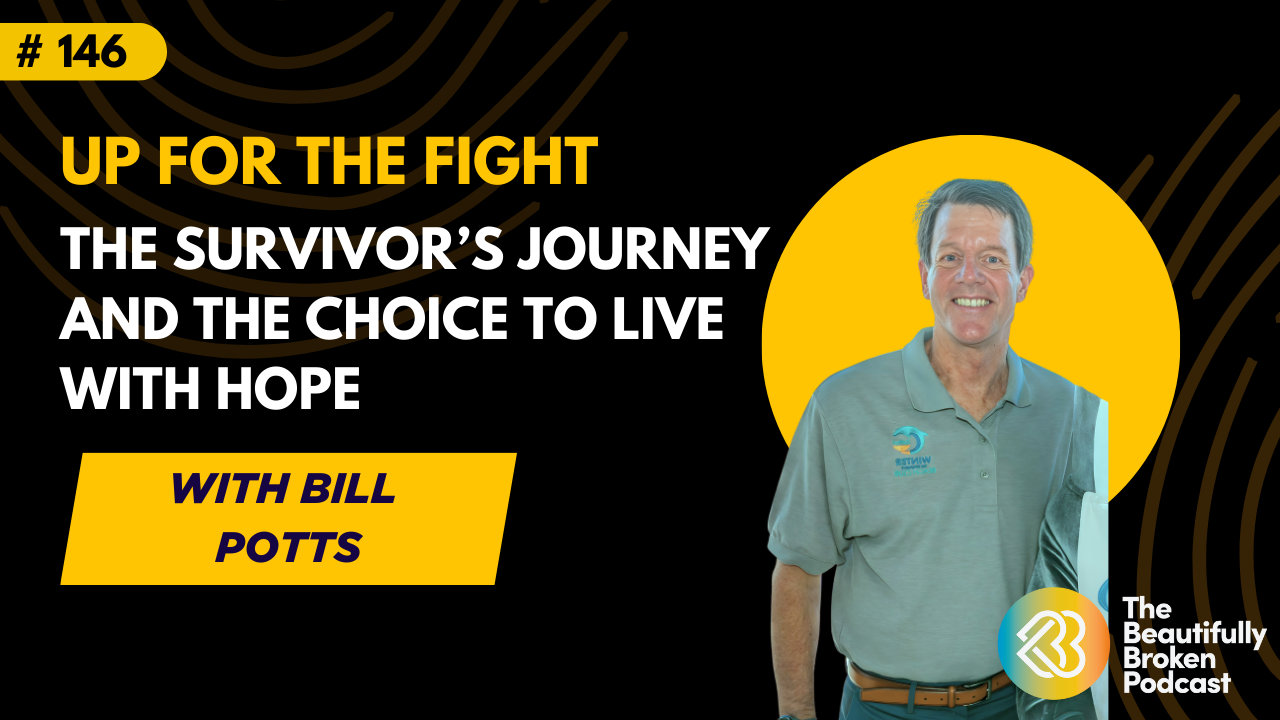
WELCOME TO EPISODE 146
Ladies and gentlemen, prepare to be inspired again. Our guest today is Bill Potts, an amazing individual who has battled cancer FIVE times and won. He is the author of Up for the Fight: How to Advocate for Yourself as You Battle Cancer - from a Five-Time Survivor, a tell-all book about his journey from diagnosis to remission, providing a guiding hand for many who find themselves in the same, often disheartening place.
Despite currently being in his sixth battle with cancer, Bill remains an inspiring figure as an athlete, dedicated father, and loving husband.
In this episode, we'll discuss how it is possible to not just survive cancer but also to truly thrive and live fully after facing this difficult challenge. I hope that Bill's story and insights will provide encouragement and hope to you as they did to me.


Episode Highlights
[00:00] Introducing Bill Potts
[04:16] Bill on Cancer and What Has Changed Since His Diagnosis
[09:57] Bill’s 20-Year Journey With Cancer
[12:26] Explaining Lymphoma
[14:53] How Bill Manages the Symptoms of His Treatment Through His Dedication to Maintaining a Healthy Lifestyle
[23:04] Other Ways Patients Manage Some of the Symptoms of Chemotherapy and Innovations That Can Help
[29:02] The Power of the Mind in Healing
[32:00] Bill’s on How He Feels About How Other People Deal With Him Having Cancer
[35:09] On Being Immunocompromised and Becoming Aware of the Fear
[38:15] On Managing the Cancer Journey Financially
[44:38] On Focusing on What Brings You Joy
[48:02] On Owning His Cancer Journey
[53:18] On Processing the Fear of Death
[59:04] Where to Find Bill’s Book
[59:52] What Does It Mean to Be Beautifully Broken?
[1:00:27] Bill’s Message to Everyone
UPGRADE YOUR WELLNESS
Silver Biotics Wound Healing Gel: https://bit.ly/3JnxyDD
Code: BEAUTIFULLYBROKEN
LightPathLED https://lightpathled.com/?afmc=BEAUTIFULLYBROKEN
Code: beautifullybroken
STEMREGEN: https://www.stemregen.co/products/stemregen/?afmc=beautifullybroken
Code: beautifullybroken
Flowpresso 3-in-1 technology: (https://calendly.com/freddiekimmel/flowpresso-one-on-one-discovery)
CONNECT WITH FREDDIE
Work with Me: https://www.beautifullybroken.world/biological-blueprint
Website and Store: (http://www.beautifullybroken.world)
Instagram: (https://www.instagram.com/beautifullybroken.world/)
YouTube: https://www.youtube.com/@freddiekimmel
EPISODE TRANSCRIPT
Freddie Kimmel (00:00.224)
Ladies and gentlemen, welcome to the beautifully broken podcast. I am so excited for today's guest, Bill Potts, Up for the Fight, How to Advocate for Yourself as You Battle Cancer from a Five-Time Survivor. Bill is a motivational speaker. He is a business leader. He is an energetic community builder. He is an Ironman athlete, a dedicated father and a husband. And he is currently in his sixth.
ongoing battle against cancer. We sit down and have a very candid conversation. Why he wrote this book. Why it is important to be an advocate for yourself at every stage of the journey. How to pick a team. We talk about how to care for yourself emotionally and mentally and navigating a pandemic while being a severely immunocompromised cancer patient. This is something that I wanted to shake my fists at the sky.
As I heard people yell about what you should or should not do to manage your experience through the pandemic, because there are people operating under a different set of pretenses than you. So I want you to sit back. I want you to receive this story with such love and light because it's beautiful. Bill is a beautiful speaker. He is real. He's as real as they come. I'm going to stop talking. Let's jump on in.
Freddie Kimmel (01:24.972)
Welcome to the Beautifully Broken podcast. I'm your host, Freddie Kimmel, and on this show, we explore the survivor's journey, practitioners making a difference, and the therapeutic treatments and transformational technology that allow the body to heal itself. Witness the inspiration we gain by navigating the human experience with grace, humility, and a healthy dose of mistakes, because part of being human is being beautifully broken.
Freddie Kimmel (01:56.332)
Ladies and gentlemen, welcome to the beautifully broken podcast. We have a very special guest today. I would like everybody to do a round of applause and welcome Bill Potts to the podcast. Welcome, Bill.
Thank you for having me. I'm so excited to be on your show. find it to be so interesting.
thank you. I love doing it. It's my passion project. You know, I love asking these questions about what is hell? What is healing? What's what's abundant energy? What is that? Does anybody know what that feels like in this day and age when we look around and there's so much? There's a perception that there's so much illness in the world. I have an article actually have a screenshot on my phone. Let me grab this because it's fascinating and it's great fodder for what we're going to get into. Half a million UK workers.
have left the workforce in the last three years citing chronic long-term illness. This is wild. is this is a thing, you know, that people generally, when I ask people on the street, I'm like, how are you doing? Not great. They got something going on. So it's fascinating.
Yeah, it is. And by the way, that number is bigger in the in the US. I some stats from that earlier this week. So it's a significant issue just related even to COVID.
Freddie Kimmel (03:10.656)
I know it's incredible what the world is, you know, what we're, the world is going through and what we're holding space for. Like I said, this morning when we were chatting pre podcast, I just, think it's, it's all a miracle or none of it is. And your life that the fact that we're talking right now is, a miracle. Cause we're going to get in for your book up for the fight, how to advocate for yourself as you battle cancer. And you are, bill, you're a five time cancer survivor.
Yeah, a miracle is a good way to describe it. And I'm grateful every day that I have that five time cancer survivor on the top of the book because it really is remarkable. And what I've learned in this journey, not just about advocating for yourself, but about life. It's something that I just felt like I needed to share. It wasn't my idea, by the way, Freddie, it was the idea of my care team at the hospital to write this book, to turn my pain into purpose, to help others. And like you, this podcast is your passion project.
This is mine as well to try to help others learn from my mistakes and learn from my journey.
I had this, there's a biological medicine doctor I follow in Switzerland. I think it's Dr. Rao. Anyways, sometimes they'll say there's an answer in cancer or cancer is, I know this could be triggering to people that sometimes cancer can be a gift. It's all information. It's how we choose to process it. How do you frame cancer? What does that word bring up for you?
It brings up, interestingly for me, brings up a big mixed bag of emotions, right? Depending on my day. But for me, the fact that I've been able to be cancer five times to me gives me hope. And it's a big dose of gratefulness that I have. I understand that there's not a lot of five time cancer survivors out there. So I appreciate, you know, life in a different perspective. So to me, cancer, changes.
Bill Potts (05:06.668)
The view that you have on the world as it did for you too, right? It changes how you see the world in such a unique way. Somebody asked me, you Hey Bill, was it worth it? And I'm like, worth what? And they're like, worth having the cancer. I'm like, Hmm. You know, I mean, obviously you and I both been through it. It's excess amount of suffering. It's, it's emotional, it's physical, it's mental. And the answer, I had to think about it. And I'm like, yes.
It was worth it because now I can use it to help others through their journey. And that's a pretty big purpose. So it has given me a real purpose.
Isn't it interesting? I always find this conversation fascinating that you can really only have with another person who has been through cancer or maybe some type of a potentially terminal diagnosis. You reevaluate what life is. And for me, I always, you know, to view your mortality at a very young age, things sort of crystallized at like what I thought I was doing with my life or what I was supposed to be or supposed to create or the career I was supposed to have.
And that sort of shattered. was like crystallizing your life and you shatter it with a big hammer and it all f***ed apart. then it's reconstructing. What am I going to do with my, I always reference a hundred years on the planet. know again, everybody has a different and to look at the last three years, you know, and the number of people leaving the planet, seems it's just incredible.
Yes.
Freddie Kimmel (06:40.16)
It's just given me great clarity with how I want to spend my time and the energy that I want to give myself to. Now it's easy. I don't know if you feel like this, it's easy to forget and get caught back up in like just the anxiety tightening in your body over a text message or something that you can't solve a problem for. But yeah, how have things changed? Like if we went back to Bill before you had cancer, how are you different today?
Very true.
Bill Potts (07:08.236)
Yeah, that's a great question. I've been through the journey for 20 years and my cancer is incurable. So it's going to come back. you know, five times with cancer that I've beaten, I've got number six in progress with the prostate cancer, which we're going to put on hold, but my lymphoma is going to come back. So I live with the knowledge that I got to deal with this again.
could be next year, hopefully I'll get three to five years before it comes back again to give technology and medicine a chance to try to catch up to what's going on with my cancer. But what it's really, if you look back at how it's changed me, just like you, I don't really sweat the small stuff anymore. Example, I was riding my bike a few months ago and somebody threw a Mountain Dew and hit me with it from a car. I'm like,
I'm like, normally I would have, you know, probably given the double bird or whatever and screened it there. I'm like, and I just, I didn't fall. didn't crash. They kept going and I just kept going. My wife's like, what the heck? I'm like, yeah, you know, it doesn't even make me mad. I honestly, I felt kind of bad for them that they're throwing stuff out of a car window at a cyclist. So what makes somebody do that? But I think if I really, really the big thing I learned is you mentioned it is, is to live in the moment. Like to be present in the moment, like right now.
The only thing that I'm focused on period is this conversation in you. And that's been so insightful for me. And I think another big lesson that I've learned through this journey is to make sure that I tell my friends and my family that I love them. And as a guy, that can be kind of hard to do, right? In many cases, cause it kind of the bro code is do you tell your buddy that you love them? And now I do because I didn't want to be that guy that
didn't get the chance to say it, and they didn't want to be the person that didn't get a chance to say it. And it's opened up those relationships in such a different direction. I just had it with some friends last night. They were texting me like, hey, how you doing? And I'm like, just so you know, guys, at the end, love you guys. And they're like, love you back. And that's pretty cool.
Freddie Kimmel (09:08.62)
Yeah. Yeah, it is. If that is not in your community, you know, if that's not in the family dynamic, then it can feel out of the norm. If you don't have, so, you know, I think one of the greatest things of traveling all over the world for me is I've got to see how differently people express and share love. know, the theater community that I was in is deeply, deeply loved. They love so deep. It's incredible. And that is just, that's normal.
I love you. You always say good luck. You always say I love you when you leave the theater. I sang a concert last night in Austin, Texas. And it's I'm like officially a retired Broadway performer. I'm a retired music theater dude. But when we walked out, was everybody said that, you because we really had shared a bond. We had created this container where we were just sharing our gifts, our genetic gifts. Bill, if we walk back to again, the time before you were ever diagnosed,
with cancer. said your journey has spanned 20 years. And I know from your book, you've had multiple different types of cancers. I want to break apart the nuance of your story, but when did it begin?
Yeah, 2002. So 20 years ago, I just went into my primary care physician, 42 years old, twin girls and a young son and went into the primary care physician. And he looks at me and goes, there's something on your thyroid. I can see it. And I'm like, okay. So I turned out to be thyroid cancer. I have my thyroid removed. And then I went through radiation ablation treatment, which is basically getting the same. is the same drug iodine 131 that Chernobyl released. So I took that in pill form.
and was isolated in the hospital for a while. They actually released me only when the Geiger counter, think about that, the Geiger counter said I was safe enough to leave the hospital, but not safe enough to be around my family. So that was a little bit challenging for a little while, but I thought I was done with the cancer journey. But then in 2008, I was diagnosed with stage three lymphoma. So I shifted my treatment and to a big cancer center in Houston called MD Anderson.
Bill Potts (11:14.606)
And I beat it. then in 2014, lymphoma again, 2019, lymphoma again, and then 2020 in July, was prostate cancer followed by September lymphoma again. So I'm currently in remission from my lymphoma, though I am really beat up from the chemo. Even though it's been 18 months since my last treatment, my immune system hasn't really rebuilt.
As anybody that's gone through chemo knows, your body does some really weird things for, can potentially be for a really long time. So every time I go to the oncologist, I get the diagnosis, which is, well, your immune system will come back in six months. And I go back in six months and they're like, it'll come back in six months. And then I go back again, it'll come back in six months. And I'm like, I got it. So it's been an interesting life going through the COVID pandemic during chemotherapy.
and then coming out of chemotherapy, going through it. So my journey really continues for a couple of reasons. Number one is coming back. And number two, I'm still dealing with a broken immune system, which is its own unique set of challenges of loneliness.
Yeah. Can you break down because you're an expert at this point, every cancer is different. Every cell makeup is different. That's the reason why they respond or don't respond to radiation or chemotherapy or whatever you're going to choose to use as your medicine. Can you break down and help the audience understand what lymphoma is? And even I know there's subtypes of lymphoma, but what's happening in the body?
Yeah, so lymphoma, there's actually, you're right, there's, on who you ask, there's up to 61 different types of lymphoma, which is a blood cancer, which is really a cancer of the immune system. So there's different versions. Mine is non Hodgkin's lymphoma, but the essence of it is, is the immune system, it's a blood cancer that winds up being coagulated or is stuck in the lymph nodes. That's why with people with lymphoma have swollen lymph nodes and things like that. So it's a
Bill Potts (13:19.768)
cancer of the immune system. So leukemia would be another one, multiple myeloma. These are blood cancers that can either start in the bone marrow or can start outside the bone marrow, but it's a cancer. In my particular case, there's a lot of lymphomas that are curable. My particular version happens to me one that you can only knock it down and then keep knocking it down each time it comes back.
And why is that? What would a physician walk you through? Why is this one only be able to be managed?
You know, they don't always know for sure. you know, based upon what these particular cancers, why, why am I particular version is not curable, but what they tell me that the layman's terms of it is they can knock it back, but it falls asleep. This is the remission piece. And for reasons they're not really sure, we'll just wake right back up and get back at it. They can't eliminate it. They can always put it to sleep.
Yeah, it's so fascinating the way the body can revolt. And it's interesting, there's different bodies of science that look at the voltage of a cell or the charge of a cell and that shifts with cancer. The pH of a cell will shift actually. And it changes how they balance out and repel each other. So there are certain cancers that because of their charge, they'll actually start to form a mass and then there'll be a blood supply.
fueling that tumor. And it's almost like you think about the human body, like my terrain of cells, which is relatively fine and functional until it's not until we have a primary tumor and then things go haywire. So let me ask you this just because you know, all the fun stuff that I'm into beautifully broken and all the different unique wellness technologies, have you done anything to either help your body recover or manage the symptoms of treatment that would be considered holistic or outside the box?
Bill Potts (15:09.582)
Yeah, that's that's 100%. And I don't think I explained too well my particular cancer, but it's a cancer. The lymphatic system has a bunch of different B's and T cells that kill infections. And mine, mine really is a cancer of the B cells. So that's why I'm still aiming a compromise because the chemo knocked out the wiped out the B cells, good and bad as a part of my treatment. So I just want to make sure I clarified that for your audience. But yes. So if you look at exercise as being a key part of my
Lifestyle. I'm an Ironman athlete and my doctors deeply believe that the healthy active lifestyle that I lead, particularly the active piece has been a big part of me being able to be cancer so many times. That's a hundred percent. So for example, I was having a chemo treatment and they turned off. I was alarmed up as in the hospital. They alarmed up that I was alarmed up for heart rate amongst other things. The alarm goes off. My heart rate's down to 42. They stopped the treatment.
They call the doctor. The doctor says, don't worry about that. He's an Ironman athlete. That's his normal heart rate. Turn it back on. So, you know, just in the sense of the heart rate, that's super important, but the exercise, I am always trying to stay in shape. So I'm ready when it comes back. So exercise is super important. That's walking, that's running, that's swimming, trying to go anaerobic as often as I can keep my heart strong, my lung strong, my legs strong. So that's not exactly holistic.
But it's pretty important because a lot of cancer patients think that maybe they should just rest. There's times that you have to rest, right? There's times you can't, I couldn't go for walks, couldn't go for runs. So, so that's important. Vitamin D therapy, which to me is I live in Florida, the sunshine state every day. I try to sit in the sun every day. I try to be barefoot, connect myself with the ground and the earth for that energy that comes from the earth every day. I'm staying hydrated every day.
deep breathing. It's important to me. My diet has changed. My wife jokes had took me getting cancer five times before I finally cleaned up the diet. She's telling the truth, but I finally got it right. And I hired a nutritionist and I work with a dietician to make sure that I do the right thing. Two things to manage side effects. three things actually number two, to boost my immune system, which challenging. And then number three, to try to prevent any future cancer. So
Freddie Kimmel (17:19.106)
Yeah.
Bill Potts (17:38.41)
Red meat is largely out of my diet, way more fruits and vegetables. I limit dairy, do things like ginger, cinnamon, green tea, those types of things. Right now I'm doing a lot of colored peppers to try to boost my immune system, things like that. So all those have been really an integral part and I get better as I go. And so this last time was the kitchen sink was thrown at me from a treatment perspective. mean, even the treatment itself was pretty high risk.
So it seemed like a good time to get the diet in particular lined up in a better way. So how about you? Is that some of the things that you did as well?
my goodness. always joke. say I was double fisting McDonald's biscuit sandwiches on the way to chemotherapy. I didn't know. Yeah, I didn't know. Now I was very fit like you, you know, I was, had like a joke. I have this picture. I had like an eight pack, you know, not a six pack. I had like an eight pack. I was ripped when I got sick. I was very, very fit. You know, I was dancing seven, eight shows a week professionally. So it was one of those things as
So good.
Freddie Kimmel (18:43.916)
The experience went on and cancer turned into surgery number two, went to surgery number five over 15 years. You know, I dramatically started to change the quality of food I ate. And another thing that I really played with was eating windows. You know, actually what you don't eat, taking breaks from food. You know, had a woman on that I released a podcast last Monday that had went to Siberia who was considering medically assisted suicide. And she had done a 30 day medically supervised dry fast.
in which she had done almost like training for a marathon, nine days, 11 days, dry fastings, no water. It's not touching water. You don't brush your teeth. And so she had this complete cellular reset and had a complete, complete healing of neurological Lyme where she was, you know, looking for her husband to help her with, with suicide at the time. She was completely bedridden, couldn't go to the bathroom and she's great, you know, so playing with eating windows when I do or don't eat. almost trying to think about like,
Intermittent fasting is a gym exercise. So I really like this methodology of like once a week, 24 hour. I like the idea of three days a month and then an extended fast every quarter. I'm not doing that right now just because I'm choosing to commit to all this entrepreneurship, which you know, when you have your hands on a lot of pots, you got to have energy in the machine. So that's, know, what I do eat and what I don't eat.
You do.
Freddie Kimmel (20:10.454)
Obviously, the quality of that, I don't eat food from a box. No boxes, no wrappers, period. It's just whole foods. And it's really interesting to look at the research. I have people that will trump it and they're going to blast from the mountaintop that it's the vegan diet and it's a juice fast or it's going to be a carnivore diet. there's actually the frustrating thing from an end user, there's good science to support both.
Right.
I just saw longevity study which paired the vegan diet and the carnivore diet like right out front and it beat the Mediterranean diet. I mean, talk about, you know, and it's something people don't want to talk about because we become so attached to like, well, this is what did it for me. I think that's part of this podcast is having conversations with different people and there is no right or wrong. It's like, how do you go inside and figure out what works for your body? know, the thing that you said about exercise and the Ironman aspect of your
You know, the facility that was already built into your muscular structure and mechanism is really interesting to me. I do an exercise on Sunday. It's called ARX adaptive resistance exercise. It's like a biofeedback system that like it's very safe. It's going to push against you as hard as you're going to give it resistance the whole rap. And if you stop pushing, it stops. And the minute I first did this machine, I got to send you this interview. You're going to be blown away. It's amazing. And your muscle growth, I mean,
I'd like to hear it.
Freddie Kimmel (21:38.068)
It's incredible. I've added 15 pounds of lean muscle since I've been in Austin. And it really, the musculature is extra batteries. think that we'd always think about that in cancer, right? You you're like, no, be coveted at home. Don't go outside. Well, this would be a great device to have in an oncology ward. The literally around treatment times, obviously there's nuance there, but you know, put some lean muscle on while we're going through these treatments where we're
we're a little bit, we're going to war with the body and just set yourself up for success. But the second I did this thing, it's like, you know, they're having more muscle growth and like a 13 minute workout once a week than going to the gym six times. And it's just like, there is a great technology. Yeah, I agree with you. The musculature of the body is just paramount.
That's fantastic.
Bill Potts (22:26.936)
Yeah, you know, interesting what you said both on that and the diet is that we're not getting told that at the oncologist, right? So I'll get a pamphlet about diet, literally a pamphlet that's like, here you go. I'm not getting any meetings. I'm not getting any phone calls. I am now through my health insurance company. I'm working with them, interestingly, right? But when you look about, you know, muscle mass while you're going through chemotherapy, never came up. Yeah.
So your podcast brings it up, somebody's gonna be listening to this and go, yeah, and they'll take this advice that you give and it will change the dynamics of how they go through treatment.
Yeah, at least explore it. to what your point also like when I was doing chemotherapy, my hospital, which I went to, it's Golisano Children's Hospital, but also it's called the University of Rochester Medical Center up in Rochester, New York, which they're, they're great. They're very innovative. And, but they were wheeling around carts with white bread sandwiches and candy. You know, they had the candy nurses while you're doing, they're like, here's a treat.
like, the worst thing you can do is sugar, right? They're giving you sugar.
Yeah, but you know, I can't fault it's nobody's fault, right? It's just what exists now. So I think you have to, we just, people need to talk, right? You've got to call it. You got to realize like, okay, here's my area of excellence. This is what I do. What happened if I had people breathing hydrogen gas and standing in front of a red light panel and like doing a 36 hour fast before they got treatment? Well, science says you would have a lot less collateral damage, but that's pretty out there.
Freddie Kimmel (24:03.082)
I'm like, do you get frustrated that they're peddling candy or do you get frustrated that you can't yet implement the things you know, scientifically would hold great benefit? We just got to keep talking and we'll find a change maker to get in and like be that one person that like changes the paradigm. think.
Yeah.
Bill Potts (24:19.394)
Well, it's interesting. It's the same thing with hair, right? So a lot of times you lose the hair during chemo and there's ways that you can prevent that from happening or limit the risk of it happening. And so a lot of people like me, you know, I didn't want to lose my hair. Obviously I've mentioned a lot of cancer patients and that are going through it. I'm like, but you can ask at the oncology center for this treatment. It's called CoolCap or DigniCap that will help you limit losing your hair. And they're like, my gosh.
That's just one small thing that's there that's slowly making it into mainstream. Now when I go into the infusion center, I see those on the side of the wall, generally not being used because a lot of people don't know about them, but it's there if somebody knows and can ask to get it.
Yeah. I always think it's fascinating again, as a teacher, chemotherapy is a teacher, the idea that it's going to target cells that replicate at a specific rate, you know, often lost in the conversation of like, here's what we're going to give you. And it's like, well, why, what's it doing? What's the delivery method? But fingernails stop growing, you know, eyebrows fall out, your hair falls out. So
This idea of this neuroprotective effect of cold is now, now we're seeing, if you watch my Instagram, I'm usually in a bucket of cold water in the morning. You know, I start the day with a cold lunch before I allow myself coffee, before I do anything. I've been getting in 38 degree water for at least a minute, most times three minutes and just sit there and breathe. But now they're having science come out about tumor reduction through systemic cold therapy.
Sure, sure.
Freddie Kimmel (25:50.446)
It's really cool to see. I'm like cold is stopping your hair from falling out, but it's also reducing tumor growth. is fascinating. There's something here. Yeah, it's wild. It's wild, which I intuitively feel. I'm like, this is good. You just feel too good.
Yeah, I'm not at your level yet. I am my morning showers with the cold. But I am Bravo. I am not dunking myself in 38 degrees. But you know what, if you're doing it, I'll give it a shot.
Totally. I don't. There's so much good stuff out there. Red light therapy has been clinically shown to help increase energy, circulation, increase testosterone production, workout recovery, hair growth, improve the depth of fine lines and wrinkles. I love red light therapy. It works. You stand in front of a panel, naked, you turn it on, you repeat, you reap the benefits. I think the only challenge for the customer
With so many lights on the market, is how do I choose the right light for my body? I use Light Path LED for the following reasons. They include a three-year warranty. They have panel options with pre-programmed frequencies or different pulse rates to add the benefit of pulse light to the body. Even Andrew Huberman, the famous neuroscientist from Stanford University, is celebrating the breakthroughs happening around 40 Hertz, while this panel goes from one to 9,999.
Finally, they go deep. Light Path LED is 60 % near infrared. So that spectrum is the range that penetrates deeper into the tissues of the body. And finally, I have to mention after purchase support. When you have a light and you purchase technology, you want to know how to best use it. And there is a 7,000 member group dedicated to helping you do that at Light Path LED. All of my mentors speak of mitochondrial dysfunction as the root cause of chronic illness.
Freddie Kimmel (27:40.95)
and Red Light is safe, it's effective, and it's an easy way to support full body wellness from home. So check out Light Path LED and use the code BEAUTIFULLYBROKEN for a hefty discount in the checkout. Also, if you're interested in joining the Light Path LED team, join their affiliate program and get benefits from sharing a product that you absolutely love. Team Light Path, I'm out.
You know what it is for me? I think it's the science behind the regulation of the autonomic nervous system, which they've shown we can have more influence on when we're in tune. And I think ice and breath just makes you go inside to such a deep level that now this one of the purveyors of the movement, you know, Wim Hof, everybody's seen Wim Hof. He can send, he can change his hand temperature on demand. He can change where energy goes in his body to different areas.
To me, that's like, and he can teach other people to do it in a very short amount of time. Talking 10 days. You know, there's stuff, there's conversations that again, it's just like, maybe this is, know, I theorize, or maybe I call in, maybe this is what the podcast will become. You start having the right conversations and it's like, the universe tends to open doors to the right people who can make those changes, or at least pick up the phone and have a conversation, you know.
Yeah, it's interesting. The power of the mind to heal is still really underutilized. So for example, at MD Anderson, when I went through my first lymphoma treatment, they actually taught me visualization techniques to try to improve the effectiveness of the cancer. So in that particular treatment, mine's a cancer of the B cells, which are part of lymphatic system. One drug, the drug would mark it basically like a market, like an X, sure, agate, and then the immune system.
Yeah.
Bill Potts (29:33.154)
would go ahead and kill it. This is immunotherapy back in 2008 when I got it was still very, very new and not even mainstream yet. But I actually got the immunotherapy because I turned down the chemotherapy because I didn't want to lose my hair. And they're like, what is wrong with you turning down our treatment plan? I'm like, you're MD Anderson, surely you could come up with a better plan. And they're like, and they took it as a challenge. And they met the whole team, they got together and they said, yes, but the point of this is that you can use your mind in such a powerful way.
to heal your physical ailments that we're just starting to scratch the surface on that. mean, the visualization technique, which worked, I was in remission in 12 weeks and I'm like, okay, I wouldn't have thought of that, but they draw it out and they visualize how this works. I'm like, dang, that's impressive.
It's impressive and it works. It's beautiful. And I don't think I want to go back to this because I know this is triggering for some people. They're like, it was honestly was triggering. I remember going through chemo and some guy called me. He's like, you should be on these mushrooms. And I was like, you can go fuck yourself. I was like, guess what you can do when you get cancer. You can avoid all the drugs. You go do mushrooms. Let me know how that works out for you. I remember having this very visceral response to this human being who's actually in my family unit. I said, some guy.
Yeah, it's
Freddie Kimmel (30:47.754)
Okay. And I just got like so angry, you know, because all I could feel was my diagnosis and I was like, I'm going to die or I hope I'm not going to die. And I hope this medicine works. And this plan says it's not a hundred percent. And we were going to get to this point. And when we get here, then we'll make a new decision. And it was just very scary. And a lot of it was motivated by fear, you know? And so I just felt I was just going along with it. I was also very young, you know, I was 26 years old.
And again, I really had no understanding of the body or what health or nutrition or any of these things that I could do to have some sort of engagement or participation in my own improvement just didn't exist yet. But with that, it's like, and I will loop back to my point, it doesn't have to be a this or that, you know, the both and conversation of like, yes, like let's do standard of care or the best possible outcome for me. What else can we do, you know, to support?
my mental health, my energy, my, you know, the recovery of my immune system. Cause I think that's where people get, you know, where a very polarized society is. If you haven't seen this, it's in the.
Yeah, yeah, yeah, yeah, for sure.
I mean, yeah, how do you feel about all that stuff?
Bill Potts (32:02.998)
I've almost become numb to it, right? Because I've been going through it for 20 years. And so my advice for friends and family of cancer patients is number one, don't tell them what they should do. You know, what really aggravates me, what really aggravates me is when somebody says, Bill, you're going to beat it. I'm like, that actually infuriates me because I'm like, you know, I'm going to beat it. Then they follow it with, but you're going to beat it because you're good attitude. The attitude helps, but it's not going to save me.
I've sat next to people with better attitudes than me and they've passed away and I'm alive. So I'm like, well, I know that's not true. So don't say it. you should try this juice. You should try this medicine. You should go to this country. I'm like, stop it. You you should go see my doctor. Stop. I'm in control of my journey. own it. so what's instead of now all these years later, I'm becoming numb to these things. And I basically like roll my eyes and ignore it. Right.
But it's the things that I start coaching them to do, which can make a difference in my journey as friends or family in your case, which is don't always talk about my cancer when you see me. How about we talk about in your case, the Yankees in my case, the Tampa Bay Rays or the Tampa Bay Lightning or Tom Brady, but I don't always want to talk about my cancer when you call or come over. So that's just.
stop.
Give me some ideas of how to spend my time when I'm going through treatment. Those are all originally cool. The one I like the best is what can I do to help you? And this is where I've gotten better as a patient. I have to think about it. Then I come up with something and I tell them, then they can help because people, it helps them if they're helping you. It's hard to be the family or friend of a cancer patient because you don't always know what to say or do. So if you ask them, what can I do to help you as a patient? It happened to me like.
Bill Potts (33:53.358)
What can do to help you? I'm like, you know, and this is somebody that didn't really know very well. I said, can you take me fishing? Two days later, I'm on his boat. We're out there fishing. I'm like, that was perfect. There's a big debate about, you know, should I bring a cancer patient food? Yes. And no, don't bring over your home cooking because I might not like it. Right. And things change on how you taste. And anyway, when you're going through treatment, but do say, Hey, what's your favorite restaurant? What do you love for me? It's Chick-fil-A. And so.
They can bring over your favorite meal. Now that's pretty good. So I'm kind of learning as I go on here, but this is a good tips to help the family. And I probably what I've learned most importantly, going through the COVID pandemic is the immunocompromised patient is making sure that the friends know not to come over if they don't feel good. I told my family it's going to walk in the front door. And you know, there was when I was going through chemo, my chance of beating COVID was 45%. Yeah.
I'm
Like you can't let it walk in the door. that's kind of become the norm is to be careful around me. Look, that limits who you see because nobody wants to be the guy that comes over and gets me sick. So it limits how many people come over, but we do come over and sit outside in the backyard and that's okay.
Yeah. I always had a very interesting lens that I viewed the pandemic through. You know, I do as people listen to the show, everybody knows what I do daily to manage and boost my own innate immune system. So I have strong feelings about that. And I was like, God, I've worked so hard to rebalance and get my white blood so count in the right range and manage my vitamin D and you know, things well beyond the basics. for someone to like, I was very, I was like, people were like,
Freddie Kimmel (35:38.83)
trying to manage me and what I was going to do to have a good outcome of the pandemic. And I was like, everybody needs to back off. Like, I'm like, I got it and I accept full responsibility. And I think there was just a low level of awareness for people with immunocompromised lifestyles, with cancer, with chronic Lyme disease, you know, all the things it's like, and it seemed and it felt, you know, again, choosing to be on the phone.
Yeah.
Freddie Kimmel (36:08.478)
choosing to be on watch the news that the more you like tried to just back away, the louder people yelled because it was driven from fear. And it was just we can go back to this fear of like, I'm like, there's just this fear of like, I don't want to die. I'm like, well, guess what? There are people out there dealing with this every single day long before the pandemic that it's just part of their lives. So it was just like a low level of awareness that I just felt like nobody ever really talked about.
Yeah, it's interesting. You know, there's 7 million people in the US that are immunocompromised. So the pandemic never ends, never ends. Hopefully my immune system will reboot at some time. But there's a lot of people organ transplants, rheumatoid arthritis, there's a whole lot of people that never get out of the cycle of being immunocompromised. And so for us, and I'm in some groups with this, which is great for my support, right, they're Facebook groups that this were all the same. And it's been super, super helpful to hear their perspective. But it is fear. It's palpable.
because COVID to somebody like me is, it's truly a 911. To somebody with rheumatoid arthritis, it's getting retoxin periodically, which reduces the immune system so they don't have as many symptoms. That never stops for them. And as the pandemic progresses and the COVID smartens up, the...
the amount of tools and they have in the toolbox to save the immunocompromise, you know, is starting to get reduced and with funding being reduced and this stuff not being developed as fast, it really is. It really is concerning. So now I hear you. And so, you know, people saying, why don't you do this? Why don't you do that? I'm like, dude, it's my life. I can't make a mistake. I have one. So let's not make it.
Don't you tell me to make it. My family's on board with all this. There's protective of me as you can imagine. Right. Sure. And so, and the friends have kind of dialed in. don't know how it was when you went through cancer, but there's some friends that just kind of disappear because they don't know what to do. So they just kind of go away. So the group that's around me now is they're like my bubble. They try to keep me from making a mistake, but at least you're getting out. Right.
Freddie Kimmel (38:07.244)
Yeah.
a hundred percent. All the time. I'm living my life and my, you know, I think I hadn't been to a, started with this. I think I was like, we need to push record cause we were chatty Cathy and starting. was like lots of good stuff. I hadn't been to a doctor in almost three years. hadn't been to a doctor. I, you know, from going every week for years and years and years over a decade. And I just got to a place where I was like,
Yeah, yeah, you're doing great.
Freddie Kimmel (38:37.778)
managing the things I knew I needed to manage. I'm very tapped into my body, how I feel, energy levels, all the processes, right? How I'm sleeping, how I'm eliminating, how I'm recovering, how my mental emotional health is. And as that started to really fortify, I felt comfortable enough to say, you know, and also with like some of this stuff is like pandemic induced, no doctor was seeing you. Like my doctor was in Manhattan, I hit out in writing Connecticut for the pandemic. So
That just turned into like a three year endeavor. And I've just got a functional nurse practitioner here in Austin who is a genius, know, a genius, all the integrative stuff, you know, he has an ARX, he has a gym in his office. You get access to like fitness equipment when you go see him. So he really understands the whole picture of health and he's absolutely incredible. But we ran labs and he's like, oh, let's tweak this. Just little minor things. Just let's.
let's tweak, you know, a little hormonal stuff and let's see how you feel. And it was like, just a little bit itty bitty tweak was just a great return on performance and efficacy about how I wake up in the morning. So it's been good to take a break. was spending, I don't know about you, but like the spend, the spend through these things are, can be wild if it's not covered or if it's, know, you got to do some experimental treatment. It's unbelievable. And it was nice financially to take a
It can be.
Freddie Kimmel (40:05.272)
break from that. was like, you know, I quote the figure all the time, just like supplements alone. was like $26,000 just supplements. That's no doctor, no medical treatments, anything. So it was nice to just pull back. How did you manage financially through this endeavor of going through cancer five times?
Yeah, you know, it's not uncommon for cancer patients to have to declare bankruptcy, right? So it can be really expensive deductibles. I've been fortunate that I've always had a pretty good insurance and right now I have it through the Affordable Care Act. So from me financially, what it's done is it just has been, it's forced me to be cautious to save more because I wasn't sure I was always going to be around free kids, right? And a wife that works, but I had the whole idea of I need to provide
I need to make sure they've got a nest egg. So our spending was never very crazy. We lived a very, very reasonable conservative lifestyle on that side. Early on, I got some help from Leukemia and Lymphoma Society. Southwest Airlines helped me out. There's one period I went to Houston 23 times in a 24 month period flying from Tampa to Houston for my stuff. And I worked with the social workers at MD Anderson to try to help out on some of those costs. And they were really great about it. But
has changed my relationship with money in a dramatic way. I care less about money, drives my wife crazy than I did before. The way I like to spend my money is not on stuff, but it's on experiences and memories that I can create. It's working out okay. My wife is really conservative, but I've worked, I'm 62, I've worked my whole career and I just want to spend it all and enjoy time with family and friends, obviously limited because I can't go anywhere right now.
But once I get free to roam about the cabin, that's what I want to do. I want to travel. I want to go see my friends. I want to experience different cultures, all the stuff I was had been doing as a part of my work and vacations before this last couple of years have happened. But yeah, in spending on healthcare. Look, nobody gets a better return on investment than I do. So I have yet once to complain about the high deductible plan I'm on and what I have to spend. We'll figure out how to fund it. But seriously, I've beat cancer five times.
Bill Potts (42:15.67)
And I know what the cost would have been if I didn't have insurance. So I'm grateful for it. I mean, really, really, really grateful for it. I mean, you know, you know what it costs.
Yeah.
Yeah.
Yeah, energetically, financially, all the things, right? But my lived experiences taught me that there is nothing more valuable than being able to wake up in the morning and pursue what brings you joy and makes you feel a purpose in the world. That's like, there is no monetary value.
You are wise beyond your years. took me a while to catch up to that.
Freddie Kimmel (42:45.74)
Yeah, that's the thing, right? It's like that's being a billionaire. Yeah. I know so many people would like so much money. They're so unhappy. Yeah. You know, there's like a deep, you know, it can be just like a deep sadness. And I'm so thankful to have something that I'm purposeful about.
Yeah.
Freddie Kimmel (43:07.202)
Ladies and gentlemen, before we start this episode, I need to mention how I've upgraded my oral health and my immune system response in the last 30 days. I started using a supplement called Silver Biotics, and they have a line of products that incorporate silver, a century old technology, utilizing silver, is a metal with the highest electrical conductivity on the planet. But they've biohacked silver and literally surrounded these particles with a
molecular coding.
that allows it to work much, better. And when I say much better, I mean, they have 420 independent studies, 60 patents, and it is 4X more potent than any silver on the market. So this is gonna work on things like bacteria, mold, fungus. My result, or my N equals one, is my gum health. My gums are like pink and glowing. They look amazing. And then I've just had a better balance, or I would say an even immune response,
after about a month, I would have you have this in your cabinet. If there's one thing we overlook, it's oral and dental health, and every single tooth is wired to an organ in your body. It's one of the most overlooked things I see people jump around. And this is something that is cheap, it's affordable, and you can get a great discount. It's like 20 % using the code beautifullybroken. So go over to silverbiotics.com and check them out.
Bill, what lights you up in the morning? Like, what do you love, like waking up and doing what brings you the most joy?
Bill Potts (44:43.97)
the most joy I love nature so much that like this morning when I woke up and I heard the birds singing, I'm like, my gosh, it's the small things that bring me the joy, right? It really is. This is standing the other day. You know, we had Nicole come through. I'm standing in the rain. My daughter's like, I get it soaking up the rain coming out of the sky is pretty cool. But if what drives me every day is my relationships with my family and my friends.
And then one thing that cancer has done, mean, my gosh, I get checked in all the time. I could spend full time just answering phone calls from friends to say how you're doing. And I love that so much. I've really leaning into my relationships and that's what drives me. Also what drives me is this book. As we talked before, this is my book is your podcast. It's trying to reach people with this message of how to navigate the cancer journey. It's the book, you know, I wish somebody else had written for me. I wish I didn't have to write it.
I mean, I accidentally became the expert, not on purpose. And so, you know, this is my drive. So if I default on how I'm spending my time during the day, if I'm working on getting publicity for the book or getting this book into the hands of people, it's been a great day. It's not about making money. It isn't, you know, my goal with the book was if I can change one life before the book was out, I gave it to a friend whose best friend was had given up the fight, which, know, I almost did.
and read the book, going through chemotherapy right now. And you know, so I got the one. So now the rest is a bonus.
Yeah, I totally agree. It's really interesting the value that we place on money. For me, the hardest thing was like having to leave. My career was really starting to like build in music theater in New York. And if you've ever read any stories or listened to people talk about like the unemployment rate among professional actors is very high. And so I was just having this thing where I booked this show at the Kennedy Center. wow. I was going to sing for the president.
Bill Potts (46:38.316)
Yeah, very high.
Freddie Kimmel (46:45.742)
The show was going to go to Broadway. It was the most I'd ever been offered in a page. I was like, oh my God, you're going to pay me $2,000 a week to sing? I was so heartbroken. asked my oncologist, and I was diagnosed in November. The show was in March. And I was filled with nine tumors in my abdomen. And I'm like, can I, if everything goes great.
Can I be dancing in March? He's like, you better make other plans. He's like, you just got to switch. And I remember like sitting there being like, and in a minute I just had to let it go and be okay with it.
It's a hard switch. It's a hard switch. I'm living it and I understand it. mean, every time I go in, it's six more months of isolation and I'm like,
It's a hard switch.
I was just so heartbroken.
Freddie Kimmel (47:43.55)
Yeah.
Damn it. Okay, but yeah, it's a hard switch in what you did. I mean, I have to change careers because of your cancer. It's brutal.
Well, for a while I say I was like professionally like, okay, I'm not music theater. I'm like a cancer warrior for a while.
Yeah, that's what I mean. It's their priorities, right? And so the same for me. It's I remind myself every day the reasons why I need to continue to fight, you know, family, friends, make God proud. This book is around myself that every day and every day I try to remind myself, you know, how special it is to have that day. And all of a sudden, you know, like you said, it changes not only how you spend your time, most importantly, it changes how
things that you don't do. And, know, for me, there's a lot I don't do. easily can say no to things that I wouldn't say no before, because that's not within my purpose.
Freddie Kimmel (48:41.102)
Yeah, it's so powerful. I often think about this in our culture, specifically in the United States, we tend to like celebrate these wild stories of recovery and the hero's journey. And not only did I beat cancer, but now I'm like, you know, running a billion dollar company. And it's like, there's lots of stories that don't get there. As I know, you know, like, there's plenty of people that I've known along this 2006 to 2023, you know, so 2022.
So we're gonna, I'm like, John, like getting rid of 22, we're already done. It's a long journey. There's many of people that I have become friends with and an online space and they don't lose their journey, but their journey takes a different turn. You know, they, they transition and I'm often feel into that of like, you know, everybody, we're all going to have a different experience through this life, through chronic illness. And we may reign victorious over disease, but it is all, it's always temporary, right?
Nobody's getting out alive. think we forget that. That's the point I wanted to make. gets out alive. Don't judge other people's journeys as good or bad.
Yeah, great. Totally agree. It's so interesting. this is even this conversation can be hard for me because what's one of the things I like to talk about least, probably honestly, it's cancer, right? And so when I agreed to do the book, it's a lot more fun talking about it than writing it. But it can be kind of triggering. And I didn't want to be defined as the cancer guy. I don't want to be Bill Potts, the cancer survivor.
Yeah. And I even sometimes struggle with the word survivor because it's to your point, it's like celebrating that I beat it. Okay. But that doesn't mean what about the people that didn't, right? I've had plenty of friends that hadn't, and it seems like celebrating it. I would prefer to be called the cancer veteran versus survivor, but it's going to get more exposure being a cancer survivor. And it sounds all fancy, but I wanted to make sure that when I started talking about my journey, this isn't a book about me. It's not.
Bill Potts (50:43.53)
It's a book about what I learned. And so when we had that conversation with the editors, I don't want this to be like you described, you know, hey, I beat cancer five times and you know, I went out and ran a marathon. Yay, me. I want to be, yeah, I beat cancer five times. I made a lot of mistakes along the way. Here's what I learned that can help you. Great. And the thing I didn't expect when I wrote this book is that I didn't expect people to thank me for writing it. Number one, had no idea.
I mean, how many people have called or texted emailed me and said, Bill, thank you for writing it. Thanks for being vulnerable. Hadn't thought of that. And for some weird way, I hadn't thought about a bill. Your story gives me hope. And I'm like, dang, it does because, know, I had done some public speaking on my cancer journey years ago and people would just line up and they get teary eyed, they cry, they do whatever. And I'm like, I'm not sure I'm tracking what this is, but what it was, was hope.
I mean, somebody can be cancer five times and whatever their issues are cancer, not cancer. Then they see hope that they can wrestle whatever they're going with too. And, and the idea of you owning your own life and owning your own journey. It's not just about doing it for cancer. It's about doing it for your whole life, right? Advocate for yourself. Don't let others tell you what to do and you own it yourself as your life. And so for me, it's owning my journey. Literally my life depends on it. It does. If I don't own my own journey.
I'm not here having this conversation. And I know that, but it's more than just about cancer. It's just about life. Own it. I mean, the decisions that you have to make, every decision you make, right? That you were talking about, you know, going through your journey, going through the pandemic. It's my life. It's my decisions. I'll listen to you, maybe, but I'm going to own it myself and make the most of my life because it's mine. And I love that.
Yeah, I really think it amplifies the value of life and the ability to be present. That's the gift I've taken from it. It's allowed me just to like savor the sips of coffee, savor the social visits, savor Netflix, savor a good book. It's just like, oh, let me just lean into how good this is. Because as you know, especially when you're in the middle of treatment and you feel like a slug on the couch, you're like, I can't barely stand.
Freddie Kimmel (52:59.852)
You know, and to have some level of vibrancy or being able to engage with someone, man, what a, it's like the nectar that life is worth living for. And yeah, just exploring that.
It's true. It's living in the moment and enjoying those small things. And I think that's you and I share that because of our, of our cancer battle. But I think anybody that's had to take the deep look of and think about the dying part, whether it's surviving a car crash or whatever it is, I think a lot of folks have that same perspective. And you and I were lucky. We got to look the dying part in the eye and come out alive and it changes our perspective. But
I don't know how was with you, but it took me a while to get my hands around the potential for dying part.
yeah. I actually just, had that come up for me really strong in the pandemic and the beginning of the pandemic. Like there was almost like a trauma response of like the world stopped. You know, we were all alone. I was slowed down, everything slowed down, you know, and I had a lot of stuff come up over like existential crisis. And even it went for a few months, I wasn't sleeping. I just could not, it was lots of trauma coming up in my body and you know, re-examining and processing that deepening my like,
spiritual practice, which can be again, for me, spiritual practice does not mean going to church, it means being spiritual and the embodiment of this body. Every interaction, every sip of coffee, the exchange with an Uber driver, it can all be spiritual, you know, and just to really embody that, that potential you have for goodness is an incredible power. So and with that, my quality of life got better.
Freddie Kimmel (54:41.238)
Yes. You know, going through that really tough period when I was going through cancer, like there were definitely times when I like, I look back on it now and it was just like, dude, you could have totally died. Like my one, really big surgery that I talk about called a retroperitoneal lymph node dissection, pelvis to chest, take out the digestive organs, put them in a bag, cut your cancer out, pack everything back in and like,
I mean, I remember waking up from that surgery, not understanding the gravity as a 26 year old and waking up and the amount of my epidural had failed. Well, of a sudden the pain started to go amplified and I got to a level of pain. My whole body was shaking. And if you've ever been in that spot where you, once you lose the control on pain in a hospital setting, it's so hard. takes hours and hours and hours to get it back. And I just remember being like, Oh, you're fucked.
Like I felt the pain of this, you know, cutting all the way through my abdomen. just, all my body could do is shake for hours and hours and hours, but I didn't think about death. You know, I just, my psyche didn't go there. Now looking back on it, that I have tons of feelings about it, you know, and things that today I'm probably ready to process.
Yeah, it's been the same for me and my first treatment in 2008 went right off the rails. He had this severe reaction. The medication that I was getting was built on the back of hamster embryos. Go figure by Genentech. I've actually been to the factory where that was made, but, uh, I didn't know I was allergic to hamsters. So it's like being stung a thousand times by a bee and being allergic to bees. Cause I'm getting it, you know, via an infusion and I'm like literally almost dying.
And I didn't really connect the dots. Yeah. Like with you, you know, yeah, they saved me. It took, you know, yeah, they did whatever they did. I was alarmed up and, you know, yeah, it took a few minutes, but all of a sudden I could breathe again. And, my heart rate went down and my eyes, you know, unswallowed shut and I could see and, and I'm like, okay, that was a little bit scary. I have to admit I cried, but I didn't really think deeply, deeply about the dying part. And then I came up in 2014. I'm like, do whatever you can. Don't let that happen again.
Bill Potts (56:54.798)
Because by then it took me, it took me literally five and a half, six years to get my hands around. Oh yeah. You know? Yeah. I actually could die. And now I'm super aware of it. mean, I literally know the math, even though math doesn't count, I know it doesn't count. It does. And when I go in for my chemo, I'm the only one in the room. You my wife, I don't tell her, but I know how serious the risk is just going through the treatment. And so I know every time I go in there.
Map doesn't count. And it does.
Bill Potts (57:24.11)
I know that I could die and that really is made going in, uh, challenging. And the way I deal with that is, don't know how you were, call it scanxiety, but before I would go in for an infusion, you had to drive four hours. I was being treated in Jacksonville at Mayo and I had to stay in a hotel the night before and with my wife. I mean, I am just sullen the day before a treatment. mean, don't talk to me. I don't want to talk. Cause I mean, we're literally playing for keeps the next day. I mean.
keeps and so don't want to talk. But once I walk through the front door of the infusion center at the hospital, it's game on. I feel like a job and the emotion legitimately gets shoved down somewhere inside of me and I can smile and I can go in and I can lay down. I can get drugged up. I can be there for eight hours and I'm fine because and I learned this from all my athletic stuff as I set.
small goals along the way to achieve a big goal. So if you're going to do a marathon or Ironman, you got to build your mileage up to be able to do the big race. And I look at the same way with the treatment, which is if I have, which last time was 14 treatments, I would count up, you know, to seven, then I start counting down. So I always had a goal. So treatment number three. Got it. I walk out of there or stumble out of there or wheel out of there in a wheelchair, depending on the day. And I'm like, that's number three down.
You know, in three weeks I'll go for number four and that really helped keep my mind in a good spot versus freaking out and having anxiety attack. Every time I walked into the treatment, knowing that, you know, what could happen that day, I didn't think about it. I just focused on, okay, this is one step in a very race.
Yeah, it's incredible. Bill, your story is amazing. I want people to grab the book and read the book. Where can I grab your story?
Bill Potts (59:12.264)
anywhere books are sold, Amazon, Barnes and Noble, independent book retailers, target.com, wherever you can go to billseapots.com. It kind of tells my story and has a link to where you can buy the book, but, I'm hoping your listeners don't need it for themselves, but most everybody knows, somebody going through the cancer journey. It's one that is designed to be able to be carried with them with a lot of checklists and things like that. And it's with a hundred percent certainty if, if somebody that you know is going through the cancer journey.
It will be valuable for them.
Yeah. Well, you're here for a reason, Bill. Your book is Up for the Fight, How to Advocate for Yourself as You Battle Cancer from a Five-Time Survivor. Bill, I celebrate your journey. got to close with what do you, it's the Beautifully Broken Podcast. What does it mean to you to be beautifully broken?
Yeah, I'm really broken too. And it's just what it means to me is a perspective on life of gratefulness that and what have I learned from being broken that's changed how I am and changed how I am around people. And it's magical. And so I am who I am because I'm beautifully broken. And I'm proud of what the brokenness has created. And hopefully God is proud as well.
beautiful. And then if you could gift the people of the world, like if you could get like an Instagram live with everybody on the planet for like a minute, what would you say to people of planet Earth?
Bill Potts (01:00:37.9)
Yeah, I'd say live in the moment. Be nice, be kind, don't sweat the small stuff. You never know the influence that you can have on people. So the default to all the people in the world should be niceness and kindness to other human beings because the world would be a lot better place.
I agree. Well, let's send out loving kindness going forward out to everybody. I will put the link for your book in the show notes and everybody can get that. It sounds like an amazing gift for Christmas for a stocking stuffer. That'd be my guess as we move into the holiday season here, depending on when this podcast comes out, I always say that I'm like a reference Easter. It's now, no, we'll get this one out in 2022. Ladies and gentlemen, I hope you enjoyed yourself. I hope you find great value in this and
I hope we're meeting you where you're at. was an honor, Bill, to have you on until next time. Namaste.
Freddie Kimmel (01:01:35.214)
Team, thank you for creating a wave of momentum that is driving season five of the beautifully broken podcast. My heart thanks you for tuning in. And if you enjoy today's show, head over to Apple podcasts and now Spotify, Spotify is new and you can leave a review five stars if you loved it. And before you go, I have something really important I need to offer. There are two ways we can build this relationship. The first,
is to join my membership program at buymeacoffee.com forward slash freddy set go. You get early access to all the podcasts, bonus episodes, discounted consults, and free webinars covering all the wellness technologies. The second is to support beautifullybroken.world. That's right, I have a brand new website and new store, beautifullybroken.world. Listed on here are all the wellness tools, supplements,
educational courses and products that I absolutely love. Most of them offer significant discounts by clicking the link or using the code. Please know that they don't cost you anything extra. And at the same time, they do support the podcast through affiliations. What? What's that? I just got a message from my lawyers, my internet team of lawyers. They wanted me to tell you that the information on this podcast is for educational purposes only. By listening.
You agree not to use the information found here as medical advice. Do you agree? Yes, you agree. To treat any medical condition in yourself or others, always consult your own physician for any medical issues that you may be having. Finally, our closing. The world is changing. We need you at your very best. So always take the steps to be upgrading your energy, your mindset, and your heart. Remember, while life is pain. Putting the fractured pieces back together is a beautiful process. I love ya. I'm your host, Freddie Kimmel.