When Your Gut Predicts Your Sleep: AI, Functional Labs & the Future of Personalized Health with Jeremy Malecha
Apr 06, 2026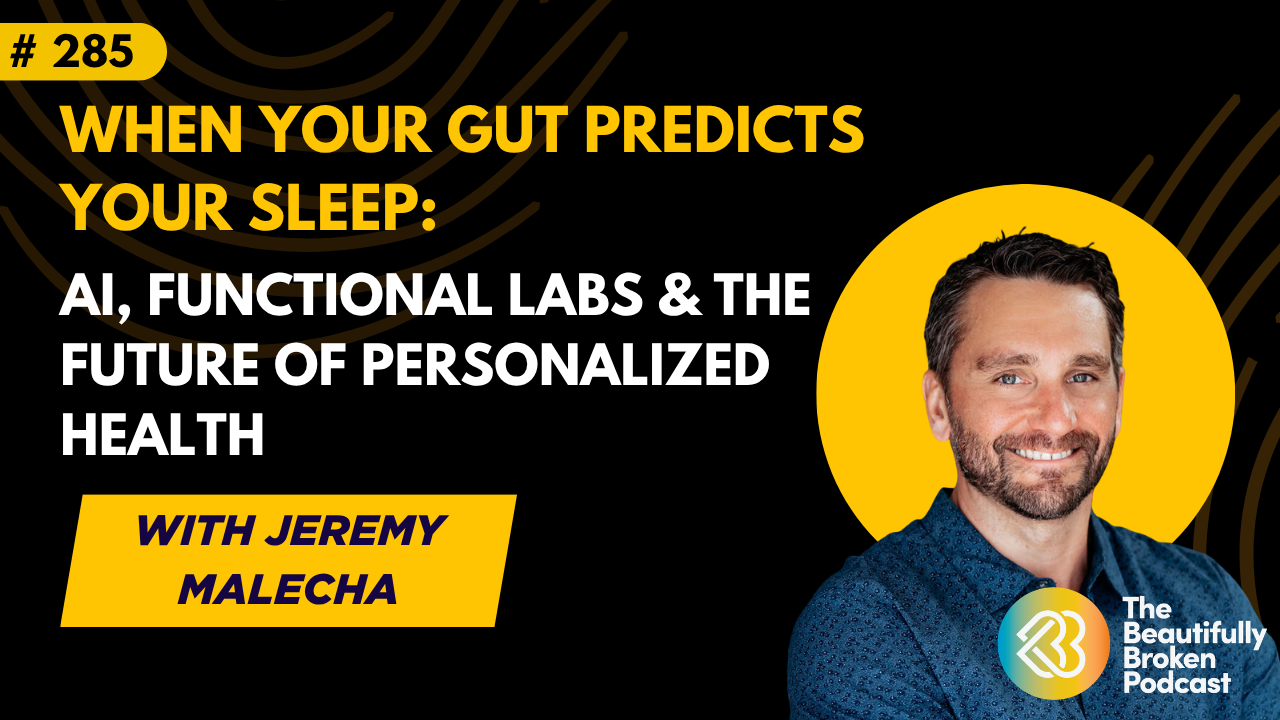
WELCOME TO EPISODE 285
Jeremy Malecha is the founder of Biocanic, a tech-enabled platform built specifically for functional, integrative, and longevity medicine practitioners. In this episode, Jeremy pulls back the curtain on one of the most exciting intersections in modern health: artificial intelligence meets real-world patient data. He shares how his team ran a linear regression between Oura sleep scores and gut microbiome markers — and predicted his own sleep score to within a single point. The conversation digs into why more data doesn't automatically lead to better health outcomes, how Biocanic's Nexus analytics layer helps practitioners objectively demonstrate results (think VO2 max improvements, reduced toxin burden, improved HbA1c), and why the future of functional medicine is about synthesizing data down — not piling it higher.
Freddie and Jeremy also explore the massive opportunity for solo FDN practitioners and large integrative clinics alike, covering real-world use cases from ketogenic mental health programs to integrative oncology and EBOO therapy. They get into the cost of the platform (starting at $75/month), lab integrations across 350+ providers including GI Map, Dutch, and Quest, and what it looks like when a clinic goes from siloed chaos to a single, unified health record. Whether you're navigating your own healing journey or running a clinic that wants to prove its outcomes and scale its impact, this conversation will change how you think about personalized medicine, AI in healthcare, and the future of the patient-practitioner relationship.


Episode Highlights
[00:00] – Why healthcare is splitting into emergency care vs personalized optimization
[03:17] – What Jeremy does building software for integrative and functional practitioners
[04:25] – The data overload problem wearables, labs, and too much information
[06:51] – Using AI to uncover correlations between biomarkers and real outcomes
[09:07] – The future of predicting health outcomes with fewer tests
[11:20] – Why more data alone doesn’t improve health
[13:39] – Moving from testimonials to measurable outcomes in medicine
[18:12] – How practitioners can prove results and stand out in a crowded space
[20:35] – The post-pandemic shift toward taking ownership of your health
[22:57] – Why AI can’t replace human connection in healing
[25:35] – Disrupting healthcare from the outside not within
[30:29] – The importance of proper training in functional medicine
[33:23] – Measuring effectiveness of therapies like detox and advanced modalities
[37:33] – Why foundational habits still matter more than tools
[45:02] – Why Biocanic avoids insurance and focuses on concierge care
[47:58] – The future of patient-owned health data
[54:14] – Integrative oncology and rebuilding the body after cancer
[59:11] – Jeremy’s personal health stack sauna, detox, and reducing carbs
Links & Resources
The Biological Blueprint Program: https://www.beautifullybroken.world/
Biocanic: https://www.biocanic.com/request-a-demo/?am_id=frederick2598
Use code 10OFFTODAY for $10 off a month
Get Silver Biotics: bit.ly/3JnxyDD
— 30% off with Code: BEAUTIFULLYBROKEN
CONNECT WITH FREDDIE
Work with Me: https://www.beautifullybroken.world/biological-blueprint
Website and Store: (http://www.beautifullybroken.world)
Instagram: (https://www.instagram.com/freddie.kimmel
YouTube: https://www.youtube.com/@beautifullybrokenworld
FULL EPISODE INTERVIEW
EPISODE TRANSCRIPT
Freddie Kimmel (00:01.546)
Ladies and gentlemen, welcome back to the beautifully broken podcast. I'm here with my good friend Jeremy from BioCannock. Welcome to the show, Jeremy.
Jeremy Malecha, Biocanic (00:09.582)
Awesome. Thanks for having me, Freddie. Super excited to have this conversation. Oh, really? Oh yeah. We got a lot of birds around here. Yeah.
Freddie Kimmel (00:13.334)
I can hear the birds in the background. Yeah. That's awesome, man. That's awesome. So you're in Southern California. You're in the land of sunshine and just beautiful temperate climate.
Jeremy Malecha, Biocanic (00:26.88)
Yeah, yeah, no, and you know, my wife's very passionate about being, you know, functional, environmental, and so we had our backyard was basically a pool deck with concrete. She made made us rip it out, so we absolutely will not have astroturf. But we did, we put a bunch of plants in and so and our orchid tree and an umbrella tree. And so, yeah, so we have a bunch of birds that now hang out in our backyard. Yeah.
Freddie Kimmel (00:52.439)
That's incredible. That's incredible. We get that by default just to Austin, Texas, living in the suburbs. It's like we got, there's dirt everywhere. There's places to ground, there's trees, there's nature, places to swim. It's pretty amazing. It's pretty amazing. Well, I, you know, I've known you for a long time. If we bumped into each other at Whole Foods or wherever you grocery shop, what would you tell me you do in a nutshell? It's like, hey, Jeremy, how do you spend your time on the planet?
Jeremy Malecha, Biocanic (01:07.693)
Yeah, yeah.
Jeremy Malecha, Biocanic (01:21.858)
Yeah, well, so we build software for functional, integrative, personalized health practitioners. I know that's a mouthful, but it comes in different flavors, right? So we think about functional medicine and now longevity medicine or adrivedic medicine. But really what we're doing is we're building a tech-enabled platform for practitioners like my wife to help them do things faster and more efficiently so they can see more patients, better outcomes, and really transform the healthcare industry from the outside.
Freddie Kimmel (01:51.958)
That's great. So you are creating an organizational system so people can be better at their jobs.
Jeremy Malecha, Biocanic (01:57.418)
Exactly, exactly.
Freddie Kimmel (01:59.454)
And so I've had this conversation with you probably two times at different events in which we'll talk about this idea or concept that more data doesn't always lead to better outcomes. And I had seen you write something about heart rate variability and sleep quality and then gut bacteria.
Jeremy Malecha, Biocanic (02:17.518)
Mm-hmm.
Jeremy Malecha, Biocanic (02:23.0)
Mm-hmm.
Freddie Kimmel (02:23.902)
And you have you creating a working theory around some of the information you were getting back and I was like can we please talk about this on the show because Nobody's doing this
Jeremy Malecha, Biocanic (02:30.894)
Yeah. Yeah, so we so kind of rewind. So I used to be in the traditional health care market. So I was acquiring electronic medical records for post acute care. If you don't know what post acute care is, think of nursing homes, skilled nursing facilities, DME equipment, know, in home health nursing. So one of the things around those technology platforms is they're built for the delivery model.
I got exposed to personalized health and personalized medicine through my wife, who's a practitioner, and kind of went through the process as an individual patient. And it was a dumpster fire, right? So we had all kinds of different testing. I think I took four five different tests, supplement recommendations, really intensive intake forms. Also, I was doing DEXA scans, tracking my blood work in a spreadsheet, aura, garment, everything that you had, right? And so it really became kind of like this data overload. And so one of the impetus for
creating BioKinic all the way back in 2018 was really building technology to help practitioners like my wife make sense of the data more faster and more efficiently. Right. And so if you think about trying to do personalized health, unlike your traditional allopathic medical healthcare system, know, practitioners are really looking deeper at the individual, you know, what's that medical history? What's your birth history? What are your symptoms? How your symptoms changed? You know, what are you, what are your health goals? What are you trying to get to? And then running all this comprehensive
of lab data. So even beyond the lab core and the quest data, but microbiome, food sensitivity, etc. Right. And so the idea of BioCANIC was really just be a kind of the system of record. So let's bring everything together in one place and help that practitioner be efficient so they can deliver their programs to more people. And in the cash pay concierge world, it's not a it's not a meet and forget them like you do in the traditional health care model. You're working with them over time. Right. And so if you're inefficient, you can't see more people because the admin
overhead is too high. And so the goal was to build that platform to kind of bring efficiency to practitioners, which we've done. The fun part is now we're actually able to unlock that data for our practitioners. And so in the world of hyperbole around artificial intelligence, I've been doing a lot of talking about really what is the practical application for artificial intelligence specifically around health. And so that was what we we've been kind of playing around. So I've been using a lot of my data. think I last time I
Jeremy Malecha, Biocanic (04:57.167)
at something like 100 different lab tests. So I do function health, I do super power, I do my own lab core testing, I do GI maps all the way back to 2016, so stool microbiome. I do Dutch testing all the way back to 2017 as well, so advanced hormone testing. I've done multiple food sensitivities, toxin testing, right? And so I have a really robust data set. And so one of the fun things that I wanted to do with our data scientists was, hey, what is the correlation between your aura and gut microbiome markers?
Right. So, know, there's a lot, you know, or has partnerships with quest, I think now, and you can do blood chemistry and they're doing some interesting stuff there, but nobody's done it on the stool microbiome. And so what we did is we did basically a linear regression. And if you don't know, machine learning is basically a series of linear regressions between different data points to try to predict an outcome. Then that becomes what is artificial intelligence. And so this is just kind of like a foundational thing. And what we found was that I've for Mickey D's was.
negatively associated with the aura sleep score. So what that means is for myketes goes up your sleep score goes down. I have no idea if this is a causal relationship or whether this is just happens to be correlation, you know, the whole correlation versus causation thing. But the funny thing was so it creates this linear regression, right? So I have higher sleep scores with lower for myketes and then or no, it's actually ischaria. That was it ischaria SPP. So as it went up over time, right, so I have
GI maps every year since 2016 so it had a really strong R value of over 0.9 So 1 and our value 1 is a perfect correlation And so I was like well, I got I have to run a GI map. I do it I'm over the age of 40 I use this kind of my colorectal screening and so I got it in and I was like wait before we go look at the data that with the analysis let's just see what that linear regression was and so basically it was minus twelve and a half times the log base 10
of ischaria plus 120 or something and so it predicted a sleep score of 84.75 so then I was like okay well what was my sleep score on the day I took the test and it was 84. like an amazingly accurate prediction of an aura sleep score.
Jeremy Malecha, Biocanic (07:16.107)
Does that mean anything clinically? I have no idea, but I thought it was just a really cool way of saying, Hey, look, can we actually start to predict some of these things such that we can start to simplify the data sets that we actually need to do. Right. So if you think about a prep, think about, you have to run five different lab tests. I'm sure you've been through this, right? So food sensitivities, microbiome, advanced hormone.
Freddie Kimmel (07:29.299)
Yeah.
Jeremy Malecha, Biocanic (07:40.878)
know, comprehensive blood work, maybe a tox test or something if you're worried about mold, mycotoxins, and fibromyaltoxicity. What if you could...
Freddie Kimmel (07:46.013)
Morning PM, AM cortisol.
Jeremy Malecha, Biocanic (07:50.222)
just take one test and predict everything else from that. And that's really where the exciting part of where this can come to actual fruition is we can start to eliminate and synthesize those data sets down to smaller data sets. So instead of $3,000 in lab testing, cut it down to 500. Think about the opportunity that that's going to open up for more and more people to have access to this type of care.
Freddie Kimmel (08:12.105)
Yeah, it's so exciting. It's so exciting. I think that just before we started, had exchanged before we hit record that I've never been so empathetically sorry for a consumer trying to navigate the space right now because every single day I am pitched a new comprehensive service, whether it is associated with my wearable that is tied to gut function and blood and hormone testing and then
then you're funneled into, well, we've got everything for you over here. You can just buy our supplement line. It's really challenging. And in my experience, again, to date, and now it's, this is the, would say the functional medicine, whole, whole-ism, the holistic side of things is, can be just as segregated as the oncologist from the rheumatologist, from the pulmonary specialist. We're not talking to one another.
And for me, like the promise of data, as long as it's clean, has been that we can start to be more efficient in our endeavors. But from my experience so far, more information has never led to better health outcomes. I would love to hear your thoughts. know, even in, think if we looked at the monetary investment, the investment that functional medicine labels bring, I...
Bet you anything we don't get better health outcomes for the price that we spend.
Jeremy Malecha, Biocanic (09:45.292)
Yeah, I mean that's the challenge right so and this is you know, we shameless plug for our product nexus Which is the ability for a practitioner actually demonstrate their outcomes. So up until that product came out Every single outcome that was demonstrated by a practitioner was essentially word of mouth Right. So somebody went and worked with a given practitioner that person had a great positive outcome
they become the kind of sounding board for that individual. I'm sure you've gone to any number of kind of functional medicine practitioner websites and they have testimonials on their site.
Freddie Kimmel (10:19.057)
That's right.
Jeremy Malecha, Biocanic (10:19.213)
But that's not really objective, right? That person had a great outcome. Was it because of the functional medicine or was it because they just simply stopped eating processed foods? So what really I think the opportunity now is for these practitioners to take that objective data and actually demonstrate what's happening. So one of our early customers who's been using this, they are a mental behavioral health clinic in the Northeast. They do the ketogenic diet alongside of a talk therapy.
Freddie Kimmel (10:21.905)
That's right.
Jeremy Malecha, Biocanic (10:49.307)
in a facility-based program. So think about I have anxiety, I want to address that, I'm going to go to this four to six week program. They're going to not only do the talk therapy, but they're also doing education around dietary change, specifically going on the ketogenic diet.
With that process now, so they're doing blood work beginning and end, they're using in-body during their time within the facility. They're doing glucose meters through Thea Health. They're also doing ketone monitoring through Keto-Mojo. Now on their website, what they can show is they can show both their symptom scores improved. So that's the self-reported level of anxiety. So think the general anxiety seven questionnaire is improving. But the other thing that they can now show is that through their in-body measurement,
body composition improved. So BMI came down, weight came down, visceral body fat came down. And then even in that short period of time when you look at Quest pre and post, you can see improvements in HbO1c, triglycerides and HDL to triglyceride ratio. And so now to get it back to your original point, they can actually objectively show that if you go through this program, no one will be going to improve your symptoms. You're also going to look great on the outset because you're going to lose pounds and you're going to have better body composition on the way out.
Freddie Kimmel (12:06.118)
Amazing. Yeah. Amazing. It's like the gold standard of a testimonial. What is Nexus?
Jeremy Malecha, Biocanic (12:12.716)
Mm-hmm.
Jeremy Malecha, Biocanic (12:16.705)
So Nexus is our analytics layer. So if you're not familiar with kind of the software industry, there are products like Tableau or
Power BI, allows, it's like business reporting, right? So if you're, let's say you're in a, you know, a logistics business, you have a dashboard, how many orders shipped, how, what was the latency, how many orders had complaints, what was this delivery rate, what was the delay rate, all of that stuff. And so what we did is we basically built that layer for individual practitioners. What we want to do is we want to democratize their data and their real world data sets such that they can show those proof points to prove to the world that this is the
right approach for transforming health, proactive personalized health. And so that layer comes in. And so now we can actually do that analytics without needing a clinical trial. You don't have to hire a CRO. You don't have people entering data into spreadsheets. It's all done automatically. So it becomes this turnkey like, you know, game changer from an analytics and reporting perspective.
Freddie Kimmel (13:18.372)
Yeah, incredible. What kind of clinics are using this at this time?
Jeremy Malecha, Biocanic (13:22.507)
Yeah, so it's a lot of, so there's a lot of different ways. So we have like, for example, we have one practitioner who runs large online group programs. So one of her programs includes the Vibrant Total Tox Burden.
So she'll do a group program. run a tox burden. Pretty much if you're a, if you live in the U S you're lit up with toxins unless you're doing something about it. Obviously the two of us are probably different. but anybody else that's come and walking off the street is going to be lit up for things like glyphosate, ochratoxin, a heavy metals, environmental toxicity, you know, phthalates, BPA, et cetera. What she can show is she runs that total talks. People come back lit up. They go on to her program and.
want to retest, which is really great because you want to see that, all these cell core supplements, all the deep body detox that I'm doing, the dietary changes are actually excreting those. And so she's doing like 50 % improvements in things like okra toxin A, right? Or glyphosate, 40 % reductions. And so that's really now for the next group program that she wants to run, when you have all of these big media outlets talking about glyphosate and BPA and all the impacts of toxicity,
hey, are you interested in your toxin load and potentially addressing your toxins? Here's what happens when you go through my program. Another great example is longevity clinics. So what they'll do is they'll actually be looking at things like VO2 max, right? And so they'll have their cohort doing longitudinal VO2 max testing as a part of being in the clinic, doing all the things and the workouts and the HIIT training and all the programs. And then they can show improvements in VO2 max, but it becomes gamification.
Hey, freddie look you've improved your vo2 max by 15 percent But guess what everybody else in the program has improved by 30 percent And you have you've been missing a lot of appointments. You could see the difference right and now all of a sudden it's like oh Wait, i'm underperforming. I need to come out and so they can use it into driving compliance as well
Freddie Kimmel (15:24.41)
Yeah. Wow, that's exciting. Can anybody at any scope or size utilize something like this? What if, yeah, what if I am a one-man show? What if I'm an FDN practitioner and I want to focus on helping people with the environmental burden of the exposome? And so I could do something like this myself.
Jeremy Malecha, Biocanic (15:47.917)
Yeah.
So perfect example of my wife who is an FDN solo practitioner. She does follow the FDN methodology, so she's gonna run a comprehensive set of testing, but she always does a retest on a GI map. So GI map for her is really kind of centered to what she does. So person typically comes in with high symptom scores. They use something called a metabolic chaos scorecard or an MC scorecard. And then she's very regimented in making sure that people do the retesting because the retesting and seeing your symptoms
is really important. And then she retests on the GI map. And so if we just look at secretory IgA, which is just a marker of the immune function within your gut, if it's too high, you have an infection. If it's zero, you have leaky gut. So you want it to be within a range of say 500 to 2000. So everybody's like scattershot when they come in super high, like 6000, a bunch of people at zero. When she does the retesting, now she's able to show that CIGA comes down within range by going through her
FDM address protocol approach. yeah.
Freddie Kimmel (16:50.98)
so exciting to me I'm like on fire right now how does this build in then to my goodness it really should it should be rewarded in in an SEO rankings like the fact that you're that you do you know I mean because here we are with the thing we have it's different bodies different biomes but different practitioners different training different systems of education and and and the ability to create
Jeremy Malecha, Biocanic (17:03.533)
Right.
Freddie Kimmel (17:19.628)
an experience where you actually do move someone forward. I mean, look, that's the wild wild west right now. Wow, that's so interesting. It's so exciting. It's like the blue badge that they just gave out on YouTube. Do you know what I mean? Now they're giving a blue badge for people that are actually licensed healthcare providers to give medical advice.
Jeremy Malecha, Biocanic (17:38.722)
Yeah, yeah, I mean the, you know, rewind five years ago.
You know, there was a lot of not a lot of functional medicine and personalized health practitioners and it was hard to find, you know, clients were looking but hard to find them or they were like they had long wait lists and everything else. Today, that's completely changed, right? I there is no shortage of let's say longevity clinics. So you have a fountain life. You have a human. You have local, you know, different longevity clinics in the space. Now your consumer is out there looking for answers. You can't just have that testimonial because every single one
of your competitors has that testimonial. So now what they can do is they can turn that around and say, look, you come to my $12,000 a year membership program for my longevity clinic and includes X amount of services. And on average we see, you know, body fat improvements by 20 % or, you know, a weight loss of 10 % weight loss improvements in VO2 max. Like I was saying, all of that now becomes the differentiation to get people to get your business above the fray of all of the new entrants coming into the
space today.
Freddie Kimmel (18:45.283)
Yeah, it's getting above the noise. I know you just said that in my head, my little ringer with my audience members, like $12,000 a year program. Wait, I already pay for health insurance. Why isn't this included? I have two questions for you. Is it your belief system that spending on the front end can save you hundreds of thousands of dollars on
the back end if we do have a quality program that can deliver these results. And we can preemptively maybe not have an experience with cancer or rheumatoid arthritis or our hips fall apart, you know, when we're 45.
Jeremy Malecha, Biocanic (19:28.417)
Yeah, I mean, there's been a huge shift and our industry and personalized health has, and I jokingly say this, the industry that benefited the most from the pandemic. What that did is it shifted the consumer mindset away from being dependent upon the healthcare system for answers and going, look, the only person that's gonna take care of me is me.
Alongside of that, we all have the same experience with our health benefits. And I'll give you a perfect example with BioCannock. We had a United plan with a $6,000 deductible. Premiums were going to go up 20 % on the renewal. So what did we do? Went to a higher deductible health plan to keep the premiums the same. Everything that's happening from a healthcare perspective is pushing individuals into solving their own health issues. Right? And so now we have the Huberman effect,
Joe Rogan effect, all of this conversation, you have the benefit of Function Health pushing out $250 million in advertising about getting 110 blood biomarkers for $365, right? So the consumer mindset has really left the dependency on the healthcare system for kind of what ills them. That being said, obviously the acute care component is a critical need that people will have. So the kind of the way that I think about it is way healthcare is going to diverge is you're going to keep your
hospital benefits within the CMS world, it's Medicare Part A. So get in a car accident, go to an emergency room, need to be in a hospital, know, severe, you know, severe cancer therapies, all of that will still exist as a core component. But this concept of going to your primary care for an annual set of blood work of 12 blood biomarkers, people are done with that because I have to pay out of pocket for that anyway. Why wouldn't I just spend the same amount of money and get a more comprehensive data set? The problem is
is if you just do it as a consumer, you're in this world of the cycle of trial and error, right? So the consumer platforms are gonna give you solutions to help them monetize you to the highest effect, whether that's in quote unquote personalized or not, there's another end goal for you as a consumer. What happens is what's really exciting about the transforming in the industry is all of these people that go get those 110 blood biomarkers from you name your DTC company, they come back
Jeremy Malecha, Biocanic (21:49.44)
lit up, the interpretation really isn't there. And guess what? People are human. When I have a health issue, I do not want to talk to an AI doc in your pocket. And I was, I was listening to a podcast and he was using the term IRL, right? It's like, I don't know if you've heard that three letter act in real life. I am a human. I have, lit up. I've got my thyroid's out of whack. I've got elevated Hb1C. My, you know, my lipids are all over the place. I've got elevated HbOB.
Freddie Kimmel (22:07.115)
in real life.
Jeremy Malecha, Biocanic (22:19.393)
LDL particle is small, what do I do? Where do I start? A chatbot is not going to get that person emotionally connected to understanding what is the first step in my journey. And that's really the exciting part for the human practitioner because that's where they're going to connect with people. So you'll see this transformation of shifting to people paying to want to get the right answers, wanting to know where to start first so that they can start to get those wins on the board and actually get on the path to being healthy.
Freddie Kimmel (22:49.267)
Yeah. I have a couple things and it's like, behavior change. That's the million dollar question, right? It's like, and I'm sure you've seen this. I've seen it myself. Just because I get the data and the red flag is there does not always mean that I make the adjustments. And that's what's really hard about this human experience is that I need, I should do it in community.
I do need a mirror. know, again, whether in maybe in maybe in two or three years, the chat bot is incredibly empathetic and there's a human face there and all those things, I think maybe we'll see that. But I want to be able to talk it out. I need support. I need to understand when I am chasing my tail. You know, to the because it's again, it's like, how do I have discernment? Because if I get on the internet and I say I've got inflammation, well, my God.
All of sudden, my phone is going to be like, Freddie, you need a sauna. Freddie, you need ozone therapy. Freddie, you need this next level binder that goes intracellular. Again, and then we have to set apart, well, does it really do that? And what are the claims? And what's the scientific validation? It's challenging. So I do think this trusted person that is supported by the results have been able to deliver and repeat. We've said this a couple of times. You have a theorem. Can you repeat it on different bodies? That's the magic.
Jeremy Malecha, Biocanic (24:13.239)
Mm-hmm.
Freddie Kimmel (24:15.957)
you know, that's the magic. This is where it really does get exciting to me. And I've always referenced by, I'm like, there's a couple of people out there, know, there's Heads Up Health, there's BioKannock. Other than that, like, I don't know people that are doing this. And I don't mean to like put you in the same room with Heads Up Health. Are you guys similar? Is that different?
Jeremy Malecha, Biocanic (24:33.549)
Mm-hmm.
Jeremy Malecha, Biocanic (24:39.243)
Yeah, yeah, heads up, how's great platform Dave's built a great business over there. We started be
focused on the practitioner. Dave started in with heads of health, started more direct to consumer and came into the space. We operate as a full electronic medical record across so you can run your whole clinic with our platform, including business automation through our CRM integrations and all of that stuff. So we're more of a full service tech stack. There is a lot of overlap, but it's another great solution of really visualizing data to help the individual stay on track and see those results and going along the way.
The industry today is still very subscale, but it is a massive blue ocean of opportunity in terms of disrupting the traditional healthcare system. And one of the things that I always talk about is...
know, Uber didn't come from the taxi cab industry, Airbnb didn't come from the hotel industry. So I don't know why people keep thinking that the traditional insurance-based healthcare industry is somehow going to change itself. Disruption always comes from the outside. And we wholeheartedly believe that disruption will come from this consumer-driven initiative to get to more personalized health and health preventative health programs, longevity programs, even complex autoimmune through functional medicine types of programs. So when we think about like
of the players in the space. It's not competitive today because our competitor is ignorance. It's ignorance in the industry that these solutions exist and by the way you're actually going to save more money, feel better, live a longer life. If whatever, if we have 50 different biocannics and heads-up health and what we actually break through into kind of that bell curve of adoption into the mass market, this opportunity is huge and there's plenty of room for everybody to operate.
Jeremy Malecha, Biocanic (26:31.439)
Thank
Freddie Kimmel (26:32.285)
Yeah, that's exciting. to be clear, BioCannock is not a consumer dashboard tool at this time.
Jeremy Malecha, Biocanic (26:39.329)
We sell to practitioners, we are consumer look and feel, but it's intended to help our practitioners deliver that consumer experience to their end users or clients. So you get good, cool visualization, you can track and trend all the data like you would in a direct to consumer platform, but it's really up to the practitioner to determine what they wanna do with that.
Early on we had like a consumer facing product and it was just miserable having to deal with a whole bunch of consumers. So we just wanted tech enabled practitioners so they can go serve all of those great consumers.
Freddie Kimmel (27:11.529)
Yeah, I think that's really smart. What you said about the driving of innovation, specifically, let's talk about the pandemic in which people were like, wow, I think there really is an opportunity here for me to take radical ownership of my health. There's a lot of people that are in that mindset of get up and go. And then it's like, get up and go where I still think that there's so many powerful things out there. I mean, there are some
powerful tools available to a consumer. We could just talk about peptides or different nootropics or methylene blue or these very powerful things that people are bringing in that will indeed shift your experience, your energy, your terrain. And then as I think you and I would probably share this picture that you have to, somebody's got to take responsibility for that with training. Right? I think that was the thing I said.
Jeremy Malecha, Biocanic (28:05.761)
Mm-hmm.
Freddie Kimmel (28:08.671)
Provide the experience repeatability, but the training. You've been trained in this. And that's the kind of loose thing where I'm like, you know, you can pick up a certification for some of these things and like, there's people selling functional medicine certifications in two weeks or a weekend sometimes. It's not enough. Do you have any thoughts on like training that you love?
Jeremy Malecha, Biocanic (28:27.603)
hold on.
Jeremy Malecha, Biocanic (28:32.941)
Is that me?
Freddie Kimmel (28:35.57)
No, Jeremy. Hold on, we're reconnecting. Yep. Are you back?
Jeremy Malecha, Biocanic (28:40.905)
man.
Freddie Kimmel (28:44.328)
Testing one, two.
loss I'll mark this. You're good. I can mark.
Jeremy Malecha, Biocanic (28:51.629)
But sorry, my internet, like, I don't know what Jen just did.
Freddie Kimmel (28:55.816)
Jen?
Jeremy Malecha, Biocanic (28:57.749)
Everything was fine until she came outside to start working. And then it just, I can see my, I have wifi and wired. And they both went down.
Freddie Kimmel (29:04.478)
I love it. It's great. It's great. That's a great thing about recording on the cloud and this software. had said, I was saying, I'll prompt you again, but I did mark that just for our editor. I had said there's so many certifications out there. said, with great power comes great responsibility. If I were to sum it up in a one sentence, are there trainings that you like out there that you're familiar with in the space of understanding the integration of
Jeremy Malecha, Biocanic (29:09.749)
Yeah. Okay.
Freddie Kimmel (29:32.53)
The microbiome and labs and cortisol levels and DEXA scans.
Jeremy Malecha, Biocanic (29:37.07)
I mean, there's obviously a lot of great programs out there. So obviously the Institute for Functional Medicine is kind of the founding kind of training program that most of our MDs are going through, MDs, DOs, chiropractors. It's a really great training program to get people to start understanding people with this idea of understanding them at a deeper level.
I hate the term root cause because generally there isn't one root cause, right? It's a confluence of different things going on, but it is a great starting point. On the non-licensed side, you we do see a lot of people going through functional diagnostic nutrition, restorative wellness solutions, the Institute for Nutritional Endocrinology. So great. Those are great comprehensive training programs. They all have their focus and differentiation. It's one of those things where to be in the space as a practitioner, it's a constant learning evolution.
right and so even things so I'm an IFM practitioner and then I'm gonna go through the a4m training because I want to be certified in those peptides and regenerative therapies beyond just doing the lab testing and supplementation so the way to think about it is there isn't a There is the training approach is a constant evolution right? So somebody should want to continuously learn and the nice thing about this space unlike the traditional healthcare industry where
Science goes takes 18 years to go from the bench to practice our industry can adopt those therapies Much faster and much more quickly, right? So you mentioned things like ozone therapy, right? When do you think ozone therapy will end up in the traditional health care model? Probably never right that only started in that I've been aware of only in the last past few years, right? So even things like autonomic stress so things like heart math and getting people understand heart rate variability Those things can be implemented more quickly
But as the research comes out you're like, hey, this is this is the right evolution right flowpresso perfect example, right three days, right? Maybe research comes out the three days is to every three days is too fast It needs to be five or depending on your certain Immune status it actually changes that and so those types of learnings are we're help people do things faster and more efficiently Especially as that data comes in quickly
Freddie Kimmel (31:56.016)
Yeah. Is there an opportunity, now I'm hearing that it's a pretty clear cut path to a practice wanting to use this software and to prove out their working theory on how they work with people. What about on the side of, we've got this, again, we've got these incredible innovations in technology. We've got things like the Immortal Chamber or Flopresso or Pulse Center's PEMF devices.
Jeremy Malecha, Biocanic (32:21.921)
Mm-hmm.
Freddie Kimmel (32:24.88)
What about for companies that have a therapeutic? Now I'm imagining that would be, it would just have to be isolated in a silo, but do you have anybody on that side using BioCannot?
Jeremy Malecha, Biocanic (32:37.333)
Yes, it's perfect example. We have a customer in South Florida that's doing eboo now, right? So what's the what is the right approach for that? Tox testing before
Ebu therapy, tox testing after, right? And so now for that, and I don't remember what particular product or brand that they're using, now you can really demonstrate the effectiveness, assuming that that tox burden has actually decreased by going through that process. We all see the albumin bags hanging up with all the yellow stuff. Okay, what's in there? Did it actually work, right? And so I think those are the really exciting things. And so we have another
that we're working with that has like a, it's not PEMF, but it's a vibration product that specifically you kind of sit on the product and now they want to actually demonstrate improvements in self-reported behavior. They want to roll in some lab data to kind of bring in that objective data so that their actual product for people, autonomic stress, looking to do heart rate variability, improvements, POTS syndrome, actually demonstrates those outcomes. So it's a really cool opportunity. And again, when you think
about traditional healthcare demonstration, you have to hire a contract research organization, CRO. Then there's a whole bunch of other things, IRBs and all these other things that get then published. What we can do now is we can accelerate that cycle because it's turnkey. As long as the data goes in, you can demonstrate the outcomes and, you know, update your marketing, create your poster presentation. When you're on stage at A4M, you can say, hey, look, we put 30 people through eBoo. This was the tox burden before. This is the tox burden after. This is how effective it's been for us.
Freddie Kimmel (34:19.406)
In the world of good research, I tend to feel that we overstate the value of one intervention. I think we underestimate the value of, I see it's so true, we underestimate the value of a multimodal approach in which we're gonna optimize, right? How many ways can toxins leave the body? Through the sweat, through the urine, through the stool, through the breath, through emotions.
And that's where it gets a little complicated for me. It's like, well, was it the total plasma exchange, flopresso and the sauna, or is one of those three the Kentucky Derby winning horse that is way above the other ones and maybe I only need one.
Jeremy Malecha, Biocanic (35:02.512)
And I think we'll be able to kind of tease that out. I think one of the challenges in the direct-to-consumer space that we kind of touched on is it's always a this for that still. So hey, you ran your 110 blood biomarkers, your homocysteine's 11, here's a great methylated B vitamin to address that.
in the kind of the precision health space where you're actually working with a practitioner, they're going to think more broadly around exactly what you're saying, which is, look, you've got 12 fires burning, which is the biggest fire that we want to put out first and what's going to work best for you right now, right? So maybe, maybe not worrying about a methylated B vitamin right now isn't the problem. It's actually the fact that you were living in a moldy home and we need to go through this process first. So basic blocking and tackling, there's no point in going into Ibu and a detox
protocol if you're still living in a moldy home, right? And so that's where the of the imagination comes in for the human to kind of pull that stuff together. And then we can start to synthesize that down, right? So as we start to see more and more modalities with more and more data around them, we can start to sub segment them to see, okay, which lever of the four that we pulled actually have the biggest impact. And then therefore, do we need to round, you know, square the corner?
Or can we just go with that big lever because maybe it's a cost time or an access issue So there's a lot of really exciting opportunities to kind of really start to dial in and again going back to this concept of Decreasing overall cost and increasing access, right? So to your point, you know flowpresso PEMF sauna and an eboo That's that's a hard facility to find and it's very expensive But maybe there's an opportunity where you know, you can just start say, you know start leveraging certain ways to bring that make it much
more affordable for people.
Freddie Kimmel (36:55.734)
Yeah, you know, it's always been, you know, again, shameless self-plug, but the program that we have, the biological blueprint, which is 16 modules that are all modifiable lifestyle factors. So it's just looking at simply what would food like if it was medicine? What would that be? What is medicinal food? You know, is it helping your protein expression? Is it a burden? What can we do for light? You know, what's a sleep biome? How do I move the lymphatic system?
What is a respiratory rate and how do I change that? How do I learn how to do a full deep diaphragmatic breath? What's the value of nonviolent communication or a language model in which I create a world and I'm no longer a victim? Some of those things are so profound that even just saying, I'm like, shit, well, if you did five of those, do you need to onboard an immune system in a bag?
Jeremy Malecha, Biocanic (37:36.512)
Mm-hmm.
Jeremy Malecha, Biocanic (37:43.575)
Mm-hmm.
Jeremy Malecha, Biocanic (37:47.724)
Yeah.
Freddie Kimmel (37:54.285)
I, you know, and again, I think that changes the accessibility, but to your point, it comes down to time. Cause a lot of people you're going to say, well, you know, just be outside and do this and do that. They're like, I have kids. We work three jobs. You know, if you, if we look at the debt to income ratio, if we look at the average amount that an American has on their credit card, a lot of these things are not, you know, the TPEs and the flow pressures, it's not realistic. And
But I do think that the data moves us towards like a working study and we're like, well, let's build a community center where we have some of these, you know, could be a mini trampoline, could be certainly a community sauna is not, it's so funny. My mom's trailer park had a community sauna and they took it out in the pandemic and they were like, no, they're like, there's people are going to get viruses in there. was like, it's a great sauna. Let's rip it out of there.
Jeremy Malecha, Biocanic (38:43.508)
Yeah.
Freddie Kimmel (38:50.153)
Anyways, that's so exciting, man. I'm really stoked about this. Can we talk about cost and price? What does that look like for a clinic? What's that look like for a practitioner of one who's just kind of working with 20 people or something? What's the lower end scale?
Jeremy Malecha, Biocanic (39:00.109)
Mm-hmm.
Jeremy Malecha, Biocanic (39:08.397)
Yeah, I mean it's super affordable. If you're a solo practitioner, we're $75 a month. Like anything, you can pay annually and be 20 % less or 60 bucks a month on average. We just scale up with the clinic. We don't have any weird limitations. So if you're working with one client, same price. Is it 10,000 clients, 100,000 clients, still the same price, right? It's really just about get the practitioner and what they need to do. Then we have certain add-ons that if you want to have a diet meal planning add-on, we can add it on for $20.
We have a business automation so we do partner with go high level so a reseller that's $99 a month so you can get rid of your mail champ or other email system Set up websites and sales funnels and we'll help you through that Through our process you can have a full onboarding tech stack for less than $200 a month And think about kind of eliminating all those extra Costs and fees like Calendly or schedule once or Trello or sauna. You don't need to have that. That's all built into what we do
Freddie Kimmel (40:06.24)
Yeah, incredible, incredible value. Well, I always throw you guys out there when people are asking me. In fact, there's a clinic that I went and trained their staff out in Dripping Springs, Thriving Springs Wellness. And they were really excited about it. Like, this is all in like one thing? I was like, yeah. Everything, everything.
Jeremy Malecha, Biocanic (40:07.597)
Yeah.
Jeremy Malecha, Biocanic (40:22.349)
Yeah. Yeah. Yeah. mean, our philosophy is if it's not built, we'll build it. If somebody's built it, we integrate, right? So we're not going to get into the ring business. We integrate with Aura, Woop, Garmin, all of those great products. If that's something that you use, CGM monitors. And then, you know, on the workflow side, we're always listening to our practitioners on how we can improve the system. And so that's been our roadmap. And for eight years, it's literally every two weeks adding new features that our practitioners need or are asking for.
Freddie Kimmel (40:30.477)
Yeah.
Freddie Kimmel (40:51.553)
Yeah, it's incredibly, yeah, I just, get a full body yes for it. It's very empowering to take the overwhelm of information and data, which even as a solo practitioner, you can imagine having a Google folder with everybody's labs and you're like, you're gonna miss stuff.
Jeremy Malecha, Biocanic (41:08.652)
Yeah.
Yeah, and that's the that we also call that death by five minute paper cuts, right? So if you have to open that intake form, your medical symptom questionnaire, and then you need to go open your GI map, your Dutch test, your lab core and get to the right page. All of those minutes stack up, right? So if you have one client, not a big deal. If you have 10 clients, that's a lot of time. And that's really where we see a lot of practitioner burnout. And so really putting the investment into the technology stack is what really frees practitioners to do what they want to do, which is help their clients.
Freddie Kimmel (41:14.262)
Yeah.
Jeremy Malecha, Biocanic (41:39.759)
And so they're not stuck in admin hell.
Freddie Kimmel (41:42.999)
Yeah, so exciting. So exciting. I have so many questions. Where do you see, know, just, yesterday somebody sent me a thing. like, oh, do you know, have you heard about Throne? They're like, it's a unit that latches onto the back of your toilet and it's analyzing your urine in real time. Is that like, have an API that you could integrate?
Jeremy Malecha, Biocanic (41:56.428)
you
Jeremy Malecha, Biocanic (42:05.561)
So actually met the founder. was at the Stanford Consumer Health Summit. So I think they're coming to market this week. Throat is actually not measuring your urine. It's taking pictures of your stool. Yeah. So it's great to be able to track and trend. So let's say, for example,
Freddie Kimmel (42:15.38)
even better.
Jeremy Malecha, Biocanic (42:25.485)
The early focus is really around fetal occult blood, right? So, A, Bristol stool, you don't have to worry about it. It does it automatically. Fetal occult blood, potentially flagging colon cancer, especially, you know, in the media lately of how important it is identified early. And occult blood is in a very early indicator of polyps that should be looked at. It's a cool idea. My issue is, how do you clean it?
So, you know, there's been a lot of like different kind of home devices. This is not a new concept. It's new in terms of stool microbiome tracking, but there's a lot of home devices that have been specifically around senior living. They've been around forever, right? So think about, you know, a heart failure patient who's homebound.
if you're tracking urination, you can actually track their heart failure and their fluid status, right? So if they're not urinating, they're fluid overloaded, you can proactively go and intervene. I'd be curious to see how much people adopt it. Hey, maybe it's just like the bidet and some people really enjoy it, but you know, it's an interesting concept. I'll probably buy one and see how it goes.
Freddie Kimmel (43:40.661)
Yeah, me too. I was like, I want to play with that.
Jeremy Malecha, Biocanic (43:43.234)
It's not going to be useful. I think it's going to be interesting at a consumer level, especially if you're having GI issues and you want to measure kind of impacts over time without actually doing a diary function. It's not going to be diagnostic enough for what a practitioner needs. So things like beta-gluteroidase, secretory AGI, steatocrit, you know, what is the stool microbiome makeup? I assume, I'm sure they are going to have AI vision, but there is no way that you're going to be able to really understand for micedes, to vector-dVs ratios, acrimansia, staphylococcus, all
those kind of sub bacterial level which is really what's more useful on the clinical side.
Freddie Kimmel (44:18.612)
Yeah, not with the genetic sequencing which different tests use, which takes a lab. It takes very high powered machines. Sometimes microscopes, different paracytologists, are lit...
Jeremy Malecha, Biocanic (44:30.251)
Yeah, I mean, there's even arguments in the industry around stool microbiomes being inaccurate when they're directly measuring from it. So you have to imagine that just AI vision is still much, much further away when you can't even align on when you're actually directly measuring the RNAs from the stool itself.
Freddie Kimmel (44:47.722)
Yeah. If you had to self-critique BioKannock, what do think the limitations are today?
Jeremy Malecha, Biocanic (45:00.641)
We have a lot of limitations quite a few years ago, but we've kind of been building and solving for those problems over time. We intentionally do not do insurance.
So that is the biggest limitation that we run into is we do have talked to a lot of, for example, naturopathic practitioners. They may get it be getting some insurance, some sort of session coverage, CPT coding that they get reimbursement for. We just want to stay clear of that. We only focus on cash paid concierge. So that is that is probably the biggest limitation that we've run into today. But that is a strategic decision that we've chosen, which is we just want to stay away from the insurance space and really focus on tech enabling practitioners.
that are really building these cash pay or concierge businesses.
Freddie Kimmel (45:45.116)
Wow, yeah. like, I have no more questions. I'm just really, I'm really stoked. You know, I have an account and the practice that I was using is no longer. But I could get my BioKannock account transferred over to a new practitioner. Yes. Is that true?
Jeremy Malecha, Biocanic (46:04.013)
Yeah.
So that's actually one of the things that's unique about what we do. So if you're not familiar with what the federal government has been pushing out is this, this concept of data sharing, right? And so now last fall, HHS actually issued a memo now that they were going to go penalize platforms for what's called information blocking. So if you've ever tried to get your traditional healthcare record from say your all scripts provider, your primary care, it's always a pain. They never want to do it. It comes as a fax or
DVD or something along those lines. With BioCannock, we're built that it's the individual client's record and that data travels with you. So if you move from your previous provider, so a perfect example, Jen was working with a Hashimoto's, hypothyroid woman, struggling to lose weights, was unable to get pregnant, went through Jen's program, lost the weight, then moved over to Dr. Ramatma for a holistic fertility program to get pregnant, got pregnant, had a kid, and then moved back.
The benefit is all of that testing travels with you, right? So all of the Dutch testing that happened with Jen, Amatma can see what they did, what changed, so they don't need to rerun that Dutch test again, right? And so now it's like, okay, we can focus on this program because I can see where you're at and let's go and then it travels back with them. It's been an interesting change because it is the focus. The federal government...
makes sense, right? You should, if I have a car accident and I'm in Austin, Texas, but I live in San Diego, you shouldn't have to rerun an allergy panel or understand where my stats are. They should see that immediately so they can make the most informed decision at the point of care. So philosophically, that makes a ton of sense. It's just been a big change for the industry because practitioners are so used to everything being so siloed that we've had to have a few conversations with people. It's like, no, no, no, this is helping you and it's helping the patient as well too.
Freddie Kimmel (48:00.1)
Is this something, Jeremy, in which you could envision, I don't know if it's access to the data, but imagine, know, within my, imagine my bio strap on the backside has a chip, which has like a really comprehensive view of my health data if I go into an ER. Is that something that could unfold at one time? So they were like, my God, don't do that. Freddie's allergic to that. Or he's had, you know, he's had three bowel surgeries and he is prone to obstructions.
We don't want to give him these three medications.
Jeremy Malecha, Biocanic (48:30.229)
Right. So people are building that today.
So Apple Health has expressed Apple the company, through Apple Health has expressed interest around doing that. Building that there's quite a few companies that are actually leveraging the blockchain to actually put your health record on the blockchain. So then you actually have kind of, you know, chain of custody and then it can travel with you. Perfect example, I'm allergic to amoxicillin. I have no idea why I've just, I was a kid and figured it out. Let's say I got into a car accident. First line of defense on antibiotics is amoxicillin.
know from some form, some way that that comes in. no, no, don't use that. know, but I use a different one. And so there is a lot of opportunity for that. In our space, it's easy with BioCannock. The problem is all of the rest of the healthcare companies. I remember I was at a Northwestern hospital in Chicago. They acquired North Shore Hospital.
They were both on Epic, the same EMR software provider. So you would think that they would put those two together. I think it was a three year project plan just to get them to communicate between the two hospital systems. And that's the real challenge today is not necessarily on the front end where we're in the consumer cash pay space. It's the historical kind of legacy systems that are really gonna struggle to make that model work.
Freddie Kimmel (49:55.719)
Yeah. And what about, I know at the time, this is like 2022, was like biocannic for what, whatever lab we were using, it was like lab core or quest or something. They were like, there's no integration for that. we're really not going to be able to do a good charting or progress of your last, you know, four or five labs. They were, they had needed a manual upload. Is that all been solved?
Jeremy Malecha, Biocanic (50:21.421)
Yeah, so we work with a ton of the different lab provider, lab ordering providers. We are working on a couple direct integrations with some of those. One of, think it was specific, that incident was specific to CPL because that's a larger lab in the, yeah.
Freddie Kimmel (50:37.321)
yes, was probably CPL.
Jeremy Malecha, Biocanic (50:39.135)
Yeah, so the challenge of doing the ordering integration with some of the more smaller lab testing companies is they don't have kind of like the electronic integration capabilities, but we're constantly adding to that. So we're always adding new labs, new ordering capabilities, and really trying to be the fulfillment without having the challenge of doing that manual upload. Again, just eliminating a system. You can just do it right. Just a couple of clicks from the dashboard.
your pick your lab company, pick your test and send it off and then everything comes in automatically. Yeah.
Freddie Kimmel (51:14.354)
goes right into the portal. is there, do you guys have an integration where I could upload? And so I do see a progressive scale over the last, even if they're old labs.
Jeremy Malecha, Biocanic (51:24.109)
Yep, we have over 350 different labs that we support. So all of that information will get extracted automatically. You can track and trend it over time.
Freddie Kimmel (51:32.914)
Yeah, so fun. So fun. Where do people go if, let's say they want to do something like this biocannock. We have a lot of clinics, a lot of practitioners that listen. Where do they go to get trained? What does that onboarding look like?
Jeremy Malecha, Biocanic (51:47.916)
Yeah, so we're biocannic, B-I-O-C-A-N-I-C.com.
We're a bit different. We're very hands-on with our practitioners. So we do one-on-one training. We have videos. We have a bunch of educational support. But however that clinic needs to be supported, we'll figure out a way to make it work and through a human component. A lot of the challenges with some of the other systems is that it's knowledge-based, maybe email support. People get frustrated that they don't get answers when they need it. We want to meet our customers where they're at. So let's say, hey, it's Friday. It's a slow day in the clinic.
is when I need to learn, then we'll do a team training, we'll do one-on-one training, and it's really about getting them up and going, because every clinic operates differently, right? So you just can't have a one-size-fits-all onboarding program. It's like, OK, well, let's focus on what are the top things that need to be solved right out of the gate and get the team going as soon as possible, because we want to get everybody up and running and really understanding the capabilities and leveraging everything that we do.
Freddie Kimmel (52:49.33)
Yeah, so exciting. I have a few people, it would be fun to have a clinic on like in their first work day one and then to really have a check in after 90, 120 days. And be like, ooh, here's a new clarity. Here's how now we're looking at Mrs. Robinson and Mrs. Neely. Way different picture, way different understanding of where they were at initially.
Jeremy Malecha, Biocanic (53:14.731)
You know, I think people underestimate the need. So yes, you can do other systems and have things organized. But the real power is being able to show the improvements to the client as they're going through the process. I always tell the example, like somebody comes in, migraines nine out of 10. They get to six out of 10 and they feel a ton better, but they still are at six, right? And so you can use that, what gets measured gets managed, right? To keep them wanting to get, using it as a gamification and getting them to
want them to get no migraine headaches at all by retaining on the program. Oftentimes, people would go to functional medicine clinics, do all the testing, they get a 21 page document of a bunch of stuff and then just completely fall out because they don't know what to do. With the feedback, the tracking, even things like Orasleep score, it's a great model of CGO. Learning about glucose spikes, what really works, connecting the dots between, I had rice noodles at a Thai place, it was gluten free, but my
glucose spike to 220 and I had to take a nap, right? You actually, that's like, okay, now I understand and I can connect the dots and that's really the exciting part because it's automatic for practitioners to help people, you know, stay on track.
Freddie Kimmel (54:28.561)
Have you, just one last question, have you, are you currently working with any integrative oncology centers? can imagine this would be really incredible there, but just because there's so many, there's different ways to look at circulating tumor cells, cancer stem cells, the susceptibility of different cells to different treatments and therapies over time, it seems like it would be a very valuable tool in an industry or a,
just working with cancers in general, which were just so varied as far as outcome right
Jeremy Malecha, Biocanic (55:00.109)
Yep.
Yeah, so a great example is Dr. Charles Meakin or Chuck Meakin. So he's Meakin Metabolic Care and he is very, it's a very complimentary metabolic recovery program for cancer patients. And he does exactly that, right? So, hey, we're going to run that comprehensive blood work. We're going to look at your score. So he's got the Meakin Metabolic Score, which is basically a self-assessment value that you can then track over time. how you're moving along within his program does a lot of great work. And it's really
exciting stuff. it's more, it's very complimentary, right? So it's okay, I had, you know, I had stage four cancer, I need to go through, you know, chemo, you know, whatever. Okay, we finished that, but now let's actually put the foundation to restoring the terrain back to where it needs to be such that the immune physiology can actually protect against a remission at some point in the future.
Freddie Kimmel (55:55.408)
Yeah, there's a really fun company that I actually do. It's called CatchBio. Do you know Catch? CatchBio looks at the 500 identifiable, modifiable risk factors associated with all cancers based on what we understand today in the science. And so it gives me a risk score of developing specific cancers. I did my intake form that was 20 minutes and it was like my number one was testicular cancer, which I had at 26.
it grabbed it right out of the gate and then it was like Freddy you know here's 50 things to do but your top three are to test your home for radon, to do a complete to have someone go look at all your complete evaluation of your skin and then it was like increase fatty fish two three times a week based off you know your current meat intakes now it's really easy targets and
Jeremy Malecha, Biocanic (56:29.431)
Mm-hmm.
Jeremy Malecha, Biocanic (56:37.389)
Thanks.
Freddie Kimmel (56:49.944)
It's not that the one thing is going to tie into your cancer. However, what we know about the terrain theory today, it's really an interesting dashboard, patient friendly, it's meant for the consumer. It's work, but it's very clear, it's very clear target and it does eliminate a lot of the noise of the internet oncology, which I'm going to be talking to Dr. Nasha next week. Yeah, yeah, so fun.
Jeremy Malecha, Biocanic (57:09.377)
Yeah. Yeah.
Jeremy Malecha, Biocanic (57:14.272)
Awesome. Yeah, she's great.
Freddie Kimmel (57:19.418)
Dude, this is so good. I'm really excited. I want to interview a clinic that's Yeah, in the next couple months. I'd love to swing back around and just learn more and then check back in with you because yeah, long, long overdue. Just applaud what you're doing. It's so clear. Yeah, thank you for the service you're doing to the world of wellness. It's really, really wild. just, yeah, as your friend, I'm I'm proud of you.
Jeremy Malecha, Biocanic (57:25.773)
Welcome.
Jeremy Malecha, Biocanic (57:44.462)
Yeah, well, it's lot of fun. you know, I think I don't know if you saw the LinkedIn post I had, but I mean, you know, everybody it's makes total sense right now.
Six years ago, nobody believed in me. Right. And I kept saying, this is the future of health. And people would laugh me out of the room. Nobody's ever going to pay out of pocket. No, you know, everybody's always going to go back to their doctor. When are you going to get a reimbursement code and who's going to pay for it? All this. And now just within the last 18 months, it's completely turned around and you can just see people in droves, leaving the traditional healthcare space and really wanting the solution for them. And thankfully, you know, everybody does see the only person that cares about my health is me.
and I'm the only one that can do anything about it. And if I don't do it, nobody's gonna do it.
Freddie Kimmel (58:31.363)
That's right. Yeah, yeah, it really does. It serves such a specific need. But it also helps to remove a lot of the noise about what is a valuable intervention for you because you'll be able to see that. You'll be able to see how your theory played out in real time in a short amount of, you know, six months to a year. We should see change.
Jeremy Malecha, Biocanic (58:52.577)
Yep. Yep.
Freddie Kimmel (58:54.767)
Amazing. Amazing. Well, thank you for being a guest, man. Well, I'd love to do it again. We'll talk soon. Thank you for being a guest on the Beautifully Broken podcast. Jeremy, because it is the process of being Beautifully Broken and I say the cracks are where the light comes in, but do you have an intuitive hit? What does it mean to you to be Beautifully Broken?
Jeremy Malecha, Biocanic (58:57.837)
Awesome. Yup.
Jeremy Malecha, Biocanic (59:20.693)
I think if I were to react to it, I would say it's understanding that there's always failures and then making the most out of those failures going forward.
Freddie Kimmel (59:39.906)
Let me ask you one more question. What are three things you've done change, integrative into your life, which have made a profound change to your health?
Jeremy Malecha, Biocanic (59:51.213)
Eliminating carbs, so not necessarily carnivore, but just eliminating carbs. used to be very carb heavy. That was the biggest change.
to sauna. So we bought a sauna before even this whole journey started. It's just it's a it's just it's part of my daily routine. I'm in it every single day but it's more of a meditative kind of sanctuary for me. And then getting more serious on the detoxification side. So I've always done the the supplements before but you know as you know we're very well aligned with Cellcore but also beyond
just the, you know, cell core was kind of where we started, but now doing Flo-Presso as a part of my weekly routine and thinking more pragmatically about my environmental toxicity and exposures. I don't think I really took that seriously, but I, my higher priority issues was kind of weight, hypertension, you know, low libido, GI issues. And so once we kind of got through that, this kind of new space of really understanding,
Toxicity and focusing on ensuring appropriate detox in this kind of toxic soup of a world that we live in has probably been the biggest focus of late.
Freddie Kimmel (01:01:06.797)
Beautiful, Great. My head's spinning with ideas. I will let you go for today. Thank you for being a guest on the podcast. Big love.
Jeremy Malecha, Biocanic (01:01:14.1)
Awesome, thanks for having me. Appreciate being here.