Gut Instincts: Unveiling the Secrets of Fecal Transplants and Therapeutic Worms with Dr. Piper Dobner
Apr 08, 2024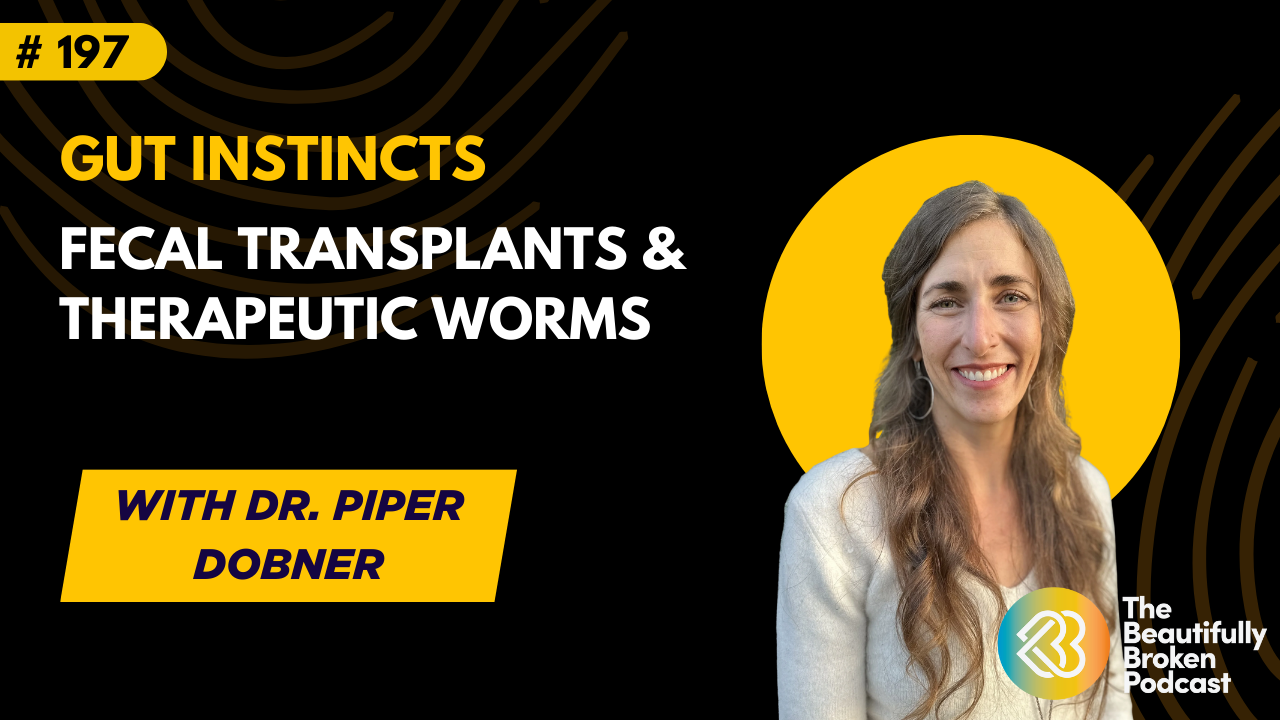
WELCOME TO EPISODE 197
Ever wondered how fecal therapy and helminthic (worm) therapy actually works? In this episode, Dr. Piper Dobner introduces us to the incredibly underestimated power of helminthic therapy and its capacity to heal the body. As a naturopathic doctor specializing in microbiome therapeutics and fecal transplant therapies, Dr. Dobner's mission is to help patients restore their internal and external microbiomes, which aims to support the body's innate healing abilities.
Join us as Dr. Dobner shares insights into the profound impact of microbiome health on disease resistance and immune function. While it might seem like a new approach for some listeners, don’t miss this chance to learn from an experienced practitioner and debunk the mysteries around fecal transplants! Throughout the episode, we also talk about detoxification strategies to support lymphatic systems and the science behind therapeutic worms in regulating the immune system. Dr. Dobner also shares easy and practical tips for self-care, such as the benefits of Epsom salt baths and castor oil.
Today’s episode is both light-hearted and chock full of wisdom, thanks to Dr. Dobner’s passion for naturopathy and patient-centered care. Gain a brand new understanding of how we treat our bodies and how we can truly restore balance and vitality -- even when it seems like all hope is lost. With several success stories involving conditions like vitiligo and arthritis, Dr. Dobner’s life work emphasizes the importance of embracing holistic wellness practices in our journey towards vibrant health and longevity.


Episode Highlights
[2:20] Understanding Dr. Hobner’s Specialty
[4:15] What Is Naturopathy?
[6:25] Heat as a Catalyst in Helping the Body Heal
[9:40] Detoxifying the Body and Lymphatic Systems
[13:00] Radically Improving Your Chances One Step at a Time
[15:38] Piper’s Introduction to Microbiomes and Fecal Transplants
[23:10] The Correlation Between Worms, Microbiome, and Chronic Illness
[29:15] On Helminthic Therapy
[33:35] Understanding How Worm Therapy Regulates the Immune System
[38:00] Success Stories With Vitiligo and Arthritis
[45:08] Clinical Trials on Fecal Therapy
[50:33] The Power of Epsom Salth Baths and Castor Oil
[55:50] Where to Learn More About Piper’s Work
GUEST LINKS
Website: https://drpiperdobner.com/
Instagram: https://www.instagram.com/drpiperdobner/
Resource Mentioned: Worms Inside Us: Lecture on therapeutic helminths to the North Carolina Science Museum by William Parker - https://www.youtube.com/watch?v=CL-trN00s2Y
UPGRADE YOUR WELLNESS
Silver Biotics Wound Healing Gel: https://bit.ly/3JnxyDD
Code: BEAUTIFULLYBROKEN
LightPathLED https://lightpathled.com/?afmc=BEAUTIFULLYBROKEN
Code: beautifullybroken
STEMREGEN: https://www.stemregen.co/products/stemregen/?afmc=beautifullybroken
Code: beautifullybroken
Flowpresso 3-in-1 technology: https://www.beautifullybroken.world/flowpresso
CONNECT WITH FREDDIE
Work with Me: https://www.beautifullybroken.world/biological-blueprint
Website and Store: (http://www.beautifullybroken.world)
Instagram: (https://www.instagram.com/beautifullybroken.world/)
YouTube: https://www.youtube.com/@freddiekimmel
FULL EPISODE INTERVIEW
EPISODE TRANSCRIPT
Freddie Kimmel (00:01.215)
Ladies and gentlemen, welcome to the beautifully broken podcast. We're joined by the lovely Dr. Piper Dobner. Welcome to the show.
Piper Dobner, ND (00:09.23)
Thanks for having me, Freddie. It's great to be here.
Freddie Kimmel (00:12.447)
Lovely to have you here. So I don't even know where to start. We're gonna talk about we're gonna talk about worms We're gonna go down to wormhole however If you were to if we were to pass each other on the street and you were to say hey This is this is what I do. What would you tell somebody? What is Piper Dobner do and in the world of wellness and how do you spend your time on the planet Earth?
Piper Dobner, ND (00:20.622)
to the wormhole.
Piper Dobner, ND (00:38.094)
Oh man, that's a really good question, Freddie. I would say that I am in the business of restoration. Like I love restoring microbiomes. That's a big, big part of what I do, both internal microbiomes and the external microbiomes, right? So it's that like microcosm to macrocosm of restoring and healing. I guess would be the, that would be how I would describe it. Yeah.
Freddie Kimmel (01:05.535)
That's great. I love that. I love that. So would you, you know how there's containers of like functional medicine, biological medicine, naturopathic, holistic and alternative. Do you align or fall within one of those containers?
Piper Dobner, ND (01:20.206)
Gosh, you know, I don't, I don't put myself in a container, Freddie. I'm not a container. I'm not a container person, but I do think, I guess, I don't know, maybe I have to take that back because I do think that what I've learned in the last year, especially, is that being a naturopathic doctor is actually a really, really special profession to be in and the philosophy of naturopathic medicine. Like I think about, you know, like biomedicine and bioregulatory medicine. And I think about,
A lot of the terms that are used to describe the different energetics in the body, a lot of that is derived from naturopathic medicine. So I'm like, Oh, maybe I am like, maybe I'm just like a real true blood naturopath, because the philosophy of this medicine is really what guides me. And it's what gives me the confidence to work with patients and know that like, there's always a potential to heal. And so figuring out what the block is, or what the thing is that's inhibiting that person to get to where they need to go.
I think that that really comes from the philosophy of naturopathic medicine. So.
Freddie Kimmel (02:24.511)
Yeah, could you go into that? Like what and again, is a is an outsider or some we've never had a conversation before I know nothing about wellness. What is the philosophy of naturopathic medicine?
Piper Dobner, ND (02:35.374)
Oh my god, that's such a big question. I'll do my best to be concise, but I'm never a concise person. So I'll do my best. But it's basically like trusting the power of nature. And then you're like, cool, that sounds really nice. But like, what the hell does that even mean? Right? Like, what does it mean to trust the power of nature? What does it mean to trust that there are specific ways that nature shows up time and time again? And so if we can see those patterns and understand how those patterns are conveyed,
then we can really start to figure out where we need to intercept and figure out how to kind of rewind the wheel a little bit, right? And trusting that the body, like I think another really beautiful example of what I mean by that is that trusting the body has mechanisms in place to do what it needs to do to get us where we need to be. And I think that, I mean, you and I kind of joke about this, right? Like friends get fevers and we're like, yeah, that's awesome. Like look at you and your immune system go. And it's like,
That's kind of like the side of naturopathy that people are like, well, that's fringy and weird, you know, because we've always been taught to take Tylenol, which is like crazy toxic. And I like think about this all the time. I'm like, if I could take one drug off of the over the counter market, it would easily be Tylenol. Like if I could choose one, that would be my drug. I would be like, can we just like not have this in the home cupboard of people? Like I think that we overall would just be healthier as a human species.
that's a side tangent for another day, but like ultimately it's that it's that our body has these internal mechanisms to heat us up when we are sick so that we can speed up the enzyme activities that our immune system can ramp up so we can get the cells to the different locations that they need to go because heat is speed, right? Like heat is our catalyst. Heat is what gets our enzymes rocking and rolling. And so I think about the importance of that mechanism and how do we support.
that mechanism because that mechanism is ultimately supporting us. And so it's really about understanding what the body is doing, why it's doing it, and how to support it in doing what it needs to do to get back to health.
Freddie Kimmel (04:39.839)
Amazing. I actually want to go into that one thing I want you to do is just like a little housekeeping thing. You're going to grab your mic here. Oh yeah, and just you don't have to hold it all the way up, but just hold it out. It's so funny, the iPhone, which they sound beautiful, but even like a piece of hair on that mic, it's like.
Um, as an audio file, oh my God. So people that are going to watch this and I would tell you to go check it out on YouTube because we'll put on YouTube as well. But Piper has like big, like long curly luscious hair, unlike myself. So here on the microphone is something I don't have to worry. And I actually, you said conversation for another time Piper, but I would love to just talk about that idea of heat being a catalyst. You know, it is every time I've had a fever, it's like, what do I do to get rid of this fever? Um, when I think about.
a when I think about back to high school chemistry, what would we have to do when we would add a couple substances together to get a chemical reaction? We would put a burner under it. We would add heat. So just talk a little bit more about the idea of we want heat in the body to improve enzyme activity. You manage your message. What else?
Piper Dobner, ND (05:46.958)
Yeah, I mean, okay, so think about when we have, if we have a fever, we're generally thinking that we've got some sort of a bacteria or viral infliction to the body, right? And we can start with that because it's very basic and it's an easy thing for people to visualize, but it's like, cool, you had something come in and it's wreaking havoc on the system. So the system now has to do what it can to protect itself. When that happens, like our, when we have heat, we're dilating blood vessels.
Right, so we have more ability to move blood to greater locations, right? Because the blood vessels are dilated, so now they can expand further, they can go further, we can have more blood in the system because there's a wider opening. The blood is what carries the immune system, right? So like, when we need immune support, we need the blood vessels to start working with us and talking with the body to be like, oh wow, it's time for me to go here, because like.
you know, we're not doing so great today, we should probably clean this up, you know, and the immune system has a job and it's going to do its job. And the most beautiful thing is that like, we talk so poorly of inflammation because we have we live in chronic disease America where everyone has inflammation that's not turning off, which we'll get to with the worms. But like, what's really cool is that we need inflammation.
we need to have the inflammatory response to have the body go through its healing crisis, right? Like it needs to go through that heating crisis so it can do its job through the immune system to attack whatever the foreign invader is to then allow the body to clean it up, right? A lot of the immune response is also like a cleanup crew. Like they're coming in, they're breaking things down, they're moving it out of the system. And so it's like, if we can support that process and relax, not go to work.
not eat a ton of food. Like we always say fast a fever, right? Because if you're, if you are munching down on a meal when you feel like hell and your body is sweating, now all that blood has to divert to the digestive tract and try and do the nutritional sweep it does there. So it's like, cool, we don't wanna like miss the opportunity to get all the goods over here. But like, we're also trying to fight a battle over here. So you're like asking the system to do a lot. So it's like rest, fast, hydrate.
Piper Dobner, ND (07:55.854)
because our blood is also massive amount of water, so we need to keep fluids and hydration going through. And that's also where we detox. So like our kidneys, when we need to pee out everything, we need to be replacing what's going into that bathtub. You know, I tell my patients that they're essentially a bathtub, like you're a sack of cells in a big cloth of bathtub. And if you're not constantly putting fresh water in and draining water out,
Think about how nasty your bath water gets like after just like one soaking, you know, you want to continue to continue to replenish that so the body has places to dump the garbage and get the garbage out, right? That's really through the lint that.
Freddie Kimmel (08:34.367)
Yeah. Yeah. I was just going to mention, and we should touch on lymphatics because, you know, it's been a topic I've been into for the last year. I mentioned it a lot on the show. I've had Desiree on from Flo Presso and we, you know, we were just talking this week. It's like, man, my, my understanding of the system and how much it's the ability of our medical system to ignore the lymphatic system, how it's played into this thing you mentioned, you said we're in, we're in toxic America, chronic disease America. And, you know, so we have this.
system that is equally as important as our circulatory system, but gets no love. There's no awareness around it. When you have somebody coming in to work with you and you're talking about these core systems that help to regulate the body that are already in place, it's just getting those back online. What are your thoughts around the lymphatic system and where does that come into play as far as managing the body's ability to reset?
Piper Dobner, ND (09:30.766)
It's in everything we do, right? Like it's in my daily treatment approach to patients where it's like, you're tired and you're sick and you don't feel good, but getting out and walking for 10 minutes, like that's contracting those muscles, which is moving the lymphatics. And if you can at least dedicate to that, if you can put on a podcast, if you can go outside, listen to a song you like, like get your body moving. If you can't do that, that's okay. Like moving your arms, you know, like getting the arm muscles contracting is what's going to help.
pump that lymphatic fluid and that lymphatic fluid is the storage of so much of the toxicity, right? And this is where I also go back to the philosophy of naturopathic medicine because it's like, is it the bug that's inflicting our environment or is it because we've become so toxically overloaded in whatever we're doing, right? Like we're busy humans. So like we're running around like crazy. We are way more stressed as a species than we've ever been. We're working way too hard, way too much, way too long.
hopping on and off airplanes, being exposed to radiation, your body can only handle so much. And when we think about the body as like a cup or a vessel or something that's being filled, you fill it so much. And when that overflow happens, that's really when I think the body is like fever, right? Because that's when it's like, hey, we need to detox. Like you can do the liver cleanse, it's April, like it's spring. We could really support like the liver time of the year and do a massive cleanse.
or you can get a rock and fever and you will detox probably 100 times more in that fever than you would by eating all of those fresh vegetables. And like, that's the power of a fever. So like, when I'm like going through fever mode myself or like hopping into a sauna to like, like create the essence of the feeling of fever, it's like, yeah, get to that uncomfortable space because I'm opening up and cleansing in a way that like, the body just needs to do that more, especially because we have so many.
You know, it's also April. This is my other rant for this time of year. But like pesticides, like people are out with their backpack sprayers and they're spraying their dandelions because they want their yard to look good. And it's like, cool, but your pet's going to be walking on that. And that's going to go absorb into our waterways, into our water systems. It's going to be part of, I mean, glyphosate is like ubiquitous inside of all waters, right? Like they're now starting to be able to find it up in alpine lakes. And it's like, this is kind of nuts. Like we're in like,
Freddie Kimmel (11:48.703)
Hmm.
Piper Dobner, ND (11:56.302)
We're in a toxic sludge.
Freddie Kimmel (11:58.111)
Yeah. Yeah. And I was thinking about this this morning. I had like my, of course, you know, this is my weekly occurrence is a friend reaches out to me from my past as they've been diagnosed with cancer. So it's, it's usually like once every two weeks. He's, you know, I'm talking 32 to 40, 50 years old, young people. And so I always, I always want to offer people, you don't please, please don't wait till something bad comes along. Please understand that your body doesn't operate under different principles.
is anybody else on the planet, your radical ownership of health is to step into this now. And your chance at a better outcome is so much more likely if you can do this before we have tumors, before we have chronic fatigue syndrome, you know, chronic arthritis, before we're replacing joints. Yeah, that's my soapbox for right now. I just, I really would love, I know I can't, I know I can't take anybody's healing journey away. And at the same time,
I just, I wish people could feel this message on a visceral level, how much power we have. So that's my call to action. Yeah.
Piper Dobner, ND (13:04.11)
Yeah, you do. I love your call to action. I am like, I'm here, like chanting the rally call for it because it's true. We have so much power and it's in little things we do every single day of like, hey, body, I'm like, I'm here and I respect you and I'm like, I'm appreciating what you're doing. So I'm going to give back, right? Like it's like that give back to give back to yourself, which is like the ultimate form of self care and listening.
Freddie Kimmel (13:17.407)
Hmm.
Piper Dobner, ND (13:33.742)
to who you are, right?
Freddie Kimmel (13:34.335)
Yeah. Yeah. The ultimate form of self love. So, so with that, you know, when we talk about self love, um, and you mentioned a couple of times, you're like the world we live in, the elements of toxicity, you know, it's easy to kind of paint the world as something to sort of be afraid to walk outside your door, you know, and with that, there's, there's a huge camp right now, right, wrong, or indifferent that, you know, there's lots of cleansing, there's lots of worrying about the bug, worrying about parasites. So, you know, I notice in my immediate world,
you know, especially the last four years, it was like within the world of Lyme and chronic illness and people were always asking me, well, have you done a parasite cleanse? Have you been tested for parasites? And I will tell you, there was a, I think it was Dr. D 'Angelo with parawellness .org who he was one of the guys that I did a stool sample with and he did find some pretty virulent, um, Giardia, some things that were really wrecking my gut. And I had great results doing a pretty holistic version of.
a modified essential oil capsules, some silver, some other things, and really cleaned up my gut. And it did help me move forward. But it's my understanding that your belief that some parasites for us, some of the worms can actually be quite beneficial. So I'd love you to just to start in and why did you form that belief system?
Piper Dobner, ND (14:52.59)
Gosh, that's a great question. Why did I form that belief system? So when I was in school, I actually was doing really, really poorly in microbiology. It was not my area of study. I walked into that classroom and it was like, here's 50 new organisms that you need to know their crazy names of, right? So like bifidobacterium, you're like, oh my God, okay, I can learn how to say that fast and sound cool and sound smart and that's awesome.
But then it's like, and is it associated with this? Is it associated with this? And it's like all, it was all rote memorization, right? And I am such a global thinker. So like rote memorization and me, we've battled. It just hasn't really, we just haven't really gotten along and that's fine. So I got a tutor and I'm working with my tutor. And I was like, I, in one of my sessions with her, I was like, I hate microbiology. I like hate the microbiome. And she's like, this is not the microbiome. Like.
you hate this because it's rote memorization. She's like, let's talk about the microbiome. And that woman, still a very dear friend of mine today, like love her so much because she totally changed the trajectory of how I saw and understood the microbiome. And she really introduced me to a couple of doctors in Portland, Oregon, who were doing fecal transplant. And through fecal transplant, I got to understand the concept of an ecosystem, or like restoration of an ecosystem and seeing patients coming in who had
a horrible bacterial infection that was literally degrading the internal lining of their intestines and like sloughing off intestinal tissue. Like they'd have diarrhea 15 plus times a day, sometimes 25 times a day. They were not leaving their home. Like they were with their bathroom at all times, right? They had to have the safety of being home. And overnight, we would see a complete shift or change in the person sitting in front of us. Like,
Freddie Kimmel (16:21.887)
Mm.
Piper Dobner, ND (16:43.982)
They'd come in, they'd be so sickly, they would have had so many different rounds of antibiotics, shotgun approach of antibiotics, so many different opportunities for them to be healed through their infectious disease specialist or somebody through the Mayo Clinic or they've been to the Cleveland Clinic, and they've been all over. And then they come and we give them crapsules, like frozen stool, you know? And the next day you call them and they'd be like, yeah, I had a solid stool for the first time in like seven months. And you're like, cool.
That's the shit. Like that is like, that's where this is at, you know? And then I started understanding ecosystems, right? And so it was like, fecal transplant is so cool. Love it. I will always be a proponent for stool -derived therapies, because I think that the potential there is so immense. And there are potential risks and side effects and things that are like unforeseen in the world of fecal transplant, you know? Like I was...
I had the privilege of talking with Dr. Sabine Hazan at a conference that I was at at the end of February. And she was speaking on donors and donor selection. And like, she was, she kind of made the statement, like, I don't know if there's any healthy stool anymore in the United States. And it was like, damn, like that's a very real, that's a very real thing. Donor screening is like the thing that I've always been very like conscientious of and curious of. Like I have a fecal transplant manufacturing,
Freddie Kimmel (17:51.903)
Mmm.
Piper Dobner, ND (18:07.662)
lab, you know, so like I can create these capsules for people and I love it. And I'm constantly like, is my donor healthy enough? Is my donor healthy enough? Did I pick the right kind of a donor? You know, like even, you know, she had told me she had a couple of cases where she provided fecal transplant and people had scarring alopecia on the other side because it just wasn't the right kind of a match, you know, and so you start thinking about all those potential side effects.
The beautiful things are incredible and they're miraculous when they happen. But there's also like this potential thing over here, right? And so you start thinking more about ecosystems and like, we're all so different, right? Like if we took you and me and then say you had 20 listeners of your podcast. So there's 22 of us. We're all like in this virtual room together. We all submit our stools and we put our stools in and we get a whole genome sequencing read out of our stools. And they're like, wow, you guys are all so.
different, you know, maybe 10 % of our biomes would overlap in terms of the names of the species. But then they'd go in and they'd probably sequence deeper to the metabolites. So like, what are these species making? What are the little small molecules that these bugs are making? And then they'll start to see that it doesn't really matter what the name of the bug is, because what they're making ends up being the same. So then it's really about what's the diversity of that microbiome?
Do you have all of the different types of bugs, regardless of the name, making the different types of things? And what are those different types of things? So this is kind of where I roll in worms because when I think of ecosystems, you know, I think of the concept of a keystone species. And a lot of us are missing different keystone species because of different eradication events, right? Like we've got...
So many exposures to antibiotics, I like already soapboxed on pesticides, like people who go through chemotherapy, like all the different chemotherapeutics that people are being exposed to, like they're wrecking our guts. PPI's wreck our guts. So like people who have heartburn and they're constantly popping the pill, it's like great, but you're changing your gut microbiome every time you do that.
Piper Dobner, ND (20:12.142)
And so how do we restore those biomes? How do we bring back that diversity that we've lost through, whether it's through medications that we needed or medications we thought we needed or whether it's through our water supply, because people are peeing out their medications that they need. It's like, okay, so we stop thinking about the major implications of it, but it's like, okay, how do we replenish this biome? And I think of it, I think the best analogy.
I have for it is thinking about the keystone species of the gray wolf in Yellowstone National Park. Where in like the 1920s, 30s, they eradicated the gray wolf from Yellowstone National Park because the gray wolf was killing all the elk and it was a predator key predator, right? So they needed to get rid of this predator. And so they removed the predator from the park. And over the next like 50 years, they see pretty significant ecosystem degradation. The
Elk were allowed to graze longer by the riverbank, so they're a heavy herd. They're herd animals. They're very heavy. They can shift the sand, right? So they made, they actually created more shallow spaces in the river. So some of the salmon populations didn't recover as much. They had reductions in the small habitats of the different species that lived in the underbrush of the trees, because the elk could then feed on the trees longer. And so they were basically ruining habitat for all these other downstream species.
because they themselves no longer had their predator. So in the 80s, no the 70s, they reintroduced, sorry, in the 90s, it was in 95. I'll get my numbers right. But in 95, they reintroduced the gray wolf. And what was really interesting is within a couple of years, they saw that ecosystem restore. They brought that keystone species back in. They didn't need a ton of them. Wasn't like they needed to bring in the like, you know, 5 ,000.
like units of probiotics or what are 500 billion or however many billions you need. It was just like, no, we bring in a couple. We've got some wolves on the land now. They're becoming predators again. They're preying on these elk herds and it completely shifted the whole ecosystem. And so, Hellmints can kind of do the same thing, at least the species that I work with. And this is where that whole concept you talked about where like you sent your...
Freddie Kimmel (22:18.527)
Wow.
Piper Dobner, ND (22:28.622)
stool sample in to para wellness and you found out you had Giardia. Like, yeah, you need to deal with that. Like Giardia is not great for our internal ecosystem, right? Like it can be, it can be too much of a predator, right? Like it can kind of like retrain on the internal environment of your digestive tract. But what the Hellman's do that I work with, so I work with human hookworm, human hookworm. I like to emphasize that it's human.
Freddie Kimmel (22:40.831)
Hmm.
Piper Dobner, ND (22:55.79)
hookworm. So it likes to be in us, right? It's a symbiont of ours, meaning that it's a friend. It's a it's a bug friend that we have evolutionary, evolutionarily had for many, many centuries. We all used to walk through each other's stool before sanitation. So if you had worms and they were in a nice sunny area for about five days, and they had time to hatch, you could walk through them. And somebody else is going to get their infection. You're getting
hundreds or thousands when you're walking through each other's stool, which can be a bit of an over expression of the worm. So like, yeah, when we learned how to kill them, we got really excited because we're like, cool, we can like eradicate these, you know, like we had already figured out antibiotics and like antifungals and like, we're really good at killing. Like we love killing things. So it's like, let's kill the bugs in all the different forms. So we did and that's great. But then what was really interesting is there's a researcher at a Duke University who is basically like,
Well, we've killed everything and now we're like seeing mass amounts of autoimmune disease show up in the United States and allergies and chronic disease. And when we used to die from infectious disease, now we're dying from chronic illness, right? Like we're dying from people who have like long -term 30, 40 years of struggling with X condition. And a lot of that correlates with us eradicating these
Freddie Kimmel (24:03.519)
Hmm.
Piper Dobner, ND (24:22.926)
keystone species from our environment. And so if we can reintroduce them in small numbers, what's really cool is that the microbiome is what educates our immune system. It's what tells our immune system how to function. And so if we don't have the proper signals going from the microbiome to the immune system, then we lose that ability for our immune system to know when to shut off, right? So if we go back to that.
Freddie Kimmel (24:47.551)
Hmm.
Piper Dobner, ND (24:48.942)
fever conversation where it's so important to have inflammation and it's so important for this body to go in and like do the degradation in that area that needs to happen and like clean it up and get things moving out. But if it's constantly churning and not turning off, then that's when people start to get sick, right? And some people can develop autoimmune conditions right after they've had a viral illness because that immune system just didn't turn off.
Freddie Kimmel (25:15.807)
Hmm. That's so powerful. You just think about how much life has changed over the last hundred years. You know, you mentioned increased in allergies. It's like, look at the numbers. And I would just say, you know, whatever anybody has access to, go ahead and Google like the one in, the how many in a hundred thousand kids used to have peanut allergies. How many, how many in a hundred thousand had like a severe seasonal allergy? How many in a hundred thousand had autism? How many in a hundred thousand had cancer?
MS Parkinson's neurological. It's unbelievable. If you really want to scare the shit out of yourself. Um, it's something I said this morning, I said radical, radical, radical ownership of health. You know, what is that? It's how long can you kick the can down the road to the next generation and say, it's not my fault. It's a really interesting time to be alive because we have this generation, like my parents, the boomers, right.
they all got a hold of a house for like 80 grand, a hundred grand. If you happen to sit at a home and now it's worth 1 .5 million, you don't care. You're like, it's not my problem. And you're tired. And we mentioned the last 30 to 40 years of your life is spent in chronic illness. You know, most, most of the people I know have something, you know, four or five pretty heavy conditions. So it's, it's not a particularly vital age group. I mean, it's rare. It's, you know, it's again, I could go on and on about this.
But it's like, how do we take that biome and re -educate back to a time when it had more of these systems for self -internal regulation back online? So I want to go back and just said, you said the word Helminths and just tell the audience, like, what is a Helminth?
Piper Dobner, ND (26:59.598)
Yeah, so Hellmint is basically a parasite. It's a worm. It's a the again, the one that I'm specifically working with is Nicator. So Nicator is a round worm. It's microscopic. They're tiny. And there's four different types of therapeutic worms known at this moment in time, right? So Nicator is one human hookworm. That's the one that I like adore. I have like a love affair with Nicator.
HDCs are another one, which is rat and tapeworm. There's TSO, which is the pig whipworm. And then there's TTO, which is the human whipworm. And all of them are very cool, have different potentials and capabilities. I just like NICADER because one, financially for my patients, it's much more affordable. The dosing on it is, you know, once or twice a year.
So it's pretty easy for people to kind of like get into a pattern once we figure out like, what does your body tolerate? And by tolerate, I mean, at what dose or at what number are we seeing your symptoms resolve while also not necessarily stirring up other symptoms, right? Because again, with too many worms, you can have other side effects. And so it's not without risk by any means. And does it work for everybody?
Freddie Kimmel (27:55.743)
Mmm.
Freddie Kimmel (28:13.023)
Mm -hmm.
Piper Dobner, ND (28:20.718)
like newsflash, nothing works for everybody. Like it's a it's a accumulation of all of the different things that we do on a day to day basis that really works, right? But it's like we can add in some of these additional things to really help boost the system and help support and restore it. So they're worms. Helmets are worms.
Freddie Kimmel (28:30.463)
Yeah.
Freddie Kimmel (28:37.727)
Yeah. Yeah, they're worms, but I just, I want to also go a little deeper. You know, we talked about, uh, with Natia that was just on Natia Winters, who, uh, again, another naturopathic doctor and working in the field of oncology. We had, we had just talked about a couple of the things that are, uh, just an over the counter adjunct to palliate symptoms like Tylenol. I think it's almost 17 ,000 people die every single year in an emergency room from bleed outs.
Piper Dobner, ND (28:45.902)
Love her.
Freddie Kimmel (29:06.559)
from something like an over -the -counter Ed's head, which is wild number to me. I was like, man, it's not a number, it's a person's family. So I just want to throw that into context. So when we talk about worms, you know, and you said things can go sideways, like in your experience, what does that number look like to adverse side effects for us people who generally do pretty well? And I also want to just know, I would assume,
that we aren't having people run to the, go to the emergency room and pass away from too many nicators.
Piper Dobner, ND (29:40.142)
No, no, no, no, no, usually you, you start to feel it in the body. So, I mean, I've had two, I guess I'd say I've had, well, I've had maybe three patients now who've had things and by like, things go right. It's like, I'm not sure if this is like solving all of my problems while also not starting other things, right? And so I think a couple of story examples of like what that looks like would be.
a woman who started with a few too many and like that happens. Some people are just really sensitive and it really created more loose stool in her bowel. And like, we're like, okay, well, like let's wait it out. See what it looks like at three months, you know, cause it takes them some time to onboard and really have consistency inside of the system. And it's just like, it never really ended. And so it's like, cool, well, we can kill them. If this is uncomfortable for you, we kill them, right? Cause we have anti -parasitics.
Freddie Kimmel (30:33.471)
Mm -hmm. Mm -hmm.
Piper Dobner, ND (30:35.598)
And so it's like, we can do it through Chinese medicine herbs. We can do it through different like Western herb tinctures. We can also do it through different actual pharmaceuticals, right? There's also over -the -counters like Reese's pinworm medication is like great in a pinch, you know? And so there's that and like she killed and didn't wanna do it again and that's great, you know? I had another patient who was loving.
helmets and loving how they felt in her body. And we lost touch because we were working together and then we lost touch and she got she kind of like went rogue and she got herself up to like, you know, multiple hundreds worth of worms infected into her system. And she started having difficulty breathing like when walking upstairs, she started having difficulty breathing. And so
Freddie Kimmel (31:23.359)
Mmm.
Piper Dobner, ND (31:26.254)
It actually, you know, she went to her cardiologist, found out she had eosinophilic pneumonia. So she had what they can do, because how they work, this is my favorite. So how they work, and then take out a little colored pencil here.
Freddie Kimmel (31:39.903)
And if you're at home, we'll describe it as best we can, but also, again, a good chance to just jump over to YouTube if you want to see the visual representation of how they work with a pencil.
Piper Dobner, ND (31:46.574)
Oh my God, I love it. Well, I usually podcast and walk. So I'm going to try and like zone into my walking self while I talk about this. Yeah, for sure. Yeah. So good. It's so good. Yeah. Listen in. So I like have a leveled pencil, right? So it's like a horizontal pencil. And when our immune system spikes, that pencil turns into something like a teeter totter. So if you can assume that like one end of that pencil goes up and the other end goes down like a teeter totter.
Freddie Kimmel (31:52.831)
Mm -hmm. Thank you. Yeah, don't go away. This is gonna be great. Stay here.
Piper Dobner, ND (32:15.278)
That's your immune system. The high end of that teeter totter is the immune system ramped up. It's doing a job. It's like taking care of business. Normal immune responses, you need to come back down and become a leveled pencil again or a leveled immune system again. And so what's really cool is when the nicator get in, people who have things like autoimmunity or who have things like allergies, right? It's two different sides of the teeter totter, but like one side's up, it's spiked. It's not coming back down.
What NICADER does when it gets into the system is one, it's a parasite. So one side of this T. h. 1 .0 totter represents more of a like what we call a T. h. 1 .0 response, which is more of an autoimmune response. It's like Hashimoto thyroiditis. Think about rheumatoid arthritis. Think about things like ulcerative colitis. Those types of conditions hang out here in the T. h. 1 .0 response. On the other side of the T. h. 1 .0 totter are things like parasitic infection, right? So this is a T. h. 2 .0 response. This is what's being stimulated here.
When the worms first enter the system, they're stimulating more of that Th2 response because the body is like, ooh, foreign invader, right? There's a parasite on board. We need to spike this side of the immune system. So it starts to naturally bring down that Th1 response just because it's now fighting a worm, which is kind of cool to think about. But.
What's interesting is once that worm gets into the system, because people are like, well, then don't you have a problem with too much of a TH2 response? And it's like, you would think that. But once they get themselves inserted into the system, they start to spit. And their spit carries over 200 different peptides, so different small proteins that can traverse the lumen of the intestine and basically talk to the immune system and tell the immune system, like, hey, like, let's tune things up. Let's tidy things up a little bit. And the immune system will start to break down.
produce a molecule called Treg or T regulatory cells because they're being stimulated by these peptides in the spit. And the Treg cells are what tell this pencil to stay level. It's what tells the immune system to shut off. It's what tells everything to kind of come back to level so it can spike and go up, but it comes right back down because that's a healthy immune response. It goes up and it does the immune thing and then it turns off. And then if the other side needs to go up, it can go up, do the immune thing and it can turn off.
Piper Dobner, ND (34:31.886)
And so having Treg is super important. If you overdo it though, and you get too many worms, then you have that TH2 response that pops up. And that's really where eosinophils can start to come into the picture and they play a little, they play an important role. And so, you know, she learned, she actually contacted me, it was like two years after we had worked together previously. And she had kind of told me her story and I was like, how many did you get up to? It was like 350. And I was like, you don't.
need that. Like when when she was checking in with me, she was at like 25 and doing great. Like some of her reports to me were like, my gray hair is turning brown and I have thicker hair. And I like you know, when we talk about hair, I'm a you know, I'm a Leo Moon and a Libra Sun. So hair is like a thing for me. Like I love hair. So when patients are like telling me that their hair is changing, that it feels thick and it feels full and it feels like it's coming in like she was like, I feel like I'm like, like,
Freddie Kimmel (35:06.559)
Mmm.
Freddie Kimmel (35:18.975)
Hmm.
Piper Dobner, ND (35:29.518)
aging in reverse by like putting these worms in. But she felt like if she continued, that was just going to continue to get more and more and more, which we come to find with keystone species again, like the gray wolf, you don't need a ton of gray wolves. If you had too many, you'd totally kill the ecosystem in a different way. But if you have just enough, it's enough to kind of keep everything else regulated and in check. And so figuring out what that just enough is, is different for each individual.
Freddie Kimmel (35:38.495)
Hmm.
Piper Dobner, ND (35:56.622)
But again, they're usually things that we can kind of see and be like, all right, well, let's fix that. And now we can go back and have the conversation of, was it because the worms weren't working or was it because you got too many? I've had another patient who had vitiligo. Are you familiar with vitiligo? So for people who aren't that might be listening, vitiligo is basically where the pigmentation in the skin is the melanocytes that...
Freddie Kimmel (35:56.735)
Yeah.
Freddie Kimmel (36:11.327)
Yeah.
Piper Dobner, ND (36:22.35)
make the pigment for the skin get attacked by the body. So it's an autoimmune attack to the melanocytes. And I had a patient with vitiligo who really wanted to try helmets to see if he could get on top of his vitiligo. It was incredible, the results that we saw with the vitiligo itself. But for him, he was so sensitive that like, we didn't really do more than one or two worms at a time. And like,
we had to figure that out the hard way. Like I don't, I generally dose my patients very low. I don't dose my patients, but when patients come in or clients come in and they are interested in self -infection with human hookworm, we have a conversation about like, if you're going to pursue this, you've got to start really low because of people like that who I've had interactions with where I'm like, oh, you really aren't going to tolerate more than one. If you get to, okay, it might be a little bit like immune intense for six months, but like,
Freddie Kimmel (37:05.759)
Mm -hmm.
Piper Dobner, ND (37:16.782)
very interesting, he would get joint pain. So it was really, that was his indicator was too many worms was joint pain, but just enough, like, you know, like the bears, right? Like the just warm enough porridge was like his skin was all normal color tone throughout like uniform color tone for him, which was like huge, huge.
Freddie Kimmel (37:18.911)
Mmm.
Freddie Kimmel (37:29.567)
Mm -hmm.
Freddie Kimmel (37:35.935)
Wow. Wow. Amazing. What are some of your other favorite stories of patients who have been in and they've used these different human hookworms to balance out the TH1, TH2 branches of the immune system?
Piper Dobner, ND (37:51.918)
Oh man, where do I start? I would say one of my favorite cases was a young man in his 30s who was a brilliant violinist and he was trained in all of the top schools for violin and had just like a very beautiful human just in general but was really struggling with
um, psoriatic arthritis of the right wrist, right? So like his, like his playing wrist, um, and had been doing a bunch of research that came to me because I'm in, I'm in the poop world, right? So like people are like, Oh, well, they find fecal transplant and they see that panacea option for something that they're dealing with. And they're like, I read a case report somewhere that somebody completely had reversal if they swallowed poop, right? And it's like,
Freddie Kimmel (38:22.655)
Hmm.
Mm -hmm.
Piper Dobner, ND (38:43.95)
Okay, and then I talked to them about the potential side effects and then we weigh the options and it's like, okay. And for him, I was like, I don't actually think fecal transplant is what you wanted, what is going to necessarily benefit you the most, because this is inflammatory, right? This is the immune system. Yes, fecal transplant is going to have an impact on your immune system because it's impacting the microbiome and the diversity of the microbiome and the different critters that live in your intestines. But adding in something like a keystone species,
I just feel like it packs a little bit more of a potent punch and it's not replacing what is quintessentially you, right? Because when we take that step back and think about all the 20 listeners on this podcast and our stool all put together or not put together, but all tested and we all see just how different we are. If I were to take your ecosystem and put it into my ecosystem and there's only 10 % overlap, like I think about that as like here's.
soil from the Arctic tundra, let's put it into the deciduous forests of the Pacific Northwest and see what happens. When we think about people who are starting vineyards in the US, but they want old growth vines from France, they're going to bring those vines in and they have to be quarantined for years at different institutions and universities to make sure that invasive species don't come with them and that we don't introduce something into the environment that might not be
Freddie Kimmel (39:58.303)
Hmm.
Piper Dobner, ND (40:09.198)
beneficial to that new ecosystem that it's going into, right? So I think about that a lot with fecal transplant where it's like, it's a gift and there's a lot that we don't know about it. With NICADER, we already know what your microbiome is now. If we can just add in that keystone and see how your body responds, maybe that's enough. And if that's enough, can we diversify what's already quintessentially you, which might be better for you. So we had that conversation.
Freddie Kimmel (40:20.639)
Hmm.
Piper Dobner, ND (40:37.87)
and he chose to self -infect and I had a check -in with him last November and he had gotten himself up to about 15, 20 worms and told me that it was the first time in the last 10 years that he's been pain -free. And like, he wasn't sure if he was getting, like, you know, we know with psoriatic arthritis, rheumatoid arthritis, osteoarthritis,
Freddie Kimmel (40:56.255)
Wow, amazing.
Piper Dobner, ND (41:05.038)
the more damage done to that joint from the inflammatory reaction, sometimes it's hard to come back. And I told him that when we first started working together, I was like, I don't know how much damage has been done to your wrist, but if we can at least stop it dead in its tracks, maybe we can get you to a point where you're not gonna continue to degrade. And that would be perfect. So to hear that he was fully pain -free was like the day when you like...
Freddie Kimmel (41:11.537)
Yes.
Freddie Kimmel (41:24.511)
Mm -hmm. Yeah.
Piper Dobner, ND (41:32.238)
You know, you get done with your patients and you just like, kind of like kick back and you're like, hot damn, like being a doctor is so fun. Like being a naturopathic doctor is fun. Cause I'm already like, I tell people, I'm like, you know, I'm already fringy being in the fecal transplant world. But then like, when I move people from that gateway drug of poop to Helminth, like poop really is my gateway drug to Helminthic therapy. And that's like the next layer of fringe, you know? So like.
Freddie Kimmel (41:42.015)
Yes.
Piper Dobner, ND (41:59.822)
But I love to play out there because I get to see the patients who've been through all of the best of the best and I get to hear about all of their cases and all of the different doctors that they've seen. And then I'm like, cool, well, I'm going to give you something that's going to sound crazy weird. Like, here's my thought, here's my idea. And if they run with it, like, it's so fun to hear the feedback. Like I have Crohn's patients who, you know, one of them approached me, gosh, we started working together almost two years ago now and.
He came to me with a fecal calprotectin of almost 3000, which is really significant inflammation inside of the bowels. And his GI really wanted him to start a biologic and he was like, I'm not doing biologics. Like I'm not doing it. And I was like, okay. You know, like that's where you're like in that situation of like, I can't advise you not to because that's what your GI is telling you to do. I have this other thing that might work.
I like it's the thing that I'm gonna throw at it. It's not great for acute flares. I know I'm not gonna pull you out of a flare, but like if we can get your immune system consistently being educated on how to stay chill, maybe we can get you to a place of remission, like a longer term remission and see how things go. And it was really cool. 18 months later, his fecal calprotectin was 27.
Freddie Kimmel (42:55.615)
Mm -hmm.
Freddie Kimmel (43:02.559)
Yeah.
Freddie Kimmel (43:19.583)
That's amazing. That's amazing. I think it's, you know, when I'm listening to you speak about the science of worms and the science of poop and all these things, my one question to you is anybody at like the Mayo Clinic or MD Anderson or these bigger hospitals, are they starting to look at this data and see the potential here? Because I know it really depends, but is there any type of a softening of that line in between this like what you say, fringe in between our,
our Western medicine model.
Piper Dobner, ND (43:51.598)
Yeah, I mean, that's a really good question. Fecal transplants are like fecal transplant. There's like over 400 clinical trials on clinicaltrials .gov, like lots of different information coming in. And there's really interesting mouse data, especially, and you know, you talked about how you'd interviewed Naysha recently and like, I just love that woman on a level, but like they're doing mouse trials on like...
immune like PD -1 checkpoint inhibitors for cancer, right, for melanoma. And they're testing them in mice and saying that if you were a mouse that was given this immunotherapy and you didn't respond versus if you're a mouse that was given it and did respond, if they take the stool from the mouse that did respond, give it to the non -responding mouse and give them more therapy, that non -responder now becomes a responder. Super interesting. So potentials for things like cancer care are pretty high.
What's fascinating, so in 2022, the FDA approved its first fecal derived drug, which is Rebiota. And Rebiota is a rectal insert of fecal transplant, essentially, it's like a rectal slurry. You retain for 15 minutes, you are generally said to be free or clear of your C. diff.
Freddie Kimmel (44:59.839)
Hmm.
Piper Dobner, ND (45:08.078)
I've heard mixed reviews on whether or not people are fully responding in that kind of as sure of a way. There's another drug that came out in March, Voust, which is a frozen oral for capsule delivery of stool. And that's that one I think works better, much more expensive. So the rectal inserts like nine grand, the oral capsules are like 17 grand, like it's it's expensive, right?
Freddie Kimmel (45:32.191)
Wow, you're kidding me. That is quite an upcharge on poop.
Piper Dobner, ND (45:37.198)
It is it is God golden poop never had such a fine ring to it right but um I know I know like I feel like I could like maybe work one in I'm not sure um
Freddie Kimmel (45:42.175)
Yeah. There's a pun there somewhere.
Freddie Kimmel (45:49.247)
Yeah, yeah, I think it's something like it's a shitty business model, but it's for the customer.
Piper Dobner, ND (45:52.654)
I'm sorry.
Piper Dobner, ND (45:56.366)
Yes, 100%. I love that.
Freddie Kimmel (45:58.303)
Yeah, or you could say, you could say, yeah, it's a, what would you say? Yeah, yeah, something, it's a stinky deal for the customer anyways. Yeah.
Piper Dobner, ND (46:06.702)
Shitty deal for sure. Yeah. Yeah, but you know, what's really interesting is I had a conversation with another doc who said that he you know, because once things are approved by the FDA for something so it's approved for C. diff other docs are you know, playing or dipping their toe in using things off label, you know, so I've heard through the grapevine that there are some docs kind of playing around with.
Freddie Kimmel (46:18.399)
Yeah.
Piper Dobner, ND (46:30.638)
with potentially like using Rebiota in conjunction with different chemotherapeutics purely because that mouse data exists, right? And like it's ethically, like we can't ethically take stool from somebody with or like who had cancer, who responded to a therapy and then give it to somebody with cancer, right? Who is not responding to that therapy because again, it comes back to like, is that really a healthy donor? And then we get to the ethics of that question. But it's...
Freddie Kimmel (46:35.007)
Hmm.
Yeah.
Freddie Kimmel (46:46.559)
Mmm.
right.
Piper Dobner, ND (46:59.118)
It is fascinating. And I think that we are starting to see the world shift into the way of like, well, how do we think about the microbiome? We start thinking about what our therapeutics are doing and how our therapeutics are working and whether or not somebody is responding. Could we do a little bit of a modulation to the immune system and see if we can have that impact? So like, you know, I mean, the Mayo Clinic, the Cleveland Clinic, they've done in -house fecal transplants for sure. I think now they're moving more towards the...
more towards having these pharmaceutical options because that's why they were created was so that we can always have a source for them. But again, financially, not a lot of people can afford them.
Freddie Kimmel (47:40.991)
Yeah. Yeah. It's, it's wild. It's wild. You know, the other thing I'm hearing you say is that this is something that really does need, or it's so important to be guided, you know, in this, cause it really is hyper personalized care that, that we're saying that we have a very small, even though we are very similar genetically that we have evolved to have a small overlap and all the strains we have inside. I always,
I'm say this like why why the frustration point why doesn't everything work for everybody why is there such a very response right well of course. I mean think about all the different like just take you and i for example the different the times you been on the planet like things that we've gone through medically what we been exposed to the emotional intelligence around us growing up as children and like all plays into the special sauce it is me and is you.
So as we find ourselves, we mentioned the climbing rates of things people are struggling with from a health platform, be it mental, emotional, physical, spiritual, that we need more hyper -personalized guidance. And I just think, you know, this is a great example of it's not just to clean up the fish tank of the body and remove all the bad stuff. There is this balancing act. And I love that example of that T1, T2 being a teeter totter.
like that heavy handed, you know, we talk about that, what all the things we do to make this heavy handed response from the one side of the immune system memory versus the new and the new front, the new invader that comes in. And we want to always be working. I say like work that like you'd go to the gym, you know, work that like you'd go to the gym. What are some of your favorite, uh, lifestyle things, be it.
Piper Dobner, ND (49:18.253)
Come.
Freddie Kimmel (49:25.343)
cast rail pack be it up some salt bath any lifestyle things you like people to do that helps to really keep things in balance and check that are kind of accessible to everybody.
Piper Dobner, ND (49:37.294)
Oh yeah, I mean, I love a good Epsom salt bath. I'm a big fan. I think I was just ranting to you a couple weeks ago about how hard it is to find a bulk Epsom salt where I live currently. Cause I usually tell my patients, clients, go to your local, you know, go to your local farm and feed store and you can usually get the Magra culture bags or like 50 pound bags of Epsom salt. Cause like, I don't mess around when I'm doing Epsom salt in my bath. Like at least four cups.
I want like a good salty bath. I want it to be a little bit more saturated so that my system can start to absorb some of those minerals. You know, like that's something that I really, I love a good Epson salt bath. You do that two or three times a week. Not only is it like actively helping detox for the skin, but there's just this like to be in water. That's a little bit buoyant is like so healing for a nervous system. Like.
Freddie Kimmel (50:27.455)
Hmm.
Piper Dobner, ND (50:28.142)
float tanks, you know, that's not always accessible to everybody because it's not always in the price range that people can do or it's not in your region. But like thinking about taking all that our nervous system has to take in on a day to day basis, like we're on screens, we're answering phone calls, where if you're a millennial who does that, some people don't, some people don't talk on phones, which is so crazy to me. But you know, like, we've got...
Freddie Kimmel (50:31.135)
Right. Right.
Piper Dobner, ND (50:52.174)
artificial light, we've got all kinds of different things around us that are keeping our nervous system on like this, you know, we used to live in the middle of nowhere with our tribe and like go hunt and forage and like if there was a sound or noise or like a flash that was like, okay, what what like what do I need to be alerted to? What does my system need to understand so I can protect myself so I can save myself? Right? Like, we don't really have those kinds of like predator situations anymore.
Freddie Kimmel (51:15.679)
Yeah. Yeah.
Piper Dobner, ND (51:22.094)
But the way that our world interacts with us, yes, we do. So thinking about ways that like turn the nervous system off. So like, I love that. I love doing a good bath. I also think walking is one of the most like highly underrated things that we can do for our body. And it is so accessible to most every single person. Like I understand that there are people who are in wheelchairs and cannot go for a walk and like.
Freddie Kimmel (51:22.367)
Mm -hmm.
Freddie Kimmel (51:40.639)
Yeah.
Piper Dobner, ND (51:48.302)
that's okay, you can still roll, right? Like you could use your arms and still use that motion and like the simplicity of going on a walk, moving the fluids in your body. Like our fluids are doing so much for us all the time. We need to be replenishing them. We need to be peeing them out and we need to be moving them. Like so important. And then if you like, you know, I think if I think of castor oil, I love castor oil, but I do my castor oil in my sauna cause I like to be hardcore. So if you want to talk about like stacking.
That's kind of like my castor oil stack, because I just, I pop it on before I go sweat, because I know that stuff is getting absorbed in that moment. So, but I do, I love castor oil and I have some patients where they are so, so sick and they can't, they can't tolerate any sort of a supplement or even like, you know, small additions to their regimen can flare them, right? So I'm like, let's just start with castor oil. Let's start with like moving the lymphatics.
Freddie Kimmel (52:26.655)
Yeah.
Freddie Kimmel (52:42.239)
Mm -hmm. Yeah.
Piper Dobner, ND (52:47.15)
in a way that you don't have to go walk because you're not ready yet. And in a way that like you don't have to put too much of a effort into it. Let's just at least start getting the movement, get the flow to start going so that we can baby step you to taking a five minute walk, 10 minute walk, 20 minute walk.
Freddie Kimmel (52:56.671)
Hmm.
Freddie Kimmel (53:01.439)
Yeah. Yeah. If I, if I didn't experience that level of hypersensitivity, like it could be like one stabilizer molecule in a supplement that would just trigger me into a crazy autoimmune flare for like a couple of weeks. It was so frustrating because you start to be afraid of everything. Um, so thankful to be out of that spot. Just took a long time. Took 20 years, honestly. Took a long time. Um, yeah. So it's, I always, um,
Piper Dobner, ND (53:25.838)
Yes!
Freddie Kimmel (53:30.463)
As much as I hated that pain, it gives me such great perspective. Really like the art of rebalancing. It's not going to be overnight. If you'd told me in 2001, that in 2000, you know, in the 2020s, you'd start to feel good again, I would have like, I don't know if I would have been up for it, honestly. Um, albeit I think now the way information is traveling and being spread, we get to hear great interviews like Dr. Natia.
Piper Dobner, ND (53:49.614)
Right.
Freddie Kimmel (53:59.071)
from you, Christine Dianisi, Dr. Dix and Tom, all these great people on this podcast that it, and I wanted to just say this, that I've done this in the past. I've heard a podcast. I'm like, great, I'm going to do that. Cause I did this. I was like, you know, seven years ago, I was like, I'm buying worms. So I had some type of a worm, couldn't tell you what got them from Europe. It was like $795 per month. And I like every time it would like draw from the bank account, I was like, Ooh, man, I hope this is doing something.
You know, I didn't, nobody's guiding me. This is all on my own. Luckily, nothing bad happened, but also nothing good happened. It was like, who is $3 ,000 of just who knows what happened, you know? Um, so I just, I think it's a great, I say all this to say, these are great conversations as a jumping off point for your self discovery, not to subsequent or use this as a treatment protocol or advice. You gotta do your own research. You gotta find your guide.
Piper Dobner, ND (54:29.294)
Great.
Freddie Kimmel (54:55.935)
Um, with that Piper, where, where would people, where would you tell people to go to start learning about worms or helmet therapy or nicators?
Piper Dobner, ND (55:06.254)
Love that. That's a great question. So for learning more about the worms, I honestly think look up there's a lecture on the worms within, I think it's called the worms within or the worms inside of us. It's by William Parker. He's the researcher at Duke University and it's amazing. Like.
Freddie Kimmel (55:21.791)
Mmm.
Piper Dobner, ND (55:25.87)
It's like an hour long, go take a stroll, listen to a pot, like listen to him give his lecture. It's absolutely fascinating. And then the other thing I often suggest to people who are kind of just dipping their toe in is reading the book Epidemic of Absence. It's a really beautiful book that really kind of talks through that idea of we're losing ecosystems, we're losing...
we're losing diversity in the different species that we have inside of us. So how are we re -diversifying using something like a keystone species? And it's a man who takes this journey. He has alopecia universalis, so full body hair loss. And he's trying to figure out if helminthic therapy could be something that works for him. And it's his journey going down into Mexico and figuring it out for himself. And...
Ultimately, you know, I think that the book itself gives you, it gives you a lot of good information about the immune response and how that's all going. I'm in the process of dreaming up a course about it so that I can send people eventually to my little course because it's just so cool. And I think that the more people know about it and the more they can let it simmer, the more that it can become approachable. And what William Parker says is like, you know, I'm going to roughly quote him, but he basically was like, if we really cared about health.
in America, every year at a physical exam, we would be dosing our patients with Nicator. And I've come to believe that. Like, I really have come to feel that to be true. Like, once you figure out what that kind of sweet spot is for that person who's interested in that therapy, then like, it's really fascinating how well we can keep the immune system relatively managed, which is really fun. And it's like, cool, if we could do that.
Freddie Kimmel (56:48.351)
Mm -hmm.
Piper Dobner, ND (57:11.854)
I think that that's really special. I do tell people that if you have these worms and you're going to go visit a friend who's really into composting toilets, you might want to kill your worms before you go poop in their toilet. Because a lot of times they'll use it in their farm or use it on their soil or use it in some way where they've repurposed the stool and it's like, well.
Freddie Kimmel (57:14.271)
Hmm.
Piper Dobner, ND (57:33.582)
that's when it can become like an infection problem, right? Cause now you're growing it and like little kids could walk through it. So there are some things you really do have to think about and like be conscientious of. But I do think that the more that we can get on board with it, the more that we're going to be able to edge educate immune systems to, to work the way they're meant to work, which is for us, which is kind of in that line of letting nature do its thing.
Freddie Kimmel (57:37.663)
Yeah.
Freddie Kimmel (57:52.607)
Yeah.
Freddie Kimmel (57:56.319)
Yeah, isn't it funny how much we don't know about the body?
Piper Dobner, ND (58:00.366)
Yes, no, we like know nothing. Yeah. I know. I know. It's crazy. Oh my God. I think about this all the time because you know, the brain, like we've been studying the brain extensively for like 100 years, right? Like, let's just put 100 on it because like, why not? And we know what, like, we've mapped like 15%, 20%, maybe, and that might be really generous, but like, fine, I'll give them that. We've known about the microbiome and all these different microbes and all these different anaerobes and all of these different like,
Freddie Kimmel (58:01.215)
Nothing. Nothing.
Piper Dobner, ND (58:30.542)
creatures that live inside of us for like, you know, 25 years. So like we know nothing. We just know nothing. But then we like throw all these things in that are like massive, you know, neurotransmitter shifters or like we're going to turn off this, like this receptor, we're going to like upregulate this receptor. We're going to do all these different things. It's like, okay, but like, can we just like take a step back, please, and just think about what we don't know, because there are things we do know, and I appreciate that.
Freddie Kimmel (58:35.007)
Yeah.
Piper Dobner, ND (58:59.854)
but there are so many more things that we just don't know.
Freddie Kimmel (59:03.359)
Yeah, it's wild. It's wild. I try to bring in that energy of curiosity and just keep that present. You know, remember that there was a time when like this conversation would have been so ridiculous to me. Um, but I, now I know now I have different information. So now I'm like, okay. I mean, I know there's value there. There's people who have had value. I know, I know personal friends who have had incredible value with definitely the idea of, of fecal transplants and.
Um, poop therapy and, and the benefits of some worms, but it certainly does resonate to me as, as, as a body that gets a lot of information from sunlight, from dirt, from minerals, from food sources that are not, you know, we didn't use to wash all our vegetables with soap and water and, and harsh astringence. There must've been some element of information coming in from the, the, the biome within all the plants that, that we're missing.
You know, this hyper sterile society that's, that's pretty clear, right? You can look at like, um, the prevalence of hand sanitizers and, and look at allergy aggravations. That's quite documented. Isn't it? Am I crazy? Okay.
Piper Dobner, ND (01:00:14.35)
No, you're not crazy hand sanitizers and sanitizers were like one of my biggest issues during the pandemic because I was like, why are we all using hand sanitizer? I was like, oh my god, we're like, we're killing the bugs on our body. Like we have but people don't understand is like, if you were to swab like
you're, you know, inside your nose, inside your cheek. If you're to swab like your ear canal, if you were to swab your armpit or your groin or your like swab any place in your body you're curious about, like pick 20 locations and then you go take those 20 locations and you submit them for testing. You're going to find that you have all these little micro ecosystems on your body alone. Like you yourself are a globe and you have all these little micro climates in your globe. That's nuts to think about.
Freddie Kimmel (01:00:49.407)
Hmm.
Freddie Kimmel (01:01:05.791)
Meow.
Piper Dobner, ND (01:01:06.19)
And then we add something like sanitizer, like a hand sanitizer, which is like, we're just going to kill everything here and just like completely eradicate this part of the globe. Like it just, it didn't make much sense to me. And I really, I struggled because it's not good for us like to lose what's so beautiful about microbes. And I will just like, I will just say this because they are, they are helping to co -regulate their own environment. And so they're making things like,
bactericins, which are anti -microbial compounds. So they actually, if you have a good healthy, diverse ecosystem on your skin, it's going to protect you from those foreign invading bugs that we're worried about. And so for me, it was just so counterintuitive to watch people use hand sanitizer. So I'm not a fan is all I have to say. It's not.
Freddie Kimmel (01:01:54.751)
Hmm, yeah.
Yeah.
Piper Dobner, ND (01:01:59.214)
I would much rather wash your hands with soap and water if you need to, but even our soaps, they're antimicrobial soaps. And it's like, cool. So now we have like an antimicrobial agent that's also eradicating these external ecosystems that we have on our body. And it's like, like you said, when we weren't washing our vegetables, we were getting the soil organisms. We were getting that message from the soil. And another thing that kind of like peeked in my brain while you were talking is,
Freddie Kimmel (01:02:15.135)
Yeah.
Piper Dobner, ND (01:02:29.07)
Are you familiar with Steven Herod Buhner?
Freddie Kimmel (01:02:31.263)
Mm -hmm. Yeah. Love him.
Piper Dobner, ND (01:02:32.782)
love him. Wonderful, like, beautiful human, everything he did for us so grateful. But his book about the secret language of plants, and how you know, we've started using all of these anti psychotic agents, right? So like SSRIs would be a really great example of what I mean by that an antidepressant. So you take an SSRI. So that's, that SSRI is actually stopping how the plants themselves are communicating amongst one
Freddie Kimmel (01:02:52.415)
Mm -hmm.
Piper Dobner, ND (01:03:02.67)
one another because again, it's going into our waterways, it's getting picked up by the rain, it's going out into different environments. When those receptors are being blocked or inhibited or worked on by our pharmaceuticals, our plants talk through serotonin. And so we're losing so much of this signaling network that I think like, you know, when we talk about reconnecting with nature and getting back into nature and understanding the rhythms of nature, like we need to be able to sense those rhythms.
Freddie Kimmel (01:03:30.207)
Hmm. Yeah. Amen. Sensor rhythms. Well, let's close it down here. We're going to do like 20 more podcasts because you're my, you know, as far as like worms and poop go, you're my expert. And I talk about poop a lot. So it's just something that is, um, yeah, man, there's a lot of value there. Again, there's like puns all over this, but I need to come prepared with more poop, poop jokes.
Piper Dobner, ND (01:03:37.422)
Love it.
Piper Dobner, ND (01:03:44.078)
Yes.
Piper Dobner, ND (01:03:49.774)
Yeah, a lot of value.
Piper Dobner, ND (01:03:55.502)
Do it, do it, I love it.
Freddie Kimmel (01:03:56.031)
I'm going to be like so ready. I'm going to have like 20 in the can next time. Oh, I did it. Sometimes you don't need to work. Where can people follow you or learn more about your life and your work?
Piper Dobner, ND (01:04:01.006)
20 in the can! See? It's so good!
Piper Dobner, ND (01:04:11.726)
Yeah, great. So a good place to follow me right now is going to be at Dr. Piper Daubner on Instagram. So no dots or anything. It's just dr. Piper Daubner. That's a great place to start. I'm really I'm in the middle of rebranding my current medical practice, which is now floor medicine. Don't commit that to memory, though, it will be changing. And I'm hoping to have that all ready to go by the end of the month or early May. So yeah, check it out. It'll all be on my Instagram so you can stay up to date there.
Freddie Kimmel (01:04:38.399)
Great. We'll put that in the show notes and we'll just keep it simple for people. Um, cheap and cheerful. Thank you for being a guest on the beautifully broken podcast. You get, you get one more question. Um, I'm going to hand you a magic wand. You can wave it at the TV screen of the world. Everybody turns in to Dr. Piper for a minute. What would you say to the people of the planet right now? Is there anything on your heart?
Piper Dobner, ND (01:04:43.79)
Love it.
Piper Dobner, ND (01:05:02.51)
Hmm, God, that's a big platform. That's a huge platform to speak to. I think what I would want to say to the world is find something that makes you laugh every day. Be kind to those around you. And in that kindness to those around you, respect all the bugs. Like everything you do, think about all the different organisms that are allowing you to achieve that.
Freddie Kimmel (01:05:06.687)
It's big.
Piper Dobner, ND (01:05:31.086)
because the more we can support them, the more they support us, the more we support our community. It's just like a beautiful giving back. So laugh a lot, be kind, and love your bugs.
Freddie Kimmel (01:05:41.119)
I love it. That's a great place to stop. Thank you for being a guest on the podcast and we're going to do it again. Big love. Yes.
Piper Dobner, ND (01:05:47.566)
Thanks for having me.